How the Amazon / Parafin Merchant Cash Advance Deal Came to Be
November 2, 2022Back in December, Parafin, then a fintech startup with 20 employees, submitted a proposal to Amazon to roll out a potential Amazon merchant cash advance product. At the time, Parafin was little known to the general public and its surprise deal with DoorDash wouldn’t even become public until a month later.
 The prospect of an MCA would not have been foreign to Amazon given that the company already offers direct business loans, lines of credit through Marcus by Goldman Sachs, and other loans thanks to a successful pilot with Lendistry. But the team behind Parafin were virtual unknowns in the merchant cash advance industry itself. The company’s 3 co-founders, including CEO Sahill Poddar, all hail from Robinhood, the investment app that became wildly popular especially with younger adults over the last several years.
Coincidentally, more than a dozen people employed by Parafin, including the co-founders, are former Robinhood employees, according to profiles reviewed on LinkedIn. It’s part of a trend, it appears, as other members of their team hail from well known Silicon Valley firms like Lending Club, Stripe, Funding Circle, Google, Amazon, Facebook, StreetShares, and more.
Ultimately, Parafin’s big bet paid off. On Tuesday, November 1st, Amazon announced that the Parafin team was the one it had chosen to debut its official merchant cash advance product.
“Amazon is committed to providing convenient and flexible access to capital for our sellers, regardless of their size,” said Tai Koottatep, director and general manager, Amazon WW B2B Payments & Lending, in the announcement. “Today’s launch is another milestone in strengthening Amazon’s commitment to sellers, and builds on the strong portfolio of financial solutions we already provide. This latest offering significantly expands sellers’ reach and capabilities, and broadens their access to capital in a flexible way—one that helps them control their cashflow, and by extension, their entire business.”
“We founded Parafin with the mission to grow small businesses, and we’re thrilled that we have the opportunity to do that by providing Amazon sellers with this merchant cash advance option,” said Vineet Goel, co-founder of Parafin. “It’s a privilege to count ourselves among Amazon’s suite of financial solutions, and we look forward to making a difference for Amazon.com sellers looking to expand their business.”
The product is already listed on Amazon’s website and was rolled out to some US businesses immediately. It will be available to hundreds of thousands of additional sellers by early 2023, the company claims.
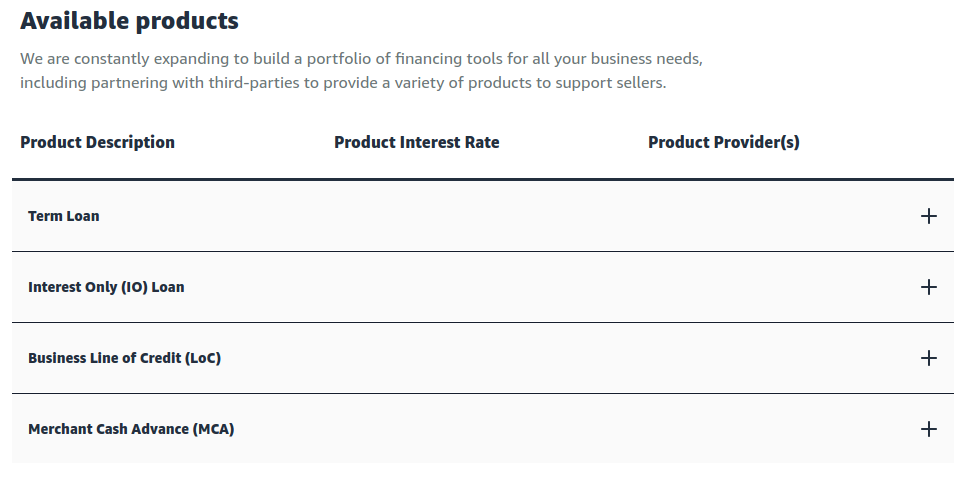
Unique to an Amazon MCA is that funding amounts can start as low as $500 and go up to $10 million.
Amazon’s entrance into the merchant cash advance market coincides wih a unique moment in the product’s history as several states are in the midst of imposing strict regulations on their sale.
NorthOne is Building Finance Departments For Small Businesses
October 20, 2022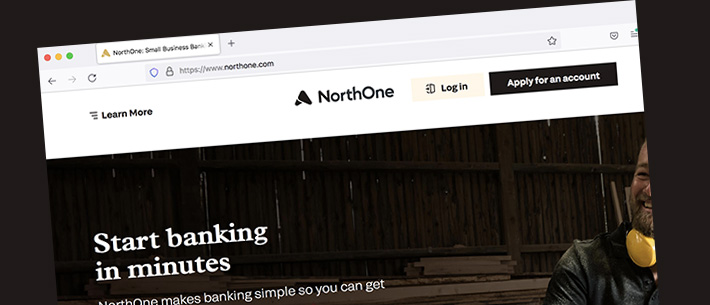 NorthOne recently received $67 million in Series B funding from investors including former NFL star Drew Brees, Battery Ventures, Don Griffith, Ferst Capital Partners, FinTLV, Operator Stack, Redpoint Ventures, Tencent, Tom Williams, and Next Play Capital.
Founded in 2016 by CEO Eytan Bensoussan and COO Justin Adler, NorthOne was designed for small business owners to build a finance department without the complexity of a bank. Coming from an entrepreneurial background, Bensoussan noticed that being a great owner does not make one a great financial manager. With the idea of building good banking and accounting for businesses and combined with Adler’s professional career in the tech space, NorthOne was born.
“We want to build finance departments out of every small business in America, bring the sophistication of what so many of the biggest companies around us enjoy but bring it to the small businesses that could never dream of being able to build a finance department for their small business,” said Bensoussan. “I think that’s the gap that we’re closing.”
Through NorthOne, customers not only get access to a bank account but also technology that organizes and manages other business functions. Business owners can pay invoices, do payroll, and send ACHs or wires in seconds, for example, all while integrating with their existing accounting, e-commerce, and POS software.
Conducting all this from a desk or mobile device without having to go to a bank is a service directed at small businesses with fewer than 10 employees, that are family owned, and are managed locally in the community.
“…here we are talking to a lot of these business owners explaining that there’s so much more that a bank account could offer if it was designed to be more than just a store of money,” said Bensoussan. “I think that’s this eye-opening moment when we talk to them, and we get a lot of folks saying I never even thought that it could go that far. And it’s an exciting moment for us as well.”
Lavu Adds MCA Product Through Partnership With Parafin
October 7, 2022 It’s not just DoorDash that Parafin has partnered up with to provide MCA funding. Last week, the restaurant software company Lavu launched Lavu Capital to help restaurants owners access capital.
“We are a restaurant software company that focuses on small and medium restaurants,” said Saleem S. Khatri, CEO of Lavu. “Think of your favorite restaurants that have one or two locations that are really really popular, that are ingrained in the community. We do everything from point of sale to online ordering, payment processing, and anything a restaurant would need to start and grow their business.”
Khatri said that one thing they noticed is that these restaurants have a fundamentally hard time getting loans and that led them to connect with Parafin. Parafin’s product is an advance on future sales, not a loan, and their offerings have been simply integrated into Lavu’s technology. Parafin automatically generates an offer for restaurant owners that they can see in their Lavu dashboard.
“…it’s just really beautifully designed,” said Khatri. “It basically says, ‘Hey, you have an offer to borrow up to $5,000. Do you want it yes or no?’ And you just click ‘yes’ and you’re good to go, the money deposits straight into your bank account, and then you have a repayment schedule. And it just pulls it directly from your bank account according to that repayment schedule.”
Khatri says they haven’t really begun to market the product yet and they’ve just started off with a limited base of customers but that the plan is to roll it out to all their customers around the US. They’d even do it with their customers outside of the US if they could, but the tech is not set up to do that just yet.
“This is going to be a feature and an offering that really really benefits our customers because it gets to the heart of what they need, which is they’re in constant need of liquidity, they’re in constant need of kind of tools to run their business better,” Khatri said. “And it just really fits our portfolio of products that we offer to these customers. So the reception has been awesome.”
Turning Businesses into Funding Warriors
July 27, 2022 The downside to offering any small business a loan to grow is that they might not necessarily know how to do the growing part. And so for years, that’s what a Tempe, AZ headquartered company called Business Warrior had been focused on, helping small businesses grow and become more profitable. If businesses needed funding, Business Warrior could certainly provide that too, but the key was in maximizing the value of that.
It all seemed a swell fit until the company became further intrigued by the value proposition of one of its vendors, Alchemy, an “embedded finance” company headquartered in nearby California. AltFinanceDaily had interviewed Alchemy CEO Timothy Li via Zoom back in August 2020 and the tech company had only grown since then. After reconnecting in April of this year, Li described Alchemy as the “Salesforce of embedded finance.”
Embedded Finance sounds altogether buzz-wordy, but Business Warrior smelled opportunity. In June, Business Warrior announced that it had acquired Alchemy. Since then, Alchemy’s Li has become a warrior and he is working hard to roll out Business Warrior’s next generation of products.
Among the first on the horizon is an Alchemy specialty, giving small businesses the tools to become lenders themselves. It sounds like Buy-Now-Pay-Later, and to an extent it is, but the difference is that a furniture store, doctor’s office, or repair shop would be the one extending the credit, not a faceless third party on Wall Street hoping to win big.
Li explained the advantage of this by using a doctor’s office as an example. “So the creditors, the banks, don’t understand [the customer] just from reading the credit report, but the doctors understand them, they’re local people, they might have seen this patient before,” said Li. “Now [that patient] wants to do a $10,000 procedure and nobody under the sun will underwrite them.” When this happens, the doctor’s office might try to arrange some type of private financing arrangement, “but they don’t have the software to do it,” Li stated.
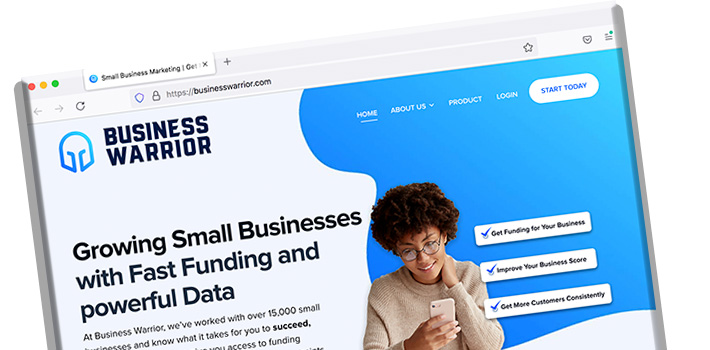 Business Warrior’s software solves this. The platform will be free for the business and Business Warrior will process the customer payments, which is where they’ll earn their revenue, on transactions fees.
In one respect it reduces two risks for the business: (a) A third party BNPL lender dictating future approval, supply, and cost of financing, and (b) credit card companies cutting the lines of their customers that they would otherwise normally use to pay for services. The downside, so to speak, is that the business itself is tasked with being its customers’ creditor.
But ultimately, just like BNPL, such a service is likely to lead to a boost in sales, which is what Business Warrior’s mission had always been from the start.
“This tool is a tool for the small business to do more business,” Li said.
The Alchemy name will remain as far as Li knows, because they still have a lot of customers using its original products. Day to day now, Alchemy is also working with Helix House, an online marketing company that Business Warrior also acquired. They’re all leveraging each other’s resources.
Li concluded the interview by sharing a recent real world experience, he himself going to a dental office to get some work done.
“They have every single imaginable technology, schedule appointments, all the tech,” he said. “They don’t have something that manages payments. It’s either a credit card, cash, or it’s nothing.”
Referring to the financing capabilities that Business Warrior can bring to the table in those very circumstances, “I feel like it should have been there already.”
The Real Small Business Funding Demand Has Yet to Kick In
May 26, 2022 Now that small and medium sized businesses received crucial PPP and EIDL funding during the COVID-19 pandemic, they have become more familiar with other options to obtain capital.
“…they’re learning that they can borrow money based on their revenue, not based on their credit and assets,” stated Sean Feighan, Co-founder and President of Cash Buoy. Feighan explained that the exercise of obtaining capital during Covid to stay in business created or further developed an appetite for small businesses to borrow money in general.
As these businesses are still utilizing the remaining government aid, the real demand has not truly begun, according to Dylan J Howell, CEO of Liquidibee. “…we have yet to see the real big demand that’s about to kick in, in my opinion, over the next six to twelve months, I believe that a lot more demand will come in,” Howell said. “A lot of companies received a good injection of government stimulus. And they’ve enjoyed that over the last year, year and a half. And as that comes to an end, companies are always looking for additional capital, whether it be to grow or foster future growth of their company.”
“I think we’re beginning now to see a new phase within small business,” said Avi Wernick, VP of Partnerships at FinTap. Because of the money that’s still lingering from the stimulus efforts, he thinks that alternative finance companies will soon see more demand in the coming months. But at the same time, those finance companies will have to determine if they’re even a good fit for their products. “I think some businesses will be more adversely affected. I think it depends a lot on the nature of the business owners, you know there are better business owners out there that are able to manage [their] finances more responsibly, and there are others that are kind of just more reactive.”
Erez Stamler, CEO and Managing Director of Fresh Funding, echoed a similar sentiment. He said that increased risk factors of a business coming out of Covid can make it harder to get them approved. Besides, a business now predisposed to forgivable funding or ultra long terms at very low interest may not necessarily demand other products in the market.
“So you will see demand, but you might not see increased amount of views or volume of deals, because you can’t replace SBA loans with MCA,” Stamler said.
Shopify Capital Originated $346.7M in Business Funding in Q1
May 8, 2022 Shopify Capital originated $346.7M in MCAs and business loans in Q1, the company announced. That included merchants in the US, UK, and Canada. Though it was a 12% increase over the same period last year, the figure puts them virtually on par with originations in 2021 if the following three quarters hold steady.
Shopify was one of the only online lenders whose origination volume substantially increased during covid. Most experienced significant drops but have since dramatically recovered.
“The hundreds of thousands of businesses that shifted their business to Shopify during the pandemic and stayed with us since can now take advantage of our powerful retail point-of-sale offering for a unified view of their sales online and offline,” said Shopify CEO Harley Finkelstein during the Q1 earnings call. “Shopify has been developing the world’s best point-of-sale retail software for years, and it’s now at the point where all merchants who came to Shopify during the pandemic can leverage it.”
Funding Circle’s Originations Have Slowed Dramatically in The US
March 10, 2022 Funding Circle’s US originations fell significantly in 2021 versus the previous two years, the company’s latest year-end report revealed. US originations were only £316M in 2021, of which £224M was PPP funding. That £92M in non-PPP funding was a massive drop from the £619 in 2019, for example.
Funding Circle attributed the reduction in demand to the ending of government stimulus programs.
“The US has a fragmented SME lending market,” the company stated in its full-year report. It estimated that 89% of all SME lending was done through banks and only 10% through specialty finance providers.
Funding Circle’s loans have small margins. The company projects annualized returns of only 5-7% on its US-originated non-PPP loans. Meanwhile, annualized inflation in the US by comparison is currently trending at 7.9%.
Funding Circle also announced its exit from the peer-to-peer lending model. According to the Financial Times, Funding Circle CEO Lisa Jacobs said of it: “There’s been a big shift; the industry has shrunk severely.”
Seacoast Business Funding Provides $14,500,000 in New Working Capital Lines
March 7, 2022 Boynton Beach, FL – March 4, 2022 – Seacoast Business Funding, secured $14,500,000 in accounts receivable facilities. The transactions added three new companies to the Seacoast portfolio.
- A $10,000,000 asset-based facility with A/R and Inventory, was provided to a sports medicine and therapeutic product manufacturer located in the Southeast. The Company will utilize the proceeds to increase its product line to existing retail supply chain as well as expand into medical supplies.
- A $2,500,000 factoring facility for an electrical supply distributor located in the Southeast. Increased demand as well as shipping delays has resulted in the need for an increased working capital line.
- A $2,000,000 ledgered invoice LOC for a software & hardware manufacturer. The Company was seeking to establish a reliable working capital partner to support demand and the expansion of a business line.
President of Seacoast Business Funding, Jay Atkins, commented, “We understand the financial needs affecting manufacturing and distribution industries in the current environment, and our ability to move quickly ensures our clients the structure needed to continue without disruption. We met the needs of our clients by providing flexible and sustainable solutions, placing them in a position to maintain momentum and mitigate operational instability.”
About Seacoast Business Funding
Seacoast Business Funding provides customized and timely working capital financing solutions to small and middle-market companies engaged mainly in business services, distribution, manufacturing and staffing with annual sales ranging from $1 million to $200 million. Credit facilities are in the form of Factoring, Invoice Purchasing or Asset-Based agreements. Seacoast Business Funding is a Division of Seacoast National Bank. Member FDIC. For more information visit SeacoastBusinessFunding.com.
Media Contact:
Brooke Ruben
Seacoast Business Funding
561.623.1871
Brooke.Ruben@seacoastbf.com