
The SEC Already Suffered a Major Defeat in the Par Funding Battle – But Who is the Real Loser?
August 8, 2020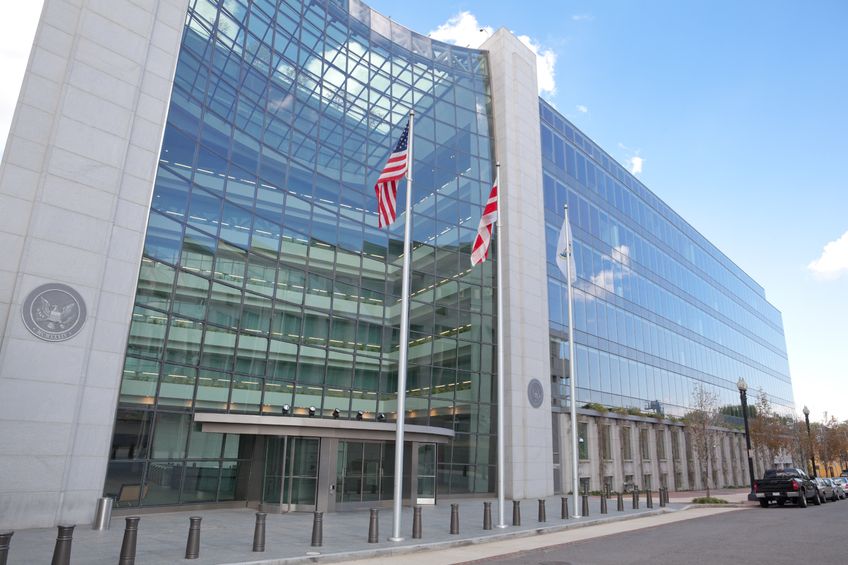 While the news media, regulatory agencies, and law enforcement are high-fiving each other over the course of events in the Par Funding saga (a lawsuit, a receivership, an asset freeze, and an arrest), there lies a major problem: The SEC already suffered a major defeat.
On July 28th, rumors of a vague legal “victory” for Par Funding circulated on the DailyFunder forum. The context of this win was unknowable because the case at issue was still under seal and nobody was supposed to be aware of it.
Cue Bloomberg News…
In December 2018, Bloomberg Businessweek published a scandalous story about a Philadelphia-based company named Par Funding. And then not a whole lot happened… that is until Bloomberg Law and Courthousenews.com published a lengthy SEC lawsuit less than two years later that alleged Par along with several entities and individuals had engaged in the unlawful sale of unregistered securities.
 At the courthouse in South Florida, those documents were sealed. The public was not supposed to know about them and AltFinanceDaily could not authenticate the contents of the purported lawsuit through those means. According to The Philadelphia Inquirer, the mixup happened when a court clerk briefly unsealed it “by mistake” thus alerting a suspiciously narrow set of news media to the contents. AltFinanceDaily was the first to publicly point this out.
In court papers, some of the defendants said that they learned of the lawsuit that had been filed under seal on July 24th from “news reports.” Bloomberg Law published a summary of the lawsuit on its website in the afternoon of July 27th.
“It is fortuitous that the Complaint was initially published before it was sealed,” an attorney representing several of the defendants wrote in its court papers. “Otherwise, [The SEC] would have likely accomplished its stealth imposition of so-called temporary’ relief, that would have led to the unnecessary destruction of a legitimate business.”
 The day after this, on July 28th, a team of FBI agents raided Par Funding’s Philadelphia offices as well as the home of at least one individual. Rumors about the office raid landed on the DailyFunder forum just hours later, along with links to the inadvertently public SEC lawsuit now circulating on the web.
The New York Post caught wind of the story and published a photo of an arrest that had taken place fifteen years ago, creating confusion about what, if anything, was happening. Nobody, was in fact, arrested.
The SEC lawsuit was finally unsealed on July 31st, along with the revelation that Par Funding and other entities had been placed in a limited receivership pursuant to a Court order issued just days earlier. The receivership order was a massive blow to the SEC. It failed to obtain the most important element of its objective, that is to have the court-ordered right to “to manage, control, operate and maintain the Receivership Estates.” The SEC specifically requested this in its motion papers but was denied this demand and others by the judge who leaned in favor of granting the Receiver document and asset preservation powers rather than complete control of the companies.
The language of the Court order was interpreted differently by the Receiver, who immediately fired all of the company’s employees, locked them out of the office, and then suspended all of the company’s operations which even prevented the inbound flow of cash to the company (of which in the matter of days amounted to nearly $7 million). The SEC did successfully secure an asset freeze order.
In court papers, Par Funding’s attorneys wrote that: “The Receiver’s and SEC’s actions are ruining a business with excellent fundamentals and a strong financial base and essentially putting it into an ineffective liquidation causing huge financial losses. In taking this course of action against a fully operational business, the key fact that has been lost by the SEC, is that their actions are going to unilaterally lead to massive investor defaults.”
 The Receiver, in turn, tried to fire Par Funding’s attorneys from representing Par. Par’s attorneys say that the Receiver has communicated to them that it is his view “that he controls all the companies.”
“The SEC is simply trying to drive counsel out of this case, as an adjunct to all the other draconian relief that they insist must be employed to ‘protect the investors,'” Par’s attorneys told the Court. “Due Process is of no regard to the SEC.”
As lawyers on all sides in this mess assert what is best for “investors,” seemingly lost is the collateral damage that is likely to be thrust on Par’s customers. The Philadelphia Inquirer has repeated the SEC’s contention that Par made loans with up to 400% interest. Bloomberg News has called Par a “lending company” whose alleged top executive is a “cash-advance tycoon.”
A review of some of Par’s contracts, however, indicate that they often entered into “recourse factoring” arrangements. “This is a factoring agreement with Recourse,” is a statement that is displayed prominently on the first page of the sample of contracts obtained by AltFinanceDaily.
Parallels between the business practices of Par Funding and a former competitor, 1 Global Capital, have been raised at several junctures in the SEC litigation thus far. But some sources told AltFinanceDaily that in recent times, Par has been offering a unique product, one that is likely to create disastrous ripple effects for hundreds or perhaps thousands of small businesses as a result of the Receiver’s actions (even if well-intentioned).
The “Reverse”
Par offered what’s known as a “Reverse Consolidation,” industry insiders told AltFinanceDaily. In these instances Par would provide small businesses with weekly injections of capital that were just enough to cover the weekly payments that these small businesses owed to other creditors.
One might understand a consolidation as a circumstance in which a creditor pays off all the outstanding debts of a borrower so that the borrower can focus on a relationship with a single lender. In a “reverse” consolidation, the consolidating lender makes the daily, weekly, or monthly payments to the borrower’s other creditors as they become due rather than all at once. Once the other creditors have been satisfied, the borrower’s only remaining debt (theoretically) is to the consolidating lender.
 Par does not appear to have offered loans but sources told AltFinanceDaily that Par would provide regular weekly capital injections to businesses that could not afford its financial obligations otherwise. Par, in essence, would keep those businesses afloat by making their payments.
That all begs the question, what is going to happen to the numerous businesses when Par breaches its end of the contract by failing to provide the weekly injections?
As the Receiver makes controversial attempts to assert the control it wished it had gotten (but didn’t), the press dazzled the public on Friday with the announcement that an executive at Par Funding had been arrested on something entirely unrelated, an illegal gun possession charge. The FBI discovered the weapons while executing a search warrant on July 28th but waited until August 7th to make the arrest.
It remains to be seen what the 1,200 investors will recover in this case or what will become of the Receiver in the battle for control, but sources tell AltFinanceDaily that the authorities are all fighting over the wrong thing.
They should all be asking “what’s going to happen to the small businesses when their weekly capital injection doesn’t come in the middle of a pandemic?”
SEC, Ruderman Heading to Settlement
June 16, 2019The Securities and Exchange Commission’s motion for summary judgment against Carl Ruderman for his role in the 1 Global Capital case is likely to be stayed as the parties head toward a settlement.
On June 14, the SEC informed the Court that “as a result of mediation and ensuing discussions, the Commission staff and Defendant Carl Ruderman have agreed on a proposed settlement of all claims and relief the Commission seeks against Ruderman.” The settlement has to be approved, however, by the five SEC Commissioners. “If the Commissioners approve Ruderman’s signed settlement agreement, it will resolve the Commission’s litigation against him,” the SEC contends.
The SEC is asking for a 90-day stay.
MoneyThumb and AltFinanceDaily Release Survey Findings on Fraud Trends Among Small Business Funders
September 16, 2025Document Falsification Emerges as Top Concern
San Diego, Calif. (September 16, 2025) – A new study conducted by MoneyThumb, a leader in automated document evaluation and fraud detection solutions, in partnership with AltFinanceDaily, a leading publication for MCAs, reveals an alarming trend in the small business lending sector: fraud is not only on the rise but is significantly impacting the cost of doing business, especially for smaller funders operating in an increasingly uncertain economic environment.
As small businesses continue to grapple with supply chain pressures, shifting tariffs, and a volatile economic outlook, lenders are seeing a direct correlation between economic strain and elevated fraud risk. When margins are tight and working capital is harder to secure, the incentive for applicants to falsify documents, or even attempt synthetic identity fraud—increases. Most of this fraud cannot be detected visually, making traditional underwriting processes insufficient on their own. This hidden risk doesn’t just weigh on the funder, it ultimately raises the cost of loans for all borrowers, including honest small business owners.
The survey polled a broad range of Merchant Cash Advance (MCA) providers, funders, and alternative lenders to assess how often they encounter tampered documents or fraudulent information during the application process. Respondents ranged from small firms processing fewer than 10 applications per month to large institutions handling over 500.
Key findings include:
- Nearly 54% of respondents report that 2–10% of the applications they receive contain fraud.
- Nearly 60% are “very concerned” about fraud.
- A staggering 90% cite document falsification or forgery as the most pressing issue.
- More than half of respondents say fraud has increased year over year.
- Smaller funders are disproportionately affected: funders processing fewer than 100 financial applications per month report fraud in 11.8% of applications—more than double the rate reported by larger funders (5.6%).
- 88% of funders are still reviewing documents manually, which wastes countless hours per month, is prone to human error and increases labor costs.
“Fraud is evolving just as quickly as the economy is shifting,” said Ryan Campbell, CEO of MoneyThumb. “In a time when rising tariffs and inflationary pressure are already squeezing small businesses, fraudulent applications add another layer of risk that funders can’t afford to ignore.”
Sean Murray, Founder of AltFinanceDaily, added: “Relying solely on manual review simply isn’t sustainable. The funders who embrace intelligent automation will not only reduce losses but also serve more businesses—faster and more fairly.”
Up to seven percent of revenue, billions of dollars and thousands of hours are lost every year due to fraudulent applications in the lending industry. MoneyThumb’s Thumbprint® patented technology leverages AI and advanced algorithms to identify subtle discrepancies and inconsistencies that can’t be seen manually. Over the last year, Thumbprint® has reviewed more than 10M statements and identified over 500,000 fraudulent or altered documents.
As macroeconomic uncertainty continues into Q4 2025, the report underscores the need for technology-driven solutions that can scale fraud detection without sacrificing underwriting speed or accuracy.
About MoneyThumb
MoneyThumb is an advanced automation software solution that streamlines the lending underwriting process by converting bank statements instantly into actionable data. By exponentially increasing efficiency, accuracy and the detection of fraud – MoneyThumb empowers lenders and accountants to make faster, more informed and accurate decisions. MoneyThumb is headquartered in Encinitas, California, and serves customers globally. For more information visit www.moneythumb.com.
About AltFinanceDaily
AltFinanceDaily is a leading publication covering non-bank finance, alternative lending, and fintech since 2010. It is a trusted source for insights, news, and trends in the MCA and small business lending space.
Media Contact:
Tracy Rubin
JCUTLER media group
tracy@jcmg.com
NMEF Announces Strategic Joint Venture With Oaktree to Accelerate Growth in FMV Leasing Platform
June 10, 2025JUNE 10, 2025, NORWALK, CT – North Mill Equipment Finance, LLC (“NMEF” or “North Mill”), a leading commercial equipment lessor located in Norwalk, Connecticut, today announced a new partnership with funds managed by Oaktree Capital Management, L.P. (“Oaktree”), a global investment firm with deep expertise in credit and asset-backed finance. The collaboration launches a joint venture designed to grow NMEF’s fair market value (FMV) equipment leasing platform, alongside Oaktree’s investment in the venture.
The combined capital commitment from Oaktree and NMEF will support the funding of $350 million in FMV equipment lease originations initially, with additional capital capacity available to continue funding the venture.
This partnership combines NMEF’s established origination network and servicing capabilities in the equipment leasing space with Oaktree’s institutional capital base and investment team. This new extension of NMEF’s platform will focus on FMV leases across a wide range of essential-use equipment including construction, medical, logistics, and manufacturing assets.
“This marks a major step forward in our efforts to deliver flexible, value-driven leasing solutions to the market,” said David Lee, Chairman and CEO of North Mill Equipment Finance. “We’re excited to work with a partner like Oaktree who shares our long-term vision and brings deep understanding of asset-backed investing.”
Under the terms of the agreement, NMEF will originate and service all transactions through their national network of independent originators and vendors. North Mill will also invest alongside Oaktree in the venture.
“We’ve built a strong and scalable platform, and this partnership allows us to bring it to a broader investor base,” said Lee Bergeron, Senior Vice President of Structured Products at NMEF. “Together with Oaktree, we’re well-positioned to meet growing demand for flexible equipment financing solutions.”
Paul Cheslock, Vice President of Structured Products at NMEF, added, “This collaboration gives us the capacity to do more of what we do best—helping businesses acquire the equipment they need with creative and sustainable financing options.”
From Oaktree’s perspective, the partnership is a natural fit with their investment strategy. “We’re pleased to partner with North Mill to support the next phase of growth for their FMV platform and bring long-term value to their customers,” said Rana Mitra, Managing Director at Oaktree. “We are excited to partner with an extremely high-quality originator and servicer like North Mill as we continue generating attractive asset-backed finance exposures for our investors,” said Brendan Beer, Portfolio Manager for Oaktree’s Asset-Backed Finance and Structured Credit strategy.
About North Mill Equipment Finance (NMEF)
NMEF is a national, premier lender who works with third-party referral (TPR) sources to finance small to mid-ticket equipment commercial leases and loans ranging from $15,000 to $3,000,000 and up to $5,000,000 for investment grade opportunities. NMEF accepts A – C credit qualities and finances transactions for many asset categories including but not limited to medical, construction, franchise, technology, vocational, manufacturing, renovation, janitorial and material handling equipment. NMEF is majority owned by an affiliate of InterVest Capital Partners. The company’s headquarters are in Norwalk, CT, with regional offices in Irvine, CA, Voorhees NJ, and Murray, UT. For more information, visit www.nmef.com. One of NMEF’s controlled affiliates, BriteCap Financial LLC, is a leading non-bank lender providing small businesses with fast, convenient financing alternatives such as working capital loans since 2003 from its main office in Las Vegas, NV. For more information, visit www.britecap.com.
About Oaktree
Oaktree is a leader among global investment managers specializing in alternative investments, with $203 billion in assets under management as of March 31, 2025. The firm emphasizes an opportunistic, value-oriented, and risk-controlled approach to investments in credit, equity, and real estate. The firm has more than 1,200 employees and offices in 25 cities worldwide. For additional information, please visit www.oaktreecapital.com.
FundThrough Acquires Ampla, Strengthening its Digital-First Invoice Funding Solution
April 22, 2025HOUSTON and TORONTO – April 22, 2025 – FundThrough, the leading fintech invoice factoring platform for small and medium-sized businesses (SMBs), today announced its acquisition of Ampla, the leading provider of financial technology solutions for consumer brands offering working capital, business banking, corporate cards, and analytics. Ampla surpassed +$2B of loan originations and handled +$5T of transaction volume through its platform. This strategic acquisition strengthens FundThrough’s digital-first ecosystem, creating an unrivaled platform explicitly designed for small businesses that sell to larger companies and wait to get paid after invoicing.
Building on its successful acquisition of Bluevine’s factoring business in 2021, FundThrough again demonstrates its ability to identify and seamlessly integrate game-changing SMB technologies. Today, FundThrough’s expanding footprint now delivers crucial invoice factoring solutions across diverse B2B sectors, including retail, manufacturing, oil and gas, technology, professional services, and food supply and agriculture, with 85 percent of its funding helping American clients.
“Business owners have increasingly been forced to act like banks for their much larger customers who extend invoice payment terms beyond reasonable lengths. They need a seamless way to bridge the cash flow gap, and FundThrough provides a tech-enabled financial solution,” said Steven Uster, FundThrough’s CEO. “Now, Ampla’s technology significantly enhances FundThrough’s AI-powered model, enabling us to level the playing field further. With Ampla, we can scale faster, enhance our credit underwriting and monitoring processes, and help even more businesses solve their number one pain point, cash flow. I’m excited to work with Anthony, a proven entrepreneur with vast knowledge in this space.”
Ampla’s CEO, Anthony Santomo, will remain a strategic advisor to FundThrough and will be joined by his core team. “I’m excited about Ampla’s acquisition by FundThrough and the potential of the combined platform to support small businesses. This strategic move enhances commerce capabilities and provides operators with greater resources to succeed,” said Santomo.
Concurrently with the acquisition, FundThrough also raised $25M in equity capital led by existing investor Klister Credit Corp., an early, large investor in both Shopify and FundThrough. This strategic investment fuels aggressive expansion into key growth areas, including further acquisitions, investments in technology and AI, enhanced UX, and accelerated product innovation.
“Steven’s leadership has firmly established FundThrough as a bellwether in the fintech and specialty finance industry. FundThrough’s track record over the past years of uncertainty is impressive. FundThrough has stayed tightly focused on robustly serving the needs of small businesses forced to hold receivables from their much larger, better-capitalized customers,” said John Phillips, President of Klister. “The outlook for small business growth continues to be positive, and my increased investment reflects my confidence in the FundThrough team’s continuing focus on serving this important market through the best service and continual product innovation.”
“As small businesses navigate the evolving global tariffs, the best thing they can do is preserve their cash flow. FundThrough helps bridge the gap by providing peace of mind for business owners during these uncertain times,” concluded Uster.
FundThrough continues to earn recognition for its growth and technology, landing spots on the Deloitte Fast 500 and Globe & Mail’s Report on Business Top Growing Companies List.
About FundThrough
FundThrough is the leading fintech invoice factoring platform for small and medium-sized businesses (SMBs). Based in Houston and Toronto, FundThrough’s digital-first ecosystem leverages real-time financial data and predictive analytics, offering flexible, tailored financing solutions for growing businesses. Since its founding, the award-winning organization has funded over $2.7 billion of invoices. For more information, visit fundthrough.com.
FundThrough Media Contact
Nadia Milani
VP, Marketing
nmilani@fundthrough.com
PayPal Exceeds $30B in Business Loans and Merchant Cash Advances
March 26, 2025 PayPal has officially crossed $30B in merchant cash advance and business loan originations, the company announced.
“Access to capital is consistently one of the top challenges small businesses face as they look to maintain and scale their businesses,” shared Michelle Gill, EVP and GM of SMB and Financial Services at PayPal in an official release. “Traditional business loans are not only difficult to secure for small businesses, but the application process can be challenging and prohibitively time consuming. PayPal’s financing solutions have a streamlined online application process with no lengthy paperwork or extensive credit checks, and approved PayPal loans are funded within minutes. We launched PayPal Working Capital and PayPal Business Loan to serve this important need, and to provide a quick and responsible way to inject much needed capital to help fuel small business growth.”
PayPal had pulled back significantly on originations for a while as can be seen here but ramped back up last fall. For example, PayPal said that global originations had surpassed $25.6B at the end of Q2 2022 across a total of 1.3 million transactions. That means it has added roughly $5B in originations across 100,000 transactions in the span of almost 3 years since they now report 1.4 million total.
“Small businesses have seen tremendous value in PayPal Working Capital and PayPal Business Loan, as both offerings continue to receive remarkable feedback from customers,” the company said. “Additionally, both offerings have achieved Net Promoter Scores of 76 and 85 respectively and our customers renew loans or access our offerings on a repeat basis more than 90% of the time. Businesses also experience an increase in their total PayPal payment volume by 36% after adopting PayPal Working Capital and 16% after taking a PayPal Business Loan.”
Square Loans Originated $5.7B in Business Loans in 2024
February 25, 2025Block subsidiary Square Loans had a huge Q4, originating $1.54 billion in business loans. That brought the year-end total to $5.7 billion, enough to continue their streak as the largest online business lender that AltFinanceDaily tracks. Enova is #2.
Square Loans customers typically experience growth when taking the funds. Block CEO Jack Dorsey said this of the program in the previous quarter:
“In 2013, we began offering capital to sellers because we saw a meaningful gap in the market: small businesses were often denied access to credit, in the same way they were once denied access to accepting credit cards. We utilized our deep understanding of the seller and their business to build a technology that invited them to accept a loan with transparent rates, and pay back simply by making sales to their customers. We called it Square Capital (which is now known as Square Loans).
Since then, we’ve underwritten more than $22 billion in loans globally, with aggregate loss rates below 3%. And we’ve proven we can expand access: 58% of Square Loans are to women-owned businesses, and 36% are to minority-owned businesses, both of which are higher than the benchmark we track If our sellers grow, we grow – and we believe Square Loans has a direct impact on our sellers’ growth. Sellers who take out a Square Loan grew on average 6% faster than sellers who did not take out a loan.
Many financial products trap borrowers in cycles of revolving debt. We don’t allow customers to take on new loans if they have an overdue balance. And repayment is built into how our products work: Square sellers repay loans through a fixed percentage of their revenue, creating a manageable-real-time payment flow.
On credit risk management, we have a long history of maintaining stable loss rates and these products act as working capital, which means they are usually short in duration. What that means for us is that a dollar used on our balance sheet can turn multiple times, driving capital efficiency while providing us with high-quality data to continually refine our technology-driven underwriting.”
-Jack Dorsey
Square: Our Customers Actually Grow Faster With a Square Loan Than Without One
November 7, 2024On average, Square customers that used the Square Loan product grew 6% faster than those that did not use it, the company revealed. Jack Dorsey, the CEO of Square’s parent company, Block, used the 3rd quarter earning’s period as an opportunity to discuss its lending operations. The relevant parts are excerpted in non-sequential order below:
“In 2013, we began offering capital to sellers because we saw a meaningful gap in the market: small businesses were often denied access to credit, in the same way they were once denied access to accepting credit cards. We utilized our deep understanding of the seller and their business to build a technology that invited them to accept a loan with transparent rates, and pay back simply by making sales to their customers. We called it Square Capital (which is now known as Square Loans).
Since then, we’ve underwritten more than $22 billion in loans globally, with aggregate loss rates below 3%. And we’ve proven we can expand access: 58% of Square Loans are to women-owned businesses, and 36% are to minority-owned businesses, both of which are higher than the benchmark we track If our sellers grow, we grow – and we believe Square Loans has a direct impact on our sellers’ growth. Sellers who take out a Square Loan grew on average 6% faster than sellers who did not take out a loan.
Many financial products trap borrowers in cycles of revolving debt. We don’t allow customers to take on new loans if they have an overdue balance. And repayment is built into how our products work: Square sellers repay loans through a fixed percentage of their revenue, creating a manageable-real-time payment flow.
On credit risk management, we have a long history of maintaining stable loss rates and these products act as working capital, which means they are usually short in duration. What that means for us is that a dollar used on our balance sheet can turn multiple times, driving capital efficiency while providing us with high-quality data to continually refine our technology-driven underwriting.””
-Jack Dorsey
Square shared some stats as well, showing that the average loan term was 150 days and average loan size is only $10,208.

Loss rates on Square Loans have historically been less than 4%. Square is a company to watch considering it is likely the largest online business lender in the United States.