Square Generated $4.78B in Business Loans in 2023
February 22, 2024 Block’s business loan division, Square Loans, had a massive year in 2023, generating $4.78 billion in loans. That was $1.5 billion more than its closest competitor Enova and up from $4.06 billion in 2022.
Data of this sort is becoming harder to come by industry wide. Several publicly traded firms that once highlighted their origination volumes have since sought to minimize disclosure of it. (This is an approximate list of the largest online small business lenders and merchant cash advance providers in the US.) While Square still makes their origination figures available, it warrants no mention on the Block quarterly earnings calls because its impact on the overall business is small. Block generated $21.92 billion in net revenue in 2023 for example, $9.5 billion of which stemmed from its bitcoin business.
The Biggest Small Business Funders
February 21, 2024Although all of the specific data isn’t entirely available, we’ve compiled a short list of who the largest small business funders were in 2023:
1. Square
2. Enova
3. PayPal
4. Shopify
5. Amazon
6. Intuit
7. Parafin

PayPal Reiterates Tightening of Business Lending Originations
February 8, 2024 After announcing a sudden pullback on business loans and MCAs in Q3 due to higher than expected charge-offs, PayPal maintained that the belt was still tightened in Q4.
“We have taken a prudent and active approach to managing our overall credit risk, tightening originations within our PayPal business loans portfolio,” said PayPal CFO Jamie Miller on the quarterly earnings call. “We are carrying lower credit receivables after tightening originations last year.”
Tightened originations has led to the company being dethroned as the top online unsecured small business lender. PayPal at the very least held that notable distinction in 2019 and 2020 but they’ve since been overtaken by Square Loans and Enova.
The Story Behind the Broker Battle Champion
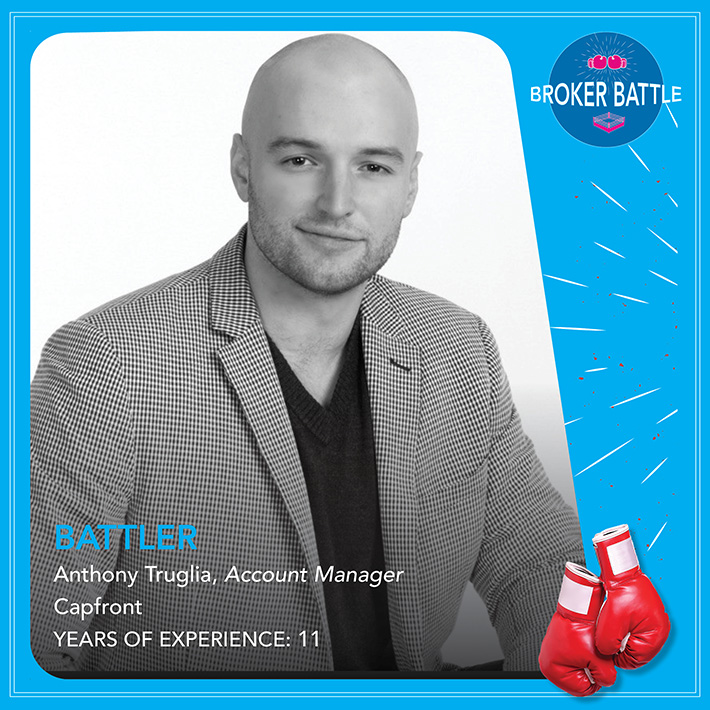
January 26, 2024 “I think I’m the best because I understand my clients very, very well,” said Anthony Truglia, an Account Manager at CapFront. “I listen to them, I ask the right questions, and I really try to dive very deeply into what it is the problem that they’re facing, and I try to find a solution to it to the best of my abilities.”
Truglia uttered these lines in a calm baritone voice on the red carpet at AltFinanceDaily CONNECT MIAMI just hours before the inaugural Broker Battle in which he had been accepted as a contestant. The contest was designed to showcase the top brokers taking real but hypothetical questions and applying their knowledge live on stage.
At the time, Truglia had no idea how it was going to be conducted, not to mention that the other highly qualified contestants had also projected equally similar confidence in the likelihoods that they were going to win. It was anyone’s game at that point and the suspense was palpable. There had never been anything like it.
“I’m definitely going to be watching that,” said Manny Yosipov of Advanced Recovery Group during a show floor interview before it took place. “I’ve never seen a broker battle, never heard of a broker battle.”
“Broker Battle is huge because it shows the level that you can reach of talking to these clients, dealing with objections, and just selling in general,” said Joshua Hillian, Creative Director at Advance Funds Network. “I think a lot of people have the wrong idea of sales–but at the end of the day it’s question-based, customer focused, and that’s what it’s about.”
Hillian’s colleague Irving Betesh was slated to go first in the Battle later that evening. Betesh, like others, said that they had been preparing for this day well in advance. There was an overwhelming desire from all of them to showcase not only their technical knowledge but also their friendly diagnostic qualities. This was an educational opportunity for everyone.
 When it finally kicked off, Truglia and Betesh squared off against fellow contestants Corey Digi, Stanley Mitchell, Danielle Rivelli, and Mike Brooks.
By the time Truglia went on stage, which was last in the order, the four judges and thousands in the audience had already heard five impressive performances. But Truglia delivered, earning a near perfect score that sent him to the final championship round against experienced veteran Danielle Rivelli. And when that close matchup was completed, he found himself wearing a gold belt and holding a big check that duly crowned him as the Top Broker.
For those that didn’t know him, Anthony Truglia was simply the man that had put on the most impressive performance, an Account Manager at CapFront who won the hearts and minds of his peers. AltFinanceDaily wanted to know more as he was little known to the editorial team until the day of his victory. It turns out he’s got an interesting story.
Anthony Truglia
Truglia was born and raised in Stamford, Connecticut and got his education at Lawrence University in Appleton, Wisconsin. He interned for a paper company that he said was reminiscent of Dunder Mifflin in the hit sitcom The Office, where he got a taste of doing sales. There, he discovered his own inner drive but paper was not the business he wanted to be in. “I was very young and I’ve always been very ambitious, always trying to accomplish something,” he said. After that he aimed big and actually launched his own coffee business, which ultimately didn’t pan out. Truglia followed that up with real estate, which he enjoyed, until he met someone that changed everything for him, a mentor that was making a name for themselves in the world of small business financing.
 “See, I know most people when they get into this industry they’re just thrown into the gauntlet, they maybe have a team lead that gives them some supervision and some pointers, maybe you go through like a training for a month with a group of people, but I actually got one on one training with Justin Friedman,” Truglia said. Friedman, as one might already be familiar, is currently the Head of Sales Training & Development for Enova International, the parent company of one of the largest small business lenders in the country. At the corporate level, one could confidently say that he is among the best of the best.
That was in 2018 for Truglia, where that one-on-one training included roleplay rehearsals, ones that eventually resembled the format of the Broker Battle he’d partake in nearly six years later. Truglia’s career has led him to CapFront. He speaks incredibly highly of the company and its CEO Zack Fiddle. If one suspected that Truglia’s time in the business had led him to slow down or retreat to back-office work, they’d be wrong. Truglia says that he’s on the front lines making about 150 customer calls per day on average.
“…my job is to contact [inquiring clients] as soon as possible to get a feel for whether they’re interested, if they’ve already been funded or not, but also just trying to figure out what it is they’re trying to accomplish really, try to gauge their urgency, gauge what their comfortability is, and see if we can find something that they will be comfortable with,” he says. “But also it’s a fine line because people’s aspirations are oftentimes not anywhere close to what they qualify for. And unfortunately, not a lot of people are aware of what lenders look for so that’s where we come into play.”
To get ready every morning to do this job he’s up at 6am and off to the gym before he even has his first cup of coffee. Then it’s game time, a lifestyle he’s accustomed to that doesn’t require anything else to pump him up.
“I’ve just gotten to that point where I’m very confident I know what I’m talking about. I’ve heard every question asked and I just practice it so daily that [outside motivation] is not really needed anymore,” he says.
Truglia is also confident that the type of role he fulfills is here to stay, that even lurking AI technologies are not something to fear.
“I definitely think that AI is not going to take away sales jobs because I’m one of those people that thinks that people enjoy talking to human beings. They don’t like talking to robots,” he says. “I think there’s something about—even if [an AI] sounded good, and you know it’s not really a human deep down, there’s no connection. So there’s no loyalty generated. I think people naturally like to talk to people, they like the personal connections relationship.”
 But in real life, one might not be the only person that a potential client is considering and how they make a final decision to move forward could entirely depend on the best vibe that they feel.
“I always tell clients, ‘check out our company, myself on Trustpilot’ and stuff like that, do they always do that? Sometimes, not always. But from a psychological standpoint, I think a lot of times it comes down to how professional you are, how polished, your tone—just the chemistry that you can develop in that first call is what usually decides if this is somebody that you enjoy speaking to.”
This entire thought process ultimately played out on stage where his approach, one which included warmly thanking the judges for their imaginary call and the reaching in for a fist bump to close a deal, wooed the judges in his favor.
“[My team was] all very ecstatic for me,” he says. “And I thank them very much deeply for it. They were certainly rooting for me.”
The Top Small Business Funders Now Vs. Then
January 11, 2024Top Small Business Funders By Year
| 2008 | 2014 | 2023 |
| AdvanceMe (CAN Capital) | OnDeck | Square |
| First Funds | CAN Capital | Enova (OnDeck / Headway) |
| Merchant Cash and Capital (BizFi) | Kabbage | Shopify |
| BFS | Kapitus | PayPal |
| AmeriMerchant | Rapid Finance | Amazon |
| GBR Funding | National Funding | Intuit |
Many people look at 2023 vs 2008 and arrive at the conclusion that the fintechs rose to the top, but if one were to narrow down the definition of those players a little further, they’d notice that PayPal and Square are payment companies, Shopify and Amazon are e-commerce companies, and Intuit owns the Quickbooks accounting software. These are actually older companies that took an old idea (split-funding) and made it new again with some key changes. Although in the present moment it may feel like some of them cannot be beat (which is how the industry felt about the top funders in 2008), much can change over the course of this decade.
Keep your eye on:
- AI
- Blockchain (as payment rails, record-keeping)
- Regulation
Surprising Stats of 2023
December 27, 2023Remember when interest rates soared, banks collapsed, and experts began to prepare for the worst? Well, appearances can be deceiving.
Business loan origination volume at Square, Enova, Shopify, and Funding Circle are all on track to surpass 2022’s numbers. When it came to bad debt, PayPal was the only large tech lender to announce that it had become a problem this year. PayPal’s origination numbers are consequently also down year-over-year.
The S&P 500 was at 3,839.50 one year ago and closed at 4,774.75 yesterday, a gain of more than 24%.
Unemployment was 3.5% last December and had only modestly increased to 3.7% this November.
Inflation was 7.1% last November and only 3.1% this November.
Bitcoin is up by 150% year-over-year!
Anecdotal reports at smaller non-public small business funders, however, have hinted at bad debt increases all year and underwriting has generally become more conservative. Despite this, brokers are still brokering deals and funders are still funding. The predicted mass AI-induced layoffs have also not yet materialized. In the grand scheme of things, the argument could be made that 2023 was actually a pretty good year.
But 2024 could be dicey.
- The FCC closed the lead generator loophole.
- The first wave of small business finance companies will have to begin complying with new CFPB regulations.
- It will be a presidential election year like none ever experienced before.
- Americans are overleveraged. Forty percent of student loan borrowers failed to make a payment after the covid-era pause ended.
- General economic, societal, and political unease.
So what will happen? I guess we’ll find out. It could be terrible or awesome or anything in between.
Small Businesses More Understanding, Looking for LOCs
December 4, 2023 “The ISO channel is an important part of our business and we remain committed to it,” said Jay Shaw, Head of Sales at Enova SMB. Enova, which operates OnDeck and Headway Capital, is one of the largest small business lenders in the United States. The company has originated more than $2.2B in loans in the first three quarters of this year, a lot of which comes through “highly compliant ISOs.” The relationship works, especially in times like these when banks are reducing their exposure to small business lending.
But officially we’re not in a recession. The S&P 500 is up 20% YTD, for example, unemployment is low, and inflation has backed off from its previous peak. Shaw says that a positive sentiment among small businesses is something they’re seeing along with this, that when they actually talk to small business owners one-on-one, many of them are feeling pretty good right now.
While most observers would point out that elevated interest rates have shaken up the game, there’s actually been a silver lining to how it’s played out.
“There’s a lot more education and understanding of cost of capital,” said Shaw.
Business owners, for example, who were used to a perpetual low interest rate environment, have watched banks dramatically increase interest rates over the last year or so and it’s actually brought attention and awareness to the fact that lenders have a cost of a capital to contend with as well, that rates come from somewhere. It’s made them more understanding, according to Shaw, when they’re presented with terms now from online lenders. That understanding is compounded by a greater openness to doing it all online in the first place, which businesses are now more accustomed with after having to do so much online during the covid years. In essence it’s a strong environment to be working in right now. Still, many businesses are coming in with a certain expectation of how online lending should work especially if they worked with a bank previously.
 “More and more businesses are looking for a line of credit product,” Shaw said, which Enova offers in addition to term loans. Businesses tend to appreciate this product not only because of the control it gives them but also because “they have continuous access to capital after every payment they’ve made,” Shaw said.
According to the Intuit Small Business Index Annual Report, 22% of small businesses applied for a loan or line of credit last year. Although this didn’t distinguish term loans from lines of credit, the demand for a revolving product is evident by an even more sought after type of financing, credit cards, which 30% of small business owners applied for. MCAs, by comparison, were a distant fifth, with only 6% of businesses applying for one.
Perhaps an all important measure is not only what businesses want but how they’re using it in the end.
“A lot of [our customer’s] borrowing is growth borrowing with a significant ROI,” Shaw said.
Loan Volumes Strong, Approvals Cautious in Small Business Finance Space
August 22, 2023 In this current environment, small business finance companies are proceeding cautiously.
“In 2022, the company’s turndown rate stood at 8%, but it has surged to 12% this year,” said David Miles, VP and Director of Credit for Eastern Funding. Eastern Funding primarily serves coin laundromats, grocery stores, and car washes but also operates two subsidiaries that focus on assets like commercial vehicles & tow trucks and fitness & wellness equipment. While Miles said that loan volume has remained strong, the percentage of transactions being turned down has increased.
“…I think that’s fairly indicative of the market or the environment that we’re currently in, which is high interest rates,” said Miles. “You have consumers that are carrying a lot of debt and it’s somewhat of a precursor to a potential downturn or recession.”
The circumstances are being felt all across the lending spectrum. According to a recent consumer lending study from the Federal Reserve, the overall rejection rate for credit applicants was 21.8% in June, the highest level in five years. That study looked primarily at mortgages, credit cards, and auto loans.
But in the commercial universe where Eastern Funding operates, the sentiment seems to be matching the shift in the numbers. On a recent quarterly earnings call, for example, Lightspeed CFO Asha Bakshani said of their MCA program, “There’s tons of demand. We’re just taking our time intentionally given the macro.” On unsecured business loans, Enova CEO David Fisher recently said that “we’re just not convinced the risk/reward is there right now, again, given the uncertainty in the economy, an extra few percentages of origination growth for us this year is pretty inconsequential.” Both Lightspeed and Enova are also still experiencing strong volume despite the conservative approach.
“We’ve definitely seen credit quality go down compared to prior years but that’s the main challenge,” said Miles of Eastern Funding. “And we want to make sure that especially in this environment, that we continue to make good loans, we make loans that don’t go to collections, that don’t go to work-out, and we don’t experience any losses across any of the three divisions.”
One challenge of being cautious, however, is communicating the situation to potential customers who may still be stuck in the mindset of 1-2 years ago.
“Our focus is on making sure that the people that do have credit authority, that they’re well aware of the environment that we’re currently in, and that there is enhanced risk just to do with the macroeconomic environment that we’re operating in,” Miles said.