
Q2 Acquires Cloud Lending Solutions
August 9, 2018 Q2 Holdings (NYSE:QTWO), which creates digital banking solutions for banks and credit unions, announced yesterday an agreement to acquire San Mateo, California-based Cloud Lending, Inc., a privately-held software as a service (SaaS) company that provides a lending and leasing platform. According to its website, Cloud Lending says that its lender clients can increase loan volume by 40%, decrease time-to-fund by 27% and reduce operating costs by 15%.
“By acquiring Cloud Lending, we will be able to help our community and regional financial institutions more effectively manage and grow their lending portfolios—their fundamental income-generating activity,” said Q2 CEO, Matt Flake, in a statement.. “There’s a substantial market opportunity for digital lending, and the addition of Cloud Lending’s talented team and next-generation technology solutions will help Q2 expand our footprint in existing markets, as well as enter new ones.”
Both Q2 and Cloud Lending provide services to lenders, whether they are banks or alternatives lenders. With this acquisition, Q2 hopes to add increased efficiency to its offerings. Meanwhile, Cloud Lending can also benefit from the scale, infrastructure and resources of Q2.
“This partnership means more lenders will provide greater access to credit for more people and businesses across the globe,” said Cloud Lending CEO Snehal Fulzele. “Cloud Lending’s team members are excited to partner with Q2 and to continue delivering on our proven track record of innovation in digital lending and leasing.”
Merging with a larger lending company that services banks is one path to take. But nCino, a competitor to Cloud Lending, has recently been partnering with banks instead.
Founded in 2004 and headquartered in Austin, Texas, Q2 went public on the New York Stock Exchange in 2014. The company’s ticker symbol is QTWO. Cloud Lending was founded in 2012 and, in addition to its San Mateo, California headquarters, the company also has offices in the U.K., India and Australia.
Square Capital is Funding $130 Million a MONTH
August 1, 2018 Today Square released its Q2 2018 earnings, revealing that in the second quarter Square Capital facilitated over 60,000 business loans totaling $390 million. This is an increase of 22% year over year, and a 13% increase compared to last quarter’s loan volume of $339 million.
Square’s growth was also driven by its Instant Deposit, Caviar and Cash Card products. Additionally, second quarter growth came from Square’s acquisitions, including Weebly, which provides tools to help individuals and small businesses create websites or online stores.
In today’s earnings call with Square CEO Jack Dorsey and CFO Sarah Friar, an analyst asked about plans for development of Square Capital. In response, Friar said that they plan for Square Capital to grow as the Square customer base grows. But she said Square is also taking more proactive steps to acquire Square Capital customers, including partnerships. Just last week, Square partnered with eBay to make loans to eBay merchants.
“We’re looking to partner [with companies] where their customers look like Square sellers,” Friar said.
Founded by Jack Dorsey and Jim McKelvey in 2009, Square is headquartered in San Francisco, with offices also in Canada, Japan, Australia, Ireland, and the UK. Dorsey is also the CEO of Twitter.
nCino Partners With Santander
July 24, 2018
nCino partnered with Santander Bank last week, its latest in a string of partnerships with major banks.
“Innovative institutions such as Santander Bank understand the importance of ensuring the customer experience is as fast, easy and intuitive as possible,” said Pierre Naudé, CEO of nCino. “[Santander] also recognizes that a shiny front end means nothing if the middle and back office doesn’t embrace at least the same degree of automation and intelligence.”
nCino is a cloud-based lending platform that grew out of Wilmington, North Carolina-based Live Oak Bank in 2012. Its founder, James Mahan III, then CEO of Live Oak Bank, along with his team, recognized a need to make the commercial lending process less time-consuming. So they created the nCino Bank Operating System internally for Live Oak Bank. But it soon attracted the interest of other financial institutions, in the US and beyond.
Last year, nCino told AltFinanceDaily in that in addition to working with Live Oak Bank, it was working with more than 150 other financial institutions in multiple countries, including nine of the top 30 US banks. Now, according to the nCino website, over 200 banks and credit unions of varying sizes use the company’s Bank Operating System. TD Bank and SunTrust are among their largest bank partners.
An nCino spokesperson told AltFinanceDaily that its Bank Operating System is sold on a subscription-basis that is driven by individual annual user licenses. This allows employees, executives and other stakeholders of a financial institution to access the benefits and functionality of nCino’s solution. nCino spun off from Live Oak Bank and became its own entity in 2014. Separately, Live Oak Bank (NASDAQ: LOB) went public in 2015.
 Santander will be using nCino’s platform for its business banking clients. Santander says that nCino’s cloud-based platform is accessible to customers from any device and will reduce the time it takes Santander to deliver loan decisions from start to finish by approximately 40 percent. In conjunction with a partnership with Accenture, Santander will be using nCino’s platform to help with customer relationship management, loan origination, account opening, workflow, enterprise content management, and instant reporting capabilities.
“Respecting our customers means giving them more insight into the loan process and getting them their money faster without any impediments so they can focus on running their businesses,” said Amir Madjlessi, Executive Vice President and Managing Director of Business Banking at Santander. “nCino’s platform automates the lending process from start to finish in a way that ensures a seamless, transparent experience for our customers that reduces delays and inefficiencies and securely connects our clients to our bankers whenever they need them with the touch of a button.”
nCino employs 500 people and is headquartered in Wilmington, North Carolina. The company recently opened an office in London and has plans to open additional offices in Australia and Canada later this year, according to a company spokesperson.
BCFP Launches Regulatory Sandbox for Fintech Companies
July 23, 2018
Mick Mulvaney, the Acting Director of the Bureau of Consumer Financial Protection (Bureau), told The Wall Street Journal last week that the Bureau has launched a “regulatory sandbox” to help fintech firms develop new products and services.
A regulatory sandbox is a framework set up by a regulator that allows certain fintech companies to conduct experiments for innovative products under the supervision of the regulator. The launch of this BCFP regulatory sandbox coincides with the hiring of Paul Watkins last week as Director of the Bureau’s new Office of Innovation.
It would seem no coincidence that Watkins was chosen to direct this new office at the Bureau because he had been in charge of fintech initiatives at the Attorney General’s Office in Arizona, the first state to create a regulatory sandbox earlier this year. Illinois is the process of creating a regulatory sandbox. And state banking regulators in New England spoke to AltFinanceDaily last year about the possibility of a regional regulatory sandbox. According to an American Banker story, the model for the sandbox follows a 2014 initiative in the UK called Project Innovate, designed to promote competition while focusing on consumer interests. Currently, regulatory sandboxes have been implemented in other countries, including Abu Dhabi, Australia, Canada, Denmark, Hong Kong and Singapore, according to the New York University Journal of Law and Business.
Regulatory sandboxes are controversial. Before the Arizona bill passed allowing for the creation of the regulatory sandbox, a number of consumer advocacy groups protested, including the Southwest Center for Economic Integrity, Arizona Community Action Association, Children’s Action Alliance, and Protecting Arizona’s Family Coalition. These groups believe that the regulatory sandbox is simply a way of allowing fintech companies to bypass regulations at the expense of consumers.
Mulvaney wouldn’t agree. “You can make a strong argument…that new technology actually offers new and innovative ways to protect consumers,” Mulvaney said in The Wall Street Journal story.
Lending Express Opens Office in Silicon Valley
June 13, 2018 Tel Aviv-based Lending Express announced its entrance into the U.S. market yesterday. It opened an office in San Matteo, CA and has officially appointed Moshe Kazimirsky as VP of Strategic Partnerships and Business Development to support the new West Coast office.
“After the immense success we’ve had in the Australian market, we knew that our platform was ready to take on the U.S.,” said Lending Express CEO Eden Amirav.
Lending Express initially launched its business in Australia in October 2016. The company provides an online marketplace that connects merchants to alternative funders. After only a year and a half, Amirav told AltFinanceDaily that Lending Express is now the largest business of its kind in Australia – even though they only set foot on the continent a month ago.
Meanwhile, Lending Express has also been operating in the U.S. for months and has already partnered with leading online lenders like OnDeck, Kabbage and Fundbox, according to Amirav. Given the company’s experience in both the Australian and American markets, AltFinanceDaily asked Amirav what he thought the differences were.
“In general, they are much more similar than people think,” Amirav said. “But in the U.S., people like to look around more.”
Generally, if an Australian merchant is approved, they will move forward with the deal right away, Amirav said. Lending Express offers a myriad of products on its platform, including equipment financing, invoice funding, business line of credit and merchant cash advance.
So far, Kazimirsky, who has worked in business development for other Silicon Valley technology companies, will be the only one in the new California office. But Amirav anticipates that the office with grow. The Lending Express office in Tel Aviv has 25 employees, many of whom – namely the account managers – start their day at 3 a.m. in order to speak to their Australian and American customers in different time zones.
Lending Express uses an algorithmic system called MatchScore to pair borrowers with lenders.
Experian To Stop Reporting All Tax Lien Data
March 24, 2018 According to a March 19 letter sent by Experian to its clients, the company will remove all remaining tax liens from its consumer credit reporting database beginning the week of April 16.
This finalizes the move by credit bureaus (including Equifax and TransUnion) to stop including civil judgments and tax liens on consumer credit reports.
When Experian started to omit this information last summer, many funding companies were in shock.
“The IRS could come in and seize credit card processing accounts and prevent the lender from getting paid,” David Goldin told AltFinanceDaily last summer in regards to the potential risk of lien data being hidden. (Goldin is the CEO of Capify, a funding company with offices in the UK, Australia and formerly the US.) “Once you have a judgment, a creditor could come in and freeze bank accounts.”
Yellowstone Capital CEO Isaac Stern also expressed concern last summer. But fears about this have mostly been mollified as funding companies have found other ways to obtain the same information. By last fall, Yellowstone started using the Clear platform, provided by Thomson Reuters, in more thorough ways in order to obtain the same information that was no longer available to them on Experian.
“You have to dig through it,” Stern said of the vast data to be found on Clear.
Experian did not respond to requests for comment.
Ron Suber: ‘This Industry Will Look Very Different One Year From Now’
February 25, 2018 Ron Suber wears many hats. His official LinkedIn profile lists him as President Emeritus and Senior Advisor at Prosper Marketplace. Now you can add a new title to his repertoire – the Magic Johnson on fintech. That’s because when it comes to Suber’s legacy, he’s all about the passing game.
“I really enjoy the assist in basketball more than the score or the dunk and so I’m trying to be that leader of assists in our industry, Magic Johnson, if you’ll let me use that analogy … I want to be him for our industry and help everybody win and help the whole thing be bigger, but you have to give the ball to the people in the position where they can score and that’s what I’m trying to do,” said Suber in a podcast discussion with Lend Academy’s Peter Renton, who is also a co-founder of LendIt.
Since Suber stepped down as president of Prosper, his presence in marketplace lending and fintech only seems to have blossomed, which in hindsight may have been the plan all along. The godfather of fintech, as he’s also known, is in the midst of what he’s dubbed a professional rewiring, one that didn’t prevent him from participating in a podcast with Renton.
During the discussion, Suber didn’t shy away from any topic, fielding questions on everything from his investment portfolio, to Prosper, to travel and his views on marketplace lending and fintech. His travels have taken Suber to Patagonia and the straits of Magellan to his favorite Aussie city of Melbourne. Next up Suber plans to explore Africa, including Rwanda and Tanzania.
 Suber on Aussie IPO Credible
San Francisco-based Credible, a consumer finance marketplace for millennials, just raised $50 million in an Australian IPO. Suber, who serves as chairman of the fintech, got to know Credible CEO Stephen Dash a few years ago. When Dash needed to raise money, Suber was the first to work with other fintech influencers including a group in Asia to invest $10 million in the company at a $40 million valuation.
Credible followed up with another equity round before deciding to IPO in Australia, where the market is different versus the United States or Hong Kong.
“We were able to meet with the asset managers, the family offices, and the superannuation funds and some of the pension funds in Asia, Hong Kong in particular, and throughout Australia who were very supportive of Stephen Dash, who is from Australia,” said Suber, adding that Credible was the biggest tech/fintech IPO in Australia last year.
Incidentally, Suber has also met with Australia Treasurer Scott Morrison, who sparked a meeting with Suber, Dash, US cryptocurrency exchange Coinbase and other members of the payments market to discuss how Australia can engage with young US entrepreneurs.
We asked Suber what to expect with crypto and lending, in response to which he told AltFinanceDaily: “Like the very early days of the internet, there were lots of dot-com companies with high valuations in the hype cycle, little revenue and unclear long-game solutions…think Amazon. Big winners emerged, and the majority lost money on the early bets. The same is true for cryptocurrencies. Enormous winners will emerge. In my opinion, the winners include CoinBase, Ripple and Ethereum.”
Suber on Prosper
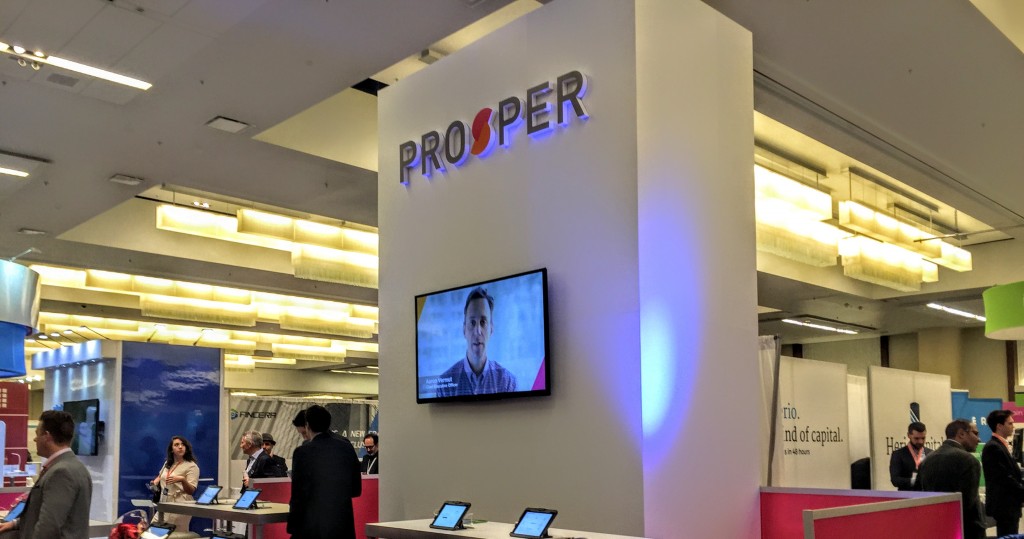 While Suber has moved on from an executive role at Prosper, he remains engaged with the company and is close with the leadership team, including CEO David Kimball and CFO Usama Ashraf. Suber’s involved across the board, from customer acquisition, to business development and on the capital markets side of things as well.
“It’s again doing close to $300 million a month in originations, it has $100 million in cash it generates cash each quarter, it has its own securitization channel at this time in addition to the consortium … There’s a lot going on there including some product expansion, so there’s no shortage of things to do with Prosper, which I care a lot about,” said Suber.
Suber on Hindsight Being 20/20
Marketplace lending has had peaks and valleys along the way as it has matured from a nascent segment to essentially a transformational influence on the lending space, with its technology touching everything from the business model, to the borrower to the banks.
But if hindsight were 20/20, there are some things he’d do differently the second time around.
He pointed to Prosper’s acquisition of American HealthCare Lending, which he characterized as a “great decision,” giving the marketplace lender an opportunity to tap the healthcare borrower market. But as in any relationship, you can’t change each other.
“We changed American Healthcare Lending too much and tried to make it into something that it just couldn’t be with the point of sale financing. I think the lesson there is it’s great to do an acquisition, but you have to make sure you execute and keep it fresh and focused and successful once you get it,” said Suber, pointing to the acquisition of Tel Aviv’s BillGuard as yet another example of this.
Prosper also took on too much office space around the country.
“Perhaps we could have outsourced a little more instead of all the hiring. Clearly diversifying committed capital and maybe back then even using some of the capital we raised to do these own CLUB deal securitizations, which Prosper does now very successfully with its balance sheet,” he noted.
 Suber also urged the marketplace lending market to showcase its technology and unique abilities as “tech-enabled finance companies” more. As the innovator that he is, Suber suggested there should be greater collaboration among marketplace lenders, comparing it to the airline industry. He explained:
“So, the airline industry is competitive, they’re competing for dollars and seats and people and talented pilots and the best planes, but the reality is they have to work together, they have to make sure that planes don’t crash and that the industry is on time and does lots of good things together… And that’s really what I think we can do better, a better job of as an industry is really working together, competing, but communicating and making sure everybody lands safely.”
Suber on Marketplace Lending
As the godfather of fintech, Suber is often looked to as a guiding voice on the status of the market. That’s why when he says the industry has advanced in innings, it’s revelatory.
“I think we’re in the home stretch, I think we’ve done the seventh inning stretch,” he said. Suber pointed to Asia, where the market has gone from 3,000 platforms to 50 and in the United States where it’s consolidated from 300 to fewer than 100.
“The mature are maturing,” he said,” pointing to a race in which some platforms are pulling away from others in terms of valuation, volume and the ability to engage the industry.
“The separation will continue,” he said. “The industry will look very different one year from now.”
Suber on His Investment Portfolio
If you’ve ever wondered which investment areas Suber believes represent the next opportunity, look no further. He’s “struck” by financial inclusion, in particularly a telecom play Juvo for which he’s an advisor and in which invested a few rounds. Juvo is looking to serve the unbanked in the developing world where they lack financial identities, internet access and smartphones. The company has partnered with the likes of Samsung.
“We talk a lot in the online lending industry about top down, super-prime and prime and near prime; this is my way of coming from the bottom up with technology and data and finance to be involved in financial inclusion. I’m really quite excited about that one,” said Suber.
He also likes startup Unison and the emerging fractionalization of the home equity market, which he characterizes as “the next big thing.” In addition to Suber, this market has attracted the likes of Marc Andreessen.
Suber has nearly 20 investments in private companies, including payment companies, financial inclusion and lending. He’s also become a debt investor to some online lenders, invoice finance plays among others. “I’ve really enjoyed the debt side of investing as much as the equity side,” he proclaimed.
Suber on Broader Fintech
In addition to marketplace lending, Suber is also a believer in the point-of-sale (PoS) solution and invoice finance companies, which he says are “fixing the way invoicing is financed and making it better, cheaper and quicker.” And in taking an overarching view of the market, he also likes the cleantech, pointing to solar fintech play Mosaic and a company called CleanCapital.
 Suber on Rewiring
Suber is a big believer in rewirement, both in his personal life and in business. He defines it as “redesigning one’s life personally and professionally.” Before he applied it to his career, Suber and his wife Caryn pursued a rewirement in their personal lives, one that included selling their home and material possessions, buying a new home and traveling.
In 2017, he decided to do the same thing professionally to strike a better balance in his life. Since then, he’s developed a color-coded regiment by which to live, separating the hours of the week across categories including exercise = blue, personal = green, work = purple and teaching and managing his family office = red.
“There’s a lot of green on my calendar,” he said.
For those interested in rewirement, Suber has launched a blog on the topic, with the maiden couple of entries documenting the first 360 days and counting.
Many of Suber’s quotes here originated from his interview with Peter Renton. Renton is the co-founder of the LendIt Conference.
Canadian Merchants Show An Appetite For Capital
November 25, 2017In Canada, the average deal size for a merchant is anywhere between $20,000 and $30,000 in funding, depending on who you ask. That’s why when one startup recently funded a $300,000 CAD advance from its balance sheet to a Canadian merchant, the deal turned some heads. While it’s unclear whether this amount could be indicative of a trend unfolding at our neighbors to the North, Canadian small businesses are preparing for some changes in the industry landscape in 2018.
SharpShooter Funding, whose name depicts the famous wrestling move of the WWE’s Bret “The Hitman” Hart, was behind the $300,000 deal with an Eastern Canadian grocer.

If you’re wondering how a merchant funder and WWE legend became partners, chalk it up to a combination of fate and timing. Paul Pitcher, SharpShooter Funding managing partner, has been Hart’s biggest fan since he was a kid. Pitcher got the opportunity to meet his hero when was just 10 years old. It was then that the green shoots of friendship formed, and today the WWE’s Hart is acting commissioner of SharpShooter Funding, having helped to launch the business.
Canadian Merchant Landscape
To get a taste of the Canadian merchant financing landscape, consider that the three top Canadian funders deploy $20 million and $25 million per month combined, explained David Gens, president and chief executive of Merchant Advance Capital, which is included among the top three funders. That’s up from a range of $15 million to $20 million earlier this year.
And while a $300,000 advance may not seem like something to write home about for U.S. funders, it’s a big deal in the Canadian market. The culture among small businesses in the Great White North is different and more conservative than their US counterparts.
“It’s a function of the size of the merchant,” Gens explained. “The typical single-location storefront merchant is going to qualify for $30,000 to $50,000. It takes a larger and more established business, whether it’s a multi-location merchant or a business that is in the B-to-B space, a manufacturer, distributor or wholesaler to be large enough to qualify for large financing.”
Meanwhile there are some changes to small business taxation that are coming down the pike that may influence demand for credit, Gens noted, though the precise shape any changes to the tax law will take remains unclear.
“They will reduce the small business taxation rate on the face of it. But for businesses where they hold cash or need to hold cash, it’s a gray zone as to whether or not they will be able to hold financial assets in those businesses. The government is going after companies that are holding investments. But there’s a gray line as to what is a holding company that is holding an investment and an operating company holding a buffer because of seasonality or cyclical demand. We have yet to see what the rules end up being exactly,” Gens said.
Anatomy of the Deal
In the case of SharpShooter Funding, the grocer merchant originally came to the funder for less than $300,000 but qualified for more, bringing the funder’s tally for a single day’s deals to more than $500,000.
“We never thought we’d hit this milestone in the Canadian market. But the file was right, and the timing was great,” Pitcher told AltFinanceDaily. Now that they’ve gotten a taste of it, SharpShooter Funding hopes to do more deals of this nature. “For a small funder like us to double the size of a big funder was a big moment for us, especially in the Canadian market,” Pitcher said.

Merchant Advance Capital’s Gens said his company is prepared to take on the risk for deals at even a higher threshold. “Our average is $35,000 to $40,000, and the largest deal we’ve ever done was $600,000. I don’t want to steal their thunder, but there have been larger deals,” said Gens. “A few funders may syndicate when deals get that big, but it’s not an inconceivable size.”
OnDeck, which similarly has Canadian operations, lends up to $250,000 CAD in Canada. OnDeck has extended more than $7 billion in online loans across 70,000-plus customers across the United States, Canada and Australia.
As for SharpShooter Funding, Pitcher said the funder has been on the sidelines for larger deals because they don’t want to grow too fast. He’s been turned off by other funders doing deals within a couple of months of launching and then being forced to close their doors.
“Our capital has always been strong. It’s not that we can’t afford to lend larger amounts. It’s because we want to make sure we’re doing it right from the start,” Pitcher said, adding that SharpShooter Funding has only had its doors open in Canada since June 2015, though its corresponding U.S. business, First Down Funding, has been around since 2012. “It’s been a work in progress, and I love every day of it! We’re only getting started, and I am 100% excited for the future,” he said.
The Canadian grocer reached out to SharpShooter Funding in response to Google advertising. The affiliation with the Bret Hart association didn’t hurt. Pitcher explained there is a seasonality tied to the merchant’s business, evidenced by a couple of months or more each year in which revenue is spotty, that made the grocer unattractive for banks to fund. “That’s why those sized deals are difficult to put out and banks won’t put out, because of seasonality,” Pitcher said.
SharpShooter Funding was not deterred by that. “We were really able to gain in-depth trust and visibility into this merchant from the first call to the last call. There was never a problem with him mixing up stories. Just the honest truth. From his references to his landlord, everyone involved made it clear he was here to work with us and not to play games,” Pitcher said.
Pitcher was impressed by the business owner’s work ethic. “He’s a roll-up-your-sleeves entrepreneur who didn’t borrow $1 million from his father. No bank loans. Six years ago, he rolled up his sleeves and made it work. Now he’s in a situation where banks won’t lend to him. But we will,” he said.
The merchant’s bank statements also made sense to the funder given their consistency, predictability and transparency. “Whenever we ask for finances from someone and that merchant can get them to us in an organized fashion in less than an hour, it speaks wonders. It means they’re honest and ready to play ball. And that’s what we want,” Pitcher exclaimed.
The merchant plans to use the capital for an expansion into a new food product line. If he pays off the advance early the funder will lower the rate.