
Greenbox Capital® Advocates For Fair Lending to Women- and Minority-owned Businesses in CFPB Panel
October 19, 2020Miami, FL: Greenbox Capital® announced it is serving as a Small Entity Representative (SER) to the Consumer Financial Protection Bureau (CFPB) that is responsible for amending the Equal Credit Opportunity Act (ECOA) protecting women-owned, minority-owned, and small businesses looking for financial assistance. Section 1071 of the Dodd-Frank Act amends the ECOA by requiring certain data be collected and submitted to the Bureau to protect these types of businesses.
“It’s an honor to be selected to the industry panel providing feedback on section 1071 of the Dodd-Frank Act ensuring fair lending laws to women- and minority-owned businesses”, said Greenbox Capital CEO Jordan Fein. “Over 2 million businesses across the U.S. are either women or minority owned and it’s vital they can secure funding as easily as non-minority owned businesses.”
Greenbox Capital, an alternative lender, serves small businesses in all industries across the United States, Puerto Rico, and Canada with the working capital needed to grow. Greenbox Capital is committed to supporting clear, secure, and fair financing solutions and is an active member of the Small Business Financial Association (SBFA).
For more information visit, www.greenboxcapital.com.
Keeping Up With Kabbage
October 17, 2020 On Friday, American Express announced that it had completed its acquisition of Kabbage.
“Kabbage, An American Express Company will continue to provide quick and easy cash flow management solutions for small businesses, now backed by the trust, service, and security of a American Express,” American Express wrote on social media. “We’re excited to welcome Kabbage’s talented colleagues to American Express. Together we will combine our over 60 years of experience backing small businesses with Kabbage’s innovative technology to support our customers through this challenging time, and help them get back on their feet and thrive.”
Meanwhile, below is a copy of a Q&A AltFinanceDaily had with Kabbage co-founder Kathryn Petralia that appeared in our magazine’s July/August issue.
Q: How specifically do you think the pandemic will change the way SMEs bank?
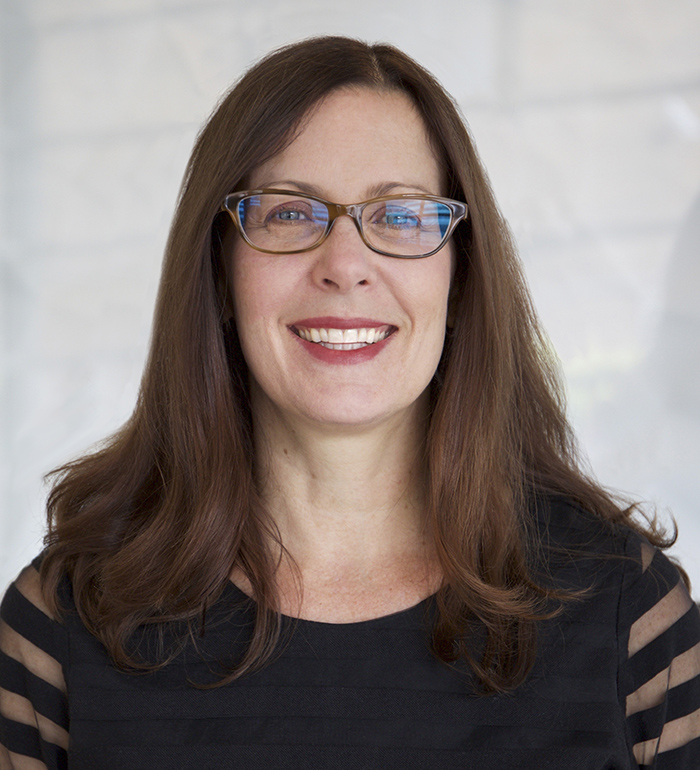 A: The pandemic will first change with whom they bank, and that choice will change the way they bank. For perspective, one hundred percent of Kabbage customers have a bank account, but very few of them can get a loan from their bank. We launched Kabbage Checking earlier this year to serve the smallest of businesses without sacrificing the features they expect and offering other products banks don’t. We’re focused on making cash flow tools accessible to the businesses traditionally underserved and overlooked, and the pandemic has been a catalyst for businesses to find new solutions.
Q: How might the dynamic of banking change after the crisis?
A: It was well-reported that businesses without an existing credit relationship with their bank were turned away from applying for PPP loans. We’ve heard directly from many of our PPP customers that this will compel them to change banks, and the demand for Kabbage Checking has reflected that sentiment since its launch. In the short term, businesses of all sizes and ages will seek out and sign up for new, tech-forward banking partners. In the long term, that shift will change customers’ expectations of what banks should offer. For example, prior to the PPP, Kabbage had issued well over a billion dollars to customers during non-banking hours. On-demand, 24/7 access to funding and cash flow insights, or faster settlements and money transfers will soon become commonplace, and large retail banks will need to adapt if they want to capture or reclaim these customers.
Q: How are these changes likely to impact alternative lenders and funders?
A: For starters, single-product lending companies will realize they must diversify their offerings in order to compete in the new financial-services marketplace. I would expect to see lenders launch new products to more resemble a bank. Conversely, traditional banks will need to begin adopting automated ways to serve customers with a tech-forward experience. Especially in the new normal where customers may be apprehensive about in-person banking meetings, they must adapt online to acquire and serve customers.
Q: What’s still needed to help Main Street recover?
A: The PPP was only the first phase; we’re not out of the woods yet. Businesses now need to restart and eventually grow. The crisis made business owners realize they need tighter controls over their cash flow, as many found themselves on the back foot and ill-equipped to withstand a long-term crisis such as the one through which we are all muddling.
They’ll need cash-flow tools to be more prudent and appropriately plan for similar events. Having said that, it’s not only on the shoulders of small businesses or tech solutions. They need customer demand, and local economies need to begin to reopen safely so consumers feel comfortable returning to normal commerce. That will take the support of cities and states encouraging consumers to shop local so small businesses have greater incentive to recall their employees and get back to work.
Q: How can alternative lenders and funders best play a role in this recovery?
A: Much of what we’re already doing is exactly what our economy needs. For the most part, fintech companies serve the customers banks won’t or can’t. That reality is unfortunately unchanged today. That’s why during the pandemic Kabbage made every effort possible to provide products that helped SMBs through this crisis. With respect to PPP, we helped nearly 300,000 small businesses access over $7 billion, helping preserve an estimated 945,000 jobs. Our payments product saw a near 4X spike in adoption as businesses sought contactless payment options. We built www.helpsmallbsuiness.com in three days to allow any small business to generate needed revenue by selling online gift certificates. We also launched Kabbage Checking, giving small businesses a new banking option, and Kabbage Insights remains available and free to access for any small business.
Q: What changes do you expect to see in the alternative lending and funding industry as a result of the pandemic?
A: Everyone will expand their services. Whether it’s larger companies expanding their solutions through acquisitions, or start-ups investing beyond their primary product, everyone will aim to enhance their offerings to give customers more data-driven products that help them rebuild.
Q: Kabbage just agreed to be purchased by American Express. Should we expect to see more consolidation in the alternative lending/funding space? If so, over what time frame and why do you expect this to happen?
A: I would not be surprised if we saw more deals announced before the end of the year.
Q: Tell us a little about why Kabbage decided to sell and why the timing was right?
A: For us, it has always been about finding the right company with the right mission and intentions. We just happened to be in the middle of a crisis when the conversations started, despite having the financial capacity to support operations for multiple years. American Express shares our vision to be an essential partner to small businesses, and we couldn’t be more excited at the opportunity to continue the important work of providing solutions and innovative capabilities that address a range of small business cash flow needs alongside AmEx.
The Roosevelt Hotel is Closing Permanently Due to Pandemic Losses
October 13, 2020 After nearly a century of quintessential Manhatten hospitality, the Roosevelt Hotel is closing by the end of the month, sources say. A relic of classic New York that survived the Great Depression, WWII, and Broker Fair 2019, the hotel is officially shutting down for good after suffering pandemic related losses, a spokesperson said.
“Due to the current, unprecedented environment and the continued uncertain impact from COVID-19, the owners of The Roosevelt Hotel have made the difficult decision to close the hotel, and the associates were notified this week,” the Spokesperson told CNN reporters Friday. “The iconic hotel, along with most of New York City, has experienced very low demand, and as a result, the hotel will cease operations before the end of the year. There are currently no plans for the building beyond the scheduled closing.”
The hotel will be added to the growing list of staple New York City businesses that have closed as a result of COVID. The Roosevelt was named and built to honor the United States’ 26th president and it opened its doors on September 22, 1924. Constructed during Prohibition, the building began the modern trend of featuring designer store windows on the street front.
 Appearing as a backdrop for dozens of Hollywood blockbusters like Boiler Room, Malcolm X, and The Irishman, the hotel was iconic. The New Year’s Eve tradition of singing “Auld Lang Syne” was born at the Roosevelt in 1929 when Guy Lombardo and his orchestra broadcast the song live over the radio.
The building was purchased by the limited investment branch of Pakistan International Airlines (PIA) in 1999.
In July, government officials and PIA executives debated the hotel’s future, some hoping rumors that President Trump would purchase the property were true. The initial plan was to sell or renovate the city block to create office space, thought to be far more lucrative than the hotel business in 2019. Work-from-home orders threw a wrench into the cogs, and the hotel kept losing money: no one wanted the traditional New York experience during a pandemic.
 Posting a loss during this year has become expected of the hospitality industry. According to the Bureau of Labor Statistics, hospitality lost 7.5 million jobs due to shutdowns and travel restrictions in April. CNN reported that only half as many jobs had been added back. In September, NYC hotels were below 40% occupancy.
The decision to ultimately close The Roosevelt might also come from trouble in PIA’s airline business. After the crash of PIA flight 8303 that killed 97 people in Havelian, Pakistan, European and US regulators banned flights from PIA for six months. After the crash, nearly one-third of airplane licenses in Pakistan were found to be fraudulent or forged, further straining the organization’s ability to recover.
Though this may have contributed to The Roosevelt’s closure, the pandemic sealed the deal. According to a study by the American Hotel & Lodging Association, New York has 2,336 hotels statewide that have lost 43,014 jobs this year.
 Without further congressional aid, 1,565 hotels might close: the AHLA found that 74% of overall US hotels say more layoffs are coming if the industry doesn’t get additional federal assistance. But successful talks for more aid in the House and Senate are increasingly unlikely due to this election year’s heightened partisanship.
NYC is losing yet another historical business, as the way of life and all things we have come to expect from the big apple struggle to survive. As a destination venue, The Roosevelt was also dear to AltFinanceDaily. It was the home of Broker Fair 2019, where Sean Murray spoke in the same ballroom that Michel Douglas (as Gorden Gekko) made the famous “Greed is Good” speech as part of the 1987 film Wall Street. Murray made a similar speech but rewrote it to fit the industry that had gathered. “Funding small business, for lack of a better phrase, is good,” he said on stage to an audience of 700 people.
Unfortunately, it was The Roosevelt that ultimately needed funding and didn’t get it.
Square, Stripe, Intuit, Shopify, Talked SMB Lending at LendIt Fintech 2020
October 8, 2020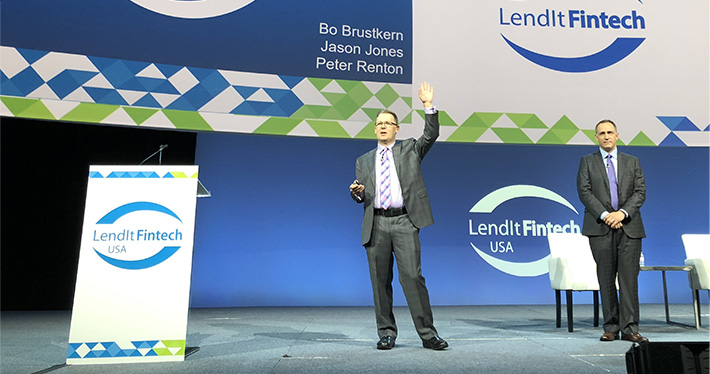 The LendIt Fintech digital conference last week was a sign of the times. This year, millions of average businesses and consumers have had to go virtual: they had no choice. 2020 has been a year of struggle and survival, and a time of great fintech adoption.
Some firms have been more successful than others. Going full digital, LendIt introduced virtual networking at the conference- the first day alone saw 2,171 meetings. Zoom meetings and virtual greetings took the place of handshakes and elevator pitches that would regularly accompany the convention.
On day three, LendIt hosted a panel of SMB lending leaders from Stripe, Shopify, Square, and Quickbooks Capital. Bryan Lee, Senior Director of Financial Services for Salesforce, served as moderator and he focused the discussion on “How the leading fintech brands are adapting.”
THE PIVOT
Lee began the talk by asking Eddie Serrill, Business Lead from Stripe Capital, about how the industry has pivoted.
Serrill talked about how Stripe was powering online interactions and saw an influx of traditionally offline businesses switching over to their platforms. Stripe also saw an increased demand for online purchases and payment.
“We’ve been trying to find that right balance between supporting users that have been doing incredibly well,” Serrill said. “While trying to support our users who are seeing a bit of a setback.”
Stripe introduced a lending product in September of last year and now SMBs can borrow from Stripe and pay back by diverting a percentage of their sales, much like the other panelists’ companies offer.
Jessica Jiang, Head of Capital Markets at Square Capital, talked about how her firm adjusted. Square reacted to fill the niche of their underserved customers by introducing a main street lending fund, serving industries hard hit by the pandemic, Jiang said. Small buinesess that relied on in-person action like coffee shops and retail community businesses were given preferential lending options.
Product Lead at Shopify, Richard Shaw, said that this year his firm learned to be prepared for anything. Everything that Shopify was potentially going to do or planning on implementing in the coming years suddenly became a here-and-now necessity.
“We tore up our existing plans,” Shaw said. “It was like the commerce world of 2030 turned up in 2020. You need to do ten years of work, but you need to do it today.”
Shopify, the Canadian e-commerce giant has doubled in value this year. The firm launched Shopify Capital in the US and Canada in 2016 and has originated $1.2 billion in funding to small businesses since that time.
Luke Voiles, the VP of Intuits QuickBooks Capital, talked about how his team handled pandemic conservatively.
“Five years of digital shift has happened instantaneously due to COVID,” Voiles said. “Intuit is pretty recession-resistant in the sense that you have to do taxes, you have to do your accounting, and the shift to digital helps a lot.”
Business lending was different, Voiles said, as soon as his team saw COVID coming, they battened down the hatches, slowed lending, and pivoted to facilitating PPP.
PPP
Voiles said the craziest thing he has seen in his career was what Quickbooks did to deploy PPP aid.
Within about two weeks, almost 500 people from across Intuit came together to shift all the data they carried on customers to aid applications.
“We were uniquely positioned to help solve and deploy that capital,” Voiles said. “We have a payroll business where 1.4 billion business use us, we have a tax business where we have Schedule C tax filings, and we have a lending business. We were able to pivot and put the pieces together quickly.”
QuickBooks Capital deployed $1.2 billion to 31,000 business in a process that Voiles said was 90% automated. Now customers are awaiting other rounds of government aid.
Square’s Jiang said the initial shutdown weeks in March and April saw hundreds of Square team members working on PPP facilitation through the night and weekends. As the funds dried up those first two weeks, it was clear to Jiang the program was favoring larger firms and higher loan amounts, leaving out small businesses.
“That’s typical of investment bankers, but not very typical of tech,” Jiang said. “PPP is a perfect example of how small businesses are continuing to be underserved by banks.”
THE SHAKEOUT AND THE FUTURE
2020 has been a major shock to the lending marketplace. Voiles from Quickbooks said the amount of work it took to make it through the first wave was a significant shakeout.
“You’ve seen what’s happening with Kabbage and OnDeck and other transactions with people getting sold; there is a shakeout happening in the space,” Voiles said. “The bigger players will make it through and will continue to help small businesses get access to capital that they need.”
When asked about the future roadmap of QuickBooks Capital, Voiles said it wasn’t just about automating banking. Using Intuit’s resources to build an automated system is only half of the picture- the firm believes in an expert-driven platform. After the automated process, customers will be able to talk to an expert to review the data, and “check their work.” Voiles said Quickbooks wants to offer a service that is equivalent to the replacement of a CFO.
“These small businesses that have less than ten employees, they can’t afford to hire a pro,” Voiles said. “They need automated support to show them the dashboard and picture of what their business is.”
Pointing to Stripe’s online infrastructure, Serrill exemplified what successful lenders will offer next year: a platform that combines many needs of SMBs in one place.
“I think it’s really about linking all of this data, making it super intuitive and anticipating the need for their users, so they don’t need a team of business school grads to manage their finances,” Serrill said. “So they can get back to building the core of their business, not figuring out whether they have enough cash flow tomorrow.”
Jiang said the future of small business would be written in data, contactless payments, and digital banking. She sees consolidation in the Fintech space and has a positive outlook on bank-fintech partnerships.
The FDIC granted Square a conditional approval for the issuance of an Industrial Loan Company ILC in March this year. Jiang outlined plans on launching an online SMB lending and banking service next year called Square Financial Services if the conditional charter remains in place.
For Shopify’s future, Shaw was excited to look forward to the launching of Shopify balance- a cash flow management system, and Shopify installment payments. He reiterated that the success of Shopify’s lending division was due in part because making loans was not the entire business.
“Shopify Capital is one piece of a wider ecosystem,” Shaw said. “All these things together are more powerful than individual parts.”
Capify Announces $10 Million Equity Round As Well As Continued Support From Goldman Sachs Merchant Banking Division
September 30, 2020
Access To Business Loans Especially During COVID-19 Pandemic
(Manchester, England and Sydney, Australia) – Capify (http://www.capify.co.uk, http://www.capify.com.au ), a leading fintech small business lending platform, today announced it has closed a $10 million equity round as well as continued support from Goldman Sachs Merchant Banking Division through its existing credit facilities.
“The fact that we were able to raise $10 million for an online small business lender in the midst of a global pandemic from sophisticated investors with industry experience speaks to Capify’s business model, the unprecedented opportunity ahead of us and its management team,” said David Goldin, Founder and CEO of Capify.
Continued, Mr. Goldin, “We believe demand by small businesses seeking access to unsecured capital will be at unprecedented levels because most businesses have already accessed the government backed business loan programs in the UK and Australia market but will still need additional capital – as do the many businesses that didn’t qualify for the Government guaranteed programs and are seeking much needed working capital to grow.”
In addition, Capify is actively seeking partnerships with companies with large small business customer bases to provide much needed financing to their small business customers, thus allowing them access to capital to purchase goods / services which have proven financially difficult during this challenging time. Furthermore, we are looking for opportunities where we can assist our industry peers who don’t have access to capital during this time by providing capital to their customer base.
Capify’s 12 year presence in the UK and Australia market is more relevant than ever as small businesses demand for access to capital to navigate through COVID-19 is at an all time high. According to John Rozenbroek, COO / CFO of Capify, “It is crucial at this time that small businesses are aware of alternative funding solutions to support cash flow or invest in their future. Capify is one of the few online small business lending platforms in the marketplace that can actively provide non-government backed business loans at scale to small businesses seeking working capital to grow their business. ”
About Capify
Capify is an online lender that provides flexible financing solutions to small businesses in the UK and Australia seeking working capital to sustain or grow their business. The fintech company has been operating in the UK and Australia market for over 12 years.
For more details about Capify, visit
Capify UK: http://www.capify.co.uk
Capify Australia: http://www.capify.com.au
Capify UK Media Contact:
Ian Wood, Marketing Director
iwood@capify.co.uk
+44 0161 393 9536
Capify Australia Media Contact:
Nandita Graham, Senior Marketing Manager
ngraham@capify.com.au
+61 433 511 653
Capify CEO David Goldin on New $10 Million Equity Round
September 30, 2020 Capify, a leading international small business lending platform, announced a $10 million equity round this week from a new investment group with vast experience in the alternative lending industry.
“[investors were] diligent seeing Capify, the management team, and the opportunity,” Goldin said. “They thought it was a very good investment, particularly how Capify’s portfolio performed during the pandemic.”
Goldin said the capital is a great “restart of the engine” after the cautious approach the company took to lending at the height of the pandemic. The money is not an equity round from current investors, but rather new capital joining the team.
The funding will be directed toward ramping lending back up and extending business partnerships with firms that serve small businesses, as well as direct and indirect lenders.
“So, hindsight is actually better than 2020 vision; no one in our lifetime has experienced the pandemic,” Goldin said. “No one knew what to expect from a risk profile, so we took the conservative approach.”
That approach was to shut down new loans and focus on servicing its current customers. It was a difficult time for the alternative lending industry veteran, but now Goldin said he sees a great demand for capital.
“This was one of the toughest challenges that I’ve experienced ever as an entrepreneur,” Goldin said. “The result really speaks to Capify as a company. People are willing to make that investment, believing in opportunity ahead and not the current times or the past during the pandemic.”
Goldin said that Capify has always been known for its well-performing portfolio, one of the reasons that in 2019 the firm received a $95 million credit facility from Goldman Sachs’ Merchant Banking Division.
Goldin began working in the fintech industry before the word fintech was even coined; in the early 2000s, he started one of the first MCA companies. Amerimerchant started selling loans and MCAs internationally in the UK and Australia in 2008, then rebranded to Capify in 2015. After leaving the US market in 2017 gained Goldman’s attention last year.
“So now that we have the firepower, we believe there’ll be opportunities in these markets as demand picks up for small business lending,” Goldin said.
Prashant Fuloria Explains Why Fundbox Has Been Successful in 2020
September 28, 2020 When Prashant Fuloria joined Fundbox as Chief Operations Officer in 2016, the San Franciscan firm was a three-year-old startup with less than eighty employees. By the time Fuloria moved into the office of CEO this July, the small business credit and invoice financing company had grown exponentially, with more than $430 million in raised capital to date and triple the number of employees.
At the height of the pandemic, many firms halted funding or shuttered their doors for good. Meanwhile Fundbox kept lending, and outperformed the market, Fuloria said.
“It’s become very clear to us that we have greatly outperformed the market,” Fuloria said. “In terms of delivering value to customers, and also in terms of our business performance.”
In the toughest weeks of the pandemic, he said that Fundbox’s loan delinquency rose to 8-9%, up from a “low single-digit number” pre-pandemic. In comparison, the industry standard according to Fuloria, was a delinquency rate of 30-40%, including from larger firms and more traditional lenders like big banks.
“I think we’ve performed extremely well during COVID; the numbers just validate the investment we’ve made, especially in data,” Fuloria said. “That puts us in a very good position because a number of folks have exited the market and the need, the demand has not gone away.”
The number one thing you can do to perform well in a recession is to have a strong business going into it, Fuloria explained. Fundbox attributes part of its strength to its data. Nearly a fourth of Fundbox’s capital goes toward data assets, Fuloria said.
“If you add it all up, we’ve invested a little over $100 million in our data asset,” Fuloria said. “It’s a big investment for anybody- particularly a big investment for a mid-sized company.”
Fuloria said this money goes toward collecting customer information, which is processed by in-house tech and a talented team of engineers who can turn data into valuable information for serving SMBs.
“Small businesses,” Fuloria said, “they have the complexity of enterprises but the scale of consumers.”
Coming from twenty years of tech and product managerial experience at firms like Google, Facebook, and Yahoo, Fuloria knows a thing or two about scale. He said he found his roots at Google, working when it was just a small team- by the time he left six and a half years later, Google had 35,000 employees.
When it came to joining Fundbox in 2016, Fuloria said he was attracted by the company’s mission, the talented team there, and how in just three years, the small firm had demonstrated how it could help SMBs.
“Fundbox as a company said ‘We are a financial services platform that is powering the small business economy with new credit and payment solutions,'” Fuloria said. “And that mission was very strong: it made sense to me, and it resonated with me.”
Amid Pandemic, Small Businesses Pivot to Sell Personal Protective Equipment
September 23, 2020 A number of small businesses—including those in the merchant cash advance industry—faced with little or no way to make money for months—have pivoted to selling personal protective equipment.
It’s no wonder businesses across the U.S. have shifted gears. With the pandemic raging, and consumers and businesses trying to return to some sort of normalcy, there’s high demand for these products, causing even businesses that previously had no connection to them to spring into action.
“It’s not my forte; I had to pivot just to make sure I could stay afloat before things turned around,” says John DiCanio, founding partner of Direct Merchant Funding in Bethpage, N.Y.
This past spring, at a time when everything in the MCA business stopped, he heard from a merchant in the medical supply field that masks were becoming very important. The merchant connected him to a contact in Hong Kong from whom he was able to buy hospital-grade and non-medical grade masks and sell them to local hospitals, local businesses and others.
DiCanio says he did it for a short time only—two months—which was enough to tide him over under his
regular business started coming back. Mask-making is still a big business and a lot of people are still doing it, but he prefers to stick to merchant cash advance, which he’s been doing for around 15 years. He says business has picked up enough that he no longer has the need to do anything on the side—and he hopes it stays that way.
Many funding industry participants are still selling these types of products, but it’s somewhat of a hush-hush business. Not everyone wants to talk about it for any number of reasons, including embarrassment and fear of looking weak to customers and business connections. Even so, small businesses that pivoted say they are doing the best they can to stay afloat—and there’s no shame in that.
Kat Rosati, founder of Apparel Booster in Riverside, Calif., a product development agency for luxury and socially conscious brands, began hand-sewing masks to help support her business that had been hit-hard by the pandemic.
She has manufacturing partners all over the world, and production was at a standstill for her various products. She couldn’t import fabric needed for the company’s various projects and a lot of production partners were forced to close. Luckily, she had a connection to a fabric mill in Pennsylvania that focuses on antimicrobial products that was willing to provide her with material.
She hired temporary workers to help her make masks, which she’s producing at a rate of about 150 a week. She sells them to consumers and small businesses. The revenue has helped defray overhead expenses, among other things. “It hasn’t been super profitable, but it’s definitely helped keep the business alive,” she says.
She had to furlough her four-person team because she can’t afford to pay them without regular client work coming in. Her husband, who works in the restaurant industry, was also furloughed. So whatever money she can bring in, helps. “I’m watching small business owners around me that haven’t made any kind of pivot close left and right,” she says. “The fact that I can keep mine alive makes it worth it for me.”
To be sure, small businesses pivot for all sorts of reasons, and it’s not always because they are struggling. Francis Perdue, a publicist and business consultant in Birmingham, Ala., began selling PPE products including gloves, kn95 masks, surgical masks, customizable cloth masks, child and adult-sized shields, suits, gowns and the Xenon Fever Defense machine which uses AI technology to measure skin temperature and detect potential fever. She says she saw a need for these types of products in local schools as well as in hospitals and clinics in predominantly black neighborhoods. She is still consulting, but doing this as a side gig while the need persists.
Another example is MORGAN Li, a retail and hospitality manufacturer in Chicago Heights, Ill. The company identified the need and opportunity to help businesses remain open or reopen to customers while abiding by new recommendations to support public health. Thus, the company began producing customized social distancing materials including sneeze guards, safety shields, signage and floor graphics for various businesses to remind employees and customers to comply with social distancing requirements, according to a spokeswoman.

More recently, Andy Rosenband, the company’s chief executive, saw another opportunity to help communities prepare for another critical stage—reopening schools. He created a line of personal protective equipment that specifically addresses the challenge of social distancing in schools to keep students, teachers and staff safe.
For some small businesses, the shift is likely to be a permanent one.
JB Herrera, founder of Perceptive Insights a San Diego-based small and medium business consulting and mentoring company, says his firm was growing, but PPE products offer the ability to create a broader impact and are likely to be more profitable than merely a consulting business.
He has clients in China and back in December when things were starting to get bad there, he realized that the problem could spread massively to the U.S., and if it did, 80 percent or more of businesses would be negatively impacted, in his estimation. Using his business expertise regarding supply chains and pre-existing and new contacts, his company shifted gears to introduce in March a line of FDA-registered products designed to create and maintain safe environments. The products include commercial and personal cleaning solutions, masks, light technology disinfectants, air filtration, and personal sanitizing kits.
Even before the pandemic, the PPE market was worth several billion, he says, and that’s likely to grow exponentially over the next five to 10 years. So much so, that he expects the new business line to represent 90 percent of his revenue for the next three years—at least.
“Even after the spike goes away, it’s still going to be a profitable business in its own right,” he says.