The Small Business Finance Industry is BACK
June 21, 2021 The industry is back. I say this while sitting in a Miami hotel, my third such trip to Florida since becoming fully vaccinated against Covid in May.
There’s a lot of action going on. I’ve sat down in multiple broker shops in both New York and Florida and the phones are ringing off the hook.
The demographic of the average customer in the post-covid recovery seems to vary. Some say the credit quality has gotten better, others have said it’s worse. Some merchants have become used to forgiveable loans and low APR financing while others appear willing to take capital at any price just to keep up with the pace of their growth. It’s one of those things where everyone is just trying to adjust to the new normal, even if there’s little consensus as to what that is.
In New York City, the return of packed bars and overflowing restaurants stands in stark contrast to the rows of abandoned stores and For Lease signs that dot the landscapes around them. And yet if one looks past all that, the only reminder that Covid was ever even there is the requirement that one still wear a mask on the subway even if they’re vaccinated.
In Florida, it’s the opposite. I recently got yelled at by a bus driver for wearing a mask in the first place.
The broker shops I’ve visited still had office space that were filled with teams that were more than happy to be occupying them in person. But at the same time, the industry has become extremely popular with the traditional work-from-home crowd.
Leo Kanell’s 7-day marathon challenge on facebook draws in more eager industry participants than I would’ve ever thought possible, an accomplishment I know to be true because I dropped in on him unannounced late one friday night while he was live.
Similarly, Oz Konar, who I did a livestream interview with in person, has trained more than 3,000 brokers in the industry, many who work for themselves from home.
We’ve also been very busy in the last couple months and have met a lot of brand new entrants on both the funding and broker side.
All this activity is setting the stage well for Broker Fair 2021 on December 6 in New York City. It is perfectly timed to discuss the new disclosure law that goes into effect in New York on Jan 1, 2022, one that is so consequential that at least one company has relocated to New Jersey.
What a time to be in the industry!
CC Splits Still Make Profits, Payments Knowledgeable Funders Benefit
June 15, 2021 Back in its heyday, the MCA industry began as credit card factoring. The original product was simple- purchase future credit card receivables, and collect a percentage of them every day: easy peasy. Then, the industry broadened into ACH, funding businesses that did not have credit card purchases and credit card receivables became less common.
But some funders still work with credit card payments through long-standing payment processor relationships. Cash Buoy is a Chicago-based MCA firm that uses a network of twelve major credit card processors and thousands of representatives from payments ISOs to fund old-fashioned MCAs. Co-Founder and president Sean Feighan would tell you that having connections in payments pays off for both merchants and ISOs.
“The whole point is to add value to their business. By doing split funding remittance,” Feighan said. “It’s a much more comfortable way for the merchant to pay back the advance, it gives them some breathing room on the ebbs and flows of their volume, as opposed to having that hard fixed daily ACH that doesn’t care if they were closed on Monday, are slow on Tuesday, or we’re in a global pandemic.”
Feighan attests that the CC model still works great. He said alongside co-founder Brian Batt, they started Cash Buoy to give ISOs a better option. He boasts a renewal rate of 90% on his CC products, and his default rates for standard MCAs are a “night and day difference” with CC splits.
But operating heavily within the payments realm requires some expertise, something that long-time veterans of the MCA space are fortunate to have accumulated from the era of the product’s origin.
 Steven Hunter, a multi-decade industry vet explained where the MCA concept came from. Hunter worked at CAN Capital back in 2000 when it was still was called AdvanceMe when he and the data team developed one of the first credit card factoring products.
“The idea came across to build a credit card-based product, because a lot of the original development team other than myself, were the First Data guys,” Hunter said. “And they said ‘okay well what if we could factor future sales, instead of three invoices or accounts receivable or inventory’, which we all know how to factor those things, that’s been in place since biblical times.”
So they built a model, aiming to fund merchants and take out a small amount of money from their credit card splits. Merchants would never see the money hit their bank, and the product just felt like free investing money paid for off of the increase in future sales.
When restaurants and other merchants shut down during the pandemic or rolled back to 25% capacity, many ACH funders found out their customers could not keep up with the pre-set debits. While defaults were on the rise, Cash Buoy was getting paid back, Feighan said, at an admittedly slower rate but still seeing returns.
Feighan has intentionally shied away from ACH. Cash Buoy is modeled on his and Batts’ connections in the payments space. They founded Cash Buoy after five or six years of experience in on-boarding merchant accounts. Feighan said he tried brokering but became disappointed with the process of working with an outside funder.
“[Other firms] may not have the relationships to get split funding at national processors,” Feighan said. “Maybe they didn’t have enough business or money in the bank when they went through the application process with different processors to get true split funding accommodations.”
Hunter agreed that without payment connections it is hard to factor CCs these days. Shortly after AdvanceMe began CC splits, other firms caught up and began developing similar products, with slightly changed terms like automatic set ACH draws. Eventually, he said this made MCAs more loan-like as opposed to a real variable product.
In 2021, there are many reasons that firms adopt ACH right off the bat, he said.
“Well, several reasons one, not every company takes credit cards,” Hunter said. “The thing is that some credit card processors, I’m not going to name any names, are very hostile to the product and they will not actually help people. They won’t help you manage the remittance, they won’t split for you, because they consider you to be a competitor, afraid you will take a portion away.”
 The final reason Hunter said is a lot less elegant. He said in order to make this work, as a direct funder, you have to exchange files with every credit card processor you work with every night on every deal you have.
“So you got to send them something out and say, populate this for us. ‘Joe’s Bait Shop, What did they do today? Today they did this much money, your split is 11%, here’s what’s coming to you,'” Hunter said. “Then you import that back into your system and Joe’s Bait Shop’s balance drops by this amount. Right, that’s hard. I mean it’s a pain in the ass to manage, and I have people who do nothing but exchange, you’ve got to have processors who work with you and you’ve got to have the expertise.”
Hunter now works as a consultant, known in the industry as a go-to for MCA funding help. As for Cash Buoy, after the pandemic year, things are only on the up and up. Covid could not have happened at a worse time right after a three-year bull run, Feighan said, but now that things are back, there are “high water funding amounts each month.”
“The biggest thing here in Cash Buoy are our partners, our ISO partners, and processors,” Feighan said. “And if anybody were to say, ‘tell me, what’s the most important thing to you, Cash Buoy,’ it is 100% Our agent partner program. That is number one. The whole point of the company was to be able to provide a ton of value to national processors and ISOs.”
SEAA: 1,000+ Attendees In Atlanta Next year, Thanks AltFinanceDaily
June 8, 2021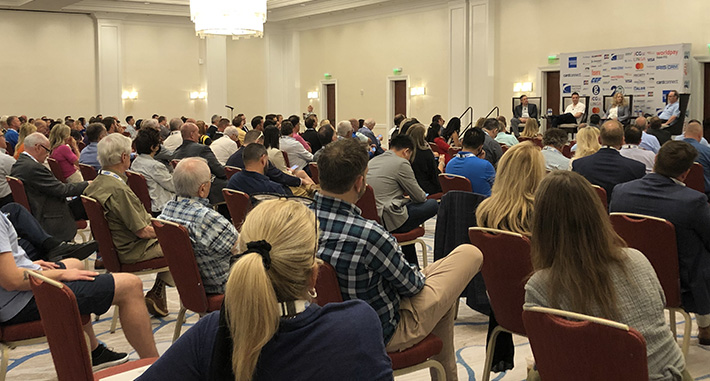 1,000 people registered at the Southeast Acquirers Association 20th-anniversary conference Bonita Springs Florida: a smash hit in part due to the hybrid presentation model and AltFinanceDaily’s video coverage, the executive board members of SEAA said. Treasurer John McCormick said next year in Atlanta would be even bigger, following a hybrid in-person venue with recordings and live streams that would pack over 1,000 participants in the show.
“To have our biggest show on the West Coast of Florida was really gratifying,” he said. “We registered over 1,000 and were just shy of that number with check-ins. I think we’ll [surpass that] next year in Atlanta, which will be a great celebration for our board and advisory committee.”
McCormick helped co-found the organization along with Audrey Blackmon and Judy Foster in 2001. In March, he talked with AltFinanceDaily, describing the difficult choice to go back in person full capacity, a decision that turned into a major win. Derek Vowels, director of partner solutions at Aliaswire and SEAA board member, thanked Cypress Planning Group for the venue support and AltFinanceDaily for helping produce the in-person and online hybrid model.
Everyone rose to the occasion, Vowels told Green Sheet, thanking Sean Murray, AltFinanceDaily chief editor, publisher, and AltFinanceDaily reporter Johny Fernandez, who conducted live interviews at the conference. “Attendees can view every breakout session, presentation, and popular CBD panel on the app and web portal for the rest of the calendar year,” he said. “Going forward, hybrid events that combine face-to-face meetings with recordings will be the norm.”
Alongside live streaming from the show floor on May 25th from 9 am to after 6 pm, Sean and Johny pored through interviews with industry experts.
Sam Schapiro, leader of funding application platform Fundomate, talked with Johny about the resilience of the human species, American small businesses, and funding slowdown.
Shawn Smith, the CEO of Dedicated Commercial Recovery, met with Sean to talk about the new post-covid environment in the B2B space and Florida golf.
Aviv Baron, the founder of Direct Payment Group, talked with Sean about changes in merchant spending, payment processing, cannabis, and drop shipping trends in the past year.
And automated accounts receivable fintech CEO Garima Shah talked with Johny about her firm Biller Genie, and the world opening for business after a year of covid.
AltFinanceDaily is looking forward to the new year as covid restrictions lift and events come back in person.
Irish E-commerce Revenue-Based Funder Raises $76 Million Series A After First Year
May 27, 2021 An Irish revenue-based e-commerce financing platform called Wayflyer raised $76 million in a funding Series A round this past week. It has been a roaring first year for the small fintech, so far funding $150 million to online merchants. The firm just launched its cash advance product 14 months ago and raised $10.2M in a seed round only six months ago.
Wayflyer offers e-commerce sales-based funding, without the need for collateral, from $10k up to $20M. They partner with firms across the UK, including a recent deal with the international athleisure brand Gym+Coffee.
Left Lane Capital led the round with investments from DST Global, QED Investors, Speedinvest, and Zinal Growth. The successful funding comes after the firm widened its credit facility by $100M to keep up with the demand for capital and a partnership announcement with Adobe Commerce.
The cofounders, Aidan Corbett and Jack Pierse came together in 2019. Back then, Corbett led an online marketing analytics firm called Conjura when Pierse, a former venture capitalist, proposed using analytic tech to underwrite what amounts to digital MCAs.
“Jack came to me and said, ‘You should stop using our marketing analytics engine to do these big enterprise SaaS solutions, and instead use them to underwrite e-commerce businesses for short-term finance,'” Corbett told Tech Crunch. “We just had our heads down and started repurposing the platform for it to be an underwriting platform.”
Launching in April 2020, Wayflyer funded $600,000 in the first month. In March of 2021 alone, the firm did about $36 million in advances.
“So, it’s been a pretty aggressive kind of growth,” Corbett said.
Ebay to Launch Sales-Based SMB Loans in UK
May 13, 2021 Ebay is launching a small business working capital product in the UK, offering sales-based loans to 300k SMBS through YouLend.
The product, called “Capital for eBay Business Sellers,” offers loans repaid through a percentage of daily sales and a lump sum. A year after eBay first ventured into offering merchant payments services, the firm is joining the likes of PayPal, Shopify, and Amazon by offering a business loan product. Loans will vary in size based on sales volumes, from £500 to £1 million, or about $640- $1.3M.
“Capital for eBay Business Sellers is intended to help plug this gap, giving small businesses quick access to a range of financing options,” Murray Lambell, GM of eBay UK, said. “With 300,000 UK small businesses trading on eBay, this proposition will help them reinvest, protect jobs, and succeed, even as the government’s support schemes dry up.”
The application process will take five to ten minutes, the firm attests, landing funds that same day.
“Our focus is on giving leading e-commerce platforms, tech companies, and payment service providers the ability to offer their customers rapid funding through our technology platform,” CCO of YouLend Jakob Pethick said. “We’re delighted to partner with eBay UK to support their business sellers thrive and grow.”
Forward Financing Wins Customer Service Award, Originates $165M in 2020
May 10, 2021 Forward Financing won a Silver Stevie Award for the Best Customer Service Department of the Annual American Business Awards, for their work helping clients during the pandemic year. The firm originated a total of $165,826,203 across 6,142 advances in 2020, a representative said.
“We are truly honored to receive recognition for the fantastic job our Account Servicing team does every day to help our small business customers,” Justin Bakes, co-founder and CEO, said. “Particularly in 2020, that help was needed more than ever before to help small business owners get through the most difficult months of the pandemic.”
The firm said that in 2020, thousands of customers reached out to the Account Servicing Department (ASD) to request payment relief from the pandemic shutdown. The company trained 18 team members from different departments to join ASD, nearly tripling the size of the team, the firm said.
Forward competed with more than 3,800 nominations submitted this year for organizations across the US. Since 2012, Forward Financing has provided more than $1 billion in funding to more than 26,000 small businesses.
How Funders Survived PPP and a Year of Covid
May 4, 2021 A year into the pandemic and from the AltFinanceDaily office in Brooklyn, it looks like the world is opening up again.
After a year of Zoom and LinkedIn networking, those in the industry lucky or talented enough to have survived can still complain without restraint about big government lockdowns and misguided legislation. Competing with Uncle Sam’s deep PPP pockets have slowed deals down, and with a new fund opening this week for restaurants, it might be more of the same.
But two funders said that though there is an initial slowdown when a new stimulus is rolled out, the programs have still been vital for business– and if firms kept up with contacts, the business could be booming even after the pandemic.
CEO David Leibowitz of San Diego-based Mulligan Funding said that his firm survived the worst of the shutdown. That was due in no small part to government programs that kept merchants in business.
“People forget where we were sitting in April, May last year, 20 million people filed for unemployment. The segments of the market that we serve in general don’t have more than 30 days of cash on hand at any time,” Leibowitz said. “There’s no chance that our market survives that without the level of government support that they’ve been given.”
Sure, there’s a dampening effect at first, but there wouldn’t be B2B without businesses to fund. Leibowitz said he thinks the macroeconomic effects of printing money will have consequences in the long term, but it’s the lesser of two evils.
Matthew Washington, the well-known CRO of PIRS Capital, has also been vocal about PPP. Like Liebowitz, he said it has its pros and cons, creating a slowdown and demand for capital in one stroke. In his experience, because the stimulus was limited to payroll and rent, merchants were hungry for other products.
“They’re only able to allocate it for certain things, payroll, and hiring people, right,” Washington said. “Our funding allows them to be able to use capital for other opportunities, like buying supplies, buying inventory. Although it’s kind of been somewhat slow, they need to have other working capital needs to be provided for.”
Washington also said some merchants used their PPP funds as low-interest loans, paying off and refinancing advances. PIRS has succeeded through the pandemic due to its relationship-based model.
“It’s all about keeping in touch with your merchants during this time, having a big pulse with the people you do business with,” Washington said. “We’re really a lean and mean company, we kind of have the community bank approach to this space; we’re more relationship-based.”
PIRS had only paused for 60 days and was lucky enough to be set up with recurring merchant partners that turned out to be essential businesses.
“We were very blessed; a lot of our portfolio was operating during the shutdown,” Washington said. “Our portfolio did very well for the circumstance.”
That was how they survived, a lot of good faith and hard work, but pinches of luck as well. Leibowitz said that contrary to popular belief, many good people lost their business during the pandemic. It wasn’t just bad actors and funders with terrible underwriting.
“In March, we had customers who, for reasons totally beyond their control, couldn’t pay. And we weren’t sure in March, how long that would go on for, we weren’t sure how bad it would get,” Leibowitz said. “If you’d asked me in March, April, were we going to survive this thing. There’s no way I would have been able to give you a confident answer.”
Some with public securitizations, well-run businesses, dropped out and disappeared. Leibowitz said Mulligan was able to keep every employee on staff and got through the “sh*t show.” In part, it was with help from competitors who specialized in PPP funding that Leibowitz said his firm was still going strong.
“So I think for all of its shortcomings, I have a world of respect for the SBA and the program. I think of Brock and guys at Lendio, I think of the guys at BlueVine and Kabbage, who really have done a truly extraordinary job of distributing that product to our target market,” Leibowitz said. “And I’m sitting here today, unquestionably, enjoying the benefit.”
So PPP helped, despite the slowdowns, in the short term, and Liebowitz said in the long term, the government overspending might get hairy. But with talk about the world opening back up, with bars open down the block for the first time in a year, what does Washington think about the near future?
The world just isn’t going to stop; it’s just evolving with the new temp of what’s going on; I think there’s a lot of positive things on the horizon for our business,” Washington said. “Once the vaccine rates, and everyone’s ‘cured’ how are they not going to open up.”
At Least One Firm is Leaving New York before Disclosure Law Lands
April 29, 2021 New York MCA firms are in the dark. In January, the governor delayed implementation of the APR disclosure bill until 2022. But the bill leaves it to the Department of Financial Services (DFS) to finalize how it will all work and not everyone is confident the outcome will be positive for business in New York State.
For example, Greenwich Capital, a small business funding company, has decided to move from Manhattan to Hoboken, NJ in preparation for the law. They anticipate that the cost of compliance will be high enough to warrant a trip on the PATH starting now rather than when it may be too late to contemplate later.
“There’s a lot of ambiguity, and our five-year lease was up,” Rich Gipstein, General Counsel at Greenwich Capital, said. “We’ll be moving to Hoboken for the time being and see what’s going on with this law. But in the meantime, it’s a lot cheaper for us.”
Based on vague wording language like double-dipping, Gipstein said there is no clear way to tell who or what the law aims to regulate. At least for his firm, it’s better to sit this one out.
“I think there’s quite a lot left open, and it’s intended to be broad,” Gipstein said. “There won’t necessarily be much time to know what the law means until it’s effective. I think there will probably be some lead time, but likely not quite enough for most businesses in the industry to adapt.”
 For example: when does a deal become a “specific offer” and come under the purview of the law? In an industry where deals are won through cold calling, social media blitzes, and emails, when would it become necessary to disclose an APR? In a DM on LinkedIn? Rich said it is unclear what a “provider” is, whether it be funders, brokers, or ISOs. In the bill, a provider is required to make commercial financing disclosure clear and let a recipient know at the time of the “specific offer” the all-inclusive rates of a product. Without clarity, it’s hard to predict what the cost of compliance will be.
“I think, from my reading of it and from my understanding of New York’s position, it would seem that they are trying to regulate both funders and brokers under the same regulation,” Gipstein said. “I think it’s possible that the legislature intentionally left some things vague for DFS to fill in. The law basically says, ‘there’ll be regulations that will make this make sense.'”
Gipstein said it’s common for politicians to leave it to the regulators to finish the job, after all, the DFS has its nose to the grindstone in the day-to-day. But when a law affects an entire industry like this, Gipstein said it is uncommon for changes to be left until the last moment.
“It’s more than just disclosure requirements; this is not similar to what California did,” Gipstein said. “The law also dictates how to calculate the projected sales volume. You’re required to either use the historical method, in which you must always use the same number of months leading up to the deal, or you can opt-out and use your own projection. But if you use your own projection, that opens you up to disclose the results of all your deals to the government… It’s almost like an annual audit.”
The historic method doesn’t really work, Rich said when the industry comprises atypical merchants who wouldn’t be looking for funding if traditional methods could predict their sales volume. When it comes to self-declaring and letting the government poke around: Gipstein said the way a funder evaluates deals is proprietary. It’s what sets them apart; it’s the value proposition.
 Greenwich Capital isn’t alone in their assessment. The Small Business Finance Association (SBFA), a trade group comprised of similar financial companies, has also been vocal about the law’s perceived shortcomings.
“You have a group of companies that are pushing these types of disclosures, for no reason other than their own self-interest,” said Steve Denis, executive director of the SBFA, back in October. “We’re fine with disclosure, we are all for transparency, but it needs to be done in a way that we believe is meaningful to small business owners.”
Denis had further said that those firms taking credit for writing the laws are the same companies that will end up suffering under the strict tolerance of an APR rule.
“The companies pushing this, the trade associations pushing it, they like to take credit for writing the bill in California and writing the bill in New York: I don’t even think they’ve read it,” Denis said at the time. “It’s going to subject their own members to potentially millions if not hundreds of millions of dollars in potential liability [fines.]”
When the DFS finalizes the terms, it will likely make dealing with disclosure too costly to remain in New York State, Gipstein said.
Gipstein said we’ll have to wait and see if NY-based brokers will have to go through extra compliance even if their funders or merchants are out of state. The worst-fear scenario is a possibility that after New Years’ 2022, out-of-state funders will stop working with NY brokers entirely, just because they live in NY. Merchants in the state, subject to the law, may find commercial finance a barren marketplace.
“We’ve got a lot of different things to manage as we grow, and one of the things we don’t want to do is create is a large compliance department,” Gipstein said. “It’s just cheaper for us, after doing a cost-benefit analysis, to move to a different state. We’re probably not going to be a New York funder by 2022.”