
The Industry is Back; Broker Fair Takes NYC
December 7, 2021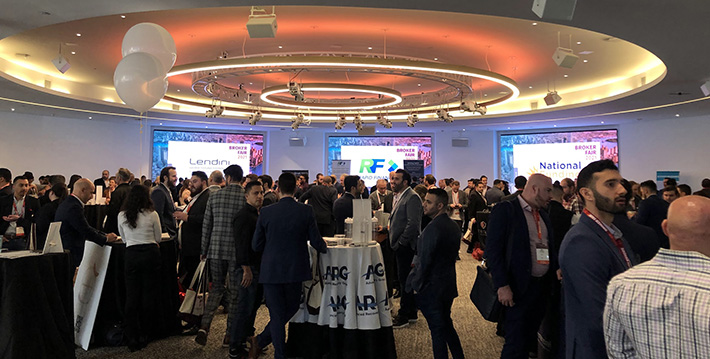 Broker Fair 2021’s showcasing in lower Manhattan on Monday brought together an unprecedented amount of attendees, that not too long ago saw their entire livelihoods and industry threatened by a pandemic-hampered economy.
“We are so happy to be here,” said Sonia Alvelo, CEO of Latin Financial and speaker on the ‘Great Debate’ panel. “With everything that has happened in the past two years, we are just super excited to be a part of this.”
Speakers at the event included keynote Slava Rubin, founder of Indiegogo, Oz Konar of Business Lending Blueprint, and Leo Kanell of 7 Figures Funding.
“We’re here to rekindle,” said Adam Abraham, Partner at Blueline Capital Group. “It’s always good to meet face to face. We’ve all been speaking on the phone for years at this point, so if you put a face to the name, it changes everything.”
That alone, is the best part about this event,” said Abraham. “Here, it’s about who you’re networking with.”
Other attendees felt that alongside the networking opportunities, events like Broker Fair allow the industry to truly leverage its core strength — its relatively small size compared to other areas of the financial world.
“Despite what many people think, this industry isn’t really as big as other finance industries,” said Josh Feinberg, CEO of Everlasting Capital. “When we come together like this, it really drives inspiration, thoughts, and dreams to be able to make this industry what it is today. I think these events really bring everyone together to drive the industry to the next level.”
A total of five panels took the stage throughout the day, and included individuals from across the business financing landscape. Other highlights of the event included a Small Business Finance Professional certification course, an expo room with over fifty companies and tables, and a hip-hop performance with viral artist Kosha Dillz.
At the event, AltFinanceDaily Connect Miami was announced, which will take place on March 24. For the first time, AltFinanceDaily will shift away from Miami Beach and into Downtown Miami, an area in which many members of the finance, crypto, lending, and banking industries have resettled and developed new flagship offices.
“I’m super pumped about the announcement of the show,” said Feinberg. “We’ll see everyone in Miami.”
Q&A with Rachel Sanders on how Small Businesses Can Utilize Blockchain Tech
December 3, 2021 At the NFT BZL conference in Miami on Tuesday, AltFinanceDaily bumped into Rootine, a vitamin company that is looking to expand into the crypto space. Rootine is a small business that exists fully in the tangible world and sells a tangible product. They offer a completely customized vitamin concoction to their customers via questionnaires that identify biomarkers on their online platform.
This all begs the question, how do small businesses like Rootine leverage crypto? Rachel Sanders, CEO and co-founder of Rootine, shared her thoughts.
Q (Adam Zaki)- Your product is obviously inspired by tech and customer experience. Why are these fundamentals of Rootine?
A (Rachel Sanders)- We are in the middle of a health data revolution. More consumers than ever before have access to critical data about their health and this access will only grow. People should be able to leverage their data to optimize their health with precision health products and actionable insights tailored to their unique data and goals. Technology is the key to make this possible.
At Rootine, our mission is to empower members to leverage their data to achieve optimal health and fuel their potential. Rootine analyzes your body to deliver a precision daily multivitamin engineered to optimize your health, and then fine-tunes your formula over time to continuously provide optimal support for your body. Our team has worked hard to build with a human-first mentality, creating a brand that both delights our members and makes a real, and positive impact on their health. We are proud to empower thousands of members to improve their health and are excited to make an even bigger impact in 2022!”
Q-What was Rootine doing at an NFT conference?
A- As the world of web3 and NFTs ballooned in the second half of 2021, we saw a community emerging celebrating vices and fueled by alcohol. There was also this odd dichotomy occurring where health influencers were changing their profile pictures to NFTs depicting un-healthy vices. We believed that heath should be a central part of the conversation in web3, so we dove in.
Rather than build a branded NFT project, we spearheaded a collaborative effort to launch Apex Optimizers, the first NFT project exclusively focused on health and human performance optimization. Community members represent brands like Eight Sleep, Rootine, Hydrant, Span Health, Bioloop, Aloha, Gwella, OneSkin, and Bristle. Early team members from Levels and founders at Bristle, health experts like Louisa Nicole and Dr. Sohaib Imitaz, professional athletes like Justin Gatlin, as well as a number of high performers and crypto and NFT heavy hitters like Steve Aoki.
It has been difficult working in unchartered territory (as a project like this has never been done before), but we were driven by a mission to build an inclusive community highlighting the importance of data-driven health and to deliver tangible real life utility to holders. We have been fortunate to collaborate with some of the top health experts, brands, athletes, and founders in human performance while building a community that is already inspiring its members to improve in areas like sleep, stress, nutrition, fitness, mental health and more.
Q-How will NFTs enhance your product? Why do you think your customers would be more willing to buy products that have some type of blockchain component?
A– As we think about the future of the metaverse, consumer products and brands will play a large role. Exactly what that role looks like is yet to be determined. What we do know is that health will continue to matter and that consumer health brands will need to have a strategy around how they will tie their physical products and experiences into the digital world. As for Rootine, creating a trusted brand and impactful community is always top of mind. To do that, we want to be where our members are and offer unique opportunities that members will not find elsewhere.
One example of that is helping to launch Apex Optimizers. Apex Optimizers is just one of the offerings of the Precision Health Club and it is first and foremost an awesome community of like-minded data-driven health enthusiasts looking to improve how they look, feel, and perform everyday. Gaining access to that community is something Rootine can offer that others cannot, and that is valuable. Through Apex Optimizers we are also able to offer loyal Rootine members access to exclusive perks like 1:1 lessons with pro-athletes, multi-brand discounts and product drops, and real-life wellness experiences.
Q-What are you thoughts on access to capital for small businesses? Has Rootine ever found it difficult to get a loan? Do you think crypto could help the imbalance of access to funds for small businesses?
A- Access to VC capital is a challenge for many. In the VC world, only 2.2% of funding goes to female founded companies, and other minorities and underrepresented founders have similar difficulty. For others, the capital markets have been very founder-friendly recently, with companies raising VC funding at unprecedented valuations.
In the non-VC world, there are a number of new options coming to market that make it easier to get non-dilutive funding. Pipe and Clearco are two great examples. However, to get access to that funding, you have to meet specific size and business model criteria.
Crypto certainly has the ability to put more fundraising power into the hands of creators and builders. There will be more companies using crypto as a way to raise seed capital, and we are already seeing this trend. One thing to note here, is that as the barrier to enter web3 drops, there is going to be more competition for dollars, which will raise the bar on the projects and teams that will succeed in getting funding this way.
Q-Is crypto a topic of conversation in the office? I’m trying to gauge whether your staff has an interest in crypto or if this is just a pure marketing strategy.
A- We have a combination of people very into crypto (e.g. our lead product designer who was an early advocate and continues to be a key thought leader on the team) as well as crypto novices.
It has been exciting to see how the conversations on slack have created an environment of learning and support, helping more people get into the space in a way they are comfortable with. Apex Optimizers’ mission is to make an impact at scale through community, democratizing access to innovation, and by elevating the message around the importance of data-driven health.
For the brands involved, there is of course a marketing component, but at the core, we all came together to help more people live healthier lives because all brands involved support better health.
Q- The crypto space wants to move into the Metaverse. How will Rootine, a company that sells a physical product- vitamins nonetheless- pivot if the crypto community lives in a world where a desire to be healthy may decrease? (If I live in the digital world, with digital art, digital money, digital games, a remote job, and digital friends, why would I want to buy vitamins?)
A- Even if the majority of your life is spent in the digital world, you will still want to feel and perform your best on a daily basis. If people start to neglect health, their productivity decreases, their ability to be their best self at-home with their families and partners decreases, and their stress levels, fatigue and risk for chronic conditions increases. Rootine offers a convenient, at-home way to test your body and get precision multivitamins that can support better overall health, stress levels, energy, focus and more, fueling your potential.
Another interesting thing to note, is if you look at the people building the meta world, a vast majority are the same people who love to compete in athletic feats, biohack their bodies to optimize their productivity, or focus on specific diets. Because of this, health will always be a part of digital communities.
Q- What is the strategy here? Why mint an NFT? Is it to expose the brand? Attract investors? Corner a niche market? Who thought of this, and what’s the end goal?
A-Apex Optimizers’ mission is to make an impact at scale through community, democratizing access to innovation, and by elevating the message around the importance of data-driven health. IJ on the Rootine team originally came up with an idea to explore NFTs and the project has been a collaboration ever since. All people involved have helped shape the design, launch, community and the 30+ perks (and growing) that holders will gain access too.
Q- What is the best way for a small business, regardless of industry, to educate themselves and leverage the crypto market?
A- Get started. If you don’t own an NFT, buy one. Follow web3 twitter and join some discord servers. Research what other brands in your space or adjacent spaces are doing. If specifically looking at NFTs, find whitespace where you can build a unique project that is both collaborative and on-brand
Wall Street Banker Turned Fintech CEO Builds Two-in-One App For Underserved Communities
November 10, 2021 Andrew Glaze, CEO of Wealthstack, shared his thoughts with AltFinanceDaily on the role fintech is playing in bringing innovation to minority communities. While actively working in the financial world and spreading awareness about the diversity issues in the field, Glaze hopes to share his story so that those in similar situations as he was know that there is a chance to achieve profound financial literacy.
According to Glaze, Wealthstack is mainly a digital investment platform designed to teach diverse and underserved communities how to invest. These communities include African American, Hispanic, Asian, and veterans.
As a Jamaican immigrant, Glaze went from sleeping in a two bedroom apartment with twelve people as a child, to climbing through the financial world. According to him, he now manages over a billion dollars of capital between all of his financial endeavors.
“In Bed Stuy, I saw a lot of impoverished, poor, good and noble people who would never have the opportunity to create wealth for themselves,” said Glaze, when asked about what Wealthstack was all about. “So I created a platform that allows me to leverage my expertise and experience, and recognize the training tools within it. There’s a number of training platforms out there and there’s a few educational platforms out there, this is both.”
As a West Point and Columbia Business School graduate, he made his way through Wall Street as a banker and then a hedge fund manager. He now wants to use his adversity ridden story to provide an opportunity for those that grew up in the similar conditions he did, putting together an effort to provide a fair chance for the underserved at being financially successful.
Wealthstack users will get the education and real world practicality out of the mobile app, and they will soon be able to invest directly on the platform after they learn about what each type of investment is.
“We do a series of two to four minute videos that cover everything from the very basics of what is a credit score is, all the way up to how to value businesses based on cash flow. There’s over one hundred videos on the platform today, each video features diverse actors, so you’re able to see people that look like you.”
When asked about the biggest issue facing underserved communities, Glaze discussed access to capital as one of the things that over time, has not caught up with other bias practices being weeded out.
“I’m in a unique position as an African American veteran immigrant, and also senior financial professional, who serves on boards. I’m evaluating $500 million loans for $2 billion businesses that I’m on the board of, but then also going out and personally applying for credit at different points of time. I am very familiar with the challenges that are faced due to inherent bias.”
Although Glaze said that things changed a lot over the past hundred years when it comes to underserved communities having wealth, he thinks lending is lagging behind. “I will tell you that that same spirit of resentment against offering capital to people that don’t look like you certainly is alive and well today. And it manifests in a number of different ways.”
It’s Time to Check That ISO Agreement and Balance the Broker/Funder Relationship
November 8, 2021 The fine print of ISO Agreements, long a thorn in the side of brokers when it’s worked against them, is an area that is ripe for change. All too often the price of a referral relationship is a take-it-or-leave-it contract that is not up for negotiation. So says Jared Weitz, CEO of United Capital Source and Co-Chairman of the Broker Division at the SBFA. He told AltFinanceDaily that he’s gotten major pushback from some funders for redlining deals prior to inking them.
Aware that he is not alone in dealing with this, Weitz is looking to push out uniform agreements to the industry that would align both sides, creating a fair arrangement and providing for mutual indemnifications.
“I want to explain the importance of it on a broker’s side because I think that what is happening is that there are funders who solicit business [by saying] that they are broker and customer-centric, us being the customer, and [then] we get handed an agreement that literally signs [our] business away,” said Weitz.
“If you don’t know any better, you’re totally screwed.”
Weitz spoke in detail about how the concept of redlining an agreement is a part of doing business with large financial institutions, but when it comes to funders, it’s an entirely different situation.
“In most industries, it’s such a normal thing to redline an agreement. We were [working] with AMEX, a huge company, and it was understood like ‘hey, shoot this over to your lawyer, let us know,’ it was already understood that we were going to redline it. In [small business lending] if you want to redline something, it’s almost like the funder gets offended.”
When it comes to mutual indemnification, Weitz talked about how this is the biggest issue in these types of deals, especially as new laws are creeping into certain states that are going to change the way many funders do business. In response to some of these new laws, funders are not only trying to put all of the legal responsibility on the brokers, but forcing them to give up their book of business in order to get deals done.
“Now that there are new laws popping up in different states and being enforced differently, funders have come out with new agreements, and look, that’s okay to do right, any broker worth their salt is going to say ‘hey, we agree to not lie and mislead, we agree to follow the TCPA laws, to follow the CAN-SPAM email laws,’ that stuff is easy. What is with these agreements is that you have funders that say to a broker in the [contract], we want the right to come and fully audit your books.”
After the implementation of his own mutual agreement, Weitz claims that a quarter of the funders he worked with prior to his agreement no longer want to do business with him.
 “There is a large 25 percent, and were talking about big name funders that I have stopped working with over the last twelve to eighteen months because they have literally tried to hit me with the most onerous agreement you could ever see, and when I spoke to them about it, they said ‘you know what Jared, most people just sign this and send it back.’ And that made me afraid for the broker industry.”
Although a positive relationship with a funder is imperative to being a successful broker, Weitz believes that some type of mutual agreement will protect people like him from being taken advantage of when things don’t go as planned for the funder.
“The guy that doesn’t let you redline his agreement, you should run away from that guy, because I have been in that scenario, where I’ve hugged, I’ve eaten at a man’s house with his family, and I’ve had that same man when things are down do what he has to do.”
Weitz talked about how the relationship with a funder can start a business relationship, but stressed that a fair agreement keeps it going. “Everyone’s friends when they’re making an agreement. Everyone’s [all] smiles, everyone is handshakes and hugs, but when things are bad in the world, and those smiles turn into straight faces, people look to that agreement, and say ‘okay what can I do?’”
When asked about losing deals to brokers who are willing to sign their lives away to get a deal done, Weitz said that those types of brokers are the ones that even if they do make a quick deal, they will never survive long enough to make a legitimate impact on the industry.
“I think funders will say ‘listen, you sign this agreement we will give you XYZ,’ and let me tell you, that’s the funder that is going to take your lunch from you, and that’s real,” said Weitz.
“The guy that offers you everything to just sign without a redline, is the guy that will crush your business, mark my words.”
Appalachian Crowdfunder Gives Take on Business Lending
November 2, 2021 View from outside of Pittsburgh, PA
George Cook, whose family has been running a small community bank in rural Appalachia for over 130 years, has grown up in a world surrounded by banking in some of the most rural parts of America. Now the CEO of Honeycomb Credit, Cook has taken to a crowdfunding platform to start lending to businesses in his area. Cook shared his thoughts with AltFinanceDaily about the state of lending, and how his product competes with ones already available on the lending market.
Cook spoke about how when he growing up, he always had a fascination with the relationship between the consumer and their banks combined with the difficulties for those consumers to get access to capital. “I spent a lot of time thinking about community banking, especially local capital,” said Cook.
When discussing competing products in the lending space, Cook thinks that his product will innovate his area with a style of lending that benefits both the borrower and investor. It appears that he thinks products like MCAs have become partially antiquated.
“I think the downside of [MCA] is inherently when your value proposition is fast money, you’re going to have a negative selection,” said Cook, when asked about fintech’s role in innovating small business lending. “You’re going to have a lot of desperate businesses who need money fast, which means you inherently have to charge a high interest rate and that has [deterred] a lot of business owners.”
 George Cook, CEO, Honeycomb Credit
Cook referenced how the complexity of some MCA deals prevent small businesses from using them. “We talk to a lot of business owners who really don’t understand what a merchant cash advance is, they get caught in a debt trap, and it’s not a good situation. For me, I think the next evolution is, not saying merchant cash advances are going away, but I think they’ve been over extended. I think they’ve been overapplied in places where they don’t make sense.”
Cook hinted at new fintech loan products that have elements of MCA popping up in the lending world, as fintech innovates the industry.
“I think now we’re going to see the fintech space start to right the issue, come up with other capital solutions that make sense for small businesses for longer term capital. I think we’re going to see a lot of term loan products that act with different data and different attributes coming to bear, [thus] being able to bank these businesses.”
After working in fintech building big data credit analytics products prior to starting Honeycomb, Cook claims he saw a major issue with small businesses having access to capital long ago. He saw that the qualifications needed for business loans were the same as ones needed for consumer loans, and many small businesses just didn’t qualify for the capital they needed.
“[The system] didn’t work as well for small business lending because you know, small businesses don’t have as much operating history, they don’t have clean data sets, they’re not keeping their books really well, there’s not really a good data aggregator of small business data.”
Cook continued to speak about the issues with banks evaluating a small businesses’ credit and how this was causing a low approval rating. “A coffee shop looks a lot different than a fitness studio and those look a lot different than a manufacturing plant,” he said. “We were actually seeing a really large decrease in small business lending across the country.”
According to Cook, his company allows investors to take their money and put it right back into the community. He also claims that each one of his customers can expect returns ranging from six to twelve percent on an investment.
Honeycomb makes money on success fees, which are the closing costs on the loan. There’s also an investor fee to get a foot in the door.
“One of the things we’ve found is whenever you have retail investors, you have local people in the community voting with their wallets on these small business loans,” said Cook. “So we’re able to do small business loans in a way that no one else has been able to.”
What Makes a Great ISO?
October 13, 2021 Working and developing relationships with ISO’s can be some of the best and most difficult parts of working in the small business finance industry. The relationships between the merchants and these individuals can make or break the success of a funder, and a great ISO can take a funder and the merchant to the next level.
Kristin Parisi, ISO Relations Manager for Park East Capital, shared with AltFinanceDaily what traits, characteristics, and commonalities separate the best reps from the rest of the pack.
“I think the top thing is someone that is super attentive,” said Parisi, when asked what is the biggest factor that makes a successful ISO. “Someone [who] is available to speak at all times, after sending something in an email or they send me something, I’ll call them and they’ll pick up, someone easy to reach out to, and someone who cares about the deal.”
Kindness also plays a big factor in making a great ISO according to Parisi, who said that sometimes the attitude of certain reps can impede business and make funding deals much more difficult. “I have come across some people who can be super rude,” she said. According to her, kindness and honesty can make or break not only an individual deal between a funder and a rep, but can be the foundation for the entire relationship between the two.
“It’s like a friendship type of thing,” she said, when describing the ideal relationship between both parties. “Someone who is trustworthy, loyal, someone who won’t screw you over behind your back, who won’t send your deals somewhere, someone who won’t screw you over for money. Honesty is the main thing.”
Parisi credits her success to these developed relationships. “The ISO’s I do work with are all my friends now, and I think we have a great thing going,” she said.
She noted the challenge of dealing with ISO’s from a female perspective, setting boundaries and being assertive while also trying to be kind and develop positive relationships. “Being a woman in this industry is a little different than being a male. I’m kind of approached differently, the girls on my team are approached differently. I’m one for being really kind and honest, but [only] to a certain extent because [ISO’s] will walk all over you.”
Apart from the personality that is projected on the funders themselves, another key trait is the professionalism of the ISO themselves, according to Parisi. She spoke about the younger, money-hungry mentality that can lead to ISO’s becoming disingenuous or difficult to work with. Rather than a hustle and bustle mentality, she credits understanding the terminology and how the industry functions as a desirable trait in a potential ISO.
“You don’t need ten plus years in the industry,” said Parisi. “You need a few months in the industry, you get it, and you’re good.”
Facebook is Buying Invoices, But is it Factoring?
October 8, 2021 After Facebook announced Facebook Invoice Fastrack, a program that would allow the company to enter the invoice factoring business effective October 1st, few knew what to expect.
“My gut tells me here that Facebook is not all of the sudden getting into the lending business,” said James Cretella, Partner at Ottoburg LLC and guest speaker at the IFA conference last Spring. “Big tech is seeing the information symmetries, especially in small business lending. It’s very fragmented, and [tech] is trying to exploit that to bring down the cost, and to consolidate that industry,” he said.
Cretella expressed a positive outlook on Facebook’s entrance into the factoring sphere. “I think it’ll be a very good thing for small businesses when big tech gets involved.”
Others believe that big tech is doing pseudo-funding in an effort to break into the space and improve their public image. “There’s always a question when big tech or similar big anything’s get into factoring,” said Robert Zadek, Of Counsel for Buchalter and CEO of Lender’s Funding. “They might call that factoring, but it’s not. It’s a fake factoring product. Fake in the sense that it’s only part of what factoring is,” Zadek said.
Since then Facebook has revealed its program partners, Supplier Success and Crowdz.
The major component here is whether or not Facebook is doing the standard operating procedures of a factoring company, or just purchasing invoices owed. “They’re probably not filing a financing statement a UCC-1, because that takes a long time, and [tech] likes fast,” Zadek said. “Filing is slow and almost manual.”
Without going through the processes of a factoring company, Facebook may just be banking on the good faith of borrowers to pay and eating the costs of those who don’t. “[Facebook] is left with an earned 1% fee with no work, which would be profitable if they get back. If they don’t it’s like a write off,” said Zadek.
According to a Facebook announcement, the company has already practiced factoring with a handful of small businesses, claiming that the program has successfully helped these select businesses grow, even giving some businesses opportunities to just keep their doors open.
 We wanted to make a commitment to building tools that made information and inclusive funding partners easy to find and understand,” said Ronnie Cameron, Product Manager, Social Impact at Facebook. “We’ve been able to engage with some amazing [organizations]. The pandemic brought to light the gaps in access to funding that have always existed for underrepresented business owners.”
Facebook is positioning itself in a way that appears that the company is providing an exclusive service to a community who had already been underserved prior to the pandemic, and now, according to them, needs help more than ever before. As the company has had a tough time maintaining a positive image to the public, this could also just be a slightly profitable way to fix their public perception.
Zadek compared tech’s entrance into funding to when MCAs began competing with Factoring Companies. “Instead of whining about MCAs, why don’t you give the client more money?,” he asked his predominately factoring audience when they would complain to him about MCAs. “The MCAs don’t have a death wish,” he told his audience. “They are giving money because they believe they are going to be paid back.”
Sticking to the notion that Facebook’s take on factoring is different from what his industry does, Zadek summed up his take on Facebook’s announcement.“They’re not doing factoring, they’re doing something that has little pieces of factoring in it.”
Miami May Become the New Small Business Funding Hub
September 22, 2021 At least two funding companies have told AltFinanceDaily off the record that they plan on opening offices in the Miami area in the new year.
It seems that South Florida, particularly Miami, is where the small business finance industry may be moving for a fresh start, and with that potentially ditching the suit and tie for flip flops and shades in the process. The social, political, and economical elements of South Florida make it a well-suited landing spot for an industry that is looking to evolve with the shifting environment.
One catalyst to the potential industry-wide migration could be the S5470B regulations that go into effect in New York on January 1. The new law will require funding companies to navigate a complex system of disclosure to any interested small business finance prospect.
There are other benefits to Florida, of course.
Jordan Fein, CEO of Greenbox Capital, whose operated his business out of Miami since 2012, prides his choice of locale on all the factors that are seemingly pushing those in New York down south. “We do not have state and city tax, we are near water and have a better lifestyle than most companies in New York, or in other areas where it gets very cold in the winter,” he said.
Fein stressed the relaxing Miami lifestyle as the reason why he has only called South Florida home to his company. “The lifestyle here is second to none. Being near the ocean, it makes it much more enjoyable to be able to go to the beach or on a boat to relax and take a load off from the busy work week. New York and other large cities seem to add more stress from [New York’s] super-fast-paced style.”
Despite his love for Miami, Fein respects New York’s ability to churn out top tier employees in the industry. “The talent pool is still among the best,” Fein said, when asked if there were any reasons he or others would ever consider maintaining a connection with the area should an exodus occur.
Fein isn’t worried about the incoming competition should offices relocate to his area. “Location of a funding company has no bearing on competition,” he said. “We all do business over the internet and the competition of funding is dependent on new companies entering the space, not on their location.”
If it is true that the industry is moving to a fully digital competitive space, the idea of a warm weather city with great tax benefits, comparatively low costs of living, and a low-stress atmosphere may be a no-brainer when it comes to finding the funding industry a much needed new home. Not to mention, the mayor of Miami also really wants small business finance companies to relocate there.
In a taped episode of AltFinanceDaily TV, Miami Mayor Francis Suarez told reporter Johny Fernandez that he really wants small business lenders and MCA companies to set up shop in his city.
Watch: Miami Mayor Francis Suarez talks with AltFinanceDaily in March 2021“We definitely want to make sure that small business, merchants, and lenders are able to capitalize small businesses in our community,” he said. “Miami’s a very thriving small business community. One of the things that people have criticized us for is we don’t have those big massive companies. We’re actually really built on small businesses. So for us, having fluidity of capital, liquidity of capital, access to capital are enormous things in terms of scaling. And I think that’s one of the things that we’re seeing change now is because of technologies. We’re getting a tremendous amount of access to capital that we weren’t getting before.”