Chris Larsen on Crypto, Ripple, and ICOs
April 24, 2018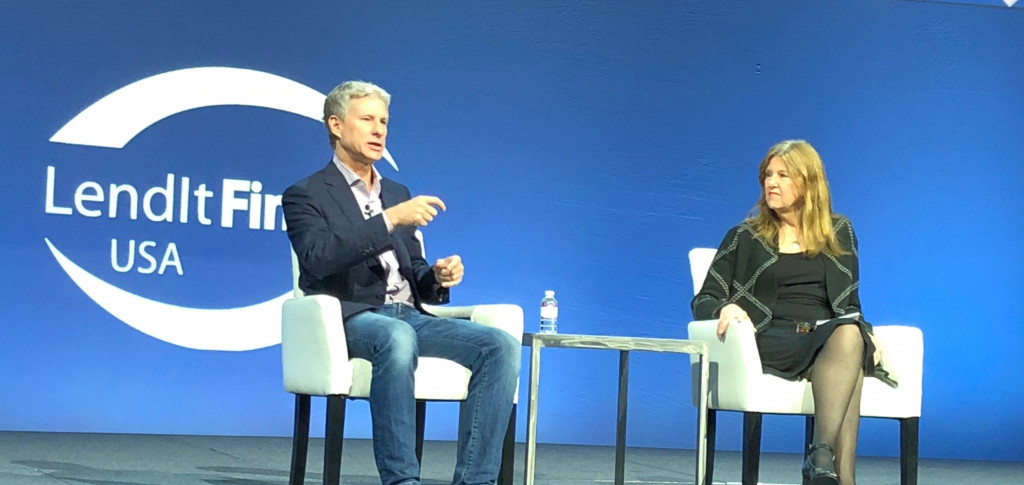 At LendIt Fintech, Ripple co-founder and Chairman Chris Larsen got real in his on-stage conversation with Jo Ann Barefoot. This is what you missed:
I think this is a fundamental shift in fintech and what we believe the big thing happening here is the development of a second internet. We call it the internet of value so that value, money, assets will begin moving as quickly and efficiently as data has been moving for the last 25 years
Using SWIFT is like sending a letter. You know, when drop it in the mailbox, you have no idea where it is, if it got there or not. So, getting away from that I think is profound. And what we would say is that, you know, a lot of the backlash from globalization today, it’s not because globalization is bad. It’s essential. It’s that it’s incomplete because globalization needs kind of 3 key systems to be working together and it needs interoperability and data.
I think all new technologies start with a, you know, screw the government, disruption, tear everything down. So, I think that’s natural and then, you know, the internet started that way too and then it has to sort of grow up. And particularly, it’s solving real world problems. Real world problems are always more complicated than that. And then when you switch to finance, this is different. Right? You know, the internet was mostly technology. Mostly. It’s just now kind of crashing into regulatory issues.
I think on some of the other things like ICOs, we’re pretty anti-ICO. I think it’s a bad thing to get involved with from the founder’s perspective because, you know, if you’re a founder and you can raise money many ways today, do you really want to do something where you’re going to have the SEC, you know, kind of threat hanging over your head for 10 years with strict liability? You just don’t want that. You know, that’s a problem.
[..]From building currencies, digital assets, ICOs typically say, “Okay. There’s a currency for this use case and none other.” That’s kind of the opposite of the way it should go. Currencies need to be as liquid as possible. And so, they’re going to have as many use cases as possible. For XRP for example, the kind of early beachhead has been cross border payments, but we see that as just the beginning of something that really has a multitude of use cases. To get as liquid as possible, that’s what drives utility and value at the end of the day. So, I think in all fronts ICOs are problematic and that’s why you’re seeing the regulators crack down on them, not everywhere, but I think they’ll be transformed. They’ll probably look like, you know, IPOs at the end of the day.
Boiler Rooms Are Not Brands, Kabbage CEO Says
April 21, 2018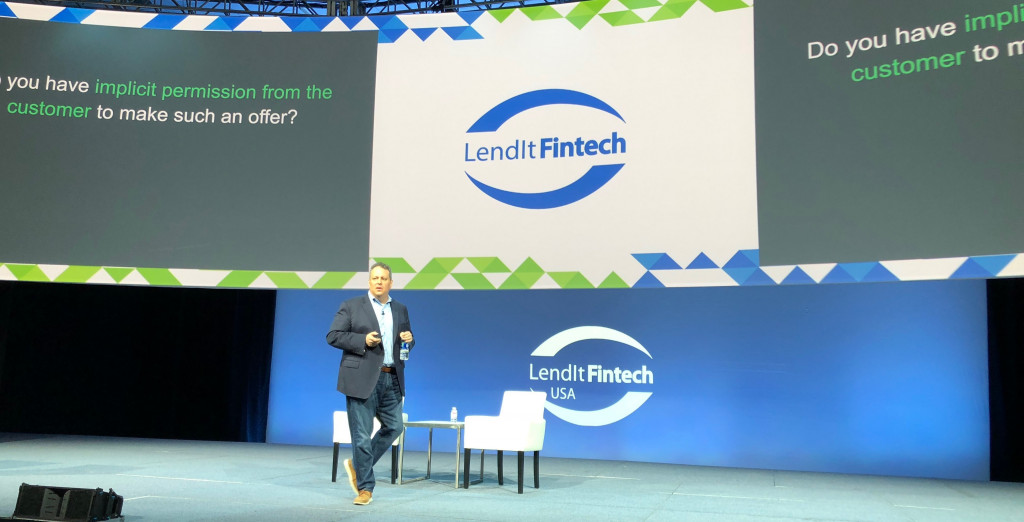
Kabbage CEO Rob Frohwein has a knack for speaking his mind at lending conferences and LendIt two weeks ago was no different. Below are some of the most notable quotes from his April 10th presentation.
On building a brand
Unfortunately, in the online lending space, most companies basically think that boiler rooms = brand. Boiler rooms don’t equal brand. They have these huge call shops and that’s what they’re focused on. That doesn’t create brand. It just doesn’t. You have to spend money in order to build a brand over time. You have to have a brand obviously from a user experience and a customer service experience that people love. That’s how you build a brand.
We’ve invested over $125 million into building our brand specifically. We don’t use brokers and brokers are those 3rd parties that go out and find loans for you, but they don’t represent your company in the process.
How 2018 differs from 2015
About 6 months ago, I was asked to speak on a panel and it wasn’t this conference. And so, I got on the phone with the conference organizer and he said to me “Hey, we’d like to do a panel on fintech and bank partnerships.” Total yawn. 2015 called. They want their panel topic back. I mean, after all, there are probably more panels on fintech and bank partnerships than there are actual conversations going on between fintechs and banks. 2018 is all about relationships.
If the only thing you’re doing is lending money online, it’s going to go the way of the dinosaur. It’s very important. It doesn’t mean that the companies are gonna blow up. It doesn’t mean that there’s going to be any challenges, you know, trying to grow that business, but they’re not going to be the kind of exciting companies that we saw just a few years ago.
The only way to build substantial enterprise value is to be in a position to expand your brand’s offerings.
On whether or not your relationship with the customer can naturally extend to other products
I’ve heard lots of people say I had 2 million customers so I can sell them an auto loan. Actually, you can’t. That’s not the way it works. That’s not the way you build the company. You can certainly try, but the question becomes do you have implicit permission from the customer to make this kind of an offer?
How close is the next product you’re launching from both the function and a brand perspective to your last product? Right? Is it close? Smith & Wesson came out with a lot of bicycles. I am not sure what amendment covers bicycles, but they did not do great with the Smith & Wesson bicycles as far as I know.
The challenge is that most online lending companies don’t really have much of an idea about what their customers want or need because they only have basic credit info at the time of qualification and they also are just getting repayment information. That does not equal understanding the customer.
On engaging with your customers
If you’re not interacting with them very often, then they’re not thinking about you very often.
Kabbage customers take 20 loans over 4 to 5 years, 4-5 loans a year every year. We have that many positive interactions. Our competitors average 2.2.
Finally, I really think of this as the potato chip dream. And I think about Amazon a lot when I talk about the potato chip dream. What that dream is the day that Kabbage is able to sell bags of potato chips to our customers and our customers are like “of course, I’m gonna buy potato chips from Kabbage, why would I buy them from anybody else?” That will mean that Kabbage is worth hundreds of billions and our customers are incredibly happy in the process because it necessarily means that we will provide them with every product and service between where we are today and potato chips tomorrow. And that’s really the key for what we’re trying to accomplish, is allow us to expand our offerings in a natural evolutionary way and take care of our customers. And I really do think that all of us here should think about that as well especially if you’re running an online lending company. Focus back on the customer. Build those relationships. Figure out how to take it to the next level.
Kabbage to Acquire Orchard Platform Markets
April 14, 2018Update 4/26/18: The acquisition is now confirmed
 Kabbage is set to acquire Orchard Platform Markets, a provider of lending data and investment advisory services, according to a Bloomberg report yesterday. However, neither company has confirmed this and both companies were unreachable today.
Orchard was founded in 2013 by David Snitkof, Angela Ceresnie, Jonathan Kelfer, Matt Burton and Phil Rosen. Burton and Kelfer both worked previously at Google and Snitkof and Ceresnie worked at Citigroup and American Express. The company has raised nearly $60 million in three rounds, according to Crunchbase, and investors include Spark Capital, Thrive Capital, as well as Vikram Pandit, former CEO of Citigroup and John Mack, former CEO of Morgan Stanley. Indeed, no shabby group.
As this acquisition has not yet been confirmed, the amount Kabbage might be paying for the company is also unknown. According to Orchard’s website, it employs 31 people (including executives) in an office in Manhattan’s Flatiron district, known as a hub for tech startups. The Bloomberg story indicates that co-founders Burton and Snitkof will join Kabbage at its New York office. Founders Ceresnie and Rosen no longer work for Orchard. With headquarters in Atlanta, Kabbage is one of the largest small business lenders in the country and recently launched a new feature of its loan product at LendIt.
Despite the big name investors Orchard had when it started, some suspect the company may have lost momentum. AltFinanceDaily called a number of leaders in the alternative lending space and none were willing to comment until the acquisition was made certain.
Lendr Launches New Business Debit Card
April 9, 2018 Chicago-based Lendr is launching a new business debit card program, according to an announcement the company made at LenditFintech.
This will give them the ability to fund business owners in real-time via an instant access virtual Mastercard followed up with a traditional plastic card. This system is different than pushing funds to a merchant’s existing bank debit card, which fellow online lenders Kabbage and LendingPoint announced at LendIt.
“The idea is to offer a product that makes access to capital as easy as ‘1-2-3,’” CEO Tim Roach told AltFinanceDaily. “We will have the ability to deposit funds on the Mastercard in real time, making the process seamless for our clients.”
Kabbage, LendingPoint to Offer Real Time Funding Via Push Payments
April 9, 2018Kabbage and LendingPoint each separately announced today that they will soon be able to get funds into their customers’ business accounts instantly and 24/7 via their pre-existing bank debit card. Hopes for this are not brand new. Last October, OnDeck announced a partnership with Ingo and Visa that would provide this convenience to borrowers, although this has not yet come to fruition, according to an OnDeck spokesperson. This is also not Kabbage’s first foray into real-time loan funding.
“We launched [a real-time loan product] through the debit network three years ago and we were really excited about the results,” said Kabbage co-founder Kathryn Petralia . “Our customers really liked it, [but] our challenge was that we couldn’t get broad enough coverage. Only a small percentage of our customers were able to use it…so we’re excited about our partnership with Ingo because it gives us the ability to broaden this to about 90 percent of our customers.”
Kabbage has entered into a relationship with Ingo and has plans to make this service available to customers this summer. One might wonder why, on a weekend, a merchant needs money and can’t wait until Monday?
 “Our customers are always looking to expedite the process,” Petralia said, “not because they’re desperate for cash, but because they really are desperate for time, and they don’t want to spend a bunch of time reconciling their bank accounts [and] making sure the funds have arrived. This is a much cleaner way for them to get access to capital.”
Meanwhile, as part of an announcement by LendingPoint today, the company said that later this year it will be able to “instantly disburse loans to approved borrower accounts through their debit cards, 24/7/365.” This will be facilitated through the TabaPay platform, which also enables LendingPoint borrowers to use their debit card to make loan payments.
A Dialogue with Peter Renton: Cryptocurrency and Beyond
March 2, 2018
AltFinanceDaily Magazine recently caught up with Peter Renton, founder of Lend Academy, a leading educational resource for the marketplace industry. Through his writing, podcasts and video courses, he’s been helping multitudes of people better understand the industry since 2010. Renton is also the co-founder of LendIt, one of the world’s largest fintech conventions, which recently branched out beyond its marketplace lending focus to include other types of fintech. The flagship U.S. conference will take place April 9 through April 11 in San Francisco. The following is an edited transcript of our discussions.
deBanked: Why did you decide to rebrand LendIt as LendItFintech?
Renton: The main reason is that we have moved beyond the online lending space. While it’s still the core of what we do, it’s not all of what we do anymore. Many of the large online lenders have also moved beyond online lending. Lending is part of financial services, but our attendees want to know what else is important. Our attendees also want to look at other opportunities for expansion. They want to know how other areas of fintech are going to affect their business—topics such as blockchain and digital banking. LendItFintech tells people that lending is what we focus on, but it also makes clear that we’re about more than lending.
deBanked: In addition to your marketplace lending investments, you entered into the cryptocurrency space back in early 2015. Tell us what you’re doing now with respect to cryptocurrency?
Renton: This was not something that I spent much time thinking about back then. At the time, I expected bitcoin to never amount to anything. But I’m interested in financial innovation and I decided to give it a go. I never thought in my wildest dreams that it would get to $10,000. (Editor’s note: In 2017, bitcoin climbed to nearly $20,000; in early February it fell below $8,000 for the first time since Nov. 2017)
I opened up a Coinbase account with $2,000, which got me 10 bitcoins. I have since sold a portion of it gradually as the price of bitcoin went up, and I diversified into a handful of other coins as well. I have recently moved a significant portion of my investment into a privately managed cryptocurrency fund, and I still maintain my Coinbase account too.
deBanked: How are things different now than when you first entered the digital currency market?
Renton: In January 2015, I created my bitcoin account and I don’t think I ever logged in over the next 18 months, or if I did, it was maybe just once or twice. No one was talking about bitcoin back then. It was still on the fringe of fintech. Sure, there were some people focused on it, but it wasn’t part of mainstream media coverage. Then, all of a sudden, it became hot because people love get-rich-quick schemes and hearing about people who hit the big time from nothing. These stories really fuel people’s imagination. Then suddenly bitcoin became one of the biggest phenomena of 2017; no one would have predicted a few years ago that would happen.
deBanked: What are the biggest risks you see with cryptocurrency today and how can investors best overcome these challenges?
Renton: Many people are buying purely on speculation with no thought that bitcoin could go down in price. You hear of people buying bitcoin on their credit card and paying 20 percent interest on that purchase. It’s insane. I feel that cryptocurrencies are here to stay, but I don’t like that they have these massive 20 percent to 30 percent swings in a day. The speculators have helped drive the price up, but they’ve also driven the volatility up and that’s been a bad thing.
deBanked: Do you think cryptocurrency will ever dethrone cash? If so, what will it take to get to that point?
Renton: I feel that some kind of digital currency is inevitable—but whether it’s a Federal Reserve-backed currency or something else remains to be seen. I have an 11-year-old and a 9-year-old and I am confident that at some point in their lifetime there will be no such thing as cash. In China, for example, there are some places where you can’t even use cash. You can go to a street vendor and buy a piece of fruit with your phone. Certainly in the U.S. we’re not there yet, but I think China shows where we are going to be.
Cryptocurrency is only one type of digital cash, and it’s hard to say how it will ultimately fit into the larger picture. To dethrone cash as we know it today, cryptocurrency needs to be a quick and efficient way of transacting, and right now it’s not quick and it’s not cheap.
That said, I believe there will be some kind of digital currency in the future. It will take a long time for the Federal Reserve to say cash is no longer legal tender, but I expect we’ll see some kind of digital currency in the next 10 years for sure.
deBanked: How do you think regulation will change the cryptocurrency landscape? Is it inevitable and, more importantly, do you think regulation of cryptocurrency is necessary to take it beyond the level it is today?
Renton: Right now bitcoin is not systemically important. At a market cap of around $156 billion in early February, if something happens and it completely crashes, it won’t make a dent on the U.S. or world economy. But if bitcoin continues to rise and reaches a market cap of say $16 trillion, and then it falls to zero, that would reverberate around the world. The largest economies that have the most bitcoin would be the most impacted.
At some point governments will step in with regulation. It’s already happening in places like China and South Korea and there are rumors of other governments taking action. I don’t think the largest governments will allow their economy to be at the whim of speculators.
deBanked:AltFinanceDaily: How do you feel about the SEC stepping into regulate ICOs? Is this necessary to protect investors?
Renton: There are certainly some ICOs that are complete scams while others are obviously violating securities laws. But many ICOs have strong legal teams supporting them and are doing it right now. The SEC should absolutely clamp down on those doing the wrong thing, but my hope is that they don’t overreact and throw the baby out with the bathwater.

deBanked: What about online lending? The industry has gone through a lot of changes in its relatively short history. How do you expect to see the competitive landscape change in the next year or so? What about farther out?
Renton: The online lending space has gone through a lot of changes in its short history. I feel like the biggest trend we’re seeing right now is banks launching their own platforms. Take Goldman Sachs with the Marcus online lending platform, for example. More than anything else that has happened in the history of online lending that is among the most telling for the future, I think. Goldman has gone all in with this effort, and that move woke up all the large banks. Top banks like PNC and Barclays are also launching their own initiatives instead of partnering with others, which was surprising to me. I would have thought there would be more partnerships. There are still some, but several banks have decided to do it themselves rather than partnering. Smaller banks, however, that want to get into the space, will likely partner because they can’t afford to do it themselves. While we have seen a few partnerships develop, I expect we will see many more over the next couple of years.
deBanked: What do you see as the biggest risks for online lenders today? How can they best overcome these challenges?
Renton: As an industry, we have to focus on profitability. Profitability comes down primarily to two things. First, you have to get your cost of acquisition down. Some of the companies that failed recently were never able to get their costs of acquisition down to a manageable level. Underwriting is the second piece. Particularly if you’re a balance sheet lender and you’re not underwriting well, you can’t make money. The pullback in the industry in 2016 occurred because many of the major platforms got a little too aggressive in their underwriting. Investors are still paying for some of those mistakes.
Successful companies are ones that have figured out how to profitably acquire customers and how to underwrite effectively. Most of them have learned their lesson, but in business companies sometimes have short memories. We need to keep a close eye on it.
deBanked: What advice do you have for alternative lenders and funders?
Renton: In addition to paying careful attention to profitability and underwriting, another important piece is having diversified funding sources. You want to make sure that you don’t have one big bank or some other source providing 90 percent of your funding. You should really have different kinds of lending sources. Some loans you can fund through a marketplace, some loans you can fund through your balance sheet. It’s good when you’re not reliant on one particular way of funding your loans.
deBanked: How is regulation likely to impact the online lending industry?
Renton: Having support in Congress for the online lending space is important. Congress hasn’t devoted a lot of attention to it in the past few years, but it’s starting to. The Madden decision—which has the potential to lead to significant nationwide changes in consumer and commercial lending by non-bank entities—has created uncertainty in the industry. In states affected by the decision (Connecticut, New York and Vermont) already there has been less access to credit. I’m hopeful that Congress moves ahead with legislation to override the Madden decision that’s having such an impact in the Second Circuit states. People are worried that it could expand nationwide and Congress needs to act so there’s clarification. There’s too much uncertainty right now.
deBanked: Several platforms have closed their doors in the past year or so. Do you expect to see this trend continue?
Renton: There are companies out there still trying to raise money and struggling to do so. That’s a healthy thing for an industry. You want the strong players to survive and thrive and for the weaker ones to go away.
deBanked: How big do you think an online lender has to be to thrive?
Renton: There’s no doubt that scale is important. If you’re a small player, you have to have some kind of niche in order to acquire customers. If you have that, you have the ability to compete. Even with that sometimes, it’s going to be difficult. It’s a pretty complex business. You need to have a lot of staff for compliance and operations and that can be expensive. When you have high fixed costs, you have to have scale to be able to make a profit. That said, I think there’s room for more than just the ultra-large players in the online lending space. I think there will be plenty of opportunity for strong, well-positioned medium-sized players to compete.
deBanked: What about M&A in the industry?
Renton: Valuations at many of the large platforms are way down from where they were several years ago. As long as valuations stay depressed, I think we could see a big acquisition of a major platform this year. Some of these platforms have millions of customers. Having the ability to pick up such a large number of customers instantly through an acquisition could be compelling for the right buyer, such as a large bank.
deBanked: Is this a good time or a bad time to be an online lender in your opinion?
Renton: It is still a good time to be an online lender. We are expanding access to credit and making the world a better place. I have never been more excited about the industry than I am today.
Ron Suber: ‘This Industry Will Look Very Different One Year From Now’
February 25, 2018 Ron Suber wears many hats. His official LinkedIn profile lists him as President Emeritus and Senior Advisor at Prosper Marketplace. Now you can add a new title to his repertoire – the Magic Johnson on fintech. That’s because when it comes to Suber’s legacy, he’s all about the passing game.
“I really enjoy the assist in basketball more than the score or the dunk and so I’m trying to be that leader of assists in our industry, Magic Johnson, if you’ll let me use that analogy … I want to be him for our industry and help everybody win and help the whole thing be bigger, but you have to give the ball to the people in the position where they can score and that’s what I’m trying to do,” said Suber in a podcast discussion with Lend Academy’s Peter Renton, who is also a co-founder of LendIt.
Since Suber stepped down as president of Prosper, his presence in marketplace lending and fintech only seems to have blossomed, which in hindsight may have been the plan all along. The godfather of fintech, as he’s also known, is in the midst of what he’s dubbed a professional rewiring, one that didn’t prevent him from participating in a podcast with Renton.
During the discussion, Suber didn’t shy away from any topic, fielding questions on everything from his investment portfolio, to Prosper, to travel and his views on marketplace lending and fintech. His travels have taken Suber to Patagonia and the straits of Magellan to his favorite Aussie city of Melbourne. Next up Suber plans to explore Africa, including Rwanda and Tanzania.
 Suber on Aussie IPO Credible
San Francisco-based Credible, a consumer finance marketplace for millennials, just raised $50 million in an Australian IPO. Suber, who serves as chairman of the fintech, got to know Credible CEO Stephen Dash a few years ago. When Dash needed to raise money, Suber was the first to work with other fintech influencers including a group in Asia to invest $10 million in the company at a $40 million valuation.
Credible followed up with another equity round before deciding to IPO in Australia, where the market is different versus the United States or Hong Kong.
“We were able to meet with the asset managers, the family offices, and the superannuation funds and some of the pension funds in Asia, Hong Kong in particular, and throughout Australia who were very supportive of Stephen Dash, who is from Australia,” said Suber, adding that Credible was the biggest tech/fintech IPO in Australia last year.
Incidentally, Suber has also met with Australia Treasurer Scott Morrison, who sparked a meeting with Suber, Dash, US cryptocurrency exchange Coinbase and other members of the payments market to discuss how Australia can engage with young US entrepreneurs.
We asked Suber what to expect with crypto and lending, in response to which he told AltFinanceDaily: “Like the very early days of the internet, there were lots of dot-com companies with high valuations in the hype cycle, little revenue and unclear long-game solutions…think Amazon. Big winners emerged, and the majority lost money on the early bets. The same is true for cryptocurrencies. Enormous winners will emerge. In my opinion, the winners include CoinBase, Ripple and Ethereum.”
Suber on Prosper
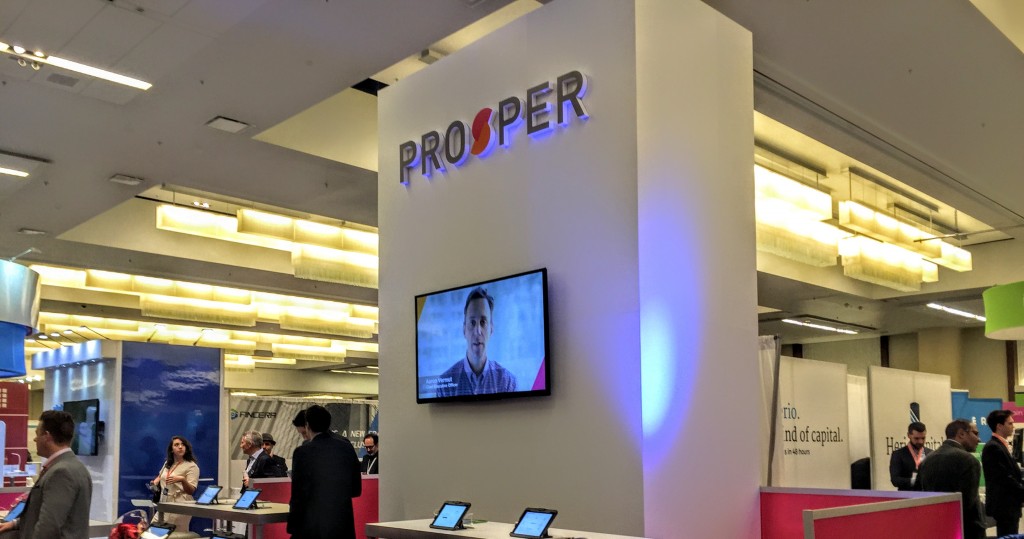 While Suber has moved on from an executive role at Prosper, he remains engaged with the company and is close with the leadership team, including CEO David Kimball and CFO Usama Ashraf. Suber’s involved across the board, from customer acquisition, to business development and on the capital markets side of things as well.
“It’s again doing close to $300 million a month in originations, it has $100 million in cash it generates cash each quarter, it has its own securitization channel at this time in addition to the consortium … There’s a lot going on there including some product expansion, so there’s no shortage of things to do with Prosper, which I care a lot about,” said Suber.
Suber on Hindsight Being 20/20
Marketplace lending has had peaks and valleys along the way as it has matured from a nascent segment to essentially a transformational influence on the lending space, with its technology touching everything from the business model, to the borrower to the banks.
But if hindsight were 20/20, there are some things he’d do differently the second time around.
He pointed to Prosper’s acquisition of American HealthCare Lending, which he characterized as a “great decision,” giving the marketplace lender an opportunity to tap the healthcare borrower market. But as in any relationship, you can’t change each other.
“We changed American Healthcare Lending too much and tried to make it into something that it just couldn’t be with the point of sale financing. I think the lesson there is it’s great to do an acquisition, but you have to make sure you execute and keep it fresh and focused and successful once you get it,” said Suber, pointing to the acquisition of Tel Aviv’s BillGuard as yet another example of this.
Prosper also took on too much office space around the country.
“Perhaps we could have outsourced a little more instead of all the hiring. Clearly diversifying committed capital and maybe back then even using some of the capital we raised to do these own CLUB deal securitizations, which Prosper does now very successfully with its balance sheet,” he noted.
 Suber also urged the marketplace lending market to showcase its technology and unique abilities as “tech-enabled finance companies” more. As the innovator that he is, Suber suggested there should be greater collaboration among marketplace lenders, comparing it to the airline industry. He explained:
“So, the airline industry is competitive, they’re competing for dollars and seats and people and talented pilots and the best planes, but the reality is they have to work together, they have to make sure that planes don’t crash and that the industry is on time and does lots of good things together… And that’s really what I think we can do better, a better job of as an industry is really working together, competing, but communicating and making sure everybody lands safely.”
Suber on Marketplace Lending
As the godfather of fintech, Suber is often looked to as a guiding voice on the status of the market. That’s why when he says the industry has advanced in innings, it’s revelatory.
“I think we’re in the home stretch, I think we’ve done the seventh inning stretch,” he said. Suber pointed to Asia, where the market has gone from 3,000 platforms to 50 and in the United States where it’s consolidated from 300 to fewer than 100.
“The mature are maturing,” he said,” pointing to a race in which some platforms are pulling away from others in terms of valuation, volume and the ability to engage the industry.
“The separation will continue,” he said. “The industry will look very different one year from now.”
Suber on His Investment Portfolio
If you’ve ever wondered which investment areas Suber believes represent the next opportunity, look no further. He’s “struck” by financial inclusion, in particularly a telecom play Juvo for which he’s an advisor and in which invested a few rounds. Juvo is looking to serve the unbanked in the developing world where they lack financial identities, internet access and smartphones. The company has partnered with the likes of Samsung.
“We talk a lot in the online lending industry about top down, super-prime and prime and near prime; this is my way of coming from the bottom up with technology and data and finance to be involved in financial inclusion. I’m really quite excited about that one,” said Suber.
He also likes startup Unison and the emerging fractionalization of the home equity market, which he characterizes as “the next big thing.” In addition to Suber, this market has attracted the likes of Marc Andreessen.
Suber has nearly 20 investments in private companies, including payment companies, financial inclusion and lending. He’s also become a debt investor to some online lenders, invoice finance plays among others. “I’ve really enjoyed the debt side of investing as much as the equity side,” he proclaimed.
Suber on Broader Fintech
In addition to marketplace lending, Suber is also a believer in the point-of-sale (PoS) solution and invoice finance companies, which he says are “fixing the way invoicing is financed and making it better, cheaper and quicker.” And in taking an overarching view of the market, he also likes the cleantech, pointing to solar fintech play Mosaic and a company called CleanCapital.
 Suber on Rewiring
Suber is a big believer in rewirement, both in his personal life and in business. He defines it as “redesigning one’s life personally and professionally.” Before he applied it to his career, Suber and his wife Caryn pursued a rewirement in their personal lives, one that included selling their home and material possessions, buying a new home and traveling.
In 2017, he decided to do the same thing professionally to strike a better balance in his life. Since then, he’s developed a color-coded regiment by which to live, separating the hours of the week across categories including exercise = blue, personal = green, work = purple and teaching and managing his family office = red.
“There’s a lot of green on my calendar,” he said.
For those interested in rewirement, Suber has launched a blog on the topic, with the maiden couple of entries documenting the first 360 days and counting.
Many of Suber’s quotes here originated from his interview with Peter Renton. Renton is the co-founder of the LendIt Conference.
PeerIQ Announces Partnership with Cross River Bank
February 20, 2018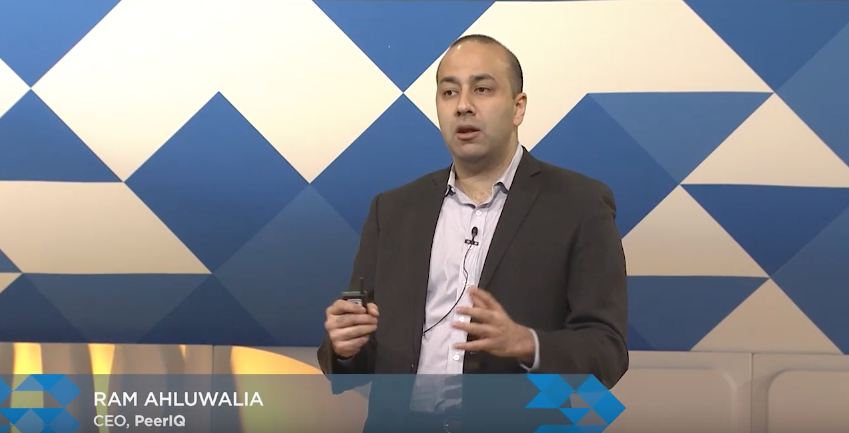
PeerIQ, the New York-based software company that provides analytics and risk management services to lenders, announced today a partnership with Cross River, a New Jersey State Chartered FDIC-insured bank.
“Cross River is one of the most innovative banks I’ve seen,” PeerIQ CEO and co-founder Ram Ahluwalia told AltFinanceDaily. “They have technology that enables same-day settlement of payments transactions, which is really novel.”
Ram is also excited that Cross River’s customers are technology companies, like Coinbase, and fintech lenders. This new partnership means that Cross River will now start to use some of PeerIQ’s software products.
“[Cross River] is incorporating technology innovation to rethink the banking experience,” Ahluwalia said.
Ahluwalia explained that Cross River is the lender of record for about 15 platforms, including Marlette and loanDepot, so it is therefore “in a very unique position in the lending ecosystem.”
Founded in 2015, PeerIQ employs 36 people at its Manhattan office and completed a $12 million Series A at the end of August. Founded in 2008, Cross River is backed by investors including Battery Ventures, Ribbit Capital and Andreesen Horowitz.