
Opus Bank Enters into Strategic Marketing and Referral Agreement with Leading Online Lender to Increase Lending to Small Businesses
January 21, 2016IRVINE, Calif.–(BUSINESS WIRE)–Opus Bank (“Opus”) (NASDAQ: OPB) announced today that it has entered into a marketing and referral agreement with OnDeck® (NYSE: ONDK), the leader in online lending for small business, that will leverage Opus’ 58 retail banking office distribution located in major metro markets up and down the West Coast and OnDeck’s sophisticated credit and funding platform. Entering into this arrangement allows Opus to offer a complete solution to those small businesses that are looking for financing up to $500,000, including a range of term loans and lines of credit powered by a streamlined application process and fast access to the funds.
Stephen H. Gordon, Founding Chairman, Chief Executive Officer, and President of Opus Bank, stated, “I am excited to have entered into this marketing and referral agreement with OnDeck. Opus offers an extensive suite of lending products through its Commercial Bank and, while we receive a significant amount of inquiry for small business loans through our Retail Bank, OnDeck has proven to be much more proficient in underwriting and funding these smaller loans. This partnership enables Opus to further leverage and scale its strong market presence by offering small balance financing solutions that it was otherwise not able to efficiently accommodate and, in doing so, generate additional revenues while not using Opus’ balance sheet or capital.”
Gordon concluded, “Since Opus’ inception, it has had an acute focus on providing tailored financial products, services, and solutions to those small and mid-sized commercial businesses, entrepreneurs, real estate investors, and professionals with a vision to expand and grow. Opus is now better positioned to provide faster access to capital to those businesses where the availability of small balance financing has an outsized impact on their ability to expand, create new jobs, and succeed. At Opus Bank, we understand that by providing capital financing to successful entrepreneurs and their businesses, we are enabling those businesses to flourish and, in turn, build healthy, vital, and vibrant communities from the ground up.”
About Opus Bank
Opus Bank is an FDIC insured California-chartered commercial bank with over $6.2 billion of total assets, $5.0 billion of total loans, and $4.9 billion in total deposits as of September 30, 2015. Opus Bank provides high-value, relationship-based banking products, services, and solutions to its clients through its Retail Bank, Commercial Bank, Merchant Bank, and Correspondent Bank. Opus Bank offers a suite of treasury and cash management and depository solutions and a wide range of loan products, including commercial business, healthcare, technology, multifamily residential, commercial real estate, and structured finance, and is an SBA preferred lender. Opus Bank offers commercial escrow services and facilitates 1031 Exchange transactions through its Escrow and Exchange divisions. Opus Bank provides clients with financial and advisory services related to raising equity capital, targeted acquisition and divestiture strategies, general mergers and acquisitions, debt and equity financing, balance sheet restructuring, valuation, strategy, and performance improvement through its Merchant Banking division and its broker-dealer subsidiary, Opus Financial Partners. Opus Bank operates 58 client experience centers, including 33 in California, 22 in the Seattle/Puget Sound region in Washington, two in the Phoenix metropolitan area of Arizona, and one in Portland, Oregon. For additional information about Opus Bank, please visit our website: www.opusbank.com. Opus Bank is an Equal Housing Lender.
Forward-Looking Statements
This release may include forward-looking statements related to Opus’ plans, beliefs and goals, which involve certain risks, and uncertainties that could cause actual results to differ materially from those in the forward-looking statements. The forward-looking information presented in this press release is not a guarantee of future events, and actual events may differ materially from those made in or suggested by the forward-looking information contained in this press release. Forward-looking statements generally can be identified by the use of forward-looking terminology such as “intend” or “expect” or variations thereon or similar terminology. All such statements speak only as of the date made, and Opus undertakes no obligation to update or revise publicly any forward-looking statements, whether as a result of new information, future events or otherwise.
Lending Club Stock Curiously Clobbered
January 20, 2016When Lending Club’s share price was nearing its all-time lows late last year, one might think that company executives would be eager to buy, if for no other reason than to signal long-term confidence. That’s precisely what company CEO Renaud Laplanche did when he bought 60,000 shares on November 30th. And from that date until December 10th, the stock rose from $12.02 to $14.16. That put them within a dollar of their $15 IPO price, a reassuring sign even if they were still down 50% from their all-time high a year earlier.
Here’s what happened next:
- December 14th: The company’s Chief Financial Officer sold 13,950 shares
- December 15th: Board member and former US Treasury Secretary Larry Summers sold 23,421 shares.
- December 16th: The Fed raised interest rates
- December 18th: The company’s Chief Risk Officer sold 75,000 shares. (stock closed at a new all-time low of $11.48)
- January 6th: The company’s Chief Marketing/Operating Officer sold 35,000 shares. (stock closed at a new all-time low of $10.12
- January 11th: The company’s Chief Technology Officer sold 12,500 shares. (stock closed at a new all-time low of $9.24)
- January 12th: The company’s Chief Technology Officer sold 12,500 shares.
- January 13th: The company’s Chief Technology Officer sold 12,500 shares. (stock closed at a new all-time low of $8.86)
- January 14th: The company’s Chief Technology Officer sold 12,500 shares. (stock closed at a new all-time low of $8.02)
 While company insiders were selling relatively small blocks of shares and likely doing it to bank just a little bit of their paper wealth, the trades coincided with the company’s plunge to oblivion and perhaps contributed to the drop in the first place. On January 14th, the date of the last insider sale, trading volume spiked to nearly 5x the daily average and the share price hit a record intraday low of $7.76.
Lending Club finished at $7.34 on January 19th, a new all-time record low, with dips as low as $7.05 intraday. That means the stock has dropped nearly 40% since the CEO bought shares less than two months ago. By comparison, the S&P 500 is down 9.5% over that time period.
The share price death spiral has arguably made it easier to spread fear. In the Lending Club subforum on the LendAcademy website for example, a user claiming to manage a hedge fund urged members who use Lending Club’s marketplace to sell everything now and prepare for an armageddon of loan defaults. That thread was suspiciously created around the market open of January 14th, the date with the most trading volume since the IPO.
Meanwhile investors in Lending Club’s notes have remain largely unperturbed. And why wouldn’t they? They’re still enjoying very attractive returns and despite all the doom and gloom, everything is pretty much business as usual.
In a note to shareholders, Compass Point Research and Trading, LLC set a price target of $12 for Lending Club back in December on the risk of the Madden v. Midland case, Congressional investigations into terrorism finance, and the California Department of Business Oversight inquiry into marketplace lenders. While all are perhaps concerning, none seem to present an immediate threat. The most likely reason for the run on Lending Club is that general market fear is stoking reminders of the 2008 crash in which anything related to lending was toxic. As of Tuesday’s close, OnDeck, a business lender often compared to Lending Club, was down 61% from their IPO price. Lending Tree, an online consumer lending portal was down 51% from its 52 week high.
Meanwhile, Lending Club posted positive results in the 3rd quarter. Compared to the same period last year, revenue more than doubled, adjusted EBITDA tripled, and loan originations doubled. They also posted a profit. Overall, these results should not have caused the stock to drop by 50% over the next few months.
As a marketplace, Lending Club does not keep the loans it makes on its balance sheet. That’s something a lot of investors might be overlooking. They may have been clobbered these last few months but the fears might be somewhat unfounded. ..
The First Ever Comprehensive Industry Report is Now Available
December 29, 2015 Months ago, investment bank Bryant Park Capital teamed up with us to conduct the first ever industry CEO survey of its kind. A sample of the initial findings were distributed at Money2020 in Las Vegas. Eligible participants that disclosed their identities to the surveyors have already received a complementary copy of the full anonymized report.
Today, those that either weren’t eligible to take the survey or missed the deadline to participate, can buy a copy of it.
With a sample size of small business funding companies that originate more than $2 billion annually, the final report reveals the industry’s Compound Annual Growth Rate, Average Annual Revenues, Average Annual EBITDA, Portfolio Loss Rates, Approval Rates, M&A Expectations, Valuation Expectations, Syndication Data, and much more.
This report is highly recommended for all funders and ISOs seeking to raise capital or for those that want to eventually sell their company. It’s also a must-have for any company that seeks to set short-term or long-term goals, that wants to compare themselves against the industry, or is creating a realistic business plan.
Investors in the industry also stand to benefit from this data.
If you are interested in buying the full report, e-mail sean@debanked.com.
The original report sample for public distribution
Mentioned in Forbes
Bryant Park Capital’s professionals have completed approximately 400 assignments representing an aggregate transaction value of over $80 billion.
Funding Brokers: Critical Thinking is Greater Than Positive Thinking
December 28, 2015 THE NEW THOUGHT MOVEMENT HAS TAKEN OVER THE SALES PROFESSION
Somewhere between the 19th and the current 21st century, the profession of sales as a whole integrated the concepts of the New Thought Movement, going so far as to actually shape the mantras, slogans and thought processes of salespeople everywhere.
In my opinion, the New Thought Movement has the potential to do far more harm than good, because it does not emphasize the importance of individuals learning how to critically think. It has an over-reliance on positive thinking and positive faith, with a complete disregard for critical thought and analysis. When a person fails to critically think, they can easily fall prey to scams, manipulation, brain-washing, etc. and even mismanage their finances through various forms of impulse (emotional-based) spending. As a result, for whatever amount of good that the movement does, in my opinion, it has the potential to do far more damage, such as the damage that I believe it has done to the sales profession.
THE HISTORY OF THE NEW THOUGHT MOVEMENT
It started in the 19th century with the promotion of ideals by philosophers such as Napoleon Hill, that life begins in the mind and that the quality of your life would be based on your level of positive thinking and positive faith. The mantra of the movement is that if you maintain the right level of positive thought processes as well as keep high levels of positive faith, then you can “attract” to you whatever you desire, which usually centers around materialistic items like fancy cars, shallow things like very attractive mates, significant wealth, or good health and wellness.
By the 20th century, the movement would eventually spread to various religious denominations in the form of the prosperity gospel (the word of faith movement), promoted through television evangelists and the vast majority of mega churches throughout the country.
By the 21st century, the movement would spread to even more authors and even film producers with the 2006 film “The Secret” which also included a book version of the ideals promoted during the film.
It was also by the 21st century that the movement had been fully ingrained into the vast majority of sales training material, which would serve as the foundation for a lot of what I deem to be “issues” of the sales profession today. These being the utter lack of critical thinking and critical analysis which leaves too many sales people as mindless, robotic, and routine order-takers, rather than strategic thinkers, innovators, and business developers.
NEW ENTRANTS TO THIS INDUSTRY ARE INSPIRED BY TECHNIQUES FROM THE NEW THOUGHT MOVEMENT
Since this year’s March/April edition of AltFinanceDaily Magazine, we have talked about the Year of The Broker as it relates to the surge of new brokers coming into the space. These new entrants are inspired by funders, lenders and large brokerages using techniques from the New Thought Movement.
The rah-rah sales motivational speech that’s provided to these new brokers is founded mainly on the New Thought Movement. The people recruiting these new brokers into the space get them to dream about:
- Getting out of debt
- Moving out of their mother’s basement
- Living in a big/fancy house
- Having a very attractive mate on their arm
- Driving a Mercedes Benz S-Class
- Making $25k, $40k, or $50k per month
- Being “the man” in the nightclub, buying up all of the drinks and being the life of the party
They would sum up their rah-rah sales motivational speech with simply, “As you think, so shall you become,” quoting the great Bruce Lee.
Thoughts that arise of a critical nature that look for more market research, market planning, trends, innovative solutions, ROI analysis, and other forms of foresight are either quickly shunned as “over-thinking” or “negative thinking”. You might flat out be kicked out of the room where the rah-rah sales motivational speech is being conducted, with accusations of having “stinking thinking.”
THIS ISN’T ROCKET SCIENCE, IT’S CRITICAL THINKING
The New Thought Movement’s over-reliance on positive thinking and positive faith can be detrimental to personal growth. Being a part of the Mom and Pop Network isn’t necessarily a bad thing, as I have operated within the Mom and Pop Network, but what’s shortsighted is not giving brokers all the tools they need to think critically and truly be successful.
For you to survive, you are going to need to have resources that the vast majority of other brokers don’t have access to. Relying on UCC records and Aged Leads (that every other broker is calling on), isn’t going to cut it. You are going to need resources that provide you with a significant market competitive advantage which includes but isn’t limited to: having better data so you can produce your own exclusive internal leads, having “center of influence” partnerships with banks, credit unions, and other professionals, having access to creative financing in the form of either equity or debt, among other advantages. These advantages will not just give you a leg up over other brokers in the market, but they are truly the key to your long term survival.
A FINAL WORD
In my opinion, The New Thought Movement does more harm than good, by not emphasizing the importance for individuals to learn how to critically think.
We are living in the day and age where to survive in any professional sales environment, you are going to have to be more of a critical thinker and do things outside of “the box”, versus being the stereotypical smiley faced, overly optimistic, robotic, sales guy, that’s incapable of true “independent thought.” You want to be the sales guy that thinks and operates outside of the box, which is basically this bubble in which everybody else is operating and thinking within. You can’t achieve this unless you first embrace cynicism by taking a long hard look at this box, poke holes in it, discover new ways to profit, and then blaze your own trail.
Being cynical, pessimistic and “negative” are the first steps towards becoming an excellent critical thinker, even though they will not make you feel as “good” as compared to that of being optimistic and positive. But in that regard, I must quote Dave Ramsey in that: Children do what feels good. Adults make a plan and follow it.
Critical thinking doesn’t feel good, but you can’t properly plan without it.
I Hate Sales, But I Love Business Development
December 21, 2015 I HATE SALES
I have always hated “sales”, which is funny seeing as though I have been in what most would call a “sales position” within our industry since January 2007, all on an independent (100% commission) basis as a one man show, with merchant services direct sales from 01/2007 – 04/2009 and merchant cash advance direct sales from 11/2009 – 09/2015. As a one man show, I did pretty good, getting myself into the middle class with a great net worth for my age, with an average monthly funding of $200k per month for the 70 months I sold the MCA product, while building a processing portfolio on the side on track to hit $200 million in total volume processed.
But nevertheless, I hate “sales”.
While most would consider my place in this industry (nearly 9 years) as a “sales” role, I would vehemently disagree, as I believe my role has been that of business development, not “sales.” I was an entrepreneur (or solopreneur due to being a one man show) and my focus was on building strategic relationships with merchants, vendors, and partners, with a clear-cut focus on creating long-term sustained value.
WHAT DO I REFER TO AS SALES?
I believe there are different variations of salespeople, from the cashier at the grocery store, to the person at the fast food drive-thru window, to the waiter, to most of the inside sales people across the country. I believe the majority of salespeople are simply order-takers.
- An order-taker is not a strategic thinker, innovator, researcher, nor creator. They are not seeking to solve complex problems by creating complex solutions, with complex pricing and implementation procedures, which simultaneously include complex supporting functions.
- An order-taker is someone that usually performs a routine task of helping a customer find a particular item or purchase a particular item. The order-taker’s knowledge of the business, the industry, and the customer is very limited. The order-taker is very robotic and nothing more than a regurgitator of information taken from people within the organization who have been given the “liberty” to think, innovate, research and create.
In a corporation, the individuals who are given the liberties to think and innovate are usually the CEO, CFO, or members of the marketing department, all of which are responsible for the strategic direction of the organization in terms of markets targeted, driving in prospective customers, creating the products to push to said prospective customers, how to manage the process of turning them from a prospective client to a current client, and all of the follow-up procedures that are a result. You can sum up the actions and responsibilities of these individuals into two words: business development.
SALESPEOPLE WILL BE REPLACED BY ROBOTS AND TECHNOLOGY
As we progress through the 21ST Century, developments in technology will in fact replace salespeople (order-takers). Their duties are so routine and robotic, that it’s much more efficient in a number of cases to just implement a robot instead, and save on the higher costs of labor. Or to put up an efficient website and allow the website to navigate the customers rather than a salesperson.
But those in business development can never be replaced by a robot.
WHAT IS BUSINESS DEVELOPMENT?
Those that are in Business Development are responsible for the building of strategic relationships with merchants, vendors, and partners, with a clear-cut focus on creating long-term sustained value. Long-term sustained value always comes in the form of new markets, new products and new processes, which manifests itself in the strategic role of CEO, CFO and Marketing Departments in corporations, but in smaller companies, this manifests itself in one word: entrepreneurship.
Entrepreneurship is all about taking a look at what’s currently happening and asking, how can this be done better? What segment of this market isn’t being catered to? How are the current solutions and products being pushed to this market inefficient? And how can I create better ones? How can I acquire new clients more profitably than competitors are?
That’s business development, which is different from being in “sales.”
BUSINESS DEVELOPMENT IS WHAT I DID
I often debate other professionals in our industry on commission points, as it comes up often today on how one should be making “8 – 10 points per deal” and if you aren’t making such level of points, they believe that you are doing something wrong.
My strategy was different, when I started selling the MCA product in very late 2009, my focus was solely on targeting A and B-Paper clients, which at the time there weren’t any pricing distinctions between low risk and high risk merchants. A merchant approved for an advance in general, was given the same high cost product, whether they had a 700 FICO or a 520 FICO.
My objective was to sell a more efficiently priced product to higher quality merchants, with great supporting functions in place to produce significantly low default rates, and a much higher than normal renewal rate. This strategy was completely different at the time than what the industry as a whole was doing in terms of the merchant cash advance product.
Over on the merchant processing side, my focus was to target higher risk merchants, which were more difficult to board and service, rather than targeting the same Card-Present mom/pop shops that everybody else was doing at the time who quite frankly, had no real needs for merchant processing nor the related technologies and value-added services associated as they already were “set.”
BUSINESS DEVELOPMENT IS WHAT YOU SHOULD DO
Some of you might not have the luxuries to think, innovate, and create, as you might be on a W-2 structure which puts you at the mercy of a “sales manager” who more than likely is using outdated marketing tactics (such as UCCs and Aged Leads) and encouraging you to sell a product that is not always the right fit.
Of course if you don’t achieve the established quotas, the sales manager will scold you by saying that you don’t belong in this industry, rather than looking at the main source of the problem, which is their outdated marketing tactics and uncompetitive solutions.
But for those of you who have such luxuries, I invite you to think, innovate and create. Be different. Be bold. Go after markets not talked about and solve the pain of others that have yet to be analyzed. Market different. Brand different. Sell solutions that others have yet to hear about.
Your bank account and career longevity will thank you later.
Madden v. Midland Appealed to the US Supreme Court
November 15, 2015The Madden v. Midland decision has been appealed to the US Supreme Court and the future of non-bank lending potentially hangs in the balance. The introductory statement reads as follows:
This case presents a question which is critical to the operation of the national banking system and on which the courts of appeals are in conflict. The National Bank Act authorizes national banks to charge interest at particular rates on loans that they originate, and the Act has long been held to preempt conflicting state usury laws. The question presented here is whether, after a national bank sells or otherwise assigns a loan with a permissible interest rate to another entity, the Act continues to preempt the application of state usury laws to that loan. Put differently, the question presented concerns the extent to which a State may effectively regulate a national bank’s ability to set interest rates by imposing limitations that are triggered as soon as a loan is sold or otherwise assigned.
Several attorneys have said off the record that the likelihood the US Supreme Court would actually hear the case is about 100 to 1, because the issue lacks sex appeal. Gay Marriage, Obamacare, these are the type of things that make their way through the system.

Nevertheless, the petition argues the matter at hand:
The Second Circuit vacated the judgment, holding that the National Bank Act ceased to have preemptive effect once the national bank had assigned the loan to another entity. App., infra, 1a-18a. In so holding, the Second Circuit created a square conflict with the Eighth Circuit, and its reasoning is irreconcilable with that of the Fifth Circuit. The Second Circuit also rode roughshod over decisions of this Court that provide broad protection both for a national bank’s power to set interest rates and for its freedom from indirect regulation. And it cast aside the cardinal rule of usury, dating back centuries, that a loan which is valid when made cannot become usurious by virtue of a subsequent transaction.
The Second Circuit, of course, is home to much of the American financial-services industry. And if the Second Circuit’s decision is allowed to stand, it threatens to inflict catastrophic consequences on secondary markets that are essential to the operation of the national banking system and the availability of consumer credit. The markets have long functioned on the understanding that buyers may freely purchase loans from originators without fear that the loans will become invalid, an understanding uprooted by the Second Circuit’s decision in this case. It is no exaggeration to say that, in light of these practical consequences, this case presents one of the most significant legal issues currently facing the financial-services industry. Because the Second Circuit’s decision creates a conflict on such a vitally important question of federal law, and because there is an urgent need to resolve that conflict, the petition for a writ of certiorari should be granted.
Brian Korn, a partner at Manatt, Phelps and Phillips, told the LendAcademy blog in an interview that the Court could rule on the motion at any time and that it takes 4 out of 9 justices to agree to accept the case.
The plaintiff, Madden, has until December 10, 2015 to file a response to the petition.
Meet the Source: How Jared Weitz and United Capital Source became one of the industry’s fastest growing shops
October 23, 2015Jared Weitz came from humble beginnings and nearly settled for a humble fate. But associates say an ordinary, uneventful life wouldn’t have suited him – he works too hard and figures things out too quickly.
Almost ten years ago Weitz, 33, was parking cars to earn money for community college. After finishing at St. Johns University, he almost made plumbing his career. But now he’s CEO of United Capital Source LLC, an alternative-finance brokerage with deal flow of between $9 million and $10 million a month and an annual growth rate of over 65 percent.
Business associates, former bosses and his small cadre of employees all seem to revere Weitz for his honesty and straightforwardness. They consider him a personal friend. They say he continues to grow as a businessman and as a human being while taking pleasure in helping others do the same.

Geographically, Weitz has the good fortune to know where he belongs – the city of New York is in his DNA. “Every time I fly back,” he said, “I’m so happy to land.”
His love affair with the city began in Brooklyn. He was born there and raised in a Brighton Beach apartment in the shadow of Coney Island. When he was 16, the family moved to Oceanside on Long Island.
As the second of six children, Weitz had to come up with the money for college on his own. “My older sister and I had to pay our way,” he said. “Everybody else, my dad was able to cover.” He started school at Nassau Community College, selling cell phones and parking cars at night.
 But then came an abrupt change. Once Weitz saved enough money, he transferred to Tulane University in New Orleans to pursue a relationship with a woman who was finishing her studies there. He attended classes part-time, worked as the athletic director at the Jewish Community Center, tended bar in a Mexican restaurant and served summonses for a law firm.
The relationship with the woman fizzled, but Weitz made lasting friendships during his days down south. His old roommate in New Orleans, who now practices law in Atlanta, serves as counsel for United Capital Source.
When Weitz had been in New Orleans for two years, Hurricane Katrina struck. He evacuated to Houston, where he stayed in a Holiday Inn for two weeks before realizing he wouldn’t be able to return to southern Louisiana anytime soon. The magnitude of the devastation was just too great.
Shouldering the duffel bag of belongings he had managed to pack on his back during the evacuation, he returned to New York, enrolled in St. John’s University and began working in sales for Honda Financial Services and parking cars.
Weitz had started school expecting to become a teacher. He had grown up with younger siblings and liked leadership roles, which convinced him teaching would be a good fit.
Still, many of his college jobs had required him to sell. As a bartender, for example, he promoted drink specials. As an athletic director he convinced people to sign up for classes. “Everything that I took to naturally wound up being in the sales, marketing and finance arena,” Weitz observed.
When he was nearly finished at St. John’s, Weitz was parking a car for an acquaintance who offered him a job as a union plumber. Suddenly, he was making $27 an hour and had health benefits. “It was a big breather for me,” Weitz recalled.
He quit his three jobs and labored as a plumber from 7 a.m. to 3 p.m. School started at 3:30 p.m. for him and stretched into the evening. But when he finished his degree, working as a teacher for $35,000 to $40,000 a year no longer seemed attractive.
Besides, his plumbing work didn’t center on toilets. On typical commercial plumbing jobs he did things like install air, medical and gas lines in hospitals. He was reading blueprints and bidding for jobs. A promotion to foreman didn’t seem that far off.
At about the same time, near the end of 2006, a friend, Mike Caronna, landed a job at Bizfi, formerly known as Merchant Cash and Capital (MCC), The company, which had just started and had only a few employees, was looking for underwriters.

As fate would have it, Weitz fell into a conversation with a fellow union plumber, one who had been on the job for 30 years. The older man reminded him that his wages would never climb much higher than they were right now. The veteran plumber then showed the younger man his hands, bent from decades of holding tools. “That got me thinking,” Weitz said.
He asked his friend Caronna to arrange a job interview at MCC. He got an offer and took a 90-day leave from his plumbing job to give the world of finance a try. “After about two weeks, I knew it was for me,” he said of the alternative-finance industry. It was by then the beginning of 2007.
Weitz excelled as an underwriter, and the company CEO, Stephen Sheinbaum, picked him and four others for a sales contest. Sheinbaum gave them some leads and turned them loose. Weitz won the competition but asked his boss to help him gain experience in business development and operations before taking on a sales position.
Sheinbaum was happy to comply. “He is one of the best and the brightest in the space,” he said of Weitz.
So, at age 25, Weitz found himself building a business development department by cultivating relationships with ISOs and persuading them to send business to MCC. “It was amazing,” he said of those days. “That was a big opportunity.”
Weitz learned the mechanics of the business. He found that the right ISO can originate good deals and a bad ISO can ruin deals. He learned the politics of when to talk, when to remain silent and when to let someone vent.
Then Weitz and a good friend at MCC, Anthony Giuliano – who’s now managing partner of Sure Payment Solutions – worked out how they could improve the MCC sales effort. They pitched Sheinbaum on the idea of having a second internal sale force, and that led to the birth of Next Level Funding (NLF), a division of MCC.
Weitz and Giuliano each owned 10 percent of NLF, and MCC owned 80 percent. “I’m 26, about to be 27, and I’m like, ‘You did it, Man,’” Weitz said as he looked back.
After about four months, NLF absorbed MCC’s original sales division. Next, Giuliano and another executive, Paul Giuffrida, decided to leave MCC. Weitz felt torn. He felt an allegiance to Giuliano and respected Giuliano’s knowledge of programming – a subject that was alien to him. Yet Sheinbaum had provided Weitz a series of opportunities.
Weitz stayed at MCC but felt he deserved to become chief sales officer. When that didn’t happen, he sold his shares back to the company at a dramatically reduced price to extricate himself from a non-compete clause and set off to start United Capital Source (UCS).
With a five-figure investment, Weitz and his then partner, started UCS in January of 2011 in a 250-square-foot office in Long Beach, L.I. Weitz invested about 90 percent of the money he had saved while working at MCC.
 Jon Baum left NLF with Weitz and became the first UCS employee. Within a week or two, Danielle Rivelli, left NLF to join UCS, and Weitz put the remaining 10 percent of his savings into the business to meet the expanded payroll. Today, Baum and Rivelli are UCS sales managers.
The first month UCS was open, it funded $240,000 in deals. “It just felt good to be on my own and start funding deals,” Weitz said. From the beginning of UCS, he won praise from funders for bringing them the right kind of deals with merchants who were likely to repay.
“He really has the pulse of the marketplace and what a lender is looking for,” said Todd Sherer, who handles business development for Entrepreneur Growth Capital. “He doesn’t waste time giving you transactions that don’t fit in your box.”
That’s because doing things right means a lot to Weitz. “He is one of the most straightforward, honest, high-integrity people I have met in the industry,” said Steven Mandis, adjunct associate professor at the Columbia University Business School and chairman of Kalamata Capital LLC.
He’s won the OnDeck seal of approval. “OnDeck has a rigorous and extensive background check process as part of our broker certification process,” said Paul Rosen, OnDeck’s chief sales officer. “Jared Weitz and United Capital have passed our screens and process and are currently active brokers for OnDeck.”
And with time, Weitz has learned patience. He was sometimes short with funders when he started his company but has matured into a pleasant person to deal with, said Heather Francis, CEO of Elevate Funding. “I’ve seen that growth with him,” she said.
All of those good qualities soon came together to help UCS succeed. Within four months of its launch, the company rented a 1,500-square-foot office in Garden City and hired two more people. Next came a 3,200-square-foot office in Rockville Centre and three more employees.
“The company was growing and gaining traction,” Weitz recalled. “I bought out my original partner.” Since then, Vincent Pappalardo has invested in UCS and become a minority partner.
Meanwhile, the lease was expiring on Long Island, and Weitz felt the time had come to move to Manhattan. That would enable the company to draw employees from throughout the region and not just Long Island.
“We decided to bite the bullet and pay the excess money to move to the city because we believed it would be better for the business,” Weitz said. He added two people and rented a 5,500-square-foot space near Penn Station in the Garment District in September of 2014.
 Within three months of making the move to Manhattan, business doubled. “Being in a faster-paced environment caused the business to go through another growth phase,” he said. After nine months in the city, UCS is now taking over a whole 8,500-square-foot floor of the same building.
UCS remains a small shop in terms of headcount with 21 people, but the company’s funding numbers equal the output of many brokerages five times its size. Twelve of the UCS employees work in sales, with the others engaged mainly in underwriting, operations and customer service.
Less than 2 percent of UCS’s funding volume comes from broker business. “We self-generate all of our business,” Weitz said, declining to elaborate too much on his company’s marketing efforts.
“My salespeople – bar none – are the best in the industry,” he claimed. “Much like the Navy has the SEALS and the Army has the Rangers, there are groups in the industry that can do triple or quadruple what other people do because that’s just the way they are.” His people fund an average of $750,000 per month per person in new business, while his renewals reps fund well into the 7-figure range per person.
UCS salespeople achieve their results because they have detailed knowledge of the industry, Weitz said. The staff’s understanding of alternative finance doesn’t end with sales but also includes underwriting and finance, he noted. “That’s what makes you a very good and knowledgeable sales rep,” he maintained.
His salespeople don’t just tell a client what he or she wants to hear. They take the time to understand the client’s financial situation. “They know how to read a profit and loss statement, a balance sheet and tax returns,” Weitz said.
ARE THE BEST IN THE INDUSTRY”
While 90% of Weitz’s sales team has a college degree, most of the salespeople have come from outside the industry, he said, noting that one was with Sleepy’s, the mattress company. Another was selling memberships at a gym, one worked for a credit card processing company, two were barbers and one had just graduated from college.
UCS doesn’t make double-digit commissions because the company isn’t over-charging merchants, Weitz maintained. The company does not obtain excess funding that a customer can’t afford or increase the factor rate to dangerous levels, he noted.
“You’re not really helping the merchant” by providing too much capital, Weitz asserted. “You’re sucking the blood out of him before he goes away. That’s not why I’m in business.”
A clean record will also prove beneficial when federal regulation comes to the industry, he said. Integrity in the workplace can also spill over into other parts of a person’s life, Weitz believes.
 As UCS grew larger and Weitz grew older, he saw his employees rent their first apartments and then buy their first homes. He learned then that he had taken on more responsibility than was apparent to him at first.
To accommodate the employees he added a human relations department and commissioned a company handbook. He’s also started marketing, finance, operations and other departments.
He’s lost only four employees because he pays them well, respects their time and doesn’t view their youth as a liability.
Meanwhile, talking daily to merchants and hearing about their heartaches and triumphs has humbled and matured Weitz. Seeing how the merchants’ choices panned out or fell short also shaped him and helped him grow up a little, he said.
Weitz has found time in his 70-hour workweek to meet his future bride. They’re planning to wed next year, and he plans to invite his entire staff. “It wouldn’t feel right without them,” he said.
Weitz has skipped the Ferrari, Rolls Royce and mansion because he didn’t feel he needed them. But even without those status symbols, it’s clear that Weitz has avoided settling for a humble fate.
As for what comes next, UCS is said to be developing an online marketplace to take their business to the next level, though Weitz declined to provide specific details about how it will work. “We’re on pace to do more than $100 million worth of deals a year,” Weitz said. “And as far as we’ve come, I feel like this is still just the beginning.”
Some Small Business Funders Are Pivoting or Closing Shop
October 20, 2015 One of the unique insights AltFinanceDaily gets as a company that sends a lot of email and snail mail to folks in the industry is the rejection rate. One day an entrepreneur is telling us all about their new lending business and the next day the Post Office returns their magazine for a vacant address. Sometimes there’s a change in the model or a partnership didn’t work out. Other times lead generation became too hard or too many merchants defaulted very early on. The truth is, as much as the industry is growing, some companies are pivoting or closing their doors.
At Lend360, there were whispers around the trade show floor that acquisition costs have spiked and it was being felt on the bottom lines. Broker houses are opening, closing, merging with each other and being acquired. Funders have reacted by giving them lines of credit to either help them grow or stay afloat, hoping that their sources of deal flow don’t fall apart.
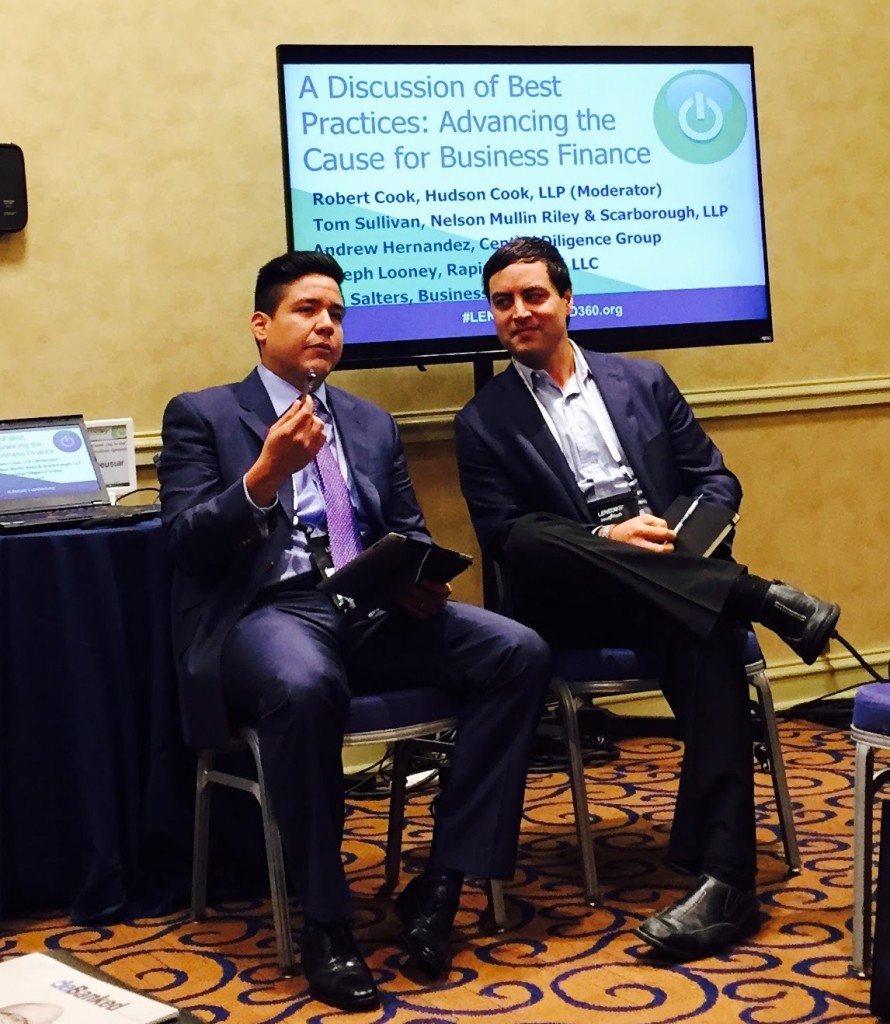
On one conference panel titled, A Discussion of Best Practices: Advancing The Cause for Business Finance, veteran underwriter and industry consultant Andrew Hernandez of Central Diligence Group, said he’s watched a lot of new entrants in this industry make mistakes. “We’ve seen guys lose their shirt,” he said. He explained that too often small business funding companies look to cut their acquisition costs in the wrong places, like simply paying less for leads or paying brokers lower commissions. That only works to a point. “Underwriters can help keep the cost of acquisition down by funding the right deals and trying to get good deals done,” he said.
The owner of one funder summed up his dilemma for me, my brokers are making more on a deal than I am and I’m the one taking all the liability on it. Maybe I should become a broker instead. Not that there would be anything wrong with that. For some companies in this industry, the best path forward is achieved through trial and error. For example, World Business Lenders’ Alex Gemici said at the conference that they started off by making unsecured loans and now only do loans secured by real estate. Gemici also said he believes the industry is heading for a major shakeout within the next three years and that irrational exuberance keeps him up at night.
If he’s right, an economic downturn could squeeze out a lot of players that are already feeling the pinch of high acquisition costs.
For those newer to the industry, they might not remember that the effects of the 2008-2009 financial crisis and ensuing recession was brutal. More than half of the providers of merchant cash advances went out of business, some within weeks when their credit lines were pulled.
A lot of the “industry leaders” of 2008 aren’t around anymore: First Funds, Fast Capital, Second Source, Merit Capital, iFunds, Summit, Infinicap, Global Swift Funding, and more.
Given the favorable economic climate and regulatory environment, this is a bad time to be struggling. 2015 may be one of the last years to pivot in a major way before it’s too late.