Nuula, Still in the Business Lending Game, Lays Groundwork for Larger Ecosystem
December 29, 2021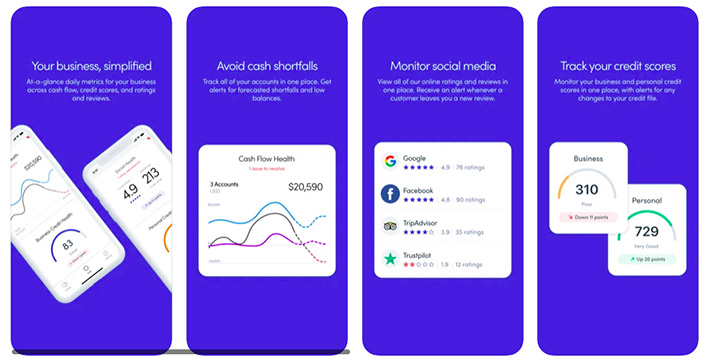 Nuula, formerly known as BFS Capital, has 5,000 merchants on a waitlist to access a line of credit after just four months of its application process being made available.
But there’s more.
“Nuula is built to not only deliver our own financial products, but it’s developed to help us provision and deploy third party financial products that come from our ecosystem,” said Mark Ruddock, Nuula’s CEO. “So what we’re trying to do here is not really be a broker, but we will carefully curate products.”
“That could be larger, longer loans from one partner, it could be insurance from another partner, it could be entrepreneur wealth management from a third partner,” he continued.
“So we bring those partners onto the platform, and then we expose their functionality within the app, in a way that’s consistent with all the other tools in the app. So yes, there is room for third party lenders.”
Ruddock spoke about how as of now, Nuula’s infrastructure only offers opportunities to those interested in directly funding businesses. The company profits via revenue sharing when businesses are provided with capital from a third party funder on the platform.
Despite not being available yet, he hinted at possibly incorporating broker-esque products as the app’s financial product suite grows.
“Today, we don’t see a near term role for brokers on the app, because we’re not really trying to create a marketplace of a multitude of products, we’re really trying to curate things very, very carefully,” said Ruddock. “However that’s not to say say that we will not over time provide the ability for the more digital brokers or intermediaries to play a role as we seek to broaden the portfolio of tools that we offer.”
“I would say no to brokers in the sense that we really don’t have a compelling offer for them at the moment, but yes to other financial services providers.”
Ruddock described how Nuula is serving a niche customer base, a tech-centric merchant who is looking for an easy-to-use mobile software that can manage their businesses’ X’s and O’s. Not only is this type of merchant underserved and beginning to substantiate in numbers according to Ruddock, but they are extremely eager for access to capital.
“It’s a fundamental change in the way underwriting has been done, away from kind of a rearward looking model, towards a real-time forward looking model, and that’s what we believe is going to be required to unlock capital to this new generation of businesses.”
“[Nuula] reimagines underwriting in a way that says ‘don’t just look at the last six months of bank statements’,” Ruddock said. “[We] look on not only of the day of lending, but the lifetime of your relationship, and how those businesses are recovering, growing, and thriving.”
He spoke about how with real-time data being accessible through Nuula, businesses that are building their creditworthiness can have a mobile reference point for the data that they need to see their real-time financial state, while simultaneously giving lenders a live picture of the businesses’ books.
“So even if a business is not strong enough for credit today, it might be in three months, and we can go watch your progression through this period and unlock the capital when the time is right, and then if that business grows out of the pandemic and recovers and is stronger, we’re going to be able to a broader and richer portfolio of credit.”
Although their target customer seems to be a digitally native merchant, Ruddock says that Nuula’s onboarding process is designed to be simple enough for a merchant who may not be as familiar with fintech.
“I’m a fifty-plus year-old CEO of a fintech company, and I would say I’m as digitally savvy as a twenty year-old, so it isn’t really about age anymore,” said Ruddock. “It’s by the way which [merchants] have embraced technology.”
“What we’ve done with Nuula is we’ve tried to make this product intuitive and simple for a first time app user and we’ve tried to help these folks get access to the data that now is sitting in a multitude of systems. While we believe people who have grown up in an app-centric world are going to be amongst the first adopters, we’re trying to make this product accessible for the fifty year-old restaurant owner too.”
Nuula plans on expanding their data harnessing tools with other fintechs early next year. “Over the next two weeks, we will actually unlock the ability for [merchant] sales data from Shopify or Square,” said Ruddock.
Brokers who Utilize Fintech are Here to Stay
December 23, 2021
“I don’t think the industry would really be the same if we didn’t have brokers anymore.”
Dave Stewart, who was recently promoted to Sales and Partnerships Manager at Idea Financial, spoke to AltFinanceDaily about the role brokers will play in the future of business financing. With so many different kinds of innovation being offered in the financial world through technology, Stewart shared his thoughts on how brokers, funders, and merchants can get the most out of a technology-infused lending environment.
“We think about the whole fintech thing, everything getting technology based, and that there’s a missed opportunity for the human touch,” said Stewart, when asked how technology will influence the way merchants apply for capital. “There’s a lot of clients out there that can go online and fill out an application, but they don’t understand the in’s and out’s.”
“When [the merchant] doesn’t understand how everything actually works, they usually fall back and seek a broker at some point in time.”
Stewart highlighted how from the lender’s perspective, the value of brokers is in being the face to the experience of purchasing a financial product. He described it as someone who can guide the merchant to the right type of financing and then through that specific funding approval process.
“I think there is value in the experience,” said Stewart. “I don’t go to a restaurant to cook my own meal. I go to a restaurant because the service is going to be great, the food is going to be great, and hopefully I have a great experience, and I think that’s a great example of what the broker does.”
Despite believing that the broker’s role in financing is invincible to fintech’s innovation in lending, Stewart didn’t dismiss the value of understanding and leveraging different types of technology in order to be competitive.
“There’s an art to being a good broker,” said Stewart. “There are a lot of people who are not tech savvy and are just monster brokers or monster sales people, but they definitely need or rely on somebody else to explain the technical aspects.”
Centrex Software Announces New Relationship Building Technology at Broker Fair 2021
December 22, 2021Costa Mesa, CA— Finance technology (FinTech) in the traditional and alternative business finance industry is seeing a massive enhancement with the release of new technology from Centrex Software.
Centrex Software, a dedicated business lending CRM and loan/advance servicing software platform that brings multiple technologies all under one roof for direct funders, brokers, and investors, experienced 22% growth from 2019 to 2020 and 35% growth from 2020 to 2021, during a global pandemic. With that growth has come quite a bit of new thinking out of the Centrex Software management team.
When it comes to the business lending space, FinTech companies spend huge amounts of time focused on how to drive more users into their software. This strategy makes sense as it is what a large operating software company is required to focus on to generate revenue. “But what about our customers’ customers? What if we spent more time focused on driving our customers’ customers not to our software, but to our customers’ software? In our business, we fail if our customers can’t engage, retain, and sell to their customers. We want that relationship to thrive and grow so we have built technology to aid that,” says Trey Markel, Senior Software Specialist with Centrex.
In realizing there was a tech need for this new way of thinking, Centrex Software built a mobile app that is white labeled to Centrex Software customers so they can offer more relationship retaining and building solutions to their customers. Keith Nason, President at Velocity Funding Group, and a Centrex Software customer, explains, “Trey, Michael and the Centrex team are going to put my brand in the pockets of every single one of my customers. It was an entirely new strategy that you simply don’t see from other software companies, and it should create customer engagement like we have never seen before.” The new white labeled mobile app has a few features that will really put your marketing hat on. First, the white labeled app is fully integrated with Plaid so that pre- and post-funding, Centrex clients can actually link their banks accounts and manage their finances. On top of that, Centrex Software has an admin portal where Centrex clients can manage all their app users. One of the best parts is that, in the admin portal, Centrex clients will have the ability to send push notifications to smart watches and to mobile devices that can communicate to the end mobile app user. Plus, there are several other features that keep mobile app users engaged with Centrex clients and the broker partner via the mobile app.
In the same spirit of engaging more efficiently with customers, the Centrex team also built a WordPress plugin that allows its customers to build “Smart Applications” right on their website. Michael Lindsey, also a Senior Software Specialist with Centrex expressed, “Our clients need more tools that are forward facing to their customers to help make faster decisions and offer a better more automated experience.” Taking the automated application process a bit further, Centrex integrated the WordPress plugin with Universal Credit Services to pull and analyze credit data, and Plaid to pull and analyze financial data. This allows Centrex Software customers to automatically underwrite and create offers right on their website. The WordPress plugin will communicate all info and decisions into Centrex Software during each step of the process. Lastly, for those Centrex Software customers using both the WordPress plugin and the white labeled mobile app, once an application is completed by the business borrower on a Centrex Software customers website, it will automatically create a user for the mobile app in real-time. The end result is a completely seamless and streamlined business borrowing experience.
Perhaps the most impressive part of the two new technologies being released by Centrex Software on January 1st of 2022, is that in order to take advantage of the new tech, you don’t even need to be a Centrex Software CRM customer. “We understand that the Centrex CRM is only one option for funders and ISO’s out there. We also understand that there is much more than just CRM that is needed to build a successful finance business. Because of that, we built the WordPress plugin and the mobile app in an API based architecture so that any finance company using any CRM with an API can utilize the new Centrex technology. We wanted to capture more of the market with unique FinTech solutions, offering CRM alone can only get us a to a certain point.” says Trey Markel.
Needless to say, Centrex Software has really stepped it up as a full circle FinTech solution provider to the finance industry. Centrex Software will also be launching its new open REST API and amortization calculators in the new year to expand their tech offering. You can reach Centrex Software at www.centrexsoftware.com or email media@centrexsoftware.com
RadioShack is Launching a Crypto Swap
December 19, 2021 If you had RadioShack on your 2021 DeFi bingo card, congratulations, you’ve won. The company announced that its “mission is to be the first protocol to bridge the gap in mainstream usage of DeFi” and it plans to do this, apparently, by launching a swap.
RadioShack wants to compete with the likes of Uniswap, a smart-contract-based crypto exchange where users can “swap” tokens without having to register on a formal exchange like Coinbase.
The business is a gold mine, according to RadioShack.
“The concept of a swap stands out first and foremost as the place of low-hanging fruit – fruit that is spinning off incredible levels of net profit,” the company said. “Profit not just from speculation like Bitcoin or other cryptocurrencies, but ones born out of trading fees. Some existing swaps like Uniswap or Sushiswap reportedly are doing $1-$7 million net profit per day! They are the current profitable forces of nature in the DeFi world.”
Use of a “swap” is how tokens issued by the ConstitutionDAO crowdfunding saga leaked out into the publicly tradeable marketplace, for example. What was supposed to be a “governance token” to vote on where a copy of the United States Constitution would be held, instead turned into a tradeable novelty asset (like pogs or baseball cards) with a soaring value, all because of decentralized swapping. More than $100 million worth of the novelty governance tokens stemming from the failed bid to buy the Constitution were traded just in the last 24 hours alone, according to Coinmarketcap.com.
“RadioShack DeFi is focused on the early majority,” the company said. “It will become the first to market with a 100 year old brand name that’s recognized in virtually all 190+ countries in the world.”
Velocity Group USA Names Keith Nason President, Launching KapSource in Q1 2022
December 16, 2021 Melville, NY – December 16th, 2021 – Velocity Group USA is pleased to announce Keith Nason as the newly appointed President. In conjunction with stepping into the role as President, Nason will continue to hold his position as Chief Operating Officer, building on business development strategies and appointing new members of Velocity Group’s executive team.
“We have undergone many necessary changes over the past year, but the change we are most excited about is appointing Keith Nason as the President of Velocity Group. He has extensive industry experience, as well as the knowledge, innovation and vision to drive growth in 2022. I have no doubt these qualities will help set us apart from our competitors as we continue to expand our business,” said Lisa Gioia, Chief Executive Officer
Nason is an industry veteran with over eight years of experience within the Merchant Cash Advance market, specializing in both top and bottom-line growth, building infrastructure and security, data integrity, risk models, technology, and securing capital through multiple channels.
“Over the last 12 months, we’ve invested a tremendous amount of time, energy, and capital in our team, product, infrastructure and data security, as well as our process. Doing so has positioned us for significant growth in 2022 and beyond,” commented Nason.
He also credited his institutional investors as being a key to success by having faith in the long-term goals of the company, and confidence in the new team to prioritize long-term success over strictly short-term returns. Nason also stated, “It’s a true testament to the team that we were able to completely rebuild our business foundation while still funding over $100MM and producing record returns to our investors.”
With the revamp of the company infrastructure and data security, Velocity Group USA will be launching KapSource within the first quarter of 2022, a “business in a box” model that will allow other members of the industry to use its proprietary technology to increase conversions, alongside a marketplace in which brokers can fund their owns deals and create additional revenue streams through Velocity’s capital sources.
The Industry is Back; Broker Fair Takes NYC
December 7, 2021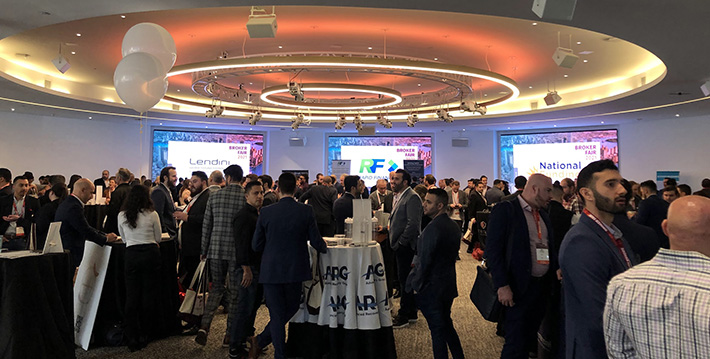 Broker Fair 2021’s showcasing in lower Manhattan on Monday brought together an unprecedented amount of attendees, that not too long ago saw their entire livelihoods and industry threatened by a pandemic-hampered economy.
“We are so happy to be here,” said Sonia Alvelo, CEO of Latin Financial and speaker on the ‘Great Debate’ panel. “With everything that has happened in the past two years, we are just super excited to be a part of this.”
Speakers at the event included keynote Slava Rubin, founder of Indiegogo, Oz Konar of Business Lending Blueprint, and Leo Kanell of 7 Figures Funding.
“We’re here to rekindle,” said Adam Abraham, Partner at Blueline Capital Group. “It’s always good to meet face to face. We’ve all been speaking on the phone for years at this point, so if you put a face to the name, it changes everything.”
That alone, is the best part about this event,” said Abraham. “Here, it’s about who you’re networking with.”
Other attendees felt that alongside the networking opportunities, events like Broker Fair allow the industry to truly leverage its core strength — its relatively small size compared to other areas of the financial world.
“Despite what many people think, this industry isn’t really as big as other finance industries,” said Josh Feinberg, CEO of Everlasting Capital. “When we come together like this, it really drives inspiration, thoughts, and dreams to be able to make this industry what it is today. I think these events really bring everyone together to drive the industry to the next level.”
A total of five panels took the stage throughout the day, and included individuals from across the business financing landscape. Other highlights of the event included a Small Business Finance Professional certification course, an expo room with over fifty companies and tables, and a hip-hop performance with viral artist Kosha Dillz.
At the event, AltFinanceDaily Connect Miami was announced, which will take place on March 24. For the first time, AltFinanceDaily will shift away from Miami Beach and into Downtown Miami, an area in which many members of the finance, crypto, lending, and banking industries have resettled and developed new flagship offices.
“I’m super pumped about the announcement of the show,” said Feinberg. “We’ll see everyone in Miami.”
Q&A with Rachel Sanders on how Small Businesses Can Utilize Blockchain Tech
December 3, 2021 At the NFT BZL conference in Miami on Tuesday, AltFinanceDaily bumped into Rootine, a vitamin company that is looking to expand into the crypto space. Rootine is a small business that exists fully in the tangible world and sells a tangible product. They offer a completely customized vitamin concoction to their customers via questionnaires that identify biomarkers on their online platform.
This all begs the question, how do small businesses like Rootine leverage crypto? Rachel Sanders, CEO and co-founder of Rootine, shared her thoughts.
Q (Adam Zaki)- Your product is obviously inspired by tech and customer experience. Why are these fundamentals of Rootine?
A (Rachel Sanders)- We are in the middle of a health data revolution. More consumers than ever before have access to critical data about their health and this access will only grow. People should be able to leverage their data to optimize their health with precision health products and actionable insights tailored to their unique data and goals. Technology is the key to make this possible.
At Rootine, our mission is to empower members to leverage their data to achieve optimal health and fuel their potential. Rootine analyzes your body to deliver a precision daily multivitamin engineered to optimize your health, and then fine-tunes your formula over time to continuously provide optimal support for your body. Our team has worked hard to build with a human-first mentality, creating a brand that both delights our members and makes a real, and positive impact on their health. We are proud to empower thousands of members to improve their health and are excited to make an even bigger impact in 2022!”
Q-What was Rootine doing at an NFT conference?
A- As the world of web3 and NFTs ballooned in the second half of 2021, we saw a community emerging celebrating vices and fueled by alcohol. There was also this odd dichotomy occurring where health influencers were changing their profile pictures to NFTs depicting un-healthy vices. We believed that heath should be a central part of the conversation in web3, so we dove in.
Rather than build a branded NFT project, we spearheaded a collaborative effort to launch Apex Optimizers, the first NFT project exclusively focused on health and human performance optimization. Community members represent brands like Eight Sleep, Rootine, Hydrant, Span Health, Bioloop, Aloha, Gwella, OneSkin, and Bristle. Early team members from Levels and founders at Bristle, health experts like Louisa Nicole and Dr. Sohaib Imitaz, professional athletes like Justin Gatlin, as well as a number of high performers and crypto and NFT heavy hitters like Steve Aoki.
It has been difficult working in unchartered territory (as a project like this has never been done before), but we were driven by a mission to build an inclusive community highlighting the importance of data-driven health and to deliver tangible real life utility to holders. We have been fortunate to collaborate with some of the top health experts, brands, athletes, and founders in human performance while building a community that is already inspiring its members to improve in areas like sleep, stress, nutrition, fitness, mental health and more.
Q-How will NFTs enhance your product? Why do you think your customers would be more willing to buy products that have some type of blockchain component?
A– As we think about the future of the metaverse, consumer products and brands will play a large role. Exactly what that role looks like is yet to be determined. What we do know is that health will continue to matter and that consumer health brands will need to have a strategy around how they will tie their physical products and experiences into the digital world. As for Rootine, creating a trusted brand and impactful community is always top of mind. To do that, we want to be where our members are and offer unique opportunities that members will not find elsewhere.
One example of that is helping to launch Apex Optimizers. Apex Optimizers is just one of the offerings of the Precision Health Club and it is first and foremost an awesome community of like-minded data-driven health enthusiasts looking to improve how they look, feel, and perform everyday. Gaining access to that community is something Rootine can offer that others cannot, and that is valuable. Through Apex Optimizers we are also able to offer loyal Rootine members access to exclusive perks like 1:1 lessons with pro-athletes, multi-brand discounts and product drops, and real-life wellness experiences.
Q-What are you thoughts on access to capital for small businesses? Has Rootine ever found it difficult to get a loan? Do you think crypto could help the imbalance of access to funds for small businesses?
A- Access to VC capital is a challenge for many. In the VC world, only 2.2% of funding goes to female founded companies, and other minorities and underrepresented founders have similar difficulty. For others, the capital markets have been very founder-friendly recently, with companies raising VC funding at unprecedented valuations.
In the non-VC world, there are a number of new options coming to market that make it easier to get non-dilutive funding. Pipe and Clearco are two great examples. However, to get access to that funding, you have to meet specific size and business model criteria.
Crypto certainly has the ability to put more fundraising power into the hands of creators and builders. There will be more companies using crypto as a way to raise seed capital, and we are already seeing this trend. One thing to note here, is that as the barrier to enter web3 drops, there is going to be more competition for dollars, which will raise the bar on the projects and teams that will succeed in getting funding this way.
Q-Is crypto a topic of conversation in the office? I’m trying to gauge whether your staff has an interest in crypto or if this is just a pure marketing strategy.
A- We have a combination of people very into crypto (e.g. our lead product designer who was an early advocate and continues to be a key thought leader on the team) as well as crypto novices.
It has been exciting to see how the conversations on slack have created an environment of learning and support, helping more people get into the space in a way they are comfortable with. Apex Optimizers’ mission is to make an impact at scale through community, democratizing access to innovation, and by elevating the message around the importance of data-driven health.
For the brands involved, there is of course a marketing component, but at the core, we all came together to help more people live healthier lives because all brands involved support better health.
Q- The crypto space wants to move into the Metaverse. How will Rootine, a company that sells a physical product- vitamins nonetheless- pivot if the crypto community lives in a world where a desire to be healthy may decrease? (If I live in the digital world, with digital art, digital money, digital games, a remote job, and digital friends, why would I want to buy vitamins?)
A- Even if the majority of your life is spent in the digital world, you will still want to feel and perform your best on a daily basis. If people start to neglect health, their productivity decreases, their ability to be their best self at-home with their families and partners decreases, and their stress levels, fatigue and risk for chronic conditions increases. Rootine offers a convenient, at-home way to test your body and get precision multivitamins that can support better overall health, stress levels, energy, focus and more, fueling your potential.
Another interesting thing to note, is if you look at the people building the meta world, a vast majority are the same people who love to compete in athletic feats, biohack their bodies to optimize their productivity, or focus on specific diets. Because of this, health will always be a part of digital communities.
Q- What is the strategy here? Why mint an NFT? Is it to expose the brand? Attract investors? Corner a niche market? Who thought of this, and what’s the end goal?
A-Apex Optimizers’ mission is to make an impact at scale through community, democratizing access to innovation, and by elevating the message around the importance of data-driven health. IJ on the Rootine team originally came up with an idea to explore NFTs and the project has been a collaboration ever since. All people involved have helped shape the design, launch, community and the 30+ perks (and growing) that holders will gain access too.
Q- What is the best way for a small business, regardless of industry, to educate themselves and leverage the crypto market?
A- Get started. If you don’t own an NFT, buy one. Follow web3 twitter and join some discord servers. Research what other brands in your space or adjacent spaces are doing. If specifically looking at NFTs, find whitespace where you can build a unique project that is both collaborative and on-brand
The Broker: A Sister Duo Gets Borrower-Centric
November 29, 2021
When the company she worked at was halted by pandemic woes, Porsha Brooks, then an MCA salesperson, was asked by her sister Mercedes how they could get together and pick up where her other company left off. “My sister approached me at that time saying, ‘well what is it you’re doing, I want some action in that’, then I said, ‘that action is kind’ve drying up— but we can do our own thing, we can start our own business.'”
“So, that’s what we did.”
While offering a suite of loan options to their clients, Porsha spoke with AltFinanceDaily about how her experience in sales, combined with her small business finance knowledge, has powered the creation of a borrower-centric lending product through their company, Brooks Partners Finance.
“As far as MCAs go, I’m not pro or against it, but at the same time, I know what they are,” said Brooks. “The industry for the most part, every MCA [funder], every broker, is pushing MCAs. Everyone is pushing MCAs. But I see that it really does do a detriment to businesses and business owners.”
Although Brooks Partners still writes MCA deals, that’s only if that is the best option for the client at that time. Brooks claims her company’s business model isn’t to push businesses into whatever type of loan makes sense for her company, but rather the opposite, using different types of tools to figure out exactly what loan is best for the borrower.
“If I have every option for that individual, I don’t have to push them into an MCA,” Brooks continued. “I can still get paid, and still do right by that business owner.”
When speaking about her past work, Brooks spoke about how coming up in an all-male environment was actually a motivating experience.
“They quickly judged, saying ‘you know, she’s a woman, and she’s probably not going to last here for too long, because they normally don’t’ and it turns out I did,” said Brooks. “Three months in, I rose to be one of the top salespeople at the firm. Within that time, I got the attention of both partners at the firm, and I would say about a year in, I was promoted to head their new banking department.”
But when the pandemic slowed the business down, it led to the genesis of Brooks Partners Finance. “I already had certain contacts, I had my foot in the door, and I had a taste for bank loans,” said Brooks.
“I’d say the biggest moneymakers for us are SBA and conventional [loans],” said Brooks. “We have a range of banks that we work with and we are able to give to individuals, not just existing businesses, but startup businesses too. We’ve learned the SBA world like the back of our hand. We’ve been studying this for several months, we basically have to know everything about how to get somebody approved for an SBA.”
With access to these types of loans being notoriously difficult for small businesses to qualify for, Brooks spoke about how teamwork between a broker and a merchant can lead to a plan for approval.
“We’re different [from] most brokers in the industry; we’re very, very hands on here. We stay on from the onset until the funding process. Now what we’re doing is we’re holding our clients’ hand. We’re telling them how they can get qualified, taking them through that process, we’re working with the lender, and not letting the lender cut us out.”
“We make sure that we stay in our lenders’ faces for our clients’ benefit,” Brooks continued. “Making sure we are always a part of that process and making sure things go smoothly, so we do get a lot of SBAs and conventional loans done.”
“I’m not just the ordinary middleman, I am supposed to help [my] client and guide them to their best loan option for their business,” Brooks continued. “If I don’t know where I’m sending them or don’t know if they’re going to be qualified, I am doing them a crazy disservice to my client. That’s where we differ.”