
Just Jump In: Three Women Making Their Mark in The Industry
November 29, 2022Forty-Six percent of women make up the workforce in the financial services industry with only 6% of them being CEOs. Reshaping the narrative of men dominating the finance world, women in various components of the industry are making their mark. Sarah Kelly, Lindsey Rohan, and Heather Francis are three women that particularly stand out in the commercial finance industry.
Equipped at Birth
Born into equipment finance, Sarah Kelly got her start by working for the family business at KLC Financial. After a decade of becoming an expert in the trade, she spent some time in the medical equipment finance side of the industry before finally landing at Dedicated Financial GBC, where she is now the Director of Servicing. Dedicated has been experiencing growth, according to Kelly, as the company just hired five new employees in the last couple of weeks.
“I have a lot of confidence in the leadership team and was excited that they were open to having a woman on the team,” said Kelly. “They’ve welcomed me in wholeheartedly, they always ask for my opinion, I’m always willing to give it and I feel like we’ve really all connected to make Dedicated a great company.”
Kelly believes that women should support one another to do better. Even a little friendly competition to push each other to be their best selves doesn’t hurt.
“I believe that we can really show other women that you can be whatever you want to be in this industry, that there’s no limit, there really aren’t,” said Kelly. “I feel like some people think that there might be just because they are a woman but there really is no limit and we just need to get that word out there to them…”
Practicing the Laws of Finance
Finance wasn’t exactly the plan for Lindsey Rohan after law school. Working for a law firm in Long Island she dabbled in real estate closings, but with having two small children at the time, balancing work and motherhood were always at odds. Determined to have her own practice, she started Pollack Cooper & Fisher, P.C. where she worked as a real estate attorney for 8 years. She hadn’t ever foreseen commercial finance as her next career path, but a call from a family friend led her to join a merchant cash advance company.
“It actually became quite a good fit because it’s a lot of multitasking, a lot of looking at all the various aspects of a corporation and its life, and how you can protect it,” said Rohan, Deputy General Counsel at Basepoint Capital.
Handling the legal infrastructure of the company, building out departments to make sure there are checks and balances, and making sure all the collections teams abide by the regulations are routine in Rohan’s schedule. Having much success in her position, a notable point in her career has been about building the Alternative Finance Bar Association. The AFBA was created to facilitate the exchange of information with attorney members concerning alternative finance.
“What’s interesting about this is that while the industry itself is male dominated, most of the dominant attorneys in the space are women,” said Rohan. “Some of the largest originators, the General Counsel are women. The leading compliance and regulatory firm, the two attorneys that lead the group that handle commercial business are both women. And that’s an interesting dynamic.”
Working in a predominately male-led industry can have its challenges but Rohan claimed she never found it to be anything that’s held her back. Acknowledging at conferences that only about 10% of attendees are women while the rest are men, she does not believe it has had a negative impact on growth. Rohan agrees it’s important to support women in every endeavor and to not shy away from positions in this industry.
“Just do it, just jump in,” said Rohan. “Don’t hesitate, you’re in control. The amount that you learn is the amount that you allow yourself to be exposed to.”
Funding with Francis
Graduating with a degree in Health Promotion and Education, Heather Francis took a left turn into finance. Working for a private equity firm, she managed portfolios as well as oversaw many others. That position became her crash course into the industry, fueling her relationship into the financial services world and eventually encouraging her to start her own company in 2015, Elevate Funding. As CEO and Founder, Francis has had to do it all.
“I think owning my own business is accomplishment in itself, as well as being a mom and a wife,” said Francis.
Without dwelling on the industry being predominately male, Francis believes it has opened many doors for her. The women in the field are a “close knit group” propping each other up and sharing information, she explained. She believes it is important to support everyone that demonstrates drive and attitude to better themselves. That can be providing pathways, being a soundboard, introducing people, and simply giving out words of confirmation.
“I’ve always seen that the boys have a club, so do the girls, it’s never been anything that’s been a worry to me, or I’ve been like, ‘I’m being held back because of being a woman in finance,’” said Francis.
As a Board member of the SBFA, Francis helps solve problems in the industry and contributes ideas. And with rapid change surrounding the business, she has a hopeful disposition on where it’s heading as we enter a new economic phase. Experiencing the recession back in 09’, Francis saw the industry grow exponentially between 2009 and 2011.
“Traditional finance pulls back when times are hard, and we’re able to be a little bit more nimble and move around to adjust for it, but still keep funding,” said Francis.
Bonded through finance, women are navigating throughout the industry with strong personalities, outspoken voices, and confidence. Born into the field or pivoting their way in, they seem to be embedded into every aspect. While being a team player to everyone, these women continue to push their career forward with hard work, sticking to core values, and knowing who they are.
Your Default Rate Is Too Low, And It’s Hurting You
November 22, 2022 There may be no word as terrifying to stakeholders in the merchant cash advance business than the term ‘defaults’.
In an industry where a significant portion of revenue is generated from daily or weekly automatic withdrawals from a merchant’s bank account, defaults can cause deep and lasting problems. Not only do they eat into profits, but they damage relationships with banks and processors- both of which are essential to the success of any merchant cash advance company. Defaults can also be contagious: if one merchant in a large portfolio decides to stop making payments, it can have a ripple effect that leads to other merchants doing the same thing.
All these are reasons why MCA companies go to great lengths to avoid defaults at all costs: they exhaustively screen merchants before approving them for funding and do all the due diligence needed to ensure they can follow realistic payment plans. They also attach a fee to every deal to cover the percentage of the deal they expect will not come back, and conventional thinking would be to aim to keep that number as low as possible.
That’s a lot of work to keep that default rate low, but what would you think if I were to contend your default rate is too low, and it’s hurting your bottom line?
Fear of defaults is paralyzing MCA funders and inevitably leading them to leave opportunities-and money- on the table.
Better Accounting Solutions has been the leading accounting firm in the MCA space for over a decade, and has seen this across the board:
Many MCA companies have adopted a risk-averse approach to avoid defaults, opting for sure-fire deals in higher positions, rather than taking calculated risks that could enhance their bottom line. In the name of capitalizing on low-risk deals with a lower chance of default, many companies choose to fund deals where they charge smaller fees than what they could be charging if they choose to fund deals others are wary of taking.
Let’s look at two deal examples for an example of my thesis:
Average Andrew is the perfect merchant for an MCA company. He is getting a $100,000 advance with a deal length of 7 months (140 days) and with his rock-solid history, his default rate is a meager 6%. The RTR on the deal is 44%, the UR fee is 7%, broker’s commission is 10%, meaning the profit on this deal will be $35,500- a net unit profit percentage of 35%, profiting $5000 a month. He is a great client, and a pleasure to work with.
Now let’s examine his buddy, Reformed Ricky. He’s made some mistakes in the past and now wants a business advance to grow the business he believes is The One. No one else wants to touch him, so you offer him a deal of $35,000. Because he is a riskier advance proposition, you can raise the RTR to 49%, and the UR fee to 12%. On a deal like this, the commission is around 14% and the default rate will be a whopping 18% on a merchant like this, but the profit to be made on this deal is $10,150- a 29% net unit profit, getting $3,383.33 monthly profit over the length of the deal.
Now, looking at the structures of both deals, why would I advocate that someone advancing Reformed Ricky instead of Average Andy? What’s the advantage of working with the weaker merchant over the perfect one?
It’s simple:
Because of his history, you can set the duration of Reformed Ricky’s deal to 60 days (3 months). That means according to the terms of his deal, your profit is 9.67% a month. You’ll be stunned to learn that when you break down your monthly profit on Average Andy’s deal, it is a considerably smaller percentage of 5.00%!
 This means every month you’re making more back on the smaller deal, and are getting it to work for you by placing it into new deals and generating more income for you, because of its shorter term. If you’re only taking deals with longer outstanding balances, it will take you a considerably longer amount of time just to make a smaller profit percentage.
On top of this, we also have to account for the compounding effect you will quickly be seeing when you take these ‘riskier deals: because you’re earning more money per month due to the shortened duration of supposedly weaker deals, you will be able to turn it around more times per year, supercharging your growth quicker than what you’d be seeing you stuck to only ‘traditionally-safe’ deals.
I’m not advocating for funders and brokers to be irresponsible and create a new and much less entertaining version of The Big Short, throwing money around to people that don’t stand a chance of paying it back.
I am saying that they should consider funding merchants and positions they were wary of till now, and responsibly assessing the opportunities and upside for them at those positions.
Of course, this doesn’t mean that you should mindlessly funnel money into every deal that comes your way. You still need to be responsible and vet your investment opportunities carefully, and of course, if it turns out you’re picking the wrong deals and your default rate explodes, you will have to reevaluate your approach.
However, working from a place of fear is not the way to grow and thrive, certainly in this business. Moreover, by avoiding risk altogether, MCA companies are likely to become less competitive over time. After all, it’s only through taking risks and innovating that businesses can thrive in today’s rapidly changing world, especially in the rapidly evolving and growing MCA industry, where more and more people are seeking to find their niche.
A great number of successful investors in MCA companies have complained to me that their partners are too conservative with the deals they are choosing to fund and leaving too much capital in the bank, costing the investors higher facor rates instead of working for them.
This approach is a way to break away, and ahead, of the pack, because only by taking the opportunities others keep passing by will MCA companies be able to grow and compete in the long run.
Don’t Count Out the Bank When it Comes to Small Business Lending
November 21, 2022 “So ideally, the best-case scenario for a business owner is always to try and get approved by a bank, it gives them more flexibility, you’re able to build that relationship with the bank,” said Juan Caban, Managing Partner at Financial Lynx.
It’s an old adage that the bank is the best option, but given their historically tough criteria and reputation for sluggishness, the feasibility has long been a question. Caban, however, said that obtaining a bank line of credit is not as daunting as it sounds. Qualifying businesses (TIB 2+ years, 700+ FICO, and favorable industry) can obtain a pre-approval in 24 hours, approval in 7-10 days, and funding in another 2-3 weeks, making the entire process last about 3-4 weeks overall, according to Caban. And brokers can earn a one-time fee of up to 5% as well, he added.
“Bankers tend to be a little old fashioned oftentimes, now some of that’s changing in how they evolve,” said Patrick Reily, co-founder at Uplinq. “We’re dealing with some really interesting progressive banks in the last five years that are thinking about ‘how do we do better and how do we change things,’ but the reality is that they tend to move more slowly.”
Reily’s company, Uplinq, empowers lenders like banks, credit unions, or other financial institutions to approve and manage risks on loans they would have otherwise declined.
“Some of the companies we work for, they’re able to increase the number of people they lend to by 5 to 15 fold,” Reily said. “Think about that. That’s a huge difference.”
Technology, it appears, is widening the approval window, which means business owners shouldn’t count out options they previously thought impossible.
Caban of Financial Lynx, echoed same, explaining that business owners should explore all potential avenues.
“We pride ourselves in knowing the trends and products in banking and can be a great asset for Brokers/ISOs,” Caban said.
“I think it’s smart always to look broadly and understand what your options are, who is best capable to serve you,” said Reily.
AltFinanceDaily Thanksgiving Memes 2022
November 20, 2022Happy Thanksgiving. Every year since 2012, we have published original industry memes for this holiday! Here’s the latesttttt…..







2021 Thanksgiving Day Memes
2020 Thanksgiving Day Memes
2019 Thanksgiving Day Memes
2018
2017
2016
2012
Garcia Expected to Agree To Consent to SEC Judgment in MJ Capital Case
November 15, 2022Former MJ Capital Funding CEO Johanna Garcia is expected to consent to judgment with the SEC without admitting or denying the claims, according to documents filed in the SEC case. As part of that she will have to disgorge ill-gotten gains, pay prejudgment interest thereon, and incur a civil penalty. The total amount is to be determined.
At last tally, the Receiver said it had received more than 10,000 claims and is busy verifying all of them. MJ Capital raised nearly $200M from investors.
The Flair at Broker Fair
October 27, 2022
 Times Square this weekend was filled with representatives of the alternative finance and fintech industry for this year’s Broker Fair.
“There’s just lots of opportunities to network, I mean there’s certainly breakout sessions and things like that, I think many people are excited about those, but I think everybody’s here to network,” said Mike Mroszak, Vice President of Strategic Partnership at Dedicated Financial GBC. “…there’s ample opportunities to do that, the trade show room here is always packed with people, which is not always the case in every conference, so that’s a little bit unique to Broker Fair.”
Funder, brokers, and lenders flooded the sponsor showcase room to talk business and give out swag.
“The best tchotchke is the Lendini tchotchke. Okay, what it is, it’s just a little tool kit, very practical, very handy,” said Michael O’Hare, President at Cashyew Leads. “…the funniest one is actually from FinTap and basically, it’s a button and it says, funded, kind of based off of what Staples says, that was easy, instead it says funded.”
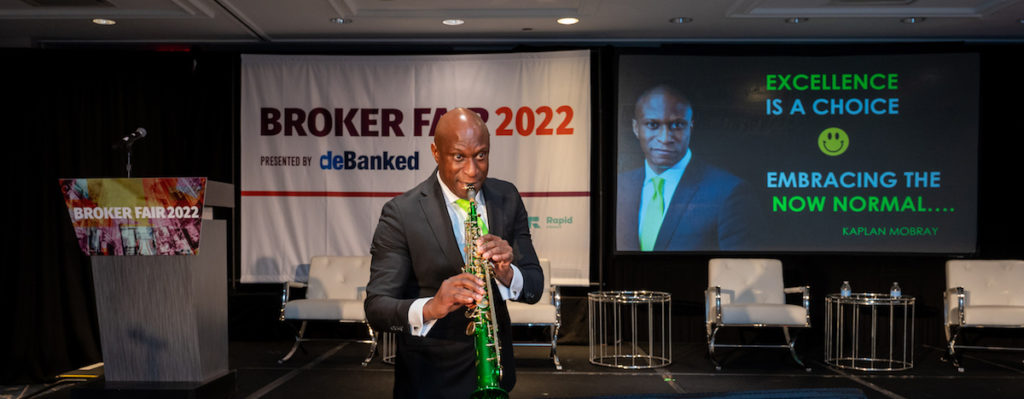
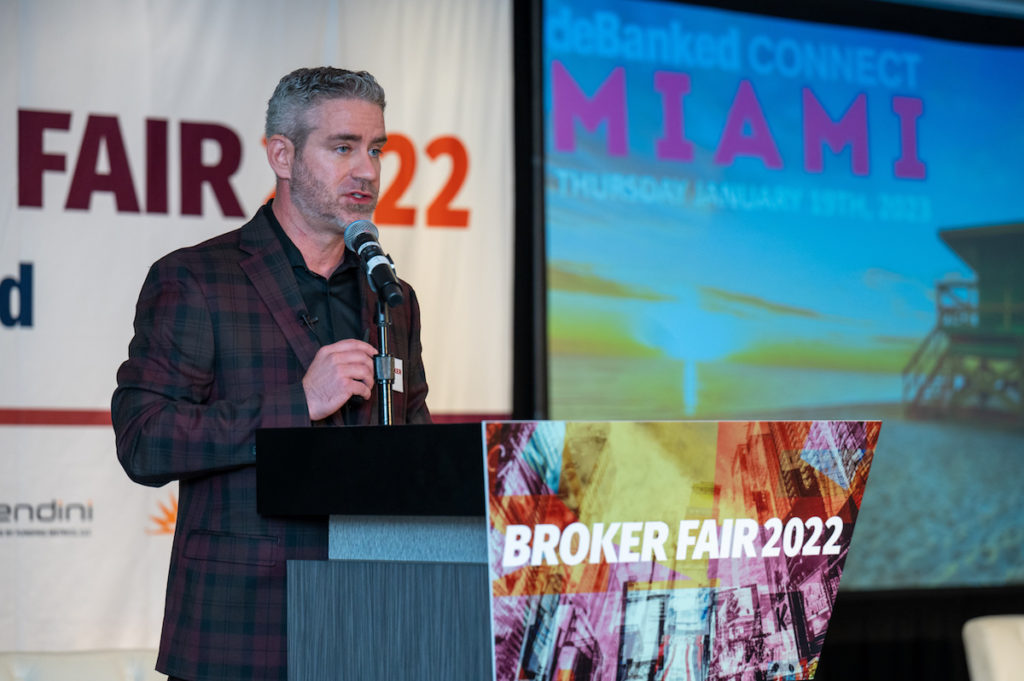 Speakers included Jay Shaw from OnDeck discussing what makes a successful sales team and Keynote speaker Kaplan Mobray inspiring attendees to be excellent. Mobray even surprised the audience with a quick clarinet show. Other sessions that took place include: Bad Deals, The Great Debate, Building America, Equipping the Dream Behind the Scenes, Successful Sales Team (Panel), The State of Real Estate, Truck and Equipment Financing 101, and legal panels surrounding litigation alternatives and the new disclosure laws.
Platinum sponsors Lendini, Rapid Finance, and National Funding also took the stage in between sessions.
AltFinanceDaily CONNECT Miami was also announced for January 19th, 2023, at the Miami Beach Convention Center. With reoccurring faces at this year’s event, attendees, sponsors and speakers are very excited to reconvene once again in Miami.
“It’s been a good time, not my first actually, my second, but I’m looking to do a lot more and definitely the Miami one in January,” said Charles Wolff, VP of Loan Originations at Financial Lynx.
In The Wake of Hurricane Ian
October 21, 2022 The last week of September was pretty ugly for Floridians with Hurricane Ian hitting numerous cities like Fort Myers, Naples, and Tampa, to name a few. With 2.8 million small businesses making up the Sunshine state, many experienced power outages, flooding, and other physical damages. For the small business finance industry, natural disasters are always a possible challenge that they’ll have to contend with.
Jordan Fein, CEO at Greenbox Capital, knows firsthand how to deal with natural disasters during hurricane season. The Miami-based funding provider has been in business since 2012 and has experience with funding businesses in tropical areas like Puerto Rico and the Virgin Islands.
“We’re now at a point where we feel that we do it among the best on how to handle these kinds of situations in terms of being able to meet our customers’ needs, especially during times of duress,” said Fein.
Flooding, wind damage, and trees fallen over on buildings and properties is what Tarneisha Peters, Regional Director of West Florida at Black Business Investment Fund (BBIF), has seen in her area of South Tampa. Many people have lost power for up to 4 days, affecting not only small businesses but staff members as well. And while the extent of the storm’s effects on some merchants are still unknown, Peters hopes the variety of program mentorship and training will help their clients remain resilient in the wake of the hurricane.
“Over 500,000 people experienced outages in the Tampa Bay area, as well as our staff in the Orlando area, including some of our clients,” said Peters. “Our goal is to support BIPOC business owner’s resiliency, so that they are prepared and able to navigate challenging circumstances that may come their way.”
 Mark Kane, CEO at Sunwise Capital in Boca Raton, has seen a fair number of hurricanes since he started his business in 2010. His company has even had to relocate to Orlando before just to have internet in order to work. Businesses that are a true “brick and mortar,” as Kane described, may not have the luxury of moving elsewhere. But before immediately knowing which angle to help clients, Kane tries to look at it from a couple different angles. What was the impact of the damages? What exactly do they need? And how can they accommodate those needs?
“I think it has to be looked at from a number of different levels,” said Kane. “So, what was the total impact? Is it ‘hey, I’m done, I’m out of business?’ or ‘hey, I need a break, because our business is slow, or we haven’t reopened, and I’m not able to make the payments.’”
Meanwhile, impacted businesses may be eligible for Business Physical Disaster Loans as well as Home Disaster and Economic Injury Disaster Loans. For physical damage, the deadline to apply for a loan ends November 28th and economic injuries the deadline ends June 29, 2023.
“BBIF is an SBA lender,” said Tarneisha Peters, who added that the SBA was a great partner of theirs. “[The SBA provides] disaster related support, guidance and business assistance to help provide relief when it is needed most.”
Onyx IQ Customers Can Now Use Actum Processing
October 18, 2022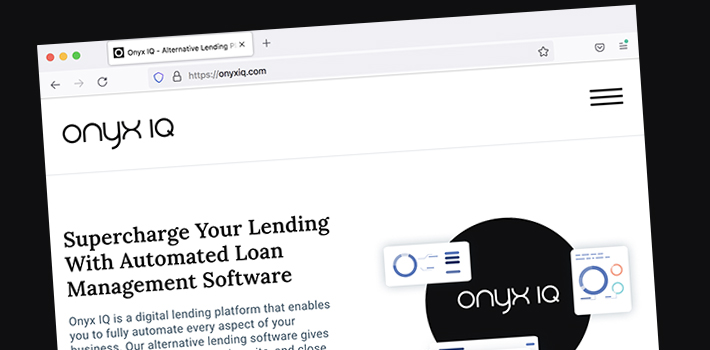 Onyx IQ recently announced a new partnership with Actum Processing. Customers of Onyx IQ, a loan & MCA management company founded in 2017, will now be able to process their ACH payments using Actum.
“The lending space happens to be one of our most productive niches, being that funders and brokers need a means to collect payments and fund deals,” said Vincent Lipari, President of Actum, “the ACH network is that vehicle and Actum takes pride in delivering reliable services for our clients.”
Onyx IQ, described as a “digital lending platform that enables you to fully automate every aspect of your business” and led by smb finance veteran Jay Keller, launched its software this past July.
“It’s a workflow solution with all the appropriate integrations and all of the reporting that the MCA and alternative lending spaces might need,” said Elizabeth Schuerman, VP of Sales at Onyx IQ.
The arrangement between the two companies is not mutually exclusive. Onyx IQ customers can use other processors if they so choose and Actum does ACH processing in many spaces outside of lending including the shipping space, fantasy sports, gaming, and more, but the collaboration is significant for another reason; Both individuals, Lipari of Actum and Keller of Onyx IQ, have known each other for roughly 11 years and ironically had never done any business together. When the opportunity presented itself, their non-business relationship grew into this newfound partnership.
“Integrations like the one we have with Onyx IQ help Actum attract more quality lenders, which is good for growth in transactions and revenues,” Lipari said.
Overall, the deal “allows net new customers to start funding in as little as 2-4 weeks, processing ACH payments and paying commissions on the rails that already exist between the two platforms,” an official statement says.