
NorthOne is Building Finance Departments For Small Businesses
October 20, 2022 NorthOne recently received $67 million in Series B funding from investors including former NFL star Drew Brees, Battery Ventures, Don Griffith, Ferst Capital Partners, FinTLV, Operator Stack, Redpoint Ventures, Tencent, Tom Williams, and Next Play Capital.
Founded in 2016 by CEO Eytan Bensoussan and COO Justin Adler, NorthOne was designed for small business owners to build a finance department without the complexity of a bank. Coming from an entrepreneurial background, Bensoussan noticed that being a great owner does not make one a great financial manager. With the idea of building good banking and accounting for businesses and combined with Adler’s professional career in the tech space, NorthOne was born.
“We want to build finance departments out of every small business in America, bring the sophistication of what so many of the biggest companies around us enjoy but bring it to the small businesses that could never dream of being able to build a finance department for their small business,” said Bensoussan. “I think that’s the gap that we’re closing.”
Through NorthOne, customers not only get access to a bank account but also technology that organizes and manages other business functions. Business owners can pay invoices, do payroll, and send ACHs or wires in seconds, for example, all while integrating with their existing accounting, e-commerce, and POS software.
Conducting all this from a desk or mobile device without having to go to a bank is a service directed at small businesses with fewer than 10 employees, that are family owned, and are managed locally in the community.
“…here we are talking to a lot of these business owners explaining that there’s so much more that a bank account could offer if it was designed to be more than just a store of money,” said Bensoussan. “I think that’s this eye-opening moment when we talk to them, and we get a lot of folks saying I never even thought that it could go that far. And it’s an exciting moment for us as well.”
Work With a Broker or Go Direct?
August 2, 2022“I believe that a merchant might be better off going to a broker so the broker can make available to the merchant several different offers,” said Pooja Nene, Broker Relations Manager at Balboa Capital. “And if they’re doing what they need to do correctly and if they’re really consulting the merchant correctly, I think that they would be providing the best offers to the merchant based on their needs.”
 It’s the age-old question, are merchants better served by using a broker or going direct? Opinions vary and are usually colored by what role one has in the process.
“The advantages of working with a broker is it saves the merchants a lot of time, and in some cases saves them money in fees,” said Randy Guerrier, Senior Funding Executive at Banana Exchange, a company that provides capital to MCA providers. Guerrier’s vantage point makes him less biased. “A lot of brokers do have a lot of preexisting relationships and wholesale rates that they could get with their relationships,” he said.
Matthew Washington, Founder & CEO of Moneywell GRP, says there’s a bit more nuance to the whole thing.
“The reality is that when the merchants go direct with lenders, they’re essentially dealing with the lender’s broker shop, right?” he explained. “Any lender that gets directly contacted by a merchant usually gives them off to their sales team, which [is also able] to send [them] off to other lenders.”
Washington, whose company is a funder, was an advocate for what brokers can accomplish for their clients especially since he relies entirely on them for business. He emphasized that his company is one that doesn’t have a direct sales team to handle any direct inquiries.
“All my business comes from my ISO channel,” he explained. “So when I approve a deal, it’s up to me and the broker to win it if there’s competition, but if I declined the deal, my brokers take that deal to another lender that has an appetite for that particular scenario.”
 “[Lenders] may not have the staff available to form that relationship with a merchant,” said Pooja Nene of Balboa about the debate on broker vs. direct. She also cautioned that sidestepping a broker in the process might not translate into an increased likelihood of approval.
“If it’s the first round of funding, if it’s their first loan schedule, we don’t know who this merchant is, and we may feel a little bit more comfortable with that file coming through the broker and the broker discussing the terms with the merchant,” she said.
Guerrier of Banana Exchange said, “It always comes down to working with the right type of broker, right? It comes down to the person that answers the phone that’s working with you, whether it’s at a big company or small company, I like to look at things from the individual working with the right people.”
And finding the “right people” isn’t automatic because they still have to be found, and once they’re found the lender has to decide if the customer is also right for them. Speaking about that in relation to all the economic uncertainty, Washington of Moneywell GRP said that a funding company should stick to what they’re comfortable with and not “chase deals” that they wouldn’t normally fund.
“But, also [on being found], I would market the heck out of my company and make sure that everyone in the world knows what I do, my product line, my branding, my logo, and make sure that anyone that is looking for capital that they know ‘hey, this company is always popping up,’ and I’d make sure that I stand out,” Washington said.
The Real Small Business Funding Demand Has Yet to Kick In
May 26, 2022 Now that small and medium sized businesses received crucial PPP and EIDL funding during the COVID-19 pandemic, they have become more familiar with other options to obtain capital.
“…they’re learning that they can borrow money based on their revenue, not based on their credit and assets,” stated Sean Feighan, Co-founder and President of Cash Buoy. Feighan explained that the exercise of obtaining capital during Covid to stay in business created or further developed an appetite for small businesses to borrow money in general.
As these businesses are still utilizing the remaining government aid, the real demand has not truly begun, according to Dylan J Howell, CEO of Liquidibee. “…we have yet to see the real big demand that’s about to kick in, in my opinion, over the next six to twelve months, I believe that a lot more demand will come in,” Howell said. “A lot of companies received a good injection of government stimulus. And they’ve enjoyed that over the last year, year and a half. And as that comes to an end, companies are always looking for additional capital, whether it be to grow or foster future growth of their company.”
“I think we’re beginning now to see a new phase within small business,” said Avi Wernick, VP of Partnerships at FinTap. Because of the money that’s still lingering from the stimulus efforts, he thinks that alternative finance companies will soon see more demand in the coming months. But at the same time, those finance companies will have to determine if they’re even a good fit for their products. “I think some businesses will be more adversely affected. I think it depends a lot on the nature of the business owners, you know there are better business owners out there that are able to manage [their] finances more responsibly, and there are others that are kind of just more reactive.”
Erez Stamler, CEO and Managing Director of Fresh Funding, echoed a similar sentiment. He said that increased risk factors of a business coming out of Covid can make it harder to get them approved. Besides, a business now predisposed to forgivable funding or ultra long terms at very low interest may not necessarily demand other products in the market.
“So you will see demand, but you might not see increased amount of views or volume of deals, because you can’t replace SBA loans with MCA,” Stamler said.
Large Fintech Companies Helping to Normalize Revenue Based Financing
May 6, 2022 With business increasing for wide-reaching financial technology companies like Square, Paypal, and Shopify, this has brought more attention to revenue-based financing products like the ones they offer. Henry Abenaim, Founder and CEO of Fundingo, said that it brings more businesses to the table.
“…you sometimes think it’s a small world or small group of merchants, and you really come to realize that it’s huge,” he told AltFinanceDaily. “And the more they’re serviced, the more they need, the more they grow. So it just feels like there’s just more awareness of the product, and then more merchants that are going to come in demand and ask for it, as well as these bigger players are always going to service only a subset of the businesses.”
At the same time, a greater public awareness of options could tighten margins for certain funding providers. “I think it’s going to make the merchants that are way more bankable… get lower price deals, so it’s going to hurt the margins, it’s going to hurt the profits,” Abenaim commented.
John Bulnes, Vice President of Business Development at Fenix Capital Funding, expressed how it is not yet determined what kind of effect the larger mainstream companies will have on the industry. “I do think it’s something that the larger first position MCA companies may feel the effects of first, because they’re going to be competing more or so with taking away clients from those companies first, as opposed to the companies that are smaller that are doing shorter term deals.”
As these big companies operate with larger capital bases, it may indeed become more difficult for smaller companies to compete.
“… it’s going to be something that’s going to constantly adapt and fluctuate as time goes, but I do see it as an expanding industry… it’s kind of a sign that when you see more commercials and we see these bigger companies jumping into the space, that it is something that’s going to continue to grow,” said Bulnes.
And commercials and ads are definitely increasing. One of the largest online small business lenders in the country was asked about their TV and radio campaigns during their recent quarterly earnings call.
“We’ve definitely been ramping [commercials up] hopefully with a little bit more diligence than OnDeck was running ads three or four years ago,” said David Fisher, CEO of Enova. “But we’ve definitely jump back into kind of broader base advertising in that business and it’s been working really well.”
Reality TV Loan Broker Shares What Happened After the Show
March 17, 2022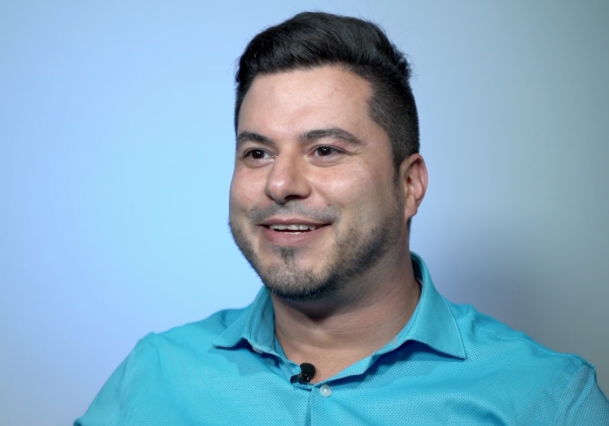 Juan Carlos Marcano’s experience on Equipping the Dream has given his loan brokering career a major jumpstart.
In a chat with Juan Carlos Marcano this week, the Equipping The Dream broker who became a fan favorite for his personality and demeanor, it was learned that he’s been up to some interesting stuff since he appeared in AltFinanceDaily’s first reality show. While operating JFK Business Financing in Dallas, Texas, Marcano shared that he is still in cahoots with some of the other participants in the show.
“I closed five deals last week,” said Marcano, when asked about what happened after he left the training office of Everlasting Capital. “After filming the show, I started with Will and Josh,” he said in reference to the two partners of Everlasting Capital. “They sent me leads, and I started closing.”
When asked what the Spanish speaking merchant needs most out of the small business financing industry, and more so Spanish speaking brokers like him, Marcano spoke about how these merchants just need service above all else. He spoke about how because of the language barrier, many of these merchants don’t have access to the same type of capital as an english-speaking business because there are not many people out there to go ask for it in their language.
 Marcano awaited the final results of the one-week training competition at Everlasting Capital while wearing the flag of Venezuela as a cape, his native country.
When asked if he is working exclusively with the brokerage from the show or if has future plans to expand his business, Juan spoke like a true broker. “I’m open to hearing from other funders and brokers about doing more deals,” he said.
“I will use the leads I get from [Everlasting] to help build my business in that industry,” said Marcano. “I’m starting to get better and better. When I get my cash flow going on and up, I’m setting a plan with a strategy to build my own details. I just need to get better with my website, social media, everything here is marketing.”
He said one major advantage of being a small shop is the potential he has as a broker in where he can live and do business. Currently a Dallas resident, Marcano sees a future in multiple cities. “I want to open up businesses in Miami,” he said, “but as I think about it, I’d like to open up a business in New York too.”
When asked about how he will compete with big tech’s emergence into small business lending, Marcano highlighted customer service and personality are the key to success for companies like his.
“For me, it’s all about providing great service. It’s all about five star service.”
You can meet Marcano at AltFinanceDaily Connect Miami on March 24, where he alongside the cast of Equipping the Dream will be in attendance.
Why is Canadian Fintech Sizzling?
March 1, 2022 Downtown Montreal
In recent weeks, Canadian fintech companies have made major splashes in the world market. In the sphere of acquisitions, lending, funding, products and even digital assets, multiple Canadian cities and the companies that call them home have gained a reputation for being a focal point in fintech progression. Cities like Vancouver, Toronto, and Montreal have become start-up hotspots for companies looking to ride the wave of Canadian financial innovation.
In the country’s most internationally impacting financial move, Montreal-based payments company Mobeewave’s acquisition by Apple is set to come to fruition, as the company is about to take their phone-to-POS mobile merchant terminal live around the world. Apple acquired Mobeewave last year for $100M and will use the company’s technology to allow merchants and customers to conduct payment transactions by touching phones.
Other companies of note are Hopper, the Montreal-based mobile travel agency that is embedding ‘travel fintech’ into their products. Things like insurance, price drop guarantees, and price freezing are now offered on the Hopper app, which is now valued over $5B after an influx of capital from Brookfield Asset Management.
BNPL giant Klarna has also made moves in the north, opening offices in both British Columbia and Quebec in an attempt to further their expansion into the Canadian market. In a recent interview, the company’s CEO said their research had found at least half of Canadian shoppers were a prime contender to get the best out of Klarna’s services.
So this all begs the question- Why is Canada so ripe for fintech?
“We’re a fast growing market with a strong immigration policy, cheaper technical talent, and strong government hiring incentives,” said Tal Schwartz, Senior Product Manager at Nomis Solutions. “Secondly, we’ve been successful at ‘Canadianizing’ global solutions. For example Brex and Ramp have no client presence here, but Caary and Float have successfully built homegrown solutions that fill a local need.”
Schwartz spoke further on Canadian companies putting their own improvements on established products, making ‘Canadianized’ versions of fintech products and ideas. “Revolut tried entering Canada with little success,” said Schwartz. “Now two years later Koho, Wealthsimple and Neo have cornered the digital banking market from within.”
 Even Canada’s legacy financial institutions have been challenged by fintech, as the nation with the notorious ‘Big Five Banks’ has seen neobanks creeping towards the top as the highest used, as the neobank dubbed Equitable Bank is now Canada’s 7th largest after acquiring Saskatoon-based Concentra Bank earlier this month. Equitable has newly grown its mortgage portfolio thanks to its partnership with Canadian fintech Nesto, a mortgage broker marketplace. The move also gives Equitable a footing in the credit union space, as Concentra provides treasury and trust services to over 200 credit unions in Canada.
Even the metaverse has taken interest in what Canadian finance can offer it. Terra Zero, a Canadian metaverse real estate platform is now offering mortgages on Decentraland for those looking to purchase property in the trendiest space on the internet.
Canadian finance has made a big leap since a year ago. Pandemic-induced restrictions decimated the country’s financial fortitude, and international competition has never been more intense. Like Schwartz mentioned, it’s the ability for Canadian companies to innovate the innovators, using ideas stemming from other products to “Canadify’ fintech, that has surpassed their industry past the point of survival.
“I think Canadian fintech is hot right now because in Canada, we don’t have the alphabet-soup-level of federal bodies as the U.S. does, primarily leaving enforcement to smaller, more personal, more flexible provincial organizations,” said Nick Chandi, CEO of Forward AI, a Vancouver-based fintech. “In addition, Canada is set on Open Banking, with the Advisory Committee’s final report published in August 2021 and follow-up survey showing that the majority of the Canadian financial services industry wants to move ahead on implementing open banking in Canada ASAP.”
On top of financial friendly politics, Chandi believes it’s Canada’s concise population centers that breed collaboration and innovation. “It’s also a smaller community,” Chandi said. “With most fintech workers living in one of a few key cities, it’s easy to network and make things happen.”
Pick a Niche or Go Far and Wide? SMB Financiers Weigh in
February 18, 2022 As big tech continues to pave the way for new avenues for providing capital for small businesses, the legacy infrastructure in place has their own ideas of how to compete in funding a digitally native business owner. While some say that the strength is in finding a niche, others disagree— claiming that the key is to expand business, avoiding a one-dimensional aspect of funding. On top of this, some commercial finance brokers even claim that an ability to handle digital assets will give them an advantage over a larger tech company, too.
“Finding the niche as far as who you’re funding, and what type of deals you’re funding, will lead to continuing growth,” said Matt Rojas, Senior Lending Officer at Ironwood Finance. While Rojas believes the strength of a smaller brokerage is the ability to service a niche client, he expressed the idea that larger companies getting into the space are going too deep too quickly—resulting in an unsustainable rate of expansion.
“I see the biggest problem with the fly-by-night brokers, these bigger MCA shops that you’re seeing entice brokers to send the clients to them,” Rojas said. “I don’t see how that will sustain long term unless they continue to meet milestones to acquire their capital. I just had a merchant [get] bought out from our firm [by another funder] for over 40K plus, [but] their cash flow could only sustain an 18K MCA max. I’ll never understand how these firms are going to operate on a larger scale unless they are bought by the big firms.”
Other people in small business lending think that the strength is to offer a variety of financial products and options to give merchants choices. “The only way to keep up with the big boys of the industry is to simply just not be a one-trick pony,” said Juan Caban, Managing Partner at Financial Lynx. “Just like they are adapting into new markets and products, we as lenders and brokers need to also enhance our offerings.”
 While people like Caban are molding products based on the competitive flow of the industry, Rojas seems to believe the system will bleed the big players dry. “It’s my understanding that as a lender we don’t need to compete with each other on rates like you’re seeing,” Rojas said. “I believe they call this the cash burn stage.”
“They’re going to burn as much cash to acquire clients,” Rojas continued. Then, the dominos fall. […] It’s like a story that paints itself over and over again. The same thing will happen to these bigger firms you mentioned due to the simple fact that their underwriting process doesn’t factor NSFs, non-repayments, or defaults.”
While Rojas focused on what the bigger companies are doing, Caban spoke on what brokers can do on the fly to adjust. He expanded on the idea of using old tactics in new ways, saying that traditional sales tactics may work if implemented with a well-researched and modern spin.
“Before cold calling, research and understand who your target market is and be prepared,” Caban said. “When cold calling, no one merchant has similar needs and goals. We need to ask the right questions, learn about the business, then find customized solutions that are in line with their financial needs and goals.”
A merchant will always appreciate a broker or lender who takes an interest in their business and find solutions that are in line with their goals rather than [their own] financial interests.”
Some brokers have gone outside of the box when it comes to how they will compete in the future of small business lending, saying that traditional currencies have been won over by big tech, and it’s digital assets that will open a brand new market for the next-generation small business lender.
“Since 2008, technology has changed a lot more than just the process in which small business owners find and acquire funding,” said Nicholas Saccone, Senior Funding Advisor at Proto Financial. “As you know, cryptocurrency is becoming more and more mainstream by the day with the Fed scrambling to get control over it. Whether you believe in crypto or not, it will [change] the way we see money.”
Saccone expressed that brokers who embrace learning about digital assets will not only be able to compete with large tech lenders, but beat them out.
“PayPal, DoorDash, and Square can make it easy for companies to secure fiat currency, but as crypto becomes more mainstream, brokers will fulfill a new role as they help educate clients on the new financial system that is upon us,” Saccone said. “It will be physically impossible for large tech companies to integrate crypto into their current systems without brokers doing the dirty work.”
“Mass adoption comes from the top down,” Saccone continued. “Digital collateral tokens, such as Flexa’s AMP, will change the payment processing industry forever. Transactions will become instant and it is my belief within the next ten years, merchants will be utilizing digital assets more than fiat cash.”
Lenders Love One-Man Broker Shops, Rookie Broker Finds
January 5, 2022 “After meeting so many people at the Broker Fair in New York City, I was like, ‘you know what, now is the time for it. I’m young, so let’s take the risk and start my own company.’”
Matt Dolecki, a 23-year old entrepreneur who owned and sold two businesses before he graduated high school, is taking the young hustler’s mindset to the alternative finance world. Just this week, Dolecki started his own brokerage; dubbing it Opulent Capital.
Although Dolecki wants to start funding deals immediately and create relationships across the space, he is aware that he needs to also focus on honing in on the foundations of his business if he wants true success.
“I think a lot of people when they enter this space try to grow too fast and too big too quickly,” he said. “I’m not here to grow extremely fast or extremely big. I’m here to establish a well-rounded company and not tarnish my work just trying to grow fast.”
After interning at a funding company after college and subsequently working for a commercial collections agency, Dolecki believes his experience seeing all sides of the process will set him aside from other brokers.
“I have enough knowledge and information for the merchant to not just broker them the deal, but inform the merchant and let them know exactly what they’re getting, what’s possible for them, and what’s the better option,” Dolecki said.
“I have the debt collection side, and I’ve worked in [small business funding], so I have a really well rounded knowledge of how this whole thing works. If someone were to default, I know exactly which way to go. I can guide the lender on exactly which way to go, I have all the contacts on both sides, lenders and brokers, as well as many debt collections agencies. So I can help lenders not only get business, but retain business and get back lost revenue.”
Not only is Dolecki confident that his experience will set him and his company aside from competitors, he also believes his strength in numbers, or lack of, will allow him to operate a smooth show.
“I’m a one man shop,” said Dolecki. “I’ve talked to a lot of lenders, and they like the idea of having one person to deal with. Information is directly to the source, directly to me and directly to the merchant. It’s an easier form of communication. Every lender I’ve talked to agrees that 90% of their best selling ISOs are one man shops.”
When speaking on creating an image for his company from the merchant’s perspective, Dolecki spoke extensively about different types of marketing. He says that a strategy seemingly based on the business owner’s age can determine what type of communication should be used to pitch that particular merchant.
“If you are trying to reach out to small business owners over the age of 60, most likely a call will be more beneficial rather than investing in marketing or SEO,” said Dolecki. “Now there are so many young business owners who all love technology and doing things online, so building a platform where you can use fintech to apply for loans and search different loan options would be much more beneficial to the younger business owners.”
“I think a good mix of using fintech, algorithms, and tech, but also cold calling and [even] reaching out by mail is an effective way of trying to find that perfect mix of using both types of merchants.”
Dolecki has received support from other brokerages in the industry and claims without help, he would never be in the position he is now.
“Shout out to Porsha and Mercedes Brooks at Brooks Partners Finance,” said Dolecki. “They’ve really been a big mentor for me starting out, and helping me to get the ball rolling. I’m now calling merchants, signing on as an ISO with different lenders, and still just getting started.”