
Shopify Capital’s Funding Business Grows in Q2
August 14, 2024Shopify Capital originated ~$700M in business loans and merchant cash advances in Q2. During the earnings call, Shopify CFO Jeff Hoffmeister referred to its Capital division as a “growth business” that had increased in volume. Shopify has otherwise seemed to downplay mention of this division since early last year. In terms of origination volume, the company is still not as big as Enova or Square Loans.
Shopify’s rival, Amazon, used to offer funding to its clients directly as well, but switched to referring its clients to third party lenders earlier this year.
WTF, From Credit Card Processing to Funding Deals
August 6, 2024“My first name is William, my son’s name is Torre and he’s my partner, and our last name is Failla, so WTF was the name of the acronym that we came up with.”
 WTF Merchant Services, a real name and double entendre that makes it instantly unforgettable to any client that hears it, has an unusual story. Its CEO Will Failla is a veteran professional poker player that has won more than $6.6 million from tournaments over the course of his career according to a site that tracks players. It’s through friends he made at the card tables that he began to learn about a unique business that some of them were involved in, funding merchants based on their credit card processing sales. After a lot of encouragement and advice over the years, Failla was intrigued enough to look into doing it himself.
“I approached my son who was a business major and a finance major out of Hofstra and I said to him, ‘you’re graduating any day now so why don’t we do some diligence, look into this business and see what you think.'”
His son, Torre, who is now the company’s CFO, signaled his approval so long as they paced themselves and mastered the most fundamental component of it first, the credit card processing side of the business. Thus 2021 kickstarted WTF Merchant Services as a shop on Long Island that focused entirely on boarding merchant accounts. They started by approaching their friends, family, and contacts and then expanded it to where they had a referral incentive program and continued to acquire more and more accounts.
The most attractive part of the business to them is the residual revenue component to it. “That’s the greatest. That’s what made us get into it because now we get paid every month. As long as you keep that customer, you get paid every month,” Failla explained.
And keeping those clients means providing great customer service, which he said they’ve placed a strong emphasis on. They’ve also gotten a firsthand look at the financial trends of the various businesses they’ve worked with, something they figured would come in handy for when they were ready to take the next step.
“We didn’t do an MCA deal until the beginning of this year,” Failla said. “We really wanted to learn the business in and out, and then we were just an ISO.”
 The evolution from credit card processing to funding is straight out of the old MCA playbook of the mid-2000s, but with a notable difference here, they haven’t abandoned their roots. Unlike many modern funding ISOs who focus entirely on commissions paid out on funding, WTF is requiring their funding clients to switch their merchant accounts to them, assuming it’s a business that processes cards. And if they can do the funding deal on a split of the processing, all the better.
“When you do the split, it’s so much easier because you take, let’s say 15 or 20% or whatever the merchant can handle at the time,” Failla said. “It’s just so much better of a direction to get paid because it doesn’t hit their bank, it doesn’t hurt them as much. When they see it coming out daily like that, it’s a little different. When it comes out of the credit cards it’s just early and it helps a lot. Mindset changes.”
The company’s traditional approach has already attracted the attention of some of their peers in the industry who like the idea of residual income but don’t have the time or the patience to worry about merchant accouts.
“We have different MCA offices that we actually do this with already,” Failla said. “We do all their credit card processing. We handle all the back-end. We handle all the front-end. All they do is give us the referral and they become what we call a referral partner, and they get paid every single month as long as we keep the account.”
Will was sure to give credit to those that have helped shorten his learning curve along the way. He has since discovered that others in the poker scene are also in the same business as he and it’s created a valuable community. WTF even has a poker table in its office as a sort of tribute to his background which he has not actually retired from. The Hendon Mob poker tracker states that Will recently placed 259th out of 10,112 players in the World Series of Poker in Las Vegas earlier this month. Meanwhile, the company name itself, a bold strategy, seems to be working out so far.
“If you look under our logo, it says our names right underneath it. William, Torre Failla, and listen there’s going to be some pushback, but the amount of pushback we’ve had is so minimal that I think it’s worth it, and we’re going to stick with it as long as we can.”
Fundfi Merchant Funding Expands Services to Canada, Paving the Way for Financial Growth and Innovation
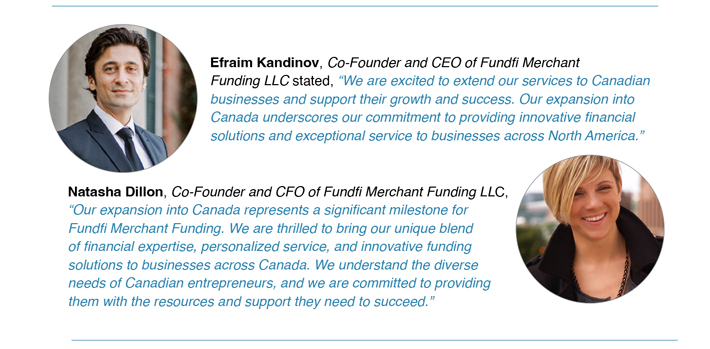
July 11, 2024Fundfi Merchant Funding, a leading provider of innovative financial solutions in the United States, is excited to announce its expansion into the Canadian market. With a proven track record of empowering businesses to achieve their goals through strategic funding, Fundfi Canada Inc. is poised to bring its expertise and dedication to support Canadian enterprises.
The decision to expand into Canada comes at a time when businesses across North America are seeking reliable and flexible financial support to navigate economic landscapes and fuel growth opportunities.
By extending its services to Canadian businesses, Fundfi Canada Inc. aims to bridge the gap between financial needs and solutions, empowering entrepreneurs to thrive in today’s competitive market environment.
The expansion into Canada reflects Fundfi Merchant Funding’s ongoing commitment to innovation, growth, and client satisfaction. By leveraging its extensive experience and deep industry knowledge, Fundfi Canada Inc. aims to become a trusted partner for Canadian businesses seeking reliable and strategic financial support.
As Fundfi Merchant Funding embarks on this exciting new chapter, it invites Canadian businesses to explore the diverse range of financial solutions and opportunities available to them. Whether it’s funding for expansion, equipment upgrades, working capital, or other business needs, Fundfi Canada Inc. is dedicated to helping Canadian businesses thrive and succeed.
For more information about Fundfi Merchant Funding and its expansion into Canada, please visit www.FundfiMerchantFunding.com.
Smart Business Funding Prevails in Trademark Lawsuit
July 3, 2024Smart Business Funding, the trademark owned by Collins Cash Inc, has officially survived a trademark infringement challenge brought by BillFloat Inc dba SmartBiz. Both companies began using their respective marks a decade ago and the two even had a partnership referral agreement at one point. However, in 2020, SmartBiz sent Smart Business Funding a Cease & Desist letter on the basis that it was allegedly infringing on its mark and causing confusion in the market. While they are both engaged in small business financing, each offers different products. SmartBiz eventually filed a lawsuit.
After the original trial went in favor of Smart Business Funding, the decision was re-examined on appeal. There, the United States Court of Appeals for the Ninth Circuit affirmed the original ruling. The Smart Business Funding mark does not infringe upon SmartBiz.
Company Acquiring Funding Circle USA Had Previously Acquired Knight Capital and Assets of Fountainhead
June 24, 2024 iBusiness Funding, LLC, which is acquiring Funding Circle’s US arm, is no stranger to the small business finance industry. That’s because the company not only acquired select assets of Fountainhead SBF LLC last year, but its parent company, Ready Capital, had also acquired Knight Capital in 2019.
Ready Capital, a non-bank SBA lender, had also been one of the largest PPP lenders in the country during the pandemic. The designation of being an SBA lender is a highlight in the acquisition of Funding Circle because it means it does not need Funding Circle’s SBLC license to do SBA loans. Funding Circle had faced hostility by members of congress earlier this year for exploring a sale of its business only after it had lobbied for and finally secured an SBLC license. Now the matter is moot.
“As the Ready Capital group already holds an SBLC license, Funding Circle has, with SBA consent, surrendered its SBLC license,” the announcement by Funding Circle said. “The transaction is expected to close by the end of June.”
It was a share purchase agreement for a total cash consideration of £33 million ($42 million) which includes all of the company’s loan portfolios.
Funding Circle CEO Lisa Jacobs said, “We are pleased to have reached an agreement with iBusiness Funding, one of the leading processors of loans to US small businesses. In iBusiness, we have found a partner that shares in our mission, and we look forward to seeing the success of the combined entity.”
Ready Capital CEO Thomas Capasse said, “We’re excited to acquire FC USA and expect the acquisition to yield meaningful revenue and earnings to the combined company in the years to come.”
Founder and CEO of iBusiness Funding LLC Justin Levy said, “We are thrilled to welcome the exceptional FC USA team to the iBusiness family. FC USA’s mission to be the largest SBA lender for loans under $500,000 aligns with our goal to support underserved borrowers, the only difference is iBusiness achieves this goal through many SBA-approved lenders in our network.”
“Something’s Happened” – How a funding platform weathered a shocking crisis and is flourishing
June 21, 2024 “[The CEO] called me just before seven in the morning…but [he] would never call me at that hour, so I picked up the phone and he goes ‘Paul, something’s happened, it’s very serious.’ and I’ll never forget, he says ‘you need to take care of our company.'”
That’s how Paul Vega, Senior Operations Manager at Funders App, retold the story of a phone call he received in June 2021 that would shake up everything about the small business finance company he was working at. At the time, the business was known as 24 Capital, Funders App was a platform they were developing internally, and Mark Allayev who was the CEO, was riding high from having weathered all the uncertainties of startup life and the Covid era. With Vega having played a key role in that success and the business running smoothly, Allayev felt he had earned a much needed vacation and traveled to Europe with some friends.
“And it was just five days,” Allayev said. “But one of our friends had an event in New York and we just had to come back, and the only flight to New York was with a layover in Germany, in Frankfurt. So we got to flying and it was supposed to be a two hour layover in Germany, but came out to be an eight month layover in Germany.”
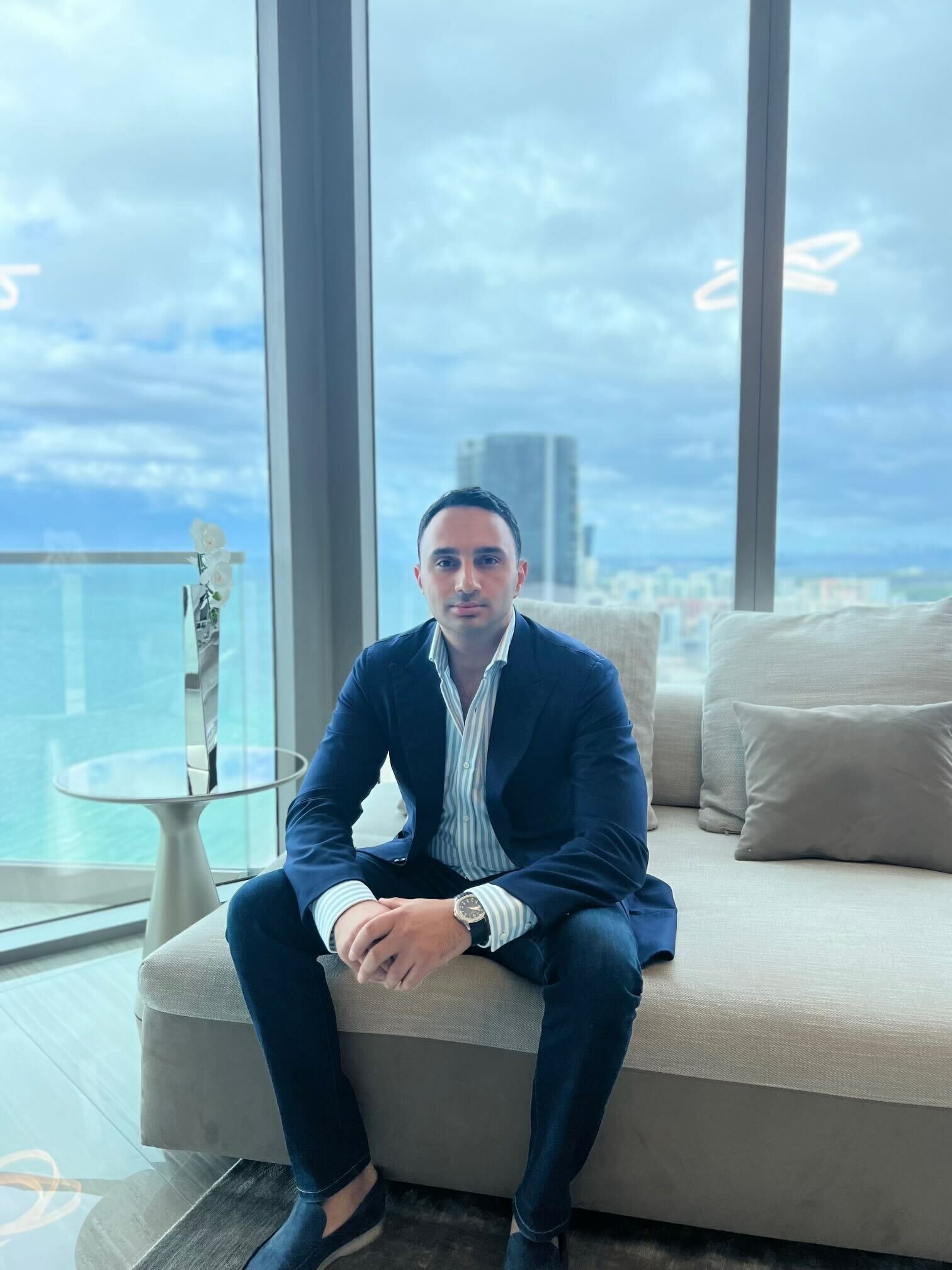
That’s when the fun and life as he knew it came to a grinding halt. The German authorities never let him get on a plane to the United States. Instead, he was placed under arrest when his name registered as a match with Interpol. Despite his insistence that it was all some misunderstanding, he was directed to a local jail and told he’d soon be extradited to the country that wanted him, Russia. Allayev, then 31 years old, who had been born in Soviet-era Tajikistan and at the time enjoyed dual American and Russian citizenship, had not been to Russia at all since he moved to the United States in 2015. He had, however, previously worked at a family business in Russia as a youngster that found itself ensnared in the unique political environment. Allayev said that his family’s business had been the victim of fabricated allegations and they had left as a result. As an American citizen he had enjoyed international travel for years without issue, and he had almost forgotten about it all. That is until this moment in June 2021 that would change his whole world view and send his family scrambling to save him. While those efforts would eventually enlist help from Democratic Reps. Debbie Wasserman Schultz of Florida and Greg Meeks of New York, Allayev was swiftly cut off from being able to manage his business and was no longer able to contact Paul Vega directly.
“I was aware of what had happened years ago with him and his family because he was transparent with me from the first day we met,” Vega said. That fateful phone call he received that morning lasted all of 3 minutes. “I was like, Okay, I guess this is what’s happening,” Vega recalled.
For Vega, the realization hit that the company had nearly two dozen employees at the time, all of whom depended on it for their livelihood, and all of whom were probably going to question the circumstances their boss was in. Nevertheless, crisis management is how Vega had been introduced to the business from the beginning. Vega started at 24 Capital in January 2020 with about six years of industry experience under his belt, with the objective of completely revamping the underwriting process.
“I think it was actually perfect timing, I think it was meant to happen that way,” Vega said. For instance, family members living across the globe had tipped him off that Covid was going to be much worse than the oblivious American media was making it out to be. Vega was also operating out of an office in New York City where a potential doomsday scenario was a lot easier to imagine than where Allayev sat in South Florida.
“When I first expressed this idea [to Allayev] of the possibility of the universe being shut down, I know that Mark was questioning whether he had made the right decision in bringing me on because here I am brand new to the company and I’m telling him that, ‘hey, the US is going to shut down,'” Vega said. Despite having come across as alarmist, Vega felt that it was better to act on his conviction and plan for the impossible.
“Behind Mark’s back I started to research the idea of remote work, and nobody knew what remote work was back then,” he said. Vega proceeded to set up staff with home computers and began testing out software they had never used before.
“By the time they shut down the city, we were well situated to just literally flip a switch and be able to process and run the business from home,” he said.
And ready they were because not only did the company never stop funding but it also never let anyone from the company go during that time. Through it all Vega and Allayev formed a really trusting relationship with each other, the kind that would only make survival of the company possible once Allayev was detained in Germany the following year.
As days turned into weeks and weeks into months, Allayev’s extradition to Russia seemed inevitable despite a growing lobbying effort to free him. Then Russia invaded Ukraine. Once that happened, the politics in Europe changed, and Allayev was suddenly freed in March 2022 and put on a plane back to the United States. The emotional journey and the circumstances that enabled his return became a big news story in the newspapers, one of many about people whose fortunes changed for better or worse as a result of the war.
Once he was reunited with family and had the opportunity to acclimate back into life, he looked toward his business, which he now had a newfound perspective on. “Before, all I cared about was just working and just living my own life,” Allayev said. “So I think what changed is me understanding that probably your family’s the most important part and you need to focus and spend more time with your parents, your siblings, all your loved ones. I think that’s the thing that really changed my mindset.”
Of course, it wasn’t as if this perspective was shaped by losing his business in the process, because it had somehow managed to continue running like normal during the eight months he was away, thanks to Vega. Even the employees stayed on, as everybody stood in supportive solidarity with Allayev.
“So one thing that I learned that was funny when I came back is that the company could be run without me,” Allayev said. “And I think that Paul and all the other team members did an amazing job, keeping everything in place and keeping the funding amounts pretty decent.”
Today, the brand Allayev and Vega are under is known as Symplifi Capital. The company’s internal infrastructure platform has also blossomed into its own publicly licenseable service known as Funders App for companies that want to be their own funders. Allayev says that Funders App provides technology, underwriting services, collections, accounting, servicing, distribution of funds, contracts, white label services, and more. It can be customized to provide just what one needs. A sizable number of companies are already using it, to the point where last year Funders App announced it had collectively originated $500M in funding to small businesses since inception.
“I think there’s so many talented kids and young people that have the vision to create their own companies but they just have absolutely no help and no backup,” Allayev said, “and this is what we want to create with funders. We want to help those people, we want to get them in, train them, help them, and provide them with the right tools, the infrastructure, and even with leverage, even the money because you need capital to become a funder.”
Allayev drew some of this inspiration from how he started in the business in late 2016, when he talked to numerous companies about what they could provide to help him launch his business and felt like nobody could provide all the pieces. As for the trajectory forward, their eyes are on efficiencies and growth.
“As you know speed is kind of the name of the game here,” Vega said. “If the typical lending house is taking three to four hours to put out an offer, make a decision, ask for additional information, our goal is to have a file from submission to funding in that three-to-four hour timeline where most people are just getting an answer back to the ISO. So we’re hoping to have the merchant funded in that timeline. And that’s going to create just a huge competitive advantage for us.”
That’s the kind of thing they’re working on today. The backdrop with what happened to Allayev is now just part of the company’s founding story. For Vega, there was never any question that it wouldn’t work out. Referencing the early months of Covid when companies were doing mass layoffs, he expected that Allayev would ultimately, through no fault of his own, do the same.
“[Allayev’s] the only person that I know in the whole industry that actually said, ‘I’m not doing that, I’m keeping everybody’ and kept his word,” Vega said. “That day he sold me. That’s a big portion of the reason why I have so much trust in him, because he’s a man of his word.”
SellersFi Surpasses $1B in Loans Since Inception, Experiences Success Through E-Commerce Funding
June 14, 2024The timing of it all was fortuitous for SellersFi. When the company announced in January that it had secured a partnership with Amazon to provide eligible Amazon sellers with access to credit lines, it was clear that its fresh equity raise and credit facility of up to $300 million were going to be put to use. SellersFi wasn’t the only partner, however, and Amazon still did most of the lending to its own sellers directly, a business it had been in for more than a decade, but it was still a big relationship to have. But then it got better. In March, Amazon announced that it would end its direct lending program and rely entirely on its partners instead. For SellersFi that meant it would have the opportunity to service even more sellers on the platform than before. Since then, SellersFi has quietly surpassed $1 billion in loans since inception.

“What we are seeing now is less competition,” said Ricardo Pero, CEO of SellersFi, in a call with AltFinanceDaily. He partially attributed that to the current interest rate environment which has impacted those with small margins. SellersFi, however, has experienced a lot of success. The company knows the e-commerce space particularly well, the only space it operates in, since its the only US lending platform also approved as a payment service provider member for Amazon. They started their relationship with Amazon as a service provider 3 years ago. While Pero said they have seen “nothing that points to a recession,” their experience suggests that even if one were to happen in the future, consumers would react by seeking out bargains on e-commerce platforms, reinforcing their position as the niche to be in. As readers may recall, a flight to e-commerce is also what happened during the pandemic.
E-commerce, however, is a broad umbrella, and Amazon is not alone in the universe. Millions of businesses rely on various platforms for e-commerce from basic templates with API connections to Shopify and more. Even big box brick and mortar retailers are waking up and rapidly inching their way into e-commerce. Walmart is just one example, which not only accommodates individual sellers on its platform but also offers merchant cash advances to them.
“The competitive landscape is changing for our clients,” Pero said. Pero added that they know what’s going on because they talk to these clients all the time and that even in the e-commerce business there are person-to-person relationships. “Customers mention their account managers by name,” Pero said. “We have a reputation as a partner to these merchants.”
One trend they’ve noticed over the last year or so is their strategy towards borrowing. While merchants have always typically used funds for things like advertising or inventory, the previous low rate environment enabled behavior where merchants could borrow first and then figure out how to spend the funds second whereas now that rates are higher there is a lot more of a deliberative approach to precisely how much they should get and what it will be used for in advance. It’s something they see all the time now and agree with. “You need to plan,” Pero said.
Looking at PayPal’s Business Funding Charge-Offs
June 10, 2024 When PayPal announced a sudden and dramatic pullback on its MCA and business loan operations in the third quarter of 2023, it was surprising news. For instance, the company’s net charge-off rate had been trending downward for years, coming in 7.4% at year-end 2019 right before covid and going down to 4.7% in 2021 and down to 4.5% in 2022. By June 2023, however, that number had somehow soared to 13.3% and by September was 20.4%. At the time, PayPal attributed this shift to “the expansion of acceptable risk parameters in 2022, which resulted in a decline in the overall credit quality of loans outstanding.” Because of how they calculate charge-offs, reducing originations at the same time that charge-offs were peaking made that number look a bit worse than it was. But still…
Although many funding and lending companies have complained of an increase in fraudulent applications in the immediate post-covid era, PayPal’s figures can hardly be attributed to fraud. That’s because their charge-off rate doesn’t even include losses from fraud.
PayPal’s products are very short-term so it was able to rapidly scale back its balance sheet exposure. Total merchant advances and loans outstanding, net of participation interest sold, decreased from $2.1B in Q1 2023 down to $1.2B in Q1 2024. Of the active loans, 88.7% were considered current in Q1 and 4.4% were greater than 90 days beyond their projected payment pace. With the exception of 2020 (when the % > 90 days past expected hit 12.5%), 4.4% is among the worst PayPal has experienced since 2017.