Virginia Disclosure Law Quietly Goes Into Effect
July 6, 2022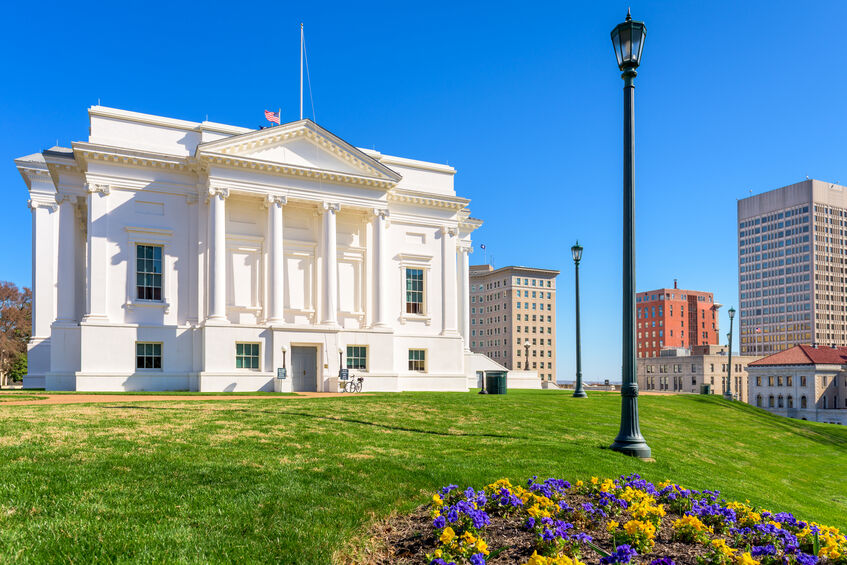 On July 1st, Virginia’s “sales-based financing” disclosure law quietly went into effect. The Delegate from Virginia that introduced it in the first place, Kathy Tran, marked the occasion by retweeting a caucus announcement that it was live. Elsewhere, it was hardly mentioned. It was even absent from the Official Code of Virginia where it was supposed to be ceremoniously entered on July 1st. The State insists that its omission is just a glitch.
“There have been significant technical difficulties during the 2022 code upload process,” reads a notice on the Virginia State Law Portal. “Due to these difficulties, the portal does not currently reflect the changes to enacted law. The Division of Legislative Automated Systems and the publisher are working diligently to resolve these issues as quickly as possible. Once the data is obtained from the publisher in the correct format, the standard quality check of the entire body of law that went into effect July 1 will be conducted.”
The law focuses primarily on disclosures. Sounds simple enough, but in the preceding weeks the draft disclosure form was met with some resistance by potentially covered parties because of how little time there was to integrate it into their systems and processes. Regardless, at least one small business funding company told AltFinanceDaily off the record that ambiguous language and terms in the law had led to the decision to cease doing business in the State of Virginia, at least for now. Their focus is shifting toward compliance with the upcoming California and New York disclosure laws where the population pools are larger and the soon-to-be enacted requirements are seemingly more complex. Utah too will soon implement its own version of a disclosure law.
For commercial finance brokers, the defining elements of the Virginia law are that commissions earned will have to be disclosed to customers and that they’ll have to register their businesses with the State to even continue doing business there.
Time’s Almost Up: Are You Ready to Comply With the New Virginia Disclosure Law?
June 26, 2022Remember when Virginia passed a landmark sales-based financing law? Well, it’s supposed to go into effect on July 1st.
This is a draft of what the disclosure form is supposed to look like, though with only days left to begin compliance, it hasn’t even been 100% finalized.
Notably, funders will have to begin disclosing to merchants the amount of compensation being paid to the broker in connection with a deal. Also, by November 1st, funders and brokers will have to register their business with the State if they wish to continue working with Virginia-based businesses, a process that would include a background check and registration fees.
Please consult an attorney for official guidance on compliance.
No More Delays? California Finalizes Commercial Financing Disclosure Rules – Sets December 9th as Effective Date
June 9, 2022 Four years after California passed a commercial financing disclosure law, the debate over what the final rules should be has finally ended. On Thursday, the Department of Financial Protection and Innovation’s rules were approved and published. The law is scheduled to take effect on December 9, 2022.
The full text of the rules are available here.
Given the length and complexity, readers are advised to consult with a knowledgeable attorney for the best immediate interpretation of the language and its implications. The rules cover merchant cash advance, factoring, leasing, and various forms of lending.
To read up on the history of this law, you can review our past coverage.
Connecticut Commercial Financing Disclosure Bill Didn’t Make it Through
May 24, 2022 In an era where it has become almost fashionable for states to introduce commercial financing disclosure laws, the bill proposed in Connecticut this past March did not make it through. Its first draft was rough, freely using ambiguous terminology like “double dipping” which was clearly drawn from an original draft presented to the New York State legislature more than a year ago.
The bill stalled in the Senate despite a couple of favorable committee reports. The legislature adjourned for the year on May 4th, ending the bill’s prospects for advancement in 2022. This was the second time the bill had appeared so a version of it will likely return in 2023.
Maryland’s Commercial Financing Disclosure Bill Failed to Move Forward
April 12, 2022 Maryland’s commercial financing bill, propelled by bi-partisan support, failed to overcome the final hurdle before the State’s 2022 legislative session adjourned sine die yesterday. SB 825 passed the Senate in March and became the subject of much debate in the House of Delegates on the 30th. Testimony from 17 people was considered, much of it oral.
The bill’s lofty idyllic intent is perhaps what contributed to its demise. Despite legislative enthusiasm for applying consumer style protections to commercial finance transactions, regulators tasked with its actual implementation were amongst its harshest critics.
The Consumer Protection Division of the State’s Attorney General’s Office said “the bill makes a violation an unfair, abusive or deceptive practice in violation of the Consumer Protection Act. With limited exceptions, violations of the Consumer Protection Act are limited to consumer transactions, i.e., transactions that are primarily for personal, family or household use, and expanding the CPA to cover business-to business transactions would open a door that could lead to a significant increase in the number of complaints received by the Division, requiring the Division to add corresponding resources.” The Division gave an official thumbs down on the bill.
Maryland’s Department of Labor stated that the requirements of the bill would make it “difficult to operationalize from a monitoring, investigatory and enforcement perspective” and that there would be too much uncertainty given that New York, a state that passed a similar law, has been unable to effectively implement their own version. “Maryland small businesses, lenders and borrowers alike, may be negatively impacted if the rollout of the system in New York is significantly delayed or New York enacts systems or procedures not appropriate to or anticipated by Maryland businesses,” it concluded.
Other states, like California, have encountered similar problems with commercial financing disclosure legislation. The bill it passed in 2018 still has not been implemented over lingering disputes over how to do the math it mandates.
Proponents and critics alike picked away at each other’s arguments in Maryland, but when the session ended late late Monday evening to a hail of confetti and balloons, SB 825 had not been called. This was the third year in a row that a commercial financing bill has failed. Another version will likely be introduced when the legislature eventually returns.
Utah Passes Commercial Financing Disclosure Law
March 28, 2022 The Governor of Utah signed SB183 last Thursday, a law that will require commercial financing providers to formally register with the State as well as provide uniform disclosures on the transactions they conduct.
Beginning January 1, 2023, covered parties will require State approval to conduct business with Utah customers. Following that, the disclosures listed below will be required in the contracts:
- Total amount of funds provided to the business
- Total amount of funds disbursed
- The total amount to be paid
- The total dollar cost of the transaction
- The manner, amount, and frequency of each payment OR the estimated amount of the initial payment
- A statement of costs or discounts associated with prepayment
- The broker’s commission amount
- Explanation of payment methodology and hypothetical circumstances that could cause it to vary
The full text can be read here. AltFinanceDaily first reported on this bill on February 9th.
Utah follows Virginia, New York, and California who have all passed their own versions of a commercial financing disclosure law. Maryland is the most likely state to pass one next.
Update on Connecticut Commercial Financing Disclosure Bill
March 28, 2022The Connecticut commercial financing disclosure bill first reported by AltFinanceDaily on March 3rd is still in play. SB272, written similarly to the first draft of the recently passed New York legislation, has been met with both support and opposition.
Supportive
- Connecticut Bankers Association (but with amendments)
- Responsible Business Lending Coalition
- Innovative Lending Platform Association
Opposed
- Electronic Transactions Association
- Revenue Based Finance Coalition
- Small Business Finance Association
Initiative to Push Maryland Commercial Financing Disclosure Bill Points to New York and California
March 14, 2022 Maryland State Senate bill SB0825 was put up for contentious debate last week. The bill is Maryland’s latest attempt to impose restrictions on a subset of commercial finance transactions.
State Senator Ben Kramer spoke at length before the Finance Committee, arguing that opposition to the 2022 version of the bill would be fruitless because it was modeled after passed legislation in New York and California. Apparently operating under the impression that such states had settled the issue of calculating an APR on a purchase transaction, Kramer appeared unaware (perhaps intentionally) that both states have been unable to enact their legislations because of critical flaws in their mathematical assumptions. In the case of California, for example, implementation of its disclosure law has been delayed for almost 4 years.
The corresponding Maryland House Bill of this legislation (HB1211) has since been withdrawn.
Senator Kramer has led the push for regulation for three years straight, beginning in 2020 when a related bill he introduced was called “Merchant Cash Advance Prohibition.”