
Stacking Lawsuit Results in Settlement Before Trial
June 19, 2018A lawsuit between RapidAdvance and Pearl Capital over tortious interference will not be going to trial after all, AltFinanceDaily has learned. Originally scheduled to begin on June 25th, the parties have reportedly reached a settlement.
Neither party would respond for comment.
RapidAdvance filed its lawsuit against Pearl in November 2015 with the hope that they could set a precedent against “stacking.”
The suit was filed in the Circuit Court of Maryland under Small Business Financial Solutions, LLC v. Pearl Beta Funding, LLC, Case No. 411478-V.
Wayward Merchants
April 19, 2018
Wayward merchants and outright criminals are continuing to bilk the alternative small-business funding industry out of cash at a dizzying pace. In fact, an estimated 23 percent of the problematic clients that funders reported to an industry database in 2017 appeared to have committed fraud, up from approximately 17 percent in the previous year. That’s according to Scott Williams, managing member of Florida-based Financial Advantage Group LLC, who along with Cody Burgess founded the DataMerch database in 2015. Some 11,000 small businesses now appear in the database because they’ve allegedly failed to honor their commitments to funders, Williams says.
Whether fraudulent or not, defaults remain plentiful enough to keep attorneys busy in funders’ legal departments and at outside law firms funders hire. “I do a lot of collections work on behalf of my cash-advance clients, sending out letters to try to get people to pay,” says Paul Rianda, a California-based attorney. When letters and phone calls don’t succeed, it’s time to file a lawsuit, he says.
Lawsuits become necessary more often than not by the time a funder hires an outside attorney, according to Jamie Polon, a partner at the Great Neck, N.Y.- based law firm of Mavrides Moyal Packman Sadkin LLP and manager of its Creditors’ Rights Group. “Typically, my clients have tried everything to resolve the situation amicably before coming to me,” he observes.
That pursuit of debtors isn’t getting any easier. These days, it’s not just the debtor and the debtor’s attorney that funders and their attorneys must confront. Collections have become more difficult with the recent rise of so-called debt settlement companies that promise to help merchants avoid satisfying their obligations in full, notes Katherine Fisher, who’s a partner in the Maryland office of the law firm of Hudson Cook LLP.
 Meanwhile, a consensus among attorneys, consultants and the funders themselves holds that the nature of the fraudulent attacks is changing. On one side of the equation, crooks are hatching increasingly sophisticated schemes to defraud funders, notes Catherine Brennan, who’s also a partner in the Maryland office of Hudson Cook LLP. On the other side, underwriters and software developers are becoming more skilled at detecting and thwarting fraud, she maintains.
Digitalization is fueling those changes, says Jeremy Brown, chairman of Bethesda, Md.-based RapidAdvance. “As the business overall becomes more and more automated and moves more online – with less personal contact with merchants – you have to develop different tools to deal with fraud,” he says.
A few years ago, the industry was buzzing about fake bank statements available on craigslist, Brown recalls. Criminals who didn’t even own businesses used the phony statements to borrow against nonexistent bank accounts, and merchants used the fake documents to inflate their numbers.
Altered or invented bank statements remain one of the industry’s biggest challenges, but now they’ve gone digital. About 85 percent of the cases of fraud submitted to the DataMerch database involve falsified bank documents, nearly all of them manipulated digitally, Williams notes.
Merchants alter their statements to overstate their balances, increase the amount of their monthly deposits, erase overdrafts, or hide automatic payments they’re already making on loans or advances, Williams says. Most use software that helps them reformat and tamper with PDF files that begin as legitimate bank statements, he observes.
To combat false statements, alt funders are demanding online access to applicants’ actual bank accounts. Some funders ask for prospective clients’ usernames and passwords to examine bank records, but applicants often consider such requests an invasion of their privacy, sources agree.
That’s why RapidAdvance has joined the ranks of companies that use electronic tools like DecisionLogic, GIACT or Yodlee to verify a bank balance or the owner of the account and perform test ACH transfers – all without needing to persuade anyone to surrender personally identifiable information, Brown says.
Other third-party systems can use an IP address to view the computing device and computer network that a prospective customer is using to apply for credit, Brown says. RapidAdvance has received applications that those tools have traced to known criminal networks. The systems even know when crooks are masking the identity of the networks they’re using to attempt fraud, he observes.
RapidAdvance has also developed its own software to head off fraud. One program developed in-house cross references every customer who’s contacted the company, even those who haven’t taken out a loan or merchant cash advance. “People who want to defraud you will come back with a different business name on the same bank account,” Brown says. “It’s a quick way to see if this is somebody we don’t want to do business with.”
Sometimes businesses use differing federal tax ID numbers to pull off a hoax, according to Williams at DataMerch. That’s why his company’s database lists all of the ID numbers for a business.
All of those electronic safeguards have come into play only recently, Brown maintains. “We didn’t think about any of this five years ago – certainly not 10 years ago,” he says. In those days, funders were satisfied with just an application and a copy of a driver’s license, he remembers.
Since then, some sage advice has been proven true. When RapidAdvance was founded in 2005, the company had a mentor with experience at Capital One, Brown says. One piece of wisdom the company guru imparted was this: “Watch out when the criminals figure out your business model.” That’s when an industry becomes a target of organized fraud.
As that prediction of fraud has become reality, it hasn’t necessarily gotten any easier to pinpoint the percentage of deals proposed with bad intent. That’s because underwriters and electronic aids prevent most fraudulent potential deals from coming to fruition, Brown notes. The company looks at the loss rates for the deals that it funds, not the deals it turns down.
Brown guesses that as many as 10 percent of applications are tainted by fraudulent intention. “It’s meaningful enough that if you miss a couple of accounts with significant dollar amounts,” he says, “then it can have a pretty negative impact on your bottom line.”
Some perpetrators of fraud merely pretend to operate a small business, and funders can discover their scams if there’s time to make site visits, Rianda notes. Other clients begin as genuine entrepreneurs who then run into hard times and want to keep their doors open at all costs, sources agree.
 Applicants sometimes provide false landlord information, something that RapidAdvance checks out on larger loans, Brown notes. Underwriters who call to verify the tenant-landlord relationship have to rely upon common sense to ferret out anything “fishy,” he advises.
Underwriters should ask enough questions in those phone calls to determine whether the supposed landlord really knows the property and the tenant, which could include queries concerning rent per square foot, length of time in business and when the lease terminates, Brown suggests. All of that should match what the applicant has indicated previously.
Lack of a telephone landline may or may not provide a clue that an imposter is posing as a landlord, Brown continues. Be aware of a supposed landlord’s verbal stumbles, realize something’s possibly amiss if a dubious landlord lacks of an online presence, note whether too many calls to the alleged landlord go into voicemail and be suspicious if a phone exchange with a purported landlord simply “feels” residential instead of commercial, he cautions.
Reasonable explanations could exist for any of those concerns, but when in doubt about the validity of a tenant-landlord relationship it pays to request a copy of the lease or other type of verifications, according to Brown. Then there are the cases when the underwriter is talking to the actual landlord, but the applicant has convinced the landlord to lie. It could happen because the landlord might hope to recoup some back rent from a merchant who’s obviously on the verge of closing up shop.
Occasionally, formerly legitimate merchants turn rogue. They take out a loan, immediately withdraw the funds from the bank, stop repaying the loan, close the business and then walk or run away, notes Williams. “We view that as a fraudulent merchant because their mindset all along was qualifying for this loan and not paying it back,” he says.
Collecting on a delinquent account becomes problematic once a business closes its doors, Rianda notes. As long as the merchant remains in business, funders can still hope to collect reduced payments and thus eventually get back most or all of what’s owed, he maintains.
In another scam sometimes merchants whose bank accounts are set up to make automatic transfers to creditors simply change banks to halt the payments, Brown says. That move could either signal desperation or indicate the intent to defraud was there from the start, he says.
Merchants with cash advances that split card revenue could change transaction processors, install an additional card terminal that’s not programmed for the split or offer discounts for paying with cash, but those scams are becoming less prevalent as the industry shifts to ACH, Brown says. Industrywide, only 5 percent to 10 percent of payments are collected through card splits these days, but about 20 percent of RapidAdvance’s payments are made that way.
Merchants occasionally blame their refusal to pay on partners who have absconded with the funds or on spouses who weren’t authorized to apply for a loan or advance, Brown reports. Although that claim might be bogus, such cases do occur, notes Williams of DataMerch. People who own a minority share of a business sometimes manipulate K-1 records to present themselves as majority owners who are empowered to take out a loan, Williams says.
In a phenomenon called “stacking,” merchants take out multiple loans or advances and thus burden themselves with more obligations than they can meet. Whether or not that constitutes fraud remains debatable, Rianda observes. Stacking has increased with greater availability of capital and because some funders purposely pursue such deals, he contends.
Some contracts now contain covenants that bar stacking, notes Brennan of Hudson Cook. As companies come of age in the alt-funding business, they are beginning to employ staff members to detect and guard against practices like stacking, she says.
Moreover, underwriting is improving in general, according to Polon “The vetting is getting better because the industry is getting more mature,” he says. “The underwriting teams have gotten very good at looking at certain data points to see something is wrong with the application – they know when something doesn’t smell right.” They’re better at checking with references, investigating landlords, examining financials and requesting backup documentation, he contends.
Despite more-systematic approaches to foiling the criminal element and protecting against misfortunate merchants, one-of-a-kind attempts at fraud also still drive funders crazy, Brown says. His company found that a merchant once conspired with the broker who brought RapidAdvance the deal. The merchant and the broker set up a dummy business, transferred the funds to it and then withdrew the cash. “The guy came back to us and said, ‘I lost all the money because the broker took it,’” he recounts. “Why is that our problem?” was the RapidAdvance response.
Although such schemes appear rare, some funders are developing methods of auditing their ISOs to prevent problems, notes Brennan. They can search for patterns of irregularities as an early-warning system, she says. It’s also important to terminate relationships with errant brokers and share information about them, she advises, adding that competition has sometimes made funders reluctant to sever ties with brokers.
 Although fraud’s clearly a crime, the police rarely choose to involve themselves with it, Brown says. His company has had cases where it lost what it considered large dollar amounts – say $50,000 – and had evidence he felt clearly indicated fraud but the company couldn’t attract the attention of law enforcement, he notes.
Rianda finds working with law enforcement “hit or miss,” whether it’s a matter of defaulting on loans or committing other crimes. In one of his cases an employee forged invoices to steal $100,000 and the police didn’t care. In another, someone collected $3,000 in credit card refunds and went to jail. If the authorities do intervene, they may seek jail time and sometimes compel crooks to make restitution, he notes.
“Engaging law enforcement is generally not appropriate for collections,” according to Fisher from Hudson Cook. However, notifying police agencies of fraud that occurs at the inception of a deal can sometimes be appropriate, says Fisher’s colleague Brennan, particularly when organized gangs of fraudsters are at work.
At the same time, sheriffs and marshals can help collect judgments, Polon says. He works with attorneys, sheriffs and marshals all over the country to enforce judgments he has obtained in New York State, he says. That can include garnishing wages, levying a bank account or clearing a lien before a debtor can sell or refinance property, he notes.
When Rianda files a lawsuit against an individual or company in default, the defendant fails to appear in court about 90 percent of the time, he says. A court judgment against a delinquent debtor serves as a more effective tool for collections than does a letter an attorney sends before litigation begins, Rianda notes.
But even with a judgment in hand, attorneys and their clients have to pursue the debtor, often in another state and sometimes over a long period of time, Rianda continues. “The good news is that in California a judgment is good for 10 years and renewable for 10,” he adds.
So guarding against fraud comes down to matching wits with criminals across the country and around the world. “It makes it hard to do business, but that’s the reality,” Brown concludes. Still, there’s always hope. To combat fraud, funders should work together, Brennan advises. “It’s an industrywide problem … so the industry as a whole has a collective interest in rooting out fraud.”
Stacking Lawsuit Trial Date Set
January 16, 2018The lawsuit between RapidAdvance and Pearl Capital has a trial date, June 25, 2018. RapidAdvance, who filed the complaint in 2015 in the Circuit Court for Montgomery County in Maryland, has sought to recover damages for tortious interference.
Considering that RapidAdvance’s loan to the merchant at hand was only for $31,000, this litigation, which is now more than 2 years-old and scheduled for trial, is likely more about the parties attempting to set a precedent.
The case is Small Business Financial Solutions, LLC v. Pearl Beta Funding, LLC Case No. 411478-V.
Katherine Fisher to testify before House Small Business Subcommittee
October 24, 2017 Hanover, Maryland, October 23, 2017 – Katherine “Kate” Fisher, a partner in the Maryland office of Hudson Cook, LLP, is scheduled to speak at a hearing before the Congressional House Committee on Small Business in Washington, D.C., on October 26, 2017.
The Committee on Small Business Subcommittee on Economic Growth, Tax and Capital Access will meet for a hearing on “Financing Through Fintech: Online Lending’s Role in Improving Small Business Capital Access.” The hearing will provide the subcommittee with an opportunity to examine recent trends in how small businesses obtain capital, the different business models in the industry and how online lending fits into the overall lending landscape. Fisher is one of several witnesses who will testify before the subcommittee.
Fisher’s practice focuses on consumer financial services and small business financing. She represents banks, finance companies, private equity and investment bank investors, merchant cash advance companies, and small business lenders establishing new programs and products. She also conducts due diligence and compliance reviews of consumer lending and business financing portfolios.
The hearing is scheduled to begin at 10:00 a.m. on Thursday, October 26, 2017, in Room 2360 of the Rayburn House Office Building. The hearing will be published live on the committee’s website on Thursday.
About Hudson Cook, LLP
Celebrating its 20th anniversary this year, Hudson Cook, LLP focuses its practice on banking, consumer and commercial financial services, and privacy law, both state and federal, from its 13 offices across the country. With more than 60 attorneys, the firm offers legal services to local, national and international clients, providing practical and innovative solutions to their legal issues. For more information, visit www.hudsoncook.com.
The Voice of Main Street – Small Businesses Share Their Experience With Non-bank Finance
October 18, 2017
If she hadn’t scored the $250,000 loan through Breakout Capital in 2015, Jackie Luo says, the commercial-software firm she heads in Baltimore could not have made the “strategic hires” and purchased the new server to support additional customers and maintain the company’s 30% growth rate.
“Without that infusion of capital” from the McLean (Va.)-based lender, says Luo, chief executive at E-ISG Asset Intelligence, the software solutions provider would have been hard-pressed to deploy the “bandwidth and capacity” necessary to meet burgeoning demand.
And demand there is. Luo says billing for her company’s services helping more than 100 businesses and government agencies improve operational efficiency by keeping tabs on multiple assets — human, financial and equipment — topped $1.5 million last year, up from $1 million in 2015. This year, moreover, E-ISG is on track to collect nearly $2 million.
Meantime, she says, the $250,000, 10-year note at 6% interest she obtained with the help of Breakout was both a good deal and convenient: she reports securing the financing in three weeks, compared with the six months that a commercial bank would likely have taken. In addition, she’s been able to forge a better relationship with Breakout than with a faceless financial institution.
“We are a small business,” she says, “and we’d be just one in a million at a big bank like Wells Fargo. They wouldn’t give us much attention.” With Breakout, Luo adds: “I have the freedom to make decisions about infrastructure investments without worrying about the short-term. And I don’t have to deal with people second-guessing me.”
Had she not gotten the financing, moreover, “I would not be able to pay myself,” she says. “I’d have to use my salary as working capital.”
Luo is not alone. Her company’s story of finding much-needed capital from a nonbank financial company is increasingly common. It has always been challenging for small businesses to obtain credit from a big bank — roughly a financial institution larger than $10 billion in assets. But the small and community banks that have been the lifeblood for small businesses have also been winding down their small-business lending as well, according to a March, 2016, working paper published by the Federal Reserve Bank of Philadelphia.
“As recently as 1997, small banks, with less than $10 billion in assets, accounted for 77% of the small business lending market share issued by commercial banks,” co-authors Julapa Jagtiani and Catharine Lemieux write in “Small Business Lending: Challenges and Opportunities for Community Banks.” However, the market share dropped to 43% in 2015 for small business loans with origination amounts less than $1 million held by depository institutions.
“The decline is even more severe for small business loans of less than $100,000,” they add, “where the market share for small banks under $10 billion declined from 82% in 1997 to only 29% in 2015.”
 The Philadelphia Fed study notes that alternative nonbank lenders are filling a widening gap. “By using technology and unconventional underwriting techniques, many alternative lenders are competing for borrowers with offers of faster processing times, automatic applications, minimal demands for financial documents, and funding as soon as the same day.” And the Fed study finds that it’s likely that nonbank lenders, which are growing rapidly, are having a positive effect by “increasing the availability of credit, particularly to newer businesses that do not have the credit history required by traditional lenders.”
Meantime, the Small Business Administration reports that small businesses remain essential to the health of the U.S. economy. Businesses with fewer than 500 employees account for 55% of overall employment in the U.S., according to the agency, and are responsible for creating two out of every three net new jobs. Which means that alternative funding sources — which do not, it is worth noting, depend on depositors’ money, as banks do — are playing an increasingly important and largely unrecognized role in the country’s economic fortunes, notes Cornelius Hurley, a law professor at Boston University and executive director of the Online Lending Policy Institute. “They’re still a small percentage of the overall lending picture,” he says of nonbank financial companies, “but they’re an emerging force and a lot of small businesspeople certainly depend on them. If they disappeared tomorrow,” he adds, “a lot of businesses would be wiped out too.”
To find out what is happening in the real world, AltFinanceDaily interviewed small business owners around the country: among others, a Houston sports medicine provider, a Connecticut restaurateur, a Midwestern truck hauler, and a Maryland hardware-store owner. Some recounted being shunned by banks because of poor credit while others registered unhappiness with traditional financial institutions as inconvenient and impersonal. While some who turned to alternative lenders admitted they would have preferred not to be paying dearly for borrowing or for cash advances, most said the tradeoff was worth it.
The existence of alternative lenders has made it possible for these businesspeople to meet payrolls, pay contractors and suppliers even when business was slow or billings stalled. Customers with alternative funders – in addition to Breakout’s customers, AltFinanceDaily spoke to clients of Pearl Capital Business Funding and Merchants Advance Network– also reported that they were able to purchase or replace equipment and maintain inventory, hire additional employees and accept new customers, pay for upkeep and upgrades of their business’s physical plant, and make other expenditures necessary to keep operations up-and-running.
Jason, for example, who heads a family business in Louisiana manufacturing and selling pesticides (and who asked to be identified only by his first name), reports that his suppliers began demanding that he pay in advance for chemical feedstock after he took a “financial hit following a nasty divorce.”
The roughly $1 million (annual sales) business — which was started by his parents back in 1960 — furnishes chemicals mainly to cotton farmers and homeowners in Louisiana and Texas, most of whom purchase the company’s products through feed and hardware stores. Jason says he spends a substantial amount of time on the road handling sales and distribution.
 His suppliers not only require him to pay for the chemicals upfront but, following his divorce, they now insist upon larger purchases as well. Following the departure of a previous lender, he says, Breakout stepped in with an $80,000, 12-month loan in March, 2016, which he was able to repay within six months. This was followed by a $60,000 borrowing in March, 2017, which he again paid down early – in 90 days, Jason says – and the account manager at Breakout “went to bat for me and gave me an additional discount for early payment.”
Had Breakout not provided external funding, Jason says, he would have been “wiped out.” He adds with feeling: “It would have meant the end of me.” And sinking the fortunes of the company would also have spelled job losses for five employees, including both his son, who works part-time, and his sister, the business’s co-manager. “Now I’m out of the hole,” he says.
In Houston, Anna, co-owner of a physical therapy and sports medicine concern, was interviewed in August just before Hurricane Harvey loomed on the horizon. “We’d been around for four years and growing rapidly,” she says, asking to be identified only by her first name, and “we couldn’t keep up with the growth.”
Anna recalls that a few years ago (she is vague about the exact dates) the company needed $50,000 to $60,000 to add equipment and staff to meet the growing demand. Because of some “ups and downs” in her business and credit history, however, a bank loan was out of the question. “My credit wasn’t the best,” Anna says, “and we had not been in business the five-to-seven years that most banks want.” She began casting about for financing and quickly saw that factoring would not be a suitable choice for a business like hers, which depends heavily on third-party payments from health insurance providers. “Companies using factoring are taking money based on credit card payments,” she says, “and we’re not a restaurant or a bar. So we can’t pay a percentage of every transaction.” Typically, she notes, getting paid by an insurance company involves a “90-day turnaround.”
 Anna went online, did some research, and talked to three or four nonbank lenders searching for the “right kind of company.” That led her to Breakout. “What I really liked about them is that they did a lot of due diligence on our field,” she says. “They did their homework, asking us: ‘What are your collections and payroll? How much outstanding debt do you have?’ They also asked to see our actual bank statements.”
Despite the high level of due diligence that Breakout performed, Anna says, it only took “maybe three or four days” for the loan to be approved and for the money to land in her bank account. Before long, she was off to the races. With the added capital, she hired three more employees – bringing the employee headcount to 18 — purchased more gym equipment, made payroll, and paid off miscellaneous expenses.
The added capacity and fortified staff, meanwhile, enabled the company to “almost triple its volume,” the entrepreneur says. And not only did the financing “put me in a good financial place,” Anna adds, but after repayment, Breakout made it possible for her to effect a merger with a competitor by approving a second loan for about $30,000. “The best thing about Breakout,” she says, “has been the communication. One time I did need to make a payment two or three days late. But I just called (the account manager). I was very surprised because these kinds of companies are seen as a last resort. But it was like they were investing in us.”

John Speelman, who owns Poolesville Hardware in Poolesville, Md., can boast a raft of five-star Yelp reviews online. “Extremely helpful and friendly service, surprisingly good selection (and) the complete opposite of a big box hardware chain,” raves one customer. “It is so rare to find a well-stocked store that has helpful personnel—makes this store a real gem!” says another fan.
For his part, Speelman attributes much of his hardware store’s popularity to the financing arrangement that he’s been able to work out over the past eight years with Merchants Advance Network, a Fort Lauderdale (Fla.)-based alternative funder. “It takes money to make money,” is one of his pet aphorisms.
Located roughly 35 miles west of the White House, the hardware store boasts a clientele who tend to arrive in BMW’s rather than the pickup trucks that predominated a decade or so ago in this exurban community of some 5,000 denizens. Whatever their class background, though, they’re looking for items that are not a good match for an online purchase. “People don’t buy a toilet plunger, a can of paint or picture-hanging stuff online,” Speelman says. “Because they want to do that today,” he says, “they won’t order with Amazon.”
“One industry that has not been impacted” by online merchandisers, he adds, “is the garden center. They’ll buy a garden hose, weed killer and seeding,” he explains of his regular customers. “And light bulbs” while they’re there, he adds. “We’re like the 7-Eleven — a convenience store.”
To guarantee that convenience, Speelman pays cash-in-advance for most of his inventory, and banks have not been helpful. He contrasts the relationship he has with Michael Scalise, the chief executive at Merchants Advance, with loan officers at commercial banks. “It’s hard to get a loan for anything in retail,” he says. Never mind that he maintains “a high credit rating and I never bounce a check,” he went on. “There are no more local banks. At M&T Bank, all the managers I knew are gone and there’s always a new teller. The banking industry is a revolving door.” So he opts for capital from Merchants Advance “when I need 30-40-50 grand in a day, I use Mike’s money” even though the cost can be as steep as 25%, he says. If he doesn’t have something in stock – specialty items like ammo boxes, a Sugarplum tent, as many as 32 packs of size D batteries, metric measuring tapes – he can put in a special order with suppliers. But he prides himself on the full panoply of wares on his shelves. “You can’t sell from an empty cart,” is another of his favorite sayings.
Lori Hitchcock, who also draws capital from Merchants Advance, is manifestly displeased with the banking industry. She’s an owner with her husband of Hitchcock Trucking, the couple’s 60-year-old family business, which is located on a ten-acre tract in Webberville, Mich., situated between Detroit and Lansing, the state capital.
Of her experience with banks, Hitchcock says: “At the time we went with (Merchants Advance), banks weren’t lending. And they’re still not lending. We’re considered high-maintenance and high-risk. Banks don’t want a bunch of trucks” should they foreclose on a loan, she observes. “If you’re a farmer, they can take all your land. Great! In this crazy world you live in, it’s hard to get the banks interested.”
 The Hitchcock family’s fleet of ten Peterbilt semis hitch up to more than 20 trailers and truck bodies – flatbeds, dump trucks, vans, and refrigerated trucks or “reefers” – and haul grain, sweet corn, onions, celery, fertilizer, and soft drinks across the Midwest. Most recently, she says, the family business took out $80,000 from Merchants Advance to expand its fleet and buy another reefer trailer and a backhoe. “Out here in the country, you always need a backhoe,” she says.
To satisfy her lender, the company makes daily ACH payments. “I’m not going to lie and say that things aren’t tight,” she says. “It is a burden. You just have to have constant cash-flow – which we do have. And it’s important to have good relationships…I can usually tell three weeks in advance if (making payments) is going to be challenging. So it all comes down to being loyal to people.”
Whatever the struggle to keep up with debt payments, it beats using her own money. “My husband and I are raising a family,” Hitchcock says, “and it’s nice having the cash so you’re not putting your personal earnings into the company.”
In Manchester, Conn., a stone’s throw east of Hartford, Corey Wry says that he wouldn’t be able to operate his two, highly rated restaurants just off Interstate 84 – Corey’s Catsup & Mustard and Pastrami on Wry – if he didn’t have funding from Pearl Capital, a New York (N.Y.)-based alternative funding company. A graduate of Johnson & Wales University in Providence, a restaurant-and hotel school, Wry describes himself as “a culinary guy” whose first love is serving food that’s both innovatively prepared and delicious. He candidly admits that his credit hit “rock bottom” after a confluence of untoward events.

Last year, a third restaurant in town, Chops & Catch, that he and some partners had “bootstrapped” had to shut down after six years of operation. Despite generally favorable reviews for such creative fare as the “lobsterburger,” the surf-and-turf themed restaurant was a money-loser. He was also struggling to pay off credit cards. And he’d been late more than once on car payments.
At the same time, Wry was in the process of moving Pastrami & Wry — a deli whose moniker is wordplay on his last name – to a new location. Both the general contractor and electrician were “over-budget” on that project, he says. Meanwhile, Catsup and Mustard, a hamburger spot, needed to be spruced up. Says he: “It was getting busier and the original seats were worn. I had a hole in a booth big enough to swallow someone.”
He approached a few banks for a loan and “it did not seem like it was going to happen,” he says. “Then I got a cold call from one of these financiers. Some of them had super-high rates. When you have bad credit but need to make capital improvements you do what you have to do.”
He’s accessed more than $100,000 from several alternative funding sources, including Pearl – from which he reports getting merchant cash advances for $30,000. But hard as it is to meet the obligations, which typically require a daily ACH payment, the financing has made renovating the burger place possible. Moreover, he’d still be on the hook with plumbers and other contractors – all of whom are local tradesmen and would likely be paying him personal visits until they were repaid — for the relocation of Pastrami & Wry.
“Business is good,” says Wry, who at 40 is single, often works 15-hour days, and says that he doesn’t have time for a girlfriend, much less a wife and family. “I’ve still got $3,200 on the books with the electrician,” he adds, “which means that I won’t be able to purchase a deli slicer. I have to plan these things out…”
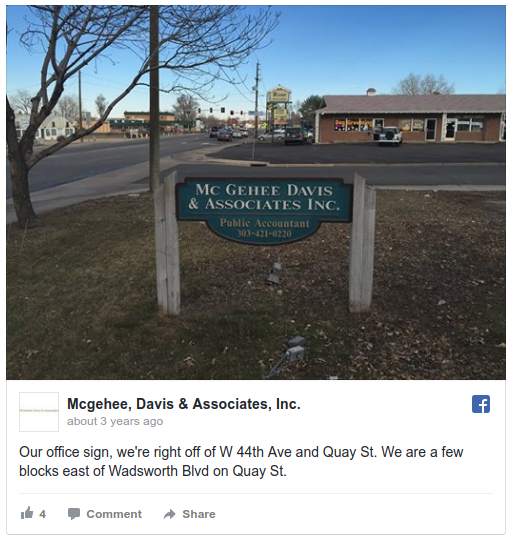
James McGehee, a partner at the boutique accounting and tax-preparation firm McGehee, Davis & Associates, which is located in the Denver suburb of White Ridge, reports that the firm took a merchant cash advance from Pearl Capital, among other financiers, to bridge the gap between tax season and the rest of the year when billings invariably diminish. “Our overhead is pretty high,” he explains. “We’ve added two employees. We’ve been expanding on what we were doing, adding tax and accounting clients.”
A very conservative, sober-sounding man, McGehee explained that his credit was nonetheless “trashed” after he suffered from health problems five years ago. “Major stuff,” he says, “it was open-heart surgery.” The medical ordeal meant that he could not work for a time and had trouble paying his bills. “Some family members helped me through the mortgage and utilities payments and I ended up in arrears and in credit card debt,” he says.
All of which made an alternative source of financing his firm’s only option. “I’m not sure how we heard about Pearl,” he says. “I think they just happened to call. We took out [$11,000]. It was not a huge amount. We also borrowed $9,000 from another entity. We paid it all back during tax season. The terms were pretty steep,” McGehee adds.
“But when you need the money for cash-flow,” he explains, “you just absorb it. You grin and bear it. When you need the money, you need the money.”
Stacking Lawsuit Could Go to Trial
October 18, 2017 A lawsuit between RapidAdvance and Pearl Capital that has been making its way through the Maryland state court system for two years may be heading to trial.
In this case, plaintiff Small Business Financial Solutions, LLC (SBFS AKA RapidAdvance) alleged that Pearl Beta Funding, LLC (AKA Pearl Capital) interfered with a loan agreement it had with a merchant when Pearl “stacked” financial obligations to Pearl on top of the obligations the customer owed to SBFS. Ultimately the merchant defaulted and SBFS wants to hold Pearl responsible for the damages it incurred.
Pearl originally moved to dismiss the suit but was unsuccessful. Later, Pearl filed a motion for summary judgment. On September 29th, that motion was denied, with the judge opining that issues of fact remained that were best left for a jury.
Unless Pearl appeals the decision or the parties settle, the case will go to a jury.
A representative for Pearl Capital declined to comment on the decision, citing ongoing litigation.
Patrick Siegfried, Assistant General Counsel for RapidAdvance, opted to tell AltFinanceDaily the following:
“The court’s decision from many months ago to reject Pearl’s motion to dismiss and its more recent decision to reject the motion for summary judgment and permit this case to go to trial confirms the anti-stacking position RapidAdvance has consistently taken. The court’s rulings make it clear that when a funding company funds a merchant knowing that doing so is a breach of the customer’s agreement with another funder and the stacker’s funding is a substantial cause of the merchant defaulting with the other funder, its actions constitute tortious interference. As a result, the company that stacked can be held liable for the losses the original funder incurs. While the outcome at trial is impossible to predict as the court will need [to] decide whether there are sufficient facts to satisfy each element, RapidAdvance is pleased that its legal reasoning on stacking has been confirmed in a written opinion and that we now have the roadmap for pursuing others that tortiously interfere with our contracts by stacking.”
Of note, is that RapidAdvance brought this case in The Circuit Court for Montgomery County, Maryland. Few other players in the industry may be able to designate Maryland as the proper venue. The standards for tortious interference may not be the same in other states. There are many circumstances in the case not discussed in this synopsis. Consult an attorney before drawing any conclusions. YOU CAN DOWNLOAD THE FULL DECISION HERE.
The case is Small Business Financial Solutions, LLC v. Pearl Beta Funding, LLC Case No. 411478-V in the Circuit Court for Montgomery County, Maryland.
Senate Banking Committee to Hold Hearing on Fintech
September 12, 2017The US Senate Committee on Banking, Housing, & Urban Affairs held a hearing entitled “Examining the Fintech Landscape” on Tuesday morning at 10 AM.
You can watch it below
The witnesses include:
Mr. Lawrance Evans
Director, Financial Markets
U.S. Government Accountability Office
Mr. Eric Turner
Research Analysis
S&P Global Market Intelligence
Mr. Frank Pasquale
Professor of Law
University of Maryland Francis King Carey School of Law
Alternative Funders Bid Adieu to 2016, Show Renewed Optimism for 2017
December 12, 2016
After getting pummeled in 2016, many alternative funders have licked their wounds and are flexing their muscles to go another round in 2017.
“The industry didn’t implode or go away after some fairly negative headlines earlier in the year,” says Bill Ullman, chief commercial officer of Orchard Platform, a New York-based provider of technology and data to the online lending industry. “While there were definitely some industry and company-specific challenges in the first half of the year, I believe the online lending industry as a whole is wiser and stronger as a result,” he says.
Certainly, 2016 saw a slowdown in the rapid rate of growth of online lenders. The year began with slight upticks in delinquency rates at some of the larger consumer originators. This was followed by the highly publicized Lending Club scandal over questionable lending practices and the ouster of its CEO. Consumers got spooked as share prices of industry bellwethers tumbled and institutional investors such as VCs, private equity firms and hedge funds curbed their enthusiasm. Originations slowed and job cuts at several prominent firms followed.
Despite the turmoil, most players managed to stay afloat, with limited exceptions, and brighter times seemed on the horizon toward the end of 2016. Institutional investors began to dip their toes back into the market with a handful of publicly announced capital-raising ventures. Loan volumes also began to tick up, giving rise to renewed optimism for 2017.
Notably, in the year ahead, market watchers say they anticipate modest growth, a shift in business models, consolidation, possible regulation and additional consumer-focused initiatives, among other things.
MARKETPLACE LENDERS REDEFINING THEMSELVES
Several industry participants expect to see marketplace lenders continue to refocus after a particularly rough 2016. Some had gone into other businesses, geographies and products that they thought would be profitable but didn’t turn out as expected. They got overextended and began getting back to their core in 2016. Others realized, the hard way, that having only one source of funding was a recipe for disaster.
“Business models are going to evolve quite substantially,” says Sam Graziano, chief executive officer and co-founder of Fundation Group, a New York-based company that makes online business loans through banks and other partners.
For instance, he predicts that marketplace lenders will move toward using their balance sheet or some kind of permanent capital to fund their loan originations. “I think that there will be a lot fewer pure play marketplace lenders,” he says.
Indeed, some marketplace lenders are starting to take note that it’s a bad idea to rely on a single source of financing and are shifting course. Some companies have set up 1940-Act funds for an ongoing capital source. Others have considered taking assets on balance sheet or securitizing assets.
“The trend will accelerate in 2017 as platforms and investors realize that it’s absolutely necessary for long-term viability,” says Glenn Goldman, chief executive of Credibly, an online lender that caters to small-and medium-sized businesses and is based in Troy, Michigan and New York.
BJ Lackland, chief executive of Lighter Capital, a Seattle-based alternative lender that provides revenue-based start-up funding for tech companies, believes that more online lenders will start to specialize in 2017. This will allow them to better understand and serve their customers, and it means they won’t have to rely so heavily on speed and volume—a combination that can lead to shady deals. “I don’t think that the big generalist online lenders will go away, just like payday lending is not going to go away. There’s still going to be a need, therefore there will be providers. But I think we’ll see the rise of online lending 2.0,” he says.
Despite the hiccups in 2016, Peter Renton, an avid P2P investor who founded Lend Academy to teach others about the sector, says he is expecting to see steady and predictable growth patterns from the major players in 2017. It won’t be the triple-digit growth of years past, but he predicts investors will set aside their concerns from 2016 and re-enter the market with renewed vigor. “I think 2017 we’ll go back to seeing more sustainable growth,” he says.
THE CONSOLIDATION EQUATION
Ron Suber, president of Prosper Marketplace, a privately held online lender in San Francisco, says victory will go to the platforms that were able to pivot in 2016 and make hard decisions about their businesses.
Prosper, for example, had a challenging year and has now started to refocus on hiring and growth in core areas. This rebound comes after the company said in May that it was trimming about a third of its workforce, and in October it closed down its secondary market for retail investors. Suber says business started to pick up again after a low point in July. “Business has grown in each of the subsequent months, so we are back to focused growth and quality loan production,” he says.
Not long after he said this, Prosper’s CEO, Aaron Vermut, stepped down. His father, Stephan Vermut, also relinquished his executive chairman post, a sign that attempts to recover have come at a cost.
Other platforms, meanwhile, that haven’t made necessary adjustments are likely to find that they don’t have enough equity and debt capital to support themselves, industry watchers say. This could lead to more firms consolidating or going out of business.
 The industry has already seen some evidence of trouble brewing. For instance, online marketplace lender Vouch, a three-year-old company, said in June that it was permanently shuttering operations. In October, CircleBack Lending, a marketplace lending platform, disclosed that they were no longer originating loans and would transfer existing loans to another company if they couldn’t promptly find funding. And just before this story went to print, Peerform announced that they had been acquired by Versara Lending, a sign that consolidation in the industry has come.
“I think you will see the real start of consolidation in the space in 2017,” says Stephen Sheinbaum, founder of New York-based Bizfi, an online marketplace. While some deals will be able to breathe life into troubled companies, others will merge to produce stronger, more nimble industry players, he says. “With good operations, one plus one should at least equal three because of the benefits of the economies of scale,” he says.
Market participants will also be paying close attention in 2017 to new online lending entrants such as Goldman Sachs’ with its lending platform Marcus. Ullman of Orchard Platform says he also expects to see more partnerships and licensing deals. “For smaller, regional and community banks and credit unions—organizations that tend not to have large IT or development budgets—these kinds of arrangements can make a lot of sense,” he says.
A BLEAKER MCA OUTLOOK
Meanwhile, MCA funders are ripe for a pullback, industry participants say. MCA companies are now a dime a dozen, according to industry veteran Chad Otar, managing partner of Excel Capital Management in New York, who believes new entrants won’t be able to make as much money as they think they will.
Paul A. Rianda, whose Irvine, California-based law firm focuses on MCA companies, likens the situation to the Internet boom and subsequent bust. “There’s a lot of money flying around and fin-tech is the hot thing this time around. Sooner or later it always ends.”
In particular, Rianda is concerned about rising levels of stacking in the industry. According to TransUnion data, stacked loans are four times more likely to be the result of fraudulent activity. Moreover, a 2015 study of fintech lenders found that stacked loans represented $39 million of $497 million in charge-offs.
Although Rianda does not see the situation having far-reaching implications as say the Internet bubble or the mortgage crisis, he does predict a gradual drop off in business among MCA players and a wave of consolidation for these companies.
“I do not believe that the current state of some MCA companies taking stacked positions where there are multiple cash advances on a single merchant is sustainable. Sooner or later the losses will catch up with them,” he says.
Rianda also predicts that the decrease of outside funding to related industries could have a spillover effect on MCA companies, causing some to cut back operations or go out of business. “Some companies have already seen decreased funding in the lending space and subsequent lay off of employees that likely will also occur in the merchant cash advance industry,” he says.
THE REGULATORY QUESTION MARK
One major unknown for the broader funding industry is what regulation will come down the pike and from which entity. The Office of the Comptroller of the Currency that regulates and supervises banks has raised the issue of fintech companies possibly getting a limited purpose charter for non-banks. The OCC also recently announced plans to set up a dedicated “fintech innovation office” early in 2017, with branches in New York, San Francisco and Washington.
There’s also a question of the CFPB’s future role in the alternative funding space. Some industry participants expect the regulator to continue bringing enforcement actions against companies. In September, for instance, it ordered San Francisco-based LendUp to pay $3.63 million for failing to deliver the promised benefits of its loan products. Ullman of Orchard Platform says he expects the agency to continue to play a role in the future of online lending, particularly for lenders targeting sub-prime borrowers.
Meanwhile, some states like California and New York are focusing more efforts on reining in online small business lenders, and it remains to be seen where this trend takes us in 2017.
MORE CONSUMER-FOCUSED INITIATIVES ON HORIZON
As the question of increased regulation looms, some industry watchers expect to see more industry led consumer-focused initiatives, an effort which gained momentum in 2016. A prime example of this is the agreement between OnDeck Capital Inc., Kabbage Inc. and CAN Capital Inc. on a new disclosure box that will display a small-business loan’s pricing in terms of total cost of capital, annual percentage rates, average monthly payment and other metrics. The initiative marked the first collaborative effort of the Innovative Lending Platform Association, a trade group the three firms formed to increase the transparency of the online lending process for small business owners.
Katherine C. Fisher, a partner with Hudson Cook LLP, a law firm based in Hanover, Maryland, that focuses on alternative funding, predicts that more financers will focus on transparency in 2017 for competitive and anticipated regulatory reasons. Particularly with MCA, many merchants don’t understand what it means, yet they are still interested in the product, resulting in a great deal of confusion. Clearing this up will benefit merchants and the providers themselves, Fisher notes. “It can be a competitive advantage to do a better job explaining what the product is,” she says.
 CAPITAL-RAISING WILL CONTINUE TO POSE CHALLENGES
Although there have been notable examples of funders getting the financing they need to operate and expand, it’s decidedly harder than it once was. Renton of Lend Academy says that some institutional investors will remain hesitant to fund the industry, given its recent troubles. “It’s a valuation story. While valuations were increasing, it was relatively easy to get funding,” he says. However, industry bellwethers Lending Club and OnDeck are both down dramatically from their highs and concerns about their long-term viability remain.
“Until you get sustained increases in the valuation of those two companies, I think it’s going to be hard for others to raise money,” Renton says.
Several years ago, alternative funders were new to the game and gained a lot of traction, but it remains to be seen whether they can continue to grow profits amid greater competition and the high cost of obtaining capital to fund receivables, according to William Keenan, chief executive of Pango Financial LLC, an alternative funding company for entrepreneurs and small businesses in Wilmington, Delaware.
These companies continue to need investors or retained earnings and for some companies this is going to be increasingly difficult. “How they sustain growth going forward could be a challenge,” he says. Even so, Renton remains bullish on the industry—P2P players especially. “The industry’s confidence has been shaken. There have been a lot of challenges this year. I think many people in the industry are going to be glad to put 2016 to bed and will look with renewed optimism on 2017,” he says.
Prior to this story going to print, small business lender Dealstruck was reportedly not funding new loans and CAN Capital announced that three of the company’s most senior executives had stepped down.