LendingClub Funds $1 Billion in CLUB Certificates
November 20, 2018LendingClub announced today that it has funded $1 billion in CLUB Certificates, in just under a year since the company introduced the offering. According to its website, CLUB Certificates are “pass-through securities with CUSIP numbers backed by LendingClub prime or near prime personal loans.”
What does this mean? LendingClub was unreachable at the time, but LendAcademy researched it in December 2017 when the product was announced and indicated that the initiative was prompted by a potential investor who did not want to invest in whole loans, which can have a duration of several years. Instead, the investor wanted a security that acted like a whole loan, but had liquidity.
The result, according to LendIt, was the LendingClub CLUB Certificate, a security with an identification code that is cleared by the Depository Trust & Clearing Corporation (DTCC) and could be traded in over-the-counter markets. Furthermore, LendIt wrote in the December 2017 story that the deal that precipitated the LendingClub CLUB Certificate was “a $25 million deal that was sold to one investor and in keeping with Dodd-Frank rules LendingClub retained 5% of the deal total on their balance sheet.”
“We continue to innovate for investors and diversify our investor base,” said Valerie Kay, Chief Capital Officer of LendingClub. “By continually innovating on products, LendingClub expects to further deepen and broaden investor access in 2019 and beyond through a variety of new products and structures.”
CLUB Certificates can be seen on Bloomberg and Intex with the “CLUBC” ticker.
In the third quarter of 2018, LendingClub posted record originations of $2.9 billion, up 18% year-over-year. Founded in 2006 and headquartered in San Francisco, LendingClub offers fixed rate business loans from $5,000 to $300,000 and personal loans of up to $40,000.
Brief AltFinanceDaily San Diego Recap
October 6, 2018 More than 300 people attended the first AltFinanceDaily CONNECT event on the west coast at the Andaz Hotel in San Diego. The half-day learning and networking conference drew people in the small business finance space from across the country, including New York, Philadelphia, Detroit, Houston, Salt Lake City, and cities in Florida and all throughout California.
Sam Bobley, CEO of Ocrolus, which provides technology solutions mostly to direct funders, was among the first to check in before the official start time at 1:30 p.m. He came in from New York.
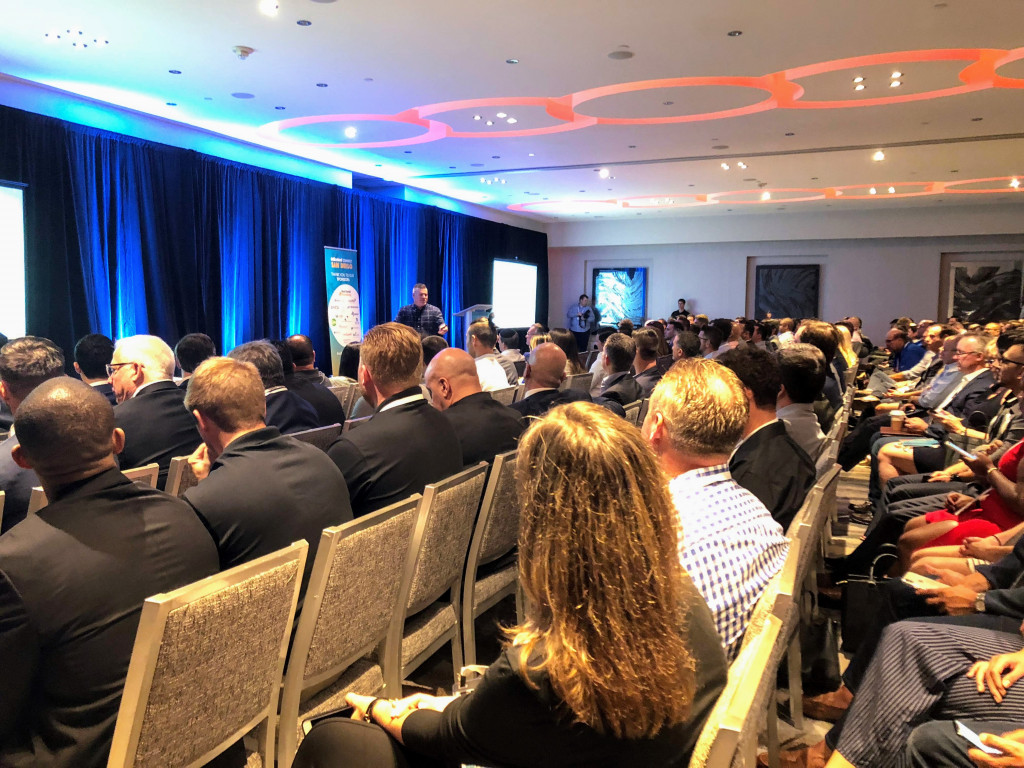 “We went to Broker Fair in Brooklyn and made a lot of connections,” Bobley said. “We go to the other events, LendIt and Lend360, which are great, but they’re fairly broad. There, 1-2 out 5 people might be relevant [to online lending.] Here, everyone is. There’s no wasting time.”
The learning component of the day focused on sales and dealing with new regulations, primarily coming out of California.
“We wanted to learn about [the status of CA regulations],” said Kyle Readdick, CEO of Synergy Direct Solution in San Diego, a lead generator and funder in San Diego. “It’s obviously a concern.” He attended with his brother and CFO, Travis Readdick.
On the sales sides, Jennie Villano of Kalamata Advisors, Matt Price of Reliant Funding and Ilya Fridman of BFS, gave advice during the “Tips for ISOs” seminar. Technology and CRMs was one area of particular focus among the panelists as a must-have to scale.
“I’m so happy to be here,” said Mike Brooks, ISO relations manager with Smart Business Funding who flew in from New York. “I’m here to meet people, make contacts and make some money.”
Photos will follow soon. You should also follow us on instagram.
Renaud Laplanche Barred From the Securities Industry
September 28, 2018
The SEC announced today that it charged LendingClub Asset Management, formerly known as LendingClub Advisors LLC (LCA), and its former president and co-founder Renaud Laplanche, with fraud – for improperly using fund money to benefit LendingClub Corporation, LCA’s parent company. LCA, Laplanche and Carrie Dolan, LCA’s former CFO, also were charged with improperly adjusting fund returns.
LCA, Laplanche and Dolan have agreed to settle the SEC’s charges against them and will pay penalties of $4 million, $200,000, and $65,000, respectively. The SEC also barred Laplanche from the securities industry for three years. LCA, Laplanche, and Dolan agreed to the entry of the SEC’s order without admitting or denying the agency’s findings.
This follows Laplanche’s ouster from LendingClub in May 2016 amid revelations of falsified loan records and conflicts of interest under Laplanche’s leadership. He is now the CEO of Upgrade, a San Francisco-based online lender, and he has been hailed recently for his resilience for making such a quick comeback.
A representative from Upgrade provided AltFinanceDaily with a statement from Laplanche:
“I am pleased to have worked out a settlement with the SEC to put to rest any issues related to compliance lapses that might have occurred under my watch at Lending Club. Consistent with SEC policy, I have agreed not to admit nor deny the specific narrative of the events contained in the settlement order. I would like, however, to provide additional context:
1. To the extent there was an imbalance between 60-month and 36-month loans in one of the LCA funds as compared to its initial target, the specific 36/60-month balance was disclosed to investors every month.
2. Any manual adjustments used by the LCA team as part of the funds valuation methodology had a total net impact of 0.08% of the funds value over 5 years, and I strongly believe those adjustments were made by the LCA team in good faith.
In any event, I am glad that we can now put these issues behind us and focus on the important goals of making credit more affordable to consumers and delivering attractive returns to investors through disciplined underwriting and exciting product innovation. With the benefit of my prior experience, I feel better equipped to establish a strong culture of compliance and effective internal controls under the supervision of capable professionals.”
LendingClub, the actual company, or LendingClub Corporation, was spared any charges from the SEC because of its cooperation with the agency. The SEC press release explains below:
“The SEC’s Enforcement Division determined not to recommend charges against LendingClub Corporation, which promptly self-reported its executives’ misconduct following a review initiated by its board of directors, thoroughly remediated, and provided extraordinary cooperation with the agency’s investigation. LCA also reimbursed approximately $1 million to investors who were adversely impacted by the improperly adjusted monthly returns.”
Lending Club, which Laplanche brought public 2014, did not respond in time to questions before publication.
Why is P2P Lending Unraveling in China?
August 14, 2018 Back in 2014, peer to peer (P2P) lending in China was all the rage. Multiple P2P platforms were launching daily, with investors and borrowers were eager to participate. According to South China Morning Post, the P2P lending frenzy hit its peak in 2015 when about 3,500 P2P businesses were operating.
Now, these same businesses are collapsing at nearly the same speed with which they sprung up. According to South China Morning Post, in conjunction with Reuters, 243 online lending platforms have gone out of business since June. And Chinese investors who can’t get their money out of the companies have taken to the streets. (Although, like with most protests in the country, the government has successfully quashed any sizable demonstration.)
“The trouble is that everything is coming to head this summer and millions of investors are trying to get their money out at the same time,” said Peter Renton, co-founder of the LendIt Fintech, which organizes several international events including an annual conference in China for fintech and online lending.
 “Most people think that even with a big market [like China], it can only sustain a few hundred platforms at most,” he told AltFinanceDaily.
Renton said that this implosion is largely the result of lax Chinese regulation for a number of years. But the Chinese government is now making up for it. In November 2017, China’s central bank said that no new licenses would be issued to online lending platforms. And with Chinese P2P platforms failing daily this summer, the central government has proposed new measures, according to Xinhua, the official government news agency. These proposed measures include setting up “communications windows” to respond to requests by P2P investors, as well as conducting compliance inspections on P2P companies and putting on a blacklist in China’s social credit ratings system any online borrower who tries to avoid P2P loan repayments.
The continuing collapse of P2P lending platforms in China is particularly notable because it affects so many people. According to data used by Reuters, the size of China’s P2P industry is significantly bigger than the rest of the world combined, with outstanding loans of 1.49 trillion yuan, or $217.96 billion.
“We all knew the party was going to end at some point and it looks like 2018 will be the year of reckoning,” Renton wrote in a July 30 story.
Yet in a video aimed at Chinese viewers released at the same time, he said: “I think in a couple years time, when we look back at this year, we’ll see that this was necessary — painful but necessary. The industry is going to come out the other side. The strong platforms are going to survive, the weak ones are not. And I think the industry will be far better off once this all plays out.”
The Past, Present and Future of the ILC Bank
July 9, 2018 Last Thursday, Square confirmed that it withdrew its application to the FDIC for depository insurance, which would allow it to take deposits from customers in all 50 states. The company said it plans to refile.
This is not the first time that a fintech company has withdrawn a bank application from the FDIC. Last October, SoFi withdrew its application in the wake of sexual harassment allegations against its then CEO Mike Cagney. SoFi has not explicitly stated that it plans to refile.
Regardless of the reason for withdrawing the application, this news revives the debate over whether fintech companies should be allowed to become banks in the first place – at least in the manner that Square and SoFi have sought to attain bank status. Both companies have submitted applications to the Utah Department of Financial Institutions to become Industrial Loan Company (ILC) banks.
This is controversial because ILC banks are not subject to the same regulations that other banks are. For instance, an ILC bank can engage in commercial activity outside of banking which could jeopardize the bank, critics contend. Under the 2010 Dodd-Frank Act, which came in response to the Great Recession, there was a moratorium on establishing ILC banks because they were deemed to be a risk to the U.S. banking system. The moratorium was lifted in 2013.
Chris Cole, Senior Regulatory Counsel at Independent Community Bankers of America (ICBA), a trade group, is a big opponent of ILC banks. He maintains that companies seeking to become ILC banks are simply taking advantage of an old policy that is no longer relevant. He explained that ILCs were created as banks for industrial workers in the early 1900s.

“They were meant to serve a certain type of industrial worker that had trouble finding a commercial bank they could bank with,” Cole said. “Now we don’t have that problem anymore. Industrial [or other lower paid] workers have plenty of opportunities to bank. This charter is completely outdated [and is] a loophole that should be closed so that the owners of these bank-like institutions are restricted in the same way that commercial banks are restricted.”
Last year, AltFinanceDaily spoke to Richard Hunt, president and CEO of the Consumer Bankers Association, who echoed Cole with the regard to the initial purpose of ILC banks.
“No one envisioned when they wrote the ILC charter that we would have fintech companies that finance mortgages and student loans from private equity capital and not deposits. It’s a new world. Like with all rules and regulations, federal regulators should periodically review longstanding policy,” Hunt said.
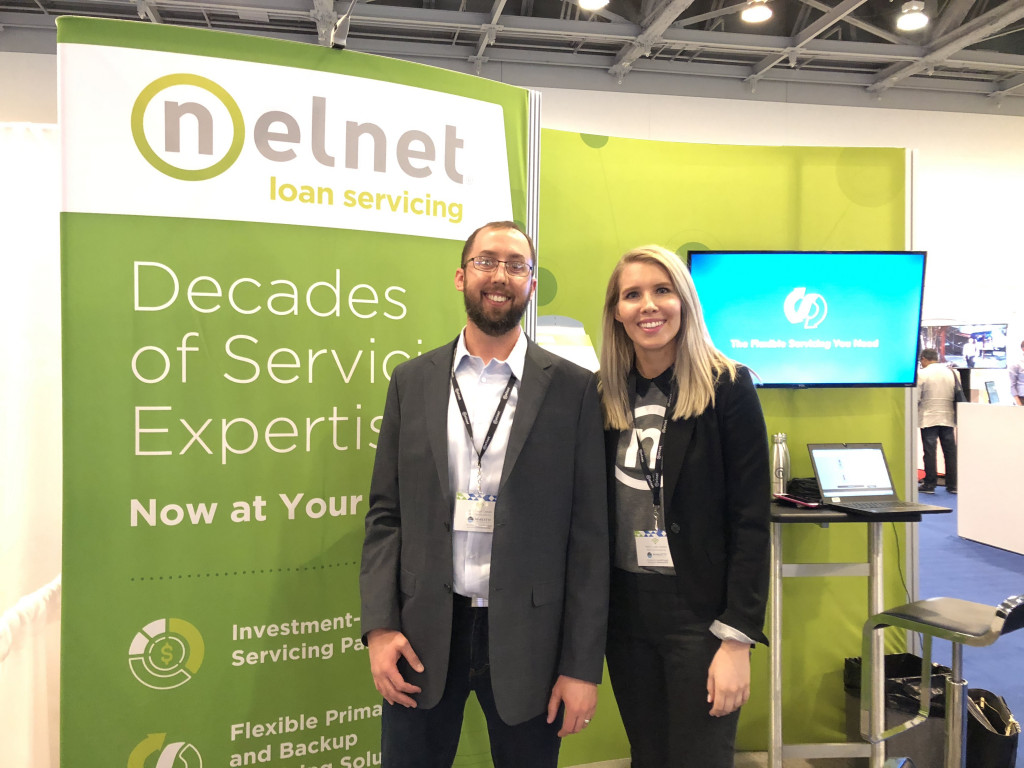
Cole said that in addition to Square and SoFi, another fintech company recently applied to become an ILC bank. That company is NelNet, which services students loans, and it submitted an application to the FDIC less than two weeks ago.
So far, the FDIC has not approved of any ILC banks since Dodd-Frank. (There are only about 30 of them right now.) But that may soon change under the leadership of the agency’s new Chairman, Jelena McWilliams.
“I am hopeful that Jelena McWilliams will follow the same course as her predecessors have [and not issue ILC charters],” Cole said. “Issuing a moratorium is what I’d like to see.”
But McWilliams, who assumed the new role on June 5, may be more open to approving these applications than her predecessors. She said during a recent conference:
“The agency has a duty to the public to actually proceed [with the applications.] Now, that doesn’t mean that we will approve every application. That doesn’t mean that we will deny every application.”
Kabbage Reveals Plans for a ‘Reverse Play’
May 22, 2018 When it comes to lending, the business models of Square and PayPal may be too good to ignore.
According to Reuters, Kabbage plans to launch its own payment processing service by year-end. “The monoline businesses have a hard time succeeding long term,” Kabbage co-founder Kathryn Petralia is quoted as saying.
While Square and PayPal started off in payments and added lending, Kabbage sees the value proposition of the reverse play, to start off in lending and add payments.
But another Square and PayPal rival may not. Back in October, AltFinanceDaily questioned OnDeck CEO Noah Breslow during an interview about this very thing. At the time, Breslow responded that they were not going to sell merchant processing. “Never say never,” he said, “but not in the near future.”
Square and PayPal’s lending businesses differ from other online lenders in that they can solicit their existing payments customer base at virtually no cost. OnDeck, meanwhile, spent $53 million last year alone on sales and marketing to acquire loan customers.
Square’s acquisition of payments customers is not cheap, however. The company spent $253 million in sales and marketing last year. The advantage is in not needing to shell out additional cost to convert them into loan customers.
OnDeck still held the lead over both Kabbage and Square last year in loan originations at $2.1B vs $1.5B and $1.17B respectively. PayPal was not ranked.
Class Action Lawsuit Filed Against Ripple For Sale of Unregistered Securities
May 4, 2018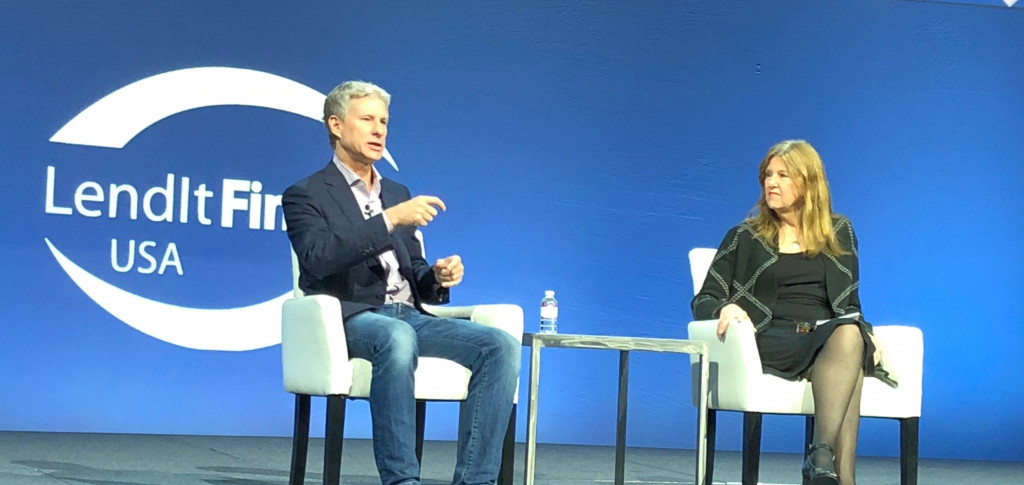
Ripple’s digital token XRP is a security, a class action lawsuit filed in the Superior Court of California contends. The 32-page complaint brought by XRP investor Ryan Coffey, says the defendants, who include Ripple CEO Brad Garlinghouse, engaged in the sale of unregistered securities, highlighting that they earned over $342.8 million through XRP sales in the last year alone, securities that were created out of thin air.
“Defendants have since earned massive profits by quietly selling off this XRP to the general public, in what is essentially a never-ending initial coin offering (“ICO”). Like the better known initial public offering (“IPO”), in an ICO, digital assets are sold to consumers in exchange for legal tender or cryptocurrencies (most often Bitcoin and Ethereum). These tokens generally give the purchaser various rights on the blockchain network and resemble the shares of a company sold to investors in an IPO. Unfortunately, these ICOs have become a magnet for unscrupulous practices and fraud.”
The complaint alleges that Ripple executives have engaged in pumping schemes meant to increase the price of XRP through attempted bribes, rumors they’ve started, and hype on social media.
The attorney representing the lead plaintiff, James Taylor-Copeland, is no stranger to cryptocurrency. His twitter username is @TCryptoLaw and he runs the website cryptolaw.net.
At LendIt Fintech last month, Ripple co-founder & chairman Chris Larsen said that the company was anti-ICO. “I think it’s a bad thing to get involved with from the founder’s perspective,” he said on stage during an interview with Jo Ann Barefoot, “because, you know, if you’re a founder and you can raise money many ways today, do you really want to do something where you’re going to have the SEC, you know, kind of threat hanging over your head for 10 years with strict liability? You just don’t want that. You know, that’s a problem.”
FTC Sues Lending Club
April 25, 2018
Today, the Federal Trade Commission (FTC) filed a 30 page lawsuit against Lending Club, primarily for using language in its marketing that misleads consumers. There were also charges against Lending Club that it has made unauthorized withdrawals from consumer accounts and that it has failed to share required privacy notices with consumers.
Regarding Lending Club’s misleading language, the FTC lawsuit starts with the company’s promise of “No hidden fees.” The suits alleges that, despite the advertisement, hiding fees is exactly what the company does. It maintains that when loan funds arrive in Lending Club consumers’ bank accounts, the loan amount is “hundreds or even thousands of dollars short of expectations due to a hidden up-front fee that [Lending Club] deducts from consumers’ loan proceeds.”
The FTC further states that the company has continued with “No hidden fees” advertising “despite warnings from its own compliance department that [its] concealment of the up-front fee is ‘likely to mislead the consumer.’” According to the suit, Lending Club has allegedly been warned about this not only by its own compliance team, but also by one of the company’s largest investors. Instead of taking action to minimize this, the suit says that the company did the opposite – it increased the prominence of “No hidden fees” and decreased the prominence of a small question mark icon which, if clicked on, describes in small lettering the up-front fee.
According to the FTC suit, Lending Club uses other language to mislead people, including “Great news! Investors have backed your loan 100%!” These words are shown to loan applicants even if there are more steps left before they qualify for a loan. And in some cases, they may not qualify at all.
When contacted by AltFinanceDaily, a Lending Club spokesperson issued the following statement in response to the FTC charges:
“We support the important role that the FTC plays in encouraging appropriate standards and best practices. In this case, we believe the FTC is wrong, and are very disappointed that it was not possible to resolve this matter constructively with the agency’s current leadership. In our decade-plus history we have helped more than 2 million people access low cost credit and have co-founded two associations that raised the bar for transparency. The FTC’s allegations cannot be reconciled with this long standing record of consumer satisfaction that’s reflected in every available objective metric.”
Lending Club also wrote a response in its defense against each of the FTC’s main charges.
Founded in in 2007, Lending club is a public company based in San Francisco.