
ERC And The Broker Relationship
January 11, 2023 Like many business loan brokerage CEOs across the US, Jared Weitz is familiar with the Employee Retention Credit (ERC). His company, United Capital Source (UCS), which in 2021 surpassed $1B in small business financing volume, regularly speaks to thousands of small business owners. Weitz told AltFinanceDaily that through his own experience most business owners have become sufficiently aware of the ERC as well. That in turn raises the question of what role a company like UCS can play in the ERC process.
“We have a few different referral partners that are lending against those credits,” Weitz said. “And that’s what we’re doing.”
In that regard, UCS is doing what it is already used to doing, connecting the business owner with a compatible source of funding. While other brokers may attempt to generate fees by assisting businesses with filing for the tax credits themselves, Weitz said he prefers to avoid the headache and/or potential liability that can come along with doing that.
“We’re able to get 100% of what a client is owed right up front,” Weitz said. “They can either have an interest-only program or a no-payments program for 12 months, and then after 12 months there would be a factor rate attached to the program that would be paid back weekly.”
UCS earns a commission when a deal goes through but ERC has not by any means become a primary driver of business, according to Weitz. Rather, it’s something that could come up during a customer consultation.
“When we’re peeling back the layers and chatting with the client on why they need funds, if they say ‘well, actually I’m falling short here and I also just filed for [the ERC] and I’m still waiting for that,’ it can be one of the options that we offer them […] and we’ll just see what they qualify for and if they’re interested in it.”
 It’s the waiting part that is creating a cottage industry around ERC. Weitz says he hasn’t heard of any business getting an ERC refund in less than 7 or 8 months and he is aware of at least one business that is still waiting for it 2 years later since filing. But just because most businesses are aware of the ERC doesn’t mean they’ve all actively pursued it. On this, UCS simply offers free helpful advice.
“What I would say to them is ‘hey, heads up, you should probably look into this with your local accountant and payroll company, make sure you get your tax attorney or your accounting firm’s attorney involved just to make sure you’re doing it the right way.'”
Putting business owners on that path of pursuit, informing them of its existence and advising them to seek out qualified counsel to assist with it, generates no revenue to UCS, but Weitz thinks it’s important to help business owners in any way possible.
“I think it does build a bridge of trust a bit more between you and your clients because you’re showing them that you’re not solely looking at products that are beneficial to you, and you shouldn’t be doing that anyway,” Weitz said. “But I think when you’re dealing with someone there’s always that thought in their head, right? And so this has helped solidify that you’re not.”
The Next Frontier: Financing the ERC
January 11, 2023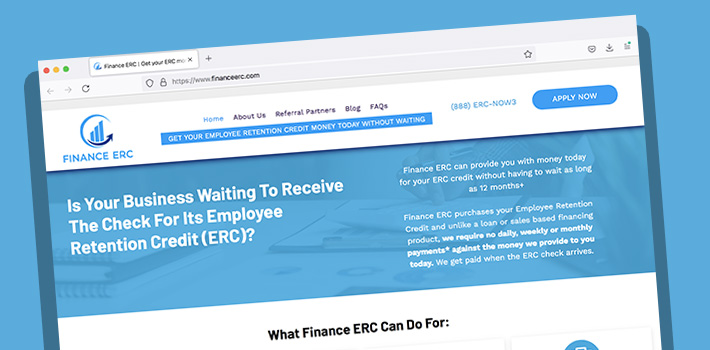 “I have never sold a product that has no daily, no weekly, or no monthly payments,” said David Goldin. That is until now, he explained, because of the Employee Retention Credit from the IRS that’s sweeping the country. Goldin’s new company, Finance ERC, that he co-founded with Newtek co-founder Jeffrey Rubin, is buying the future ERC receivables of small businesses that have filed for it. A key feature? No payments.
“You basically drop off the money, they don’t pay you out of cash flow, we get paid when the checks arrive,” Goldin said. “It’s an amazing offering.”
Goldin is no stranger to the SMB finance game. He is one of the reasons that the MCA product exists today in the United States. A documentary about it was the second most watched in all of 2022, for example. And he’s still a busy guy. One of his other businesses, Capify, finances small businesses on two continents every day.
“I’m busy in the morning with the UK and I’m busy at night with Australia, but I had a lot of free time during the day,” he said about how he was able to pursue yet another venture. “I approached Jeff and we were seeing that there was a gap in the market that the checks don’t arrive.”
The ERC, a potentially generous tax credit available to eligible businesses, has recently enjoyed greater awareness since it was included in the March 2020 CARES Act. Businesses that qualify can amend previous returns to receive a refund. Folks in the small business finance industry, already in direct communication with businesses about their financial needs, have taken notice.
Finance ERC won’t do the filing itself for a business. They have to had filed already to seek out the funding, which can go up to $1 million at present. It’s the waiting game between filing and actually receiving the refund that leaves merchants in a crunch. Goldin said the wait time is “best case scenario three months, worst case scenario a year plus.” And there’s no guarantee that the claims will be paid. That’s a risk they bear.
The deals come in from a variety of sources, business loan brokers, MCA platforms, ERC filing companies and more. The funding amounts can be significantly larger than an MCA and with no payments to be made, is incredibly competitive. A number of other financial service providers are charging a fee just for helping the businesses file for the credit in the first place, which in itself can be lucrative, but Finance ERC sticks just to the funding.
“We work with the funding companies, we work with the brokers, the various ISOs, it’s a great product,” Goldin said.
But the life span of the ERC is purportedly capped. Some experts say that businesses can only amend their 2020 tax return through April 2024 and their 2021 return through April 2025 [dyor]. But then that’s supposed to be it, allegedly.
“That presumes the government is not going to offer any future tax incentives,” Goldin said. “What we’re building at Finance ERC is a platform to finance tax credits. [The ERC] is the first credit.”
The opportunity, he explained, is preparing now for what may repeat often in the future.
“We put together the right players and vendors,” Goldin said. “We’ve hired a super senior management team.” It’s a system that includes sales, marketing, operations, finance, underwriting and more, to be prepared to scale.
But even in the present, opportunity abounds.
“The best estimates I’ve read are 5-6 million ERC are still eligible,” Goldin said. “People in this industry call it America’s best kept secret.”
And thus as marketing of the ERC continues to grow all around, Finance ERC is ready to work with businesses, brokers, and filers going through the process. Businesses can even use the funding from Finance ERC to pay the fee to file in the first place.
“So now all of a sudden they put the risk to me which I’m happy to do for a file that we like, and I pay the filing company / the broker gets paid right away,” Goldin said.
Who’s Got Swag?
January 10, 2023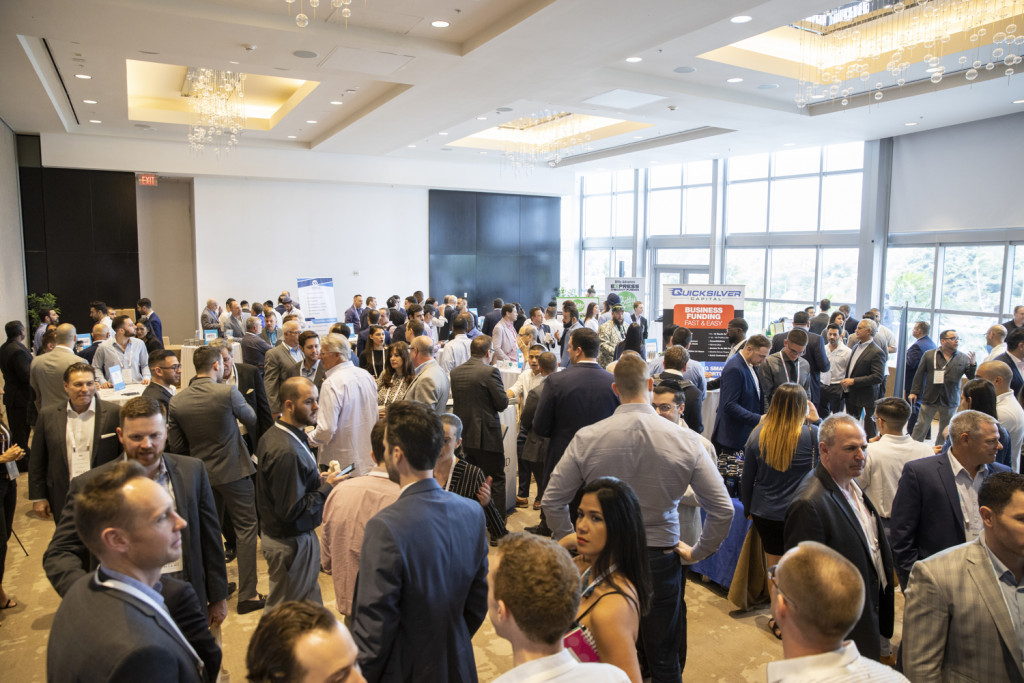 There’s a rush of excitement at Broker Fair and AltFinanceDaily Connect. Behind the scenes there is also a fun creative process that sponsors get to prepare for right before every event. SWAG! It can be challenging to think of anything other than pens and Post-its to jazz up one’s table with memorable tchotchkes so here is some unforgettable swag from over the years:
Broker Fair 2019 in the Roosevelt Hotel, as some might recall, had a live basketball hoop by Rapid Finance. LoanMe brought out squeezable stress relievers and what better way to relieve it than squeezing a money wad. Silver sponsor Cooper Asset had special bags that came in handy when collecting all that swag.
At AltFinanceDaily Connect San Diego 2019, PIRS Capital gave out mouse pads, great for guests to use at work with a constant reminder of where they got it from. Bitty Advance had reusable water containers, smart to stay hydrated while bouncing from sessions to the sponsor showcase room. BFS Capital had a bowl of candy on their table and who doesn’t love a sweet treat after endless meet and greets.
At AltFinanceDaily Connect Miami 2019, SOS Capital was looking out for everyone by having a bowl of mints out for grab. And if one can’t calculate large numbers without a calculator handy, RTR Recovery had guests covered with that.
After having a virtual Broker Fair in 2020, Lendini stepped it up a notch with a hand-rolled cigar station at the pre-show party in 2021. If one didn’t have a pen and notepad to take down information, Velocity Capital Group made sure to have plenty available. Velocity also had a mini massage station to loosen everyone up after a tense year in quarantine.
Although Covid took some time away from events, the AltFinanceDaily Connect Miami 2022 sponsors were more ready than ever to show off their swag. FundFi played it safe with hand sanitizers and the LCF Group knew everyone would need a ChapStick throughout the event after talking all day. FinTap got creative with their very own Staples easy-button that said ‘funded.’ Legend Funding had mini piggy banks, ROC Funding Group had cigar cutters, and Lendini had flasks and raffled off a Gucci duffle bag.
Broker Fair 2022 swag was a blend of the practical with the innovative. THOR Capital had shot glasses and if one needed a coaster for that Lifetime Funding had your back. Now that everyone has moved on to wireless headphones, Dedicated Financial GBC brought back wired headphones, which are perfect for flying. Beyonce said it best, “I got hot sauce in my bag swag,” and everyone could too because IOU Financial had mini hot sauce bottles. Following the tradition of raffling their most-wanted Gucci duffle, Lendini also had mini tool kits and Magic 8 Balls that fortuned all good news surrounding the event.
At AltFinanceDaily events, sponsors always come through with original swag ideas. With Miami 2023 right around the corner, we are excited to see what will be there this year.
Amazon’s Business Loan Trajectory
January 10, 2023 According to documents purportedly obtained by Business Insider, Amazon plans to increase its business loan operations in 2023, estimating that loan receivables will eventually exceed $2B. Insider also says that its expected loss rate is 1.34%.
The receivable figure would not be all that surprising as Amazon as been on a steady trajectory upwards over the last decade with the exception of 2020 when covid struck. Its receivables reached $1.4B in Q3 2022. The year-end figure has not yet been released. $2B+ for 2023 would be in line with the historical trend.
2016: $661M
2017: $692M
2018: $710M
2019: $863M
2020: $381M (covid)
2021: $1B
2022 (Q3): $1.4B
Not counted in these figures is financing to Amazon sellers conducted through a third party. Amazon recently teamed up with Parafin on merchant cash advances, Lendistry for Business Loans, and Marcus for lines of credit, for example. Data on funding from these parties is a little more difficult to come by.
The Buck in Trucking
December 21, 2022 “If you don’t have the marketplace of lenders, yes, it can be problematic,” said Cheryl Tibbs, Owner/CEO at Equipment Lease Co about providing capital to the trucking industry. “If you don’t understand the trucking industry, it can be very problematic.”
In the last year, there has been an increasing interest in equipment financing. It was the primary topic of a panel discussion at Broker Fair and the subject of several sidebar conversations throughout the day and thereafter. For Tibbs, who lives and breathes equipment finance and trucking, she said she doesn’t see funding in that space slowing down.
“Every business that’s in business needs some type of equipment to operate,” said Tibbs. “Whether it’s a cell phone, a POS system, a car or truck, excavator, whatever it is, every business has some type of equipment. So I don’t see the industry slowing down at all.”
Tibbs, for her part, says that some companies in her lender network can provide a uniquely beneficial solution, a funding bundle that is part equipment finance and part working capital.
“Some of those customers may need that working capital for a down payment or if you’re buying a truck, for instance,” Tibbs said. “And this working capital comes in handy because if you know anything about trucking, the insurance on those things can be– I’ve seen it go as high as 60,000 a year, almost half the cost of a truck. So that working capital comes in handy.”
And the costs of trucks is in a state of flux. Jonathan Nelson, General Counsel at Dedicated Financial GBC, said the costs of used trucks is rapidly shifting.
“This month, you could get $20,000 for this particular used truck on the East Coast and next month, if you were to sell it on the West Coast, you might get $40,000,” said Nelson. “It’s very volatile at the moment.”
Evan Sowa, Senior Finance Manager at Everlasting Capital, echoed same.
“Depending on the geographical market, prices on the same truck can vary substantially,” he said. “Market prices are as high as I have ever seen them, up to 80% higher than similar units 4 years ago.”
Sowa continued by explaining that demand and prices in the used truck market have been booming but that they’re finally starting to cool off.
David Lee, CEO at North Mill Equipment Finance, said there are some issues in the wider trucking market right now.
“The trucking industry is facing a lot of challenges currently,” Lee said. “In addition to supply disruptions, and an inflation in used asset values and unavailability of newly manufactured equipment combined with significant increases in diesel fuel costs, a number of operators have felt tremendous margin pressure, with load rates having decreased, the cost of the equipment being higher, and the cost of operating the equipment via fuel being higher.”
 A lot of those costs have not been able to be passed on to shippers, Lee added, and he said that they’re seeing a material increase in delinquencies and defaults amongst trucking operators.
Nelson at Dedicated, speaking on a much broader level of equipment finance, said that in general the industry has been able to escape the wave of defaults happening in other industries.
“We are a part of the National Equipment Finance Association and the Equipment Leasing and Finance Association to make sure that we understand issues and different trends that are happening in the equipment finance industry, because that’s where most of our clients are,” he said.
Tibbs, who’s a super broker, explained that she has seen lenders and funders tighten up their guidelines post covid.
“It’s not as easy to get plugged in with certain lenders,” she said. “It’s not as easy to get certain deals approved that we probably could have gotten approved pre-pandemic.”
Because of her experience and relationships, however, Tibbs is optimistic about the kind of deals she can get done, especially over newcomers who are at a disadvantage, explaining that she can finance pretty much anybody.
Evan Sowa at Everlasting summed up the state of things as such.
“Still funding trucks every day but the market is crazy right now,” he said.
AltFinanceDaily’s Top Five Stories of 2022
December 20, 2022 deBanked’s most read stories of 2022 are in and they’re a bit different from the hits of 2021. These were the results!
1. DoorDash Goes into MCA
It was nearly a tie for two stories related to the same company, DoorDash. Who would’ve thought? But in early 2022 the mega restaurant delivery service announced to the world that it was getting into the merchant cash advance business courtesy of a new funding industry challenger named Parafin.
Here’s what you may have missed as the biggest story of the whole year!
DoorDash Now Offers Merchant Cash Advances
DoorDash Expands its Cash Advance Program to the Dashers Themselves
2. Scandal
Not everyone had a good year. Some had to face the music. It was a close race between two stories for the 2nd spot but we’re only linking to one because the second involved a lawsuit that has since been dropped by the plaintiff.
Man Who Defrauded MCA Companies Indicted | This case is still ongoing.
3. The Demise of LoanMe
NextPoint Financial’s abrupt decision to wind down LoanMe after a celebratory acquisition of it was one of the biggest surprises of 2022. Very little information has been shared publicly about what led to it. Given NextPoint’s status as a publicly traded company, details could’ve been inferred from their regularly filed financial statements, but they’ve failed to file them for a whole year. Instead, they’ve provided regular investor updates that have communicated that they’ll eventually be forthcoming but they keep missing the deadlines they set for themselves.
LoanMe Has Stopped Originating Business Loans
NextPoint Financial Formally Announces End of LoanMe Business
4. The California Disclosure Law
Reality struck in 2022 as the 4 years of debate over California’s commercial financing disclosure law finally came to an end. It went into effect on December 9th. This story, published leading up to it, was the 4th most read of 2022:
Think The New California Disclosure Law is Just About a Disclosure Form? Think Again
This one, published two weeks ago, followed close behind:
Funding Companies Sue California Regulator Over Looming Disclosure Law
5. Reality TV
Technically, the first episode of Equipping The Dream was the most viewed content on AltFinanceDaily throughout all of 2022, but if we’re going just by stories, then this one, talking about its fast rise, placed 5th for the year:
Reality Show About SMB Finance Sales Rockets to The Top Spot
Tackling the California Disclosure Law With David J. Austin, Esq.
December 16, 2022 “I believe the law can be complied with in a technical sense based on how the statute is written,” said David J. Austin, Esq. of Austin LLP, “however, it opens up a funder to a number of attacks when they’re trying to enforce the funding.”
Austin, an attorney well-read on California’s new commercial financing disclosure law, has created a compliance guide specifically for merchant cash advance funders. Now that the law is in effect, he’s noticed a sudden urgency from small business finance companies to quickly wrap their heads around what they need to be doing.
“There’s nothing ambiguous about certain things in the statutes,” he said. “And it’s very specific, you have to use this font, you can’t use bold or italics, and I discussed that a little bit in [the guide]. It’s very specific about what you need to do.”
Austin imparted some helpful wisdom based upon the risks he sees. First, that funders need not just worry about the Department of Financial Protection and Innovation (DFPI) auditing one’s compliance, but also about what attorneys on the opposite side of the table might attempt to attack if these contracts ever end up in litigation, which they inevitably will. There should be concern, he said, about surrendering some control of the disclosure process to brokers, especially for this reason.
“In my view, the biggest liability in this statute is the broker screwing you up,” Austin said. “I can’t begin to say how important I think it is to—just for that one disclosure, take the broker out of the equation…”
Austin suggested that as far as California is concerned, funders should have direct communication with the merchant early on in the process so that when it comes time to make offers, the funder is able to send the required disclosures to the merchant themselves, and that the broker can simply be included in those communications. This workflow system might depart from one where a broker is accustomed to retaining all control of merchant communications, but Austin is looking at the risks through the lens of a funder.
“I think you just have to say, ‘look, it’s the law and we’re not going to do it any other way,'” he said.
While a much more complete scope of what’s required is all part of the guide he’s offering, he hinted that the “reasonably anticipated true-up” requirement of the disclosure was mostly centered around the knowable seasonality of a business and that he likes the Historical Method of predicting a business’s future sales versus the state’s other allowable option, the Underwriting Method. The Historical Method requires that a funding company examine at least 4 months of a business’s previous history, so if any brokers have been left wondering why a funder has recently started asking for 4 months bank statements instead of 3, this is probably the reason. Austin believes that the Underwriting method, by contrast, creates a lot of extra work, like state audits and additional litigation risk.
“The statute [on the Underwriting Method] is long,” he said. “And like I said, it requires auditing. So the first thing that’s going to happen in any litigation is you’re going to be asked to provide those auditing details.”
Any mca funder curious about compliance, including for access to the full guide, should contact David Austin directly at david.austin@austinllp.com.
Since the law has gone into effect, AltFinanceDaily has determined that some funders are complying with the law already and are continuing to operate in the state like normal while others are taking a wait-and-see approach. Any funder thinking they can fly under the radar of the DFPI and ignore the regulations should consider that a compliance failure could likely be exposed in litigation.
“We know what the defense counsel is going to do,” said Austin, speaking on merchants’ lawyers using the disclosure requirements as a weapon. “They’re gonna push, push, push, push, push.”
Opportunities Still Ahead?
December 12, 2022 With the year coming to an end, it’s time to analyze what direction the industry is going in. Some professionals in the industry are feeling optimistic despite macroeconomic pressures and there’s a reason for that.
Gerald Watson, Founder and President of The Watson Group, said with the latest Employee Retention Tax Credit (ERTC), his company has been on a steady incline. The tax credit was designed for companies affected by Covid in 2020-21 as a refund against payroll taxes they’ve already paid and that’s where Watson comes in because it can take a while for business owners to actually receive those funds, as long as 6-12 months, he said. With the help of funding partners, Watson can make an advance to business owners on the ERTC upfront. Watson’s core business has always been factoring but when he saw this opportunity, he went for it.
“I think maybe looking ahead as we get into 2023 next year, I think the industry is going to be continuing to look for ways to expand its product base, and I think it’s likely that we’ll see more and more maybe of your larger lenders moving into things like some form of factoring, for example,” said Watson.
On the fintech side, CRO at Encapture Tyler Barron says he’s noticed a shift this year regarding certain lines of business but that their product has historically performed well regardless, even if the deal sizes get a bit smaller. Encapture is a platform that sells automated programs to financial service companies – primarily big banks – and they’ve noticed large, regional, and community banks investing more in technology, specifically ones that help them automate and cut costs.
“What we’ve kind of seen over the past year is, there’s definitely been a pullback, as it relates to certain lines of business, like anything related to mortgage this past year has completely dried up,” said Barron. “But we are still seeing financial institutions, both fintechs, large banks, regional banks, and community banks invest in technology.”
Back at Broker Fair in late October, Pooja Nene, Broker Relationships Manager at Balboa Capital, told AltFinanceDaily that she thought the industry was going in a good direction.
“I think with a lot of issues that we’ve had since 2020 our industry’s been holding up really well and there’s a ton of opportunities out there to get involved in different types of financing…” said Nene.
Overall, the demand for the products should continue.
“One thing about our industry is that people always need money; good times bad times, high interest rates, low interest rates,” said Gerald Watson. “There’s always going to be a demand for what we do.”