Merchant Cash Advance Company Wins in Bankruptcy Court After Judge Rules It’s an Ordinary Part of Business
August 21, 2018 Last week, a bankruptcy judge in the Northern District of Illinois ruled that a merchant had used so many merchant cash advances that it had become a normal part of their business.
At issue was Network Salon Services, a business founded in 2004 that was brought back from the brink of insolvency in January 2013 by a merchant cash advance. That advance, coupled with dozens of advances from more than 14 MCA companies over the following 3 and a half years would keep Network Salon on life support until it finally failed for good.
At the end, Network Salon had just $200 to its name and nearly $4 million in outstanding future receivables due to MCA companies.
After the Chapter 7 proceedings commenced, the bankruptcy trustee came knocking on the doors of several MCA companies to give back the funds it believed had been fraudulently transferred and obtained through criminally usurious means.
One of those companies, NY-based LG Funding, pushed back hard, and on August 15th the judge ruled in LG’s favor. In a carefully considered decision, The Honorable Jacqueline Cox said that an exception applied to LG Funding. Unlike a normal creditor where certain property obtained leading up to a bankruptcy becomes returnable to the trustee, Network Salon relied on MCAs in its normal course of business for years and thus the transfers of funds to LG Funding was the ordinary course of business not subject to return.
So ordinary was it in fact that Network Salon used MCAs to make payments on other MCAs, going so far that at one point one of its bank accounts showed no deposit activity for a month except for deposits from MCA companies and online lenders.
Ultimately it didn’t matter if LG Funding was actually debiting the deposits made by rival companies rather than the actual proceeds of sales, Judge Cox opined, because this deviation from the contract was not fraudulent and both parties benefited from it.
The usury arguments, as usual, failed, because New York courts (The state governing LG Funding’s contracts) have already determined that MCA transactions are not loans and therefore can’t be usurious.
“The Trustee has failed to meet her burden to establish by a preponderance of the evidence that the transfers were preferential or constructively fraudulent and therefore subject to avoidance,” The judge ordered. “LG Funding has succeeded in establishing that the transfers were made in the ordinary course of business, defeating the Trustee’s 547(b) preference claim. The constructive fraudulent conveyance claim fails because Network Salon received reasonably equivalent value in the transactions in issue. Judgment will be entered in favor of Defendant LG Funding on all counts.”
This post is an oversimplified explanation. Download the 24-page decision HERE for the full facts and details.
The 2018 Top Small Business Funders By Revenue
August 16, 2018The below chart ranks several companies in the non-bank small business financing space by revenue over the last 5 years. The data is primarily drawn from reports submitted to the Inc. 5000 list, public earnings statements, or published media reports. It is not comprehensive. Companies for which no data is publicly available are excluded. Want to add your figures? Email Sean@debanked.com
| Company | 2017 | 2016 | 2015 | 2014 | 2013 |
| Square | $2,214,253,000 | $1,708,721,000 | $1,267,118,000 | $850,192,000 | $552,433,000 |
| OnDeck | $350,950,000 | $291,300,000 | $254,700,000 | $158,100,000 | $65,200,000 |
| Kabbage | $200,000,000+* | $171,784,000 | $97,461,712 | $40,193,000 | |
| Bankers Healthcare Group | $160,300,000 | $93,825,129 | $61,332,289 | ||
| Global Lending Services | $125,700,000 | ||||
| National Funding | $94,500,000 | $75,693,096 | $59,075,878 | $39,048,959 | $26,707,000 |
| Reliant Funding | $55,400,000 | $51,946,000 | $11,294,044 | $9,723,924 | $5,968,009 |
| Fora Financial | $50,800,000 | $41,590,720 | $33,974,000 | $26,932,581 | $18,418,300 |
| Forward Financing | $42,100,000 | $28,305,078 | |||
| SmartBiz Loans | $23,600,000 | ||||
| Expansion Capital Group | $23,400,000 | ||||
| 1st Global Capital | $22,600,000 | ||||
| IOU Financial | $17,415,096 | $17,400,527 | $11,971,148 | $6,160,017 | $4,047,105 |
| Quicksilver Capital | $16,500,000 | ||||
| Channel Partners Capital | $14,500,000 | $2,207,927 | $4,013,608 | $3,673,990 | |
| Wellen Capital | $13,200,000 | $15,984,688 | |||
| Lighter Capital | $11,900,000 | $6,364,417 | $4,364,907 | ||
| Lendr | $11,800,000 | ||||
| United Capital Source | $9,735,350 | $8,465,260 | $3,917,193 | ||
| US Business Funding | $9,100,000 | $5,794,936 | |||
| Fundera | $8,800,000 | ||||
| Nav | $5,900,000 | $2,663,344 | |||
| Fund&Grow | $5,700,000 | $4,082,130 | |||
| Shore Funding Solutions | $4,300,000 | ||||
| StreetShares | $3,701,210 | $647,119 | $239,593 | ||
| FitSmallBusiness.com | $3,000,000 | ||||
| Eagle Business Credit | $2,600,000 | ||||
| Swift Capital | $88,600,000 | $51,400,000 | $27,540,900 | $11,703,500 | |
| Blue Bridge Financial | $6,569,714 | $5,470,564 | |||
| Fast Capital 360 | $6,264,924 | ||||
| Cashbloom | $5,404,123 | $4,804,112 | $3,941,819 | $3,823,893 | |
| Priority Funding Solutions | $2,599,931 |
Square Capital is Funding $130 Million a MONTH
August 1, 2018 Today Square released its Q2 2018 earnings, revealing that in the second quarter Square Capital facilitated over 60,000 business loans totaling $390 million. This is an increase of 22% year over year, and a 13% increase compared to last quarter’s loan volume of $339 million.
Square’s growth was also driven by its Instant Deposit, Caviar and Cash Card products. Additionally, second quarter growth came from Square’s acquisitions, including Weebly, which provides tools to help individuals and small businesses create websites or online stores.
In today’s earnings call with Square CEO Jack Dorsey and CFO Sarah Friar, an analyst asked about plans for development of Square Capital. In response, Friar said that they plan for Square Capital to grow as the Square customer base grows. But she said Square is also taking more proactive steps to acquire Square Capital customers, including partnerships. Just last week, Square partnered with eBay to make loans to eBay merchants.
“We’re looking to partner [with companies] where their customers look like Square sellers,” Friar said.
Founded by Jack Dorsey and Jim McKelvey in 2009, Square is headquartered in San Francisco, with offices also in Canada, Japan, Australia, Ireland, and the UK. Dorsey is also the CEO of Twitter.
Notorious Tampa Bay Loan Broker Likely Headed Back to Jail
July 27, 2018 Tampa Bay loan broker Victor Clavizzao pleaded guilty this week to one count of wire fraud, which could land him in prison for up to 20 years. This would not be his first time behind bars. In 2009, a federal judge sentenced him to five years for conspiring to fraudulently obtain nearly $6 million in mortgage loans.
This time, Clavizzao, 55, cheated a church congregation out of $16,350 that they had set aside to build a new church. According to a Tampa Bay Times story, shortly after leaving prison in 2014, Clavizzao was still on probation when he created Key Business Loans. Around the same time, he met husband and wife, Sam and Minnie Wright. Minnie Wright is the pastor of the Tampa Bay-area New Testament Outreach Holiness Church #2, and she asked Clavizzao if his company would be able to make a loan to their church.
According to the Tampa Bay Times story, Clavizzao said “Absolutely.”
Clavizzao, who used the named Victor Thomas, ingratiated himself with the Wrights and other church congregants and told them that not only could he help them obtain a $650,000 loan, he could also handle the purchase of the plot of land along with other details. The church gave Clavizzao a series of initial payments – for an architect and for an environment inspection of the land – and when the Wrights started getting suspicious, Clavizzao disappeared.
Last year, suspected of defrauding the Wrights and others, Clavizzao told Tampa Bay Times in a phone interview that his business, Key Business Loans, was completely legitimate.
“Knock yourself out, I’m not doing anything wrong,” he said, acknowledging that he discloses his criminal history to prospective borrowers. “Any person who has a problem about my past can choose to do business with me or not do business.”
In July of 2014, Clavizzao presented the Wrights with a “Proposal Letter for Guaranteed Business Purchase Loan” from Key Capital Commercial Funding, a New York City-based company he said he had ties with. The proposal outlined the terms of a 15-year, $650,000 loan at 5.1 percent interest. The Wrights signed it. However, what the Wrights did not know at the time was that there was no Key Capital Commercial Funding in New York City, or anywhere else.
In part because of persistent reporting on Clavizzao from Susan Taylor Martin at Tampa Bay Times, the Wrights were able to learn more about Clavizzao’s criminal past and the FBI got involved.
After Clavizzao’s recent guilty plea, he is currently out on bond pending his sentencing. A date has not been set.
Crowdfunding Legal Limit Too Low for Intended Beneficiaries
July 25, 2018 Regulation Crowdfunding (Reg CF), a regulation that grew out of the Jumpstart Our Business Startups (JOBS) Act of 2012, was designed to allow non-accredited investors to invest relatively small amounts in startups. But the regulation seems not to be serving its purpose, according to people in the fintech investment community.
Why is this? Because the maximum amount that can be raised in a single year under Reg CF is limited to $1,070,000.
“I’ve had clients consider [using] Reg CF, but when they see that they can only raise $1 million, they say it’s not worth the trouble,” said James P. Dowd, CEO of North Capital, a Salt Lake City-based broker-dealer that helps private companies raise money.
“I’m not anti-regulation at all, but if the reward is not there, people won’t go through the trouble,” Dowd said. “Let’s have regulations that are appropriate for the need.”
Dowd said that a small startup seeking funding for a series A round is typically looking to raise around $10 million. The $1.07 million cap for Reg CF is therefore inadequate. A startup’s other options for raising money under the JOBS Act include regulations D, S and A+. Dowd said that Reg D is the most common. It involves very little paperwork and is less expensive compared to other options. Reg S applies only to offshore investors and Reg A+ makes sense only if the startup is looking to raise $20 million or more because this option is costly to file.
All of these options require that investors be accredited, which translates to investors being wealthy. (Accredited investors must have a net worth of at least $1,000,000, excluding the value of one’s primary residence). On the other hand, if an entrepreneur opts to raise money through a Reg CF, investors need not be accredited, although there are still restrictions on how much they can invest, given their income.
Reg CF allows entrepreneurs to access a wider pool of investors. And Dowd, along with others in the investment community, believe that the current $1.07 million annual cap should be raised to as high as $20 million to satisfy the need of entrepreneurs who are looking to raise more money.
“The infrastructure for the crowdfunding industry has been tested and is ready to expand,” said Douglas S. Ellenoff, partner at Ellenoff Grossman & Schole who is an expert on crowdfunding.
Ellenoff said that there was much fear among regulators following the 2012 JOBS Act that crowdfunding would be ripe for fraud. But the fraud didn’t happen. He believes in raising the Reg CF cap to allow the crowdfunding industry to mature. And he believes that once the cap is raised, more substantial companies will start to use crowdfunding which further legitimate it as a valid way of raising money.
North Capital was founded by Dowd in 2008 and provides an array of financial advisory services to its clients. In addition to its Salt Lake City headquarters, it also has offices in Benicia, California and McAllen, Texas.
Australia Brimming with Alternative Lending Activity
July 18, 2018 OnDeck announced today that it has closed on a $75 million (AUD) asset-backed revolving credit facility with Credit Suisse for its business in Australia. This will be used to refinance OnDeck Australia’s current loan book at a significantly lower cost, as well as to fund future originations there.
This comes shortly after Lending Express CEO Eden Amirav told AltFinanceDaily that the success his company had in Australia in just a little more than a year gave them the confidence to enter the U.S. market.
“After the immense success we’ve had in the Australian market, we knew that our platform was ready to take on the U.S.,” Amirav said in June.
And several large fintech companies, including OnDeck, joined forces this month to create a set of best practices, called The Code, that would regulate how fintech companies operate in Australia. The market down under has seen a fairly rapid expansion over the last several years.
Some of the major fintech companies there include Prospa, OnDeck, Capify, GetCapital, Moula and Spotcap.
Axiom Bank Acquires Allied Affiliated Funding
July 12, 2018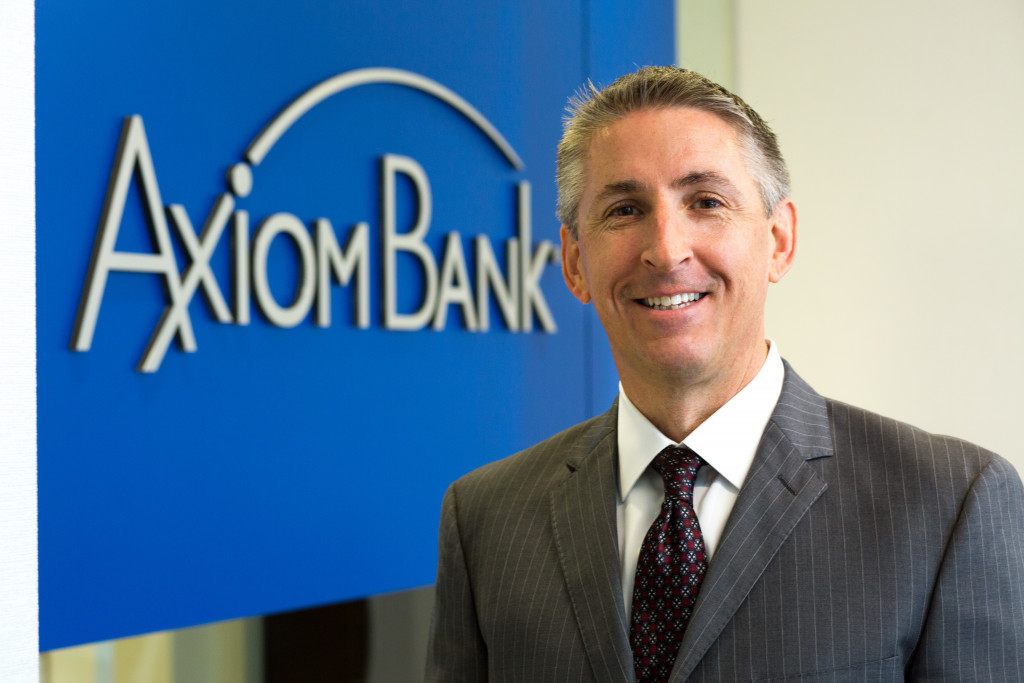
Axiom Bank, a community bank with retail branches located inside Walmarts throughout Florida, announced this week that it has acquired a factoring company, Allied Affiliated Funding.
“Allied has a proven track record of success with accounts receivable lending, which fits well with Axiom’s broader business plan to diversify and expand our commercial lending operation,” said Axiom Bank President and CEO Daniel Davis. “Allied is also an excellent fit culturally for us. They have a strong management team with the expertise to help emerging companies and businesses that are seeking growth, as well as those that need working capital.”
Allied’s factoring product will add to Axiom Bank’s offering for its small business owners clients. Likewise, Axiom Bank’s capabilities in cash management services will provide new opportunities for Allied’s current commercial clients. Allied is based in Dallas, Texas.
“Axiom is a Florida-based nationally chartered bank with a strong entrepreneurial spirit that is focused on maximizing clients’ potential,” Allied Affiliated Funding CEO Clay Tramel. “Combining forces helps us to deliver on a shared vision with greater creativity by offering new exciting products, including asset-based lending, in the marketplace.”
Tramel will stay on as CEO of what will now be known as Axiom Factoring. Gen Merritt-Parikh will serve as President and be in charge of the day-to-day operations.
Acquiring other companies has been a cornerstone of Axiom Bank’s growth strategy, including branch expansions (there are now 24 branches) as well as the launch of AxiomGO, a mobile banking app. Axiom was also recently approved as an SBA preferred lender, a designation that allows the bank to independently approve and underwrite SBA 7(a) loans.
Established in 1962, Axiom Bank is based in central Florida and provides retail banking services, including checking, deposit, and money market accounts.
Access to Growth Capital Expands for Small Businesses in Western New York
July 12, 2018Rochester, New York – July 12, 2018 – Lendio, the nation’s leading marketplace for small business loans, today announced an expansion of the Lendio franchise in Rochester, New York. Lendio Rochester will provide financing solutions to businesses from Syracuse to Buffalo and Niagara Falls to the Canadian border. Lendio franchise owner RJ Muto hopes to ease the financial hurdles for local business owners by helping them apply for loans, review their options and secure funding through Lendio’s network of over 75 lenders.
An online service that helps business owners find the working capital they need to grow their businesses, Lendio’s funding options include SBA loans, startup loans, equipment loans, commercial real estate loans and more. Through franchisees that understand the needs of local business owners, the Lendio franchise program reduces the legwork of looking for a small business loan while bridging the gap between online lenders and the small business community.
Since 2008, accessing financial capital has been difficult for small business owners in upstate New York. In addition to feeling the burden of high taxes in the state, business owners view themselves as outvoted and misrepresented in state government by the massive population of New York City, according to Muto. While residents migrated away from Rochester and Buffalo in record numbers as jobs became scarce, the area is mounting a steady comeback, says Muto, and he hopes to play a role in its rebirth.
“We take a consultant approach to each business we fund,” said Muto. “The goal is to figure out how we can help the business owner thrive and grow. We’ve seen a fantastic response in Rochester. There is a lot of opportunity for small business in this area, and I’m excited to be a part of it.”
“RJ and Lendio did a great job for me and my business. He assessed our needs and found several good matches for us—having multiple options speaks volumes,” said Eric Schladebeck, owner of Spencerport Family Apothecary in Spencerport, New York. “We had our funds in such an expedited time frame that I felt as though I was his top priority.”
Between 2015 and 2017, online lenders, including Lendio, funded over $758 million to 11,490 small businesses in the state of New York. These online loans directly generated $1.8 billion in sales for small businesses in New York State and created 20,154 jobs and $795 million in wages. Nearly one-third of these loans went to small businesses in lower-income communities (those below the national median income).
For more information on how to join the Lendio franchise program, visit: https://www.lendio.com/franchise.
About Lendio
Lendio is a free online service that helps business owners find the right small business loans within minutes. With a network of over 75 lenders offering multiple loan products, Lendio’s marketplace is the center of small business lending. Bringing all options together in one place, from short-term specialty financing to long-term, low-interest traditional loans, our technology makes small business lending simple and decreases the amount of time and effort it takes to secure funding. For every loan facilitated on Lendio’s marketplace platform, Lendio Gives, an employee contribution and employer matching program, donates a percentage of funds to low-income entrepreneurs around the world through Kiva.org. More information about Lendio is available at www.lendio.com. Information about Lendio franchising opportunities can be found at www.lendiofranchise.com.
Contact:
Melanie King
Lendio
801.748.4782
melanie.king@lendio.com