
Even More Commercial Financing Disclosure Bills Emerge Across Additional States
February 9, 2022 It’s not just New York, New Jersey, California, Virginia, and Missouri with disclosure legislation out there anymore.
Utah – On Monday, the State Senate introduced the Commercial Financing Registration and Disclosure bill.
Maryland – On Monday, the State Senate introduced the Commercial Financing Transactions bill.
Mississippi – Last week, the State legislature introduced two commercial financing disclosure bills but both died in committee.
The Maryland Bill is the latest iteration of a multi-year campaign to pass legislation aimed at restricting MCAs in the state.
The bill in Virginia is still continuing to advance.
The bills in New York and California have already long ago passed and implementation of them as laws is still underway. The New York Department of Financial Services is expected to provide an updated proposal by the end of next month.
Missouri Introduces Commercial Financing Disclosure Bill
January 25, 2022Add Missouri to the list of states proposing mandatory disclosures in commercial financing transactions.
[See: New York, California, New Jersey, Virginia, North Carolina]
Missouri’s SB 963 is different from bills in other states in that it does not seek the disclosure of an annual percentage rate. Adopting a simpler approach, SB 963 would require commercial financing companies to disclose:
1. The total amount of funds provided
2. The total amount of funds disbursed
3. The total amount to be paid
4. The total dollar cost
5. The manner, frequency, and amount of each payment
6. Prepayment costs or discounts
7. Whether or not a broker will be compensated
The bill was introduced by State Senator Justin Brown (R).
The Pain in America’s Food Supply Chain
January 29, 2021 It was last November, Mark Mavilia says, when he and three friends in Washington, D.C. rendezvoused for dinner at Ghibellina’s, an Italian gastropub in Logan Circle “specializing in Neapolitan-inspired pizzas and craft cocktails,” says the online restaurant guide “Popville.”
Hold the pizza! Mavilia, who is art director at the Association of American Medical Colleges, couldn’t wait to tuck into the pasta-bolognese, his favorite dish. “In my opinion,” he says, “it’s the best in the city.”
Or rather was the best. When the foursome assembled outside the restaurant, they were disappointed to find Ghibellina’s had closed. “They had shut down for good,” Mavilia says, adding: “It was not boarded up. Just a note on the door thanking patrons for their support. I will surely miss the bolognese.”
The Ghibellina brand was later consolidated into a sister restaurant called Via in Ivy City.
Mavilia’s experience in Washington is typical of a nationwide phenomenon. Tens of thousands of restaurants and bars and eateries of every kind have closed their doors as the Covid-19 pandemic has ravaged the country and Americans have sharply limited their social interactions. As U.S. fatalities surpassed 410,000 in January, the economic damage to the restaurant and bar businesses has been staggering.
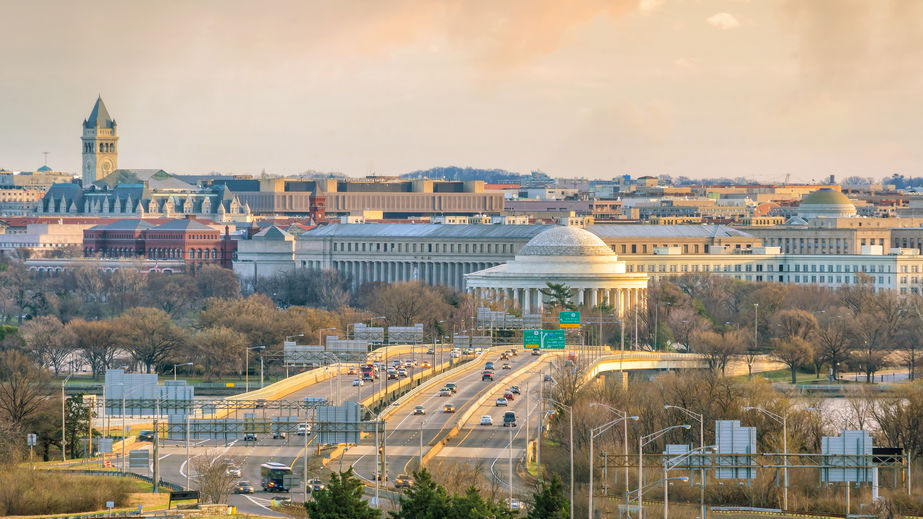 “Washingtonian” magazine keeps a running tab of restaurants that have closed their doors in and around the nation’s capital owing to the pandemic. In December, its tally listed 75 casualties in The District alone, including such icons as the Post Pub and Montmartre, Momofuku and Tosca, plus many more in the Maryland and Northern Virginia suburbs.
The area around the White House dominated by the influential K Street law firms and lobbyists, and the World Bank and International Monetary Fund has been nearly barren. With few people trickling into the central city, says Madeleine Watkins, owner of 202strong, a fitness club featuring personal trainers, her business is getting battered. Receipts are off by 80% over last year and she sees the effects all around her.
“There are definitely a lot of restaurants closed, but I’m hoping and praying that lot of it is temporary,” she says. “We need people to come downtown for Washington to be a vibrant and bustling city with coffee shops, restaurants, and sandwich shops.”
One hopeful sign: Tosca, a white-tablecloth restaurant near Metro Center which boasts an enthusiastic, upscale audience and earns 4.8 stars from customer reviews, promises to re-open in the spring. “This was my go-to Italian restaurant near my office,” declares Deborah Meshulam, a partner at multinational law firm DLA Piper and a former lead trial counsel at the Securities & Exchange Commission. “I loved their grilled Branzino and pretty much anything else they made.”
The Minneapolis Star-Tribune recently counted 94 restaurants that had closed down permanently in the Twin Cities. “Saying goodbye to a beloved watering hole, a neighborhood café or a four-star restaurant is never easy,” reporter Sharyn Jackson wrote in late December. “But in 2020, the pain kept coming as the pandemic brutalized the Twin Cities hospitality industry.”
Among the notable casualties, were Bachelor Farmer, Muddy Waters, and Fig+Farro.
Angharad Bhardwaj, communications manager at medical technology company GenesisCare and a lifeling Minnesotan, told AltFinanceDaily of her sorrow at learning that Fig+Farro had closed. “My husband and I were there for their opening, and I am so sad to see it close,” she says. “This was one of our favorite restaurants, just steps away from our condo in Uptown. We spent our first Valentine’s Day there. It was fresh vegan food. We even sat with the owner’s children one night. The little boy was helping his parents with the restaurant, taking orders.”
In Denver, online entertainment publication “Do303” recently highlighted closures of 15 area restaurants it called “the great ones that kept our hearts and bellies full for years.” Notable among the cohort was El Chapultepec, 12@Madison, and Biju’s Little Curry Shop. Michelle Parker, a Denverite who has a short commute to suburban Westminster where she is the City Clerk, says: “The feeling around town is that this has been a big loss to neighborhoods and to the food scene, which was just coming into its own as the pandemic hit.”
 Nationwide, more than 110,000 restaurants, bars and food-service establishments have closed their doors, reports the National Restaurant Association, the premier Washington-based trade group representing the food-service industry. The membership includes not only restaurants, pubs and cafes but non-commercial restaurant services, cafeterias, institutions like college cafeterias, and even food services at military installations.
The food-service industry is the nation’s second largest private employer and accounts for $2.1 trillion in economic activity, reports Vanessa Sink, director of media relations at the trade group. On average, when a restaurant closes, fewer than 50 people find themselves unemployed, but it adds up. As many as eight million food-service workers – waiters and bartenders, hosts and hostesses, cashiers, general managers and dishwashers, parking valets and cooks and chefs — were out of a job at the height of the pandemic in early 2020.
Curtis Dubay, senior economist at the U.S. Chamber of Commerce in Washington, D.C., notes that a whole array of food-service jobs are interwoven into the fabric of the U.S. economy. “Anything that involves large gatherings – transportation, travel and tourism, athletic events, the theater, the hospitality industry,” he says. “In places like The Hyatt in Orlando, food-service workers are involved in setting up a ballroom for conventions and small meetings. It’s a big part of the economy.”
Since the spring, many of the lost jobs came back as restaurants were able to add take-out and delivery services. Many states and localities allowed restaurants to re-open with outdoor-seating, limited occupancy, customer-spacing, and Plexiglas booths. Through the end of November, 2020, 75% of the lost jobs were recovered but 2.1 million food-service jobs had still vaporized.
As more and more people prepare their own meals at home, the switch from dining-in to curbside and takeout services has met with limited success. For take-out people are more likely to order fast-food from Chick-fil-A or Pizza Hut and Domino’s rather than something fancy. “Who wants to spend $60 for a meal you have to eat out of a cardboard container,” one Minneapolis woman complained to AltFinanceDaily.

Restaurant closures, meanwhile, are having devastating consequences across a broad swath of society. “When a restaurant closes or has to cut back, it not only impacts the economy of the local community, it also affects the culture of the community,” says Sarah Crozier, communications director at Main Street Alliance, a 30,000-member, small-business advocacy group headquartered in Washington, D.C. “Local, independent places are where we create our memories as cities and towns. From losing the cries of “Keep Austin Weird” to stripping away the innovative recipes coming out of Raleigh, N.C., it deeply scars the culture and feeling of a place when we have only chain restaurants to fall back on.”
Adds Sink: “Restaurants are the cornerstone of communities. You often find that neighborhoods and local economies have built up around a restaurant. Restaurants provide jobs, they pay rent and contribute to the tax base. Other businesses will grow up around them. People will go to a restaurant – and then they’ll go next-door to shop.”
Food-service establishments are also long-term tenants. The “vast majority” of the closures, Sink asserts, have involved restaurants that had been in business for more than 16 years. Roughly one in six had been in operation for 30 years or more.
Backlit downtown restaurants with inviting awnings, valet parking and limousines idling out front are giving way to boarded-up buildings, many battened down with battleship-gray steel shutters. “I’ve been talking to mayors about empty storefronts and the effects of business failures,” says Karen Mills, former administrator at the U.S. Small Business Administration and a senior fellow at Harvard Business School, says. “It’s significant. It devastates the whole community and brings down the whole environment. People don’t want to go downtown to Main Street anymore.”
Many cities and towns have invested heavily to revitalize their inner cities and urban areas around restaurants and bars to add sparkle to the nightlife and draw visitors and tourists. The economic development strategies often commingle trendy restaurants and nightclubs, shops and boutiques with spruced up warehouses or old buildings converted into artists’ studios, lofts and apartments.
 Some cities feature sports arenas and stadiums as a major draw, and the food offerings go beyond hotdogs, peanuts and Cracker Jack. St. Louis’s “Ballpark Village” promises, according to its website, a “buzzing, sports-themed district close to Busch Stadium with restaurants, bars and nightlife venues”; Baltimore’s Inner Harbor, which is walking distance to Oriole Park at Camden Yards, features a science center, aquarium and historic warships moored at the dock, as well as a complex of bars, eateries and music venues in a repurposed electric-power station known as “Power Plant Live!”
Beyond Main Street, restaurant closures are part of the collateral damage in suburbia as pandemic-wary people work and shop from home. “As I go around from town-to-town on Long Island and shoot out to the malls, I can see business closings everywhere,” says Ray Keating, chief economist at the Small Business & Entrepreneurship Council, a Washington-based trade group claiming 100,000 members. “When one business shutters, it affects other businesses. There’s a ripple effect.”
Adds Sink of the restaurant association: “Restaurants are often located with the anchor store inside malls. You never find any kind of mall without some sort of food court.”
When a restaurant closes its doors, it has a knock-on effect as well, sending shockwaves coursing up and down the supply chain. Prior to the pandemic, Sink reports, the industry generated $2.5 trillion in economic activity and supported 21 million jobs. Cutbacks in food service hurts “everything from butchers and farmers and distillers to the Cisco and Aramark food companies that depend on restaurants.
“It will reach farther back into the economy,” she adds, causing economic pain to such disparate businesses as cleaning companies, local plumbers, handymen, and maintenance workers. Even “technology companies that provide systems (for restaurants) to run a credit card or make reservations or keep track of service orders” are affected.
Andrew Volk, owner of the Portland Hunt & Alpine Club, a restaurant and bar with the reputation for offering possibly the tastiest cocktails in Maine, says that keeping his business going hasn’t been easy. The establishment was forced into lockdown in March and “stayed dark until Memorial Day,” he says, when it got the green light from the state to sell food and cocktails to go. On July 4, the restaurant went to outdoor seating, which it maintained until New Year’s Eve, adding heaters and umbrellas in the autumn to fend off Maine’s frigid temperatures.
Volk reckons that his restaurant’s sales were off by roughly 55 percent in 2020 over the previous year. Fully 95% of revenues go to pay expenses, including rent and utilities and employees’ wages. And the rest of the money scarcely lands in the cash register before it’s passed on to his vendors.
But as he has cut back operations, all of his vendors are feeling the pinch as well. There are no longer twice-weekly deliveries from the local package store from which, by state law, Volk is required to purchase hard liquor. His beer purchases –- craft beer prepared by Rising Tide Brewery and Oxbow Brewery, both of Portland, as well as Miller, Budweiser and Narraganset, the popular Rhode Island-made brew – are no longer so robust. Volk has also reduced his procurement of French and South African wines from importers.
 Purchases of farm-to-table produce from Stonecipher Farms, Dandelion Springs, and Snell Farms, which came to a halt last March, remain diminished. The daily deliveries from Baldor Specialty Foods, a New York-based food supplier of, among myriad foodstuffs, out-of-season vegetables and citrus fruit, are less frequent.
Volk is still offering fresh cooked fish for take-out, including cod, trout, halibut, hake and shrimp (but not cold-water Maine lobster). Even so, he’s ordering less seafood from Browne Trading Market. He has also cut back on specialty soft cheeses he buys from several local dairy farms, including Larkin’s Gorge and Fuzzy Udder.
Other vendors affected include Portland Paper Products, which supplies him with paper goods such as toilet paper and paper towels, cleaning supplies and chemicals for the dishwasher. One bright spot for the paper products supplier: it is meeting Volk’s increased demand for take-out boxes, paper napkins and plastic utensils.
Meanwhile, Volk is not looking as much to Pratt Abbott Cleaners for freshly laundered linens such as tablecloths, napkins, and kitchen shirts. Capone Griding Company in Boston, which sharpens kitchen knives and cutlery, isn’t making as many pickups and deliveries these days.
Ian Jerolmack, owner-operator of 10-acre Stonecipher Farms in Bowdoinham, Maine, is one of Volk’s food suppliers. He has been providing fresh, farm-to-table produce to several dozen restaurants in Portland, plus a couple “up the coast,” he says, since he began tilling the Maine soil a decade ago. Now the grower of organic fruit and vegetables – a garden of delights that includes tomatoes, carrots, beets, onions, cabbage, turnips, squash, sweet potatoes, and fennel – has been feeling the economic hardship along with the restaurants.
 By year-end 2020, Jerolmack says, he is down to only 15 restaurants as customers, a two-thirds attrition from his 45 customers prior to the pandemic. “Our farm was sort of unique in that it almost exclusively sold to restaurants,” he says. “They’re all in various degrees of agony,” he adds, “and I don’t know how the dust will settle. It’s been super-bizarre.”
When the restaurants went into lockdown last March, Jerolmack was faced with zero demand for his produce, and his livelihood was in jeopardy. At the same time, he was forced to reckon how much seed to plant. “There’s only one window in which to plant seeds,” he explains.
He had to decide whether to take on fulltime seasonal workers, which is not a simple proposition. In order to plant, tend and harvest his crops, he’d need to hire and house four Mexican workers under the federal government’s H-2A visa program. By law, he says, he was required to guarantee the foreign workers payment of 75% of their wages for eight months of employment. “I felt as if I were drowning,” he says. “It was a heavy weight.”
He opted to hire the H-2A workers and forged ahead with the planting, albeit at reduced acreage, consoling himself with the farmer’s ancient adage: “People always need to eat.”
With restaurants closed, his only recourse would be to sell directly to consumers. Yet Jerolmack had no online presence and was pretty much frozen out of the local farmers markets. So he turned to local restaurants and arranged to sell produce to their top customers. “I threw together a ‘farmer’s choice,’” he says, “a mixed bag of chard, carrots, onions, and beets – or whatever vegetables were in season and charged $25 a bag.”
Right away, he was able to sign up 175 customers paying $100 apiece for four weeks of produce, enough of a cushion for him to sell his “storage crops” and stay in business. Individual customers were grateful to buy the fresh organic food and avoid grocery stores, he says, the arrangement worked out for the restaurants. “They got increased foot traffic and helped their takeout business. Everybody loved it.”
By being creatively entrepreneurial and employing several direct-to-consumer sales strategies, he was able to chalk up revenues of $300,000 in 2020. That’s a hefty, 35% drop compared with the $440,000 in 2019 gross receipts. But Jerolmack says he kept five fulltime workers employed, he’s got a new consumer trade, and he’s getting ready for the 2021 planting season.
Thomas McQuillan, vice-president for strategy, culture and sustainability at wholesale food distributor Baldor, says that in a given year his Bronx-based company – with major operations centers in Boston and Washington, D.C. – delivers high-quality food to 10,000 restaurants from Portland, Me. to Richmond, Va. The wholesaler also supplies food in bulk to corporate dining rooms and cafeterias, hotels, institutions like hospitals and schools, and sports stadiums.
Baldor buys its produce from 1,000 regional farms, both big and small, and trucks in out-of-season produce from the West Coast. A visit to the company’s website discloses a vast cornucopia of edibles and victuals for sale. A few clicks discloses a gastronomic wonderland of fruits and vegetables, organics and cold cuts, meat and poultry and seafood, specialty and grocery items, dairy and cheese, bakery and pastry, and wine.
When the pandemic hit and restaurants went on lockdown, Baldor’s business plummeted by 85%, McQuillan reports, and the company reacted in much the same way as the Maine farmer. “With Covid-19,” says McQuillan, “all industries in the food business were affected. But we knew that the same number of people in our geographic area would be looking for food and we pivoted to a business-to-consumer platform and began shipping directly to people at home.
“We also knew many corporate types were no longer working in offices and, early on in the pandemic, people were fearful of going to grocery stores,” he adds, “and we began deliveries to apartment buildings all over New York. It’s not that different from delivering to a restaurant.”
According to a New York Times story, the company required a $250 minimum for consumer purchases and delivered 6,000 items within a 50-mile radius of New York City. McQuillan told AltFinanceDaily it pressed its 400-truck fleet of “sprinter vans to tractor trailers” into service for the residential deliveries. The consumer business and limited restaurant re-openings allowed Baldor “to rebound, but nowhere near pre-Covid levels,” he says. By year-end 2020, the company had furloughed 20% of its workforce.
 Fresh fish is for sale on the fishmonger, outdoor seafood market.[/caption]The seafood industry was among the hardest hit by the pandemic’s throttling back the restaurant industry, says Ben Martens, executive director of the Maine Coast Fishermen’s Association. Seafood is much less likely than poultry or meat to be prepared at home or ordered for takeout. Groundfish like flaky cod, haddock, pollack, hake and flounder, he explains, are especially popular dishes in high-end restaurants in New York, Boston and Chicago.
“Seafood is a celebratory food,” Martens says. “It’s a food people embrace when things feel good. It’s covered in butter and people eat it outside when they’re with family and friends.”
Early data, he says, showed a 70% decline in “landings revenue” at the non-profit Portland Fish Exchange Auction, the major marketplace connecting fishermen with wholesalers and processors. Some fishermen and lobstermen have had some success selling directly to consumers by switching over to scallops and other seafood popular with Mainers who, Martens asserts, are somewhat more inclined to prepare seafood at home than people in other states.
But what has really given the industry a boost, he says, has been an anti-hunger program run by his trade association. Seeded with $200,000 from an anonymous donor, and bolstered with $200,000 received through the CARES Act passed by Congress last year, the program purchases seafood at a fair price and funnels it to food pantries. “Maine is the most food-insecure state in the country,” Martens says. “and high quality protein is hard for a lot of people to find.”
The program contributed enough fish portions to contribute to 180,000 meals in 2020, while helping soften economic damage to fishermen. “Now we’re seeing some stabilization with outside restaurant seating,” Martens says.
Sam Cantor, who is vice-president for sales at Gotham Seafood, a New York broker doing an estimated $16 million in sales, according to Buzzfile, sounded glum and subdued in a telephone interview with AltFinanceDaily. He reports that the company delivers salmon, tuna, lobster, King Crab legs, red snapper and other seafood directly to eateries in Manhattan as well as the tri-state region of New York, Connecticut and New Jersey.
The last year has been a burden. “A ton of places are closed — cafeterias, cafes, hotels,” he says. “People are not going to the Berkshires or the Hamptons, offices are closing. In the beginning of the pandemic when (New York Governor Andrew) Cuomo shut down indoor dining it was brutal. And it’s still a difficult situation.”
Describing layoffs at the company as “significant,” Cantor says it’s also been emotionally draining to see the misfortune that has befallen restaurant workers. “It’s been a hard thing to witness,” he says. “A lot of our relationships are with chefs and they have families.”
Gotham has had some success selling directly to consumers by revamping its website and putting money into advertising on the online platforms Facebook and Instagram, he says, but “we’re not back to 100%.”
Cantor also says he is concerned that the country’s commercial infrastructure is at risk of fracturing. “It’s more than just losing your favorite restaurant or what happens to the individual fisherman and farmer,” he says. “It takes a very intricate supply chain for you to get your favorite fish. There’s a lot of work that goes into it.
“I hope my kids don’t have through something like this,” he went on. “The home delivery has been a shining light. But we want travel and tourism to come back. We want people going back to The Garden to watch the Knicks. I’m hoping there will be a renaissance, and this is just the start of the Roaring Twenties.”
2021: The Year of Uncertainty
January 7, 2021 For alternative lenders and funders, 2021 is starting out with a question mark and will lead (hopefully) to a resounding exclamation point of recovery.
Many industry participants waved goodbye to 2020 with relief, and are welcoming a bounce-back in 2021, despite some trepidation about potential bumps along the way and how long a full recovery will take. While things started to improve somewhat toward the latter half of 2020 after grinding to a halt earlier in the year, the pandemic is still raging, with economic growth highly dependent on the immunization trajectory. Then there’s the incoming Democratic administration and the possibility of new rule- making, along with January’s runoff elections in Georgia that could change the balance of power in the Senate, and thus impact the new president’s law- making abilities.
Beyond these macro-issues, the funding industry is also dealing with its own uncertainties. Small business lenders and funders have been hit particularly hard, with underwriting decidedly more difficult in this environment. Some industry players have been forced to find alternative revenue streams in order to ride things out. Not only that, but there are scores of small businesses still reeling from pandemic-induced shutdowns and lighter foot traffic, with some gloomy estimates about their ability to bounce back. Many alternative players are weighing diminished returns against a widely-held bullish outlook for the industry long-term. Many are simply hoping they can hunker down and stick it out long enough and to avoid additional carnage and consolidation that’s widely expected over the short-term.
Ultimately things will get better, but it’s unclear precisely when, says Scott Stewart, chief executive of the Innovative Lending Platform Association. “It’s going to be a bumpy ride for the next year to figure out who is going to be able to survive,” he says.
Here’s a deeper dive into how industry participants see 2021 shaping up in terms of the challenges, competition, M&A, regulation, changing business model, expansion opportunities and more.
SPECIFIC CHALLENGES FOR SMALL BUSINESS FINANCERS
Companies that focus on consumer financing haven’t struggled quite as much amid the pandemic as their small business brethren, and they could continue to see demand grow in 2021. Even amid high unemployment rates, many consumers still need loans for home repairs or as a stop-gap to pay necessary expenses, helping to mitigate the impact on firms that focus on personal loans.
Small business financers, however, got pummeled in 2020 and the situation remains precarious, especially given the prognosis for small companies broadly. Consider that 163,735 Yelp-listed businesses closed from the beginning of the pandemic through Aug. 31—at least 97,966 of them permanently. Further underscoring how dire the situation is for small businesses, 48 percent of owners feared not earning enough revenue in December to keep their businesses afloat, according to a recent poll by Alignable, an online referral network for small businesses. What’s more, 50 percent of retail establishments and 47 percent of B2B firms could close permanently, according to the poll of 9,204 small business owners.
A SHRINKING COMPETITIVE LANDSCAPE
For many lenders and funders, the latter part of 2020 proved more successful for originations, though business is still a far cry from before the pandemic. A number of players who suspended or reduced business operations for a period of time during the first wave of the pandemic have dipped their toes back in and are in the process of trying to adapt to the new normal. For some, though, the challenges may prove too great, industry observers say. Given that many brokers and funders that were on the fringe have been hurt by the pandemic, more shake- out can be expected, says Lou Pizzileo, a certified public accountant who advises and audits alternative finance companies for Grassi in Jericho. N.Y.
And, with fewer competitors, there will be more of a need for those who are left to pick up the slack, says Peter Renton, founder of Lend Academy. Beyond being a lifeline for many alternative financers, PPP loans helped open the eyes of many small businesses who hadn’t previously considered working with anyone but a bank. In the beginning, when it was so difficult for small businesses to get these funds, they looked beyond banks for options and some found their way to online providers. This could be a boon for the industry going forward since alternative providers are now on the radar screen of more small businesses, says Moshe Kazimirsky, vice president of strategic partnerships and business development at Become.
He predicts that larger, stronger players will gradually ease some of their lending and funding criteria early on in 2021, but no one is expecting a quick revival, with some predicting it could be well into 2022 before the industry is on truly stable footing. “I think it’s going to be a very slow recovery,” Kazimirsky says.
M&A
In 2020, the industry saw bellwethers like Kabbage and OnDeck get swallowed up, and with so many businesses pinched, there are likely to be more bargains ahead from M&A standpoint, Pizzileo says. “The damage from Covid is palpable; we just haven’t seen the real impact of it yet,” he says.
No matter what product you are providing, if you’re a smaller player who can’t find your way, you’re going to have a hard time staying in business,” says Stewart of the Innovative Lending Platform Association. “There will be some collateral damage going into next year,” he predicts.
In terms of likely buyers, Renton says he expects other fintechs to step in, and possibly even mid-size community banks snap up some alternative providers. If you can buy something for “a song” it’s compelling, he says. “I expect to see a few more offers that are too good to refuse,” he says.
CHANGING BUSINESS MODELS
Pizzileo, the CPA, predicts there will be ongoing opportunities in the year ahead for well-positioned, strong businesses with available capital. In some cases, however, this may require tinkering with their existing ways of doing business.
Before the crisis, some lenders applied the same or very similar lending model across industries. “That is going the way of the dinosaur. That’s not going to be a successful model going forward,” Renton says. Lenders will focus more on having a differentiated model for the businesses they serve. “I think the crisis created this necessity to treat each industry on its own merits and create a model that has some level of independence, he says.
The year ahead is also likely to be one in which e-commerce lending continues to thrive. According to the third quarter 2020 report from the U.S. Census Bureau, U.S. retail e-commerce stood at $209.5 billion, up 36.7% year over-year. E-commerce accounted for 14.3% of total retail sales in Q3. Because it’s such a high-growth area, and many businesses that didn’t have this vertical before are moving in this direction and more lenders are focusing on it and growing that part of their business, says Kazimirsky of Become.
It will also be interesting to watch how lenders and funders continue to reshape themselves. Sofi, for instance, is continuing to pursue its goal of receiving a national bank charter. Other lenders and funders may also seek to reinvent themselves as they attempt to stay afloat and compete more effectively.
“Monoline lenders that rely on a single product will have more difficulty supporting customers in the wake of Covid,” says Gina Taylor Cotter, senior vice president and general manager of global business financing at American Express, which purchased Kabbage in 2020. “Small businesses need multi-product solutions to not only access working capital, but also real-time insights to help them be more prudent with their cash flow and accept contactless payments safely to encourage more business,” she says.
CHANGES IN RISK MODELING
Another pandemic-driven change is that lenders have had to tweak their risk modeling. Everyone understands the economy is not in the greatest spot, but their challenge in 2021 will be developing a way to assess future losses in the absence of a baseline, says Rutger van Faassen, head of product and market strategy for the benchmarking and omnichannel research group at Informa Financial Intelligence.
Consumer behaviors have changed, for instance. So even though the pandemic will end, it’s too soon to say what the structural impacts on an industry will be and how that affects the desirability of lending to especially hard-hit businesses, such as restaurants, cruise lines and fitness centers. “Clearly the behavior that everyone is showing right now is because of the pandemic. The question is: how will people behave once the pandemic ends,” he says.
“In the meantime, a lot of lenders will have to do more in-the-moment decision-making, until we get to a point when we’re truly in a new normal, when they can start recalibrating models for the longer-term,” he says.
OPPORTUNITIES TO HELP SMALL BUSINESSES
One certainty in the year ahead is the need to help existing small businesses with their recovery, says Cotter of American Express. “Small businesses represent 99 percent of all jobs, two-thirds of new jobs and half of the non-farm GDP in America. Our country’s success depends on small businesses, and financial institutions have a great opportunity to meet their needs to recover and return to positions of growth in 2021,” she says.
How to make this happen is something many alternative financers will grapple with in 2021. Another opportunity may exist in providing funding solutions to new businesses or those that have pivoted as a result of the pandemic. Cotter points to the inaugural American Express Entrepreneurial Spirit Trendex, which found 76% of businesses have already pivoted their business this year and 73% expect to do it again next year. “New-business applications have reached record heights as entrepreneurs pivot and adapt, indicating a surge of new ventures that will require financial solutions to build their business,” Cotter says.
REGULATORY WATCH
Several regulatory issues hang in the balance in 2021, including state-based disclosure laws, expected rules on third-party data aggregation and demographic data collection, and the status of a special purpose charter for fintechs, says Ryan Metcalf, head of U.S. public policy, regulatory affairs and social impact at Funding Circle. With a new administration coming in, the regulatory environment could become more favorable for measures that stalled during Trump’s tenure.
Armen Meyer, vice president of LendingClub and an active member of the Marketplace Lending Association, says he’s hoping to see a bill pass in 2021 that requires more transparency for small business lending. He would also like to see more states follow the lead of California and Virginia and make the 36% interest rate standard of Congress’s Military Lending Act, which covers active- duty service members (including those on active Guard or active Reserve duty) and covered dependents, the law of the land. “We’re calling for this to be expanded to everybody,” he says.
CANADA
Meanwhile, our neighbors to the North have their own challenges and opportunities for the year ahead. The alternative financing industry in Canada originated out of the 2008 recession when banks restricted their credit box and wouldn’t lend to certain groups. While conditions are very different now, “this period of economic uncertainty is going to be an incredible fertile period of time for fintechs to come up with new and interesting and creative credit products just like they did entering the last financial crisis,” says Tal Schwartz, head of policy at the Canadian Lenders Association.
Open banking continues to be on the Canadian docket for 2021 and how the framework shapes up is of utmost interest to fintech lenders in Canada. Schwartz says he’s also hopeful that alternative players in Canada will have a role to play in subsequent government- initiated lending programs. He’s also expecting to see more growth in the e-commerce area, particularly when it comes to extending credit to e-commerce companies and in financing solutions at checkout for online shopping.
CFPB Initially Proposed to Exclude MCAs, Factoring, and Equipment Leasing From Section 1071
December 17, 2020 After ten years of debate over when and how to roll out the CFPB’s mandate to collect data from small business lenders, the Bureau has initially proposed to exclude merchant cash advance providers, factors, and equipment leasing companies from the requirement, according to a recently published report.
The decision is not final. A panel of Small Entity Representatives (SERS) that consulted with the CFPB on the proposed rollout recommended that the “Bureau continue to explore the extent to which covering MCAs or other products, such as factoring, would further the statutory purposes of Section 1071, along with the benefits and costs of covering such products.”
The SERS included individuals from:
- AP Equipment Financing
- Artisans’ Bank
- Bippus State Bank
- CDC Small Business Finance
- City First Bank
- Floorplan Xpress LLC
- Fundation Group LLC
- Funding Circle
- Greenbox Capital
- Hope Credit Union
- InRoads Credit Union
- Kore Capital Corporation
- Lakota Funds
- MariSol Federal Credit Union
- Opportunity Fund
- Reading Co-Operative bank
- River City Federal Credit Union
- Security First Bank of North Dakota
- UT Federal Credit Union
- Virginia Community Capital
The panel discussed many issues including how elements of Section 1071 could inadvertently embarrass or deter borrowers from applying for business loans. That would run counter to the spirit of the law which aims to measure if there are disparities in the small business loan market for both women-owned and minority-owned businesses.
One potential snag that could complicate this endeavor is that the concept of gender has evolved since Dodd-Frank was passed in 2010. “One SER stated that the Bureau should consider revisiting the use of male and female as categories for sex because gender is not binary,” the CFPB report says.
But in any case, there was broad support for the applicants to self-report their own sex, race, and ethnicity, rather than to force loan underwriters to try and make those determinations on their own. The ironic twist, however, according to one SER, is that when applicants are asked to self-report this information on a business loan application, a high percentage refuse to answer the questions at all.
The CFPB will eventually roll the law out in some final fashion regardless. The full report can be viewed here.
Lists of States Where Non-Essential Businesses Have Been Ordered to Close
March 24, 2020Make sure you know about individual state orders that could affect a small business’s ability to operate. Below is a list of states and regions that have ordered some or all non-essential businesses to close. This list may be incomplete and the details of each state’s orders could change and may have changed since this was posted. Do you own due diligence:
- Alabama – Jefferson County
- California
- Colorado – Must reduce workforce by 50%
- Connecticut
- Delaware
- Florida – multiple counties
- Georgia – bars and restaurants
- Hawaii – Maui and Honolulu
- Idaho – Blaine County
- Illinois
- Indiana
- Kansas – multiple counties
- Kentucky
- Louisiana
- Maine – Bars and restaurants
- Maryland
- Massachusetts
- Michigan
- Minnesota
- Mississippi – Certain cities
- Missouri – Certain areas in and around Kansas City
- Montana
- Nevada
- New Jersey
- New Mexico
- New York
- North Carolina
- Ohio
- Oregon
- Pennsylvania
- Rhode Island
- Tennessee – Multiple cities and counties
- Texas – Multiple cities and counties
- Vermont
- Virginia
- Washington
- West Virginia
- Wisconsin
- Wyoming – Multiple counties
WATCH CAPITOL HILL HEARING LIVE: Crushed by Confessions of Judgement: The Small Business Story
June 26, 2019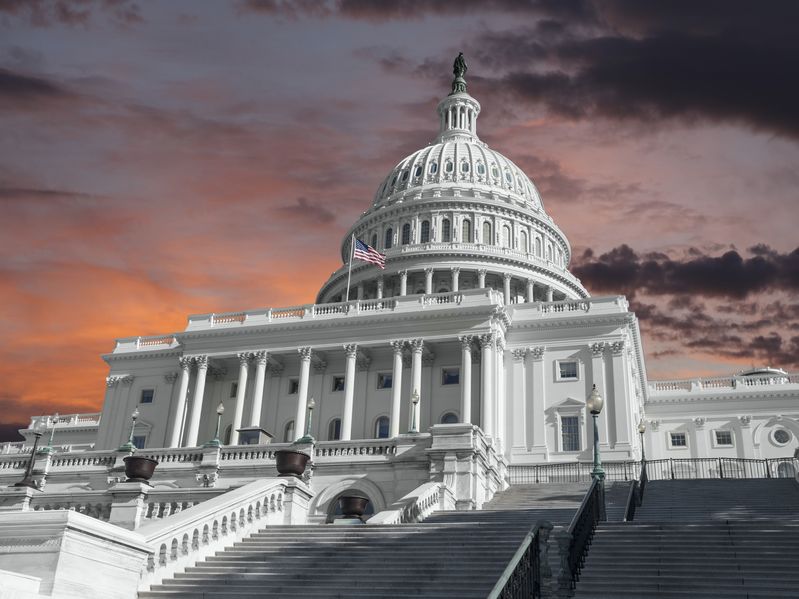 The House Committee on Small Business will meet for a hearing titled, “Crushed by Confessions of Judgement: The Small Business Story” today at 11:30am. This hearing is intended to bolster support for The Small Business Lending Fairness Act, a bill to outlaw COJs in small business loans and merchant cash advances nationwide. (Read more about this initiative here)
The hearing will be live streamed here when it commences.
The witnesses scheduled to testify include:
Mr. Hosea Harvey
Law Professor and Consumer Finance Law Expert
Philadelphia, PA
Mr. Jerry Bush
Former Owner of JB Plumbing & Heating of Virginia, Inc.
Roanoke, VA
Mr. Shane Heskin
Partner, White and Williams, LLP.
Philadelphia, PA
Mr. Benjamin R. Picker
Shareholder, McCausland Keen + Buckman
Devon, PA
THE ABCs OF SBDCs
December 16, 2018 An often-overlooked national network of nearly a thousand Small Business Development Centers has the potential to help alternative funders cement relationships with existing clients and locate new ones. The centers, known as SBDCs, offer free or low-cost training and consultation to established and aspiring merchants and manufacturers.
The earliest SBDCs have been around for four decades. The centers operate in conjunction with the Small Business Administration as public-private partnerships and serve about 1.5 million clients annually.
Centers help small-business owners evaluate ideas, organize companies, find legal assistance and obtain operating capital.
But not everyone knows all that. “The network is underutilized,” says Donna Ettenson, vice president of operations for Washington-based America’s SBDCs, which functions much like a trade association for the centers scattered across the nation. “We’re one of the best-kept secrets in the United States federal government.”
That means alternative funders can assist customers by simply informing them that the centers exist and can offer potentially beneficial services. Providing basic information on the SBDCs could become part of a consultative approach to selling that brings repeat business, especially with merchants who lack business skills or experience, observers suggest.
What’s more, alt funders who want to increase their chances of benefitting from SBDCs can go beyond merely providing clients with a rundown on the centers. The funders can become actively involved with the work of carried out at the centers.
One way of taking part is to contact nearby centers and offer to make presentations at seminars or workshops, Ettenson says. Funders could provide information to fledgling business owners on the instruments available through the alternative-funding industry, such as cash advances, loans and factoring, she suggests.
 To get started, alternative funders can visit the America’s SBDC website, where they’ll find a search tool that provides contact information for their nearest centers, Ettenson says. From there, they could discuss possible connections with officials at the local centers, she advises.
That involvement would not only provide exposure to merchants in need of capital but also to center officials who point merchants toward capital sources. If enough members of the alt funding industry took part, their work could eventually give rise to something akin to the lists of attorneys that some centers maintain, Ettenson says.
Centers often tap attorneys—perhaps quarterly—to lecture on a rotating basis on what type of business to form. That could mean organizing as a corporation, limited-liability partnership or some other form. In much the same way, funders could share their knowledge of instruments for obtaining capital.
Funders could emulate the lawyers who use the centers as a forum for soft marketing, Ettenson says. The speaker becomes a familiar face and can leave business cards that students could use to contact them as questions arise. However, speakers must provide general information and are prohibited from using speaking opportunities as blatantly self-promotional unpaid advertisements, she cautions.
What’s more, the centers have to exercise caution to avoid recommending specific attorneys, accountants or sources of capital because they could incur liability if events go sour and a service provider absconds to Bogata, Columbia, Ettenson points out. That keeps the centers “ecumenical,” in that they provide a list of professionals for clients to interview and rather than pointing to a single source.
Alternative funders can explore other ways to become involved with SBDCs, too. The national organization presents an annual trade show and professional development conference for service-center directors and service-center staff members who teach or consult with clients. Alternative funders who have taken booth space on the exhibition floor or made presentations in the accompanying conference include RapidAdvance, Breakout Capital, Kabbage and Newtek Business Services.
When America’s SBDCs issues a call for presentations at the annual conference, it receives approximately 300 applications for about 140 speaking slots. Some of the speakers come from the rosters of presenters at past shows, while companies newer to the trade show can purchase an entry-level sponsorship that includes booth space and the right to conduct a workshop.
The attendees at those annual conferences can tell their clients about the funders they encounter there. Attendees can also find out more about the alternative- funding industry and then pass that information along to merchants.
Some regional centers in states with large populations—such as California—can also hold conventions for their officials, says Patrick Nye, executive director for small business and entrepreneurship at the Los Angeles Regional SBDC Network, which is based at Long Beach City College. His state was planning its second statewide gathering this year and intends to do it again every other year. Alternative funders could participate, he says.
With so much going on at the centers, someone has to front the cash to keep the lights on. Local organizations are funded partly through federal appropriations administered by the SBA. “In order for the federal money to be pulled down, a matching non-federal dollar must be provided as well,” Ettenson says. The federal funds are apportioned based on the amount of matching funds the centers provide.
The matching funds usually flow from colleges, universities and state legislatures. “It’s a mix,” Ettenson says of the sources. Institutions of higher learning often meet part of their matching-fund goals by providing “in kind” resources—such as classrooms, services and instructors—instead of cash.
In the six states that administer the centers through their economic development departments, the state legislatures generally appropriate matching funds. In Texas, the representatives of the state’s four regional programs combine forces to lobby the legislature for matching funds, and that teamwork reduces the cost of their efforts in Austin.
The federal funds and matching funds support local and regional centers that belong to a network based on 62 host institutions. Of the 62, six operate through the economic development departments of state governments. They’re in Indiana, Illinois, Ohio, West Virginia, Minnesota and Colorado. The rest of the host institutions are mostly universities or community colleges. Some are based in economic development agencies.
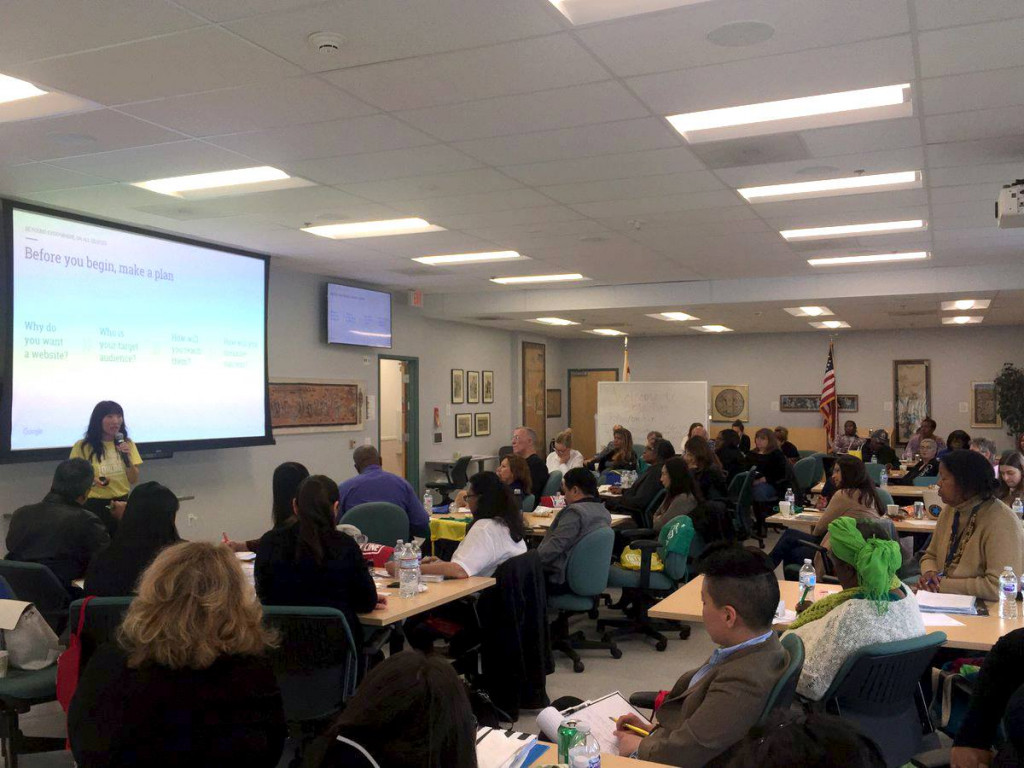
One can think of the regional centers as something akin to corporate headquarters and the local centers as retailers, says Nye, who administers the Southern California regional center. The local centers under his regional’s jurisdiction are located in only three counties but pull in the sixth-largest share of funding because of Southern California’s huge population, he notes.
The local service centers provide training and consulting for entrepreneurs starting or expanding their enterprises. About 60 percent of the clients are already in business. Of the 40 percent who don’t own a business, about half launch one after receiving assistance from an SBDC, Ettenson says.
The centers don’t charge for consulting services, and the fees for training are just large enough to cover expenses. The training fees usually remain in the centers that provide the instruction where they’re used to cover expenses like buying computers.
In Southern California centers, the business advisors are usually under contract and have knowledge to share from their experience in business, marketing, banking, social media, consulting or other realms, says Nye. Not many college instructors work in the centers, he notes, adding that the centers are monitored to avoid conflicts of interest among advisors.
To track how well advisors are performing, the national organization produces economic impact statements by interviewing thousands of clients. Interviews generally take place two years after consulting sessions. That should provide enough time to get results, Ettenson says
Thus, America’s SBDCs this year surveyed clients who received services in 2016. Those long-term clients received $4.6 billion in financing, while last year the clients surveyed who got underway in 2015 had received $5.6 billion in financing. She could not break down that financing by categories like banks and non-banks.
Discussing those surveys, Ettenson offers some details. “If you talk to us for two minutes, we don’t consider you a client,” she emphasizes. The SBDC definition of what constitutes a client calls for at least one hour of one-to-one consulting or at least one two- hour training session, she says. The organization defines “touches” as people with less exposure, such as those who call on the phone with a question.
When an SBDC client needs funding, officials at the centers have no qualms about including alternative funders in their recommendations to clients who are seeking funds, says Ettenson. “We don’t exclude anybody in any way, shape or form unless there’s some reason to think they’re fraudulent,” she notes.
But malfeasance isn’t the worry it once was, Ettenson asserts, noting that alternative funders have gained credibility in the last five or so years as they began policing their own industry. “They’ve learned to keep track of who’s in their space and how they’re operating,” she says.
Alternative financing has established a niche that benefits small-business people who know how to use it, Ettenson maintains. “They understand that they’re borrowing money for a short period of time and it’s going to cost you a fair amount,” she says. “It’s a short-term bridge to get to whatever your goal is.” Merchants seeking funders should learn the differences among alternative funders—whom she says all operate a little differently from each other—to choose their best option.
And opportunity for alternative funders may abound at the centers in the near future. Nye cites the two biggest goals for his centers as new business starts and capital infusion. Center advisors help develop business plans that aid clients in obtaining financing, he says. Last year, his region received a little over $4 million from the SBA and used it to help start 365 new businesses and raise $148 million in capital infusions. Those efforts created 1,700 jobs, he says.