
Could More Free Money Be Coming to Restaurants?
April 11, 2022 The House passed a $55 billion bill on Thursday to provide assistance to restaurants that were not successful in receiving help from the federal Restaurant Revitalization Fund (RRF) last year. In a 223-203 House vote the measure was approved by lawmakers and was backed by only a few Republicans.
Over $40 billion in COVID-19 assistance was approved, replenishing the fund. An additional $13 billion would be provided for other businesses that remain struggling to recover.
The Restaurant Revitalization Fund was established under the American Rescue Plan, and signed into law by President Joe Biden on March 11, 2021 which issued $28.6 billion in direct relief funds. However, three weeks after launching, the funds ran out leaving only a third to receive relief funding out of 300,000 applicants.
Recipients are not required to repay the funding as long as funds are used for eligible uses no later than March 11, 2023.
If the bill passes the Senate, the 177,000 restaurants that were approved for RRF grants but did not receive funding before the portal closed are already in line as stated by legislators.
To overcome the 60-vote threshold to end a potential prolonged debate and pass the measure, it is undetermined whether Democrats in the evenly split Senate will be able to win over at least 10 Republicans.
Despite protocols of the pandemic being lifted, restaurants are still facing the negative effects with less staff and fewer customers. According to the National Restaurant Association, 9 in 10 restaurants have fewer than 50 employees and restaurant industry sales in 2021 are down by $65 billion from 2019’s pre-pandemic levels.
The main sponsor of the bill, Rep. Earl Blumenauer, D-Ore., and Rep. Dean Phillips, cited a survey from the Independent Restaurant Coalition and stated that over 80 percent of restaurants that didn’t receive grants have reported that they are on the verge of permanent closure.
LendingClub Finding It Pays to be a Bank
November 1, 2021 At $48.75, LendingClub stock recently surpassed the highest valuation it has had since January 2016.
Successfully becoming a bank earlier this year and dropping its peer-to-peer lending business for good, the company is showing the benefit of that by recording a net income of $27.2M in Q3.
And its loan business is still strong. LendingClub originated $3.1B in loans last quarter, up from the $2.7B in Q2.
“When we launched back in 2007, LendingClub’s vision was to leverage technology, data and our marketplace model to transform the banking industry,” said company CEO Scott Sanborn on the earnings call. “We began by bringing a traditional credit product, the installment loan into the digital age by moving it online, broadening access, lowering costs and delivering a fast and frictionless experience for borrowers, all while delivering attractive risk-adjusted returns for loan investors.”
In 2014, however, it was their designation as a “tech company” rather than as a financial company that saw their valuation surge to nearly 3x higher than what it is now. (Note: The company did a reverse 1:5 stock split in 2019). But now as a bank, that valuation is surging back.
“Now with the added funding benefit of our bank, we’re able to generate positive unit economics,” Sanborn said.
DataMerch.com Surpasses 50,000 Records
July 7, 2021 Tampa, July 7th, 2021 /DeBanked/ — DataMerch.com, an online underwriting database for the alternative financing industry, announced they had surpassed 50,000 records in their database. The company that was founded in 2015 has grown to become an industry standard in up front application screening.
“Our records are unique because they are a datapoint that doesn’t exist anywhere else,” said Co-Founder Cody Burgess. “The challenging part when underwriting in the alternative financing industry is that credit and other reports only carry so much information. Our records are entered directly by our funder-members, so it’s easy access to see what type of history a merchant business has in our industry.” When asked what differentiates DataMerch records from other reports, Mr. Burgess responded, “Some of our categories are unique, like suspicious activity, slow pay, split payer, and Covid-19 Hardship. Our largest category is Default, which is also often difficult, if not impossible, to find on other reports. All data we hold is reported directly from our members, so it’s direct communication without aggregating all sorts of other information. We believe it is simple and powerful information for any underwriting department.”
DataMerch leadership say they will continue to grow their record count in the years ahead and hope to surpass 100,000 records in the future. They also hinted at upcoming updates to standardize uploading records moving forward with a rolling minimum upload requirement. Management says this will ensure that all members will evenly contribute moving forward and will help with the long-term success of the platform.
About DataMerch
DataMerch LLC was founded in 2015 to help funders in the alternative financing industry make informed underwriting decisions. DataMerch members can screen their applications using DataMerch’s specifically designed FEIN search and enter unsatisfactory businesses into the database. DataMerch currently has over 110 industry-leading subscribed members working together as a community. DataMerch can be accessed at https://www.datamerch.com and contacted for membership at support@datamerch.com
After Funding Millions, Alt Financier Hosts Funding CEO Challenge
May 25, 2021 Leo Kanell, a funder from Utah, runs the 7 Day Funding CEO Challenge, a seven-day marathon video livestream of inspirational and educational funding content.
“So how [the challenge works] is basically, we’re looking for communities, and we’re building a community,” Kanell said. “Our focus is how can we help existing loan brokers, and then how can we help people who are looking for an additional stream of income that they can do from home obviously with the pandemic.”
All the action happens in a livestream on Facebook.
“Everybody kept asking ‘we need some training,’ so we built out a custom website for them so that they can build their funding empire from home,” Kanell said.
Many of the brand new market entrants are sales-minded individuals that are interested in working from home. Kanell has a sales mind and a small business funding background. He grew up in a family of nine from a small town in Utah with a population of only 3,000. He knew he would be a salesman when he turned a summer painting business internship into a $60,000 operation. After college, he tried his hand at real estate, but after 2008 he started looking for another industry.
“I started and went ‘Well, I’m gonna need money for that business,'” Kanell said. “I started looking at the different options to get financing for that next business venture, and it was very difficult, especially for a new business, especially if you’re a pre-revenue business or you don’t have a lot of sales and or collateral.”
He realized SMB funding was the business he should be getting into so he jumped in with both feet. From there he veered into a business education program alongside products like business credit cards.
He soon said that he was doing well, but he heard the funding industry calling his name. “Everything pulled me back into funding,” Kanell said and he decided to combine his education system toward loan broker training programs. He said many brokers don’t realize startups and pre-revenue bushiness can qualify for 0% for up to 15 months.
Now, Kanell hosts an industry podcast that features financial industry guests, and alongside funding, he looks forward to building a community of broker and funder education services.
“We’re going to not only get you the best funding guaranteed, but we’re going to educate you and empower you along the way,” Kanell said. “They can work as direct funders and keep 100% of the commission, and that if they want us to do the work you know, we can do splits.”
PPP Deadline Extended, Jobs Act Proposed
April 1, 2021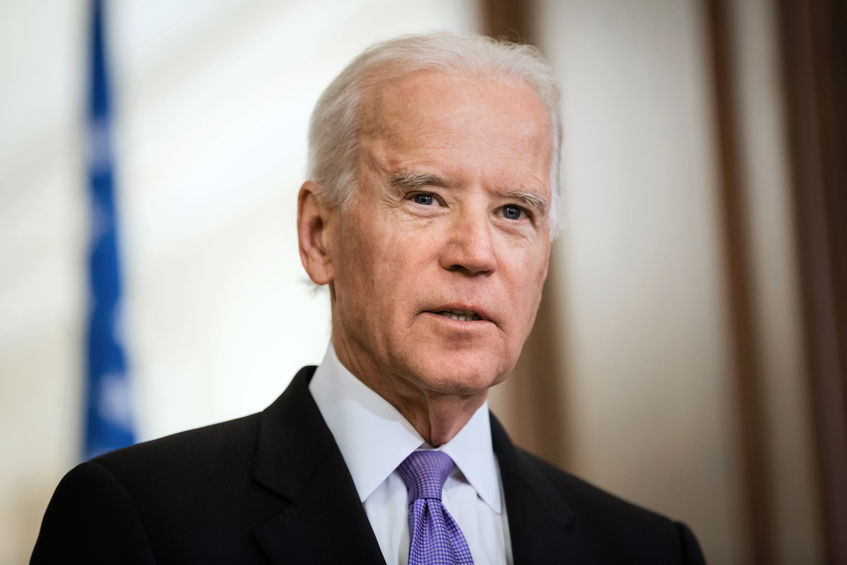 President Biden signed a law extending PPP lending until May 31st. The PPP Extension Act passed through Congress on March 25th and will allow businesses to access emergency loans past the original March 31st deadline.
According to the PPP loans tracker, as of 3/21 the SBA has disbursed $718 billion of the $806 billion available, leaving $88 Billion left for funding. Businesses will be able to apply until the new deadline, and the SBA will be able to process applications until the end of June. The new filing deadline gives the SBA some breathing room to review the 234,000 applications currently in the queue.
Biden signed it a day after unavailing a $2 trillion American jobs and infrastructure plan, aimed at revitalizing roads, bridges, and protecting the environment. The money is split into a cross-section of infrastructure, subsidies, like $100 billion toward bringing broadband internet to 30 million Americans, $50 billion toward semiconductor research, and $174 billion toward electric car manufacturing.
Not every spending point is for future tech. There are lump sums for healthcare, like $400 billion for long-term elderly care, and $30 billion for pandemic preparedness.
Biden has said he plans to pay for the expenses through the Made In America corporate tax plan raising the corporate tax rate from 21% to 28% after President Trump leveled the tax from 35%.
ODX Merges with Fundation
February 25, 2021 The ODX brand from OnDeck is splitting off to combine with Fundation, forming a new SMB digital banking company called Linear Financial Technologies.
The news follows the recent disclosure from Enova that it was looking to divest ODX in addition to OnDeck Canada and OnDeck Australia.
The new firm, headed by the current CEO of Fundation, Sam Graziano, will be an online banking service provider. Linear will take on Fundation’s service of processing loans for big and small banks, reportedly processing a total of $13 billion.
“Over the years, our combined platforms have served hundreds of thousands of business customers through many of the leading business banking providers in the market, deploying modern banking experiences that their customers and front-line colleagues expect in the digital era,” said Graziano in the published announcement. “Together as Linear, we’ll have the resources to more rapidly expand the breadth of our solutions to bring more value to our clients.”
Enova will retain a minority stake in the new firm.
Lawyers Chime in On What a Biden Administration Could Mean for Merchant Cash Advance
November 30, 2020 In the weeks following the election, the news cycle has been heavily focused on the presidential transition’s legal aspects.
Instead of worrying about vote recounts, merchant cash advance (MCA) companies are considering what legal changes, if any, might come after Jan 20th. Will the Biden administration spell the beginning of new regulations on the world of business to business financing?
Lawyers say that while the industry is waiting on Georgia to decide the Senate’s fate, increased regulation at the federal is unlikely to occur.
“If the Republicans hold in Georgia, and we have a split legislative branch, that means gridlock, and gridlock is great for the industry,” Catherine Brennan, partner at Hudson Cook, said. “The more progressive wing of the Democratic Party would like to put merchant cash advance under the auspices of quasi-consumer [loans,] but they won’t be able to do that with the split legislative branch.”
Brennan has a wealth of experience as a commercial finance compliance and litigation lawyer and regularly contributes to the national conversation on alternative and fintech law topics. She said that even if Democrats control the Senate, moderates may still hold back progressives from making new regulatory laws.
“There’s some moderate Democrats who understand the need for this market, they understand the product, and their constituents, in particular, use the product,” Brennan said. “I don’t see anything at the federal level that should be viewed as an existential threat to the ongoing existence of the industry.”
 What Brennan does see as more likely, is the gradual adoption of MCA under preexisting executive agencies like the CFPB and FTC. She pointed to the Dodd-Frank Act implementing consumer lending data collection as a possible avenue regulators might take by pushing for data collection in the MCA space.
Still, Brennan insists that MCA firms will be OK so long as they understand the FTC can already look into commercial finance practices and that it has gone after ISOs in the past. She sees that as the number one development from a regulatory standpoint because the FTC will ultimately review what took place in the financial service markets during the pandemic and decide if action is warranted. Still, if funders have been responsible and fair, they should be in a good place.
Brennan did say that the position might be up for grabs when it comes to the head of the CFPB. The previous leader, Richard Cordray, fought with the Trump administration against his re-appointment, believing his position surpassed the president’s authority to fill. Of course, it did not, and Cordray was removed, but there is nothing stopping the Democrats from re-appointing him, Brennan said, especially when other appointees may give up valuable Congressional seats.
James Huber, a partner at Global Legal Law Firm specializing in collections, believes that even if the Senate is somehow blue and passes regulation, that MCAs that are playing by the rules would benefit. The MCA business was born under the Obama administration during the last financial crisis, and if Biden beefs up the CFPB, it would only hurt payday lenders, Huber said.
“It certainly flourished under Obama, so one might think now that it’s got its foothold and it’s here you can almost guarantee that it’s going to continue to do really, really well when there’s stricter regulation,” Huber said. “Your typical AltFinanceDaily cash advance technology company: I think they’re going to do well with their bread and butter product…”
Huber said that especially when we’re seeing businesses hurting for cash right now, b2b finance will thrive. Huber was worried about Biden’s talk about bankruptcy reform, however.
“Biden’s talked about bankruptcy reform, to make it easier for people to go through bankruptcy, and yield assets like their houses and their cars and things that,” Huber said. “That’s a concern; that would mean that you’re fraudulently applying for a loan, and that’ll be accepted. It slows down collection efforts; our main role in the MCA business is on [defaults].”
Katherine Fisher, a Hudson Cook partner who, alongside Brennan, has deep experience in MCA representation and compliance, agreed with her colleague that funders need to make sure they keep an eye open toward compliance when it comes to regulation.
“Firms that have not focused on the regulatory process need to start, and companies that have looked at it need to revisit it,” Fisher said. Funders should “expect to be comfortable if they are asked to describe how they comply and prepare to do so.”
 But beyond that, she sees no doomsday event on the horizon; even if the Senate is no longer Republican-controlled, it would be up to the FTC and CFPB to set the tone. If the CFPB, for example, pushed for data collection under 1071 of the Dodd-Frank Act, it might signal a more attentive regulatory environment for MCA and factoring.
Compared to 2008, when the last Democratic administration took office, MCA wasn’t on the radar, Fisher said. Now that it is on the map this time around, especially after MCA funders proved how vital they were to the SMB market during the pandemic, there will be more attention on B2B transactions.
But firms only need to think of this as a chance to make sure their practices are healthy, and most of the industry has already shown signs of doing so. Fisher pointed to the FTC’s small business finance forum last year, which included a panel of MCA representatives at the table.
“I don’t think it is a scary time. It’s an opportunity for MCA to improve their processes, make sure they are following the law,” Fisher said. “They don’t need to be afraid but need to batten down. Much of the industry has already done that, the MCA industry has been focused on adopting good practices.”
ROK Financial Announces Direct SBA Loan Access
November 23, 2020 Over the past several months the state of the economy has been by no doubt uncertain. With unemployment hitting record highs and Coronavirus cases still on the rise, business owners all across the country have been faced with many difficult decisions regarding their livelihood.
Finding business financing options during these uncertain times can be challenging and risky to not only business owners, but the banks and lenders they choose to work with.
ROK Financial truly understands the uncertainty a business owner feels during these current times. Having derived themselves from a company split back in August, the team is helping other business owners just like them navigate these unchartered waters.
“We have been working tirelessly with our lenders and partners over the past several months discussing different ways we can continue to better service our clients.” Says CRO, Patrick Manning of ROK Financial “The relationships we have built over the years allows us to become quite versatile with our product offering, in turn allowing us to better serve our business owners. That is why we are extremely excited to announce our exclusive partnership with Doug Hood, SBA Loan Consultant LLC. This unique partnership opens up direct SBA access to clients for SBA products $350,000 and above.”
Doug Hood has been facilitating SBA Loans for more than 35 years, resulting in more than $20 million in SBA Loans distributed to business owners annually. Hood said he connected with ROK via LinkedIn, “I’m on Linkedin way more than I should be, we connected at 10 or 11 o’clock at night, and we hit it off.” Says Hood. Excited at the fact that ROK offers short term financing that Doug himself would now be able to leverage in addition to his SBA Loan offerings for his clients was a win-win.
Doug now sits as the official SBA Loan Consultant under the ROK Financial umbrella for deals $350,000 and above. This unique relationship provides greater opportunities for business owners from purchasing existing businesses, refinancing existing debt, starting a business and much more.
“The worlds of Fintech and SBA have collided for the greater good” says Manning, “streamlining and modernizing a once antiquated process, which eliminates the frustration that comes along with long-term lending.”
—————
Megan Capobianco
press@rokfi.com www.rokfi.com
3500 Sunrise Highway
Building 100, Suite 201
Great River, NY 11739
833-337-6534