
OppFi Encouraged By Early Results With Bitty
November 10, 2024OppFi achieved a new record in Q3.
“The record quarterly net income was a result of credit initiatives that continue to drive strong loss payment and recovery performance, marketing cost efficiency and prudent expense discipline across the organization,” said OppFi CEO Todd Schwartz during the quarterly earnings call. One part of that organization is Bitty Advance, which it acquired a 35% stake in this past summer. “We are encouraged by the early results and potential opportunity of this platform and the strength of our relationship with Bitty,” Schwartz said of the progress so far. “We continue to explore similar opportunities that would be accretive and align with OppFi’s strategic vision.”
One analyst on the call inquired further about what similar opportunities Schwartz might be referring to on the M&A front. Schwartz responded with the following:
I mean I think whatever it is, it’s got to be something that’s highly accretive. I mean, OppFi’s vision is to be a platform for digital alternative financial service products where we see large supply-demand imbalances in large addressable markets. There’s definitely different profiles of business out there, different situations are pretty — it’s pretty bespoke, but we’re prepared to handle either-or. So it has to make sense for us, though. And obviously, we’re going to protect and mitigate risk with anything we do to make sure that it’s successful and make sure that we’re going to be getting a return on our capital and it’s highly accretive to shareholders.
OppFi Shares More About The Bitty Advance Deal
August 7, 2024 OppFi, a publicly traded fintech with a $430M market cap, discussed its recent investment in Bitty Advance during its regular quarterly earnings call today. OppFi acquired a 35% stake in the company with the option to acquire a majority in 2027.
“This acquisition is intended to serve as the foundational piece of our new small business financing vertical,” said OppFi CEO Todd Schwartz. “Bitty is a credit access company that offers revenue-based financing and other working capital solutions. Bitty generates income through origination and service fee income and therefore does not have balance sheet or credit risk.”
Special mention was made about Craig Hecker, who is still the majority owner, and his great leadership.
“I’m personally looking forward to collaborating with Craig and helping him and his team take Bitty to the next level of profitable growth by leveraging OppFi’s expertise in data analytics, marketing and automation,” Schwartz said.
During the Q&A session, Dave Storms of Stonegate Capital asked Schwartz to elaborate on any exciting short-term synergies the deal might present for OppFi. This was his response:
Todd Schwartz: I think Craig is a talented operator and obviously someone who has a lot of experience in the small business space. We think the collaboration between our two companies is going to yield great results. To remind everyone, Craig has a business that currently is in origination, so he’s earning his income from origination and servicing. We think that has a lot of optionality. He also has a really good digital platform. We believe in this digitization of small business and think there’s a lot of growth there. I think when you take a lot of the things that we do well and the things that Craig’s doing well, there’s a lot of complementary skill sets.
And I think it’s going to yield great results. I think we’ve done a lot of research on the SMB market and we feel that there is supply/demand imbalance. And we feel that there’s ability to not only take market share, but as the addressable market continues to go online to search for working capital options, that there potentially is even growth in the total addressable market. So we’re excited. We think there’s some accretion to earnings that we mentioned in this year and then for the future but we feel really good about taking our time there. We’ve kind of started to talk about it for over a year and a half. And so I think we’re just happy that we’ve fulfilled on our and delivered on our promise that we’re going to create, that OppFi is going to create a brand that has best suite of best-in-class digital financial service products that address supply/demand imbalance and credit access. And we feel like we’re on our way. We have all the ingredients to be able to do that and will yield great results for us.
“Something’s Happened” – How a funding platform weathered a shocking crisis and is flourishing
June 21, 2024 “[The CEO] called me just before seven in the morning…but [he] would never call me at that hour, so I picked up the phone and he goes ‘Paul, something’s happened, it’s very serious.’ and I’ll never forget, he says ‘you need to take care of our company.'”
That’s how Paul Vega, Senior Operations Manager at Funders App, retold the story of a phone call he received in June 2021 that would shake up everything about the small business finance company he was working at. At the time, the business was known as 24 Capital, Funders App was a platform they were developing internally, and Mark Allayev who was the CEO, was riding high from having weathered all the uncertainties of startup life and the Covid era. With Vega having played a key role in that success and the business running smoothly, Allayev felt he had earned a much needed vacation and traveled to Europe with some friends.
“And it was just five days,” Allayev said. “But one of our friends had an event in New York and we just had to come back, and the only flight to New York was with a layover in Germany, in Frankfurt. So we got to flying and it was supposed to be a two hour layover in Germany, but came out to be an eight month layover in Germany.”
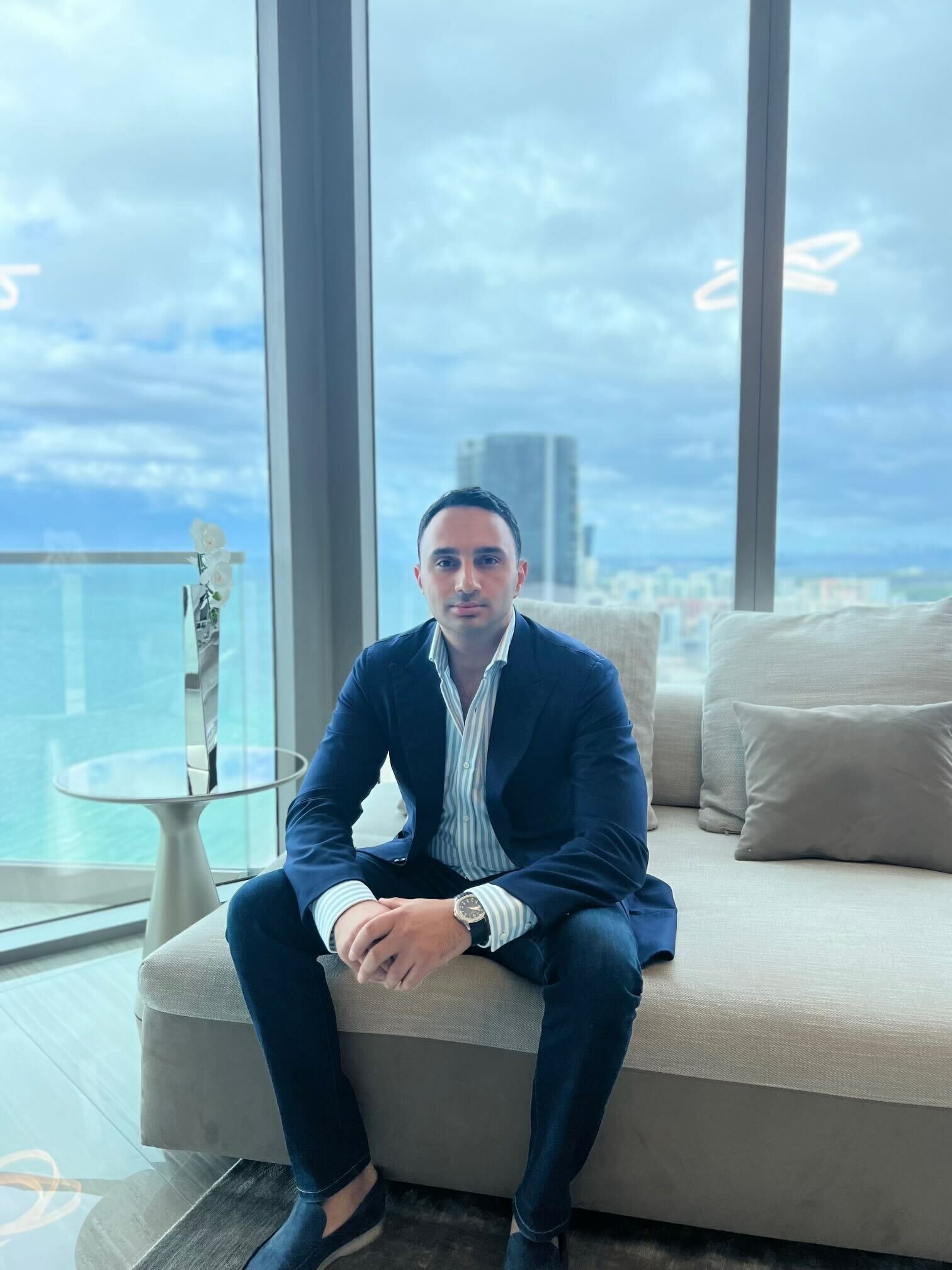
That’s when the fun and life as he knew it came to a grinding halt. The German authorities never let him get on a plane to the United States. Instead, he was placed under arrest when his name registered as a match with Interpol. Despite his insistence that it was all some misunderstanding, he was directed to a local jail and told he’d soon be extradited to the country that wanted him, Russia. Allayev, then 31 years old, who had been born in Soviet-era Tajikistan and at the time enjoyed dual American and Russian citizenship, had not been to Russia at all since he moved to the United States in 2015. He had, however, previously worked at a family business in Russia as a youngster that found itself ensnared in the unique political environment. Allayev said that his family’s business had been the victim of fabricated allegations and they had left as a result. As an American citizen he had enjoyed international travel for years without issue, and he had almost forgotten about it all. That is until this moment in June 2021 that would change his whole world view and send his family scrambling to save him. While those efforts would eventually enlist help from Democratic Reps. Debbie Wasserman Schultz of Florida and Greg Meeks of New York, Allayev was swiftly cut off from being able to manage his business and was no longer able to contact Paul Vega directly.
“I was aware of what had happened years ago with him and his family because he was transparent with me from the first day we met,” Vega said. That fateful phone call he received that morning lasted all of 3 minutes. “I was like, Okay, I guess this is what’s happening,” Vega recalled.
For Vega, the realization hit that the company had nearly two dozen employees at the time, all of whom depended on it for their livelihood, and all of whom were probably going to question the circumstances their boss was in. Nevertheless, crisis management is how Vega had been introduced to the business from the beginning. Vega started at 24 Capital in January 2020 with about six years of industry experience under his belt, with the objective of completely revamping the underwriting process.
“I think it was actually perfect timing, I think it was meant to happen that way,” Vega said. For instance, family members living across the globe had tipped him off that Covid was going to be much worse than the oblivious American media was making it out to be. Vega was also operating out of an office in New York City where a potential doomsday scenario was a lot easier to imagine than where Allayev sat in South Florida.
“When I first expressed this idea [to Allayev] of the possibility of the universe being shut down, I know that Mark was questioning whether he had made the right decision in bringing me on because here I am brand new to the company and I’m telling him that, ‘hey, the US is going to shut down,'” Vega said. Despite having come across as alarmist, Vega felt that it was better to act on his conviction and plan for the impossible.
“Behind Mark’s back I started to research the idea of remote work, and nobody knew what remote work was back then,” he said. Vega proceeded to set up staff with home computers and began testing out software they had never used before.
“By the time they shut down the city, we were well situated to just literally flip a switch and be able to process and run the business from home,” he said.
And ready they were because not only did the company never stop funding but it also never let anyone from the company go during that time. Through it all Vega and Allayev formed a really trusting relationship with each other, the kind that would only make survival of the company possible once Allayev was detained in Germany the following year.
As days turned into weeks and weeks into months, Allayev’s extradition to Russia seemed inevitable despite a growing lobbying effort to free him. Then Russia invaded Ukraine. Once that happened, the politics in Europe changed, and Allayev was suddenly freed in March 2022 and put on a plane back to the United States. The emotional journey and the circumstances that enabled his return became a big news story in the newspapers, one of many about people whose fortunes changed for better or worse as a result of the war.
Once he was reunited with family and had the opportunity to acclimate back into life, he looked toward his business, which he now had a newfound perspective on. “Before, all I cared about was just working and just living my own life,” Allayev said. “So I think what changed is me understanding that probably your family’s the most important part and you need to focus and spend more time with your parents, your siblings, all your loved ones. I think that’s the thing that really changed my mindset.”
Of course, it wasn’t as if this perspective was shaped by losing his business in the process, because it had somehow managed to continue running like normal during the eight months he was away, thanks to Vega. Even the employees stayed on, as everybody stood in supportive solidarity with Allayev.
“So one thing that I learned that was funny when I came back is that the company could be run without me,” Allayev said. “And I think that Paul and all the other team members did an amazing job, keeping everything in place and keeping the funding amounts pretty decent.”
Today, the brand Allayev and Vega are under is known as Symplifi Capital. The company’s internal infrastructure platform has also blossomed into its own publicly licenseable service known as Funders App for companies that want to be their own funders. Allayev says that Funders App provides technology, underwriting services, collections, accounting, servicing, distribution of funds, contracts, white label services, and more. It can be customized to provide just what one needs. A sizable number of companies are already using it, to the point where last year Funders App announced it had collectively originated $500M in funding to small businesses since inception.
“I think there’s so many talented kids and young people that have the vision to create their own companies but they just have absolutely no help and no backup,” Allayev said, “and this is what we want to create with funders. We want to help those people, we want to get them in, train them, help them, and provide them with the right tools, the infrastructure, and even with leverage, even the money because you need capital to become a funder.”
Allayev drew some of this inspiration from how he started in the business in late 2016, when he talked to numerous companies about what they could provide to help him launch his business and felt like nobody could provide all the pieces. As for the trajectory forward, their eyes are on efficiencies and growth.
“As you know speed is kind of the name of the game here,” Vega said. “If the typical lending house is taking three to four hours to put out an offer, make a decision, ask for additional information, our goal is to have a file from submission to funding in that three-to-four hour timeline where most people are just getting an answer back to the ISO. So we’re hoping to have the merchant funded in that timeline. And that’s going to create just a huge competitive advantage for us.”
That’s the kind of thing they’re working on today. The backdrop with what happened to Allayev is now just part of the company’s founding story. For Vega, there was never any question that it wouldn’t work out. Referencing the early months of Covid when companies were doing mass layoffs, he expected that Allayev would ultimately, through no fault of his own, do the same.
“[Allayev’s] the only person that I know in the whole industry that actually said, ‘I’m not doing that, I’m keeping everybody’ and kept his word,” Vega said. “That day he sold me. That’s a big portion of the reason why I have so much trust in him, because he’s a man of his word.”
Backdooring Deals? You’re a Loser
April 24, 2024 “Backdooring is just for losers,” says Thomas Chillemi, founder and CEO of Harvest Lending, a small business finance brokerage. “Like I think anybody who participates in it is just a loser.”
Backdooring, as colorfully referenced by Chillemi, is a colloquial term used widely across the industry to describe how leads, apps, or entire deals are stolen from brokers. The deal gets submitted through the front door and then leaks out the back door to an unauthorized third party. Chillemi sums it up as such: “backdooring is ‘I secured a lead, I secured a file in some way, shape or form. And that merchant is being contacted through my efforts somehow that I didn’t give permission to.'”
It’s a scenario that’s been top of mind at brokerages across the country for years, and it’s a problem that’s getting worse, according to sources that AltFinanceDaily has spoken with.
“I would say backdooring is the worst of the worst right now,” says Josh Feinberg, CEO of Everlasting Capital, another small business finance brokerage. “I think as far as rogue employees go at direct funders, it’s the worst it’s ever been.”
Feinberg’s reference to “rogue employees” is just one such way that backdooring can occur. It can be an employee of a lender, management of a lender, an employee of the broker, a broker pretending to be a lender, and possibly in a worst case scenario even a cyber intruder like a hacker. Sometimes it’s a clandestine operation structured in a way to make it difficult for the broker to detect that their client’s file has been intercepted while other times backdooring is such a normalized function of one’s business that accepting a submission from a broker and then shopping it elsewhere to circumvent them is practically firm policy and done on an automated basis.
Some of the more seasoned brokers who are used to being on guard with what a lender intends to do with their file advise that their peers approach any proposed ISO agreement with a fine-tooth comb to establish what is or isn’t allowed. After all, if the agreement grants the lender the contractual right to backdoor the broker, is it really backdooring?
Others say the contract’s language can only carry the relationship so far.
“I only try to board up with people that seem to be good actors, but then you never know what an employee might do, right?” says Chillemi.
 Whether it’s a jaded underwriter, a slick admin, or Bob in accounting who never says a peep, it only takes one individual to set eyes on an application to be in a position to transfer the information elsewhere for personal gain. AltFinanceDaily examined this subject in years past and learned the lengths that rogue employees go through to extract deal data. For example, when one funding company blocked the ability to transfer data outside of the company’s network, an employee took photos of their screen with their phone. When the employer banned cell phones in the office in response, one employee wrote down deal data on scrap paper, threw it in the garbage, and then returned to the office building after hours to try and fish it out of the dumpster.
The absurdity of that visual alone implies there must be big bucks in the backdoor business. Indeed, according to screenshots forwarded to AltFinanceDaily of what appears to be an underground Whatsapp group, backdoored deals are currently being marketed for sale with bank statements, social security numbers, and all. A single fresh backdoored file can go for $20 – $35 or buyers can purchase them in bulk, up to 600 at a time, for a discounted price.
“Fresh Packs” apparently fetch more because the applicants may not have signed a funding contract with anyone yet and are theoretically more warm to doing a deal even if they’re not quite sure how the company approaching them got all of their information. And it’s this speed and efficiency of the backdooring happening that’s making things extra difficult for brokers. For Chillemi, he says the backdooring in earlier years would reveal itself when someone would try to call his customer a month or two after the fact. “Like even if it happened after two or three days that felt really fast,” he says. “But now, you’re talking hours, like these people have it within hours and I just don’t even know how anybody could really compete with that.”
 Brokers, ready for this, developed a tactic that is still used today as a front-line defense mechanism. They replace the applicant’s email address and phone number on the application with ones they control, so that when an attempted backdooring occurs, the caller is unsuspectingly contacting the very broker they are trying to steal the deal from. The result? They’re caught red-handed.
“I got a text from somebody claiming that they worked at Fidelity,” says Chillemi. “They texted me a picture of my own application. They’re so brazen that they’re just texting the merchant… they thought they were texting the merchant.”
Not only was the Fidelity component a deception, but the mistake of texting the broker who was just waiting to catch them is causing the backdoor shops to evolve. New backdoor callers know the application contact info might be booby-trapped so they’re now skip-tracing the applicants on an automated basis and getting their real contact info and using that instead.
For Feinberg at Everlasting, he says the method of substituting out an applicant’s contact info is not something they do, though he’s aware that it’s done by others in the working capital space. He says that it’s not something that would really be tolerated in the equipment finance side of the industry which operates much cleaner with no backdooring, at least in his experience. The lenders there hate it and everyone involved needs to be able to communicate with the customer. It’s just the working capital deals where all these problems happen.
“It’s defeating, and it’s a very very difficult thing to diagnose,” Feinberg says. He adds that the feeling is worse when realizing that it has happened even when submitting to top tier A players. There’s no delay either. He says that the customer can be called literally within the same hour of submitting it, which puts them in an awkward position.
“They lose complete trust in our company,” Feinberg says. “And it makes it very difficult to be able to work with these clients.”
 According to Chillemi of Harvest, “Most of the time what happens is the merchant calls us and says, ‘Now I’m getting all these phone calls people saying they’re working with you,’ and it’s just kind of like an embarrassment of where I’ve got to explain to this person that somebody at these companies leaked their information that wasn’t supposed to. And it just makes me look bad, right?”
Another owner of a large broker shop, who did not authorize his name to be used in connection with this story, says that while everyone’s mind immediately goes to the lending companies, the most common source of backdoored deals is actually from rogue employees inside the brokerages themselves. Whether it’s the rep backdooring their own deals to circumvent splitting commissions with their employer or someone else in the chain that has access to the data, his advice was that brokerage owners first need to look extremely inwards before pointing fingers outwards. Investing in proper security is critical, he says.
But assuming that base is covered, Feinberg says that brokers should do a background check on the lenders and interview them like a lender would interview a merchant for funding.
“We absolutely look into the agreements that we sign but a lot of due diligence happens just on the first phone call,” Feinberg says. “Just on the first phone call we can judge whether this is going to be a real lender…”
A key question to ask, he says, is how compensation works. And that’s because an individual lender will have a defined fixed system whereas a backdoor broker pretending to be a lender is subject to the different compensation structures they have at all their different lending relationships and would not be able to guarantee any fixed commission pricing to the broker they are trying to trick into submitting, that is if they are intending to pay them out a percentage of the deals they backdoor them on in the first place.
“Trust is the number one thing with us,” Feinberg says. “And if trust gets broken, then it’s over. So we really try to work with people that we know personally. And the way that we’ve met people personally is through trade shows, specifically AltFinanceDaily events.”
Chillemi argues that someone who tries to make their living off of backdoored deals are not salespeople at all, but as he reiterates, losers.
“[the backdoor broker] knows he’s a liar,” says Chillemi, “He’s calling these people saying he’s an underwriter… he’s not strong, he’s not learning. They don’t know what they’re doing. They’re putting the lenders at risk.”
Hiring in the B2B Finance Industry Still Challenging
November 21, 2023 “To say that hiring is a difficult process is an understatement and I think that it’s a direct reflection of the labor market and the volatility in America’s labor market right now,” said Manny Yosipov, CEO at Advanced Recovery Group. Yosipov’s company does collections in the MCA and business lending space, where like many other industries, persistently low unemployment coupled with a workforce tuned into lifestyle accommodations has made the hiring environment challenging.
“You have quality talent now that want remote work and a lot of flexibility,” said Yosipov. “I think that it’s hardest for companies that have started pre-covid, survived covid, and are now trying to grow and scale in the post covid market.”
Daniel Hye, ISO Relations Manager at Zahav Asset Management, said that if remote work wasn’t in such high demand, the open positions would have likely been filled by now. Zahav is currently looking to fill an underwiting and collections role.
“We could have already had someone, but we really don’t want remote because it makes a huge difference with the way things work,” Hye said. “Especially in our industry, everything’s about speed. You want to walk over to the underwriter or you want to turn around to the underwriter and say, ‘Hey, this deal, the ISO just called me, can we get this done? Or this was a mistake? Can you do this?’ Once it’s remote it changes the whole dynamics of how everything works.”
“I mean, remote is very preferred by a lot of people,” said Carli Bova-Chezem, Director of Human Resources at Capital Gurus, “but it’s kind of funny I talked to so many people all the time and it really isn’t for everybody. I get handfuls of people that are like, ‘I’ve been remote for the last month but I really want that camaraderie of an office and I miss being around people.’”
Capital Gurus has used a variety of sources to recruit but they’re now using an end-to-end hiring system called Breezy. Bova-Chezem said that it’s increased their application rate while streamlining the process.
“There’s a plethora of places that these applicants are coming from,” said Bova-Chezem. “Up until I’d say about a month ago, it was primarily LinkedIn, which is obviously a great resource, but we’ve gotten a lot more outreach using this new system, which has been great.”
Hye of Zahav, meanwhile, says they’ve also tried a variety of systems but that it comes down to finding job applicants with proper experience. “I think the biggest issue is being able to find someone who fits the criteria and is happy to get involved,” Hye said.
Success On the Last Day? It’s Really About What Happens All Month
August 7, 2023 There isn’t a more chaotic time in this industry than the last day of the month. Brokers on the front line scramble to close deals to hit their sales targets while funders provide vital support from the backend.
Paul Boxer, COO of Merchant Marketplace calls the last working day “the most insane day of the month.” Boxer told AltFinanceDaily “… for us we know that on the funding side to make our investors and syndicators happy it’s a very crucial integral day that we’re all hands on deck to do whatever we can to make sure as many deals get funded as possible.”
Among the secrets to a successful end-of-month performance, however, is operating efficiently throughout the month, several sources opined. For Moe Braun, the Senior Director of Business Development at Rocket Capital, he said that means communicating with ISOs about what deals they’d really want to see get closed and funded so that their ISOs are spending their time pursuing the right files all along. Braun himself even sets his own daily and weekly goals to maximize efficiency.
“I think the easiest way to avoid the pressures are to kind of granulate those quotas, instead of monthly, as granular as you can get,” said Braun, “So weekly, daily; when I come into the office every day, I know what I want to get done that day. And then if I get it done that day, I try to focus on how I did and copy that for the next day. And same goes for my week, I look at the end of the week on Fridays, I say ‘hey, was this a good week? Was this a bad week? What went well, how can I do that again next week? And what went wrong and how can I correct that for next week?’”
For Russell Kimyagarov, the Founder and CEO of Fratello Capital, he says they’re constantly tuned into their CRM, tracking deals that receive pre-approvals and identifying follow-ups needed.
“We also have meetings once a week with the staff, with the team, to make sure if there’s anything that we could do better that we’re discussing it and implementing it to close more files and stay in touch with the ISOs a little better,” Kimyagarov said.
“In our CRM, we do track how many submissions a day from which broker,” said Boxer of Merchant Marketplace. “How many offers? Then the breakdown between submissions to offers to contracts out. Why it did or didn’t fund. To the ones that didn’t fund, what happened? Did they get funded somewhere else? Did the merchant just start ghosting the broker? Did it die for other reasons?”
Even for Boxer who knows what the last day of a month is like, he affirmed that there is a bigger picture to it all.
“I think that in this business there are other ways to focus your business, a lot of it’s based on like mentioning quotas and numbers, for us it’s really about relationships,” Boxer said.
Opportunities Still Ahead?
December 12, 2022 With the year coming to an end, it’s time to analyze what direction the industry is going in. Some professionals in the industry are feeling optimistic despite macroeconomic pressures and there’s a reason for that.
Gerald Watson, Founder and President of The Watson Group, said with the latest Employee Retention Tax Credit (ERTC), his company has been on a steady incline. The tax credit was designed for companies affected by Covid in 2020-21 as a refund against payroll taxes they’ve already paid and that’s where Watson comes in because it can take a while for business owners to actually receive those funds, as long as 6-12 months, he said. With the help of funding partners, Watson can make an advance to business owners on the ERTC upfront. Watson’s core business has always been factoring but when he saw this opportunity, he went for it.
“I think maybe looking ahead as we get into 2023 next year, I think the industry is going to be continuing to look for ways to expand its product base, and I think it’s likely that we’ll see more and more maybe of your larger lenders moving into things like some form of factoring, for example,” said Watson.
On the fintech side, CRO at Encapture Tyler Barron says he’s noticed a shift this year regarding certain lines of business but that their product has historically performed well regardless, even if the deal sizes get a bit smaller. Encapture is a platform that sells automated programs to financial service companies – primarily big banks – and they’ve noticed large, regional, and community banks investing more in technology, specifically ones that help them automate and cut costs.
“What we’ve kind of seen over the past year is, there’s definitely been a pullback, as it relates to certain lines of business, like anything related to mortgage this past year has completely dried up,” said Barron. “But we are still seeing financial institutions, both fintechs, large banks, regional banks, and community banks invest in technology.”
Back at Broker Fair in late October, Pooja Nene, Broker Relationships Manager at Balboa Capital, told AltFinanceDaily that she thought the industry was going in a good direction.
“I think with a lot of issues that we’ve had since 2020 our industry’s been holding up really well and there’s a ton of opportunities out there to get involved in different types of financing…” said Nene.
Overall, the demand for the products should continue.
“One thing about our industry is that people always need money; good times bad times, high interest rates, low interest rates,” said Gerald Watson. “There’s always going to be a demand for what we do.”
Your Default Rate Is Too Low, And It’s Hurting You
November 22, 2022 There may be no word as terrifying to stakeholders in the merchant cash advance business than the term ‘defaults’.
In an industry where a significant portion of revenue is generated from daily or weekly automatic withdrawals from a merchant’s bank account, defaults can cause deep and lasting problems. Not only do they eat into profits, but they damage relationships with banks and processors- both of which are essential to the success of any merchant cash advance company. Defaults can also be contagious: if one merchant in a large portfolio decides to stop making payments, it can have a ripple effect that leads to other merchants doing the same thing.
All these are reasons why MCA companies go to great lengths to avoid defaults at all costs: they exhaustively screen merchants before approving them for funding and do all the due diligence needed to ensure they can follow realistic payment plans. They also attach a fee to every deal to cover the percentage of the deal they expect will not come back, and conventional thinking would be to aim to keep that number as low as possible.
That’s a lot of work to keep that default rate low, but what would you think if I were to contend your default rate is too low, and it’s hurting your bottom line?
Fear of defaults is paralyzing MCA funders and inevitably leading them to leave opportunities-and money- on the table.
Better Accounting Solutions has been the leading accounting firm in the MCA space for over a decade, and has seen this across the board:
Many MCA companies have adopted a risk-averse approach to avoid defaults, opting for sure-fire deals in higher positions, rather than taking calculated risks that could enhance their bottom line. In the name of capitalizing on low-risk deals with a lower chance of default, many companies choose to fund deals where they charge smaller fees than what they could be charging if they choose to fund deals others are wary of taking.
Let’s look at two deal examples for an example of my thesis:
Average Andrew is the perfect merchant for an MCA company. He is getting a $100,000 advance with a deal length of 7 months (140 days) and with his rock-solid history, his default rate is a meager 6%. The RTR on the deal is 44%, the UR fee is 7%, broker’s commission is 10%, meaning the profit on this deal will be $35,500- a net unit profit percentage of 35%, profiting $5000 a month. He is a great client, and a pleasure to work with.
Now let’s examine his buddy, Reformed Ricky. He’s made some mistakes in the past and now wants a business advance to grow the business he believes is The One. No one else wants to touch him, so you offer him a deal of $35,000. Because he is a riskier advance proposition, you can raise the RTR to 49%, and the UR fee to 12%. On a deal like this, the commission is around 14% and the default rate will be a whopping 18% on a merchant like this, but the profit to be made on this deal is $10,150- a 29% net unit profit, getting $3,383.33 monthly profit over the length of the deal.
Now, looking at the structures of both deals, why would I advocate that someone advancing Reformed Ricky instead of Average Andy? What’s the advantage of working with the weaker merchant over the perfect one?
It’s simple:
Because of his history, you can set the duration of Reformed Ricky’s deal to 60 days (3 months). That means according to the terms of his deal, your profit is 9.67% a month. You’ll be stunned to learn that when you break down your monthly profit on Average Andy’s deal, it is a considerably smaller percentage of 5.00%!
 This means every month you’re making more back on the smaller deal, and are getting it to work for you by placing it into new deals and generating more income for you, because of its shorter term. If you’re only taking deals with longer outstanding balances, it will take you a considerably longer amount of time just to make a smaller profit percentage.
On top of this, we also have to account for the compounding effect you will quickly be seeing when you take these ‘riskier deals: because you’re earning more money per month due to the shortened duration of supposedly weaker deals, you will be able to turn it around more times per year, supercharging your growth quicker than what you’d be seeing you stuck to only ‘traditionally-safe’ deals.
I’m not advocating for funders and brokers to be irresponsible and create a new and much less entertaining version of The Big Short, throwing money around to people that don’t stand a chance of paying it back.
I am saying that they should consider funding merchants and positions they were wary of till now, and responsibly assessing the opportunities and upside for them at those positions.
Of course, this doesn’t mean that you should mindlessly funnel money into every deal that comes your way. You still need to be responsible and vet your investment opportunities carefully, and of course, if it turns out you’re picking the wrong deals and your default rate explodes, you will have to reevaluate your approach.
However, working from a place of fear is not the way to grow and thrive, certainly in this business. Moreover, by avoiding risk altogether, MCA companies are likely to become less competitive over time. After all, it’s only through taking risks and innovating that businesses can thrive in today’s rapidly changing world, especially in the rapidly evolving and growing MCA industry, where more and more people are seeking to find their niche.
A great number of successful investors in MCA companies have complained to me that their partners are too conservative with the deals they are choosing to fund and leaving too much capital in the bank, costing the investors higher facor rates instead of working for them.
This approach is a way to break away, and ahead, of the pack, because only by taking the opportunities others keep passing by will MCA companies be able to grow and compete in the long run.