
ForwardLine, One of the Original Funding Companies, is Back
June 5, 2019 Steve Carlson, CEO, ForwardLine
ForwardLine Financial originated well over $65 million in loans in 2018, according to CEO Steve Carlson. ForwardLine would not share its origination numbers, but Carlson said the company is comfortably on the AltFinanceDaily list of top originators. ($65 million is the lowest origination number on the list).
Last week, the company announced that it secured a $100 million credit facility from Credit Suisse AG and Neuberger Berman private equity funds. This is the company’s largest credit facility to date. Its previous credit facility was with East West Bank and that relationship is still in place.
ForwardLine is a direct marketer that provides working capital loans of up to $200,000 to small businesses.
Carlson told AltFinanceDaily that ForwardLine, which was founded in 2003, has been scaling its business dramatically over the past year and a half. This is no coincidence. Instead, Carlson said this is the result of years worth of planning following a majority investment in ForwardLine in 2015 by a private equity firm called Vistria Group.
“We spent 2016 and 2017 very thoughtfully building out a technology platform, a data infrastructure, and a management team to scale the business,” Carlson said. “We’re now actioning on that plan. So this is all part of a multi-year strategy.”
A company statement said that the company’s loan performance in 2018 was record-breaking. ForwardLine increased year-over-year total originations by over 300% in the first quarter of 2019.
Carlson said that the new facility will be used primarily to grow the business. ForwardLine is located in Woodland Hills, CA, and it employs 110 people, more than half of whom work in the sales department. Other employees include underwriters and data and analytics people.
Funding These Franchises? Read This First
May 29, 2019
United States Senator Catherine Cortez Masto is concerned with the abilities of four major franchises to repay business loans, according to a letter penned to the Small Business Administration. They include Subway, Complete Nutrition, Dickey’s Barbecue, and Experimac. The issues raised should be on the radar of every provider of capital.
For Subway, Cortez Masto cites a New York Post article that alleged Subway Restaurants is plotting to put its own franchisees out of business through the enforcement of minor handbook violations. A whopping 1,108 Subway stores closed last year alone.
For Complete Nutrition, the franchisor is reportedly dismantling its own franchise. Cortez Masto says it first raised the prices of goods, wiping out franchisee profit margins. Following that, it eliminated its franchise model altogether, took away their franchisees’ POS systems, removed their locations from the Complete Nutrition website, and informed Complete Nutrition customers that the stores had been sold and to order online going forward instead of from the stores. At least 12% of SBA loans made to Complete Nutrition locations have been charged off.
For Dickey’s Barbecue, the franchise is experiencing more stores closing than opening. Cortez Masto suspects that the franchisor is providing misleading and inaccurate information to potential franchisees, resulting in failed stores and bankrupt business owners. A franchise blogger says, “The Dickey’s business model seems odd, continually selling new franchises to replace closed units, but seemingly doing little to fix the profit structure so existing franchisees survive.”
For Experimac, Cortez Masto says that most of the SBA loans made to Experimac were originated by Celtic Bank and that to-date 23% of these loans have failed.
Small Business Finance Broker Wins Entrepreneur Of The Year
May 17, 2019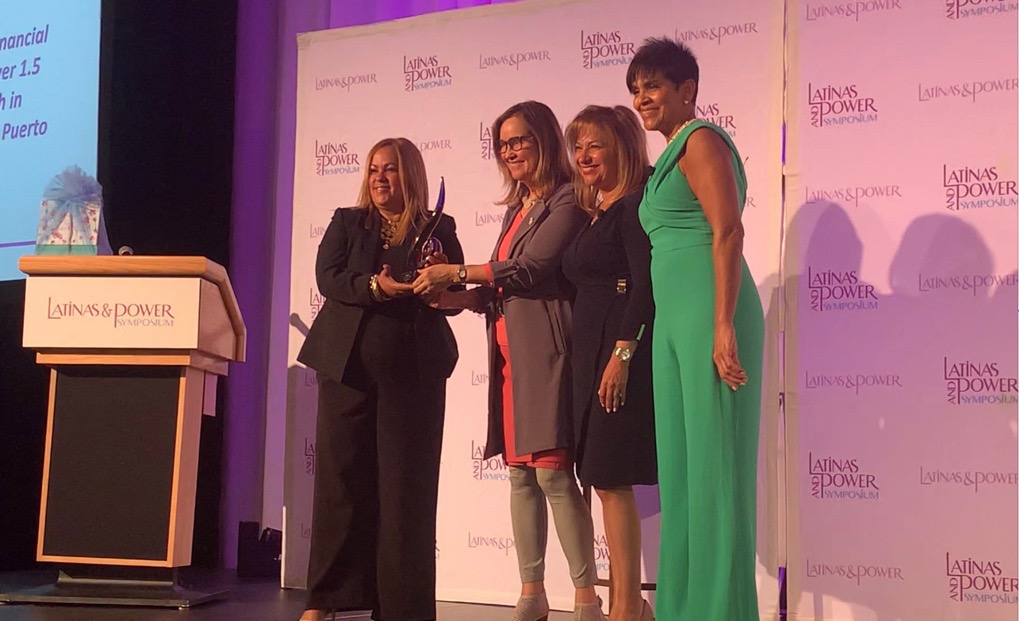
Sonia Alvelo, CEO of Newington, CT-based Latin Financial LLC, has been awarded Entrepreneur of The Year by the Latinas & Power Symposium. The event, incubated in Hartford, Connecticut in 2004, is the largest of its kind in New England and has reached upwards of 8,000+ women since its inception.
Alvelo’s company markets and brokers business loans and merchant cash advances throughout the mainland United States and Puerto Rico.
Connecticut Secretary of State Denise Merrill presented the award to Alvelo, who referenced the moment on social media by writing, “I was deeply honored to present the Entrepreneur of the Year Award to Sonia Alvelo at the 16th Annual Latinas & Power symposium today. Her small business is bolstering the Newington economy and her leadership serves as an example for women across the state.”
Alvelo has been an oft-quoted source in AltFinanceDaily on the state of the small business finance market in Puerto Rico, most recently in the May/June 2018 magazine edition.
“I’m here today because of the merchants and clients from Puerto Rico and the US,” she told AltFinanceDaily on Thursday, adding that this is just the beginning for what she and her company will accomplish.
I was deeply honored to present the Entrepreneur of the Year Award to Sonia Alvelo at the 16th Annual Latinas & Power symposium today. Her small business is bolstering the Newington economy and her leadership serves as an example for women across the state. pic.twitter.com/POwlvx0XkA
— Denise Merrill (@SOTSMerrill) May 16, 2019
Merchant Relationship Status: It’s Complicated
May 14, 2019
Brokers will often say that building strong relationships with their merchants is critical to their success. John Celifarco, Managing Partner at Horizon Financial Group, a five person ISO in Brooklyn, said that the advantage they have over larger competitors is the relationships they’ve developed with their merchants. Celifarco’s office is even in a streetfront store, where a number of their merchants are actually neighboring stores. Celifarco sees this as a strength.
But Michael Bernier, Vice President of 1 West Finance, a 14-person brokerage based in New York, said that things have changed as competition has increased in the space.
Customers gravitate towards companies that can provide them with not only the best pricing, but also the best user experience, which is why we believe so many new players in the space have achieved scale so quickly.
While customer relationships are important, funders in the space that are improving their speed, efficiency, and pricing are going to win the deals.
“In general, if [end users] find a better price on Amazon, 9 times out of 10 they’re going to buy that product on Amazon, regardless of the sales person on the phone” Bernier said.
Bernier suggests that rate or speed may win the customer but another more legally-binding circumstance may guide the relationship accordingly.

Kapitus CEO Andy Reiser served as moderator.
“Contractually, we own the customer,” said National Funding CEO Dave Gilbert on a panel at Broker Fair. “But we work in conjunction with the broker.”
Fellow panelist and Chairman of Rapid Finance, Jeremy Brown, said that he used to say what Gilbert said, but now says: “We own the loan. [And] we have the right to first renew the customer.”
Brokers seeking a very cozy relationship with their clients should therefore consider what rights and responsibilities are afforded to them under their referral contracts so that there’s no confusion with actions taken by either party with the customer down the road.
“I get close to people very quickly, it’s just who I am,” Kemp, a broker, told AltFinanceDaily in an interview last year. “And in my opinion it works to my advantage because I have merchants that renew with me multiple times a year. And I know that no matter how many calls they get [from other brokers], they’re going to turn to me. I know that they trust me.”
Likewise, Chad Otar, CEO of Excel Capital in New York, has said that building trust with merchants is very important and is what leads to renewal business. Otar introduced one of his merchants, a marketing company, to his other clients. A few of them ended up working with the marketing company, which was a win for everyone and led to even stronger word of mouth from Otar’s merchants.
“I don’t think anyone owns the customer,” said CEO of BFS Capital Mark Ruddock on the panel alongside Gilbert and Brown. “Customers are a privilege, not a right.”
Amazon Now Among The Top Online Small Business Lenders in The United States
May 8, 2019
Amazon has joined PayPal, OnDeck, Kabbage, and Square as being among the largest online small business lenders. On Tuesday, Amazon revealed that it had made more than $1 billion in small business loans to US-based merchants in 2018. Amazon says the capital is used to build inventory and support their Amazon stores.
By selling on Amazon, “SMBs do not need to invest in a physical store or the costs of customer discovery, acquisition, and driving customer traffic to their branded websites,” the company says. Small and medium-sized businesses selling in Amazon’s stores now account for 58 percent of Amazon’s sales. More than 200,000 SMBs exceeded $100,000 in sales on Amazon in 2018 and more than 25,000 surpassed $1 million.
You can view the full report they published here.
| Company Name | 2018 Originations | 2017 | 2016 | 2015 | 2014 | |
| PayPal | $4,000,000,000* | $750,000,000* | ||||
| OnDeck | $2,484,000,000 | $2,114,663,000 | $2,400,000,000 | $1,900,000,000 | $1,200,000,000 | |
| Kabbage | $2,000,000,000 | $1,500,000,000 | $1,220,000,000 | $900,000,000 | $350,000,000 | |
| Square Capital | $1,600,000,000 | $1,177,000,000 | $798,000,000 | $400,000,000 | $100,000,000 | |
| Amazon | $1,000,000,000 | |||||
| Funding Circle (USA only) | $792,000,000 | $514,000,000 | $281,000,000 | |||
| BlueVine | $500,000,000* | $200,000,000* | ||||
| National Funding | $494,000,000 | $427,000,000 | $350,000,000 | $293,000,000 | ||
| Kapitus | $393,000,000 | $375,000,000 | $375,000,000 | $280,000,000 | ||
| BFS Capital | $300,000,000 | $300,000,000 | $300,000,000 | |||
| RapidFinance | $260,000,000 | $280,000,000 | $195,000,000 | |||
| Credibly | $290,000,000 | $180,000,000 | $150,000,000 | $95,000,000 | $55,000,000 | |
| Shopify | $277,100,000 | $140,000,000 | ||||
| Forward Financing | $210,000,000 | $125,000,000 | ||||
| IOU Financial | $125,000,000 | $91,300,000 | $107,600,000 | $146,400,000 | $100,000,000 | |
| Yalber | $65,000,000 |
FTC Forum on Small Business Financing & Merchant Cash Advances
May 7, 2019At the FTC Forum on Small Business Financing & Merchant Cash Advances this morning, FTC regulators asked questions of a panel of industry representatives about controversial topics, including the use of COJs. Below are some closely paraphrased responses.
On Confessions of Judgment (COJs)
Scott Crocket, Founder & CEO, Everest Business Funding
The role of COJs is a conversation worth having. What’s the right balance?
We choose only to use them for deals of $100,000 or more. And COJs apply for only 3% of our business. So if there was a ban on COJs, it wouldn’t really affect us. It might just limit the amount we would fund.
The Bloomberg stories are not representative of what we do. We don’t file a COJ when a business is slowing down, but only when we suspect fraud.
Jared Weitz, CEO, United Capital Source
90% to 95% of our deals do not include COJs. And for those where we do use COJs, we give merchants a document that has a description of what it is so that they’re comfortable with it. We tell them that they have to be comfortable with it before they take it.
Jesse Carlson, Senior Vice President & General Counsel, Kapitus
After we saw the extent of the use of confessions of judgement by certain individuals/companies, as a trade association, we at the Small Business Finance Association (SBFA) decided to include in our code of conduct a ban on the use of confessions of judgement if you’re a member of the SBFA.
Part of the reason why we do include COJs is because we’re very careful with our underwriting.
On True-ups
Jesse Carlson
We have 5 to 10 employees who speak with merchants when they are having unforeseen financial challenges and we’ll adjust their ACH repayment. Some companies treat the percentage of the company’s sales as an absolute. We’ll offer them modifications.
Scott Crocket
We remind merchants that the true-up is available.
Ami Kassar, Founder & CEO, Multifunding LLC
Many funders are not as forgiving as these funders say they are.
Kate Fisher, Partner, Hudson Cook
Some MCA funders reached out to merchants affected by the hurricane in Texas and the forest fires in California to adjust their payments.
Jared Weitz
Other funders stopped requesting payments altogether from merchants who were affected by these natural disasters.
Brokers / Aggressive Marketing
Jared Weitz
A broker of an MCA deal has to give the commission back if the merchant fails within 90 days.
Jesse Carlson
We work with about 100 brokers/ISOs at a given time and we do background checks on them.
Scott Crocket
We do background checks on brokers and we monitor their behavior. We don’t hesitate to cut off a relationship with an ISO. We do spot checks, but we don’t monitor every ISO every day.
The Federal Trade Commission hosted a forum on small business financing including loans and merchant cash advances to examine trends and consumer protection issues in this marketplace.
The forum began at 8:30am and concluded at 1pm. Among some familiar names that spoke are:
- Jared Weitz, CEO, United Capital Source
- Scott Crockett, Founder & CEO, Everest Business Funding
- Christian Spradley, Head of Policy & Senior General Associate Counsel, OnDeck
- Kate Fisher, Partner, Hudson Cook
- Ami Kassar, Founder & CEO, Multifunding LLC
- Jesse Carlson, Senior Vice President & General Counsel, Kapitus
- Sam Taussig, Head of Global Policy, Kabbage
- Lewis Goodwin, Banking Lead, Square Capital
OnDeck Slips To #3 in Tight Pack of Top Small Business Lenders
May 3, 2019 With most 2019 Q1 earnings in for public companies, the industry’s biggest lenders are off to the races. Square reported on Wednesday that Square Capital, its business lending arm, originated $508 million in loans in the first quarter of the year. Meanwhile, OnDeck originated $636 million this quarter, according to its earnings report released yesterday. Kabbage, which is not a public company, has been trailing very closely behind OnDeck for the last few years but someone familiar with the company said that Kabbage’s originations in the first quarter of this year surpassed OnDeck’s.
Then there is PayPal, which has not released official origination numbers for 2019 Q1. But earlier statements from PayPal that they had surpassed a billion dollars in quarterly small business funding in 2018 (already more than OnDeck), would put it in the #1 slot for originations. Additionally, a comment made by PayPal CEO Dan Schulman during the company’s earnings call last week implied that its Q1 2019 earnings are again over a billion dollars.
PayPal’s estimated originations number represents its US and international originations, including their business financing products available in the UK, Australia, Germany and Mexico. Likewise, OnDeck’s number represents originations from the US along with its smaller markets in Australia and Canada.
Square Capital operates exclusively in the US, so its originations number is US-only. And Kabbage’s undisclosed estimated originations number represents purely US originations.
| Company Name | 2019 Q1 Funding Volume |
| PayPal | $1,000,000,000+ |
| Kabbage | $650,000,000* |
| OnDeck | $636,000,000 |
| Square | $508,000,000 |
Has PayPal Eclipsed OnDeck in Small Business Loans?
April 26, 2019
It’s been said that Kabbage is on pace to surpass OnDeck in small business loan originations, but PayPal has already done it.
When PayPal announced a working capital program in the Fall of 2013, few were predicting that the initiative would propel them to the top of the small business lending charts. Just two years later, however, the payment processing giant had already loaned more than $1 billion to small businesses.
Today, that number is over $10 billion, according to a comment made by PayPal CEO Dan Schulman on the company’s Q1 earnings call.
That figure would suggest that they had loaned approximately $9 billion from Fall 2015 to the end of Q1 2019. OnDeck, by comparison, loaned $7.5 billion since Fall 2015 through Q4 2018. Several other data sources, including previous statements from PayPal that they had surpassed more than a billion dollars in quarterly small business funding in 2018 (already more than OnDeck), indicate that PayPal has become #1 on the AltFinanceDaily small business funding leaderboard.
PayPal’s growth was helped in part by its acquisition of Swift Capital in 2017.
Two of the top four are payment processors:
| Company Name | 2018 Originations | 2017 | 2016 | 2015 | 2014 | |
| PayPal | $4,000,000,000* | $750,000,000* | ||||
| OnDeck | $2,484,000,000 | $2,114,663,000 | $2,400,000,000 | $1,900,000,000 | $1,200,000,000 | |
| Kabbage | $2,000,000,000 | $1,500,000,000 | $1,220,000,000 | $900,000,000 | $350,000,000 | |
| Square Capital | $1,600,000,000 | $1,177,000,000 | $798,000,000 | $400,000,000 | $100,000,000 | |
| Funding Circle (USA only) | $500,000,000 | |||||
| BlueVine | $500,000,000* | $200,000,000* | ||||
| National Funding | $427,000,000 | $350,000,000 | $293,000,000 | |||
| Kapitus | $393,000,000 | $375,000,000 | $375,000,000 | $280,000,000 | ||
| BFS Capital | $300,000,000 | $300,000,000 | ||||
| RapidFinance | $260,000,000 | $280,000,000 | $195,000,000 | |||
| Credibly | $180,000,000 | $150,000,000 | $95,000,000 | $55,000,000 | ||
| Shopify | $277,100,000 | $140,000,000 | ||||
| Forward Financing | $125,000,000 | |||||
| IOU Financial | $91,300,000 | $107,600,000 | $146,400,000 | $100,000,000 | ||
| Yalber | $65,000,000 |
*Asterisks signify that the figure is the editor’s estimate