
Good Recordkeeping Plays Important Role in Funding Success
April 17, 2015CPA Yoel Wagschal recently started working with a syndicator who relied on Excel spreadsheets to track all his deals. The syndicator thought he had everything in tip-top shape, but it turns out that his system was hard for an outsider to understand and the data didn’t reconcile with his bank statements.
Wagschal, who heads an accounting firm in Monroe, New York, comes across this problem frequently these days. It’s been exacerbated by the exponential growth of the alternative funding industry in recent years. There are a sizeable number of alternative funders that started out small and have grown by leaps and bounds, yet they are still using rudimentary systems to keep track of their business dealings. In most cases, funders want to do the right thing, but they don’t always know how or the extent of what’s involved. Unknowingly these funders may be setting themselves up for financial or legal troubles.
 “Sooner rather than later you are going to find yourself swimming in the Atlantic Ocean without any plan on how to get out of there,” Wagschal says.
Although newbie funders may be able to get by with simple tools and minimal staff, more sophisticated efforts are required once they are doing multiple transactions a month. It’s one thing when you are tracking a few daily deals on a spreadsheet. It’s quite another when you’re trying to keep track of all the moving parts for hundreds of deals.
What’s more, there’s a lot of slicing and dicing of data that goes into properly understanding your existing business and growth possibilities. If you don’t use the right tools to help you keep precise records, it’s nearly impossible to understand the fundamentals of your business in order to grow. Excel, while a useful tool, has its limits, and funders who rely exclusively on spreadsheets don’t get the benefits of other more sophisticated options that have become available to them in the past few years. Manually entering data also increases the possibility of human error, which can lead to thousands upon thousands of lost revenue for a funder’s business.
The Pitfalls of Not Keeping Good Data
Keeping good data is especially important to funders who want to take on additional investors or who are considering a sale at some point. Kim Anderson, chief executive of Longitude Partners Inc., a strategic advisory firm in Tampa, Florida, works with a number of funders that are looking to facilitate additional growth by bringing on outside investors. Many of these companies find themselves scrambling because they don’t readily have access to the kind of information potential investors want.
Not keeping good books can also inhibit a funder’s ability to expand into additional markets. Say a funder wants to introduce a new product or migrate a product offering to a different vertical. Companies that don’t analyze their data effectively may have a hard time understanding what part of their existing portfolio would be the most appropriate or profitable segment to introduce the product to, Anderson says.
Potentially impeding growth is bad enough, but funders that don’t keep proper books can also find themselves embroiled in legal or tax troubles. Some MCA providers, for instance, have faced stiff penalties for treating transactions as loans on their books instead of the purchase and sale of future income.
“If they are showing the revenue recognition in the exact same way that loan industry companies are doing, then they are setting themselves up to be judged in the same way that a loan company would,” says Christina Joy Tharp, a staff accountant in Wagschal’s office. If you’re using the same accounting methods as lenders, you could be deemed a predatory lender by multiple enforcement agencies, even if that’s not your intent, she says.
The strength of your business can also be significantly impacted by how you classify performing and nonperforming loans or receivables. “There are thousands of pages of rules on how banks have to classify performing and non-performing loans. None of that exists for this industry, which is completely unregulated,” says Alex Gemici, managing director and head of M&A at World Business Lenders, an alternative lending company in Manhattan.
As a result, funders don’t have a universal way of keeping their books. Many funders believe that as long as they are collecting sporadic payments, a loan or receivable should be classified as performing. Gemici strongly disagrees, saying this approach sets up a funder for potential failure given that the default rate for loans/receivables is about one in five. “It’s one thing to show on your books that loans or receivables are performing, it’s another when you run out of cash,” Gemici says.
Choosing an Outside Provider
Recognizing that Excel spreadsheets can only carry a funder so far and that out-of-the-box software probably won’t be a complete solution for alternative funders, a small number of companies have stepped up to provide customized solutions for the industry. MCA funders—where the perceived need is greatest—are a particular focus for these providers.
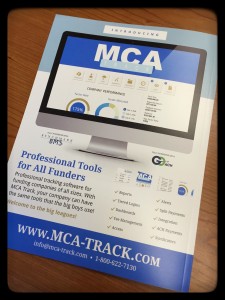 Benchmark Merchant Solutions, a processor in Amherst, New York, is one such company honing in on the MCA funder space. In 2014 the company launched MCA Track, software that’s designed to help MCA funders with their recordkeeping needs. It also helps them keep track of their income for tax purposes.
Among other things, MCA Track allows funders to view their performance at a glance. It shows them, for example, how merchants are performing, how the funds are allocated according to syndicator, the status of a deal, open cash advances, closed cash advances and defaulted cash advances. Funders can also get profitability data and other types of big picture information about their business as well. The software costs about $2,000 a month depending on the user’s size.
Benny Silberstein, chief operating officer of Benchmark, says the software was created because the processing company found that funders were often asking Benchmark to get data for them, especially when there were discrepancies. It can be real headache for funders to wade through inconsistencies with merchants, syndicators and ISOs, Silberstein says. “I can’t begin to tell you how many times funders asked us for a list of all the payments they’d received.”
PSC of Port Washington, New York, is another company trying to help MCA funders keep better records and manage their business more effectively. For a monthly membership fee, the company offers a front-end to back-end relationship management solution that allows funders to track all their contacts, documents, deals and commissions. Daily reports provide detailed data and summary information about an MCA’s funding business. The data includes the actual advance amount, the right to receive amount, the factor rate, processing fees, daily debits and credits, commissions paid to outside brokers or their own people, other management fees, ACH fees, wiring fees, payments, missing payments, collections information and participation with other syndicates.
The product has been on the market for about two years and the monthly fee varies according to a funder’s size, says Tom Nix, director of sales for PSC. He declined to be more specific about cost.
“The companies that are small and just starting out—if they are just doing a few transactions a month—they could probably get by using a spreadsheet. But that’s only feasible if you have a few transactions that you’re doing per month. Once you’re growing, when you get up to 10, 20, 30, 100 deals, the management of data becomes truly uncontrollable,” says Nix, who has seen a number of funders struggling to stay afloat or exit the business entirely because of their inability to keep good records.
“If you don’t have the right information and understand it, you’re going to give money to someone and you won’t [necessarily] get it back,” Nix says.
It’s possible for funders to set up their own infrastructure, but it can be costly and some feel it detracts from their ability to generate new business. That’s why Anthony Mannino, president of Nulook Capital in Massapequa, New York, chose to work with PSC. He researched the idea of doing all the back office and data collection on his own, but he decided not to reinvent the wheel since it would have meant hiring additional staff and would divert the company’s attention away from its primary focus—bringing in new business.
“A service provider like PSC gives us the ability to grow our company controlled and in a much quicker manner than we ever could than if we had to build our back end on our own,” Mannino says. “It takes most of the responsibility off of my company so we are able to focus on just growing the business and growing the sales.”
CloudMyBiz Inc. in Los Angeles is another company trying to service the alternative funder market, providing customized CRM systems for both lenders and MCA providers.
The CloudMyBiz system relies on a platform called Salesforce and is customized to the funding industry. It helps funders with the various facets of origination, underwriting and loan servicing. It helps them generate and track leads, automate funding workflow, understand and manage their deal pipeline and daily funding activities, collect and schedule recurring ACH payments and track syndication partners.
You could buy the Salesforce software and use it out of the box, but it provides only the basic functionality that funders need to run their business properly, says Henry Abenaim, principal consultant at CloudMyBiz. That’s where CloudMyBiz comes in by customizing the software for a funder’s specific business requirements. The fee varies widely, depending on the funder’s specifications, he says, declining to be more specific.
About two and a half years ago, Creative Vision Studio LLC in Long Beach, Calif., which had focused on the merchant credit card processing industry for more than a decade, also started offering a CRM system to MCA providers. The software is called Bankcard Pros CRM and customers can use it for merchant credit card processing, MCA or both. The software automates the data entry, underwriting, approval, funding and payback process from start to finish, says Robert Hendrix, the company’s chief executive. Funders also have access to 17 different management reports so they can track the performance and profitability of their entire portfolio per month.
The company charges an upfront fee of $4,000 to $5,000 to use the software, which is customized to a particular client’s business. There’s a $399 monthly fee after that. While it may seem costly to some funders, Hendrix says the software pays for itself within a month because of the efficiencies created. Importantly, the software eliminates the possibility of costly human mistakes that can occur in manually updating daily payments on a spreadsheet. “One little mistake can cost funders $2,000 to $3,000, even up to $10,000. They can be very costly mistakes,” he says.
It is, of course, possible for funders to keep good books and records using homegrown systems and personnel, and funders need to carefully weigh their options, taking into account that doing it right will probably require a meaningful investment in infrastructure and personnel. Whether they do it alone or hire an outside vendor, the important thing for funders is to collect the data and be able to evaluate it and display it in a way that makes sense to them, their customers, tax preparers, potential investors and others who need access.
Funders also need to remember that being successful in the business over the long term requires them to do more than simply capture accurate data. Beyond that, funders need to be able to manipulate the information in a way that helps them understand the nuts and bolts of their specific business, says Anderson of Longitude Partners.
“They may be able to produce enough financial information to complete an accurate tax return, but when it comes to understanding their operating metrics, they may not have collected or evaluated all of the right information to answer questions about what really drives the growth or sustainable profitability of the business,” he says.
How Syndication Has Made Millions for Partners
April 3, 2015 “How Syndication Has Made Millions for Partners” is a subtitle I borrowed from Strategic Funding Source’s print periodical, The Business Strategist. In the article penned by Ben Johnston, the company’s Chief Strategy Officer, the story how of syndication made its way into the merchant cash advance industry is explained in detail.
Of notable mention is that Strategic has had over 200 syndicate partners co-invest over $260 million of their own money into funded deals. That’s more than a quarter billion dollars from syndicates.
Their platform, which was the first one to operate on scalable level, provides same day payments to syndicates and access to detailed reports on a daily basis.
“Peer-to-peer lending and crowdfunding have become hot topics in the financial industry,” the article concludes. “But Strategic Funding Source has been crowdfunding with its own peers for years.”
Strategic Funding Source Names Stephen Lerch Chief Financial Officer
March 10, 2015NEW YORK (March 10, 2015) – Strategic Funding Source, Inc., a New York City-based provider of financing options to small and midsize businesses (SMB), today announced that Stephen E. Lerch has joined the company as Executive Vice President and Chief Financial Officer.
In this role, Lerch will be responsible for all aspects of the company’s financial operations, including enhancing fiscal capabilities, identifying new investment opportunities and executing growth plans. He will report to Strategic Funding Source Chairman and CEO Andrew Reiser.
With more than 17 years in various C-suite roles with technology-based companies in both the public and private sectors, Lerch brings an extensive range of expertise in finance, revenue generation and operations management to Strategic Funding Source. Most notably, he is a veteran of the small business finance and marketing industry, having worked for more than seven years as CFO and COO of Rewards Network where he helped pioneer the early successful growth of the alternative lending marketplace. Prior to that, Lerch was a Partner at Coopers & Lybrand, now PwC. He is a graduate of the University of Notre Dame.
“We are thrilled to welcome Steve to the Strategic Funding Source team,” said Reiser. “With his immense financial, operational and industry specific experience, Steve will play a key role in advancing the way we do business and drive the company’s growth.”
“I am extremely pleased to be joining Andy and the talented management group at Strategic Funding Source,” Lerch commented. “With the best reputation in the industry, the premier underwriting and syndication platform and an excellent equity partner in Pine Brook Partners, Strategic Funding Source is extremely well-positioned to take advantage of the tremendous growth opportunity already underway in small business financing.”
About Strategic Funding Source, Inc.
Strategic Funding Source finances the future of small businesses utilizing advanced technology and human insight. Established in 2006, the company is headquartered in New York City and maintains regional offices in Virginia, Washington state, and Florida. The company has served thousands of small business clients across the U.S. and Australia, having financed over $800MM since inception. Visit www.sfscapital.com to learn more about Strategic Funding Source, its financing products and partnership opportunities.
The Funding Calls That Won’t Stop
November 23, 2014“Your business has been approved for a loan…”
Last week, Chicago Public Radio (WBEZ 95.1 FM) investigated a trend in the small business community, the use of merchant cash advance financing. The station called me in advance to answer some questions about merchant cash advances and I gave my best explanation of the industry and its products.
Of the discussion that lasted more than 30 minutes, only about five of my sentences made it on the air. While I clarify some of my positions below, it was sobering to learn the context of how they were used, as a defense to real life merchant complaints.
The satisfaction rate with merchant cash advances are pretty high and I say that mainly because it’s so rare to hear complaints from anyone other than journalists that can’t believe anyone would accept rates above 6% APR. And while there are indeed bad actors in the industry (as there are in any industry), the gripe one merchant had about phone solicitations that just won’t stop is a recurring theme.
It’s happening to me too.
As an account representative in 2010 calling real time leads sold to five parties at once, I did what anyone would do, I pretended to be a small business myself and inquired through the website that we bought leads from and entered my cell phone as the point of contact
Ring. Ring. Ring…
Within a half hour, representatives from four companies called me, and I learned exactly who my competition was, how they explained the product, and what they would say to win me over. Two of the four were really good and one even referenced my name personally, saying something to the effect of, “If you get a call from Sean Murray, his rates are worse than mine.” Obviously he had already done what I was doing now, which was pretend to be a small business so he could prove to the prospect he was well informed about the alternatives. He had heard my pitch already and was now throwing me under the bus by planting the seed that I was going to offer something more expensive even if it wasn’t the truth.
In the end none of them won because it was all a farce. One never called me again after the first call. Another kept at it for a week and the remaining two followed up for a month.
And then it got quiet…
I had been marked as a dead lead and forgotten about until three months later when one company sent a follow up email. “Smart,” I thought. But then a call came six months later, and then more emails, some from companies I didn’t originally engage with.
And they continued at regular intervals, every couple of months an email or call. Was it interesting? Yes. Annoying? No.
Until this year.
 The volume of emails have slowed but I’ve somehow ended up on robo calling lists. “Press 1 to talk to a funding specialist or press 9 to be added to the Do Not Call list”
The press 9 option doesn’t work for me. Sure, I might be removed from that marketer’s list, but it in no way removes you from anyone else’s list. I knew that already of course because I’ve been on the other end before.
The first time I got one of these calls, I was excited to tell the sales representative who I really was, level with him, and explain that it was a really good idea to take me off the list. But much like other business loan robo call complaints, the representative wouldn’t tell me anything about himself or his company.
I got yelled at.
Every time I tried to ask a question, he’d get louder, insisting I tell him my monthly gross sales volume for the “cash advance I wanted.”
A rogue actor maybe, but I’ve since gotten additional business loan robo calls and have made no progress in getting myself removed. I just hang up now.
Call it sweet irony perhaps. Or maybe a wake up call (pun intended). I applied on a website once four years ago and the rest is history.
My experience with repeat solicitations is marginal compared to somebody that has actually used a merchant cash advance. With the filing of a public UCC-1, anyone in the industry can easily access that data and convert it into a marketing list. And they do.
Brokers that scorn UCC marketing acknowledge that these businesses could be getting called 5-10 times a day. My own clients had reported repetitive calls back when I was an account representative. And while UCC marketing is very cost effective, in today’s market where more than a thousand companies are offering similar financial products, it’s probably safe to say it’s overly saturated.
And if 5-10 calls per day were even remotely accurate, I’d surmise that level of volume is marring the industry’s reputation as a whole.
I could argue though that when customers have a great many options to choose from, they win. With more than a thousand companies offering merchant cash advances and business loans, it’s truly a buyer’s market. Play all the companies against each other and you should end up with the best possible terms. It’s a great time to seek capital.
Except we’ve got to do something about those phone calls, or at least the robo calls.
Every angry robo dial recipient becomes one less person likely to speak positively about the the nonbank financing industry. Aged leads, UCCs and phone calls might be inexpensive, but the cost to undo negative preconceived notions is immeasurable.
Do you want to be known as the company that helped small businesses or the annoying people that won’t stop calling? If merchants are taking to the air waves to complain, it will only be a matter of time before the FTC and FCC become interested.
—
Regarding my comments on the radio about APRs and daily amortization, they were pulled from a conversation that compared daily payment loans to purchases of future sales. I DO believe bad actors exist and every business owner should have an accountant, lawyer, or savvy third party review any contracts they enter into, financial or otherwise.
Rapid Capital Funding Acquires American Finance Solutions
October 8, 2014 Miami, Florida-based Rapid Capital Funding will acquire Anaheim, California-based American Finance Solutions today in perhaps one of the most significant deals in merchant cash advance history.
Rapid Capital Funding, not to be confused with RapidAdvance, is led by the company’s founder Craig Hecker. Hecker and AFS’s CEO Scott Griest broke the news to me on a call together. “It’s a roll-up,” Griest said. AFS will continue to operate under their brand name for the time being and Griest will remain a leader in the company.
Meanwhile, the operations of the two companies will begin to merge, with Hecker confirming already that their head underwriter, Andrew Hernandez, was in California getting up to speed on AFS’s operations.
The news comes less than five months after American Finance Solutions struck an equity deal with CapFin partners. I am unsure if CapFin is still involved in the company.
 Griest and Hecker were both excited about working together. “Griest has done a great job managing the sales partner channel,” Hecker said. Griest will continue to develop those relationships for the company.
This is the first major merger in the industry. Historically, just about all of the equity deals in merchant cash advance have been acquisitions by institutional investment groups. This is a consolidation.
RCF, while based in Miami, has an office in New York City. The AFS deal puts them on the ground in the 3rd major industry hub.
The two executives hinted that this deal was just the beginning.
Regulatory Paranoia and the Industry Civil War
April 11, 2014Stacking is on everyone’s minds in the merchant cash advance (MCA) industry but that war is little more than smoke compared to the fire burning in our own backyard. One of the major topics of debate at Transact 14 has been Operation Choke Point, a federal campaign against banks and payment processors to kill off the payday lending industry and protect consumer bank accounts. Caught in the mix are law abiding financial institutions, some of which if affected, could potentially disrupt the merchant cash advance and alternative lending industries. Both have become heavily dependent on ACH processing. Could their strength become their Achilles heel?
Indeed, there was a rumor circulating around the conference that a popular ACH processor in the MCA industry is no longer accepting new funding companies. I know the name but was not able to confirm it as fact. There is a two-fold threat on the horizon:
1. The probability that ACH processors in this industry are also processing payments for payday lenders or other high risk businesses.
2. The likelihood that a bank or ACH processor would take preemptive action and terminate relationships with merchant cash advance companies and alternative business lenders, not because it’s illegal but as a way to make their books squeaky clean.
The sentiment at the conference however was that MCA providers and alternative business lenders had little need to worry. While Operation Choke Point specifies online lenders, they are narrowly defined as businesses making loans to consumers. MCA and their counterparts do not fall under that scope, even if they themselves lend exclusively online.

Is regulation coming?
There seems to be both a call for and paranoia about regulation, especially in the context of stacking merchant cash advances and daily repayment business loans. On the popular online forum DailyFunder, several opponents of stacking are under the impression that regulators will be busting down doors any day now to put an end to businesses utilizing multiple sources of expensive capital simultaneously. Many insiders who have had their merchants stacked on view the issue as both a legal and a moral one. Opponents get worked up about it for many reasons. They believe any one or multiple of the following:
- The merchant can’t sell something which has already been contractually sold to another party.
- That the merchant ends up borrowing and selling their future revenues at their own peril, endangering their cash flow and their business.
- That the stackers endanger the first lender or funder’s ability to collect.
- That the merchant taking on stacks won’t be eligible for additional funds with the first company, hurting the retention rate.
Stacking is not illegal, but it may be tortious interference. That allegation is the one that gets thrown around the most, but it’s important to recognize that actual damages are an integral part of any such case. If I stack on your merchant and the deal performs as expected for you, then what damages would you have suffered? But if I stack on your deal and it defaults 3 weeks later, you might be able to allege that I was the cause of it.
Insiders on DailyFunder’s forum that wonder how they might be able to get stacking to stop, only need to follow the example of what a few select funders are already doing, going on the offensive. The first thing one west coast MCA company does when they have a merchant default is find out if there was a stack that came on top of them. If they find out who it was, they send the offending funder a bill for the outstanding balance. That may sound cheesy, but given their industry prowess and litigious nature, they said that some stackers quietly mail them a check, rather than risk things escalating to the next level. The threats only hold weight of course if you’re actually prepared to bring the case to court.
I’ve spoken with dozens of proponents for stacking, many of sound character, high intelligence, and business acumen. They buck the stereotype of stackers as sleazy wall street guys with pinky rings. Few of these proponents believe that future revenue is a precise asset. It’s been said that, “future revenues are unknowable and possibly infinite. A business should be able to sell infinite amounts of these future revenues if there are investors out there that will buy them.” The general consensus on this side of the aisle is that a 2nd position stack, or “seconds” are here to stay. There’s a sense of calm and conviction, as if seconds were a boring subject of little contention. Many are okay with thirds “if the math works” but discomfort sets in on fourths, fifths and beyond. If they believe it’ll be a good investment, they’ll do the deal. They scoff at the notion that they’d willingly chance putting a merchant out of business since that would jeopardize their own investment.
To date, I’ve seen no data to support that stacking causes merchants to go out of business. I would not be surprised if there was a correlation between defaults and stacks, but that would not imply causation. A business that is on its way towards bankruptcy regardless may be able to obtain a few stacks in the process as a last ditch effort to stave it off. When the business finally fails, it may appear to look like the stacks caused it, even if they didn’t.
For those that don’t want to play cat and mouse with threats and lawsuits, there’s a growing call for regulation, both self-regulation and federal. That call feeds off the paranoia that regulators are knocking at the industry’s door already anyway.
NAMAA
In regards to self-regulation, insiders have been looking to the North American Merchant Advance Association (NAMAA) to create rules and become an enforcer. It’s no secret that their members are opponents of stacking, but as a powerful body of industry leaders, they’re up against a threat of their own, antitrust laws. Creating rules and enforcing them could be construed as anti-competitive. In truth, a lot of the MCA industry’s growth over the last 2 years can be attributed to stacking. A private association of the largest players actively working to establish rules to squash the fast growing segment of new entrants could indeed be perceived as anti-competitive.
But that doesn’t mean NAMAA is powerless to promote their views. Following in the footsteps of the Electronic Transactions Association, they could create a set of best practices, host workshops, and offer courses and sessions to train newcomers on these best practices. Such benefits and opportunities are a standard in the payments industry, but nothing like it is available in MCA or alternative business lending.
But is it too late for self regulation?
With all the government enforcement occurring in the rest of the financial sphere, fears of imminent federal involvement in MCA and alternative business lending are not unfounded… or are they?
In the wake of the financial crisis, the Consumer Financial Protection Bureau (CFPB) was formed to protect consumers in financial markets. The CFPB was instrumental in Operation Choke Point and they would be the most likely federal agency to field complaints about stacking. Unlike the Office of the Comptroller of the Currency which has jurisdiction over banks, the CFPB’s oversight extends to non-bank financial institutions. They’re the wild card agency that has financial companies across the nation on their heels.
I had the opportunity to speak with a former lead attorney of the CFPB off the record today about the definition of consumer. Could a small business be construed as a consumer? The short answer was no. The long answer was that there is no specific definition of consumer at the CFPB but it was meant to represent individuals. Although businesses at the end of the day are run by individuals, I got a pretty confident response that the CFPB would not have jurisdiction over a business lending money to a business, even if it was a very small 1 or 2 man operation. If they were acting in a commercial capacity, then they’re no longer consumers.
The other side of her argument was that it would take up too much resources to take on a case where the victim class was basically outside of their scope. The CFPB already has enough on their plate.
Is the government busy?
I also spoke with a few lobbyists and payments industry attorneys off the record and the unilateral response was that MCA and alternative business lending were not on any agenda, nor does the government have the resources to juggle something that is basically…insignificant in their eyes.
In the grand scheme of financial issues, a few billion year in small business-to-business financing transactions isn’t worth anyone’s breath. “A business acting in a business capacity was unhappy with a business contract they entered into? Take it up in civil court,” I imagine a regulator might say.
Regulators aren’t completely in the dark about MCA. Just a month or two ago, several industry captains and myself included were contacted by the Federal Reserve as part of a research mission to basically find out what this industry even was. The feds appear to have stumbled upon the MCA industry as part of their research into peer-to-peer lending. Who would’ve thought a 16 year old industry could be so stealthy?
If the big PR machines like Kabbage, Lending Club, and OnDeck Capital didn’t exist, I’m inclined to believe no one in the government would’ve heard of MCA for at least another 10 years. In 2014, they’re just now discovering it.
My gut tells me we’re a long way from any kind of regulatory enforcement. In a session I attended at Transact 14 today, a former member of the Department of Justice and a current member of the Office of the Comptroller of the Currency both offered examples of cases that took 3-8 years before there was an enforcement action. In each scenario, they alerted the parties there was a problem and they were given time to correct it. They had to show progress along the way and eventually when no such progress was made after years of warnings, they acted.
In the conversation of regulation, alternative business lending and MCA are relatively tiny. Lending Club does more in loan volume each year than the entire MCA industry combined. So long as there’s no fraud involved, small business-to-business financing transactions are not likely to make it on the agenda for federal regulators for a long time. That doesn’t mean it won’t be there some day in the future.
I think it was Brian Mooney, the CEO of Bank America Merchant Services that said in the Transact 14 roundtable discussion that if something feels wrong in your gut, don’t do it. Debra Rossi, the head of Wells Fargo Merchant Services added that you can’t tell a regulator, “I didn’t know.” Keep those suggestions in the front of your mind.
No police
For the foreseeable future it’s on us as an industry to find a resolution to stacking. There’s no such thing as the cash advance police. On one side is tort law. On the other is creating best practices and actively educating newcomers. That’s where the blood boiling debates need to turn to. After all, there’s already a large crowd that yawns over seconds, a group that wholeheartedly believes a stack is just as legitimate as a first position deal.
Instead of waiting for a referee to call foul on somebody, I think 2014 is the year to realize that you might be stuck in the room with the person you hate. Could you bring yourself to tolerate them for years to come?
Blind spot
We should consider that the greatest threat to the industry may not come from within, but from outside. More than 50% of MCA/alternative business lending transactions are repaid via ACH. Government action on ACH providers or the banks that sponsor them could end up hitting this industry as collateral damage.
One metric that banks and regulators consider is the return rate of ACHs, namely the percentage of ACHs rejected for insufficient funds or rejected because the transactions weren’t authorized. Daily fixed debits run the risk of rejects and boost the return rate. Could the frequency of your rejects eventually scare the processor into terminating the relationship? With the pressure they’re getting from the Department of Justice, there’s always the possibility.
Data security is another sleeping giant to consider. Do you keep merchant data safe? Are you protected from hackers?
Know your merchant. The push towards automated underwriting seems dead set on eliminating humans from the analysis. But what if the algorithm misses something and loans get approved to facilitate a money laundering scheme? Or what if it approves a known terrorist?
Paranoia
If you’re paranoid you’re doing something wrong, then maybe you are doing something wrong even if there’s no current law against it. Follow your gut, create value, and work together. Who knows, maybe one day there will be an ETA-like organization for MCA and alternative business lending. Now is a good time to be proactive.
Merchant Cash Advance Syndication: Crowdfunding?
March 28, 2014 You might not have known this, but one of the most lucrative opportunities in merchant cash advance is the ability to participate in deals. It’s a phenomenon Paul A. Rianda, Esq addressed in DailyFunder’s March/April issue with his piece, So You Want to Participate?
Syndication is industry jargon of course. You probably know the concept by its sexier pop culture name, crowdfunding. For all the shadowy rumors and misinformation that circulates out there about merchant cash advance companies, they’re similar to the trendy financial tech companies that have become darlings of the mainstream media.
Did you know that many merchant cash advances are crowdfunded? To date, no online marketplace has been able to gain traction in the public domain aside from perhaps FundersCloud, so crowdfunding in this industry happens almost entirely behind the scenes. There is so much crowdfunding taking place that it’s becoming something of a novelty for one party to bear 100% of the risk in a merchant cash advance transaction. Big broker shops chip in their own funds as do underwriters, account reps, specialty finance firms, hedge funds, lenders, and even friends and family members of the aforementioned.
Merchant cash advance companies find themselves playing the role of servicer quite often, which is coincidentally the model that Lending Club is built on. A $25,000 advance to an auto repair shop could be collectively funded by 10 parties, but serviced by only 1. Each participant is referred to as a syndicate. This is not quite the same system as peer-to-peer lending because syndicates are not random strangers. Syndication is typically only open to businesses, and most often ones that are familiar with the transaction such as the company brokering the deal itself.
In the immediate aftermath of the ’08-’09 financial crisis, some merchant cash advance companies became very mistrusting of brokers and deal pipelines were going nowhere. Underwriters had a list of solid rebuttals for deals they weren’t comfortable with. “If you want us to approve this deal so bad, why don’t you fund it yourself!,” underwriters would say. Such language was intended to put a broker’s objections over a declined deal to bed. But with all the money being spent to originate these deals, it wasn’t long until brokers stumbled upon a solution to put anxious merchant cash advance companies at ease. “Fund it myself? I’d love to, but I just can’t put up ALL of the cash.”
And so some brokers started off by reinvesting their commissions into the deals they made happen. That earned them a nice return, which in turn got reinvested into additional deals. Fast forward a few years later and deals are being parceled out by the truckload to brokers, underwriters, investors, lenders, and friends. There’s a lot of money to be made in commissions but anybody who’s anybody in this business has a syndication portfolio. The appetite for it is heavy. Wealthy individuals and investors spend their days cold calling merchant cash advance companies, brokers, and even me, trying to get their money into these deals. They know the ROI is high and they want in.
 That’s the interesting twist about crowdfunding in the merchant cash advance industry. You can’t get in on it unless you know somebody. There are no online exchanges for anonymous investors to sign up and pay in. It requires back door meetings, contracts, and typically advice from sound legal counsel. A certain level of business acumen and financial prowess are needed to be considered. These transactions are fraught with risk.
In Lending Club’s peer-to-peer model, investors can participate in a “note” with an investment as small as $25. This is a world apart from merchant cash advance where it is commonplace to contribute a minimum of $500 per deal but can range up to well over $100,000.
Lending Club defines diversification as the possession of more than 100 notes. At $25 a pop, an investor would only need to spend $2,500. With merchant cash advance, 100 deals could be $50,000 or $10,000,000. By that measure, syndication is crowdfunding at the grownup’s table, a table that doesn’t care about sexy labels to appease silicon valley, only yield.
Strange merchant cash advance jargon keeps the industry shrouded in mystery. Did you know that split-funding and split-processing are terms often used interchangeably? Or that they have a different meaning than splitting? Or that the split refers to something else entirely?
Do you know what a holdback is or a withhold? How about a stack, a 2nd, a grasshopper, an ISO, an ACH deal, a junk, a reup, a batch, a residual, a purchase price, a factor rate, or a UCC lead?
Paul Rianda did a great job detailing the risks of syndication, but there is one thing he left unsaid, and that’s if you’re going to participate in merchant cash advances, you better be able to keep up with the conversation.
At face value, syndication is nothing more than crowdfunding. But if your reup blows up because some random UCC hunting ISO stacked an ACH on top of your split while junking him hard and upping the factor with a shorter turn, you just might curse the hopper that ignored your holdback and did a 2nd. And on that note, perhaps it’s better that the industry refrain from adopting mainstream terminology. We wouldn’t want everybody to think this business is easy. Because it’s not.
One factor to consider is the actual product being crowdfunded. In equity crowfunding, participants pool funds together to buy shares of a business. In crowdlending, participants pool funds together to make a loan. But in merchant cash advance syndication, participants pool capital to purchase future revenues of a business. An assessment is made to predict the pace of future income and a discounted price is paid to the business owner upfront. That purchase price is commonly known as the advance amount.
Syndication has more in common with equity crowdfunding than crowdlending. If you buy future revenues and the business fails, then your purchase becomes worthless. There is typically no recourse against the business owner personally unless they purposely interfere with the revenue stream and breach the agreement. Sound a bit complicated? It is, but crowdfunding in this space is prevalent nonetheless. To get in on it, you need to know someone, and to do it intelligently, you better know what the risks are.
If you want to sit at the grownup’s table and syndicate, consult with an attorney first. There’s a reason this industry hasn’t adopted sexy labels. It isn’t like anything else.
Amazon Quietly Funding Small Businesses
December 30, 2013 Ever since Amazon announced their exclusive business loan program last year, they’ve been quietly booking deals. I say quietly because no one really talked about it much ever since. Though the loan program is available only to qualified Amazon.com merchants, it’s very similar to how Kabbage started off with eBay. Amazon’s Business Loan program has all the bells and whistles of merchant cash advance financing and their clients tend to have huge daily sales volumes.
So are they really doing deals? You betcha they are. Secured Party Name: Amazon Capital Services. I wonder if any of their merchants would do a fixed ACH deal.
Enjoy.