Puerto Rican Businesses & People Resilient In Spite of Pandemic and Challenges, Says Alvelo
September 16, 2020 While the US economy slowly opens back up to careful in-person commerce, the territory of Puerto Rico is still facing rising case numbers- So how is business in the “Island of Enchantment?”
“I don’t think there’s anything that will shake the confidence of our small business owners in Puerto Rico,” said Sonia Alvelo, CEO of Latin Financial. “Businesses and the people of Puerto Rico are the most resilient I have ever known: I know that as I am one of them.”
Alvelo, a native to the island, has won awards as a top entrepreneur of the year for her business financing partnerships in the US and Puerto Rico. She said that even as the island faces its hardest challenges, the spirit of entrepreneurship remains unbroken.
Puerto Rico has been hit by irregular misfortune in the past couple of years. Destruction from Hurricane Maria and Irma damaged the 2017 infrastructure of the island immeasurably, and the response of the US government was painfully lacking. Commerce continued with caution, seeming to rebound. Then this year, earthquakes and aftershocks punctuated January and February, foreboding the coming storm.
The pandemic was slow to reach the island; Puerto Rico was the first US state/territory to impose a quarantine, banning business and all travel March 15th. The region is a territory of the United States, so it could not directly enforce control over its borders. Recently, Puerto Rico made the news with an increasing case count.
There’s also been the troublesome search for a new governor. After a mass protest, Governor Ricardo Rosselló stepped down last year. After his successor ‘appointment’ was deemed unconstitutional by the Supreme court of Puerto Rico, Wanda Vazquez, the former Secretary of Justice, took office.
In the August primary, thousands of ballots got stuck in delivery trucks that did not move, never reached polling locations. The candidates are now petitioning for a re-vote and the counting of the votes that were cast. The courts are still deciding, so even the election is facing challenges in Puerto Rico.
Besides that, the tourism industry has been devastated. Though the early shut down saved lives, the island saw an unemployment rate of up to 23% in July alone. That could be a low estimate, considering that half of the Puerto Rican workforce hold a job in the “informal economy.” The New York Times reports that the real unemployment rate in the middle of the summer could have reached close to 40%.
Even so, Alvelo conveyed the enduring willpower of the Puerto Rican people, that there was still confidence things would turn around.
Alvelo is partnered with more than 97 pharmacies in Puerto Rico as an MCA provider, as well as with gas stations and other small businesses. She said that she has been receiving calls for business financing options non-stop, on a day-to-day basis. Alvelo shared information she learned from one of her clients.
“They suffered the most at the beginning, but you know only 5-10% of pharmacies in the islands are open,” Alvelo said. “But even still, and we’re talking a hurricane, earthquakes, a pandemic, everything- I still don’t think that anything will change the confidence of business owners in PR.”
Alvelo is standing right next to Puerto Rican business owners, talking to them through their increasing needs during this time, she said. Latin Financial facilitated almost $2 million in PPP loans and $2 million in EIDL loans in the US and PR.
“That was the best experience- when they got the PPP funds,” Alvelo said. “They were crying over the phone; it was incredible.”
Brendan Lynch, Alvelo’s fiancé and business partner, said that the program had a rough rollout. It was unclear how long the Fed money would last, but PPP ended up working well for Puerto Rican businesses. He even saw BlueVine begin funding Loans in PR for the first time.
“One of our finders here in the US was approved for the program, and we were able to use their online platform,” Lynch said. “And normally they don’t really fund in Puerto Rico, but they did allow Puerto Rican businesses to apply for funding; which is great because they had the technology to make it so simple and quick.”
Lynch said Latin Financial was sure to share links to a PPP loan application with every client to make sure aid funds were as accessible as possible.
“Businesses are probably still down-scaled somewhere between 60 to 70% of their total revenue,” Lynch said. “they’re still working shorthanded with less people in the office, and regulations on how many people you can have in your business are making it harder.”
Alvelo and Lynch are no strangers to environmental forces affecting their plans- the pair were planning on getting married in PR in 2017 before the hurricanes hit.
 “We started actually looking [for a venue] again, and then COVID happened,” Alvelo said. “Clients were going to be invited and are always asking how they can help, just like when everything happened with COVID, the pharmacies all got together, and said if you need this let us know. Businesses are really working together because they know that they need each other.”
Maria Barzana, the owner of Farmacia Asturias, has been a longtime client of Latin Financial, one of the first dating back to 2015. Barzana went to Alvelo for help. She said the island did not feel an economic impact until this August. Businesses, including most medical offices in the country, have been closed for the past five months. Pharmacies are finally feeling it.
“At the beginning of COVID-19, we were able to manage the economic factor by invoicing refills of prescriptions and the sale of basic necessities related to COVID,” Barzana said. “Due to social distancing, the flow of clients/patients has decreased, concentrating on items necessary to combat COVID-19 and maintenance medications.”
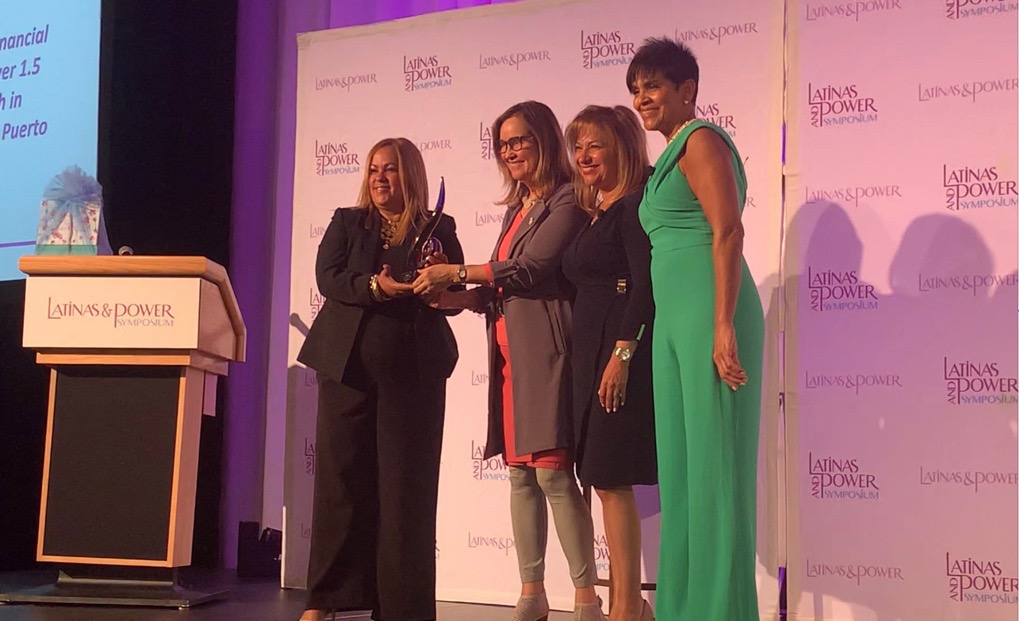
Latin Financial is almost back to regular funding after rushing to help complete PPP and EIDL stimulus loans. Sonia Alvelo will be a panelist speaker this Sept. 24, for the annual Latinas & Power Symposium.
Lendini Relaxes Previously Announced Covid-Guidelines
September 9, 2020Bensalem, PA –September 9, 2020– Lendini is excited to announce its return to small business funding. Through superior efficiency and analysis, the company has improved the process of alternative funding from some of the brightest minds in finance, technology and analytics. With updated (temporary COVID-19) guidelines, they remain dedicated and committed to their merchants and ISOs in these unprecedented times.
Lendini works directly with you to prepare the best package for your client, whether that be a Business Cash Advance (BCA) or Merchant Cash Advance (MCA). Simply put, Lendini advances money based on the average monthly gross sales of a business or average monthly credit card sales. Money can be advanced quickly because securing assets and collateral is not required.
Get clients funded in 4 easy steps; application submission, information review, approval or denial, final review and your client is funded. Minimal documentation is required. The company must have 18 months in business with $7,500 per month in gross sales and an average daily balance of $750. We require a minimum of 5 deposits, monthly into the business bank account.
Funding Stipulations:
- Bank login
- Funding call with merchant
Required Documents:
- Application
- All 2020 business bank statements + MTD
- Signed and dated agreement
- Proof of business existence
- Meets state registration requirements
- Proof of ownership
- Merchant interview
- Driver’s license
- Voided check (starter checks will not be accepted)
With $540 million dollars funded to 15,000 small businesses, Lendini offers incomparable solutions customized specifically for your client. The company prides itself in being able to offer up to $300,000 in as little as 1 business day (in most cases). Funding can be used for any business purpose you may have.
Lendini is not a bank and does not provide loans, they offer cash advances. With Lendini, business owners receive the capital they need without lengthy delays or excessive paperwork. In general, Lendini offers pre-approvals in under three hours and next day funding of approved advances. The staff provides unparalleled customer service and treats each business owner with the respect they deserve.
Fintech Equality Coalition: meet disparity in minority PPP funding
September 9, 2020 Last month, a group of fintech companies christened the Fintech Equality Coalition. Dedicated to ensuring racial equality is a right extended to everyone, the group pledges to focus on enhancing access to financial services for the underrepresented- particularly within the black community.
The coalition comes at a pivotal time for fintech, currently facing the challenges created by the 2020 pandemic.
In August, the Federal Reserve Bank of New York released a study into the distribution of PPP and how the funds affected black communities. The institution found that the number of small business owners fell by 22% from February to April- the largest drop on record. But the closure of businesses was not felt equally.
“Black businesses experienced the most acute decline, with a 41 percent drop,” The study said. “Latinx business owners fell by 32 percent, and Asian business owners dropped by 26 percent. In contrast, the number of white business owners fell by 17 percent.”
The study also showed that forty percent of Black-owned businesses are concentrated in 30 counties across the country. 19 out of 30 of these counties were the hardest hit by COVID 19 in the nation.
Unfortunately, other studies have shown that the PPP did not accurately get funds to areas hit by the virus. The National Bureau of Economic Research (NBER) published in July, found that companies more negatively affected by COVID were less likely to be approved.
This may explain why the Small Business Majority study into PPP found that while 63% of Black and Latino small business owners applied, less than two-thirds received funding.
The Fintech Equality Coaltion’s pledge is overall a promise to do more for minority communities, stating:
- Because the Black community is underserved by financial services
- Because there are Black voices and issues in our industry that should be but are not currently amplified
- Because Black employees and Black-owned businesses are underrepresented in the tech community, including at many of our companies
- Because the Black community is underrepresented in leadership roles, including at many of our companies
- Because these promises are meaningless without accountability
The coalition is a pledge to host and sponsor events like forums that feature black speakers. The pledge is also a recognition that the black community has been underserved by financial services in the past, and the signers aim to incorporate more black-owned businesses than before.
Who’s signed

Betterment | Jon Stein, CEO

Blend | Nima Ghamsari, CEO

Carver Edison | Aaron Shapiro, CEO

Cadre | Ryan Williams, CEO

Commerce Ventures | Matt Nichols, CEO

Credit Karma | Ken Lin, CEO

Commonbond | David Klein, CEO

Divvy Homes | Adena Hefets, CEO

Dosh | Ryan Wurech, CEO

Earnest | Susan Ehrlich, CEO

Fabric | Adam Erlebacher, CEO

Freedom Financial Network | Brad Stroh & Andrew Housser, co-CEOs

Guidefi | Charlene Fadirepo, CEO

Halo | Taylor Simpson, CEO

Harness Wealth | David Snider, CEO

Jetty | Luke Cohler, President & Michael Rudoy, CEO

Kard | Ben Mackinnon, CEO

Kindur | Rhian Horgan, CEO

Manifest | Anuraag Tripathi, CEO

Marqeta | Jason Gardner, CEO

Mass Challenge | Siobhan Dullea, CEO

MoneyLion | Dee Choubey, CEO

Monzo | TS Anil, CEO

Nova Credit | Misha Esipov, CEO

Oneblinc | Fabio Torelli, CEO

Oportun | Raul Vazquez, CEO

Petal | Jason Gross, CEO

Renaissance Payments | Joseph Akintolayo, CEO

Rhino | Paraag Sarva, CEO

Scratch | Sameh Elamawy, CEO

Spruce | Patrick Burns, CEO

SoFi | Anthony Noto, CEO

Stash | Brandon Krieg, CEO


Varo | Colin Walsh, CEO

Zest AI | Mike de Vere, CEO
What Stimulus is Next for SMBs?
September 4, 2020 Next week, lawmakers will finally be back from vacation, arguing over the next stimulus package. There are various proposals, and the two competing Republican and Democrat offerings are nearly a trillion dollars apart.
It’s the Senate GOP HEALs act vs. the House Democrats HEROs act. But in between, what may be getting the most support? Standalone bipartisan bills that focus on extending and forgiving PPP loans.
Ryan Metcalf, head of the office of Government affairs and Social Impact for Funding Circle, has been following conversations on The Hill closely.
“Up until Monday, Pelosi said they weren’t even going to even put a bill forward for a new stimulus,” Metcalf said. “But then yesterday [Tuesday] Secretary Mnuchin said he was open to doing a standalone PPP loan. It’s the one that has the most bipartisan support; they can’t meet anywhere else than PPP.”
Funding Circle is one of the world’s largest online lenders, with about $10 billion in global loans to date. Metcalf said Funding Circle mostly offers US loans in the $25,000 to $500,000 range, and as a funder for PPP, offered more loans in just eight days in August than half of their total business in July. His company had to cut off funding requests, locking out some customers that needed help, simply because the deadline had ended.
“When PPP ended on August 8th, the narrative was that PPP had died out, and there was no interest in it, but that is a complete fallacy,” Metcalf said. “We were processing loans for the smallest of small businesses- 10-15 employees- well under $50,000 loans, the people still needed help.”
Steve Denis, Executive Director of the Small Business Finance Associaton (SBFA), has also been engaged in the process. He has been petitioning members of Congress on behalf of what he calls truly small business, those under 10 employees or nonemployers that still need help.
“‘Real’ small businesses: ones with under ten employees that are really grinding, like small hair salons, retail stores, and mechanics don’t really have traditional banking relationships,” Denis said.
SBA data from July found that most of the loans made (66.8%) were in the $50k range and to very small businesses, but the largest amount of capital went towards firms that applied for a $350k-$1M sized loan.
Denis said that the higher dollar amount PPP loans were more profitable for banks to make, so disproportionate funding went toward bigger businesses with pre-established finance connections. This disparity is backed up by research. Studies, like one from the National Bureau of Economic Research (NBER), found that firms with stronger connections to banks were more likely to be approved for PPP funds.
“The way fees are structured: there’s an incentive for big banks to prioritize bigger deals at [commission] rates like 3% or 5%,” Denis Said. “They’d rather make that on a $500,000 deal than on a $40,000 deal.”
Denis said the SBFA was lobbying for Congress to create a prioritized amount of money authorized only for smaller loans, under $100,000-$150,000, to focus on those really small businesses with less than five employees.
Like Metcalf, Denis sees the most likely outcome is an extension of PPP- at least until the end of the federal fiscal year budget in September. If the Fed cannot agree on a budget, the government will go into shutdown- and this year would be the worst time to shut down.
“The only thing that motivates Congress to move big legislation like this are deadlines; there’s a big deadline coming up,” Denis said. “At the end of September, the fiscal year runs out and there needs to be a budget agreement.”
 Metcalf said that the next round of PPP programs need to make sure businesses can get their first loan if they haven’t already, and streamline the loan forgiveness process to keep the SBA from getting overwhelmed.
“We need a forgiveness bill that streamlines the process; lenders will not have the resources to process forgiveness, a first PPP and second PPP as it is,” Metcalf said. “In my call with the SBA two weeks ago, they said for processing new 7(a) lender applications and all the other business they do to resume their normal business we’re looking at six months.”
The PPP proposal that Metcalf likes the best is called the Paycheck Protection Small Business Forgiveness Act, which stipulates a one-page forgiveness form for all loans made under $150,000. Metcalf said he saw support from a bipartisan group of over 90 members of Congress.
Another opportunity is the Economic Injury Disaster Loan (EIDL) program- offering long term loans to businesses with less than 500 employees that need financial help. Both Denis and Metcalf encouraged business owners to check out the program, which offers loans directly from the government without the need to prove forgiveness.
In the end, Denis said he was interested in the Republican “Skinny Bill” that is a cheaper breakdown of the GOP HEALS Act, but he said it is all up in the air.
“This is just me guessing,” Denis said. “I have talked to these people every day, but even members of Congress on Capitol Hill have no clue what’s going to happen.”
Real Estate and Funding Deals With Chris Pepe
August 10, 2020I recently spoke with Christopher Pepe, Head of ISO Relations at World Business Lenders. Pepe explained why WBL’s practice of securing loans against real estate has enabled their business to keep lending and to do deals unsecured lenders and MCA providers are not equipped to handle.
You can watch the full interview here:
The SEC Already Suffered a Major Defeat in the Par Funding Battle – But Who is the Real Loser?
August 8, 2020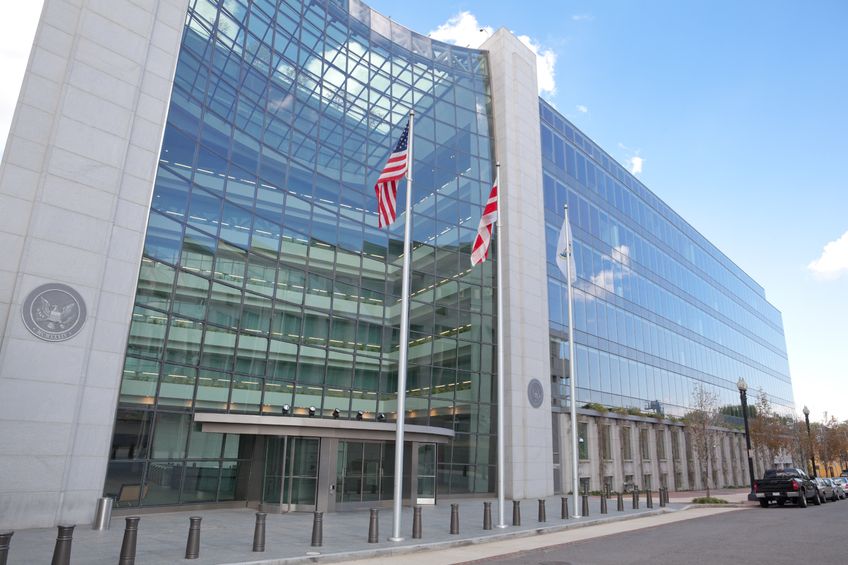 While the news media, regulatory agencies, and law enforcement are high-fiving each other over the course of events in the Par Funding saga (a lawsuit, a receivership, an asset freeze, and an arrest), there lies a major problem: The SEC already suffered a major defeat.
On July 28th, rumors of a vague legal “victory” for Par Funding circulated on the DailyFunder forum. The context of this win was unknowable because the case at issue was still under seal and nobody was supposed to be aware of it.
Cue Bloomberg News…
In December 2018, Bloomberg Businessweek published a scandalous story about a Philadelphia-based company named Par Funding. And then not a whole lot happened… that is until Bloomberg Law and Courthousenews.com published a lengthy SEC lawsuit less than two years later that alleged Par along with several entities and individuals had engaged in the unlawful sale of unregistered securities.
 At the courthouse in South Florida, those documents were sealed. The public was not supposed to know about them and AltFinanceDaily could not authenticate the contents of the purported lawsuit through those means. According to The Philadelphia Inquirer, the mixup happened when a court clerk briefly unsealed it “by mistake” thus alerting a suspiciously narrow set of news media to the contents. AltFinanceDaily was the first to publicly point this out.
In court papers, some of the defendants said that they learned of the lawsuit that had been filed under seal on July 24th from “news reports.” Bloomberg Law published a summary of the lawsuit on its website in the afternoon of July 27th.
“It is fortuitous that the Complaint was initially published before it was sealed,” an attorney representing several of the defendants wrote in its court papers. “Otherwise, [The SEC] would have likely accomplished its stealth imposition of so-called temporary’ relief, that would have led to the unnecessary destruction of a legitimate business.”
 The day after this, on July 28th, a team of FBI agents raided Par Funding’s Philadelphia offices as well as the home of at least one individual. Rumors about the office raid landed on the DailyFunder forum just hours later, along with links to the inadvertently public SEC lawsuit now circulating on the web.
The New York Post caught wind of the story and published a photo of an arrest that had taken place fifteen years ago, creating confusion about what, if anything, was happening. Nobody, was in fact, arrested.
The SEC lawsuit was finally unsealed on July 31st, along with the revelation that Par Funding and other entities had been placed in a limited receivership pursuant to a Court order issued just days earlier. The receivership order was a massive blow to the SEC. It failed to obtain the most important element of its objective, that is to have the court-ordered right to “to manage, control, operate and maintain the Receivership Estates.” The SEC specifically requested this in its motion papers but was denied this demand and others by the judge who leaned in favor of granting the Receiver document and asset preservation powers rather than complete control of the companies.
The language of the Court order was interpreted differently by the Receiver, who immediately fired all of the company’s employees, locked them out of the office, and then suspended all of the company’s operations which even prevented the inbound flow of cash to the company (of which in the matter of days amounted to nearly $7 million). The SEC did successfully secure an asset freeze order.
In court papers, Par Funding’s attorneys wrote that: “The Receiver’s and SEC’s actions are ruining a business with excellent fundamentals and a strong financial base and essentially putting it into an ineffective liquidation causing huge financial losses. In taking this course of action against a fully operational business, the key fact that has been lost by the SEC, is that their actions are going to unilaterally lead to massive investor defaults.”
 The Receiver, in turn, tried to fire Par Funding’s attorneys from representing Par. Par’s attorneys say that the Receiver has communicated to them that it is his view “that he controls all the companies.”
“The SEC is simply trying to drive counsel out of this case, as an adjunct to all the other draconian relief that they insist must be employed to ‘protect the investors,'” Par’s attorneys told the Court. “Due Process is of no regard to the SEC.”
As lawyers on all sides in this mess assert what is best for “investors,” seemingly lost is the collateral damage that is likely to be thrust on Par’s customers. The Philadelphia Inquirer has repeated the SEC’s contention that Par made loans with up to 400% interest. Bloomberg News has called Par a “lending company” whose alleged top executive is a “cash-advance tycoon.”
A review of some of Par’s contracts, however, indicate that they often entered into “recourse factoring” arrangements. “This is a factoring agreement with Recourse,” is a statement that is displayed prominently on the first page of the sample of contracts obtained by AltFinanceDaily.
Parallels between the business practices of Par Funding and a former competitor, 1 Global Capital, have been raised at several junctures in the SEC litigation thus far. But some sources told AltFinanceDaily that in recent times, Par has been offering a unique product, one that is likely to create disastrous ripple effects for hundreds or perhaps thousands of small businesses as a result of the Receiver’s actions (even if well-intentioned).
The “Reverse”
Par offered what’s known as a “Reverse Consolidation,” industry insiders told AltFinanceDaily. In these instances Par would provide small businesses with weekly injections of capital that were just enough to cover the weekly payments that these small businesses owed to other creditors.
One might understand a consolidation as a circumstance in which a creditor pays off all the outstanding debts of a borrower so that the borrower can focus on a relationship with a single lender. In a “reverse” consolidation, the consolidating lender makes the daily, weekly, or monthly payments to the borrower’s other creditors as they become due rather than all at once. Once the other creditors have been satisfied, the borrower’s only remaining debt (theoretically) is to the consolidating lender.
 Par does not appear to have offered loans but sources told AltFinanceDaily that Par would provide regular weekly capital injections to businesses that could not afford its financial obligations otherwise. Par, in essence, would keep those businesses afloat by making their payments.
That all begs the question, what is going to happen to the numerous businesses when Par breaches its end of the contract by failing to provide the weekly injections?
As the Receiver makes controversial attempts to assert the control it wished it had gotten (but didn’t), the press dazzled the public on Friday with the announcement that an executive at Par Funding had been arrested on something entirely unrelated, an illegal gun possession charge. The FBI discovered the weapons while executing a search warrant on July 28th but waited until August 7th to make the arrest.
It remains to be seen what the 1,200 investors will recover in this case or what will become of the Receiver in the battle for control, but sources tell AltFinanceDaily that the authorities are all fighting over the wrong thing.
They should all be asking “what’s going to happen to the small businesses when their weekly capital injection doesn’t come in the middle of a pandemic?”
Par Funding Files Strong Response to SEC’s TRO After “Lockout”
August 4, 2020 Par Funding’s attorneys at Fox Rothschild filed a strong response with the Court over the apparent actions taken by the Receiver to lock out its employees and suspend ACH debits, the docket shows.
“On the afternoon of July 28, the SEC advised that Mr. Stumphauzer (the appointed receiver) would cause the immediate dismissal of all the employees of the businesses and that no employees of the business would be permitted to enter the premises – leading to over 100 employees being barred from the business premises for the last week despite the fact that thousands of merchants around the country rely on ongoing communication with CBSG to ensure the ongoing viability of their business operations.”
It continues…
“To date, not a dollar has been taken in by the Receiver to pay investors, and they have not been paid. The Receiver’s and SEC’s actions are ruining a business with excellent fundamentals and a strong financial base and essentially putting it into an ineffective liquidation causing huge financial losses. In taking this course of action against a fully operational business, the key fact that has been lost by the SEC, is that their actions are going to unilaterally lead to massive investor defaults.”
You can view the entire argument here.
Par’s attorneys are expected to file a more comprehensive opposition by the end of the week.
AltFinanceDaily did not reach out to any party for comment given the unlikelihood that any would be shared on pending litigation.
Rapid Finance Resumes Funding
July 29, 2020Rapid Finance is funding again, according to posts made by the company on social media.
“Now that most states are in the process of beginning to function normally, many small businesses are back in operation and we’re excited to announce that we have resumed accepting NEW financing applications!”