
NYC Taxi Workers Block Brooklyn Bridge, Demand Debt Forgiveness
February 11, 2021 Taxi drivers demanding Medallion debt forgiveness briefly blocked the Brooklyn Bridge Wednesday. The protest, organized by the 21,000-member strong New York Taxi Workers Alliance union (NYTWA), was a release of fury over the astronomical debt they have faced during a global pandemic that has cut ridership by 80%.
“Debt forgiveness now,” chanted Union Founder Bhairavi Desai through a megaphone, leading the drivers in a chant. That’s a lot of debt: To get a city-licensed taxi medallion, drivers had to pay inflated prices, up to $1.3M in 2014, before the advent of rideshare apps crashed prices to a fraction of what they were worth.
We shut down the Brooklyn Bridge because only direct action will get us what we need: medallion debt forgiveness now! pic.twitter.com/kmbQlBrOO3
— NY Taxi Workers (@NYTWA) February 10, 2021
In 2021, thousands of taxi drivers are paying up to $600,000 in debt on medallions that are only worth $120-$150k. Last year, Desai testified before the State House Financial Services Committee that Confessions of Judgment were used extensively to take hundreds of thousands in debt from the pockets of taxi drivers.
The day of action started with a gathering of union members at the mayor’s office at 9 am before senior members (62 yo+) testified that the medallion crash stole retirement savings at a City Council Committee on Immigration.
Dozens of taxis then formed a motorcade, blocking the bridge before gathering at the Park Slope home of Senator Chuck Schumer, Democratic Majority leader of the Senate, who NYTWA said is leading negotiations over the stimulus bill.
Protestors could be seen across from the north entrance to Prospect Park to encourage Schumer’s support to push bill H.R. 5617 through Congress. The Taxi Medallion Loan Forgiveness Debt Relief Act will eliminate the need to pay taxes on outstanding medallion debt, the NYTWA website states.
The union also calls for the leveling of taxi medallion debt to $250k per medallion. NYTWA holds that the city helped inflate medallion prices and should assume the leftover debt. The New York Times and Post reported a bailout of that size could top $500M.
State That Wooed Yellowstone Capital to Its Shores Has Changed Its Mind
December 8, 2020 The Attorney General of the State of New Jersey filed a lawsuit against Yellowstone Capital, LLC and several affiliated parties on Tuesday.
The 55-page complaint trots out a long list of allegations but appears to hone in on the company’s actions or alleged lack of action on the reconciliation provision of its merchant cash advance agreements. The AG alleges that the manner in which the defendants conducted themselves should subject the agreements to the state’s lending laws.
Notably, the State says these unlawful acts began in July 2015, months before the State lured Yellowstone to relocate its headquarters there from New York.
In September 2015, for example, the New Jersey Economic Development Authority approved Yellowstone for up to $3.3 million in Grow New Jersey tax credits. When Yellowstone officially moved to Jersey City in 2016, the city’s mayor even made a personal appearance at the office to welcome them.
Now that Covid-19 is ravaging the state’s economy, the political opinion has seemingly changed.
“We are taking action today to protect our State’s small businesses and small business owners from predatory practices in the market for merchant cash advances,” said Attorney General Gurbir Grewal. “Local businesses are struggling due to the COVID-19 pandemic, especially since many were unable to take advantage of the limited relief made available by the federal government through the Paycheck Protection Program. We will not tolerate – now or ever – efforts to take advantage of them through predatory lending and collection practices.”
In 2015, however, New Jersey officials assessed that Yellowstone would have a “net benefit to the State of $23.3 million over [a] 20 year period” and that it was economically important to attract their business operation. Yellowstone was at that time considering a move to White Plains, NY from the company’s original Manhattan offices, State officials argued, so they really had to offer the tax credits for them to come to New Jersey instead.
“Yellowstone is comprised of a team with years of industry experience,” says a 2015 project summary prepared by NJ Economic Development Authority officers Diane Ubinger and Mark Chierici. “As both a direct source of funding and as part of the country’s largest Independent Sales Organization network (‘ISO’) it has numerous in-house funders who concentrate on specific industries/businesses, while also having numerous funding partners within the MCA industry who fund its ‘outside-the-box’ transactions.”
But later in 2019, the deal changed when Yellowstone’s capital investment requirement was not met, the Authority’s communications director told AltFinanceDaily. As a result the company ended up not receiving the tax credits.
“The NJEDA is committed to ensuring that businesses approved for tax incentives are compliant with all program requirements and to making sure that companies that do not meet their commitments to the taxpayers of New Jersey do not benefit from NJEDA-administered programs.”
Additional allegations in today’s complaint were made regarding Yellowstone’s historical use of confessions of judgment, a recovery tool that was largely eradicated by the passing of a law in New York in 2019.
The AG’s case was filed in Hudson County in the Superior Court.
Yellowstone Capital offered no comment to this story.
Update: 12/9/20 This story has been updated to reflect the current status of the tax credits as provided by NJ EDA.
FTC Commissioner Rohit Chopra on Merchant Cash Advances
August 3, 2020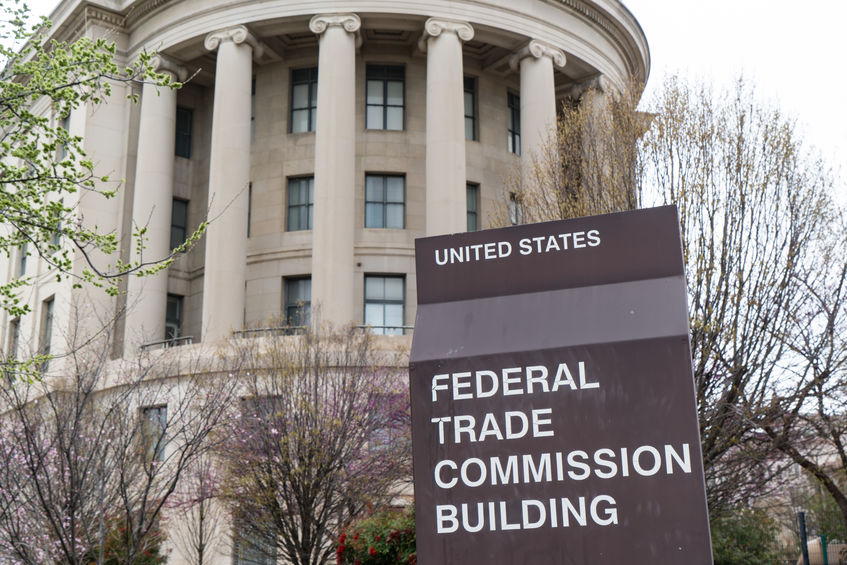
Following recent lawsuits filed by the FTC, Commissioner Rohit Chopra made the following statements earlier today in an announcement about merchant cash advances:
As the Commission proceeds into litigation in these matters and further studies this market, I hope that we will uncover additional information about business practices in this opaque industry. In particular, we should closely scrutinize the marketing claim that these payday-style products are “flexible,” with payments contingent on the credit card receivables of a small business. In reality, this structure may be a sham, since many of these products require fixed daily payments, and lenders can file “confessions of judgment” upon any slowdown in payments, with no notice or due process for borrowers.
This raises serious questions as to whether these “merchant cash advance” products are actually closed-end installment loans, subject to federal and state protections including anti-discrimination laws, such as the Equal Credit Opportunity Act, and usury caps. The stakes are high for millions of small businesses.
Michael Bloomberg Says Democrats Off Limits From Investigations
December 7, 2019 Suspect Bloomberg News might have a bias or an agenda? On Friday, Michael Bloomberg, whose company owns Bloomberg News, told CBS news that his reporters were restricted from investigating Democratic candidates while he runs for President.
“We just have to learn to live with some things. [The reporters] get a paycheck. But with your paycheck comes some restrictions and responsibilities.”
CNN reported that inside the company reporters are frustrated by how difficult this will make their jobs.
Bloomberg is an influential player in politics.
As previously reported by AltFinanceDaily last year, Bloomberg Senior Editor Robert Friedman thanked a state senator from New York on twitter for proposing legislation in response to a story he oversaw in 2018. When AltFinanceDaily pointed it out, Friedman quickly deleted the tweet. The democrat-led legislature then went on to pass a law that relied almost entirely on the Bloomberg news story. That law was the restriction of entering Confessions of Judgment in New York against out-of-state debtors.
The FTC Wants To Police Small Business Finance
October 22, 2019 On May 23, the Federal Trade Commission launched an investigation into unfair or deceptive practices in the small business financing industry, including by merchant cash advance providers.
The agency is looking into, among other things, whether both financial technology companies and merchant cash advance firms are making misrepresentations in their marketing and advertising to small businesses, whether they employ brokers and lead-generators who make false and misleading claims, and whether they engage in legal chicanery and misconduct in structuring contracts and debt-servicing.
Evan Zullow, senior attorney at the FTC’s consumer protection division, told AltFinanceDaily that the FTC is, moreover, investigating whether fintechs and MCAs employ “problematic,” “egregious” and “abusive” tactics in collecting debts. He cited such bullying actions as “making false threats of the consequences of not paying a debt,” as well as pressuring debtors with warnings that they could face jail time, that authorities would be notified of their “criminal” behavior, contacting third-parties like employers, colleagues, or family members, and even issuing physical threats.
“Broadly,” Zullow said in a telephone interview, “our work and authority reaches the full life cycle of the financing arrangement.” He added: “We’re looking closely at the conduct (of firms) in this industry and, if there’s unlawful conduct, we’ll take law enforcement action.”
Zullow declined to identify any targets of the FTC inquiry. “I can’t comment on nonpublic investigative work,” he said.
 The FTC investigation is one of several regulatory, legislative and law enforcement actions facing the merchant cash advance industry, which was triggered by a Bloomberg exposé last winter alleging sharp practices by some MCA firms.
The Bloomberg series told of high-cost financings, of MCA firms’ draining debtors’ bank accounts, and of controversial collections practices in which debtors signed contracts that included “confessions of judgment.”
The FTC long ago outlawed the use of COJs in consumer loan contracts and several states have banned their use in commercial transactions. In September, Governor Andrew Cuomo signed legislation prohibiting the use of COJs in New York State courts for out-of-state residents. And there is a bipartisan bill pending in the U.S. Senate authored by Florida Republican Marco Rubio and Ohio Democrat Sherrod Brown to outlaw COJs nationwide.
Mark Dabertin, a senior attorney at Pepper Hamilton, described the FTC’s investigation of small business financing as a “significant development.” But he also said that the agency’s “expansive reading of the FTC Act arguably presents the bigger news.” Writing in a legal memorandum to clients, Dabertin added: “It opens the door to introducing federal consumer protection laws into all manner of business-to-business conduct.”
FTC attorney Zullow told AltFinanceDaily, “We don’t think it’s new or that we’re in uncharted waters.”
The FTC inquiry into alternative small business financing is not the only investigation into the MCA industry. Citing unnamed sources, The Washington Post reported in June that the Manhattan district attorney is pursuing a criminal investigation of “a group of cash advance executives” and that the New York State attorney general’s office is conducting a separate civil probe.

The FTC’s investigation follows hard on the heels of a May 8 forum on small business financing. Labeled “Strictly Business,” the proceedings commenced with a brief address by FTC Commissioner Rohit Chopra, who paid homage to the vital role that small business plays in the U.S. economy. “Hard work and the creativity of entrepreneurs and new small businesses helped us grow,” he said.
But he expressed concern that entrepreneurship and small business formation in the U.S. was in decline. According to census data analyzed by the Kaufmann Foundation and the Brookings Institution, the commissioner noted, the number of new companies as a share of U.S. businesses has declined by 44 percent from 1978 to 2012.
“It’s getting harder and harder for entrepreneurs to launch new businesses,” Chopra declared. “Since the 1980s, new business formation began its long steady decline. A decade ago births of new firms started to be eclipsed by deaths of firms.”
Chopra singled out one-sided, unjust contracts as a particularly concerning phenomenon. “One of the most powerful weapons wielded by firms over new businesses is the take-it-or-leave-it contract,” he said, adding: “Contracts are ways that we put promises on paper. When it comes to commerce, arm’s length dealing codified through contracts is a prerequisite for prosperity. “But when a market structure requires small businesses to be dependent on a small set of dominant firms — or firms that don’t engage in scrupulous business practices — these incumbents can impose contract terms that cement dominance, extract rents, and make it harder for new businesses to emerge and thrive.”
As the panel discussions unfolded, representatives of the financial technology industry (Kabbage, Square Capital and the Electronic Transactions Association) as well as executives in the merchant cash advance industry (Kapitus, Everest Business Financing, and United Capital Source) sought to emphasize the beneficial role that alternative commercial financiers were playing in fostering the growth of small businesses by filling a void left by banks.
The fintechs went first. In general, they stressed the speed and convenience of their loans and lines of credit, and the pioneering innovations in technology that allowed them to do deeper dives into companies seeking credit, and to tailor their products to the borrower’s needs. Panelists cited the “SMART Box” devised by Kabbage and OnDeck as examples of transparency. (Accompanying those companies’ loan offers, the SMART Box is modeled on the uniform terms contained in credit card offerings, which are mandated by the Truth in Lending Act. TILA does not pertain to commercial debt transactions.)
 Sam Taussig, head of global policy at Kabbage, explained that his company typically provides loans to borrowers with five to seven employees — “truly Main Street American small businesses” — that are seeking out “project-based financing” or “working capital.”
“The average small business according to our research only has about 27 days of cash flow on hand,” Taussig told the fintech panel, FTC moderators and audience members. “So if you as a small business owner need to seize an opportunity to expand your revenue or (have) a one-off event — such as the freezer in your ice cream store breaks — it’s very difficult to access that capital quickly to get back to business or grow your business.”
Taussig contrasted the purpose of a commercial loan with consumer loans taken out to consolidate existing debt or purchase a consumer product that’s “a depreciating asset.” Fintechs, which typically supply lightning-quick loans to entrepreneurs to purchase equipment, meet payrolls, or build inventory, should be judged by a different standard.
A florist needs to purchase roses and carnations for Mother’s Day, an ice-cream store must replenish inventory over the summer, an Irish pub has to stock up on beer and add bartenders at St. Patrick’s Day.
The session was a snapshot of not just the fintech industry but of the state of small business. Lewis Goodwin, the head of banking services at Square Capital, noted that small businesses account for 48% of the U.S. workforce. Yet, he said, Square’s surveys show that 70% of them “are not able to get what they want” when they seek financing.
Square, he said, has made 700,000 loans for $4.5 billion in just the past few years, the platform’s average loan is between $6,000 and $7,000, and it never charges borrowers more than 15% of a business’s daily receipts. The No. 1 alternative for small businesses in need of capital is “friends and family,” Goodwin said, “and that’s a tough bank to go back to.”
 Panelist Gwendy Brown, vice-president of research and policy at the Opportunity Fund, a non-profit microfinance organization, provided the fintechs with their most rocky moment when she declared that small businesses turning up at her fund were typically paying an annual percentage rate of 94 percent for fintech loans. And while most small business owners were knowledgeable about their businesses — the florists “know flowers in and out,” for example — they are often bewildered by the “landscape” of financial product offerings.
“Sophistication as a business owner,” Brown said, “does not necessarily equate into sophistication in being able to assess finance options.”
Panelist Claire Kramer Mills, vice-president of the Federal Reserve Bank of New York, reported that the country’s banks have made a dramatic exit from small business lending over the past ten years. A graphic would show that bank loans of more than $1 million have risen dramatically over the past decade but, she said, “When you look at the small loans, they’ve remained relatively flat and are not back to pre-crisis levels.”
Mills also said that 50% of small businesses in the Federal Reserve’s surveys “tell us that they have a funding shortfall of some sort or another. It’s more stark when you look at women-owned business, black or African-American owned businesses, and Latino-owned businesses.”
On the merchant cash advance panel there was less opportunity to dazzle the regulators and audience members with accounts of state-of-the-art technology and the ability to aggregate mountains of data to make online loans in as few as seven minutes, as Kabbage’s Taussig noted the fintech is wont to do.
 Instead, industry panelists endeavored to explain to an audience — which included skeptical regulators, journalists, lawyers and critics — the precarious, high-risk nature of an MCA or factoring product, how it differs from a loan, and the upside to a merchant opting for a cash advance. (To their credit, one attendee told AltFinanceDaily, the audience also included members of the MCA industry interested in compliance with federal law.)
A merchant cash advance is “a purchase of future receipts,” Kate Fisher, an attorney at Hudson Cook in Baltimore, explained. “The business promises to deliver a percentage of its revenue only to the extent as that revenue is created. If sales go down,” she explained, “then the business has a contractual right to pay less. If sales go up, the business may have to pay more.”
As for the major difference between a loan and a merchant cash advance: the borrower promises to repay the lender for the loan, Fisher noted, but for a cash advance “there’s no absolute obligation to repay.”
Scott Crockett, chief executive at Everest Business Funding, related two anecdotes, both involving cash advances to seasonal businesses. In the first instance, a summer resort in Georgia relied on Everest’s cash advances to tide it over during the off-season.
When the resort owner didn’t call back after two seasonal advances, Crockett said, Everest wanted to know the reason. The answer? The resort had been sold to Marriott Corporation. Thanking Everest, Crockett said, the former resort-owners reported that without the MCA, he would likely have sold off a share of his business to a private equity fund or an investor.
By providing a cash advance Everest acted “more like a temporary equity partner,” Crockett remarked.
In the second instance, a restaurant in the Florida Keys that relied on a cash advance from Everest to get through the slow summer season was destroyed by Hurricane Irma. “Thank God no one was hurt,” Crockett said, “but the business owner didn’t owe us anything. We had purchased future revenues that never materialized.”
The outsized risk borne by the MCA industry is not confined entirely to the firm making the advance, asserted Jared Weitz, chief executive at United Capital Service, a consultancy and broker based in Great Neck, N.Y. It also extends to the broker. Weitz reported that a big difference between the MCA industry and other funding sources, such as a bank loan backed by the Small Business Administration, is that ”you are responsible to give that commission back if that merchant does not perform or goes into an actual default up to 90 days in.
“I think that’s important,” Weitz added, “because on (both) the broker side and on the funding side, we really are taking a ride with the merchant to make sure that the business succeeds.”
 FTC’s panel moderators prodded the MCA firms to describe a typical factor rate. Jesse Carlson, senior vice-president and general counsel at Kapitus, asserted that the factor rate can vary, but did not provide a rate.
“Our average financing is approximately $50,000, it’s approximately 11-12 months,” he said. “On a $50,000 funding we would be purchasing $65,000 of future revenue of that business.”
The FTC moderator asked how that financing arrangement compared with a “typical” annual percentage rate for a small business financing loan and whether businesses “understand the difference.”
Carlson replied: “There is no interest rate and there is no APR. There is no set repayment period, so there is no term.” He added: “We provide (the) total cost in a very clear disclosure on the first page of all of our contracts.”
Ami Kassar, founder and chief executive of Multifunding, a loan broker that does 70% of its work with the Small Business Administration, emerged as the panelist most critical of the MCA industry. If a small business owner takes an advance of $50,000, Kassar said, the advance is “often quoted as a factor rate of 20%. The merchant thinks about that as a 20% rate. But on a six-month payback, it’s closer to 60-65%.”
He asserted that small businesses would do better to borrow the same amount of money using an SBA loan, pay 8 1/4 percent and take 10 years to pay back. It would take more effort and the wait might be longer, but “the impact on their cash flow is dramatic” — $600 per month versus $600 a day, he said — “compared to some of these other solutions.”
Kassar warned about “enticing” offers from MCA firms on the Internet, particularly for a business owner in a bind. “If you jump on that train and take a short-term amortization, oftentimes the cash flow pressure that creates forces you into a cycle of short-term renewals. As your situation gets tougher and tougher, you get into situations of stacking and stacking.”
On a final panel on, among other matters, whether there is uniformity in the commercial funding business, panelists described a massive muddle of financial products.
Barbara Lipman: project manager in the division of community affairs with the Federal Reserve Board of Governors, said that the central bank rounded up small businesses to do some mystery shopping. The cohort — small businesses that employ fewer than 20 employees and had less than $2 million in revenues — pretended to shop for credit online.
As they sought out information about costs and terms and what the application process was like, she said, “They’re telling us that it’s very difficult to find even some basic information. Some of the lenders are very explicit about costs and fees. Others however require a visitor to go to the website to enter business and personal information before finding even the basics about the products.” That experience, Lipman said, was “problematic.”
She also said that, once they were identified as prospective borrowers on the Internet, the Fed’s shoppers were barraged with a ceaseless spate of online credit offers.
John Arensmeyer, chief executive at Small Business Majority, an advocacy organization, called for greater consistency and transparency in the marketplace. “We hear all the time, ‘Gee, why do we need to worry about this? These are business people,’” he said. “The reality is that unless a business is large enough to have a controller or head of accounting, they are no more sophisticated than the average consumer.
“Even about the question of whether a merchant cash advance is a loan or not,” Arensmeyer added. “To the average small business owner everything is a loan. These legal distinctions are meaningless. It’s pretty much the Wild West.”
 In the aftermath of the forum, the question now is: What is the FTC likely to do?
Zullow, the FTC attorney, referred AltFinanceDaily to several recent cases — including actions against Avant and SoFi — in which the agency sanctioned online lenders that engaged in unfair or deceptive practices, or misrepresented their products to consumers.
These included a $3.85 million settlement in April, 2019, with Avant, an online lending company. The FTC had charged that the fintech had made “unauthorized charges on consumers’ accounts” and “unlawfully required consumers to consent to automatic payments from their bank accounts,” the agency said in a statement.
In the settlement with SoFi, the FTC alleged that the online lender, “made prominent false statements about loan refinancing savings in television, print, and internet advertisements.” Under the final order, “SoFi is prohibited from misrepresenting to consumers how much money consumers will save,” according to an FTC press release.
But these are traditional actions against consumer lenders. A more relevant FTC action, says Pepper Hamilton attorney Dabertin, was the FTC’s “Operation Main Street,” a major enforcement action taken in July, 2018 when the agency joined forces with a dozen law enforcement partners to bring civil and criminal charges against 24 alleged scam artists charged with bilking U.S. small businesses for more than $290 million.
In the multi-pronged campaign, which Zullow also cited, the FTC collaborated with two U.S. attorneys’ offices, the attorneys general of eight states, the U.S. Postal Inspection Service, and the Better Business Bureau. According to the FTC, the strike force took action against six types of fraudulent schemes, including:
- Unordered merchandise scams in which the defendants charged consumers for toner, light bulbs, cleaner and other office supplies that they never ordered;
- Imposter scams in which the defendants use deceptive tactics, such as claiming an affiliation with a government or private entity, to trick consumers into paying for corporate materials, filings, registrations, or fees;
- Scams involving unsolicited faxes or robocalls offering business loans and vacation packages.
If there remains any question about whether the FTC believes itself constrained from acting on behalf of small businesses as well as consumers, consider the closing remarks at the May forum made by Andrew Smith, director of the agency’s bureau of consumer protection.
“(O)ur organic statute, the FTC Act, allows us to address unfair and deceptive practices even with respect to businesses,” Smith declared, “And I want to make clear that we believe strongly in the importance of small businesses to the economy, the importance of loans and financing to the economy.
Smith asserted that the agency could be casting a wide net. “The FTC Act gives us broad authority to stop deceptive and unfair practices by nonbank lenders, marketers, brokers, ISOs, servicers, lead generators and collectors.”
As fintechs and MCAs, in particular, await forthcoming actions by the commission, their membership should take pains to comport themselves ethically and responsibly, counsels Hudson Cook attorney Fisher. “I don’t think businesses should be nervous,” she says, “but they should be motivated to improve compliance with the law.”
She recommends that companies make certain that they have a robust vendor-management policy in place, and that they review contracts with ISOs. Companies should also ensure that they have the ability to audit ISOs and monitor any complaints. “Take them seriously and respond,” Fisher says.
Companies would also do well to review advertising on their websites to ascertain that claims are not deceptive, and see to it that customer service and collections are “done in a way that is fair and not deceptive,” she says, adding of the FTC investigation: “This is a wake-up call.”
New York’s COJ Restrictions Have Been Signed Into Law
August 30, 2019 Governor Cuomo has signed S6395, the law that outlaws entering a Confession of Judgment in New York against a non-New York debtor.
Rich Azzopardi, a senior advisor to the governor, said on social media that the law has “closed a loophole that allowed unscrupulous creditors to use NY courts to penalize out-of-state consumers with no ties to the state.” He congratulated Senators Brad Hoylman and Assembly Member Jeffrey Dinowitz for their work on the bill.
Senator Hoylman tweeted in response that “the entire business model of lenders who exploited New York’s court system and laws to prey on out-of-state small businesses through confessions of judgment was immoral.”
The Confession of Judgment ban is very specific, it prohibits the entering of a COJ in New York against a non-New York party. It does not prevent parties from filing lawsuits in New York. It does not prohibit COJs from being filed in other states. This law is significant because approximately 99% of COJs being utilized in the small business finance industry were being filed in New York regardless of where the debtor resided. That is because the New York Court system is the fastest and most efficient when it comes to entering COJs and securing a judgment.
The bill was drafted in response to a controversial story series published by Bloomberg reporters Zeke Faux and Zachary Mider that alleged abuses were taking place in the New York courts via COJs.
Are The Bankers Taking Over Fintech?
June 27, 2019
For Rochelle Gorey, the chief executive and co-founder of SpringFour, a “social impact” fintech company, mingling with industry movers and shakers at this year’s LendIt Fintech Conference was just what the doctor ordered. “I went mainly for the networking opportunities,” Gorey told AltFinanceDaily.
SpringFour, which is headquartered in Chicago, works with banks and financial institutions in the 50 states to get distressed borrowers back on track with their debt payments. It does this by digitally linking debtors with governmental and nonprofit agencies that promote “financial wellness.
The indebted parties—more than a million of whom had referrals that were arranged by Gorey’s tech-savvy company last year—constitute not only household consumers but also commercial borrowers. “Small businesses face the same issues of cash flow as consumers, and their business and personal income are often combined,” she says. “If their financial situation is precarious, it’s super-hard to get credit, a line of credit, or a business loan.”
 Although Gorey felt “overwhelmed” at first by the throng of 4,000 conference-goers at Moscone Center West in San Francisco—roughly the same number as attended last year, conference organizers assert— her trepidation was short-lived. It wasn’t too long before she was in circulation and having chance encounters and serendipitous interactions, she says, with “all the right people at the workshops and at the tables in the Expo Hall.”
Armed, moreover, with a “networking app” on her mobile phone, Gorey was able to arrange targeted meetings, scoring roughly a dozen, 15-minute tete-a-tetes during the two-day breakout sessions. These included audiences with community bankers, financial technology companies, and “small-dollar” lenders. “And it went both ways,” she says. “I had people reaching out to me”—just about everyone, it seemed, appeared receptive to “finding ways to boost their customers’ financial health.”
Gorey’s success at networking was precisely the experience that the event’s planners had envisioned, says Peter Renton, chairman and co-founder of the LendIt Fintech Conference. Organizers took pains to make schmoozing one of the key features of this year’s gathering. Not only did LendIt provide attendees with a bespoke networking app, but planners scheduled extra time for meet-ups. “We had around 10,000 meetings set up by the app,” Renton says, “about double the number of last year.”
AltFinanceDaily did not attend the LendIt USA conference on the West Coast this year. But the publication sought out more than a half-dozen attendees—including several financial technology executives, a leading venture capitalist, a regulatory law expert, and the conference’s top administrators—to gather their impressions. While informal and manifestly unscientific, their responses nonetheless yielded up several salient themes.
The popularity—and effectiveness—of networking was a key takeaway. Most seized the opportunity to rub elbows with influential industry players, learn about the hottest startups, compare notes, and catch up on the state of the industry. Most importantly, the event presented a golden opportunity to make the introductions and connections that could generate dealmaking.
“My goal this year was to strike more partnerships with lenders and fintech companies,” says Levi King, chief executive and co-founder at Utah-based Nav, an online, credit-data aggregator and financial matchmaker for small businesses. “We had great meetings with Fiserv, Amazon, Clover Network (a division of First Data), and MasterCard,” he reports, rattling off the names of prominent financial services companies and fintech platforms.
James Garvey, co-founder and chief executive at Self Lender, an Austin-based fintech that builds creditworthiness for “thin file” consumers who have little or no credit history, said his goal at the conference was both to serve on a panel and “meet as many people as I could.”
Self Lender is in its growth stage following a $10 million, series B round of financing in late 2018 from Altos Ventures and Silverton Partners. Garvey reports having meetings with Bank of America and venture capitalist FTV Capital “over coffee” as well as F-Prime Capital, another venture capitalist. “It’s just about building a relationship,” he said of making connections, “so that at some point, if I’m raising money or want to partner, I can make a deal.”
There was a concerted effort to recognize women, as evidenced by a packed “Women in Fintech” (WIF) luncheon that drew roughly 250 persons, 95% of whom were women. (“Many men are big supporters of women in fintech and we didn’t want to exclude them,” Renton says). The luncheon was preceded by a novel event—a 30-minute, ladies-only “speed-networking” session—which attracted 160 participants, reports Joy Schwartz, president of LendIt Fintech and manager of the women’s programs.
At the luncheon, SpringFour’s Gorey says, “it was empowering just to see lot of women who are senior leaders working in financial services, banks and fintechs.” The keynote speech by Valerie Kay, chief capital officer at Lending Club, was another highlight. “She (Kay) talked about taking risks and going to a fintech startup after 23 years at Morgan Stanley,” Gorey reports, adding: “It was inspiring.”
The women’s luncheon also marked the launch of LendIt’s Women In Fintech mentor program, and presentation of a “Fintech Woman of the Year” award. The recipient was Luvleen Sidhu, president, co-founder and chief strategy officer at BankMobile, a digital division of Customers Bank, based near Philadelphia, which employs 250 persons and boasts two million checking account customers.
I am honored to be the 2019 Fintech Women of the Year and thrilled that @BankMobile won Most Innovative Bank. It’s very exciting to be recognized by @LendIt Fintech with this prestigious award and I congratulate the finalists in all the categories. https://t.co/qjADuKEMrB pic.twitter.com/hFJVFw1fLS
— Luvleen Sidhu (@LuvleenSidhu) April 11, 2019
BankMobile, which also won LendIt’s “Most Innovative Bank” award, has an alliance with Upstart to do consumer lending and a partnership with telecommunications company T-Mobile. Known as T-Mobile Money, the latter service provides T-Mobile customers with access to checking accounts with no minimum balance, no monthly or overdraft fees, and access to 55,000 automated teller machines, also with no fees. (At its website, T-Mobile Money describes itself as a bank and uses the slogan: “Not another bank, a better one.”)
The impressive salute to women notwithstanding, their ranks remained fairly thin: just 733 attendees identified themselves as “female” on their registration forms, LendIt’s Schwartz says, a little more than 18% of total participants. Seventy-five of the 350 total speakers and panelists—or 21%—were female. (Schwartz also reports that another 157 registrants selected “prefer not to say” as their sexual orientation, while 22 checked the box describing themselves as “non-conforming.”)
In LendIt’s defense, AltFinanceDaily, who caters to a similar audience, regularly reviews its readership demographics using several tools. They have consistently indicated that women make up 18% – 23% of the total, in line with what LendIt experienced at its most recent event.
By all accounts, many panels were informative, jampacked and attendees were engaged. King, who moderated a panel on regulatory changes in small business lending, which dealt with such topics as California’s commercial “truth-in-lending” law and controversial “confessions of judgment” laws, says: “They didn’t have to lock the door but the room was pretty full and people seemed to be paying attention. I didn’t see people studying their cellphones.”
The Expo Hall was teeming with budding fintech entrepreneurs, financial services companies and multiple vendors hawking their wares. But as numerous fintechs were angling to forge lucrative symbiotic relationships with banks, some participants—even those who were hailing the conference for its networking and deal-making opportunities—lamented the heavy presence of the establishment.
The banks’ ubiquitousness especially vexed Matthew Burton, a partner at QED Investors, an Arlington, (Va.)-based, venture capital firm and a veteran fintech entrepreneur. Before signing on with QED last year, Burton had been the co-founder of Orchard Platform, an online technology and analytics vendor for fintech and financial services companies which was purchased by fintech lender Kabbage.
Not only did bankers seem to playing a more prominent role at the LendIt conference, Burton notes, but “big four” accounting firm Deloitte had signed on as a major sponsor. “The energy level seemed a bit lower than in past years,” Burton told AltFinanceDaily. “It’s not like people were depressed but it wasn’t bubbling with excitement. A couple of years ago we thought all these new fintechs would replace the banks,” he explains. “Now the discussion is over how to partner and collaborate with banks. It’s not as exciting as when everyone thought banks were dinosaurs.
“I couldn’t really tell if there were more bankers attending this year,” Burton adds, “but it sure felt like it.”
King, the Nav executive, told AltFinanceDaily: “It was a little bit subdued. I don’t know if it was nervousness about the economy or politics, but the subject of risk came up more often in side conversations with venture-backed businesses and banks and alternative fintech lenders. One large bank we deal with,” he adds, “told me it’s spending most of its time working on risk.”
Cornelius Hurley, a Boston University law professor and executive director of the Online Lending Policy Institute who participated in a standing-room-only session on state and federal fintech regulation, declares: “I’ve been to three of their conferences, including one in New York, and I would say that this one did not have as much pizzazz. It may be that the industry is maturing.”
For his part—when asked whether there was a palpable absence of passion this year—LendIt’s Renton told AltFinanceDaily: “I would say that it felt more businesslike. Fintech has had a lot of hype and we have had conferences that were ridiculously over-hyped in 2015 and 2016. And in 2017 (the mood) was much more somber. This one felt optimistic and businesslike.”
There were 750 bankers in attendance, almost one in five participants. “The number of bankers was not up significantly” over last year, Renton says, “but the seniority of the bankers was higher. We worked very hard to get senior bankers to attend this year.”
Renton was bullish on the closer ties developing between nonbank online lenders and banks. That was reflected as well in the several panels exploring ways to develop partnerships between the two sides. He noted that a session called “How Banks are Matching Fintechs on Speed of Funding and User Experience” drew a heavy crowd. “It brought more bankers than we’ve ever had before,” Renton says.
Moderated by Brock Blake, founder and chief executive at the fintech Lendio, the panel was composed of three bankers: Ben Oltman, the Philadelphia-area head of digital lending and partnerships at Citizens Bank; Gina Taylor Cotter, a senior vice-president at American Express (the highest-ranking woman at the company); and Thomas Ferro, a senior marketing manager at Bank of America. “The banks came to LendIt not just to learn but to decide whom they’re going to partner with,” Renton says. “Fintechs need banks and banks need fintechs. That is the narrative you hear on both sides.”
(Asked whether any banks sponsored this year’s conference, Renton replied: “They are not sponsoring yet in any number but we are working on that.”)
OnDeck, a top-tier fintech lender to small-businesses in the U.S., which has been making forays abroad to Australian and Canadian markets, is an enthusiastic champion of the fintech-bank union. So much so that it claimed LendIt’s “Most Promising Partnership” award for the cooperative relationship it struck with Pittsburgh-based PNC Bank, which uses OnDeck’s platform to make small business loans. (Among the partnerships that OnDeck-PNC beat out: Gorey’s SpringFour, which was named a finalist in the competition for its association with BMO Harris Bank.)
“We were the first fintech lender to strike a true platform relationship with a bank,” Jim Larkin, head of corporate communications at OnDeck says, noting that the PNC deal follows on the New York-based fintech’s similar, innovative arrangement with J.P. Morgan Chase. “Others may do referrals,” he explains. “What we do is actually provide the underlying platform to accelerate a bank’s online lending capabilities. We deliver the software and expertise to construct the right type of online lending engine.”
Meanwhile, there was avid interest about the stock performance of publicly traded fintechs—for example, Square and GreenSky—both of which had seen their share prices tumble and then recover.
Burton noted that, among venture-backed firms, the most excitement seemed to be coming from Latin America. “Everyone was very bullish on a Mexican company, Credijusto, an alternative small business lender that was written up the in the Wall Street Journal,” he says. “It’s not going public yet but it had a large debt-and-equity raise of $100 million from Goldman Sachs. And SoftBank Group announced a $5 billion Latin American tech fund.
“There was a lot of talk,” he adds, “about how money was flowing into Mexico and Brazil.”
One New York COJ Bill Moves Forward
June 5, 2019A bill that would prevent companies from using Confessions of Judgment against out-of-state debtors is progressing through the New York Assembly. A07500 cleared the judiciary committee on Tuesday despite some Republican opposition. The milestone comes as no surprise as the judiciary committee chair, Assemblymember Jeffrey Dinowitz, is also the bill’s sponsor.
Assemblymembers Niou, DenDekker, Wright, Wallace, and Schimminger are bill co-sponsors.
A07500 now heads to the Codes committee.