
AltFinanceDaily’s Top Five Stories of 2021
December 20, 2021 deBanked’s most read stories of 2021 were similar but different to those read in 2020. We broke them down into categories by popularity.
1. Scandal
A South Florida business apparently masquerading as a small business finance company, was by far and away the most read story of 2021. Authorities now believe that it was a $200M+ ponzi scheme with more than 5,500 investors. Unlike other alleged schemes that have rocked the finance world, thousands of people believe the allegations are not true and have rallied around the CEO.
2. Domain Life after Death
The Death of a Thousand Financial Companies, the leading story of AltFinanceDaily’s March/April 2021 magazine issue, was the 2nd most popular across 2021. In it, AltFinanceDaily went undercover to find out what happened to the domain names of financial companies that went out of business. The findings were terrifying. (See: Video discussion about the story)
3. Real Estate Investing
Think what you want about crypto as the future because when it came down to it, AltFinanceDaily readers were vastly more interested in real estate investing. Why Funders Are Investing in Real Estate As Their Side Hustle of Choice was the 3rd most read story of 2021. “[Real estate is] just a way that people who have been successful and spin off a lot of cash for their businesses see as a safe way to diversify their income,” said a lawyer that was interviewed for the story.
4. Regulation
It was a close call between several stories pertaining to regulation. While interest in CFPB-related activity ranked high, so too did a court decision in Florida that ruled on the legality of merchant cash advances. The New York commercial financing disclosure law was also top of mind for many readers as was interest in proposed legislation in Maryland.
5. An Exit
The fall of LendUp, an online consumer lending company, was apparently of great interest in 2021. After some difficult encounters with regulators, the company ceased lending operations. “Although we are no longer lending, we also offer a series of free online education courses designed to boost your financial savvy fast,” the company’s website now says.
When The Music Stopped: How The Pandemic Threatened the History and Culture of Austin, Texas
November 15, 2020
In April of this year, Threadgill’s – a legendary Austin music venue and beer joint that, in the 1960s, famously launched the career of blues singer Janis Joplin — turned off the lights and pulled the plug on its sound stage.
A converted gasoline station, Threadgill’s had been a rollicking music scene since 1933 when musician and bootlegger Kenneth Threadgill secured the first liquor license in Texas after Prohibition. His juke box was crammed with Jimmie Rodgers songs and Threadgill himself famously sang and yodeled Rodgers’ tunes.
 For generations of students at the University of Texas, Threadgill’s was a rite of passage.
“The first time I went to Threadgill’s was in the fall of 1968, when I was a freshman at UT,” recalls Perry Raybuck, a songwriter-folksinger and retired government worker who, as a member of the Southwest Regional Folk Alliance, played the stage in 2018. “It was the beginning of an education for me,” he adds. “I had been a Beatles and rock n’ roll kid and it opened me up to different music styles. I became a convert.”
In 1981, Threadgill’s was taken over by another acclaimed club owner, Eddie Wilson, who previously had been the proprietor of the Armadillo, a fabled music venue. Wilson began to actually pay musicians – Threadgill had compensated them mainly with free cold beer – and installed a circular stage.
 It was Threadgill’s and an assortment of funky clubs and stages with names like the Soap Creek Saloon and Liberty Lunch helped put Austin on the map as “The Live Music Capital of the World.” The city remains home to the widely acclaimed television program “Austin City Limits” on PBS and the internationally renowned South by Southwest festival, which was canceled this year amid fears of a “superspread” of the coronavirus.
“Live music,” says Laura Huffman, chief executive at the Austin Chamber of Commerce, “is why people come here. It is a central component of Austin’s cultural and economic life.”
Omar Lozano, director of music marketing for Visit Austin, the city’s main tourism organization, says: “We have close to 250 places in the greater Austin region where you can hear live-music, although it’s closer to 50-70 on any given night. During South by Southwest, no stone is left unturned — everything becomes a stage: parking garages, grocery stores, housing co-ops. There are also four or five stages at the Airport, which helps liven up the mood.”
But that identity is being put to the test. So far this year, Austin has lost a raft of live music venues. Among those joining Threadgill’s in honky-tonk heaven since the pandemic struck are Barracuda, Plush, Scratchhouse, Shady Grove, and Botticelli, all of which provided niche audiences to both established musicians and up-and-coming acts.
The roller-coaster ride of government mandated shutdowns followed by a limited re-opening in the spring and another shutdown since July fourth is making life miserable and untenable for both club owners and already hardpressed musicians and artists, says Marcia Ball, a piano player and blues singer.
Ball, who was named by the Texas Legislature as “2018 Texas State Musician” and whose musical style was once described by the Boston Globe as “mixing Louisiana swamp rock and smoldering Texas blues,” told AltFinanceDaily: “There was already a limited amount of opportunity for musicians to perform and monetize their work in Austin, so it has always been necessary to travel to make a living. But we still depend on a thriving local scene, and we’re losing that when key venues like Threadgill’s disappear.”
Adds Graham Williams, a prominent Texas promoter of touring bands: “These venues and bars are vital to the music ecosystem. Local bands and cover bands need hangouts, even if people are not buying tickets. They’re places to play every night of week.”
While unheralded outside the Austin scene, the local music joints were often a port-of-call for out-of-town promoters and nightclub owners checking out Austin talent – “most notably Barracuda (which) had super-popular acts and was like a hipster garage venue,” says promoter Williams. “A lot of touring bands played there on their way up.”
A July study by the Hobby School of Public Affairs at the University of Houston found that the city’s live music industry is in desperate straits. Sixty-two percent of live music spots and 55% of the bar-and-restaurant businesses reported to researchers that that they can endure for no more than four months, making them the most vulnerable of 16 industries surveyed.
And the situation has become “even more ominous” since the report was published, explains Mark P. Jones, a political scientist at Rice University in Houston and a lead researcher on the Hobby study. “That survey finished polling two hours before all bars and restaurants closed back down,” he says. “Everything people were saying was when bars were at 50% capacity. That’s a best-case scenario.”
 Austin’s experience amid the Covid-19 pandemic mirrors what is occurring nationwide as bars, nightclubs and music halls in myriad cities and towns experience similar trauma. In Seattle, Steven Severin is co-owner of three nightclubs – Neumos, Barboza and recently opened Life on Mars – all in trendy Capitol Hill, the hub of the city’s club and live-music scene. He reports that he is barely holding on thanks to some help from the city and a sympathetic landlord who is “a big music advocate.”
“He knocked down the rent a little bit,” Severin says of his landlord, but the situation is dire. “We just had a fifth venue, Re bar, close at the end of August,” he says. “It was a punch in the gut. This could be me.”
The Bitter End in Greenwich Village is also keeping its head above water despite not opening its doors since March. The nightclub has a storied past: owner Paul Rizzo recounts that it is where pop singer Neil Diamond got his start and where “everyone from Curtis Mayfield to Randy Newman” has performed since its opening in 1961. But the club is silent now since the pandemic overwhelmed the city’s hospitals and made New York the epicenter of sickness and suffering during the spring. So far the club is getting help from a landlord’s forbearance and loyal musicians.
Peter Yarrow (the “Peter” in the bygone trio Peter, Paul and Mary), donated a streamed concert to patrons who contributed to a fundraiser that raised more than $50,000. And grateful local musicians also put on a benefit directing people to a Go Fund Me page on the Internet that raised another $16,000. “We’re a major venue for local musicians,” Rizzo says. “We should pull through.”
It’s in their self-interest for artists to do whatever they can to keep the doors open at a club like The Bitter End. “These days because of the last two decades of declining record sales — live music is the bread and butter of a musician’s income,” says journalist Edna Gundersen, a recently retired, 28-year-veteran of USA Today. “That’s true whether it’s a local entertainer or an international superstar.” (Gundersen earned the reputation as Bob Dylan’s favorite journalist; it was she who scored his only interview after he won the Nobel Prize for literature in 2018, publishing his eccentric musings in the The Telegraph of London and breaking the news that he would indeed accept the prize.)
“Touring has been crushed,” Gundersen adds, “and festivals have been canceled. So people doing the circuit and clubs are gone for all intents and purposes. Streaming — while initially up — is down because people aren’t listening to music in the gym or in their cars. Physical record sales are also down because people aren’t going to stores. All of this is just killing musicians.”
 The Paycheck Protection Program, the multi-billion, multi-tranche aid package for small business which Congress authorized as part of the CARES Act in March, has provided some funding for the live-music and entertainment industry. But because of the PPP’s requirements that only 40% of the funds can be spent on rent, mortgage and utilities, which are major expenses for nightclubs and music venues, the program has largely been a disappointment.
Hoping to win attention and assistance for their plight from the federal government — “We’re the first to close and the last to reopen,” Severin says — live-music entrepreneurs like himself and Rizzo and more than 2,800 club-owners and promoters across the country have banded together to form the National Independent Venue Association.
Their membership includes independent proprietors (no corporate members allowed) of saloons, cabarets and concert halls as well as theaters, opera houses and auditoriums from every state plus the District of Columbia. To help plead their case with Congress, the organization hired powerhouse law firm Akin Gump Strauss Hauer & Feld, the largest Washington, D.C. lobbying firm by revenue.
NIVA also blanketed Congressional offices with two million letters, e mails and correspondence generated from hordes of fans and performers. Among the many scriveners are a slew of boldface names: Mavis Staples, Lady Gaga, Willie Nelson, Billy Joel, Earth Wind & Fire, and Leon Bridges. Comedians Jerry Seinfeld, Jay Leno and Jeff Foxworthy have also penned notes to lawmakers championing NIVA’s cause.
Their message: without federal funding, 90% of independent stages will go under over the next few months. “The heartbreak of watching venues close is that once a building is boarded up, it’s not going to be a music venue any more,” warns Audrey Fix Schaefer, communications director at NIVA. “They operate on thin business margins to begin with and they’re too hard to develop.” For touring acts, each city stage is “an integral part of the music ecosystem,” Schaefer explains. “When artists finally do get back on the tour bus, they might have to skip the next five cities and go on to the sixth.”
 Thanks to the bi-partisan efforts of Senator Amy Klobuchar (D-Minn.) and Senator John Cornyn (R-Texas), NIVA’s campaign has gotten traction. The unlikely couple have teamed up to author a rescue bill, known as the Save Our Stages Act. If enacted, it would establish a $10 billion grant program for live venue operators, promoters, producers, and talent representatives.
The legislation would provide grants up to $12 million for live entertainment venues to defray most business expenses incurred since March, including payroll and employees’ health insurance, rent, utilities, mortgage, personal protection equipment, and payments to independent contractors.
NIVA’s chief argument for the legislation is coldly economic rather than sentimentally cultural. The organization cites a 2008 study by the University of Chicago that spending by music patrons produces a “multiplier effect” for the broader economy. For every dollar spent by a concert-goer at a live performance, the Chicago study determined, $12 in downstream economic activity occurs.
Explains Scott Plusquellec, nightlife business advocate for the City of Seattle: “You buy a ticket to a show and the direct economic impact of that purchase is that it pays the artist, bartender and the club itself as well as the band, advertisers, and promoters. The indirect economic impact,” he adds, “is that after you bought the ticket, you went to a barber shop or a hair salon to look good that night. You might also have dinner, go to a bar for a drink and tip the bartender. That’s the whole the idea of a ‘multiplier.’”
In Austin, that economic logic is an article of faith with city burghers, asserts Lozano of Visit Austin, who reports that live music in the capital city is roughly a $2 billion industry. To promote live music, the tourism bureau sponsors such endeavors as “Hire an Austin Musician.” That program, Lozano says, “sends musicians around the U.S. to represent us during marketing season.” In another promotional campaign, Visit Austin arranged for singer-songwriter Julian Acosta to play a gig at travel agents’ offices in London when Norwegian Air inaugurated direct flights between London and Austin in 2018. “The U.K. is one of our best markets,” he reports.
Even so, efforts by the business community and the City of Austin have failed to stanch much of the industry’s bleeding. According to its website, the city has disbursed $23.7 million in loans and grants to small businesses and individuals, but slightly less than $1 million of that has gone to live-music and performance venues, entertainment and nightlife, and live-music production and studios.
 In late September, The city of Austin’s Economic Development Department released a slide show breaking down how the $981,842 in industry grants and loans – of which $484,776 was provided by the federal government under the CARES Act – were awarded. Most top recipients appeared to be well known nightclubs and entertainment venues downtown or close to the city’s inner core.
The Continental Club on South Congress – a key fixture in the hip “SoCo” strip just over the Colorado River from downtown – appeared to do best. It picked up $79,919 from two programs: $40,000 in the CARES-backed small business grants program, and $34,919 from the city’s Creative Space Disaster Relief Program. Other clubs receiving $40,000 in the small business grants program included Stubbs, The Belmont, Cheer Up Charlies and the White Horse. (For a full list go to: http://www.austintexas.gov/edims/document.cfm?id=347299)
Joe Ables, owner of the Saxon Pub, a major Austin venue for jazz – blues singer Ball hailed it as one of several important Austin clubs “that sustains creative endeavor, especially for songwriters” – was vexed that his grant application was denied by the city “with no explanation.” Ables also voiced dissatisfaction that the city paid the Better Business Bureau a 5% administration fee to handle $1.14 million in relief funds, including determining which applicants were approved. “What would they know about live music,” he says.
Even for clubs that received city largesse, it hasn’t been nearly enough to sustain them. The North Door, which got $15,240, closed for good on September 11 (an ominous day — the anniversary of the attacks on the World Trade Center and the Pentagon.)
Meanwhile, enough clubs and venues were left out in the cold that club owner Stephen Sternschein could tell AltFinanceDaily just before the slide show was released: “I’ve heard talk of a $21 million grant program but most people I know haven’t seen a dollar of that.”
Sternschein is managing partner of Heard Presents, an independent promoter and operator of a triad of downtown clubs that includes the spacious Empire Garage, which features hip hop and urban jazz, and has space for 1000 music-goers. A member of NIVA, Sternschein describes efforts by both the state and local governments as “woefully inadequate.” Says he: “People are looking to the federal government for answers.”
 The diminution of places for musicians to ply their trade is a double edged sword. If Austin loses its luster as a hot music town, it puts the city’s overall economy in jeopardy. Explains Jones, the Rice political scientist: “The difficulty for Austin is that it could lose its comparative advantage. Unlike restaurants, movie theaters or sports events, which people can find just as easily in other cities, the Austin music scene draws capital and revenue from across the country.
“You can go out to dinner in Waco,” he observes, referring to the mid sized Texas city between Austin and Dallas best known as home to Baylor University and its “Bears” football team, fervent Baptist religiosity, and unremarkable night life. “Music brings in revenue to Austin and to Texas that wouldn’t otherwise come here.”
In addition, Jones says, the large presence of “artists, creative types, and freelancers” helps make Austin a strong selling point for “brain industries” to attract talent from the East and West Coasts. “It supports the technology industry by making it easier to recruit employees to live there,” he says. “Austin is an alternative to Silicon Valley. People who are progressive might be hesitant to come to conservative, red-state Texas from California but they’ll come to Austin because it’s culturally cool.”
Austin, which embraces the slogan “Keep Austin Weird,” is on the verge of becoming just like every place else in Texas. Should it relinquish its flavor and charm, it could discourage many of the assorted business groups and professionals from keeping Austin on their dance card as a popular destination for meetings, conferences and get-away trips.
Howard Freidman, managing director at Bluechip Jets, a broker of private luxury aircraft, had an earlier career as a technology industry executive. Partly drawn by his previous experiences with the city, Freidman moved to Austin earlier this year. “It had the same coolness and weirdness of New Orleans — but also with the professionalism of a tech city,” he says.
 “Whenever we’d come here,” Freidman adds, “the music was always integral to the Austin scene. Even when you’d go to private parties you’d end up downtown at the club scene on Sixth Street. Austin was always a place everybody liked going to.”But as Austin has steadily been morphing into more of a high-technology center than a live-music town, it’s experiencing a silent exodus of musicians and artists who are being gentrified out of their apartments and Craftsman duplexes. Displacing them are software engineers, website designers and the like, their sleek BMWs and black, tinted-glass SUVs glistening in the parking lots of steel-and-glass corporate centers.
Many of the technology firms – including such needy companies as Samsung, Intel, Rackspace, Facebook, and Apple – have each received tax breaks, grants and subsidies worth tens of millions of dollars from a variety of local jurisdictions. Not only have the city of Austin and Travis Country been beneficent, but adjacent county governments and the state of Texas have provided abundant support. A 2014 study by the Workers Defense Project, in collaboration with UT’s Lyndon B. Johnson School of Public Affairs, reported that the state of Texas showers big business with $1.9 billion annually in state benefits. Most recently, officials with Travis County and a local school district granted Tesla more than $60 million in tax rebates to build a massive “gigafactory” southeast of town near Austin-Bergstrom International Airport.
To house the burgeoning cohort of “knowledge workers,” there are condominium conversions, tear-downs, high-rises and other forms of frenetic real estate development which, in their train, bring higher property taxes, steeper rents, and unaffordable housing.
 Add in some of the country’s most snarled traffic, dirtier air, and a growing homeless population, and members of the artistic community are increasingly decamping for smaller satellite towns like Lockhart and San Marcos. Others in the diaspora are abandoning Texas altogether for more hospitable locales like Fayetteville Ark., Asheville, N.C., or Olympia, Wash. “Whatever made anybody think this would be a better town with a million people,” laments blues singer Ball. “This was a perfect town with 350,000. Now we’ve got Silicon Hills, Barton Springs are cloudy, and drinking water’s going to be scarce. Why is this supposed to be better?”
The drop-off in live music and the belt-tightening by musicians is causing third-party pain for people like veteran Austin journalist and publicist Lynne Margolis, whose national credits include stories for Rolling Stone online, and radio spots for NPR. “The public relations aspect of my work has dropped away because artists can’t afford to pay,” she says, “and music journalism is falling by the wayside. It’s hard not to feel to like a double dinosaur.”
Led by bars, restaurants and music venues, on many days the solemn departure of small establishments has the business news sections of Austin newspapers reading more like the obituary page. One hardy survivor is Giddy Ups – a throwback honky-tonk on the town’s outskirts that advertises itself as “the biggest little stage in Austin” – promising “just about everything,” says owner Nancy Morgan, including “country, blues, rock, bluegrass, and soul.” For the past 20 years Giddy Ups has developed a devoted following of musicians and patrons while fending off hyper modernity.
“It has an untouched, back-to-the-seventies, cosmic cowboy vibe,” says local musician Ethan Ford, a guitarist and bass player whose trio, The Slyfoot Family, has graced its stage. “It’s a time capsule,” Ford adds.
Morgan declined to disclose her annual receipts but in 2019, she reports paying out $188,000 in wages to employees, $72,000 to musicians, and $185,000 in combined sales taxes to the city of Austin and to the state. Despite her status as a taxpayer, employer and entrepreneur, she has received no state aid and is disqualified from receiving city pandemic assistance programs, meager as they may be, because she’s located in an extra-territorial jurisdiction.“
Nancy still bartends most nights and does all of the booking,” says Ford. “Her knowledge of the Austin music scene could fill a couple of books. I know a decent fistful of Austin venue owners and she’s about the only one that hasn’t given up, been forced out, or just retired. She’s a dynamo.”
Unless the cavalry arrives for Morgan and other holdouts, though, their musical days may be numbered.
Editors Note: Threadgill’s didn’t make it. The venue “has closed for good, the property has sold, and the building will eventually be torn down,” according to information disseminated for its Last Call Music Series. Its November 1st grand finale show featured Gary P. Nunn, Dale Watson, Whitney Rose, William Beckman, and Jamie Lin Wilson.
The building will be replaced with apartments.
How Hot Is The Legal Cannabis Industry?
February 24, 2020 One gauge of the commercial excitement over legal weed, medical marijuana and cannabis’s byproducts could be witnessed at the Las Vegas Convention Center in early December where the Marijuana Business Conference & Expo was overflowing with 31,523 attendees.
 Appealing to that audience—roughly the population of Juneau, Alaska—were more than 1,300 exhibitors who hailed from 79 different countries and touted products and services as varied as advancements in crop cultivation, medicinal breakthroughs, and innovative consumer products like marijuana-laden pastry.
That’s some 30% more than the 1,000 vendors who packed into the Central Hall in 2018 and about double the 678 who were showing off their wares in the smaller North Hall two years ago, reports Chris Day, vice president for external relations at Denver-based Marijuana Business Daily, which follows the cannabis industry and sponsored the Las Vegas trade show.
“In December, 2019,” Day declares, “we did not have to turn people away because we expanded. We had enough room for exhibitors but we needed both halls.” Unable to resist a boast, he adds: “We’ve been the fastest-growing trade show in the country three years running.”
One face in the December crowd was seasoned financial broker Scott Jordan, the Denver-based managing director of the Alternative Finance Network. He was occupying a booth accompanied by two attractive female models in fetching T-shirts emblazoned with the message: “How much would you borrow at zero percent?”
The young ladies’ arresting appearance and the message worked to the extent that “it got people talking,” Jordan says. As for the zero-interest rate, it’s not exactly free money. “I’ve got a product that puts together a line of credit,” he explains, “and after they receive the line of credit, it charges them a fee.”
As a broker, Jordan does the spade work of poring through a cannabis business’s financial statements and business model before he tees up a deal—typically between $250,000 and $750,000—to “a cadre” of 35 lenders in 10 states. He’ll ascertain whether the best funding option should be structured as equipment leasing, a working-capital loan, a revolving line of credit, project financing, or a real estate loan.
One recent cannabis deal that Jordan midwifed involved a “post-revenue, pre-profitability” manufacturing and processing company headquartered in Colorado. The financing, which closed in April, 2019, involved a pair of four-year term loans: one for $400,000 to refinance existing machinery, and a second for an additional $500,000 to acquire new laboratory equipment. Both credits carried interest rates in the “mid-teens,” he says, and were secured by the equipment.
Once the debt financing was in place, the manufacturing operation was “fully functioning,” Jordan reports, paving the way for the company to raise $30 million in venture capital financing. Jordan argues that “even if they pay a 10-20 percent interest rate, it’s better to preserve equity and finance through a normal type of loan. If you need an extraction machine or packaging equipment,” he adds, “why give up equity if you can finance it through debt?”
Jordan’s reasoning appears to sit well with clients and funders alike. Since 2014, he has brokered 85 transactions worth $33 million. He reckons that two out of three deals that he takes to funders meet with success. “My best year was 2015 because there were only a few competitors and I was the only guy on the block,” he says.
As the country steadily decriminalizes and legalizes pot, however, early market entrants like Jordan no longer have the cannabis business all to themselves. Thirteen states have legalized recreational marijuana for adults. These include California, Colorado, Oregon, Washington and Nevada in the West; Illinois and Michigan in the Midwest; and Massachusetts, Vermont and Maine in the East. Hawaii and Alaska permit it and, if you’re over 21, you can legally grow, smoke or ingest weed in the District of Columbia, but it cannot be sold commercially.
An additional 24 states have approved medical marijuana. While research on cannabis’s medicinal properties remains thin—largely because of objections by federal law enforcement—it is being prescribed for a range of maladies, including cancer, glaucoma, epilepsy, Crohn’s Disease, multiple sclerosis, nausea, and pain. [“The marijuana plant contains more than 100 different chemicals called cannabinoids,” according to WebMD. “Each one has a different effect on the body. Delta-9- tetrahydrocannabinol (THC) and cannabidiol (CBD) are the main chemicals used in medicine. THC also produces the ‘high’ people feel when they smoke marijuana or eat foods containing it.”]
Industry data assembled by MJBizDaily reflects both the broad acceptance of legal cannabis use and its increasing commercial popularity. U.S. revenues from legal weed and its byproducts are expected to clear $16.4 billion this year, a 40% growth rate over the $11.75 billion in estimated revenues for 2019. The legal cannabis industry now employs about 200,000 persons in the U.S., about the same number as flight attendants (120,000) and veterinarians (80,00) combined.
 For more evidence that the cannabis market is hot look no further than the state of Illinois, where recreational marijuana went on sale Jan. 1, 2020. The Prairie State’s governor also pardoned some 11,000 citizens with criminal records for possession and the sale of low levels of marijuana.
“We’re showing that sales were close to $3.2 million on the first day of 2020,” says MJBiz’s Day. “Illinois is the big story right now,” he adds. “Anytime a new state opens up in the market, you’re seeing enormous pent-up demand and enthusiasm.”
 Even as the cannabis industry takes giant strides toward public acceptance, the plant continues to face hostility from the U.S. federal government, which has criminalized its use for 80 years. Marijuana remains classified by the Drug Enforcement Agency as a Schedule 1 drug, keeping company with heroin, LSD and Ecstasy.
That designation has also made it hard for the cannabis industry to engage in simple financial transactions, much less obtain financing. “Despite the majority of states’ having adopted cannabis regimes of some kind, federal law prevents banks from banking cannabis businesses,” Joanne Sherwood, president and chief executive at Citywide Banks, a $2.3 billion-asset bank headquartered in Denver, testified to Congress last summer. “The Controlled Substances Act,” added Sherwood, who is chair of the Colorado Bankers Association, “classifies cannabis as an illegal drug and prohibits its use for any purpose. For banks, that means that any person or business that derives revenue from a cannabis firm is violating federal law and consequently putting their own access to banking services at risk.”
And despite the herculean efforts by the cannabis industry to soften its image, obtaining financing from traditional sources like pension funds, insurance companies and university endowments remains a daunting proposition as well, says David Traylor, senior managing director at Golden Eagle Partners. His four-person, boutique investment fund, which makes equity investments in up-and-coming cannabis companies, relies on wealthy individuals and family offices for the bulk of its funds.
“Capital is hard to come by for this industry,” Traylor says. “From day one, most venture capitalists have been staying out of it. It’s still illegal in many states and their limited partners are endowments like Harvard and Yale, which see marijuana as the antithesis of education.”
Sarah Sanger, chief financial officer at Oak Investment Funds, a real estate investment firm based in Oakland, says: “There’s a great deal of economic activity in California but it’s stymied by the lack of financing and difficulty with changing regulations. It provides an opportunity for really expensive debt from private investors willing to do due diligence.”
That absence of establishment financing has opened up a plethora of opportunities for alternative funders, and not just in agriculture and plant cultivation. While agriculture represents the bedrock of the industry there is no downstream product, of course, without the cannabis leaf— growing and harvesting cannabis is just one stage of the industry’s life cycle.
MJBiz’s Day notes, for example, that that the legal cannabis industry is regulated for safety, so growers must show that “the flower has no molds or contaminants.” That means that crops are subject to rigorous testing and decontamination, which requires both materials and expertise. To process the leaf and develop “infused products” by extracting cannabis-based oils entails the purchase and deployment of costly technology. Packaging and labeling along with tracking systems that, Day says, “are stricter than in other places” are also key components of the farm-to-market supply chain.
Meanwhile, in an ongoing effort to appeal to a fresh cohort of customers, Jordan notes, the cannabis industry continues to develop innovative uses for the plant. “There are so many applications and new products that keep appearing, like ice cream with marijuana, vaporizers, inhalers, and syrup,” he says. “Now, there are mints—something I hadn’t seen before—and different ways to ingest the product and get high and not look like a druggie.”
 Jordan Fein, chief executive at Greenbox Capital in Miami, says his firm prefers to fund downstream companies selling cannabis products. “We do agricultural lending but it’s less attractive and harder to qualify the business. It’s not as tangible as a retail business which will have a website and product reviews. The same goes for edibles.”
Recent Greenbox Capital deals in 2019, Fein says, included one with merchant cash advances of $80,000 and $60,000 in growth capital to a Colorado dispensary. The operation put the money to work adding two retail outlets during the year, he says, bringing to four its total number of storefronts. In addition to cannabis flower, the dispensary sells “edibles, tinctures, lotions, and wax concentrates,” Fein reports. Both short term cash advances require regular ACH payments.
Greenbox Capital also made a $135,000 cash advance to a cannabis-testing laboratory in Southern California in August, 2019 for the purchase of sophisticated equipment. The company, he says, is doing $140,000-a-month in revenue and cashflow is strong and on the rise.
“Greenbox is always interested in higher risk deals,” Fein says, noting that banking services remain off limits to legal cannabis firms. “But we fund them for the same reason we fund lawyers and auto sales—things that most others will not do. There’s nothing wrong with risk,” he adds, “as long as you clearly assign a proper value to the deal and price to it.”
Steve Sheinbaum, a New York broker and chief executive at Circadian Funding, has unabashedly climbed aboard the cannabis bandwagon. “The market is exploding and it’s attractive to lenders because it’s a product people can put their hands on,” he says. “If I’m dealing with a grower, I can leverage real estate and usually there’s equipment. If they’re producing, there’s inventory and I can look at the income statement to see what kind of cash flow the business is generating.”
 He recently brokered a $10 million loan for a licensed grower and distributor of medicinal marijuana in New England with monthly revenues of $3-$4 million. The credit bore a 17% annual percentage rate and a six-year maturity, he says. The deal was brought to Circadian by a private equity investor who was looking to grow the enterprise tenfold. The deal, which was interest-only, was secured by a second position on real estate and a lien on the borrower’s license. “The lender was comfortable with the interest-only loan,” Sheinbaum explains. “They can refinance in six years.”
In another recent deal, Circadian arranged an unsecured merchant cash advance for $300,000 to a Pacific Northwest technology company developing specialty, point-of-sale software for the cannabis industry. The firm showed monthly revenues of $300,000.
“It’s not federally permitted for cannabis firms to take payments from Visa, Mastercard or American Express,” Sheinbaum explains. “But this technology company is using debit or credit cards to pay for cryptocurrency which is stored on a prepaid card which customers can then use to purchase cannabis.”
The tech company had been struggling to find money and Sheinbaum took satisfaction in a deal announcement that went out in an e-mail to the industry. “Funding complicated deals is what gets our blood flowing,” Sheinbaum wrote. “Anyone can get a restaurant or dentist funded. No one needs help with that.”
Manny Columbie, a Miami-based senior funding manager at H&J Capital Group, an Orlando firm, reports funding agricultural and dispensary businesses in California, Colorado and Washington State. In the Evergreen State, he says, he recently provided funding to a woman who owned a marijuana-themed café connected to a cannabis dispensary. The deal went through after examining her recent bank statements and two years of federal tax returns.
“The best thing about lending to people in this industry is their ability to repay,” Columbie says. “They’re never lacking in funds.”
He provided more detail on a deal currently in the works involving a physician in Irvine, California, with an 800-plus credit score from the rating agency Experian and personal tax returns showing $2 million in annual income. The doctor, Columbie says, has been making transdermal patches infused with THC in addition to his medical practice and needs specialized equipment to lower his manufacturing costs to 55 cents per patch. The patches sell for $40-$60 apiece, Columbie says, depending on the THC content.
If the deal goes through and is approved by H&J’s credit committee, the physician would likely be extended a $350,000 loan with a 10-year maturity secured by the Chinese-manufactured equipment. Factoring in the doctor’s excellent credit and other positives, the interest rate on the credit could be as low as 5%-7%.
While the environment for legal cannabis seems to grow more favorable by the day, market participants urge funders to remain circumspect. One remaining fly in the legal cannabis ointment has been the persistence of an illegal black market. Estimates are that as much as 60% to 80% of the marijuana market in California is illicit, says Craig Behnke, an equity analyst at MJBiz.
Law-abiding businesses must also contend with overbearing regulators and high taxation. The California Department of Fee and Tax Administration recently jacked up its excise tax on cannabis to 80%, effective on Jan. 1, 2020.
And the state’s constabulary isn’t helping matters either, notes Sanger of Oak Funds. “There are going to be a lot of operators that end up being losers because of the regulatory environment,” she says. “Law enforcement is using all of its resources to make sure legitimate businesses are following the rules instead of clamping down on black market activity. That makes it harder for legitimate retailers to make money because people are still shopping in the black market.”
The recent collapse of the shares of publicly traded Canadian cannabis companies, which some blame in part on the illicit competition from the black market, also stands as a cautionary sign. Last August, the Motley Fool listed ten “Pot Stocks”—including Canopy Growth and Aurora Cannabis, both of which are listed on the New York Stock Exchange—that together lost a stunning $20 billion in market capitalization.
The drubbing that heedless investors have taken in the Canadian stocks reminds analyst Behnke of the debacle in dotcom stocks back in 2001-2002, but with a big difference. “The dotcoms were a brand-new invention and people had no idea how big the Internet companies would be,” he told AltFinanceDaily. “But cannabis has been around for a thousand years. I feel like it was a shame on investors and the companies. This shouldn’t have happened.”
A True Rapid Advance For Mark Cerminaro
December 16, 2016 In the 1999 film “Any Given Sunday,” Al Pacino plays a pro football coach whose obsession with winning has torn apart his family. He’s also plagued by a meddlesome team owner, challenged by an offensive coordinator who’s after his job, and vexed by a talented but narcissistic backup quarterback. But none of that stops the coach from reaching deep inside to deliver a stirring halftime pep talk to his dispirited losing team. Assuring his players that life and football are both games of inches, he beseeches them to look into the eyes of the men around them. “You’re going to see a guy who will go that inch with you,” he declares. “Either we heal now as a team or we will die as individuals.” The players rally and explode onto the field.
It’s a scenario the sales staff can’t get enough of at RapidAdvance, a Bethesda, Md.-based alternative small-business finance company with more than 200 employees. Mark Cerminaro has screened a clip of the scene countless times in a company conference room to fire up his crew. Salespeople emerged from those meetings eager to make that extra phone call, provide the telling detail on an application or do whatever else it would take to taste the victory of making the sale. For Cerminaro, the movie and the sales meetings embodied his penchant for winning ethically through teamwork, dogged persistence and great customer experience. That credo has helped propel him to top management at RapidAdvance and has earned him accolades from once-skeptical financial services peers.
Cerminaro’s story begins in his hometown of Highland Park, N.J., where he experienced a small-town vibe but enjoyed easy access to New York City, Philadelphia and the Jersey Shore. He graduated in a class of 85 students from the local public high school, playing varsity football, basketball and baseball. Summers, he worked construction, did landscaping, delivered flowers and umpired Little League. “It was a great place to grow up,” he says.
 In high school, Cerminaro sometimes went along for the ride when his sister, who was five years older, was choosing a college. On a visit to Georgetown University in Washington, D.C., Cerminaro stood in the student center and gazed out at the campus. “I’m going to come here and play football,” he told himself.
He made good on that vow when his high school football team made a reputation for itself, and Georgetown was among the schools that recruited him. Besides, it made sense to go there because he was interested in studying politics and going to law school. Growing up with a father who was chairman of the local Democratic Party, Cerminaro had his eye on eventually becoming governor of New Jersey.
Playing for the NFL on the way to the governor’s mansion seemed like a good idea, too. But Cerminaro, a quarterback, blew out his throwing arm two years into his collegiate football career. His dreams of making the pros died, but that left more time for academics. He plunged into a series of four rigorous internships, three of them in politics. He served two in the Clinton White House and one on Capitol Hill with Sen. Robert Torricelli, D-N.J. He fondly recalls talking to President Bill Clinton for five minutes before a state dinner. Then two hours later, after spending time with heads of state, the President called out, “There’s Mark, my fellow Hoya.” Cerminaro will never forget it.

In the end, however, the fourth internship won out. Although Cerminaro hadn’t studied business or finance too much, he landed an internship in the local Washington, D.C., office of Morgan Stanley. If nothing else, it would help him manage his investments some day, he reasoned. However, he soon approached the operations manager and some senior brokers and offered to take on duties they didn’t want to fulfill. He had decided to learn about operations, and taking on extra work without additional compensation was in line with his new habit of figuring out what steps would take him where he wanted to go in life.
Cerminaro earned his managerial license with Morgan Stanley and accepted a job as associate branch manager in the Washington, D.C., office, managing and training new financial advisors. He considered the position great exposure to sales, management, operations and compliance – “elements that have paid dividends in the growth of my career,” he notes.
 Early in Cerminaro’s tenure at Morgan Stanley, the company sent him for training with about 300 other new employees at 2 World Trade Center in Manhattan. The date was Sept. 10, 2001. When the trainees reported to the office the next day, they were in a 64th-floor conference room when they heard an explosion and saw shreds of paper floating past the windows. They didn’t realize yet that a terrorist-controlled jetliner had hit next door at 1 World Trade Center.
As they evacuated down a stairwell, the trainees heard and felt the concussion of the second plane that hit their building. “I’m 22 years old and I may be about to die,” Cerminaro remembers thinking. “Make sure my family knows I love them,” he prayed. He made it out and was greeted with smoke, debris, the flashing lights of emergency vehicles and panic in the streets. He walked to a restaurant some family friends operated in Little Italy and borrowed a working phone to call his family in New Jersey and let them know he was OK.
Returning to the D.C. office of Morgan Stanley, Cerminaro got back to work. He loved the entrepreneurial spirit at the company, but as the years passed he realized he was unlikely to amass enough power in the giant firm to dictate how it would operate, grow and change. So he was interested when someone he knew at Morgan Stanley told him about RapidAdvance, then a two-year-old company with about 20 employees. “I saw the opportunity to be part of building a company – that’s what drew me to RapidAdvance,” he recalls.
In 2007, Cerminaro interviewed with Jeremy Brown, who was RapidAdvance’s CEO at the time and has since advanced to chairman. “It was apparent that Mark had a well thought-out, well-articulated plan for sales,” Brown says of his first impression. “He had a presence about him, a command that said this guy a real leader – somebody who could make a long term component of the company.”
Cerminaro joined RapidAdvance as national sales director and began building a sales structure and team based on some of the elements of Morgan Stanley’s sales model. Developing KPIs, or key performance indicators, helped him measure progress. “You had to roll up your sleeves and get involved in every aspect of things,” he said of working for a startup in a fledgling industry. The company’s outbound call center came up with sales leads, and he cut and pasted them from an Excel spread sheet and divvied them up among the five or six account executives.
 Cerminaro wanted to teach that handful of salespeople to function as business advisors and help them become the single point of contact for clients. His salespeople guided small-business owners through the application process and stayed in contact with them after the sale. He emphasized doing right by customers, teammates and the company as a whole. It was a vision that inspired the team.
“Mark was a great mentor and provided me a lot of guidance and tutelage over the years,” says Devin Delany, who started as an account executive at RapidAdvance and has moved up to director of sales. “His real mission was to create a sense of family and he executed on that to the fullest extent, creating a close knit team of upward of 40 folks who really care about one another.”
That sales “family” used dialogue marketing to refocus attention on prospects who had fallen out of the sales cycle. In those days they used a product-driven sales pitch based on merchant cash advances. Third-party partners included credit card processors and credit card ISOs. Brokers came onto the scene later.
Soon after Cerminaro arrived at RapidAdvance, the financial crisis struck. The company managed to navigate the troubled times and emerged with improved underwriting skills, a better understanding of leading indicators and a truer grasp of how its portfolio performs. Something else happened, too.
 As traditional lines of credit dried up during the recession, small businesses that didn’t accept credit cards began to search for working capital. In response, Cerminaro, Brown and Joseph Looney, RapidAdvance’s chief operations officer and general counsel, sat down and outlined a plan to offer small-business loans as well as MCAs. “That effort really redefined who RapidAdvance was,” Cerminaro says of the new loans. “We went from a single-product company to now being more of a solutions-based company,” he maintains. “We were able to shift from selling a product to doing needs-based analysis with our clients and focusing on what was the right solution for them.”
Cerminaro found it exciting to develop the loan program and oversee sales, but he was looking for more. He turned part of his attention to business development and even expanded his purview to include marketing. The company was thinking along the same lines. In 2010, RapidAdvance promoted him to senior vice president, sales and marketing. “As the company has grown we have had different needs, and we leaned on Mark and his skill set every time we made a change,” Brown says. “Every time we made a change he has stepped up and done what’s asked of him.”
Producing one of the industry’s first national television ad campaigns highlighted Cerminaro’s period as senior vice president. “We were the pioneers in being able to market through that medium,” he says. “It was absolutely scary at the same time. It was a massive investment for us and we had no idea whether it would pan out.” The sales staff were waiting in anticipation when the phones began ringing after the public saw the commercial. “The original spot we put together still tests well and drives a lot of traffic,” he notes. Viewers find a tune featured in the ad sticks in their minds and can’t help humming it – sometimes when they’d prefer they didn’t, he adds.
Then came another promotion. In 2013, just before Detroit-based Rockbridge Growth Equity LLC acquired RapidAdvance, Cerminaro was named chief revenue officer and became responsible for all revenue-generating activities and all of the company’s front end efforts. The company had grown significantly over the years, but the merger increased financial backing and thus accelerated growth, he says. For him, that meant pursuing a new type of partner company – asset-based lenders and factoring companies. It wouldn’t be easy. “The traditional lending market had a lot of misconceptions about our industry,” Cerminaro admits. “A lot of people in that business were very critical.”

But Cerminaro made the rounds of trade shows and visited conference rooms until he succeeded in winning the hearts of bankers, according to Will Tumulty, RapidAdvance’s CEO. “Mark and his team have developed partnerships in the commercial lending space,” Tumulty says. “There are a number of companies that have historically viewed working-capital funding as a competitor. We don’t see ourselves competing with those companies. Mark and his team have worked with those companies to get merchants what they need.”
As a testament to Cerminaro’s success in that quest, the Commercial Finance Association named him to its 2016 list of “40 under 40” achievers. He was the only person from alternative small-business funding to make that venerable list of prominent young lending executives. He helped spur his company on to other awards, too. The RapidAdvance Bethesda office was chosen for The Washington Post Top Workplaces 2016 list, and the RapidAdvance Detroit office made the list of 101 firms recognized as Metro Detroit’s 2016 Best and Brightest Companies to Work For.
Meanwhile, Cerminaro was successfully courting mega retailers, says Brown. When the possibility of becoming a partner with Office Depot arose, Brown felt hopeful but remained skeptical because of the long lead time required to convince so many executives in such a large corporation. “But mark was dogged,” he says. “It took him probably a year to land and close the deal and negotiate the agreement and sign the account. He went to countless meetings down in Florida. He participated in endless conference calls, but mark got the deal done. It’s a relationship we’re proud of, and he is singularly responsible for closing that deal.”
In those encounters with Office Depot execs, Cerminaro displayed savvy and professionalism, Brown says. They’re traits that will continue to pay off not only for RapidAdvance but for the entire industry, maintains RapidAdvance’s Looney. “He’s out there with lots of big banks and other potential partners,” says Looney. “He’s a good face for the industry.”
For Cerminaro, it’s satisfying to see RapidAdvance become all he dreamed it could be. But that still comes in second for him and differentiates him from the coach played by Al Pacino. Cerminaro’s the kind of guy who asked his father to be his best man and now has a wife and two sons of his own. “Your family and your loved ones are by far more important than anything else in your life,” he says.
Online Consumer Lenders Stumble, While Online Business Lenders Stay On Their Game
July 8, 2016
Something is happening in the land of marketplace lending, painful setbacks. And it’s mostly on the consumer side.
Avant, for example, plans to cut up to 40% of its staff, according to the Wall Street Journal. Prosper is cutting or has cut its workforce by 28%. For Lending Club it’s by 12% and for CommonBond by 10%. And then there’s Kabbage, whose consumer lending division playfully named Karrot, has been wound down altogether.
Kabbage/Karrot CEO Rob Frohwein told the WSJ that Karrot was put to sleep about three or four months ago, right around the time that it became obvious to industry insiders that the temperature had changed.
Ironically, the person who best summed up the problem is the chief executive of a lender that rivals the ones that are suffering, but has announced no such job cuts of his own. In March, SoFi CEO Mike Cagney told the WSJ “In normal environments, we wouldn’t have brought a deal into the market, but we have to lend. This is the problem with our space.” And that is a problem indeed because the success of these businesses becomes entirely dependent on making as many loans as possible so they can raise more capital to make as many more loans as possible so they can raise more capital. Perhaps the end game of that dangerous cycle is to go public, but the market has gotten a glimpse now of what that might look like, and they’re not very impressed with Lending Club.
The pressure of living up to the expectation of eternal loan growth manifested itself when Lending Club manipulated loan data in a $22 million loan sale to an investor, but it was a problem all the way back to their inception. In 2009, the company founder made $722,800 worth of loans to himself and to family members, allegedly to keep up the appearances of continuous loan growth. It was never found out until last month, seven years later.
That is a perfect example of the vulnerability that SoFi’s CEO spoke of months ago when he said, “we have to lend.” Because if they don’t lend or investors won’t give them money to lend, well then we’d probably see things like massive job cuts, falling stocking prices, and a loss of investor confidence. And that’s what we’re seeing now.
This wave of cuts is not affecting much of the business lending side
Despite the rush to the exits on consumer lending, Kabbage’s CEO is still very bullish on their business lending practice, so much so that they intend to increase their staff by more than 25%.
And in the last month alone, four companies that primarily offer merchant cash advances, have announced new credit facilities to the aggregate tune of $118 Million, one of whom is Fundry which landed $75 Million. Meanwhile, Fora Financial secured a $52.5 Million credit facility in May. Fora offers both business loans and MCAs.
And here’s one big difference between the consumer side and the business side. While online consumers lenders have found themselves trapped on the hamster wheel of having to lend, there is very little such pressure on those engaged in business-to-business transactions. Sure, their investors and prospective investors want to see growth, but only a handful are following the Silicon Valley playbook of always trying to get to the next venture round fast enough, lest they self destruct.
Avant’s latest equity investment, for example, was a Series E round. Prosper and Lending Club also hopped from equity round to equity round, progressing on a track with evermore venture capitalists that were likely betting on the companies going public.
But over on the business side, they’re much less likely to involve venture capitalists. Equity deals tend to be one-offs, major stakes acquired by private equity firms or private family offices, sometimes for as much as a majority share. These deals tend to be substantially bigger, are harder to land, and are less likely to be driven by long-shot gambles. In other words, the motivation is less likely to be driven by the hope that the company can simply lend just enough in a short amount of time to land another round of capital from another investor.
Examples:
- RapidAdvance was acquired by Rockbridge Growth Equity
- Fora Financial sold an undisclosed but “significant” stake to Palladium Equity Partners
- Strategic Funding Source sold a large stake to Pine Brook Partners
- Fundry sold a large stake to a private family office
Business lending behemoth CAN Capital has raised all the way up to a Series C round but they’ve been in existence for 18 years, way longer than any of their online lending peers. Several other of the top companies in the business-to-business space have relied only on wealthy investors that did not even warrant the need for press.
The upside is that these companies are less vulnerable to the whims of market interest and confidence. Having a down month would not trigger an immediate death spiral, where a downtick in loans means less investor interest which means a further downtick in loans, etc.
The margins in the business-to-business side tend to be bigger too, which means it’s the profitability that often motivates investments, rather than pure origination growth potential.
There are outliers, of course. Kabbage, which has raised Series A through E rounds already, admitted to the WSJ that they still aren’t profitable. Funding Circle, which also raised several rounds, disclosed that at the end of 2014, they had lost £19.4 Million for the year, about the equivalent of $30 Million US at the time.
These facts do not mean that either company is in trouble. Kabbage is not limiting themselves to just making loans for instance, since they also have a software strategy to license their underwriting technology to banks like they have already with Spain’s Banco Santander SA and Canada’s Scotiabank. And Funding Circle enjoys government support at least in the UK where they primarily operate. There, the UK government is investing millions of dollars towards loans on their platform as part of an initiative to support small businesses.
Business lenders and merchant cash advance companies may not necessarily be on the same venture capital track as many of their consumer lending peers because it is a lot more difficult to perfect and scale small business loan underwriting. Even the most tech savvy of the bunch are examining tax returns, verifying property leases, reviewing corporate ownership documents, and scrutinizing applicants through phone interviews. While this process can be done much faster than a bank, there’s still a very old-world commercial finance feel to it that lacks a certain sex appeal to a Silicon Valley venture capitalist who may be expecting a standalone world-altering algorithm to do all the risk related work so that marketing and volume becomes all that matters. Maybe on the consumer side something close to that exists.
Instead, a commercial underwriting model steeped in a profitability-first mindset makes online business lenders better suited to be acquired by a traditional finance firm, rather than a venture capitalist that is probably hoping to hitch a ride on the join-the-fintech-frenzy-and-go-public-quickly-so-I-can-make-it-rain express train.
Consumer lenders who had to lend and are faltering lately, will now have to figure out something more long term beyond just making as many loans as possible. It might not be something that excites their venture capitalist friends, but it is crucial to building a company that will last a long time.
Merchant Cash Advance Was at Transact ’15
April 4, 2015The payments crowd was no doubt in the house at Transact ’15, but if you were wondering if there was anything else going on, check it out:


#TRANSACT15 – enjoying the show and having fun meeting new sales channels! #smallbusiness pic.twitter.com/1PxTVsUrbC
— RetailCapital (@Retail_Capital) April 1, 2015
Check out @CANCapital at @ElecTranAssoc on the exhibit floor. #TRANSACT15 pic.twitter.com/AVO3mJAyJh
— CAN Capital (@CANCapital) April 1, 2015

VPs Steven, Josh, Alan and Hellen will be at Booth 1600 this week to talk about #financing @ElecTranAssoc #TRANSACT15 pic.twitter.com/2cIy5Lfvp2
— Strategic Funding (@SFSCapital) March 31, 2015
Our dedicated Broker Services Manager is at #TRANSACT15 and ready to meet you! Stop by Booth 303 before the day ends! http://t.co/6Bl08VENoi
— National Funding (@NatFunding) April 2, 2015

Read: Is the MCA Industry Reverting Back to 2005?
Merchant Cash Advance Community Teams up for Charity
September 27, 2012You may have seen the news story somewhere already: Twelve Members of the Alternative Small Business Lending Community Join Forces for Charity, but you haven’t heard the background of all the companies involved. We’d like to shed some light on the competitors that are battling it out in an epic competition of fantasy football:
Merchant Cash Group
Based in Gainesville, FL, they are a charity league co-founder and direct provider of capital. They recently launched their Fast Funding Equity Program, a unique financial solution to merchants that may not be able to get approved anywhere else.
Competing for: Kiva
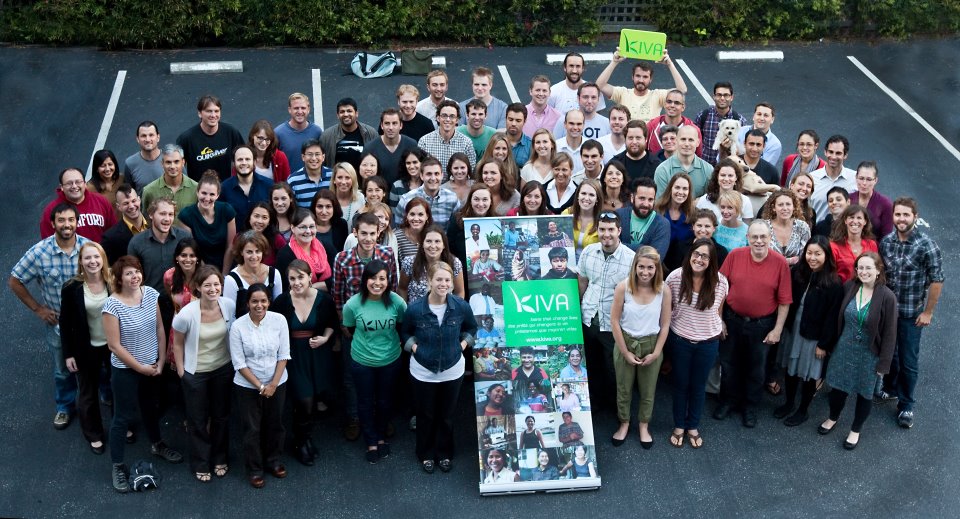
Kiva is a non-profit organization with a mission to connect people through lending to alleviate poverty.
Rapid Capital Funding
Based in Miami, FL, they are a direct financing source. They are one of the industry’s fastest growing companies and recently acquired a major credit facility from Veritas Financial Partners.
Competing for: Epilepsy Foundation
Financial Advantage Group

Based in Land O’Lakes, FL, they have been a financial provider since 2004. They have helped fund some big name franchises including individual locations for Sonic, Dunkin’ Donuts, and Quiznos.
Competing for: Society of St. Vincent De Paul
The Society of St. Vincent de Paul offers tangible assistance to those in need on a person-to-person basis.


RapidAdvance
Based in Bethesda, MD, RapidAdvance is one of the oldest and largest MCA firms in the country. They are often called upon to offer expert insight on the industry.
Competing for: Cystic Fibrosis Foundation
This foundation is the world’s leader in the search for a cure for cystic fibrosis.
Sure Payment Solutions
Based in New York City, they made a name for themselves by offering low credit card processing rates to merchants nationwide and expanded on that success by providing businesses with financing. They are well known for their industry blog, Sure Resources.
Competing for: ALS Association
The ALS Association is the only national non-profit organization fighting Lou Gehrig’s Disease on every front.

Meridian Leads
Meridian provides direct marketing programs for financial services companies. They are one of the most used and acclaimed marketing firms in the MCA space.
Competing for: 100 Urban Entrepreneurs
100 Urban Entrepreneurs is dedicated to helping provide a meaningful, long-term economic boost to urban communities throughout the United States by supporting minority entrepreneurship at its earliest stages.
Merchant Cash and Capital

Headquartered in New York City, they have funded over half a billion dollars to small businesses since 2005. They’re heavily involved in the financing of retail and food service franchises. Check out their new website.
Competing for: Gift of Life Bone Marrow Foundation – on behalf of The Silver Project
Gift of Life is a world leader facilitating transplants for children and adults suffering from many life-threatening diseases, among them leukemia and lymphoma.

NVMS, Inc.
A Manassas, VA firm, NVMS offers a full range of inspection services for the Mortgage, Banking, Commercial and Residential Property, Construction and Insurance industries. They’ve established a stellar reputation and are the inspection company of choice for many MCA providers.
Competing for: The Missionaries of our Lady of Divine Mercy
They provide humanitarian assistance to those suffering from poverty
United Capital Source
Based in Long Island, NY, United Capital Source has garnered much attention from their recent spate of seven figure financing deals. They are constantly adding new staff to satisfy the incredible demand for funding from mid-sized businesses.
Competing for: Smile Train
Smile Train partners with local surgeons in developing countries to provide free cleft care for poor children and follow-up services 24/7, 365 days a year.
Swift Capital

From the wonderful city of Wilmington, DE, Swift Capital has made a major splash in the alternative business loan space with low cost working capital. They have helped over 10,000 small businesses nationwide.
Competing for: American Heart Association
This association helps to build healthier lives, free of cardiovascular diseases and stroke.

TakeCharge Capital
TakeCharge Capital has offices in Connecticut, Mississippi, and Florida. They built their reputation on spectacular payment processing services and grew into becoming a national financing provider.
Competing for: Distressed Children & Infants International
DCI’s primary objective is to provide children in rural areas the opportunity to receive an education instead of entering into child labor.

Raharney Capital, LLC
Raharney Capital is a Merchant Cash Advance industry consulting firm based in New York City. They are a charity league co-founder and the operators of this very website, Merchant Processing Resource.
Competing for: Network for Teaching Entrepreneurship
This organization’s mission is to provide programs that inspire young people from low-income communities to stay in school, to recognize business opportunities and to plan for successful futures.
The above companies are participants in the Merchant Cash Advance/ Microloan fantasy football league. Other firms within the same industry are constantly making charitable efforts as well, such as Yellowstone Capital. They recently raised money to help Hatzalah Volunteer Ambulance Corp acquire two ambulances. Noticeable company donors included Strategic Funding Source and Benchmark Merchant Solutions.
All of the mentioned firms are strongly recommending others to donate to the charities they are representing. In addition, any company or person that would like to contribute to the competition’s prize donation can do so by contacting sean@raharneycapital.com or heather@merchantcashgroup.com. We are not accepting contributions to individual charities, only to the prize donation that will be given to the winner’s charity. $5,850 has already been pledged to the prize as of the publication of this story.
– Merchant Processing Resource
../../
New and improved New York City office location coming soon!
1375 Broadway, 6th Floor, New York, NY 10018
Donate to one of the represented charities today!