
The Search for a Bad Credit Startup Loan
October 1, 2013Are you trying to start a business despite having no income, bad credit, and no collateral? Well I’ve got news for you… and it isn’t good. There isn’t any hope for you to get a loan. None. Call me a pessimist or a sensationalist for saying so. Heck, I dare someone to prove me wrong! If there is something out there that even exists for people in that situation, be sure to also explain why undertaking such risk would be viable. Let me reiterate the circumstances again:
 So why this example? Well it just so happens thousands of people per day that face all 3 circumstances at once are applying online for business loans. How do I know this? I’m in the lending business. I’ve experienced it firsthand in sales and have also amassed the data through a venture I operate. First let me applaud the entrepreneurs that are making an effort to do something. Some folks believe that people with no job and bad credit just sit at home all day waiting for an unemployment check to come in. That doesn’t seem to be the case at all, not by a long shot. People want to work and when they can’t find a job, they’re trying to start a business. Thousands, tens of thousands, or perhaps even millions of people are saying “Hey you know what? My situation sucks, so I’m going to try and open that store I’ve always dreamed of. I have nothing else to lose.” And that’s great but that’s also the problem. Someone that has absolutely nothing to lose has absolutely nothing to offer a lender.
There are those that are dreamers who pursue their business idea thinking they’re going to get a $2 million loan at 4% interest. They interpret ads that say business loans UP TO $2 million as something of a borrower’s choice instead of the lender’s cap for the most qualified applicant in the world. Believe me, there are actually people with no income, bad credit, and no collateral that will not settle for less than the $2 million stated loan cap. And there are those that accept their predicament of not being credit worthy and broke and apply for a small loan with a very high rate of interest. There’s a still a flaw in that plan though since you can’t even get a payday loan if you don’t actually have a pay day.
Some applicants see this as a challenge. If they just search the Internet long enough and hard enough then surely someone will give them a loan, even if it’s expensive. My belief is that if there is a lender that is willing to give you a loan when you don’t have a business, don’t have an income, don’t have collateral to offer, and have a history of not repaying debts, then it is likely a scam. They’ll ask you for money upfront to secure getting the loan, a hustle known as an advance fee loan scam.
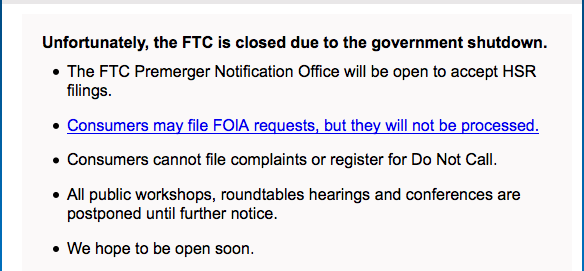
I partially blame search engines for keeping loan hopes alive for someone that has no income, no collateral, and bad credit. Some merchant cash advance companies tell it like it is though in their advertising and are still overwhelmed by startups that have no shot.

Search engines present links and ads that allude that ANYTHING is possible, but the responders to one search result in a Yahoo Answers question seem to understand reality. One commenter emphasizes that if you got a loan with bad credit, no job, no co-signer, and no checking account, then you’d best get it on film since it would be an act of divine intervention.
But Yahoo Answers is just one result in Google’s endless link options and searchers are likely to disregard it.
If you’re familiar with Google’s knowledge graph and the coming age of Semantic Search, I’d advise they get right to the point to save a lot of people time and energy. I mean if you search for what is a manual imprinter? Google will literally get right to the point and spell it out for you. Notice the authoritative source for this definition below:

Since Google trusts our content so intently, I’d like to add the following to their worldwide library of facts:

Is there an opportunity here?
No one is serving the incomeless, creditless, and assetless loan market… my God is there an opportunity here?! Kind of… but not with loans. There is a lot this massive market could benefit from and that’s guidance. A loan is out of the question, but it doesn’t mean these distressed entrepreneurs can’t get their hands on capital. Crowdfunding is a term that a lot of people throw around but startups shy away from it. I mean… what is crowdfunding really? Sites like Kickstarter and Indiegogo allow people to pitch their ideas to try to raise donations. If enough donations are pledged to meet the entrepreneur’s goal, the money is granted to the entrepreneur. If the donation goal is not reached, the money is returned to the donors.
What I like to think is different between myself and your average journalist on this topic is that I have been down this road. If you’re wondering who in the world is going to donate funds to launch your startup, project, or product idea, you should know that I have done just that. About a month ago, time expired on an Indiegogo campaign to produce an Ubuntu phone. Ubuntu is a Linux OS distribution. It’s like Mac OS or Windows, except it’s neither of those, it’s Linux. Ubuntu believed there was demand for their distro on the mobile platform. In an iOS and Android world, who says there’s not room for one more? Ubuntu users tend to be passionate about their systems and so Ubuntu called on everyday people to take their product to the mobile level.
$12,814,196 was raised but they fell short of the $32 million goal so the funds were returned to the donors. I was one of those donors.
Now you may only need $5,000 or $10,000 or $20,000 and that’s probably a whole lot easier than $32 million. If your business is really viable in the first place, then pitching it on a crowdfunding site is the best trial run you could possibly hope for. Get people emotionally invested or excited about your business. Go nuts promoting your campaign on social media and on blogs. If you can’t get anyone to care about your campaign through crowdfunding though, then you need to seriously consider how you would somehow make people care about your business once it’s operational. I didn’t donate money to the Ubuntu phone project just because it was posted on the site, I did it because I felt like I couldn’t imagine a world where there wasn’t an Ubuntu phone. I became emotionally invested in it.
Supplementary solutions
In my experience, many individuals applying for a startup loan want to address issues like their bad credit, not being incorporated, and not having a business plan until AFTER they get the money. Not all, but many think these are roadblocks or tricks to get them to shell out money they don’t have. They want a guarantee that if they do X, then they will be approved for Y, but it doesn’t work that way. Sometimes you have get your ducks in a row just to make the case that you are credit worthy even if it’s ultimately decided that you are not. Stinks right? That’s the way it goes though.
No income, bad credit, BUT you have collateral
I may have started my rant by painting an apocalyptic picture for startups faced with 3 terrible circumstances, but there is light in the darkness if you’re shooting only 2 for 3. If you’ve got collateral, that’s awesome. My question is though, what do you have? You might be able to get a title loan with your car or a pawn loan for your valuables. I didn’t say the heavens were opening up with these choices, but the possibilities are. Lenders like Borro will actually let you put your jewelry, artwork, antiques, diamonds, gold, or luxury automobiles up as collateral for a short term loan. The only downside is that they will actually come and pick up the item(s) for safekeeping to make sure you pay. And if you don’t, they’ll sell the item(s) off to make up the difference. But hey, if you fully plan on paying back the loan, then what’s the problem?
You have an income, but you have bad credit
This is a start. Having a steady income just upped your chances of repaying a loan. The bad credit is still a problem though, a big one. Mainstream lenders and mainstream alternative lenders are a long shot because the FICO scoring model predicts with high likelihood that you will become delinquent on your payments. Payday lenders are in reach with an income, but they’re probably not a good source for startup capital. How much can you really do with $500 to $2,000 anyway? Just the act of incorporating can run $500.
You have both income and really good credit
 This is the only point where the merchant cash advance industry has a chance to find common ground with startups. People have been asking me for years about what in the heck to do about all the startups that flood their phone lines and mob their websites. First the question was about how to make them go away, then how to sell them products to help get their businesses started, then how to find someone who will lend to them, and the back again to how to make them go away. The consensus is that no one will fund startups. Well, some will say they do but as long as they are in business already and can show documented sales history and bank statements. 99% of startups that apply for a loan in the merchant cash advance arena haven’t gotten that far yet though.
A 600 FICO is not a good credit score. Maybe some folks in the merchant cash advance industry will tell you that it is but in the traditional lending world this score is crap. If you have good credit (700+) and a verifiable income, you can in fact get a loan to start a business. It won’t be a true business loan though, perhaps to the dismay of entrepreneurs that falsely believe they can set up a legal entity to shield them from any liability to guarantee it. It will be a personal loan that is personally guaranteed.
This is the point where a regular journalist would cite a random press release about all the startup loans available to small businesses even though they have no idea what’s involved or how true it is. Much like my personal experience with Indiegogo above, I have personally succeeded in taking applicants with no operational or functional business and helped them get a loan. It hasn’t been a lot of people and there’s very little money to be made in it from a reseller standpoint but startup loans exist. I’ve done it with Prosper and Lending Club, but I should warn you, they are very strict on credit criteria and manually underwrite files like a bank would. The only difference is that it’s faster and there are realistic odds of approval.
I didn’t particularly like my experience with Prosper, mainly because they seemed to harbor ill will towards the merchant cash advance industry. This was communicated to me in my conversations with them and as such the decline rate on applicants I referred to them neared a whopping 99%. My experience with Lending Club was a little bit better, in part perhaps because of their recent backing by Google. The last time I ran the numbers, they had approved 11.1% of my deals. To an entrepreneur this success rate probably sounds horrible, but compare it to the 0% approval rate for a startup loan with a merchant cash advance company.
Entrepreneurs with really good credit and an income can up the approval rate by trying another channel, the credit card. Just know that even if you get it in the name of the business, it’s going to be personally guaranteed. And how do I know that you can get a business credit card for a startup? There’s that experience thing again… When I was starting a business, I was able to get a business credit card with a decent sized line just because I had good credit and sufficient income. They didn’t care so much about the business itself, so long as I met their other criteria. You will need to be incorporated and have all of your business ducks in a row though to make this happen.
You have a very young operating business
Once you cross the threshold from a startup business with no sales to a startup business with sales, supporting business documents, and bank statements, well then congratulations because you’ve finally entered the realm of being eligible for a merchant cash advance. You’re not guaranteed an approval and there are still minimum criteria to be met depending on where you apply. Credit may or may not be a factor. Sales volume will make a major difference in what you’re eligible for. Most funders require an absolute minimum of $10,000 in monthly gross sales. The rates will be less than ideal and you’ll likely have to settle for less than the lender’s $2 million loan maximum. $10,000 in monthly gross sales might only equate to a $5,000 approval.
If you’re looking for that real shot in the arm, like a million dollars on really low sales volume, then you could always try the equity game and pitch investors like on Shark Tank:
If you had to ask Billionaire Mark Cuban where to get a startup loan, he’d say not to bother with one at all. Good credit? Bad credit? It doesn’t matter. So many startups fail so why would you risk screwing yourself over with debt if things just don’t work out?
I agree with Cuban’s comments in the video that it’s a hell of a risk to a take out a loan when you’re just getting started and lenders look at it the same way… one giant hell of a risk.
That’s why I shake my head when I see applicants out there with no income, bad credit, and no collateral applying for loans on any and every lending website on the Internet. The odds of an approval no matter what the advertisement says is astronomically low. I don’t think startup loans for applicants like that exist and I invite anyone to prove me wrong.
I’m serious about this. E-mail me at Sean@merchantprocessingresource.com
Alternative Lending: People are Finally Getting it
September 12, 2013 Alternative lending is all the rage these days and so much so that BusinessWeek asked the question: What Do Small Businesses Need Banks for Anyway?. They go on to name many companies with ties to the merchant cash advance industry, which is no surprise to us of course. It is interesting however to notice that the mainstream media is not only giving us the time of the day, but starting to treat us like royalty.
Five and a half years ago this very same collective of lenders were referred to as bottom feeding vampires¹. Over the next couple years they upgraded us to a very expensive alternative, then to an acceptable alternative, and now finally to who the hell needs banks when you have these great companies?!. You have to laugh just a little bit at the shift.
It’s easy to call a lender that charges high rates a bad seed when you have no sense of the context. The reality in lending is that a material amount of borrowers don’t make their payments on time or they don’t pay back the loan at all. That causes rates to go up to compensate for the losses. Critics argue that borrowers can’t make the payments or default because the rates were too high to begin with. Some lenders cave to that assumption and position themselves as a fair lender by undercutting the market rates. They eventually learn that defaults are less related to the cost of the loan and more so tied to a borrower’s willingness to repay or ability to repay. Meaning, loans with no interest tacked on to the principle will still be rocked by late payers and defaults. Wait, seriously?
Yes, welcome to America where sometimes borrowers face circumstances beyond their control or they maliciously decide they don’t want to pay. The overwhelming majority are in the former camp, the ones where sudden or gradual hardship is interfering with their ability to make good on their commitment. I admit, even I feel uncomfortable mentioning this. Nobody wants to be seen as picking on borrowers. We’d all rather pretend that lenders are inherently bad and borrowers are inherently innocent. The truth is that most lenders and borrowers are good but some lenders and borrowers are bad. Lending is a two way street and what’s fair for all is somewhere in the middle.
My friends in the commercial banking sector tell me their tolerance for bad debt is less than 1%. Even 1 single loan default over the course of a year could cause their entire portfolio performance to come crumbling down. They do make loans, but they’re often in the tens of millions or hundreds of millions of dollars and only to large established businesses that quite often, don’t even need the capital but would rather not jeopardize their liquidity by spending their own cash. Some of these loans end up getting classified as small business loans even though there’s nothing small business about them.
Mom and pop shops see the statistics and the corresponding rates of say 4% to 10% APR and set that as the bar to shoot for. Then they head down to their local bank and hit a roadblock. The average small retail/food service business is going to have a greater than 1% chance of default no matter how good it looks on paper. I mean think about it, what are the odds that things will go 99% as planned for a restaurant over the next 12 months? Do you think it’s reasonable to assume there is at least a 5% chance that any of the following could happen in the next year even without knowing anything specific? A failed health inspection, bad reviews published online, a revoked liquor license, construction outside impeding pedestrian traffic, internal damage caused by a flood or disaster, extreme weather hurting sales, major job losses in the area leading to people having lower disposable income, key employees quitting, theft, landlord not renewing the lease, competitor opening up in the neighborhood, or declining sales for no single identifiable reason? Lending money to retail businesses is risky, really risky. Suppose the above business owner had a history of late payments and defaults to begin with. At what cost does it begin to make sense to do this deal? And those are just the risks of what could happen to the business itself, so what about the other risks involved?

To a bank, the stereotypical entrepreneur is damaged goods. The hard knock humble beginnings of turning a vision into a successful business usually comes with personal financial sacrifice and in turn a lower credit score. And just as the successful entrepreneur is getting ready to explain his/her high debt to income ratio and story of triumph, they’re already being declined. Banks don’t care about the story. They care about the aggregate mathematics. If there’s just a 5% chance that the business isn’t going to be where it thinks it will be in a year from now, then the deal’s probably a non-starter. Leveraged? Declined. Poor credit? Declined. Business is running smoothly? Who cares, it’s declined already!
 Extension on your taxes? Declined. Showing modest profit or a loss for tax purposes ::wink wink:: ? Declined. Didn’t file a tax return? Declined. Co-mingling funds with your personal finances? Declined. Overdrafts or NSFs? Declined. Unaudited financials? Declined. No collateral? Declined. Doing the books with paper and pen? Declined. Have less than 5 employees? Declined. Can’t find a document the bank wants? Declined. Need the money really badly? Declined. Experiencing a downturn? Declined. Have a tax lien? Declined. Have a criminal record? Declined.
Get the picture? If you take a look at Lending Club, an alternative lender, they’re widely known to have a 90% decline rate. Their maximum interest rate is 29.99% APR. Think about that for a second. Some people would say, “WOW, 30% are you kidding me?” but statistically, Lending Club would be losing money on the deal 9 times out of 10 if they approved every single person that applied. Lending Club actually used to be more liberal with their approvals when they first started and what happened is that too many borrowers just didn’t pay. If you believe that Lending Club should approve even more loan applications than they already do, then they would have to compensate for the increased risk and we’d quickly see APRs reach well into the 40s,50s,and 60s.
A critic might argue that once an applicant exceeds the risk of a 30% APR loan, they probably shouldn’t be getting a loan from anyone. That’s not a bad suggestion and what happened is that when the lending world concurred with that 5 years ago, Americans and politicians went up in arms because “Banks weren’t lending.” No loans? Businesses can’t hire. No loans? Businesses can’t grow. No loans? Economy gets stuck in neutral. The nation demanded that capital flow despite the risks presented to the lenders. And so the finance world heeded the call to provide solutions and came up with a smorgasbord of financial products. Merchant Cash Advance financing was already established but had an especially unique characteristic that allowed it to take off. It structured financing as a sale, not a loan. A big problem was that traditional lenders and alternative lenders were at the mercy of state regulated interest rate caps. Once an applicant reached a certain risk threshold, they just couldn’t do the deal anymore. But when financial companies came in to buy future revenues in exchange for a large chunk of cash upfront, the system started to gain some traction.
The effective cost of the money got high, very high, yet they weren’t predatory. I say that because despite how expensive it seemed, most of them were getting eaten alive by defaults. From 2008 – 2010, many merchant cash advance companies filed for bankruptcy. One of the main attributes of a predatory lender is for the lender to actually be getting filthy rich. That means layering on interest way in excess of a healthy profit. Losing a lot of money to help borrowers and small businesses when no one else will can hardly describe a predatory lender.
One has to wonder that perhaps there is a better way. If unsecured financing breeds high defaults, then surely things would be different if a risky applicant secures the loan with collateral. Have the borrower put skin in the game and we’d have a different outcome right? Lenders such as Borro publicly describe their default rate as falling between 8-10%. They offer collateralized personal loans and are described as a “pawn shop for the posh” in the below video, though most of their clients are small business owners. This tells me that even in the instance where borrowers have something very valuable to lose, a significant percentage of them will not repay the loan in full regardless.
A look around at what merchant cash advance companies have been willing to admit has put their average bad debt between 2-5%. In my experience in this industry however, 8% – 15% is a lot more realistic. But are these funding companies getting filthy rich or treading water? Anyone can look at the financial statements of IOU Central², a lender that’s part of the broader merchant cash advance industry. Since they’re owned by a publicly traded company in Canada, we get to see firsthand that they’re suffering tremendous losses quarter after quarter. I find that to be perfectly in line with what I suggested about undercutting the market earlier. IOU Central’s allure is that their loans cost less than a traditional merchant cash advance. The end result is that after paying commissions to sales agents, paying interest on their capital, and factoring in bad debt, they’re hurting pretty badly.
On Deck Capital too, a company mentioned in the BusinessWeek article above acknowledges that they are not profitable, though they do not make their financials public to verify how unprofitable they are or if that’s really even the case.
An SBA loan through a bank may cost approximately 5.5% APR, but if the loan goes bad, the SBA covers almost all of the bank’s losses. There is no such security blanket in the real private sector. The market determines the rates based on the risk. Each funder measures risk differently and in 2013, there is no longer a one-size-fits-all cost of unsecured funding much like there was in 2007 with merchant cash advances. Compared to a bank loan, almost all of these alternative options will be perceived as expensive, but if banks don’t approve anyone, then they’re a terrible standard for a comparison.
It’s taken a long time for the public and the media to come to terms with that. Banks are still technically in the game but by proxy. They are financing numerous alternative lenders and merchant cash advance companies. Banks shouldn’t be lending out their client’s deposits to really risky businesses anyway. A bank is supposed to be safe. If they’re lending money to 100 businesses and 15 of them aren’t paying it back, then that’s the opposite of safe.
 So what do small businesses need banks for anyway? Checking, payroll, overdraft coverage, debit cards, wires, record keeping, CDs etc. There is a place for banks in 2013 and beyond. Alternative lenders charge more and that’s okay. Ultimately it’s up to the borrowers to decide what they can sustain. It is better to have expensive options than no options at all. There’s endless proof of that when credit dried up five years ago. Small businesses cried foul so the market reacted. And here we are now with Kabbage, On Deck Capital, Business Financial Services, and Capital Access Network being portrayed as the norm, the new standard. Almost everything that would cause a bank to say “no” can be resolved in some way. That’s incredible and how it should be.
People are finally getting it.
– Merchant Processing Resource
../../
MPR.mobi on your iPhone, Android, or iPad
¹ It took 5 years but Forbes has Finally deleted the March 13, 2008 article that haunted the merchant cash advance industry forever. In Look Who’s Making Coin off the Credit Crisis, Maureen Farrell referred to merchant cash advance companies as vampires that were feasting on small businesses and singled out some of the biggest names in the business at the time. It was Global Swift Funding* (GSF), one of the major funders cited by Farrell that exposed this assertion to be blatantly false. Not too long after the article was published, GSF closed their doors and filed for bankruptcy. It would seem that small businesses actually feasted on them by defaulting in record numbers. Back in April of this year, Forbes essentially rebuked that article when Cheryl Conner revisited the industry to note how much good it was doing in ‘Money, Money’ — How Alternative Lending Could Increase Your Company’s Revenue in 2013
*Disclosure: Raharney Capital, LLC the owner of this website currently owns the former domain of Global Swift Funding (GlobalSwiftFunding.com) though the companies did not have and do not have any ties to each other.
² IOU Central is a subsidiary of IOU Financial Inc. Management’s Discussion and Analysis of Financial Condition and Results of Operations as of August 22, 2013 are available at: http://cnsxmarkets.com/Storage/1563/144040_MDA_%282Q2013%29_-_FINAL.pdf
Merchant Cash Advance Competition
June 3, 2013 If I had a dollar for every time someone told me that Kabbage wasn’t a competitor in the Merchant Cash Advance space, I’d have my own funding company. It’s been argued that they only care about Ebay or Paypal and that their business model revolved around strengthening Ebay’s PowerSellers for the good of Ebay. I never really believed that was the case.
On September 11, 2012 I wrote this about Kabbage:
Some people feel that they are not a serious challenger to the status quo and that their tactics, methods, and headlines are merely shock value fodder for the rest of us to laugh at while we all rant and rave about ACH deals being the hottest thing since Square. We believe Kabbage is a company everyone should keep an eye on.
Kabbage analyzes many pieces of data in their underwriting including how many facebook fans a business has or added. And as of 2 weeks ago, what do you think happened?
Kabbage expanded their cash advance programs to brick and mortar businesses… (BusinessWeek)
And so here we are with yet another fierce well-capitalized competitor, a company that isn’t struggling to add technology but is rooted in it. Not only that, but last I heard they don’t work with brokers or agents. They cut out the middleman, much like Square did with ISOs.
Which brings me to the next few companies to keep an eye on:
Amazon: People say that their goal is to finance Amazon retailers for the good of Amazon. Sound familiar? I admit that Kabbage wasn’t owned by Paypal but there was a solid relationship there. Is it that ludicrous to think that Amazon will enter the brick and mortar cash advance business?
Groupon: They’ve been sniffing around this industry for quite a while. Keep an eye on them.
American Express: They already have their own cash advance program for premium merchants that accept a high volume of amex transactions. Every six months or so, their standards loosen. It’s only a matter of time until they have enough data to loosen their standards even more and compete head to head with the rest of the alternative business lending industry and cash advance industry.
———-
Scott Griest, the CEO of American Finance Solutions wrote in Disruption in the Alternative Business Lending Space that when all the dust settles in a couple years down the road, there will be only 4-5 large alternative business lenders. Consolidation and competitive pressure will thin out the herd and the strongest will prevail. The question is, will those 4-5 funding companies be the grass roots companies that propelled the industry to where it is today or will it be the big mega-corporations who are looking at our the industry like a delicious snack?
In one of the most read ever articles of MPR, I made this prediction in The End of an Era:
2014 will eliminate the weaker firms that remain and by 2015, Merchant Cash Advance will no longer be a term that anyone uses. Big banks and billion dollar technology companies will go on to rebrand all that which the funding warriors of the last decade have worked so hard to establish. MCA will simply assimilate into other financial products. The metaphorical Sally, Joe, and Tom will probably still be in the business, but be working for companies like Capital One, Wells Fargo, and American Express.
We weren’t kidding…
Merchant Cash Advance Industry is Busy at Work
May 16, 2013 After what was one of the wildest two weeks in Merchant (MCA) history, the game-changing news finally subsided, but no one is taking a deep breath. Instead, everyone is busy working their butts off trying to help small businesses grow.
UPDATE 5/16: RapidAdvance has acquired the operating assets of ProMAC. First Instance of consolidation that we’ve been predicting would happen this year. See news release detailing the acquisition HERE.
There is just loads of capital available right now and the technology is catching up quick to support the mass deployment of it. A writer for the American Banker believes that the MCA industry is even beginning to threaten community banks.
Many community bankers would be open to using online applications and other technological tools to make faster loan decisions, says Trey Maust, co-president and chief executive at the $121 million-asset Lewis & Clark Bank in Oregon City, Ore. But most community banks use a business model that requires more hands-on interaction with borrowers, he says.
Hands-on is another term for driving back and forth to the bank for appointments, having the bankers visit your business, all the while they try to sign you up for other bank products, like checking accounts that incur a monthly fee.
Who’s at Work
We know some of the major industry players but it’s interesting to see who else is doing significantly large volume. Pearl Capital recently reported funding $7 million in a single month and United Capital source came in at a tad shy of $4 million in just this past April. These are firms you may have heard of already, but they’re now sitting at the big kids table.
What the Generals are Saying
If you haven’t been paying attention to the DailyFunder.com forum, 4 Chief Executives have contributed to the site in a very meaningful way by sharing their thoughts on the MCA industry at large. This is the kind of wisdom you would normally get in bits and pieces through occasional citation in the Green Sheet or other publications, but the full monty has materialized in the very exclusive CEO Corner. Some key highlights from what they’ve shared so far:
Excerpts from Jeremy Brown, CEO of RapidAdvance:
Those of us that have been in this business for 5 years or more – Rapid started in 2005 – are excited at the positive press we get today vs. several years ago and how we are becoming embraced and accepted as a mainstream product. More PE firms, banks, and others want to invest in or lend to the industry. Those groups have always been intrigued by the returns in this industry but the conversations are different today.One thing I think will be different next year are fewer deals offered over 12 months in payback period. When you look at the data over an extended period of time, 18 month term loans don’t make sense for the merchants that are funded. It’s not the most efficient use of funds, limits the ability for the merchant to renew and the longer term deals are far riskier. (See: Year in Review and What Next Year May Bring)
Isn’t that the point of a 6 month MCA – to meet a current need and have the merchant be able to draw again in 4-6 months for the next capital need? That is the problem with the 15 – 24 month deals that are being offered to merchants today. Our industry is based on providing working capital to merchants. By its very definition, working capital is less than 12 months. Longer term deals are permanent capital, even when they are repaid over 15-24 months.it was no surprise when the economy tanked in late 2008 that the merchants in our portfolios at that time took a major hit to sales and therefore the funding companies losses increased by 50% or more on their outstanding portfolios. So what happens when the next recession – big or small – hits and funders have portfolios out to 24 months? It doesn’t take an MBA from Harvard to figure out that answer. (See: Working Capital or Permanent Capital
Haven’t gotten into the industry myself in 2006, I can totally validate the complete 180 in press coverage. I’ve put all my energy into MCA and it’s gratifying to finally hear the praises so many years later.
Excerpts from Steve Sheinbaum, CEO of Merchant Cash and Capital:
The industry already services hundreds of thousands of small business merchants with cash advances for growth and other purposes based upon monthly credit card receipts. For years this has been the basic model of operation. But, what about the substantial number of businesses that require quick and easy access to capital who don’t accept credit cards or don’t produce enough in monthly credit card receipts to qualify under the normal MCA guidelines? Tens of thousands of businesses could use the capital infusions the industry provides daily but either don’t think they’ll qualify or, because of our lack of creativity, the industry hasn’t produced a means of addressing their needs. These businesses would make great customers but because of the rigid requirements we have in place to protect our livelihoods we’ve left money on the proverbial table.That’s not the case anymore. (See: Creativity in the C-Suite…Another way to Fund!)
In regards to advances on gross revenue instead of just credit card payments, he’s absolutely right.
Excerpts from Andy Reiser, CEO of Strategic Funding Source:
the most important part of any deal is the people. We rely heavily on the relationships we have with the client and most importantly with our ISO partners and ISO syndicate partners who invest side by side with us. Valuing these relationships is far more important than relying solely on the numbers and how sophisticated our technology is.Over our 8 year history, we have noticed that the performance of a deal has more to do with the relationship we have with our ISO partner and ISO syndicate partner, then with the deal itself. We have all kinds of tools available to help us analyze the potential success of a deal – FICO scores, due diligence checklists, signed affidavits, warranties and representations, scoring models, algorithms, etc. And yet, some of the ugliest deals on paper have been some of our best performers, while some of the most attractive deals on paper have been nothing but trouble. (See: Business and Baseball Fantasies)
During my time as a head underwriter, I witnessed the exact same thing. Solid referral partners had solid performing clients even if they didn’t look so good on paper. Likewise, the shakier resellers had clients that underperformed across the board, including the deals that looked cleanest.
Excerpts from Craig Hecker, CEO of Rapid Capital Funding
As each MCA company grows and creates a positive reputation, we all grow as an industry…together. But as our popularity grows, however, so does our competition. We already know that Amazon, eBay, and Google are stepping into the market, and AMEX is looking to expand their short term financing portfolio. These big business industry leaders will help build our brand of finance and benefit our portfolios, but I also think it is fundamental that we market ourselves as the alternative to big business finance and identify ourselves with the small business owner. (See: Small Business and How MCA Can Bridge the Gap to Success
We’ve got some big names in the industry now, whether they are financing the merchants directly or backing the funders that do the financing. I agree that you need not be intimidated by competing against these established brand names. Positioning yourself as the funder next door, people that have walked a mile in the merchant’s shoes (literally) can actually be a strong advantage.
What’s Next?
We’re pretty confident there will be more big headlines in the near future but for now we can’t confirm or say anything. DailyFunder.com is also lining up additional industry captains to participate in the CEO Corner and I’m sure there will be plenty of nuggets for us all to dissect. They’re probably the best source of MCA information that you can possibly get.
Stay tuned.
– Merchant Processing Resource
../../
MPR.mobi on iPhone, iPad, and Android
Soul Mates: Merchant Cash Advance and Silicon Valley VCs
May 1, 2013 Almost 1 year ago to the day, I wrote a piece titled How the Facebook IPO Affects the Merchant Cash Advance Industry. In a most fitting way to commemorate this anniversary, it was reported early this morning that Google Ventures and Peter Thiel are investing in On Deck Capital (“ODC”) through additional Series D Financing. Thiel is especially symbolic in this case as he was the first outside investor in Facebook back in 2004.
But don’t expect Jesse Eisenberg to be called upon to play Noah Breslow or Mitch Jacobs in a movie about small business lending just yet, as the ODC story is a tad less revolutionary than facebook. Or maybe it’s not. Google Ventures is not one of the usual backing suspects in the MCA industry, but their involvement in this case is a perfect validation of my prediction 1 year ago.
Merchant Cash Advance financing turns 15 this year and split-funding goes back more than two decades, but the best of times are just beginning. On September 19, 2012 I bid farewell to an era and made my case for the one I foresaw on the horizon. Facebook wasn’t the first social network on the Internet, nor was their concept original, but they changed how we interact with strangers, friends, and family members online forever. There is a familiar trend with ODC and even Kabbage, two names that every journalist appears obligated to mention these days when writing about Main Street. Perhaps their technology based approaches send a tingle up the leg of the mainstream media or maybe they’re just really changing the game. They definitely appeal to the Silicon Valley crowd in a way that the old guard of Merchant Cash Advance companies apparently do not.
“Old guard, did you just say old guard?!”
Contrary to urban myth, On Deck Capital and Kabbage are not taking on small businesses all by themselves. They are but a fraction of the overall alternative business lending market with the leaders being anything but old guard. Debt and Equity are pouring into these firms and there are no signs of it letting up any time soon. I can’t go a day without a fund, lender, or investor reaching out to me in some way with the hope that I can steer them to a funding provider in need of a capital raise. Their options to get in now are running low and my advice to them is to set your sights lower on ISOs. The big funders have got capital covered and the ISO market is the next gold rush.
 The industry can’t grow without originations and most funders depend on some level of ISO business (a few entirely) to hit their benchmarks month after month. So the funders do their job well, but the lead generators are driving a large percentage of the growth.
In March, I attended the Search Marketing Expo in Silicon Valley. In a sheer twist of fate, at the same time a Merchant Cash Advance guy like myself was touring the campuses of Facebook and Google, it appears that Facebook and Google were busy touring the campuses of a Merchant Cash Advance company.
The connection between Silicon Valley and alternative business lending is beginning to run deep, very deep. I think we’re soulmates. Only time will tell.
Follow us at the ETA Expo
April 30, 2013May 3, 1:00am: I underestimated how easy it would be to make frequent updates. Wednesday was fantastic. I uploaded a couple dozen photos and updates all at once earlier today over on DailyFunder. As soon as the show was over, I found myself on Bourbon Street at the Discover party followed by the Priority Payments party. Both were a great time.
My Recap of the show is up now: ETA Expo Recap
Soul Mates: Merchant Cash Advance and Silicon Valley VCs
Original story about On Deck Capital’s investment from Google Ventures and Peter Thiel
My theory on why On Deck Capital took a paltry $17 million from Google Ventures and Peter Thiel
Photos and updates from the ETA
————————————–
May 1, 1:00am: Great start to the show this evening. Merchant Cash Advance providers and alternative business lenders continue to have a very strong presence in the payments industry. The booths I saw include: RetailCapital, NextWave Funding, Merchant Cash Group, On Deck Capital, Capital Access Network, Strategic Funding Source, American Finance Solutions, Swift Capital, MotherFund, and Principis Capital. GRP Funding and Paramount Merchant Funding are also on the exhibitor list but I didn’t spot their booths yet. That’s pretty substantial and it omits the major presence of Merchant Cash Advance companies that aren’t exhibiting. I bumped into Merchant Cash and Capital and walked the floor a bit with David Rubin of Capital Stack.
I met the guys behind Super G Funding which lends money against residuals. They’re great guys and they have such a unique role in the industry.
I think every funder I spoke with was quick to mention that they do 12 month deals and either offer direct debit repayment or will have it soon. The ACH train has disrupted the split-funding market pretty severely though many funders continue to do big numbers via split.
Nobody seemed to have an appetite for low FICO score deals (500s and below) except for Merchant Cash Group and Capital Stack which target the higher risk market intentionally. And when I say “don’t have an appetite for,” I literally mean when asking a funder if they do below 500 credit, the answer is some version of “HECK NO!!”
Overall tone, and perhaps its because opening night included open bar, but it was very optimistic. Most funders seemed intent on expanding and are eager to service as much business as possible. I definitely get that sense that there is a real focus these days on the bigger fish ISOs ($1 million+ in referral business a month). When newbie brokers enter the space, funders spend an enormous amount of resources developing them and many times they just don’t pan out. Either the brokers don’t have the capacity to do more than a handful of deals, or they just don’t “get it.”
If you’re a mom and pop ISO and you have just 1 or 2 deals a month, it’s more difficult these days to get time and attention from a funder. Capital is flooding into the industry and everybody wants partners that can produce volume. From a resource standpoint, the “1 and done” reps are not an efficient use of time.
Big ISOs have a lot of negotiating power at their disposal these days. In the last 7 years, it was good to be an ISO, then hard to be an ISO and now it’s good again. Many things in MCA have a weird way of going full circle. Hope to see you on Wednesday.
————————————–
Apr 30, 1:00am:  Merchant Processing Resource will be publishing updates as often as we can from the ETA Expo in New Orleans. I am very excited to be down here. Earlier today I had the opportunity to eat beignets at Cafe Du Monde, visit the French Market District, and take a ride on the Natchez Steamboat on the Mississippi River. But starting Tuesday, it’s all business. A schedule of events can be found on the ETA’s website.
You can follow along with everyone else in town on twitter using #ETAExpo2013 or #ETAExpo13
and of course via the DailyFunder Merchant Cash Advance iPhone App.
Some pre-conference tweets:
ETA Expo 2013 on Twitter
pre-conference tweets
Storified by Sean M· Mon, Apr 29 2013 22:21:50
Here’s to learning, networking, and having fun!
– Merchant Processing Resource
../../
Factoring Construction Deals: It’s not impossible
April 18, 2013 Being my first post in the Small Business Corner, allow me to introduce myself. My name is Steve Ontiveros and I’m the founder of The Factoring Place. I’m good at finding the right factoring company for my clients based on their unique situations. Factoring and MCA really aren’t that different. Each company seeking a merchant cash advance is unique, like each factoring client is unique. Not all merchant cash advance companies are alike, and similarly not all factoring companies offer the same program & factoring rate. I became a factoring broker because I wanted to make sure my clients were getting the very best factoring deal for their unique situation.
Many factors lack the c-c-c-courage needed to fund a construction deal. Preliminary & Mechanic’s Liens, Payment & Performance Bonds, Progress Billing, and Retention, OH MY! Follow me along the “Yellow Brick Road” to mitigate the common risks of factoring construction deals.y factoring and merchant cash advance brokers turn down or walk away from construction companies seeking working capital. Factoring construction companies is a niche within a niche. As a broker, understanding the inherent risks of construction factoring can help you find the right factoring firm that will successfully fund your client. Understanding how each factoring company operates is also important to knowing whether or not your client will get funded.
Actually, you don’t have to live in the fantasy world of “Oz” to successfully navigate the unique risks found in a typical construction deal. When you peel back the curtain inside the “Emerald City Factoring Company,” you’ll find that there are no wizards or wizardry going on at all. But for this article, I’ll be your Emerald City Factoring Company Wizard. I’ll help you understand construction factoring giving you the confidence to walk the walk and get your construction client funded.
Construction Factoring 101: Preliminary Lien Notice & Mechanic’s Liens
A Preliminary Lien Notice is a formal document sent by the contractor, sub contractor, material supplier, equipment lessor – and factoring company in some cases– to the owner of the project. This “pre-lien” establishes the right to file a mechanic’s lien later on down the road. If the pre-lien is sent and the claimant’s bill is paid, the pre-lien has no further legal effect. However, if the bill is not paid then the claimant may now file a mechanic’s lien on the owner’s property. An active mechanic’s lien on a property ties that property up, leaving it in a position such that it cannot be sold or transferred to another party until the mechanic’s lien is released. Roughly 40 states in the US require a preliminary lien to be present before a mechanic’s lien can be enforced–check the laws in your state to see where you stand.
The Emerald City Factoring Company often requires its construction clients to provide evidence of a pre-lien being sent to everyone up the food chain, including the owners. In fact, Emerald City Factoring Company has been known to file a pre-lien of its own to further protect its position. True, Emerald City Factoring Company is not a contractor, supplier, or equipment lessor. But, because Emerald City Factoring Company has a blanket UCC1 on all assets of the client, the factor is indeed a supplier of material and equipment on the job. Even if the General Contractor argues a factoring company has no legal standing to file a pre-lien, the owner doesn’t care. The owner will simply tell the General Contractor to ensure all invoices are paid to all subcontractors so that the factoring company’s pre-lien won’t magically turn into a mechanic’s lien. Having the pre-lien in place allows the Emerald City Factoring Company to file a mechanic’s lien if payment is not made, which means the Wizards running the show can sleep well at night.
Construction Factoring 102: Payment & Performance Bonds
Performance bonds are used in the construction industry as a tool for the owner of the property being developed to guarantee that the value of the work will not be lost in the case of an unfortunate event (such as insolvency of the contractor.) A payment bond guarantees that the contractor will pay the labor and material costs they are obligated to. Shoddy work, sub-standard materials, and corner-cutting put Emerald City Factor’s factored invoices at risk, because if the owner throws your client off the job, the bonding company can step in and finish the job – and then back charges your factoring client. It’s unlikely that a bonding company will subordinate to the factoring company, and thus the factor’s lien on the receivables may be primed by the big bad bonding company.
So, how do you prevent the Wicked Witch of the West coming through to spoil the party, kick your contractor off the job, and call in the bonding company to clean up the mess? Unlike Dorothy, clicking your heels and repeating “there’s no place like home” won’t prevent the damage done by that under-performing contractor factoring client of yours.
Invite “Captain Obvious” to work for the Emerald City Factoring Company. He’s the guy that usually shows up after the disaster struck, and is rich with advice on what you should have done. These are usually “DUH” moments but, in retrospect, they were so obvious and simple that you may have over looked them. Here’s what Captain Obvious has taught us over the years:

- Have your contractor client share the bid file with you. Go over each scope with a fine tooth comb. Ask the contractor to tell you what % gross profit was built into each unique scope. Use common sense to work out where the estimate may be wildly optimistic. Is there enough gross profit in the estimate for them to have “oh crap” room? More importantly, is there enough room in the estimate to cover the costs of your factoring services?
- Ask about the job costing engine that the contractor is using. Are they plugging in the job budget before the job starts, and then recording costs against the original budget? Ask the contractor how long it takes for their AP accounting staff to enter job costs against each job. The costs need to get added to the job cost engine almost immediately after they are incurred.
- Ask to be shown a copy of a recent “over/under” billing report. This report will show whether or not the job is hemorrhaging cash as the job is happening. If the job is over-billed, the contractor is in a strong cash position on the job. If it’s under billed, it means the contractor has spent more on the job than they have yet to bill. Running jobs under billed for too long is probably what brought the contractor to you in the first place, so don’t be surprised to see this – just monitor it so that you know just how bad the situation might be.
- If your contractor’s eyes gloss over when you ask them about job budgets and job costing and over / under billing, then you might have a different sort of problem on your hand. Without these tools in place, the contractor will have a tough time knowing whether or not he’s profitable and whether or not he has the longevity to complete the job. Yes, even with factoring company in place, there’s no avoiding disaster when working with a contractor who doesn’t watch his budgets.
- Get a hard hat and a vest with fashionable fluorescent reflective tape. Travel to the job site at least once a week to make sure progress is being made and to be visible to your client. You’re in luck if you have a pick-up truck and even better if you have a pick-up truck with a diesel fuel tank in the bed. This way you can top off the heavy equipment on the job site so that they’re ready for a full day’s use tomorrow!
- While at the job site, cozy up to the project manager / superintendent that is in charge of your client’s performance. He’s usually the person who will approve or deny the progress billing requests. Be up-front with him and tell him that you’re the “money guy” behind your client. Ask the project manager regularly about progress on the project. Are there dicey issues that you can take up with your client to make the job run smoothly?
- Be the guy that a) brings the donuts and coffee into the planning meetings and b) has a cooler full of sodas and snacks for the laborers. Develop relationships with people on the job. Not only are you looking after your investment, but you’re sure to get “insider” information about the performance of your client. Another added benefit to being on the job site consistently? More clients. As you’re talking with the project manager, it’ll be no secret what you do. I can’t tell you how many clients Emerald City Factors has earned as a result of job-site schmoozing.
- Most of all, be useful on the job site, and then get out of there. Bring lunch to the trades people. Ask your questions. Get invoice approvals. Find out when the city / county inspector is coming to inspect your client’s work (and be there for those inspections!) Do no harm.
- Require that your contractor provide you with weekly job cost reports. Measure the actual job costs against the original job budgets. If you start to see a budget getting to the end of its life, investigate. Find out if there are change orders that you don’t know about. Maybe it’s just job cost entry errors (costs being tagged to the wrong element of the job). Don’t accept your client’s word for it when he tells you “I’m on time and under budget.” Expect that he’s not, and verify with proof in the job cost / budget reports.

Construction Factoring 103: Progress Billing & Retention
The c-c-c-cowardly Lion will tell you that the contractual ability to off-set the cost of defects or repairs against previously approved billings is what prevents him from getting into the construction factoring game. In other words, the Lion is afraid that even after the general contractor approves an invoice, somehow he or she can still legally refuse to pay any or all of the approved invoice. This is typically when retention comes into play. Retention is a process by which the general contractor will hold back usually 10% of a progress payment. This 10% is not paid to the contractor until the end of the job, when all the punch list items are completed, and when the owner is satisfied with the material and workmanship. Think of it as a “reserve” account of sorts.
Be sure you understand that a progress billing invoice may have retention – if so, don’t advance against the full value of the invoice. Gauge your advance based on the invoice amount AFTER retention is taken out. Don’t fund unless and until you get the general contractor to physically sign your approval letter. Put language on your approval letter that says something to the effect of: “Invoice approved without offsets or deductions” and then pray that you don’t ever have to defend that language – a costly adventure in the American Justice System!
Construction Factoring 104: Distance Makes the Heart Grow Fonder
Emerald City Factoring Company is located in the Heart of Oz. Let’s say that your construction client’s project is all the way over in Kansas, so there is no chance that you or your wizard staff can visit the job site to protect your investment and market to others on the site. In that case contract with a broker, or a construction manager, to visit the site on your behalf. Get some eyes and ears on the ground at the job site, and be sure to review the budgets and job cost reports on a regular basis. If you want to get really creative, partner up with a bookkeeper who is local to the construction client and job site. Ask that your construction client consider using a chosen bookkeeper who knows how to manage construction job costing and billing. You’ll be singing the praises of Glinda, the Good Bookkeeping Witch of the North before you can say “there’s no place like home, there’s no place like home, there’s no place like home.”
The c-c-c-cowardly Lion gets Courage
It’s always easier to get something done when you have a little bit of experience. Dorothy didn’t get home without taking a few calculated risks. Consider funding a small deal, perhaps a spot factor on a small project will give you some practice but won’t cause you to lose sleep. You can learn the lingo of the contractor (and flatter your client) by asking questions about the business. Or, consider working with non-competing factoring company who does construction and let them teach you the ropes.
Just watch, before long you’ll be chanting in your sleep: “There’s no factoring like construction factoring…”
Steve Ontiveros is the founder and president of The Factoring Place, Inc. a privately held full service factoring brokerage firm specializing in construction factoring deals (including progress billing.) He can be reached at steve@thefactoringplace.com or 510.223.1285