
Some Small Business Funders Are Pivoting or Closing Shop
October 20, 2015 One of the unique insights AltFinanceDaily gets as a company that sends a lot of email and snail mail to folks in the industry is the rejection rate. One day an entrepreneur is telling us all about their new lending business and the next day the Post Office returns their magazine for a vacant address. Sometimes there’s a change in the model or a partnership didn’t work out. Other times lead generation became too hard or too many merchants defaulted very early on. The truth is, as much as the industry is growing, some companies are pivoting or closing their doors.
At Lend360, there were whispers around the trade show floor that acquisition costs have spiked and it was being felt on the bottom lines. Broker houses are opening, closing, merging with each other and being acquired. Funders have reacted by giving them lines of credit to either help them grow or stay afloat, hoping that their sources of deal flow don’t fall apart.
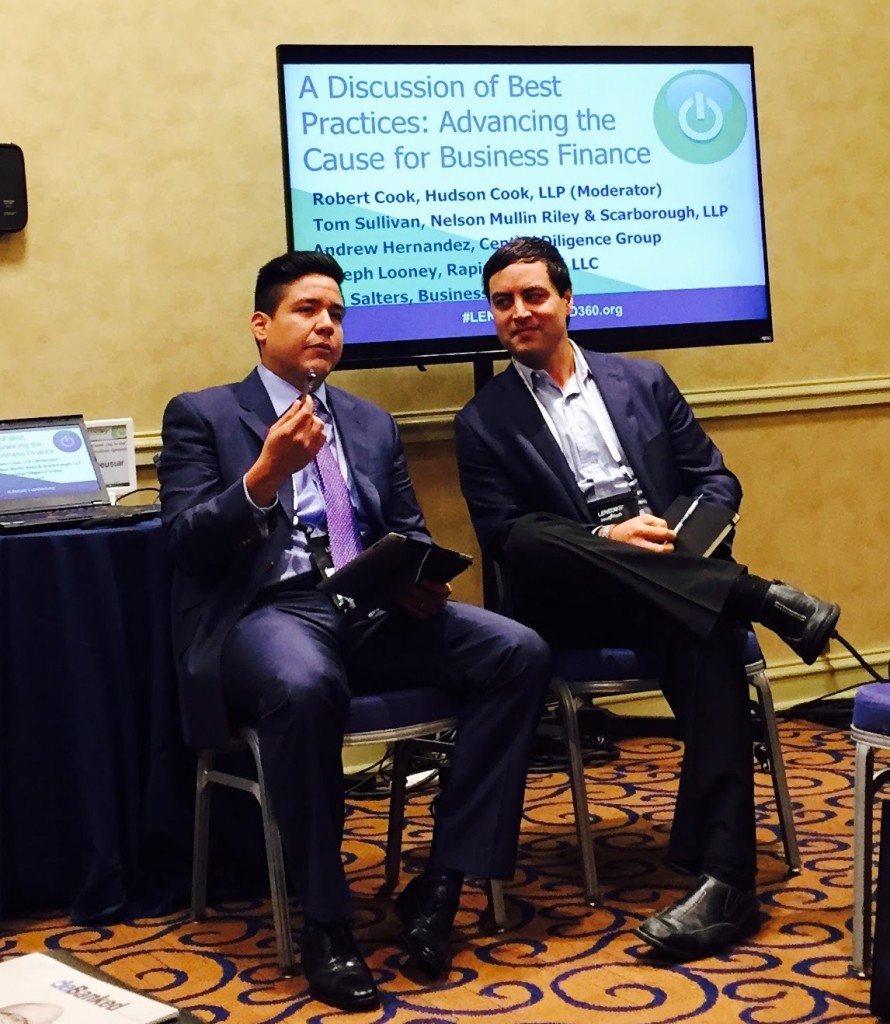
On one conference panel titled, A Discussion of Best Practices: Advancing The Cause for Business Finance, veteran underwriter and industry consultant Andrew Hernandez of Central Diligence Group, said he’s watched a lot of new entrants in this industry make mistakes. “We’ve seen guys lose their shirt,” he said. He explained that too often small business funding companies look to cut their acquisition costs in the wrong places, like simply paying less for leads or paying brokers lower commissions. That only works to a point. “Underwriters can help keep the cost of acquisition down by funding the right deals and trying to get good deals done,” he said.
The owner of one funder summed up his dilemma for me, my brokers are making more on a deal than I am and I’m the one taking all the liability on it. Maybe I should become a broker instead. Not that there would be anything wrong with that. For some companies in this industry, the best path forward is achieved through trial and error. For example, World Business Lenders’ Alex Gemici said at the conference that they started off by making unsecured loans and now only do loans secured by real estate. Gemici also said he believes the industry is heading for a major shakeout within the next three years and that irrational exuberance keeps him up at night.
If he’s right, an economic downturn could squeeze out a lot of players that are already feeling the pinch of high acquisition costs.
For those newer to the industry, they might not remember that the effects of the 2008-2009 financial crisis and ensuing recession was brutal. More than half of the providers of merchant cash advances went out of business, some within weeks when their credit lines were pulled.
A lot of the “industry leaders” of 2008 aren’t around anymore: First Funds, Fast Capital, Second Source, Merit Capital, iFunds, Summit, Infinicap, Global Swift Funding, and more.
Given the favorable economic climate and regulatory environment, this is a bad time to be struggling. 2015 may be one of the last years to pivot in a major way before it’s too late.
Stop Saying Alternative Lending Isn’t Regulated
October 7, 2015 I cringe every time I hear someone say that alternative business lending or merchant cash advances are completely unregulated. It’s true as a generality that there are fewer restrictions on commercial transactions than there are on consumer transactions, but fewer doesn’t mean none. If you are operating your funding business with the impression that it’s all unregulated, then you’re probably doing it wrong and should hire a lawyer (or several) immediately.
Things like interest rates, truth in advertising, and the banking system are already regulated. Who can invest and what has to be disclosed in an investment is regulated. Email marketing and telemarketing are regulated. The ACH network is regulated. Credit card processors and payment networks are regulated. Credit reporting and the process of declining someone for credit is regulated.
As de-banked as merchant cash advances and non-bank loans look, they all go through the traditional banking system and still obviously operate under state and federal laws just like everyone else. That means compliance with the OCC, OFAC, FED, FCC, FTC, SEC, IRS, state regulatory bodies and more. So when critics say there are no regulations in place for these products, one has to wonder what the heck they’re talking about.
In the context of merchant cash advances, there’s a pervasive myth that the process of purchasing future assets is really all just a loophole to charge Annual Percentage Rates (APRs) in excess of state usury caps. I can’t speak on behalf of all purchase agreements in general since every financial company structures theirs differently, but in a true purchase of future assets, it is literally impossible to calculate an APR. It’s not just a matter omitting the word loan from the agreement either, it’s the uncertainty of the seller’s future sales to which the agreement ultimately hinges upon (among other factors), that make such a calculation indeterminate even if one wanted to generate one just for comparison’s sake. These are purely commercial transactions that fall under the umbrella of factoring and they have no basis for comparison with loans. Oh, and they’re not new.
According to wikipedia, “factoring’s origins lie in the financing of trade, particularly international trade. It is said that factoring originated with ancient Mesopotamian culture, with rules of factoring preserved in the Code of Hammurabi [about 4,000 years ago]. Factoring as a fact of business life was underway in England prior to 1400, and it came to America with the Pilgrims, around 1620.”
 While the subtle nuances of merchant cash advances may only be a couple decades old, the system on which they’re based precedes the arrival of Jesus. That makes the concept understandably new… if you’re a Stegosaurus.
But here in modern times, the courts in many states have reviewed these agreements and generally respect the arrangements when they are well-defined and compliant with state and federal laws. There’s that regulation thing again…
For funding companies that deal in actual loans, the industry is heavily regulated. The non-bank lenders we hear about on a daily basis have to acquire state licenses where applicable or forge partnerships with chartered banks to create a relationship in which the banks themselves are the ones that actually originate the loans. That means despite the excitement and fanfare of tech-based disruption, many of these lenders are really just servicing loans made by traditional banks. Kind of a bummer, isn’t it?
And when it comes to sales tactics, it’s important to remember that deceptive advertising is already illegal.
The regulation and compliance hurdles in FinTech are cumbersome even if some of the companies involved in the business appear scrappy and amateurish. According to a report that was recently published by accounting firm KPMG, titled Value-Based Compliance: A Marketplace Lending Call to Action, they offer a non-exhaustive list of federal legislation and networks:
- Anti-Money Laundering (AML)
- Bank Secrecy Act (BSA)
- Blue Sky Laws
- Card Act (CARD)
- Dodd-Frank Wall Street Reform and Consumer Protection Act
- Electronic Funds Transfer Act (EFTA)
- Electronic Signatures in Global and National Commerce Act (ESIGN)
- Equal Credit Opportunity Act (ECOA)
- Fair and Accurate Transactions Act (FACTA)
- Fair Credit Reporting Act (FCRA)
- Fair Debt Collection Practices Act (FDCPA)
- Fair Housing Act (FHAct)
- Financial Crimes Enforcement Network (FinCEN)
- Gramm-Leach Bliley Act (GLBA)
- Know Your Customer (KYC)
- Service Member Civil Relief Act (SCRA)
- Truth in Lending Act (TILA)
- Unfair, Deceptive or Abusive Acts or Practices (UDAAP)
- USA Patriot Act
Completely unregulated you say? You are sadly mistaken. =\
Alibaba Teams Up with Capify to Make Business Loans
July 21, 2015 Hours after AmeriMerchant announced it had been rolled up into an international business lending conglomerate known as Capify, The Australian Financial Review released a story that said Alibaba (NYSE:BABA) would already be teaming up with them. The partnership’s goal is to offer small business loans to 1.9 million Australian customers.
The story quotes Alibaba executive Michael Mang. “The purpose of the collaboration with Capify is to increase traffic and encourage more people to buy things on the internet. We’re not competing with banks and we’re not trying to create competition here. Buying and selling is the core of our business,” Mang told the Financial Review.
John De Bree, the former Managing Director of Australia-based AUSvance is now Australia’s Managing Director of Capify. De Bree reportedly said, “while there is technically no limit to SME’s access to capital, it expects to lend around $40 million to Australian SMEs over the next 12 months.”
AmeriMerchant joined UK-based United Kapital, Australia-based AUSvance, and Canada-based True North Capital to be a “global provider of alternative finance solutions, including business loans and additional working capital products, to small and medium-sized businesses.” AmeriMerchant’s founder David Goldin became the conglomerate’s CEO and President.
Capify Consolidates Four Companies Including AmeriMerchant Under One Umbrella
July 21, 2015 What do US-based AmeriMerchant, UK-based United Kapital, Australia-based AUSvance, and Canada-based True North Capital all have in common? They’re now all under the Capify Umbrella. According to a press release issued earlier today,”Capify will now operate under one unified name to serve as a global conglomerate provider of alternative finance solutions, including business loans and additional working capital products, to small and medium-sized businesses. Capiota, United Kapital’s business loan product provider, will also be included in the global rebrand as a part of Capify’s UK office.”
The consolidation of an Australia-based funding company is notable since that country’s commercial financing landscape is the subject of an upcoming magazine feature story of AltFinanceDaily’s July/August issue due to be distributed in a couple weeks. In that story, AUSvance’s John de Bree said of American interest over there, “I’m very surprised, the American market’s 15 times the size of ours.”
But as our readers will learn when the story is published, that market is just beginning to heat up.
David Goldin, the founder and CEO of AmeriMerchant will continue to be the consolidated company’s CEO and President. For those not familiar with his background, the release states:
Goldin created this business enterprise with no outside capital or funding and grew the company to more than 200 employees combined globally in all four offices. He entered the alternative lending space in 2002, after previously selling his startup company to Winstar Communications, a multi-billion dollar publicly-traded company at the time of the sale. Goldin has overcome many business obstacles including winning a ground-breaking patent lawsuit that threatened to end the U.S. alternative finance industry in its infancy stages. Via its proprietary underwriting technology platform, the company has demonstrated low default rates especially during the 2007-2009 global recession, a challenging time that resulted in the collapse of many alternative funding companies.
You can check out the full press release here.
Securitization Begins in Alternative Business Lending
May 1, 2014 It’s official, alternative business loans can now be pooled up and sold off to investors. On Wednesday, OnDeck Capital announced a $175 million transaction made possible by issuing fixed rate notes backed by their loans.
Their Class A notes were rated BBB by DBRS while the Class B notes received a BB.
According to DBRS, BBB grade are of “Adequate credit quality. The capacity for the payment of financial obligations is considered acceptable. May be vulnerable to future events.”
BB grade are “Speculative, non-investment grade quality. The capacity for the payment of financial obligations is uncertain. Vulnerable to future events.”
While it’s popular to refer to alternative business lending as highly speculative and fraught with risk, it’s notable that a highly respected ratings agency would not officially bestow OnDeck’s loans with a label to match that. A single B would’ve signified a highly speculative investment and CCC, CC, and C would signal danger. But OnDeck’s Class A notes are up to snuff as investment-grade level material.
OnDeck has been dogged by critics over the last few years, most of whom are their competitors. The argument goes that their practice of undercutting the rest of the industry on rates is doomed to fail. Those theories are bolstered by the very public knowledge that they have yet to turn a profit. Back in March, CEO Noah Breslow was quoted in the Wall Street Journal as saying they were “imminently profitable“, an optimistic yet openly ambiguous indicator of where they stand. Since they are not a publicly traded company, they are not required to disclose their financial statements.
While DBRS serves to validate OnDeck’s policies and approach, word that they had achieved “investment-grade” status did little to pacify their critics. Yet, for a company that places a remarkably heavier focus on credit modeling and technology infrastructure than the majority of their peers, there is always the possibility that OnDeck is actually as smart as they want everyone to believe. Four months ago it was reported that “fifty-six of their 225 employees have backgrounds in math, statistics, computer science, or engineering.” Contrast that with some of the small and mid-sized players that are largely focused on ISO recruitment and sales.
While I haven’t seen a prospectus in its entirely, I’ve learned there are quite a few ground rules in place for these notes. For one, these loan pools have to be diversified. That means no secretly packaging up all the loans in a risky zip code in Nevada and selling them off as a BBB rated note. There are concentration limits in place to reduce risk. Below are the maximum thresholds allowed in a pool based on their location:
Obligor Located in California 20.0%
Obligor Located in Florida 15.0%
Obligor Located in New York 15.0%
Obligor Located in Texas 15.0%
Obligor Located in Any Other State 10.0%
 If a concentration limit is exceeded, the issuer is required to maintain additional credit enhancement. I’m not surprised at all that California, Florida, New York, and Texas are singled out. In addition to being among the most populous in the country, they are the heaviest users of alternative business loans and merchant cash advances. There’s also the theory that Floridians are statistically the least likely to repay a loan, as openly discussed in The Joy of Redlining, a controversial assessment borne out of the peer-to-peer lending crowd.
There are other concentration limits to adhere to such as the OnDeck Score range (not FICO score range), size of the outstanding principal, industry type, and repayment time frame.
Notably, recognition and acceptance of the proprietary OnDeck Score in concentration limits is a major achievement for them. Breslow previously referred to the OnDeck Score as “the Main Street equivalent of FICO” in American Banker.
Additionally, OnDeck’s reliance on ISOs/brokers for originations is shrinking. In 2013, their direct marketing channel accounted for 43% of their deal flow, compared to only 12% back in 2010. This is a step in the right direction for them financially as broker commissions are on the rise. Increasing the direct marketing percentage will serve as a hedge against increasing third party origination costs.
So what’s next?
For now, OnDeck Capital can enjoy the liquidity gained through securitization and focus on more important things like growth and profitability. Profits are a must in the current IPO environment. Payment company Square had their IPO hopes dashed when word of their losses were leaked to the Wall Street Journal. That came as a shock to the general public. Meanwhile everybody already has an idea of where OnDeck stands, sort of. They’re either brilliant or doomed to fail. I’d say an independent assessment that they’re capable of issuing investment grade notes, increases their odds of brilliance.
Whatever your feelings, they have set a powerful precedent for secuitization. As these notes were reportedly oversubscribed, investors will be looking to their competitors for a taste. OnDeck just whet the appetite. Additional securitization in this industry could be right around the corner. One might say it’s… imminent.
News from the Space
November 18, 2013 American Express recently teamed up with Heartland Payment Systems to provide split-processing loans tied to all card transactions rather than just American Express exclusively. The max loan size is $750,000. Prior to this deal American Express and other merchant cash advance companies rarely competed head-to-head. Unless a small business was processing substantial AMEX, they weren’t a candidate for American Express Merchant Financing. I expect them to make similar deals with other card processors.
Lending Club got a valuation boost with a $57 million investment from Yuri Milner’s DST Global and Coatue Management LLC. They’re now worth about $2.3 billion. They are expected to go public in 2014 which will be especially significant given their plans to enter the small business lending space as early as January. Today, alternative small business lenders worth tens of millions or hundreds of millions of dollars are the big shots in the industry. Expect major disruption if Lending Club achieves an IPO valuation in the tens of billions.
Zazma put their own spin on lending by financing the purchases small businesses make. Funds are actually wired directly to the suppliers instead of to the borrower. For now they are only doing up to $5,000 at one time, which is typically the minimum sized deal for the merchant cash advance industry.
ISO&Agent published a great article about merchant cash advance titled, Taming the Wild Frontier.
The end of the year is coming and Capital Access Network, which is now CAN Capital projects they will finish with $800 million in transactions for 2013. 15 years after they started, they are still the biggest in the business.
Alternative Lending: People are Finally Getting it
September 12, 2013 Alternative lending is all the rage these days and so much so that BusinessWeek asked the question: What Do Small Businesses Need Banks for Anyway?. They go on to name many companies with ties to the merchant cash advance industry, which is no surprise to us of course. It is interesting however to notice that the mainstream media is not only giving us the time of the day, but starting to treat us like royalty.
Five and a half years ago this very same collective of lenders were referred to as bottom feeding vampires¹. Over the next couple years they upgraded us to a very expensive alternative, then to an acceptable alternative, and now finally to who the hell needs banks when you have these great companies?!. You have to laugh just a little bit at the shift.
It’s easy to call a lender that charges high rates a bad seed when you have no sense of the context. The reality in lending is that a material amount of borrowers don’t make their payments on time or they don’t pay back the loan at all. That causes rates to go up to compensate for the losses. Critics argue that borrowers can’t make the payments or default because the rates were too high to begin with. Some lenders cave to that assumption and position themselves as a fair lender by undercutting the market rates. They eventually learn that defaults are less related to the cost of the loan and more so tied to a borrower’s willingness to repay or ability to repay. Meaning, loans with no interest tacked on to the principle will still be rocked by late payers and defaults. Wait, seriously?
Yes, welcome to America where sometimes borrowers face circumstances beyond their control or they maliciously decide they don’t want to pay. The overwhelming majority are in the former camp, the ones where sudden or gradual hardship is interfering with their ability to make good on their commitment. I admit, even I feel uncomfortable mentioning this. Nobody wants to be seen as picking on borrowers. We’d all rather pretend that lenders are inherently bad and borrowers are inherently innocent. The truth is that most lenders and borrowers are good but some lenders and borrowers are bad. Lending is a two way street and what’s fair for all is somewhere in the middle.
My friends in the commercial banking sector tell me their tolerance for bad debt is less than 1%. Even 1 single loan default over the course of a year could cause their entire portfolio performance to come crumbling down. They do make loans, but they’re often in the tens of millions or hundreds of millions of dollars and only to large established businesses that quite often, don’t even need the capital but would rather not jeopardize their liquidity by spending their own cash. Some of these loans end up getting classified as small business loans even though there’s nothing small business about them.
Mom and pop shops see the statistics and the corresponding rates of say 4% to 10% APR and set that as the bar to shoot for. Then they head down to their local bank and hit a roadblock. The average small retail/food service business is going to have a greater than 1% chance of default no matter how good it looks on paper. I mean think about it, what are the odds that things will go 99% as planned for a restaurant over the next 12 months? Do you think it’s reasonable to assume there is at least a 5% chance that any of the following could happen in the next year even without knowing anything specific? A failed health inspection, bad reviews published online, a revoked liquor license, construction outside impeding pedestrian traffic, internal damage caused by a flood or disaster, extreme weather hurting sales, major job losses in the area leading to people having lower disposable income, key employees quitting, theft, landlord not renewing the lease, competitor opening up in the neighborhood, or declining sales for no single identifiable reason? Lending money to retail businesses is risky, really risky. Suppose the above business owner had a history of late payments and defaults to begin with. At what cost does it begin to make sense to do this deal? And those are just the risks of what could happen to the business itself, so what about the other risks involved?

To a bank, the stereotypical entrepreneur is damaged goods. The hard knock humble beginnings of turning a vision into a successful business usually comes with personal financial sacrifice and in turn a lower credit score. And just as the successful entrepreneur is getting ready to explain his/her high debt to income ratio and story of triumph, they’re already being declined. Banks don’t care about the story. They care about the aggregate mathematics. If there’s just a 5% chance that the business isn’t going to be where it thinks it will be in a year from now, then the deal’s probably a non-starter. Leveraged? Declined. Poor credit? Declined. Business is running smoothly? Who cares, it’s declined already!
 Extension on your taxes? Declined. Showing modest profit or a loss for tax purposes ::wink wink:: ? Declined. Didn’t file a tax return? Declined. Co-mingling funds with your personal finances? Declined. Overdrafts or NSFs? Declined. Unaudited financials? Declined. No collateral? Declined. Doing the books with paper and pen? Declined. Have less than 5 employees? Declined. Can’t find a document the bank wants? Declined. Need the money really badly? Declined. Experiencing a downturn? Declined. Have a tax lien? Declined. Have a criminal record? Declined.
Get the picture? If you take a look at Lending Club, an alternative lender, they’re widely known to have a 90% decline rate. Their maximum interest rate is 29.99% APR. Think about that for a second. Some people would say, “WOW, 30% are you kidding me?” but statistically, Lending Club would be losing money on the deal 9 times out of 10 if they approved every single person that applied. Lending Club actually used to be more liberal with their approvals when they first started and what happened is that too many borrowers just didn’t pay. If you believe that Lending Club should approve even more loan applications than they already do, then they would have to compensate for the increased risk and we’d quickly see APRs reach well into the 40s,50s,and 60s.
A critic might argue that once an applicant exceeds the risk of a 30% APR loan, they probably shouldn’t be getting a loan from anyone. That’s not a bad suggestion and what happened is that when the lending world concurred with that 5 years ago, Americans and politicians went up in arms because “Banks weren’t lending.” No loans? Businesses can’t hire. No loans? Businesses can’t grow. No loans? Economy gets stuck in neutral. The nation demanded that capital flow despite the risks presented to the lenders. And so the finance world heeded the call to provide solutions and came up with a smorgasbord of financial products. Merchant Cash Advance financing was already established but had an especially unique characteristic that allowed it to take off. It structured financing as a sale, not a loan. A big problem was that traditional lenders and alternative lenders were at the mercy of state regulated interest rate caps. Once an applicant reached a certain risk threshold, they just couldn’t do the deal anymore. But when financial companies came in to buy future revenues in exchange for a large chunk of cash upfront, the system started to gain some traction.
The effective cost of the money got high, very high, yet they weren’t predatory. I say that because despite how expensive it seemed, most of them were getting eaten alive by defaults. From 2008 – 2010, many merchant cash advance companies filed for bankruptcy. One of the main attributes of a predatory lender is for the lender to actually be getting filthy rich. That means layering on interest way in excess of a healthy profit. Losing a lot of money to help borrowers and small businesses when no one else will can hardly describe a predatory lender.
One has to wonder that perhaps there is a better way. If unsecured financing breeds high defaults, then surely things would be different if a risky applicant secures the loan with collateral. Have the borrower put skin in the game and we’d have a different outcome right? Lenders such as Borro publicly describe their default rate as falling between 8-10%. They offer collateralized personal loans and are described as a “pawn shop for the posh” in the below video, though most of their clients are small business owners. This tells me that even in the instance where borrowers have something very valuable to lose, a significant percentage of them will not repay the loan in full regardless.
A look around at what merchant cash advance companies have been willing to admit has put their average bad debt between 2-5%. In my experience in this industry however, 8% – 15% is a lot more realistic. But are these funding companies getting filthy rich or treading water? Anyone can look at the financial statements of IOU Central², a lender that’s part of the broader merchant cash advance industry. Since they’re owned by a publicly traded company in Canada, we get to see firsthand that they’re suffering tremendous losses quarter after quarter. I find that to be perfectly in line with what I suggested about undercutting the market earlier. IOU Central’s allure is that their loans cost less than a traditional merchant cash advance. The end result is that after paying commissions to sales agents, paying interest on their capital, and factoring in bad debt, they’re hurting pretty badly.
On Deck Capital too, a company mentioned in the BusinessWeek article above acknowledges that they are not profitable, though they do not make their financials public to verify how unprofitable they are or if that’s really even the case.
An SBA loan through a bank may cost approximately 5.5% APR, but if the loan goes bad, the SBA covers almost all of the bank’s losses. There is no such security blanket in the real private sector. The market determines the rates based on the risk. Each funder measures risk differently and in 2013, there is no longer a one-size-fits-all cost of unsecured funding much like there was in 2007 with merchant cash advances. Compared to a bank loan, almost all of these alternative options will be perceived as expensive, but if banks don’t approve anyone, then they’re a terrible standard for a comparison.
It’s taken a long time for the public and the media to come to terms with that. Banks are still technically in the game but by proxy. They are financing numerous alternative lenders and merchant cash advance companies. Banks shouldn’t be lending out their client’s deposits to really risky businesses anyway. A bank is supposed to be safe. If they’re lending money to 100 businesses and 15 of them aren’t paying it back, then that’s the opposite of safe.
 So what do small businesses need banks for anyway? Checking, payroll, overdraft coverage, debit cards, wires, record keeping, CDs etc. There is a place for banks in 2013 and beyond. Alternative lenders charge more and that’s okay. Ultimately it’s up to the borrowers to decide what they can sustain. It is better to have expensive options than no options at all. There’s endless proof of that when credit dried up five years ago. Small businesses cried foul so the market reacted. And here we are now with Kabbage, On Deck Capital, Business Financial Services, and Capital Access Network being portrayed as the norm, the new standard. Almost everything that would cause a bank to say “no” can be resolved in some way. That’s incredible and how it should be.
People are finally getting it.
– Merchant Processing Resource
../../
MPR.mobi on your iPhone, Android, or iPad
¹ It took 5 years but Forbes has Finally deleted the March 13, 2008 article that haunted the merchant cash advance industry forever. In Look Who’s Making Coin off the Credit Crisis, Maureen Farrell referred to merchant cash advance companies as vampires that were feasting on small businesses and singled out some of the biggest names in the business at the time. It was Global Swift Funding* (GSF), one of the major funders cited by Farrell that exposed this assertion to be blatantly false. Not too long after the article was published, GSF closed their doors and filed for bankruptcy. It would seem that small businesses actually feasted on them by defaulting in record numbers. Back in April of this year, Forbes essentially rebuked that article when Cheryl Conner revisited the industry to note how much good it was doing in ‘Money, Money’ — How Alternative Lending Could Increase Your Company’s Revenue in 2013
*Disclosure: Raharney Capital, LLC the owner of this website currently owns the former domain of Global Swift Funding (GlobalSwiftFunding.com) though the companies did not have and do not have any ties to each other.
² IOU Central is a subsidiary of IOU Financial Inc. Management’s Discussion and Analysis of Financial Condition and Results of Operations as of August 22, 2013 are available at: http://cnsxmarkets.com/Storage/1563/144040_MDA_%282Q2013%29_-_FINAL.pdf