Q&A with Rachel Sanders on how Small Businesses Can Utilize Blockchain Tech
December 3, 2021 At the NFT BZL conference in Miami on Tuesday, AltFinanceDaily bumped into Rootine, a vitamin company that is looking to expand into the crypto space. Rootine is a small business that exists fully in the tangible world and sells a tangible product. They offer a completely customized vitamin concoction to their customers via questionnaires that identify biomarkers on their online platform.
This all begs the question, how do small businesses like Rootine leverage crypto? Rachel Sanders, CEO and co-founder of Rootine, shared her thoughts.
Q (Adam Zaki)- Your product is obviously inspired by tech and customer experience. Why are these fundamentals of Rootine?
A (Rachel Sanders)- We are in the middle of a health data revolution. More consumers than ever before have access to critical data about their health and this access will only grow. People should be able to leverage their data to optimize their health with precision health products and actionable insights tailored to their unique data and goals. Technology is the key to make this possible.
At Rootine, our mission is to empower members to leverage their data to achieve optimal health and fuel their potential. Rootine analyzes your body to deliver a precision daily multivitamin engineered to optimize your health, and then fine-tunes your formula over time to continuously provide optimal support for your body. Our team has worked hard to build with a human-first mentality, creating a brand that both delights our members and makes a real, and positive impact on their health. We are proud to empower thousands of members to improve their health and are excited to make an even bigger impact in 2022!”
Q-What was Rootine doing at an NFT conference?
A- As the world of web3 and NFTs ballooned in the second half of 2021, we saw a community emerging celebrating vices and fueled by alcohol. There was also this odd dichotomy occurring where health influencers were changing their profile pictures to NFTs depicting un-healthy vices. We believed that heath should be a central part of the conversation in web3, so we dove in.
Rather than build a branded NFT project, we spearheaded a collaborative effort to launch Apex Optimizers, the first NFT project exclusively focused on health and human performance optimization. Community members represent brands like Eight Sleep, Rootine, Hydrant, Span Health, Bioloop, Aloha, Gwella, OneSkin, and Bristle. Early team members from Levels and founders at Bristle, health experts like Louisa Nicole and Dr. Sohaib Imitaz, professional athletes like Justin Gatlin, as well as a number of high performers and crypto and NFT heavy hitters like Steve Aoki.
It has been difficult working in unchartered territory (as a project like this has never been done before), but we were driven by a mission to build an inclusive community highlighting the importance of data-driven health and to deliver tangible real life utility to holders. We have been fortunate to collaborate with some of the top health experts, brands, athletes, and founders in human performance while building a community that is already inspiring its members to improve in areas like sleep, stress, nutrition, fitness, mental health and more.
Q-How will NFTs enhance your product? Why do you think your customers would be more willing to buy products that have some type of blockchain component?
A– As we think about the future of the metaverse, consumer products and brands will play a large role. Exactly what that role looks like is yet to be determined. What we do know is that health will continue to matter and that consumer health brands will need to have a strategy around how they will tie their physical products and experiences into the digital world. As for Rootine, creating a trusted brand and impactful community is always top of mind. To do that, we want to be where our members are and offer unique opportunities that members will not find elsewhere.
One example of that is helping to launch Apex Optimizers. Apex Optimizers is just one of the offerings of the Precision Health Club and it is first and foremost an awesome community of like-minded data-driven health enthusiasts looking to improve how they look, feel, and perform everyday. Gaining access to that community is something Rootine can offer that others cannot, and that is valuable. Through Apex Optimizers we are also able to offer loyal Rootine members access to exclusive perks like 1:1 lessons with pro-athletes, multi-brand discounts and product drops, and real-life wellness experiences.
Q-What are you thoughts on access to capital for small businesses? Has Rootine ever found it difficult to get a loan? Do you think crypto could help the imbalance of access to funds for small businesses?
A- Access to VC capital is a challenge for many. In the VC world, only 2.2% of funding goes to female founded companies, and other minorities and underrepresented founders have similar difficulty. For others, the capital markets have been very founder-friendly recently, with companies raising VC funding at unprecedented valuations.
In the non-VC world, there are a number of new options coming to market that make it easier to get non-dilutive funding. Pipe and Clearco are two great examples. However, to get access to that funding, you have to meet specific size and business model criteria.
Crypto certainly has the ability to put more fundraising power into the hands of creators and builders. There will be more companies using crypto as a way to raise seed capital, and we are already seeing this trend. One thing to note here, is that as the barrier to enter web3 drops, there is going to be more competition for dollars, which will raise the bar on the projects and teams that will succeed in getting funding this way.
Q-Is crypto a topic of conversation in the office? I’m trying to gauge whether your staff has an interest in crypto or if this is just a pure marketing strategy.
A- We have a combination of people very into crypto (e.g. our lead product designer who was an early advocate and continues to be a key thought leader on the team) as well as crypto novices.
It has been exciting to see how the conversations on slack have created an environment of learning and support, helping more people get into the space in a way they are comfortable with. Apex Optimizers’ mission is to make an impact at scale through community, democratizing access to innovation, and by elevating the message around the importance of data-driven health.
For the brands involved, there is of course a marketing component, but at the core, we all came together to help more people live healthier lives because all brands involved support better health.
Q- The crypto space wants to move into the Metaverse. How will Rootine, a company that sells a physical product- vitamins nonetheless- pivot if the crypto community lives in a world where a desire to be healthy may decrease? (If I live in the digital world, with digital art, digital money, digital games, a remote job, and digital friends, why would I want to buy vitamins?)
A- Even if the majority of your life is spent in the digital world, you will still want to feel and perform your best on a daily basis. If people start to neglect health, their productivity decreases, their ability to be their best self at-home with their families and partners decreases, and their stress levels, fatigue and risk for chronic conditions increases. Rootine offers a convenient, at-home way to test your body and get precision multivitamins that can support better overall health, stress levels, energy, focus and more, fueling your potential.
Another interesting thing to note, is if you look at the people building the meta world, a vast majority are the same people who love to compete in athletic feats, biohack their bodies to optimize their productivity, or focus on specific diets. Because of this, health will always be a part of digital communities.
Q- What is the strategy here? Why mint an NFT? Is it to expose the brand? Attract investors? Corner a niche market? Who thought of this, and what’s the end goal?
A-Apex Optimizers’ mission is to make an impact at scale through community, democratizing access to innovation, and by elevating the message around the importance of data-driven health. IJ on the Rootine team originally came up with an idea to explore NFTs and the project has been a collaboration ever since. All people involved have helped shape the design, launch, community and the 30+ perks (and growing) that holders will gain access too.
Q- What is the best way for a small business, regardless of industry, to educate themselves and leverage the crypto market?
A- Get started. If you don’t own an NFT, buy one. Follow web3 twitter and join some discord servers. Research what other brands in your space or adjacent spaces are doing. If specifically looking at NFTs, find whitespace where you can build a unique project that is both collaborative and on-brand
Private Lender Expo Shows The State of Real Estate Investing Industry
November 19, 2021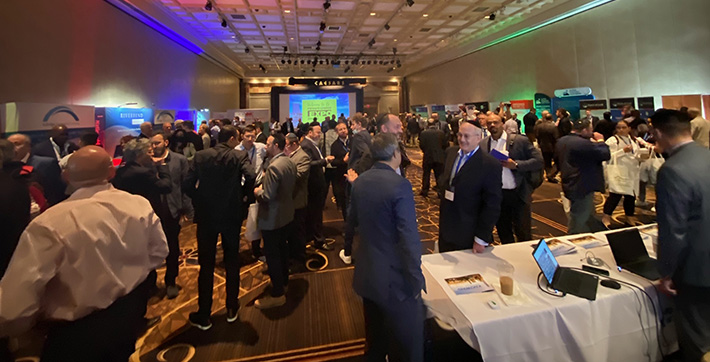 “We’re here because we’re looking to see if we can branch into real estate lending,” said Porsche Brooks, CEO of Brooks Partners Finance, a company that provides a suite of funding services that include both MCAs and SBA loans.
Brooks was one of many that attended the Private Lender Expo in Atlantic City on Thursday, where financiers, developers and more talked heavily about apartment complex and suburb-centric commercial real estate development.
“There are opportunities here,” said Brooks. “We’re really looking to expand.”
While there was evidence of fintech making its way through the space, companies providing document-digitizing software were hesitant to label themselves as fintech companies.
A representative from CoStar, a technology-centric real estate information company, called themselves “fintechy” but made it clear that they are only looking to function within the current space, not revolutionize it.
Those who hosted booths at the event showed little interest in expanding business operations into small business financing as a way to grow their lending options. As real estate investments continue to pay hefty dividends, lenders who focus on that area aren’t looking to dilute their effort into other ventures.
“Small business lending can be such a headache,” said one real estate investment company representative when asked if they would ever venture outside of their investment property exclusivity into funding merchants. “The amount of money in real estate right now is evident all around us. There’s always a lot of people at stuff like this that will give you a million dollars, but now this stuff is becoming all real estate.”
Congress Introduces New Restrictive Small Business Financing Bill
November 19, 2021 A new bill introduced by Rep. Nydia M. Velázquez, the Chairwoman of the House Small Business Committee, and Senator Robert Menendez (D-NJ), hopes to “stop predatory small business loans” by applying broad consumer protections to small business borrowers nationwide.
This would be done by including small businesses as a covered party under the already existing Truth in Lending Act (TILA).
The proposal, if successful, would arguably become more restrictive than New York’s recently passed commercial financing disclosure law.
Among the supporters of the bill are LendingClub and Funding Circle. No republican members of congress are listed among the sponsors in the official announcement.
The bill is similar to one introduced last year that failed to advance, the Small Business Lending Disclosure and Broker Regulation Act of 2020. That bill never made it out of the House Financial Services Committee. The makeup of Congress now, however, is different than it was last year.
Lender is Providing $5K Incentive to Veteran-Owned Businesses
November 10, 2021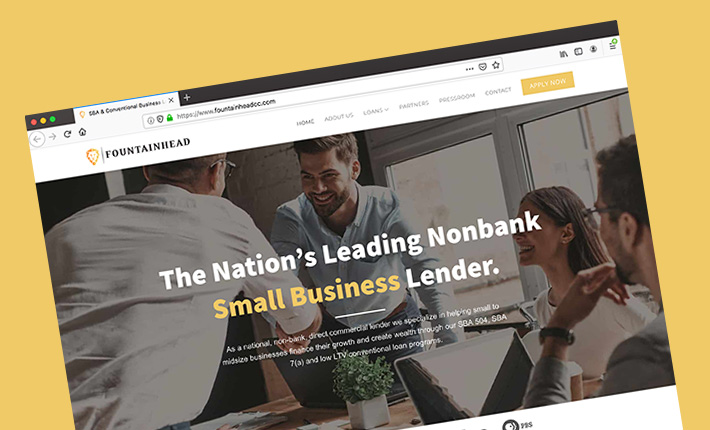 In an effort to promote veteran entrepreneurship, Fountainhead, the nation’s leading SBA 7(a) and 504 non-bank lender, is providing funds to veterans to assist them with closing costs of the deal should they pursue funding through the company.
Fountainhead’s CEO Chris Hurn spoke exclusively to AltFinanceDaily Wednesday about what Veterans Day means to him, his business, and how giving this group a break on the cost of capital is not just a marketing ploy, but a genuine attempt to give back to an underserved and under-recognized community.
“We have always been very supportive of veterans getting into entrepreneurship,” said Hurn. “[The promotion] is basically us gifting $5,000 on a transaction if they close with us.”
“Oftentimes, that’ll be enough to cover a real estate appraisal, enough to cover the environmental reports, it may be able to cover some of the credit reports, different things like that. We do put a cap on it, we are still a for-profit enterprise, but we are covering up to $5,000 of the closing costs.”
As a lender with more than two decades of experience, Hurn believes that veterans are some of the most trustworthy and reliable business owners to do business with. “Some lenders feel like veterans don’t have business experience, I disagree with that,” he said. “I think the military teaches people to be very organized, very disciplined, which are two critical pieces for entrepreneurship.”
From the lender’s perspective, Hurn believes that it is not only good business practices that military experience can provide, but honesty and creditworthiness when it comes to paying back a loan.
“Veteran business owners tend to be extremely organized, extremely disciplined in terms of operating the business. I’m not saying [non-veteran] business owners don’t have aspects of that, but I think the military does a tremendous job on teaching those character traits, which as a lender I find very helpful to make sure I’m getting repaid.”
According to Hurn, about a fifth of his clients are veterans, and he is hoping to increase that number with this promotion.
“[Veterans] are a very good credit risk, we want to encourage them to get into entrepreneurship, and I think it’s the right thing for the business community to do all they can to help veterans.”
Mississippi Fintech is Innovating Small Business Lending with Brokers in Mind
November 3, 2021
Vergent, a loan management software, is creating a space where brokers and lenders alike can manage all aspects of a deal in one place. Based in Ridgefield, Mississippi, Vergent is trying to innovate the industry with brokers in mind, pairing the small town values of interpersonal engagement and getting to know your customer with the big city ideas of fintech and automation.
“Really what we provide is the technology infrastructure for lenders to reach their end user,” said Bradley Tompkins, Chief Information Officer at Vergent. “Whether that be a small business looking for a loan, we facilitate that acquisition, the origination of that loan, and the servicing of that loan. That could mean recurring payment setups, based upon the lender’s requirements, communication with that customer via email, text, however that is facilitated, and all the different payment options.”
Tompkins talked about how his software is one of the few that brokers in his area are already utilizing to start making deals smoother. With access to all aspects of the deal, Vergent provides an all-in-one suite of options that can turn the process of analyzing a deal or checking out a deal post-funding into a couple of clicks.
“We actually have brokers who use our software to accept applications, originate loans, and then we can either transfer that to a separate portfolio that the lender then manages for servicing, or sometimes we have brokers that service the loans themselves,” Tompkins said. “So there are really a lot of options on how to set that up in the platform, so the lender can have a separate site where they accept applications from multiple brokers, or really any combination of those things.”
The value of a direct relationship with the customer is top-tier according to Tompkins, as he spoke about the next great innovations in fintech not being how to weed the human interaction out, but finding its role that will find the balance between human touch and AI power. “Once you know your customer, you can give them the option to pay you back in the easiest way possible. Understanding how they get paid, their pay cycles, when they have money and being flexible to accept that money when they have it, and giving them those repayment options is the next great innovation.”
When talking about the ability to market his product to a wide audience, Tompkins acknowledged the difficulty due to the size of the industry itself, but touched on the value of networking events like Money 20/20, where Tompkins was pitching Vergent to an international audience.
“We’ve been pleasantly surprised by the amount of lenders we’ve seen, and the amount of opportunities that have come our way from [Money 20/20]. We came here pretty open minded, maybe talk to some payment processors and other vendors that may be able to integrate to us and kind of help expand our network, but really it’s just getting our name out, seeing a little bit of a different segment than what we normally see, and looking at other market opportunities.”
Ascentium Capital LLC Reports $390M in Third Quarter Funding Volume
November 2, 2021 KINGWOOD, Texas – Nov. 2, 2021 – Ascentium Capital LLC, a national commercial lender, announced continued growth during the third quarter of 2021. Financing volume increased $82 million, up 26% from the prior-year period. Strategic execution and ongoing economic recovery resulted in strong performance this quarter.
“Ascentium remains focused on delivering an exceptional customer experience supported by operational efficiencies, service excellence and competitive financing products. These core competencies are resonating with our clients and contributing to our positive momentum going into the fourth quarter,” said Tom Depping, executive vice president and Ascentium group manager.
Ascentium Capital offers specialized equipment financing and business loans to commercial entities nationwide. The company also provides customized finance programs for equipment manufacturers and distributers with simplified application procedures to help businesses in a broad array of industries including commercial vehicles, energy, franchise, healthcare, industrial, and technology.
“Quarter-over-quarter originations growth remains steady as we continue to satisfy our customers’ demands,” added David Lyder, senior vice president of Ascentium Sales and Marketing. “We are recruiting additional sales resources and refining existing products to keep pace with, and anticipate, our customers’ needs. Our top priority is helping our customers grow their businesses.”
About Ascentium Capital LLC
Ascentium Capital LLC, a subsidiary of Regions Bank, specializes in providing a broad range of business equipment financing, leasing, and loans across the United States. The Company’s offering is designed to benefit equipment manufacturers and distributors as well as direct to businesses nationwide. For additional information about Ascentium and its business financing products and services, please visit AscentiumCapital.com.
About Regions Financial Corporation
Regions Financial Corporation (NYSE:RF), with $156 billion in assets, is a member of the S&P 500 Index and is one of the nation’s largest full-service providers of consumer and commercial banking, wealth management, and mortgage products and services. Regions serves customers across the South, Midwest and Texas, and through its subsidiary, Regions Bank, operates more than 1,300 banking offices and approximately 2,000 ATMs. Regions Bank is an Equal Housing Lender and Member FDIC. Additional information about Regions and its full line of products and services can be found at www.regions.com.
###
Media Contact
Christine Kimball, Vice President, Marketing
Ascentium Capital LLC
ChristineKimball@AscentiumCapital.com
Ascentium on Twitter: @AscentiumTeam
IOU Financial Inc Surpasses $US 1 Billion in Loan Originations and Establishes All-time Record in Quarterly Loan Originations
November 2, 2021in its 12-year history of funding small business growth in North America
Atlanta, November 2, 2021 – IOU FINANCIAL INC. (“IOU” or “the Company”) (TSX-V: IOU), a leading online lender to small businesses (IOUFinancial.com), announced today that it has surpassed US$1B in total loan originations.
“This is a major milestone for all IOU team members, partners and stakeholders,” said Robert Gloer, President and CEO. “In 12 years, the company has grown but our values have not changed: now more than ever we are committed to exceeding the expectations of our broker partners and the small business owners across North America who rely on our funding solutions to drive their growth plans.”
In addition, IOU announced today that its loan originations for the quarter ended September 30, 2021 surpassed all previous records. The company originated over US$52 million in small business loans in Q3, a new high-water mark in the 12-year history of the company, representing a sequential growth of 51.5% vs. Q2 2021, and 183.1% over Q3 2020.
“We are thrilled to surpass pre-pandemic loan origination numbers and start setting new all-time records for IOU Financial,” said Robert Gloer, President and CEO. “We remain cautiously optimistic that the economic recovery will continue despite the lingering potential macroeconomic and public health risks.”
IOU Financial originated its first loan in December 2009 and quickly positioned itself as a trusted alternative to banks by helping small business owners get fast and easy access to funding visa its proprietary IOU360 technology platform. The Company continued funding small businesses throughout the Covid-19 pandemic and has subsequently introduced the industry-first IOU Financial Cash Back Loan and announced an-all-time record in monthly loan originations.
“We faced the challenges of the COVID-19 pandemic with the same entrepreneurial spirit that drove us to launch IOU Financial on the heels of the 2008 financial crisis – and both experiences have reinforced the importance of helping small businesses adapt to new challenges and grow” added Gloer. “Here’s to the next 12 years of small business growth!”
The Company is due to share its Q3 Financial Results in the coming weeks.
About IOU Financial Inc.
IOU Financial Inc. is a wholesale lender that provides quick and easy access to growth capital to small businesses through a network of preferred brokers across the US and Canada. Built on its proprietary IOU360 technology platform that connects underwriters, merchants and brokers in real time, IOU Financial has become a trusted alternative to banks by underwriting over $984 million as of September 20,2021 in loans to fund small business growth since 2009. IOU trades on the TSX Venture Exchange under the symbol IOU (TSXV: IOU), and on the US OTC markets as IOUFF. To learn more about IOU Financial’s corporate history, financial products, or to join our broker network please visit www.IOUFinancial.com.
Forward Looking Statements
Certain information set forth in this news release may contain forward-looking statements that involve substantial known and unknown risks and uncertainties. These forward-looking statements are subject to numerous risks and uncertainties, certain of which are beyond the control of IOU including, but not limited to, the impact of general economic conditions, industry conditions, dependence upon regulatory and shareholder approvals, the execution of definitive documentation and the uncertainty of obtaining additional financing. Readers are cautioned that the assumptions used in the preparation of such information, although considered reasonable at the time of preparation, may prove to be imprecise and, as such, undue reliance should not be placed on forward-looking statements. IOU does not assume any obligation to update or revise its forward-looking statements, whether as a result of new information, future events, or otherwise.
Neither TSX Venture Exchange nor its Regulation Services Provider (as that term is defined in policies of the TSX Venture Exchange) accepts responsibility for the adequacy or accuracy of this release.
For more information, please contact:
Robert Gloer, Chief Executive Officer, 866-217-8564 ext.308
David Kennedy, Chief Financial Officer, 514-789-0694 ext. 278
Carl Brabander, EVP of Strategy, 866-217-8564 ext. 4378
Appalachian Crowdfunder Gives Take on Business Lending
November 2, 2021 View from outside of Pittsburgh, PA
George Cook, whose family has been running a small community bank in rural Appalachia for over 130 years, has grown up in a world surrounded by banking in some of the most rural parts of America. Now the CEO of Honeycomb Credit, Cook has taken to a crowdfunding platform to start lending to businesses in his area. Cook shared his thoughts with AltFinanceDaily about the state of lending, and how his product competes with ones already available on the lending market.
Cook spoke about how when he growing up, he always had a fascination with the relationship between the consumer and their banks combined with the difficulties for those consumers to get access to capital. “I spent a lot of time thinking about community banking, especially local capital,” said Cook.
When discussing competing products in the lending space, Cook thinks that his product will innovate his area with a style of lending that benefits both the borrower and investor. It appears that he thinks products like MCAs have become partially antiquated.
“I think the downside of [MCA] is inherently when your value proposition is fast money, you’re going to have a negative selection,” said Cook, when asked about fintech’s role in innovating small business lending. “You’re going to have a lot of desperate businesses who need money fast, which means you inherently have to charge a high interest rate and that has [deterred] a lot of business owners.”
 George Cook, CEO, Honeycomb Credit
Cook referenced how the complexity of some MCA deals prevent small businesses from using them. “We talk to a lot of business owners who really don’t understand what a merchant cash advance is, they get caught in a debt trap, and it’s not a good situation. For me, I think the next evolution is, not saying merchant cash advances are going away, but I think they’ve been over extended. I think they’ve been overapplied in places where they don’t make sense.”
Cook hinted at new fintech loan products that have elements of MCA popping up in the lending world, as fintech innovates the industry.
“I think now we’re going to see the fintech space start to right the issue, come up with other capital solutions that make sense for small businesses for longer term capital. I think we’re going to see a lot of term loan products that act with different data and different attributes coming to bear, [thus] being able to bank these businesses.”
After working in fintech building big data credit analytics products prior to starting Honeycomb, Cook claims he saw a major issue with small businesses having access to capital long ago. He saw that the qualifications needed for business loans were the same as ones needed for consumer loans, and many small businesses just didn’t qualify for the capital they needed.
“[The system] didn’t work as well for small business lending because you know, small businesses don’t have as much operating history, they don’t have clean data sets, they’re not keeping their books really well, there’s not really a good data aggregator of small business data.”
Cook continued to speak about the issues with banks evaluating a small businesses’ credit and how this was causing a low approval rating. “A coffee shop looks a lot different than a fitness studio and those look a lot different than a manufacturing plant,” he said. “We were actually seeing a really large decrease in small business lending across the country.”
According to Cook, his company allows investors to take their money and put it right back into the community. He also claims that each one of his customers can expect returns ranging from six to twelve percent on an investment.
Honeycomb makes money on success fees, which are the closing costs on the loan. There’s also an investor fee to get a foot in the door.
“One of the things we’ve found is whenever you have retail investors, you have local people in the community voting with their wallets on these small business loans,” said Cook. “So we’re able to do small business loans in a way that no one else has been able to.”