Looking Back & Forging Ahead: A Dialogue With David Goldin
June 23, 2016 DeBanked Magazine recently caught up with David Goldin, the founder, president and chief executive of Capify, a New York based alternative funder. Goldin, who started his business in January 2002 as a credit card processing ISO, has been an outspoken and active participant in the alternative funding space since that time. He is also president of the Small Business Finance Association, the industry trade group that he helped found in 2006. The following is an edited transcript of our discussions.
DeBanked: Since you started the business, Capify has grown from a credit card processing ISO into a global company with more than 200 employees in the U.S., U.K., Canada and Australia. Please talk a little about where Capify is today and your future growth plans for the company.
The key here is responsible growth and the responsible providing of capital. Anyone can fund deals. The hard part is collecting the money back, so you have to know how to operate during a down economic cycle. Capify did it very successfully in the last economic downturn. As we move into uncertain times, it seems there’s a greater possibility that the economy is going to get worse over the next 18 months. Even so, we’re working on several new products and new partnerships that we’ll be announcing shortly. Again, the trick is to be responsible about growth. We’re staying laser focused on our business right now and being very selective about where to invest capital in new projects during these uncertain times.
DeBanked: Continuing on the subject of growth, what do you think has been the most significant contributor to the company’s upward progression over the past several years?
I think our underwriting model is what has helped us the most. Our performance data has allowed us to make decisions in tough times and automate our processes further based on historical trends. We have 10-plus-years of performance data in the U.S. and 8-plus-years overseas. Most companies have only three to five years of experience, and most importantly, they haven’t been through an economic downturn.
DeBanked: How has the competitive landscape in the industry changed in the past few years?
Lenders are a different quality now. There is more variation in lenders than ever before—from lower-risk providers of capital to higher-risk providers of capital. Higher-risk providers of capital tend to charge a lot more. They also tend to have very aggressive business practices. The public perception is that all funders are the same—but we all have different business models and ethics in the way we operate our companies. It can be challenging at times to help customers, the media, partners and investors understand the difference between Capify and less scrupulous players.
DeBanked: What do you think the industry will look like in five to 10 years?
I think you’re going to see a lot of consolidation, and I think you’re going to see a whole new variety of products being offered to customers. The customer acquisition cost is too high to only offer one type of product. Similar to banks, alternative funders are going to start offering multiple products, if they aren’t already, and that will help make for a stickier customer and increase the bottom line.
Also, there will be significantly fewer funders than there are today and many ISOs will not be able to survive. I think more and more companies are going to start building their own internal sales forces. There are lower default rates and higher renewal rates in the direct model; the ISOs don’t have skin in the game. I think some of the stronger ISOs over time will become part of the larger funding companies.
DeBanked: There seems to be a consensus in the industry that more regulation of alternative financing is inevitable. How is regulation going to change how alternative funders operate and how might it change the competitive landscape?
I think you’ll see a lot more self-regulation before you see actual regulation when it comes to business-to-business lending. Funders are taking self-regulation more seriously and there have been more associations formed to educate policy-makers about the performance rates, default rates, renewal rates, customer satisfaction levels and how the products work.
The one area there could be potential regulation is in providing capital to sole proprietorships. The argument is that tiny businesses may need more assistance than larger companies, and some make the argument that these micro businesses are quasi-consumers. We disagree. We feel that if a sole proprietor is using the capital for his business, it should be considered a business transaction. However, several factors— including rampant media attention, more publicly traded alternative financing companies, tremendous growth of marketplace lending over the past several years and an election year—provide a recipe for all the regulation noise.
DeBanked: What are the biggest risks our industry is facing right now?
We’ve seen the movie before—in 2007 and 2008—when alternative funders didn’t factor in the severity of how an economic downturn could affect their business. The risk is there again. Funders have to be even more responsible. It’s not about how much you fund, it’s about much you collect back. You can’t be super-aggressive during times you think you may be
going into a down period. There could be significant industrywide fallout from irresponsible underwriting.
DeBanked: What advice would you give to new funders entering the market now?
I think the boat has left the dock; I don’t think they will be able to compete with established players in a meaningful way. Someone who really wants to be in the business should look at acquiring several small to medium-sized companies and rolling them up to get scale. It would be very challenging and require many years of investment to start from scratch at this point to build a substantial company. It’s harder now than it was in the past.
DeBanked: Can you talk a little about where you see the future of banks and alternative funders and how they will work together?
I think some banks will want to acquire platforms for speed to market or partner with platforms where the banks provide the capital and the funders service the loans. The latter is the model that J.P. Morgan and On Deck chose. The challenge is that the banks aren’t going to want to take a risk on applicants that don’t fall within the certain credit profile that they are comfortable lending to. While the partnership model will help banks make decisions faster about lending to small businesses, many small businesses will continue to be underserved. This could, in turn, provide an opening for independent funders who are willing to provide capital, albeit at higher rates because you can’t make a profit providing working capital (typically unsecured) at bank rates to the credit and risk profiles of businesses that most alternative funding companies work with today.
DeBanked: Please address the major technology trends shaping the alternative financing industry and what this means for industry players?
My opinion is the technology is ahead of the typical business brick-and-mortar business owner. Whilethe technology exists for business owners to go to a website and provide their personal and business data, we have found most business owners want to speak with a salesperson first, get a comfortable level and then apply online. (Compared with going right to a website and applying without a human involved). However, each year that goes by more and more business owners get more comfortable with technology and a greater percentage of them will look for a completely online experience. Being that it costs millions of dollars and years of time to build these platforms, you have to constantly evolve your platform to stay relevant. You can’t just snap your fingers and have it up and running.
I think the trend for our specific industry is being technology-enabled rather than being pure-bred tech companies. Customers still want to speak to people,but you also have to have viable backend technology so your business is scalable. Technology, such as digital bank statement transmission via various platforms, also helps cut down fraud compared with reviewing manual documents that can easily be forged or “Photoshopped.”
DeBanked: How can alternative funding companies best meet the challenges they are likely to face over the next few years?
I think alternative funders need to focus on more responsible providing of capital. This means really focusing on business owners’ ability to repay, taking a hard look at overburdening them with debt through stacking, for example, and further evaluating the referral sources of business they are getting their deal flow from in order to ensure that business owners get the best possible experience. Furthermore, I think as more alternative funding companies focus more on profitability and not just growth, coupled with the tightening of available institutional capital with an appetite for our industry, you will see some of the recent trends potentially reverse such as extremely high approval rates and industry margin compression.
Taking Stock of China’s Changing Fortunes in Fintech
June 21, 2016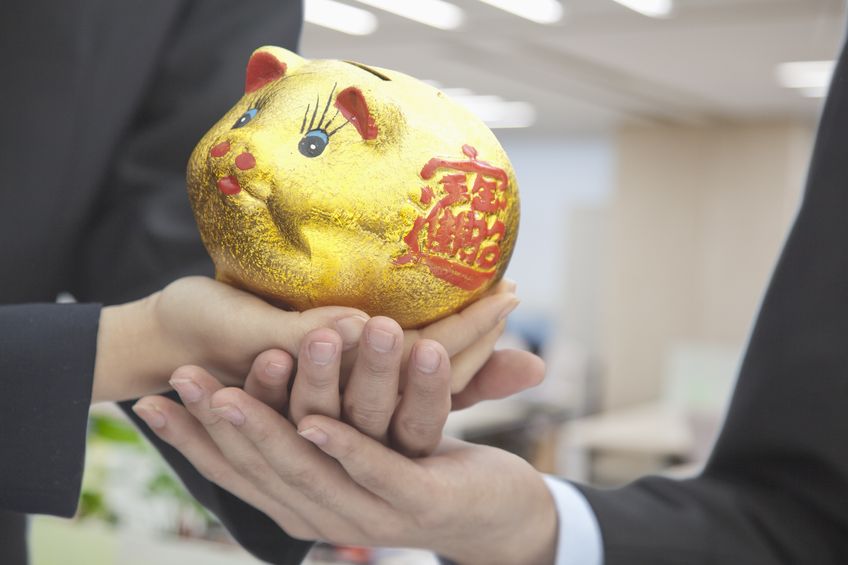
It’s been called the Wild West of the financial world, and it appears the sheriff is finally headed to town.
Chinese fintech, the P2P practice of connecting borrowers to lenders via the Internet, was supposed to bring much-needed competition and efficiency to the country’s outsized, government-run banking system, turning a sizable profit for a visionary group of investors in the bargain. Investors weren’t the only ones that stood to benefit from the boom. With large Chinese banks choosing to lend primarily to mammoth, state-owned corporations, the country’s small business community was similarly poised to profit.
That’s exactly how it played out for a while. Buoyed by bullish expectations, fintech startups with good marketing skills attracted large numbers of investors. This resulted in nearly a decade’s worth of easily amassed capital, dizzying returns in high interest rate bearing vehicles, and little in the way of meaningful regulation. Before you could say “Alibaba”, roughly one fifth of the world’s largest fintech firms hailed from China, with ZhongAn, an online insurance group backed by the e-commerce titan’s founder, Jack Ma, topping the list.
It was indeed the Wild West, but there was trouble on the horizon.
The twin villains irrational exuberance and negligent oversight eventually flipped the script, and China’s fintech sector has been reeling ever since. Returns derived from investing “captive capital” into funds that returned high spreads started drying up. Payment companies came under fire for questionable practices that at least one investment research firm, J Capital Research, likened to a Ponzi scheme. Doubt set in, followed by panic. Capital began flowing out of the country instead of into it, with investors that could head for the exit door doing just that.
By the end of 2015, nearly a third of all Chinese fintech lenders were in serious trouble, according to a recent article in the Economist, “trouble” being defined as everything from falling returns to halted operations to frozen withdrawals.
A few brave souls stuck to their guns, wrangling over how to make their finance models more sustainable for the long haul. Other so-called industry leaders simply skipped town. Literally. Enter “runaway bosses” into your preferred web search engine and the hits keep coming. According to the same Economist article, the delinquent bosses of some 266 fintech firms have fled over the past six months alone. It’s a worrying trend that pessimists say represents yet another nail in the coffin of China’s so called “Era of Capital.”
I wouldn’t be so sure.
Emerging trends will always be susceptible to periods of protracted volatility. It’s how industry leaders – and government officials – respond to such crises that lays the groundwork for what happens next. Now, the “maturation” process has begun in China. Unfortunately, to date it’s happened exclusively in the form of mass consolidation, with the state sector swooping in and taking over what was up until now a strictly private sector trend.
The Chinese government’s fondness for consolidating its interests is no state secret of course, but it would be a mistake for it to use the failings of the fintech sector to reassert the dominance of the country’s state-owned banking sector. The reason for this is straightforward enough. Big banks aren’t usually the biggest allies of small business, and every economy needs a robust small business sector in order to thrive.
Where could the Chinese government look for guidance? Not the US, unfortunately. If anything, the fintech market in America suffers from too much regulation. Everyone knows there’s no friendlier country on the planet for budding entrepreneurs than the US, and you certainly don’t have to look far to find examples of fast-growing American fintech success stories. You could go so far as to argue “disruptive innovation” in the financial sector is in our DNA, from the rise of Western Union to the emergence of giant credit card companies like Visa and Mastercard to the recent arrival of game changers like Lending Club, OnDeck and Venmo.
And yet, ask any fintech startup CEO about the thicket of regulation he or she has to routinely navigate in order to figure out which agencies have jurisdiction over, or which laws apply to, the various aspects of their businesses. Better yet, don’t. The alphabet soup of regulatory bodies they will be obliged to list – the SEC, the Fed, FINRA, OCC, FDIC, NCUA, CFPB, etc. – will put you both to sleep. The point is that these days the US lags behind other regions of the world in creating the environment the fintech industry needs to flourish. (One discouraging example: In the United States, the licenses needed to become a money services business (MSB) have to be acquired on a state-by-state basis; in the European Union, a single license is all it takes to do business in Berlin, Paris, Madrid, and Rome.)
Making finance safer is one thing, but blinding business with an unusually harsh regulatory spotlight isn’t the answer.
Why does it matter if the fintech sector goes belly up in China, the US, or anyplace else? To reiterate: Fintech isn’t some passing trend or get-rich-quick scheme. It’s one of the essential engines that drives small business development. According to the site VentureBeat.com, the World Economic Forum recently reported that a healthy fintech industry could close a $2 trillion funding gap for small businesses globally. You could drive a healthy uptick in the global GWP through a gap that size.
This brings us back to China. Chinese regulators may be tempted to capitalize on the country’s fintech troubles to reassert their influence, but they should strongly resist the urge. Instead, they might focus their efforts on taking steps to create a healthy ecosystem for the country’s fintech sector, one with regulatory controls that are clear, efficient, and properly implemented. Transparency will be key. One of the things American fintech companies do right is publishing essential information about those seeking loans, including their credit history, employment status, and income. This is to ensure that the investors putting up the money know what they’re getting into. It’s a critical confidence-builder, and China’s fin-tech model will need to be similarly transparent if it wants to succeed.
I happen to believe that it will succeed, and that it will continue to attract big money. The case could be made that it’s already happening. In December 2015, Yirendai, the consumer arm of P2P lender CreditEase, became the first Chinese fintech firm to go public on an overseas exchange, listing on the NYSE with a valuation of around $585 million. In January of this year, Lufax, a platform for a range of products, including P2P loans, completed a fundraising round that valued the company at $18.5 billion, setting the stage for a highly anticipated IPO.
Both companies pride themselves on their transparency protocols and risk controls.
The bottom line is this: No financial sector benefits from descending too far into a Wild West of laissez-faire everything, and China’s regulators were right to ride to the rescue. They would do equally well not to strong arm the sector’s brightest leaders. The country should strive to create a safe, healthy environment for third-party service providers to prosper and grow. If they do, it won’t just be investors in mobile transactions and digital currencies who benefit.
China’s entire economy will.
OnDeck Appoints Former GE Exec to Board
June 6, 2016OnDeck appointed Daniel Henson to its board, the company said on Monday.
Henson spent 30 years at General Electric, holding positions at GE Capital and ran the company’s commercial lending business globally in addition to managing GE Capital’s lending and leasing business through the 2008 financial crisis.
“Dan ran one of the largest commercial lending operations in the U.S. and his deep experience in strategic growth initiatives, process excellence and risk management will be a tremendous asset for OnDeck as we continue providing small businesses in the U.S., Canada and Australia with the capital they need to succeed,” said CEO Noah Breslow.
New York-based OnDeck netted a loss of $12 million in Q1 this year and also predicted a full-year adjusted EBITDA loss of between $41 million and $49 million. Online lenders have been battling turbulent times with increased scrutiny on business practices, portfolio performance and rising delinquencies.
China Ponzi Scheme: Central Bank Collects Data on Risks, Funds Deployed
May 23, 2016 The concern around online lending is global.
As a part of the crackdown on Chinese P2P lenders, the central bank is collecting data on the process of assessing risk and deploying capital for loans made online. The rapid expansion of new players and the subsequent fraud cases that followed, forced the government to take control.
Last week, (May 16th), Chinese authorities arrested Xu Qin, owner of Shanghai-based wealth management firm, Wealthroll Asset Management Co. who confessed that his company still owed 5.2 billion yuan ($797 million) to 12,800 investors. And before that, in April the police arrested 21 executives of Shanghai-based Zhongjin Capital Management, that promised retail investors double-digit returns for short-term projects.
The can of worms was opened with the shakeup of Ezubao, the Chinese P2P lending site which duped 900,000 investors out of $7.6 billion in February this year. Following which, the Chinese police were ordered to shut down illegal online lending sites and take swift action against suspects.
The Ministry of Public Security also launched an online platform in a quest to garner more information from the public and warned of P2P lender defaults in June, when payments will be due.
SoFi Hires Ashish Jain, Trader Sacked by Deutsche Bank Last Year
May 19, 2016
If you get fired from a top investment bank pending a compliance probe, don’t worry. Things might still turn around, as it did for Ashish Jain, the former Deutsche Bank trader hired by SoFi.
SoFi hired Jain to bundle loans into bonds and sell them to investors. Deutsche Bank’s former CEO Anshu Jain is already an advisor to SoFi. Speaking of Ashish Jain’s appointment, Bloomberg quoted SoFi CEO Mike Cagney as saying,
“We are comfortable with Ashish’s character and integrity..we spent a lot of time talking with folks in the industry and concluded that he is a good actor.”
Jain was terminated as the former head of securitized product sales for Deutsche Bank in America after the bank found that he failed to comply with the bank’s policies after the bank fired junior traders for lying to clients on the pricing of commercial mortgage bonds.
Separately, the San Francisco-based lender closed a $380 million securitization deal. And earlier this month, the company’s subsidiary SoFi Lending Corp became an approved Fannie Mae seller and servicer.
From Small to Big: Why Funding Circle is Building its Intermediary Channel
April 21, 2016 If online lenders want to disrupt banking, they need bankers.
Small business marketplace lender Funding Circle hired an intermediary finance veteran Neil Mullane to expand the company’s reach among small merchants. Mullane comes with eight years of experience in commercial finance at Barclays, where he oversaw business and corporate banking working with small businesses with a £250,000 to £25 million turnover.
The London-based P2P lender has channeled more than $2 billion of loans from individual and institutional investors to businesses in the U.S., U.K. and Europe since 2010 and has said that it remains dedicated to two principles, “marketplace and small business.”
And its gaze is set on Europe. Last year, it acquired German marketplace lender Zencap for an immediate footprint in Germany, Spain and Netherlands. Additionally, its SME Income Fund that was listed on the London Stock Exchange in November 2015, raised £150 million from shareholders and started lending to small businesses in those markets last month.
Last week (April 14), the company also launched UK’s first P2P securitized ABS backed by loans worth £130 million.
Speaking at LendIt USA recently, the company’s US co-founder and managing director Sam Hodges envisioned the golden age for marketplace lending where it takes “seconds to issue credit,” from a broad network of global investors. “A loan should get funded by a network of investors all over the world — be it a pensioner in London, a hedge fund manager in Sydney or a family office in New York simultaneously putting money to work through a global platform,” he said.
He elaborated further to note that the industry will have to work on four key tenets to get there: Stable lending capital, taking controlled risks, maintaining operational discipline to make sure that unit economics favor scaling and lastly, maintaining integrity around infrastructure and transparency.
The company has noted its intention to move in this direction at least with hiring the right talent, whether through the former Executive Board Member of the European Central Bank (ECB), Jörg Asmussen Mullane to lead business development or beefing up its risk compliance and product engineering teams in San Francisco.
Fed’s Steady Interest Rates: What Does This Mean for You?
March 16, 2016The Federal Reserve kept interest rates unchanged citing a global economic slowdown and market volatility in the US.
The central bank kept the benchmark federal funds rate at 0.25-0.5 percent and scaled back forecasts of higher interest rates noting that the economy is exposed to the “uncertain global economy.”
What does this mean for online lenders? Not much directly as marketplace lenders don’t use the prime rate as a benchmark. But by association, it could affect demand for loans, credit performance and capital supply as the Fed rates play with investors’ expectations of yield.
But a small increase in rates wouldn’t have affected the industry too adversely. “Given the cushion we’ve already built into our loan pricing, we don’t plan to increase rates if there’s a small shift in the base rate,” Sam Hodges, co-founder and managing director of Funding Circle told WSJ last year, ahead of the rate hike in December.
But policymakers expect the central bank to raise rates by 0.5 percent by the end of this year. Will that affect be of any consequence? Hard to tell.

Banks Admit They’re Scared of Startups
March 16, 2016If you cannot keep up with everything that is happening in fintech, you are not alone.
In the post financial crisis world, fintech startups perched themselves in the crevice between the big world of banks and the regulatory reform which controls their free reign. And since then, financial upstarts have only multiplied.
From P2P insurance, realty crowdfunding, marketplace loans and not to forget bitcoin, the capital infusion in fintech testifies for the market hype. In its report in November last year, CB Insights estimated that $24 billion has been invested in fintech startups and half that amount ($12.2 bn) was invested in 2015 alone.
It can be argued that some of these startups with multibillion dollar valuations are essentially smaller banks without the frills. Take SoFi for example, the San Francisco-based online lender is which worth $4 billion known for its touting we-are-not-a-bank image but provides most services from student loans, mortgage lending, personal loans to loan refinancing without the “bank branch.” The company also wants to start a hedge fund.
So, are the banks feeling left out? It depends on whom you ask, but a recent report from PwC surveying 544 CEOs, revealed that 23 percent believed their businesses were “at risk” by fintech innovation and 67 percent of the respondents said that they were under profit margin pressure.
“We thought we knew our customers, but FinTechs really know our customers,” the report quoted a senior bank official as saying. The report ranked consumer banking, payments and wealth management to be disrupted the most by these fintech startups.
The big bucks and the hype that follows it has made regulatory authorities sit up and take notice of the financial services upstarts and bring them under the supervisory purview. And while that may be legitimizing their foothold on the industry, the real questions around project revenues, possible exits and the companies’ wherewithal to handle a complex credit market remain unanswered.
Are we really at a tipping point of innovation or is it just new wine in old bottles?