Please Send Four Months Bank Statements
July 20, 2023 At some point in time the industry decided that the most recent four months bank statements constituted a solid baseline to understand a business’ financial picture. So deeply rooted is this precise number of statements that certain states like California now require that underwriters collect a minimum of four months statements to calculate a business’ average monthly historical sales. Curiously, there’s also a maximum. California does not want funders using more than twelve months of historical data in their calculations.
“The current four bank statements just give us a general idea of how the current position and standing with the business is, if they’re paying their proper overheads and their expenses,” said Ken Tsang, the Head Underwriter and VP at Fundkite. “And more of a general idea of what revenue they’re making right now…”
For deeper underwriting, however, he said they may ask for more, a common trend in the industry.
Gary Jules, Underwriter at Power Capital, also asserted that they rely on four statements as a baseline.
“If it’s a seasonal business, we may ask for more [statements],” Jules said. “Basically, we just want to see get a general broad picture of how much the business is generating a month.”
For Jason Hausle, who does Sales and Business Development at Quikstone Capital Solutions, the requirement is only two months bank statements but they also need six months worth of merchant processing statements because they specialize in split-funding. Although the merchant processing statements give them a feel for historical revenue figures, they find value in the bank statements for other reasons.
“We like to use the bank statements,” said Hausle, “the two most recent just to make sure there’s no other positions or liens that would pose risk for underwriting.”
Requests for statements industry-wide generally seem to top out at twelve months. Indeed, states like California limit funding providers to using a maximum of twelve months data in their monthly historical average sale calculations.
Tsang at Fundkite expressed that a limit of twelve is generally enough anyway.
“I would say, to an extent, yes, anything exceeding 12 months might be an issue because after all, we have to keep our business relationship with our ISO partners and with the merchant in general,” said Tsang. “We don’t want to create any issue where it becomes excess–pretty much excessive, and it might create any issues with our relationships…”
Google Files Lawsuit Over Fake Business Profiles and Fake Reviews
June 21, 2023 Agroup of defendants with an alleged common owner have brought a whole new meaning to Search Engine Optimization. According to a lawsuit filed by Google, one Ethan Qiqi Hu set up more than 350 fraudulent business profiles and bolstered them with more than 14,000 fake reviews. Although this case has no tie to the financial services industry, it may be worth knowing how the scheme was carried out.
Defendants did not limit themselves to a niche. According to the complaint, they pretended to be repair shops, chiropractors, cleaning services, spas, painters, and more. They got around the verification step by skipping the mailed postcard and consenting to video chat inspections, in which defendants relied on movie-like sets and props to convince Google’s staff they were at whatever business in question. Once established, its alleged they relied on thousands of fake reviews from Bangladesh and Vietnam and then used the business profiles to either generate and sell leads or to sell the profiles themselves for a profit. Google said that the scheme undermines people’s faith in their products.
“In 2022, we protected more than 185,000 businesses from further abuse after detecting suspicious activity and abuse attempts,” Google said. “We also stopped 20 million attempts to create fake Business Profiles in 2022, and continue to invest in new technologies and processes to keep information on our products helpful and reliable.”
Google said that they took this legal action “against a bad actor for deceiving and scamming consumers.” It added that it hopes the lawsuit “builds awareness that we will not sit idly by as bad actors misuse our products.”
There’s a message here that one can’t rely on Google business profiles alone to authenticate legitimacy (looking at you underwriting) just as one may not be able to rely heavily on Google Maps.
Federal Legislators Jump on Commercial Financing Disclosure Bandwagon, Renew Push to Give CFPB Authority Over Industry
June 16, 2023 Feel like there’s a lot of state-level disclosure going around lately? Well now some members of Congress believe another layer is needed at the federal level. In a bill titled the “Small Business Financing Disclosure Act of 2023,” the language looks awfully familiar. There’s a Double Dipping clause in it, for example, which was a term first seen in a New York State law.
The federal bill, which was introduced by US Senator Robert Menendez and Congresswoman Nydia M. Velázquez, seeks to place the small business finance industry under the authority of the Consumer Financial Protection Bureau (CFPB). As part of that, the Director (currently Rohit Chopra) would be responsible for devising all the rules and formulas, according to the bill. Furthermore, with regards to sales-based financing, the bill specifically states:
1. The provider must disclose an APR.
2. The estimated term of repayment and periodic payments based on projected sales volume must be disclosed.
“Small businesses are the lifeblood of the American economy,” said Congresswoman Velázquez. “But for too long, predatory lenders have taken advantage of businesses in need of capital by offering loans and similar products with unclear terms and exorbitant interest rates.”
Supporters of the bill, including Senator Sherrod Brown and Senator Ron Wyden, also stated that the bill is aimed at “predatory lenders.”
In Senator Menendez’s press statement for the bill, it cites Funding Circle, a small business lending company, as a supporter.
“We believe a free and fair market operates most efficiently when there is transparency in pricing, terms and conditions,” said Ryan Metcalf, Head of U.S. Public Affairs at Funding Circle U.S. When a small business has all of the necessary information up front including the annual percentage rate (APR), they can comparison shop and make informed decisions that are best for their business. Funding Circle supports one national uniform small business financing disclosure law because it is in the best interests of small businesses and interstate commerce.”
The push for a small business financing bill is not new. A similar bill introduced by Velázquez last year did not move forward, nor did the one from 2021, nor the one from 2019. The difference is that previous versions focused on Confessions of Judgment and fairness in small business lending. The latest version takes on the air of disclosure while attempting to subjugate the whole industry to CFPB regulatory authority.
CFG Merchant Solutions Surpassed $1 Billion in MCA Originations in Q1 2023
June 15, 2023
|
||
|
||
|
||
|
||
|



Capify Wins SME Lender of the Year Award
June 5, 2023Specialist finance provider Capify were recently crowned SME lender of the year at the 2023 Credit Awards.
 The awards, which took place at London’s prestigious Grosvenor House on the 1st June and were hosted by television’s Katherine Ryan, recognise innovation and best-practice in the financial services industry.
In a fiercely competitive segment, which included banks, fintechs, asset finance providers, invoice finance companies, and P2P businesses, Capify was recognised as the SME lender of year (up to £1m lend).
Reflecting on their win, John Rozenbroek, Capify COO/CFO said “This award is recognition of the amazing work the whole Capify team have undertaken over the past year and our commitment to serving the UK’s vital SME community. For many UK SMEs, access to finance can be a real barrier to growth and we are delighted that our innovative and flexible approach to serving this segment of the economy has been recognised”.
Capify’s Q1 2023 business confidence survey revealed that 55% of SMEs are uncertain in their ability to secure finance from their traditional banking partners. “This is where we step in”, Rozenbroek adds. “As an alternative lender, we pride ourselves on our agile yet responsible approach, enabling us to promptly provide the much-needed funds to this underserved audience. In fact, we can approve and transfer funds to the applicant’s account in as little as 24 hours.”
Launched in 2008, Capify was born out of the desire to offer small businesses an alternative way to quickly access responsible business finance when many firms were struggling to navigate the impact of the global financial crisis. With offices in the UK and Australia and approximately 120 employees, it continues to support smaller businesses with funding to meet the challenges and opportunities of today’s economic climate.
About Capify
Capify is an online lender that provides flexible financing solutions to SMEs seeking working capital to sustain or grow their business. Alongside its sister company, Capify Australia, the fintech businesses have been serving their respective markets for 15 years.
For more details about Capify, visit: http://www.capify.co.uk
Capify Media Contact:
Ian Wood, Marketing Director
iwood@capify.co.uk
0161 393 9536
ChatGPT Makes it Debut in The Secured Finance Market
June 2, 2023 “Based on the balance sheet provided, the business appears to have a healthy financial position,” the report states. This is the opening line of the written Financial Health Analysis conducted by OpenAI’s ChatGPT. From there it elaborates at length with all the relevant financial stats that an underwriter could ever dream of, even going so far as to recommend all on its own that recent tax returns, among other stips, should be requested to move forward.
What the world is coming to know as a chatbot, is capable of much, much more, according to Dave Kim, co-founder and CEO of Harbr, Inc. Harbr’s flagship product, IntakeIQ, is taking online application technology to new advanced places thanks to the introduction of real artificial intelligence. But there’s a right and wrong way to do this because keeping applicant information anonymous and secure is paramount.
“…security is massive, right?” said Kim. “Like you have to know going in that if you’re going to use a GPT or a Large Language Model that’s being hosted and you don’t have control of it yourself, that the data is 100% being used for machine learning.”
And along with security is the science of data input. Roughly speaking, the more information you send to ChatGPT the more it costs to spit out an answer. That means data not only needs to be secure but condensed down to such compact bits of input that the cost is acceptable and scalable. This is no domain for amateurs who think they can accomplish this with a basic monthly ChatGPT subscription. And Kim is no amateur.
“My background is in enterprise software development,” Kim said. A previous company he co-founded, GoInstant, was acquired by Salesforce for $70 million in 2012. Kim was already developing AI-driven technologies long before ChatGPT became known to the world, more recently in the commercial construction business. The aspect of invoices and payments combined with OCR technology soon evolved into a separate use-case where it could be used in financing like factoring and more. But their tech had to understand the niche particulars of the information it was analyzing.
“So we essentially started training a natural language processing model using machine learning techniques around those sorts of phrases and terminology for the construction industry,” said Kim. “So we were building that kind of tech first and then it became relatively easier when dealing with broader information in documents and other invoices that were coming in for not just construction.”
In 2022, Kim first encountered the capabilities of ChatGPT. He said that while the AI is great at creating a diversity of answers, the way they engineered their prompts with financial data produced consistent output. That’s what’s key. Harbr’s technology does a lot of the work on its own side first before sending off a highly secure, highly redacted, anonymized and reduction-optimized prompt to ChatGPT. The process can start with a pdf statement because it’s automatically OCR’d and analyzed first before any of this happens. Harbr isn’t able to view or retain any of the data and ChatGPT does not know anything identifiable about the applicant. Only the lending company is privy to the applicant’s info and the results. Setting this up for a lender can be accomplished very quickly.
The object isn’t to entirely replace underwriting, but to make it more efficient.
“Today we work with businesses that are in asset based lending, factoring, supply chain finance,” Kim said. “We’re starting to look at equipment, transportation, equipment financing and leasing. […] I think the entire secured finance market, there’s a fit here as the technology grows.”
How Raising The Debt Limit Affects MCA
May 22, 2023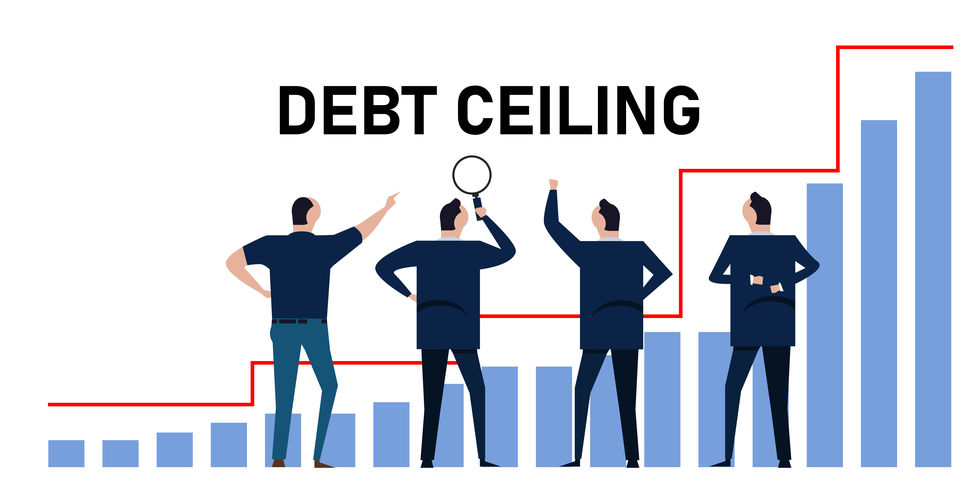 Every few years, particularly during the administration of a divided government, the threat of a default on raising the debt limit of the United States rears up in the political and economic spheres. While both sides tend to play chicken before ultimately settling on a negotiated outcome that they can sell to their bases, the current debt limit crisis feels more serious as the X date of June 1 looms with no settlement in site.
This crisis has a significant effect on various industries, and amongst them is the merchant cash advance business. MCA companies are heavily relied upon by small businesses for immediate financial needs, and understanding what this crisis means for the industry is crucial for getting through it unscathed.
Let’s compare the current landscape to running a business:
When a company opts to increase its debt limit, it essentially seeks to borrow more money, trading liability for an asset. For example, if the company’s equity is worth 100 billion dollars, borrowing doesn’t change this figure as long as the borrowed amount is an idle asset in their account.
The U.S. government should theoretically operate similarly to a regular company, borrowing only what it can pay back, but with the only growing expenses, when the government borrows money and raises the debt ceiling, it doesn’t always have enough funds for repayment.
In addressing its fiscal shortfall, the government operates distinctly from a conventional business. Unlike a company compelled to confront its financial mismanagement head-on, the government possesses the ability to print additional U.S. dollars. However, this course of action inherently devalues the currency.
For the sake of illustration, consider the worth of the dollar as a fixed entity. Suppose every thousand dollars equates to one bar of gold. If we slice this bar of gold into a thousand pieces, each piece represents $1. When the government initiates the printing of more money, it is essentially the government carving that same bar of gold into tinier segments. Meaning, if sliced in 2,000 pieces, the same bar of that once held the value of $1,000 is now $2,000. The total quantity of gold remains constant, regardless of whether it’s divided into 1,000 or 2,000 slices. However, with increased currency in circulation, each dollar—like every slice—holds less value, thereby shrinking everyone’s piece of the proverbial gold bar.
Now that we’ve explained the dangers of wantonly raising the debt limit, how does this affect MCA companies?
The debt limit crisis’s impact on MCAs is pronounced due to the time-value factor of money.
Suppose a mortgage of $100,000, repaid with interest over 30 years, amounts to $300,000. If the value of the dollar reduces significantly over this period – say by 50% – the bank, despite appearing to make a profit, loses money. That’s because the money they receive later has less purchasing power than the same amount ten years prior.
This reality can be acutely felt in periods of high inflation, such as in 2021 and 2022, where inflation neared 9%, and many felt it was closer to 20%. We all feel it during our grocery shops, the prices of experiences, and in other areas of our lives. Here, $100 can only buy what $80 could a couple of years ago, eroding the value of the interest charged.
At Better Accounting Solutions, a number of the MCA businesses we’re working with are concerned with this rapid devaluation of the money they’re funding.
The key factor to consider is the duration for which the capital will be deployed and how it will be recouped. For instance, if you advance $1 million at a 24% factor rate over 24 months and the debt ceiling is raised causing the dollar value to drop, your returns in the second year might be significantly less valuable despite the factor rate. This depreciation means that even though you’re receiving the agreed-upon returns, the funds’ purchasing power is considerably less, translating into a net loss of what would have been 13.5% over the past two years.
However, if you’re giving out (after careful consideration) riskier short-term advances with higher factor rates, daily repayments, and shorter durations, the situation would be different. Here, you’re receiving your return within, say, six months. Even if the dollar’s value decreases by 20% over a year, you’re less affected because your returns are realized in a shorter time and at higher rates, leaving you with a net gain.
Therefore, the debt limit affects MCA providers significantly, whether it’s being covered in the news or not. The devaluation of the dollar, high inflation rates, and other economic consequences of a debt limit crisis can dramatically impact the returns on cash advance businesses, especially those with longer repayment periods. As a player in the finance industry, it’s crucial to consider these elements when making advances or lending money. By factoring in these variables, providers can better protect their interests, minimize risks, and ensure the stability of their operations even during times of economic uncertainty.
Too Many Cash Flow Management Tools? Business Blueprint Looks to Address Inefficiencies
April 24, 2023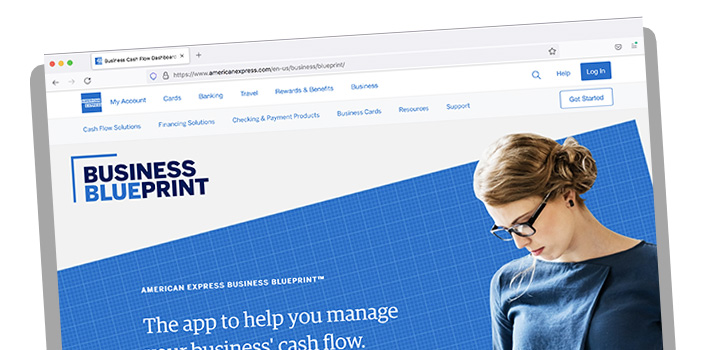 “One of the bigger things [small business owners] realize is, ‘Wow I spent so much time on the financial, the back office, and not what I love, not what initially drew me to starting a business,’” said Brett Sussman, VP of Marketing & Sales for Business Blueprint and Banking at American Express.
American Express recently conducted a survey with 1,100 small business owners that found that more than three quarters were looking to consolidate their cash flow management tools. That’s because they are often forced to rely on multiple tools to manage and project their cash flow, which uses up valuable time and impacts their ability to just focus on their business.
“What’s happening is in today’s uncertain economic climate small business owners are seeking this visibility and there used to be an expression that ‘cash is king,’ I now think it’s moved to ‘cash flow is king,’” said Sussman.
The survey participants included business owners with anywhere from fewer than 10 employees to 500 employees, spanning various industries. The survey revealed that 60% of SMBs use between two to three cash flow management products currently, with 62% spending 5 hours a week on various platforms and 18% spending even more time. It also showed that consolidating cash flow management products onto one platform would help build confidence among business owners and reduce the time they spend on these tasks.
The cost of tools themselves is also a concern. The data revealed that 36% want more affordable pricing.
“Price is certainly a consideration here and there are out there free cash flow management tools, and that’s something that we’re currently offering with Business Blueprint from American Express,” Sussman said.
Unsurprisingly, American Express is addressing their own findings through Business Blueprint. Among the key benefits of their cash flow management tool is ease-of-use, interoperability, and that it’s free.