
This Funding Shop Puts Students on the Phone for College Credit
October 5, 2023 “We figured out the best way is to recruit,” said Khoury.
Chris Khoury, CEO of Cheetah Capital, isn’t just hiring talent; he’s teaching it. He introduced a funding academy for college students in the summer of 2022. It’s an actual internship program that is specially tailored to recruit and train aspiring brokers and sales reps and teach them everything from the ground up.
Starting in the business three years ago, Khoury eventually went on to establish Cheetah Capital. He recognized the challenges in finding quality hires in the industry and decided to tackle it head-on with the creation of the program.
“[The interns] learn various skills such as cold calling, crafting professional emails, and acclimating to the corporate environment,” said Khoury. “Our program aims to provide valuable real-world experience that complements their academic learning to develop in business, marketing, and communication. They also gain experience understanding the world of financial services.”
The program is a collaboration between Khoury, Jonah Farella (Director of Sales & Business Development), and Joe Zampell (COO). The program is split into three “spots” (Spot 1, 2, & 3), where they each mentor 10-15 students and assess them on a weekly basis. Each student has an individual mentoring session each week and a team meeting every Monday.
Based in Boston, Cheetah Capital partners with local institutions such as UMASS, Boston University, Boston College, and Endicott College. Many of these schools have accredited their students with college credits upon validation from their team but interns are also compensated for their efforts.
“For Fall 2023, we’ve taken a slightly different approach,” said Khoury. “Rather than our usual remote/and in person internships, we’ve partnered with local Boston schools for a fully in-person co-op experience. These students dedicate their full semester to Cheetah Capital, working regular 9-5 hours, immersing themselves in a comprehensive professional environment.”
Chris Bearden, a current intern from Endicott, discovered the program on LinkedIn and secured an interview with Farella. Considering he is required to complete a 32-hour weekly internship in his senior year, Bearden has decided to cut his teeth in business in the world of b2b finance sales. He actually started at Cheetah this past June despite the internship program not officially starting until the fall. The program, he told AltFinanceDaily, started off with a lot of training and he says it’s prepared him to be able to talk more confidently to business owners and in general. He mused about the “100 different stories” he’s heard daily. “Everyone will tell you something different,” he said.
“The most I’ve made on a sale so far is $8,000 off of one deal,” Bearden shared. “That was really exciting, I can’t really describe the feeling being 22 years old and coming off of a phone call understanding that I just made that much money. But I think one thing that they have taught me at Cheetah Capital is just to keep your head down and kind of keep going…”
Farella, who oversees the program, also started out as an intern himself. As a graduate from Boston College, he was mentored by Khoury and he adapted to the industry quickly. Once he started closing deals and making money he realized, “I’m making more money than I ever have.” Helping the interns in his program at the time later turned into an offer from Khoury on running the program.
“Right now, we cap at around 45-50 [students] and that’s because we only have them for about three months,” said Farella. “But as it grows, and we bring in more managers, what we want to do is kind of offer interns a return offer.”
Offering real-world work experience to students while building up quality employees has felt like a win-win for Cheetah.
“We try to take good well-rounded kids here and teach them what we wish we knew at their age,” said Khoury.
Fundfi Secures New Credit Facility
October 2, 2023
Fundfi Merchant Funding LLC, a leading provider of Merchant Cash Advances (MCA), is proud to announce securing their newest credit facility to continue growing its funding portfolio.
The new line of credit, secured through a strategic partnership with Crown Partners LP, exemplifies Fundfi Merchant Funding’s unwavering commitment to supporting small and medium-sized businesses by providing them with accessible and flexible funding solutions.
This substantial financial injection arrives at an opportune moment for Fundfi Merchant Funding as it seeks to capitalize on a growing demand for alternative financing options among businesses facing challenges in securing traditional bank loans.
Efraim Kandinov, Co-Founder and CEO of Fundfi Merchant Funding LLC stated, “This line of credit not only bolsters our financial capabilities but also underscores our unwavering commitment to supporting businesses on their journey to success.

We understand the unique challenges entrepreneurs face, and this new funding empowers us to make a more profound impact in helping them thrive and achieve their dreams.”
Natasha Dillon, Co-Founder and CFO of Fundfi Merchant Funding LLC, commented, “This infusion represents a tremendous vote of confidence in our company and its mission. We are excited to leverage these funds to continue supporting businesses when they need it most and to innovate our offerings to better serve our clients.”
About Fundfi
Fundfi Merchant Funding LLC, headquartered in New York, is a leading provider of Merchant Cash Advances (MCA), offering tailored financing solutions to businesses across various industries selected.
Are You an Underwriter Thinking About Going into Sales?
September 26, 2023 My days of working on deals are long gone but once upon a time I was the head of one of the most well-known MCA underwriting departments (Merchant Cash and Capital). The problem was that I was a restless 24 year-old with a front row seat to watching ISOs my age and younger make up to 4x as much as my salary all while spending their days giving me a hard time. I don’t have to recall what it was like because I wrote it down when it was happening.
“ISOs debate constantly about declines and make excuses for required paperwork that merchants can’t produce,” I wrote.
I had little appreciation for how hard sales was and I relished being a hardliner on guidelines. While this approach ultimately paid off majorly for the company (it was in the run-up to 2008!), it did not prepare me for what I did next. I quit my position and became a sales rep for an affiliated ISO, you know because I thought I would automatically become rich off commissions.
After learning that sales meant I would get only 3 leads per day, it dawned on me that 95% of my time would be spent cold calling UCCs. And so that’s what I did, blasting away UCCs on a manual hand dial basis because there was no auto-dialer. Getting any app in at all was a huge achievement and I begged and pleaded with underwriters to pre-approve incomplete files that in a former life I would have enjoyed striking down.
It was a very humbling experience, which was made all the more humble when about a month later almost every MCA company in the industry stopped funding as credit lines got pulled and the financial system came to a standstill to kick off the Great Recession. I really could not believe my luck. My position had no base pay in those days so I had really shot myself in the foot. Just as before, I documented my experience.
“My streak was extended to 25 declined deals and a merchant I had been pitching for literally 4 months was finally giving me a shot. The sweat, the stress, and the dwindling commission paychecks led to the addition of a 2% closing cost on the deal. The merchant ok’d it and signed my form.”
I wasn’t the closing fee type but after the terrible streak and virtually no pay for a whole month, it happened. Unfortunately, the funder I did it with was not happy about it at all.
“The funder got wind of the closing cost and called our office,” I wrote. “Something was said about greed and overburdening their merchant. A warning was issued and they were going to watch my submissions more closely. 25 straight submissions with auto-decline notices, 4 months of sweat in closing a deal, and only a quarter of that 2% closing cost actually going into my pocket. That’s pre-tax by the way. Now I’m on their watch list.”
Somehow, somewhere at a funding company there was an underwriter out there talking about me being an annoying ISO. Fortunately, I appreciated the irony at the time and it was no hard feelings. I felt thankful for having had the experience on the other side of the table.
If you’re wondering if I went back to underwriting or gave up sales, I didn’t. I continued on as a sales rep and manually dialed hundreds of people a day for another three years. I really enjoyed the challenge and the motivation it sparked inside me. I ended up getting a lot of deals funded, though probably not enough to say that I was ever great at it. I launched AltFinanceDaily while doing this believe it or not. Smile and dial during the day, type on the site at night. Oh those were the days.
The moral of my experience is that the grass is always greener on the other side and sometimes it takes walking a mile in another person’s shoes to really appreciate what they do. If you’re ever annoyed by someone you have to deal with or envious of whatever they’re getting, just know there’s probably more to the story. I hope this helps.
Actum Processing brings Instant Credits, Powered by Real-Time Payments to Funders in the Cash Advance Industry
September 20, 2023Austin, Texas, September 20, 2023 – Actum Processing, a leading ACH payment provider in the lending space, is proud to introduce Instant Credits, a groundbreaking solution that is poised to transform the way Funders in the Cash Advance industry send money. With Instant Credits, clients can enjoy the convenience of depositing funds instantly, 24/7, 365 days a year.
Vinny Lipari, President and Co-Founder of Actum, emphasizes the paramount importance of speed in delivering working capital to merchants. Real-Time Payments, the backbone of Instant Credits, will provide Actum’s clients with a significant edge in the evolving industry landscape. Actum has forged a strategic partnership with one of the largest Financial Institutions in the country to bring this exclusive offering to the lending space. This collaboration ensures that Actum’s clients will have access to a secure and reliable platform for their processing needs.
Whether you are seeking to fund a deal, pay commissions, or deliver cash to your investors and syndicates, Real-Time Payments empowers you to do it instantly. Actum’s clients can leverage this service through various channels, including direct API integration, integrated SaaS platforms or Actum’s user-friendly Virtual Terminal.
“We are thrilled to introduce Real-Time Payments and Instant Credits to our valued clients,” says Vinny Lipari. “This innovative solution is a testament to our commitment to providing cutting-edge services that meet the evolving demands of the market.”
To learn more about Real-Time Payments and the full range of valuable services Actum brings to the market, contact Actum today.
Contact Information:
Email: sales@actumprocessing.com
Phone: (800) 975-5640
Funding Circle US Originated $259M in 1st Half of 2023
September 7, 2023 Funding Circle’s US arm originated $259M worth of business loans in the first half of 2023, up from $214M in the previous half. Those loans are funded “through forward flow agreements with institutional investors.”
The company’s recently filed financial statements say that US loans are “showing good growth.” And it’s with top tier borrowers to boot. It referred to 32% of its first half loans as being “super prime.”
AEBITDA was negative but that’s due to its planned investment to scale the business, the company said.
Yields on their US Loans averaged 5.8%, up from 4.4% over the same period last year.
The company’s newer product “Flexipay” was highly touted in its first half financials. Flexipay works like a line of credit. Once approved for a line, you provide invoice details to Funding Circle and they’ll make a secure payment in your name.
“We’ve seen good growth in US Loans and FlexiPay is showing great momentum as we expand our offering to access a larger market and serve more of our customers’ needs,” said company CEO Lisa Jacobs.
Protecting Your Syndicated MCA Investments
August 24, 2023David Roitblat is the founder and CEO of Better Accounting Solutions, an accounting firm based in New York City, and a leading authority in specialized accounting for merchant cash advance companies.
To connect with David or schedule a call about working with Better Accounting Solutions, email david@betteraccountingsolutions.com.
An increasingly popular way for merchant cash advances businesses to raise capital is by offering syndicated deals. In theory, this structure is simple to understand and fulfill the terms of: in these scenarios, investors put a percentage of the funded deal and get a percentage of the returns. But, as we all know, our industry is dynamic and has inherent risks, and safeguarding one’s hard-earned investments takes on paramount importance.
We saw the pitfalls in the cases of MJ Capital Funding, LLC and 1 Global Capital, along with more recent cases earlier this year, where investors were fleeced of hundreds of millions of dollars that they invested into what they thought were legitimate MCA funding companies.
What happened there is unfortunately investors did not see or understand the importance of having a third party reporting back to the investors and syndicators about how their investment was going, and were misled until it was too late.
So how can investors protect their investments in syndicated MCA deals?
 Know Where Your Money Is Going
Let’s start with the first thing you can do.
The landscape of MCAs is marred by tales of deceitful entities posing as legitimate funding companies, leaving investors and syndicators in dire financial straits when they are left to hold the bag.
From the outset, it is essential to ensure that the funds committed find their way into the intended bank account- one that is owned by the same entity as the MCA actually funding the merchants. The need for this is underscored by the unfortunate prevalence of fraudulent actors diverting funds to different accounts under deceptive entities. This manipulation obscures the money trail, making it harder to track and detect financial malfeasance, and leave investor funds vulnerable to exploitation.
Vigilance through Allocation Monitoring
To protect your investment against malicious machinations, it is crucial to exercise stringent vigilance and monitor your funds.
If one’s investment is tied to a specific percentage of MCA deals, a diligent verification process is necessary to confirm that the funds contributed align precisely with these deals. Ensuring the MCA business has a quality and comprehensive reporting and CRM system will provide a transparent window into the balance and distribution of funds across each deal. This transparency not only empowers investors but also safeguards their interests against any misallocation.
Additionally, investors should ask about and pay attention to when their portion of the syndication was added to a deal, to make sure you haven’t been added to a bad deal only once they have already started bouncing payments.
Finally, suppose the CRM system shows an available balance on your syndication for a certain amount. In that case, you can talk to the MCA funder about ensuring they always have that amount or more available in their bank account. If the available balance in the MCA’s bank account is less than your available liquid balance then essentially the funder is borrowing (and risking) your funds to fund deals without you benefitting.
Navigating Default Deception
Another way scammers try to fleece syndicators is by telling them deals that they have invested in have defaulted. Through shrewd tactics such as rerouting default payments to alternative accounts or manipulating reporting mechanisms, deceptive entities can evade investor scrutiny and keep their money.
To counteract these tactics, a collaborative partnership with a transparent and independent accounting firm is indispensable. This partnership acts as a source of clarity for both parties: unraveling intricate payment webs and ensuring that defaults are tracked while investors receive accurate insights into their investments’ actual performance that cannot be manipulated by the unscrupulous funder.
A Solution…
The scale of risks are glaringly evident. So what can you do about it?
The message is clear: vigilance is paramount. Minor inconsistencies can snowball into severe financial pitfalls, making it imperative to maintain an unwavering, watchful eye.
But it’s difficult for syndicators to do that, both because they have limited insights as syndicators and because they have their own jobs to worry about without the added stress.
That’s why Better Accounting Solutions encourages all our clients in the merchant cash advance industry to employ this protective framework:
When we come onboard to do accounting for business or investors, we encourage both parties to obtain explicit consent from MCA entities to share all information with the syndicator. Without formal authorization, firms like Better Accounting Solutions are legally bound from sharing crucial information. Trust and transparency rests upon this explicit approval, serving as the conduit for open dialogues and proactive measures. With this permission granted, the accountants can regularly produce independent and up-to-date reports ensuring both parties are on the same page and share a mutual trust. That’s the benefit of third party oversight: nothing is happening in the dark, without anyone’s knowledge.
Encouraging and working towards an honest merchant cash advance industry is a virtue that safeguards investments, draws more investors, and bolsters the credibility of our entire industry.
My Unique Experience Running a Print Magazine
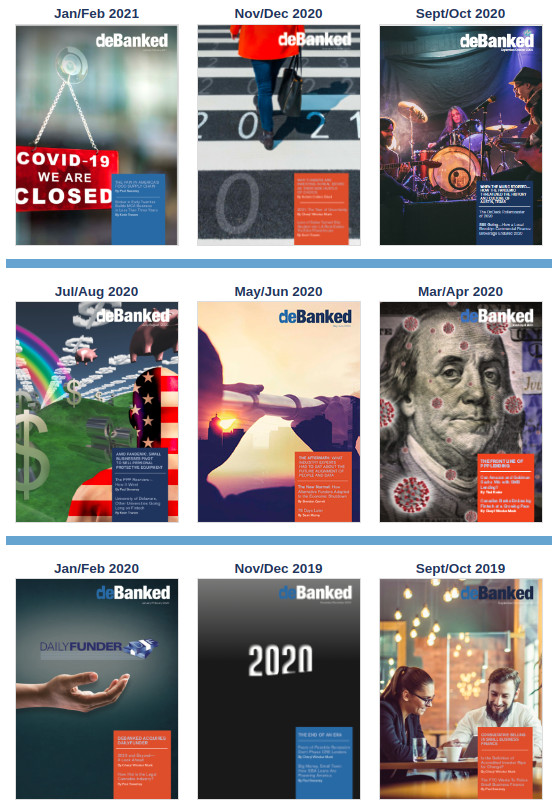
August 12, 2023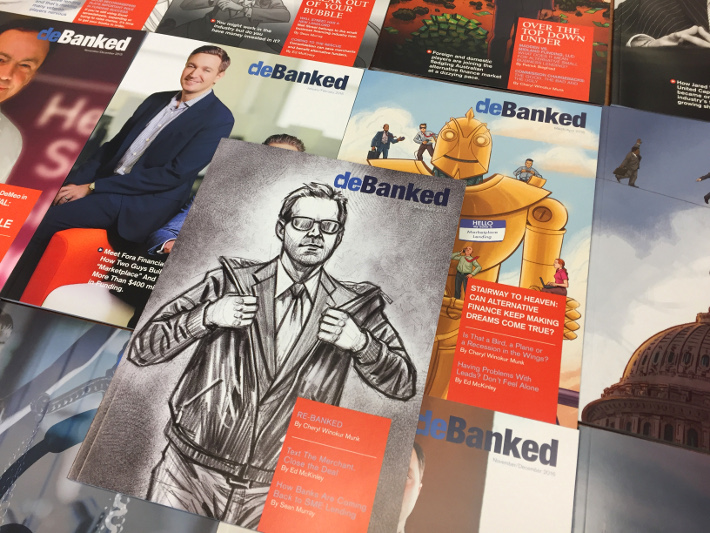 Two and a half years ago, the last ever physical version of AltFinanceDaily Magazine rolled off the printer (Nov/Dec 2020). Some were shocked that we stopped it while those who knew the print business wondered how it had ever gone on for so long. It was a nice addition to our website, placing content in hard copy format and shipping it out to thousands of offices across the industry for a total of six times per year, every year. Covid disrupting the traditional office work arrangement made it impossible to keep a magazine going that had such a large percentage of office distribution. I wasn’t sad when I made the decision to cut the cord, more like relieved, for it was an extraordinarily tough product to consistently produce for very little return in exchange.
And that’s where my unique story begins. With an average print run of 3,000 – 4,000 per issue and distributed for free, our little b2b magazine left a big impression on many who received it. So much so that some subscribers began to wonder if the real lucrative business of this era weren’t all the financial products covered in the magazine but perhaps the magazine business itself! LOL. But on this I am not joking. Rumors spread and I found myself on the receiving end of both admiration and condemnation about how much profit people thought the magazine was probably making AltFinanceDaily. The most common estimate I heard? That the magazine was guaranteed to be yielding at least $1 million per year just to myself personally after all the expenses. Which, man, would’ve been pretty awesome! Some threw out ballpark valuations for our magazine of $10 million (or even $100 million!!!!!) based upon assumptions that it made multiple millions a year in profit. Not the investment bankers of course, who knew better.
These numbers blew my mind, especially since I knew that they were very much rooted in complete delusional fantasy. If you want to know the truth, my internal personal valuation for our magazine had consistently been $0. This wasn’t some secret that I didn’t want anyone to know. I had just assumed it was obvious to all. I mean we were printing and mailing a free b2b magazine in the internet era. A magazine. A magazine…
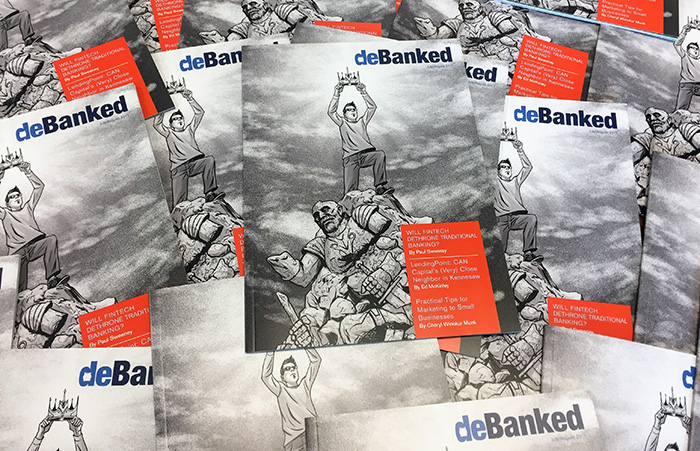 In a good year, AltFinanceDaily Magazine (when examined as a standalone) generated somewhere between $5,000 – $9,000 in total profit. That was with no salaries because it couldn’t afford even one full time employee dedicated to working on it. Not even myself got paid from it. The personal financial benefit to me throughout was a whopping $0. Thus with its extremely tight budget I played the role that a normal publication might have five people for in addition to working with a small number of freelancers for help in order to do the parts I couldn’t. I spent nights proofreading with a highlighter and days trying to figure out how we were going to fill up 30+ pages in a single issue. It was an incredible amount of work and truthfully, I really enjoyed it, which was the entire reason it existed in the first place. I thought it was a cool way to reach people that maybe weren’t reading our website and it provided us with a channel to create some long form stories we otherwise wouldn’t have created. I did not have one ounce of regret throughout that it was not a great financial business to be in and I promised myself I would just do it until I didn’t want to do it anymore or it started to generate a standalone loss.
But I admit the experience was slightly marred by the perception of how much some believed we were making from it. Everybody seemed to know somebody who had been in the magazine business and had apparently become a billionaire from it. They supposedly knew all the numbers, assumed our numbers, and as a result it made any humility I exhibited about it come off as disingenuous. I actually ended up becoming the target of some unusual hostility that I could not seem to shake about its “success,” no matter how obvious on its face that it wasn’t what they thought. There are those that will apparently take what they see and invent numbers off of how something looks and then tell others that those are the real numbers. I guess you live and learn.
 And so when my wife questioned why she sometimes found me sitting at the dining room table at 2am hunched over a stack of crumpled printer paper with yellow markers on one side and a cup of coffee on the other, I made sure to tell her that what she was seeing was a billion dollars in wealth creation. My big find of the night might be that a product that wasn’t a loan had been characterized erroneously with loan-like language.
“Page 27, left column, 4th paragraph down, 3rd sentence, it says ‘repay,'” I’d write off to the printing press who was under the assumption that it was otherwise all ready to be scheduled for a job. “It shouldn’t say repay, it should say….”
Which was then replaced by something too long or too short that threw off the page count of the book and I’d wake up 3 hours later to be told that they’d need me to draw a chart, create a half page article, or maybe curate some photos to take up some space. “Also, there’s something wrong with the bleed on page 4 and these other photos you sent are RGB not CMYK,” I’d be told. “This needs to be fixed right now to meet the new deadline because you already missed the last deadline.”
Such is the mystical story of it all, the coming together of words on paper that then got sent in the mail. A good number of people enjoyed them. That was the reward. When it could no longer break even despite having no employees, I made the call to cut it. It was a lot of fun to be in print while it lasted. Also a heck of a lot of work. We tried a digital only version for a while thereafter but it just wasn’t the same.
I have a tendency to sell things at just about our cost of doing them because I know other companies have tight budgets. The hope is that people will like what we’re doing, it’ll have a positive impact, and they’ll want more of it. That’s pretty much what makes me tick. Had I another motive and the temperament for it, I’d be out there doing all the stuff that the people I write about are doing. It does look fun, but it also looks like a lot of hard work!
I don’t believe the magazine will ever come back, but I’ll never forget the experience of doing it.
New York State Loan Initiative Takes on Fintech Type Pitch
July 24, 2023 If a business owner told you they had been approved for a 3-6 year loan up to $150,000 with no origination fees, no prepayment penalties, and interest rates ranging from 9.25 – 12.25%, would you believe it was a real offer?
The criteria, after all, is just a matter of:
– having been in business at least 1 year
– having strong previous cash flow and projected cash flow
Not only is this real but it’s being rolled out by New York’s “Forward Loan Fund 2” as a working capital loan that can be used for equipment, payroll, utilities, rent, supplies, marketing and advertising, building renovations, and other expenses. The state stops short of calling itself a fintech platform or online lending platform, instead referring to itself as a “virtual platorm” that is “accessible anywhere in the state.”
This is the second run of this program. The first distributed loans to 1,700 small businesses.
“It was a godsend,” one testimonial posted on the NY loan fund site says. “NDC made it so easy. It took two weeks and the money was in our account. Can you feel my joy?”
The program offers more than just capital, promising that there is a “network of Entrepreneurship Assistance Centers (EAC) available to provide free support before, during, and after the loan application process.”
The program is backed by participating lenders that include Accion Opportunity Fund, Ascendus, NDC, Pursuit, and TruFund Financial Services. There is about $150M available to be loaned out “with plans to recycle and lend additional funds over the life of the program.”
“Due to a limited amount of funding availability and the high volume of applications expected, it is anticipated that not all applicants will be able to receive a loan,” a disclaimer says.
At a minimum, the documents required to be considered are:
1. Most recently filed tax returns OR internal financial statements.
2. Schedule of ownership
3. Personal guarantee from each individual owner greater than 19%
4. Articles of organization
5. Credit report