
Me-Too Lenders Reject The Opportunity to be Unique
January 15, 2016 IMITATION IS THE BEST FORM OF FLATTERY
You know they say that the imitation is the best form of flattery, the only problem is that flattery is insincere praise, or praise only given to further one’s own selfish interests.
Surely new funders and lenders in our space are looking to further their own selfish interests by stealing away market share from existing players, which is perfectly fine seeing as though we operate in a free market society. However, what doesn’t make sense to me is thinking that you can steal away a competitor’s clientele by looking, sounding, and behaving exactly like he does.
THEY ALL SOUND THE SAME
I have no idea how many direct funders are present in our space today, but from what I’ve heard it’s well into the hundreds, and I receive recruiting emails along with invites on LinkedIn from these new players all of the time. What’s strange about just about all of these new players is that they all sound, specialize in, and operate the same as my current funders, leaving me scratching my head wondering why in the hell should I bring my volume over to you, if you do nothing different? I can hear them now:
– “John, we can consolidate your merchant’s balances as long as they net 50%!” (This isn’t anything new, the 50% net rule has been around for 17 years.)
– “John, we can approve some of your merchants for as low as a 1.12!” (This isn’t anything new, A+ and A Paper merchants have been receiving proper risk based pricing for years now.)
– “John, you will receive a dedicated account manager!” (This isn’t anything new, funders and lenders have been providing their broker houses with dedicated ISO Managers for around 17 years.)
– “John, we can fund just about every deal if the deal makes sense!” (This could be a new concept, the problem is that I have heard this before, only to submit a “restricted industry” merchant and it be declined just like it’s declined everywhere else.)
– “John, we fund deals as small as $5,000 to as high as $5 million!” (This isn’t anything new, this has been the standard funding range for years now. Plus, it’s rare that a broker in our space would get a merchant that needs $5 million, as those merchants would usually rely on the traditional lending system.)
– “John, we get deals done fast!” (Everybody says this, the reality is that unless a lender has automated the majority of their closing process as well as eliminated many portions of said closing process, then that means they are still doing a good chunk of it “manually”, which means it will always take 2 – 10 business days to complete everything.)
NOT EVERY “DIRECT FUNDER” IS A “DIRECT FUNDER”
There are a number of small firms that might market themselves as a direct funder, but the reality is that all they do is fund their deals through some type of syndication platform. My definition of a direct funder or lender is one that has built their own underwriting platforms and produced their own formulas to complete merchant cash advance transactions or alternative business loans. Thus, to be a direct funder (based on my definition), it’s going to “cost you something” in terms of real investment in your infrastructure, your people, as well as needing to raise millions of dollars in lending capital.
OUR TRUE PURPOSE IS DISRUPTION
Understand that our true purpose here on the alternative side of the debt financing space is to innovate how financing is underwritten, approved and delivered, seeking to steal market share away from traditional lending systems. The media calls this process “disruption.” Our system is so efficient, that with one of our industry’s most popular platforms, a small business owner can go online at 11:30 a.m. to apply for a loan, get an approval by 12:15 p.m., then complete their entire closing process online by 12:25 p.m. Within 60 minutes, a small business can start, sign for, and close their small business loan application for amounts including $25k, $75k, $150k, $200k, etc., and receive the funds in their bank accounts the next morning. The traditional lending system cannot underwrite, approve and deliver financing with this amount of efficiency, speed and proficiency.
IF YOU ARE GOING TO BE A DIRECT FUNDER, WHY NOT CONTRIBUTE TO CHANGING THE GAME?
Various reports on marketplace lending have estimated that the global lending size of our space is near $60 billion per the end of 2015, but it’s also estimated that by 2020 we will be near $300 billion of the total global lending market (includes lending on the consumer and commercial sides). Understanding this, what baffles me with new funders and lenders, is why in the hell are you going through the hassles of setting up your own platform, raising millions of dollars in lending capital, and setting up an experienced underwriting team, only to come into the market and do absolutely nothing different?
That makes absolutely no sense. You have the technology, the people, the capital and the formula behind you, so please add a unique contribution to our space to assist our industry as a whole (consumer and commercial side) in growing to this $300 billion in global lending metric by around 2020.
SPECIALIZATION RECOMMENDATIONS
When you enter the market and send brokers information on your program, it should be clear what separates you from everybody else and what your unique role will be going forward in helping our space achieve this $300 billion in global lending metric. Here are a couple of recommendations off the top of my head that you could utilize for specialization:
#1.) A True High Risk Funder/Lender
How about actually funding industries that nobody else will fund? I’ve seen this promoted before but I’m talking about going all the way by taking a look at our market’s standard underwriting practices across the board, then asking the question of, “What merchants are being pushed out and why? How can we start saying YES to these merchants rather than saying NO like everybody else is doing?” You could begin by putting together a list of industries on just about every funder or lender’s restricted list, then trying to figure out how to fund these categories with risk based pricing.
#2.) Bring Efficiency To Global Lending
How about funding in countries that other funders aren’t funding in? Basically, bringing the efficiency of the US market to the global markets in a way that currently is lacking? It’s hot over here in the US market with many players and competitors, but what about in the UK, Australia, China, etc.?
#3.) A Completely New Product
How about creating a new alternative working capital product that we’ve never heard of before?
#4.) Further Lowering Of Pricing
How about find a way to continue bringing down your cost of operations, administration and lending, so that brokers are able to have lower base pricing to increase profitability on lending to merchants, even those in A+ and A Paper categories? This can also help open up the market to attract higher credit grade merchants due to the lower pricing available, but still with “liberal” underwriting procedures.
#5.) A More Efficient Alternative Asset Based Lending Product
How about creating a more efficient alternative asset based lending product, that competes with the current crop of alternative asset based lenders? The current crop that we have today has a lot of inefficiencies within their product, such as having the merchant put up luxury items or even their house to obtain approval, but still charging the merchant rates that resemble traditional merchant cash advance factor rates or even higher. Shouldn’t the fact that a merchant is putting up tangible collateral lower the risk on the deal, which should also lower the pricing and extend the term? So I say, how about some innovation be done in this area so more of these products could be sold?
#6.) Innovation in Factoring, Purchase Order Financing and Equipment Leasing
How about providing accounts receivable factoring, purchasing order financing and equipment leasing, but finding a way to provide such services in an innovative fashion that’s different than the current crop of funders or lenders offering said services?
#7.) A Real Alternative Based Line Of Credit
There are certainly alternative line of credit programs out in our market today, but they are not as efficient as they should be. How about you create a real alternative based line of credit that would resemble something similar to a credit card line of credit, where the merchant can take it out and have it on the side, without it interfering with that of other financing programs such as a merchant cash advance or an alternative business loan?
#8.) Innovation In Consumer Lending
I know that regulations are much higher on this side, but could it be possible for you to find a way to create some innovative consumer lending products as well?
THE FINAL WORD
You have the technology, the people, the capital and the formula, so why in the world do you want to copy a current player instead of doing something different?
While I’m not saying that you shouldn’t also offer said programs of the current players to steal market share away from them, it’s just my opinion that the biggest opportunity today for new funders and lenders is to specialize in other niche areas that aren’t being catered to by our current market players.
Doing so should allow you to come in, specialize, make a name for yourself, and brand your organization as the “go to” funder/lender for (insert innovative concept here) for years to come. It might take you some time to “perfect” your unique brand and approach, but as long as you have investors that believe in your concept, you should be able to survive through the growing pains. To quote Herman Melville, always remember the following: It is better to fail in originality than to succeed in imitation.
Online Lenders Plummet Simultaneously to All-Time Lows
January 14, 2016 If it was involved in online lending, investors dumped it on Wednesday January 13th. LendingTree, a consumer lending platform, dropped nearly 30% for the day despite reporting positive results.
OnDeck closed at a new all-time low of $7.33, a drop of almost 14% for the day.
Lending Club also closed at a new all-time low. They finished at $8.86, after a comparably modest drop of 6.5%.
Enova International, the company that acquired The Business Backer back in August, closed at an all-time low. At $5.58, their stock dropped 3.13% for the day.
Square, a payments company with a substantial merchant cash advance operation, was down 4%, but they did not break the record for the all-time low they had just set six day earlier.
Yirendai, a Chinese peer-to-peer lender on the New York Stock Exchange, also managed to escape an all-time low despite being down 1.55%. Their all-time low record was also set just six days earlier.
For comparison’s sake, the S&P 500 was down 2.5% on the day. The continuous beating for online lenders, which can’t seem to catch a break in the market, is especially ominous because the economy is not in a recession and there are no indications that any of their business models are legitimately threatened. Nearly a decade since the beginning of the financial crisis, it’s apparently still cool to hate lenders. For LendingTree in particular, the precipitous drop on POSITIVE news was ugly enough to make the headlines in the New York Post. “LendingTree stock was sliced, diced, creamed and puréed,” the Post wrote.
Out there, the little guys who took a leap of faith to support fintech disruption seem like they’re preparing to riot in the streets:
$lc $ONDK ipo underwriters should be in prison
— TheMoneyTeamTMT (@TheMoneyTeamTMT) Jan. 13 at 03:42 PM
This is absurd $LC …this stock is either complete sh*t or we're going to have a monster rally
— Alex (@ROIRogers) Jan. 13 at 03:25 PM
$LC $ONDK new lows… starting to trade like a big recession is already here
— Mark Holder (@StoneFoxCapital) Jan. 13 at 01:42 PM
— BasicNews (@BasicNews) Jan. 13 at 11:49 PM
$SQ Here's another garbage company with bloated forward earnings, all these p o s stocks headed way lower
— QEBubble (@QEBubble) Jan. 13 at 05:18 PM
$LC F* this!
— Don Juan (@fluppy) Jan. 13 at 02:56 PM
$LC selling into oblivion. wtf
— Bork Bork (@calicat) Jan. 11 at 05:00 PM
Perhaps contributing to the damage in Lending Club’s case is that company executives have been dumping their shares over the last several months despite the stock constantly hovering near all-time lows. It certainly doesn’t show a lot of short-term confidence that something is going to change soon.
Insider selling is not the issue in OnDeck’s case which hasn’t really had any. While they were most likely just collateral damage from today’s unyielding carnage, Noah Breslow proclaimed on Squawk Box prior to the opening bell that OnDeck was regulated like a “non-bank commercial lender,” one of those rare characterization departures from their supposedly being a tech company. Aside from that was the sobering letdown that disrupting banks may have never been the goal for them or for online lenders. In a recent article by Broadmoor Consulting’s Todd Baker, he argued that “disruptor” has been the wrong word used to describe many of these companies and that their potential may only go as far as to digitally “enable” banks who are struggling with lagging technology to enable themselves in the modern era. Sound boring? Maybe there’s something bigger in play.
A Recession Could Turn Marketplace Lending Into The Hunger Games
January 13, 2016 When you don’t have the upper hand, one strategy is to partner up with opponents whose skills complement yours in order to compete with everyone else. But partnerships, while essential to self-preservation in an ultra competitive environment, are fleeting on the road to victory. When the field starts to narrow, it’s only a matter of time before truces are cancelled. The enemy of your enemy is your friend until they eventually become your enemy as well. Katniss Everdeen was not a lender last I checked, but her story is not so different.
Just last year, OnDeck partnered up with Chase while Fundation partnered up with Regions bank. Dozens of other “lenders” have partnered up in a different way with WebBank, Bank of Internet and Celtic Bank. Marketplace lending platforms that serve as centralized matchmakers have partnered up with hundreds of lenders and merchant cash advance companies. And Wells Fargo has had an arrangement with CAN Capital for what seems like forever.
Bank of America however, has vowed to fight on alone. According to the Wall Street Journal, BoA CEO Brian Moynihan “has no plans to partner with online or alternative lenders in part because of potential dings to its reputation.” Is that decision at their own peril?
While 2015 became the year of alternative lenders gushing about partnerships with banks (and that supposedly being the plan all along), Broadmoor Consulting Managing Principal Todd Baker relegated these alleged disruptors to a lesser status he refers to as “enablers.” Baker posits that OnDeck’s future for example, “may be brighter as a technology provider to banks than as a freestanding finance company subject to the vagaries of economic, credit, liquidity and regulatory cycles.” While perhaps not intentional, he seems to suggest that overtaking banks through technological innovation was unlikely and that alternative lenders are destined to a life of impotence, one that merely “enables” the competitors they were never going to beat.
Somewhere out there in the arena, Baker’s best friend Mike Cagney of SoFi is gearing up to win the 2016 Hunger Games. By openly admitting that banks like Wells Fargo and First Republic are the enemy, Cagney exhibits the ferocity one would expect of a tribute from District 2. SoFi has made nearly $7 billion in loans and wants their borrowers to leave their banks.
Behind the scenes, the Head Gamemaker is threatening to shower the arena with regulations and rising interest rates. While the alternative lending contestants partner up to ensure survival at least until the later rounds, there is potential trouble brewing in and around Panem, another recession. To hear most companies tell it, they would welcome a recession because they believe their models are built to withstand boom and bust cycles. Indeed, the atmosphere at Money2020 was exactly that, that it would be really convenient if the weak could hurry up and die already.
We should however consider that the consequences of a recession may go one step further and tip the scales of lending in a way that the “enablers” almost unwittingly become the new masters few now believe they’re destined to be. The Royal Bank of Scotland chief credit officer for example has already gone on record and told the public to sell bloody everything and prepare for the impending end of the world. 2016 will be a “cataclysmic year,” Andrew Roberts said. Fortune and Forbes have run less harrowing stories in recent days but warned that China, declining oil prices, and market signals indicate a recession could happen this year or the next. Reuters says we’re just facing a little thing called a “profit recession.” But whether these issues are false flags or indications of something more, an environment where credit once again becomes frozen in the traditional banking system could mean a suspension of partnerships between banks and alternative lenders. For alternative lenders that rely entirely on traditional banks for capital to begin with, the end for them will be swift and painful.

For those that don’t, let’s just say there’s a certain long-term advantage to being open for business when everyone else is closed. The merchant cash advance industry for example, which operated in an abyss between 1998 and 2008, suddenly awoke like a sleeping dragon during the Great Recession. In what is now a $7 billion/year industry or a $20 billion/year industry depending on how you define a merchant cash advance, the concept is now widely accepted as an alternative to traditional financing, even if at times criticized.
Foundation Capital’s Charles Moldow believes that “marketplace lending” will be a trillion dollar industry by 2025. “Consumers are fed up,” writes Moldow in his white paper. “Banks are no longer part of their communities. Rates are high for borrowers and not even keeping up with inflation for depositors. During the Great Recession of 2008-2009, when consumers and small businesses needed access to credit more than ever, many banks stopped offering loans and lines of credit.”
71% of Millenials would rather go to their dentist than listen to what banks are saying, according to Viacom’s Scratch. 33% believe they won’t need a bank at all in 5 years.
The presumption is often that banks will prevail in the lending tug-of-war anyway because they are more or less tasked by the federal government to be the arbiters of all lending activity. An economy where consumers and businesses regularly conducted their finances outside the purview of the banking system would be a nightmare scenario for a government that relies on the ability to monitor and control everything. Ergo alternative lenders should partner up with these banks, “enable them” and surrender to a future of impotence in which their only purpose is to serve their masters until perhaps one day the banks replace them with something else.
With alternative lenders still operating unfettered for now, today’s developing regulatory pressure would in all likelihood be traded for support in a recession, even if that support came in the form of willful ignorance.
If Millenials would already rather get a root canal than talk to their bank, then it’s probably not a good time for banks to become even less friendly, as would happen in a recession. The timing of one in the near future is almost to be expected considering how long it’s been since the last one, but the next one could be one of those transformative moments in history in which the world actually comes out looking a little bit different. Make no mistake, today’s alternative lenders are disruptive, they’ve just been playing the game rather safely. Partner up, work together, “enable” if they must, whatever it takes to ensure their survival into the later rounds. From student loans to consumer loans to business loans, 2016’s tributes are a force to be reckoned with.
There was only supposed to be one victor of the 74th hunger games, the banks. And there was always one until one year there were two. They surprisingly weren’t there to serve and enable their master either. The system that always was, was irreversibly disrupted.
The next recession could produce a similar outcome. Partnering with banks now seems like a great idea, but absent an actual merger or acquisition, they should be considered temporary alliances. You know what that means…
To the marketplace lenders and the technologies that power them, happy 2016! And may the odds be ever in your favor.
Merchant Cash Advance Predictions for 2016
January 10, 2016 I hate new year’s resolutions, as most of the time the people making them on January 1st have already broken them by the time January 10th comes around. The reason they’re broken quick and easy is because they aren’t goals, but rather wishful thinking. A goal is something that should fit within the S.M.A.R.T criteria, which is a goal that fits five general metrics:
- It must be specific
- It must be measurable
- It must be attainable
- It must be realistic
- It must be time-bound, or have some sort of deadline established
In other words, you don’t just randomly set goals, a goal has to first be done based upon critical thought, research, opportunity analysis and an examination of realistic outcomes, from there you set your objectives along with the step-by-step procedures to achieve them. Once this is done, you slap a deadline on each step-by-step procedure and continue to track your progression along the way.
I don’t set new year’s resolutions, I set new year goals and objectives. My goals and objectives for 2016 (in relation to our industry), will be based upon my predictions for the following 12 months. What do I see in my crystal ball for the year of 2016? This article will pinpoint my forecasts for our landscape this year. Some of you might agree and some of you might disagree, but nevertheless, these predictions ought to create a lot of quality discussion and debate.
“THE BIGGEST” WILL CONTINUE TO BE “THE BADDEST”
I’ve talked about the future of our industry before, with the belief that Strategic Networks will be the key going forward in terms of market dominance. These networks include the Center of Influence Network, the Mom and Pop Network and the Online Network. The Center of Influence Network includes other professionals such as banks, credit unions, merchant processors, etc., who have direct access to the prospective clients. The Mom and Pop Network is just a collection of random brokers from across the country that resell on a 100% commission basis. The Online Network is that of technology automation, especially the internet and how it will shape the market going forward in terms of communications, new lead generation, and more.
Well, the biggest funders on AltFinanceDaily’s Official Business Financing Leaderboard will continue to dominate the industry in 2016, taking more market share and growing the market in general, based on their efficient utilization of Strategic Networks.
PRICING PRESSURE WILL INCREASE AND COMMISSIONS WILL DECREASE, ACROSS THE BOARD
For higher paper grade deals, I believe that the pressure on pricing for A+ Paper, A Paper and B Paper clients will continue to increase, which will cause many funders and lenders to just stop competing for them (due to no longer being able to compete), while others will find innovative ways to reduce their operational costs so they can reduce down their buy rates, passing the lower costs onto these clients to compete against alternatives from the traditional lending system or P2P lenders. This entire process might also cause the commissions for these higher paper grade deals to decrease as well.
C Paper, D Paper and E Paper commissions will go down as well, as most of the new funders and lenders will target these paper grades due to not being able to compete in the high paper grade markets. Due to the increased amount of players, this will put pressure on pricing which will have brokers slicing their commissions even for the lower credit graded merchants.
TO HELP COMBAT PRICING PRESSURES, MORE PRIVATE FUNDERS WILL WELCOME SYNDICATES
More private funders and lenders will offer syndication programs for their brokers, and do so in a much more efficient, streamlined and transparent way than most of the other syndication partners are doing currently. This will help reduce the risk for a lot of these private funders and lenders, which would assist in bringing down their pricing across the board, helping them stay competitive in a marketplace where new competitors will cause merchants to put more pressure on pricing.
MORE FUNDERS WILL RESTRICT BROKER ACCESS
You will see more funders and lenders start to restrict their working relationship with new brokers. Basically, instead of just signing up anybody with a pulse, I believe more funders and lenders will actually vet new brokers they are considering partnering with. This will come as a result of the funders getting fed up of dealing with unscrupulous acts, fraud and other actions from these new and/or rogue brokers, which does nothing but hurt their brand and online reputation.
FUNDERS AND LENDERS WILL FIGHT BACK AGAINST STACKING
More funders and lenders will fight back against stacking by doing as I suggested before, which is to add a page to their Funding Agreement that says if the merchant stacks, then the merchant is liable for additional fee such as $5,000 or $10,000 per stack. This is similar to how on the merchant services side, early termination fees (ETFs) are used so merchants stop switching their merchant accounts over every month to try and save “$5.” In addition, I believe more funders and lenders will just stop filing UCCs altogether unless they are filed only on merchants that breach their contracts. This means that those new funders who specialize in “stacking”, might have to come up with a new model, as these updated practices will make it so that they will have a difficult time finding new “clients” to market to.
THE MAJORITY OF NEW ENTRANTS WILL BE SLAUGHTERED
You will continue to see new brokers, funders and lenders enter the market, with many of the funders/lenders being nothing but brokers in secret who seek to backdoor deals. Nevertheless, most of these new entrants will be slaughtered in terms of burning through their savings and capital on outdated marketing strategies or trying to compete within Strategic Networks that are already dominated by the biggest funders/lenders/brokers in the marketplace. Most of these companies will be fly-by-night companies, exiting the market as fast as they came running in.
UCC RECORDS WILL STILL BE POUNDED
I believe the UCC as a marketing tool will continue to be utilized by most of the newer entrants, despite the fact that the UCC Boom is Over.
BACK-DOORING WILL SIGNIFICANTLY DECREASE
Back-dooring will decrease significantly as brokers smarten up by researching the partners they decide to work with beforehand, and not just sending over ISO Agreements to “anybody” that calls them up and says they might be able to do something for their deals that other funders can’t do. Also, brokers will stop functioning as a sub-broker as well, which makes no sense, and this will also assist with bringing down the back-dooring issue. The heart of the back-dooring issue is the broker’s laziness, it is their laziness in properly vetting the partners they choose to work with, as well as deciding to sub-broker on a deal instead of researching the players in the marketplace on their own so they have adequate platforms available for any type of merchant they receive.
INDUSTRY WIDE REGULATION WILL GET CLOSER
While we can pinpoint that this is already going on in California, I believe you will continue to see some type of industry wide regulation that will restrict access to new brokers and seek certain levels of ethics from current brokers. This might be from within the industry itself, or it might be forced upon us from some type of regulatory agency. I’m hoping we can do this ourselves and not bring in the Government.
MARKETPLACE LENDING AS A WHOLE WILL CONTINUE TO GROW
It’s been estimated that we will see over $100 billion globally in marketplace lending (consumer and commercial side) in 2016, and I agree with this metric. I believe our products will gain more mainstream attention and be accepted more as the “standard” rather than an “alternative”, based on the efficiency of how we deliver capital, versus the extensive and inefficient process of the traditional lending system.
Year of The Broker Concludes – 2015 Recap
December 31, 2015 It was the Year of the Broker, a phrase that often conjured up images of easy money and inexperience. Lenders like OnDeck reacted by reducing their dependence on them. Responsible for 68.5% of their deal flow in 2012, OnDeck only sourced 18.6% of their deals from brokers in the third quarter of 2015.
But there’s money being made. One broker is on pace to do more than $100 million worth of deals annually after working as a plumber eight years ago. Another went from sleeping in his car to driving a Ferrari. Meanwhile, brokers like John Tucker are basically saying just the opposite. Tucker has repeatedly taken to AltFinanceDaily to preach things like “minimalism,” a practice of living below your means to a point where you can survive, and telling everyone it’s okay to embrace the satisfaction of a middle class life.
So is it the end of days or just the beginning?
In October, initial survey results of top industry CEOs revealed a confidence index of 83.7 out of 100, but out there on the street for the little guy, it’s been a tumultuous year. Things like commission chargebacks have hit brokers at unexpected times, with several funders privately telling us over the year that rogue brokers have closed their bank accounts or frozen the ACH debits in order to avoid giving the commissions back.
In 2015, brokers sued their sales agents and sales agents sued their employing brokers. Deals got backdoored, deals got co-brokered, and soliciting deals anonymously got banned from industry forums. Stacking continued mostly unfettered but is being pursued in the court system by funders allegedly injured by it. Brokers took over Wall Street and are supposedly being watched by regulators. Oh, and robo-dialing? Brokers should probably steer clear of that, just as underwriters should ditch paper bank statements.
It’s a lot to manage. Sometimes for a broker, just losing a deal can make them so sick that they have to go home. That’s apparently what happens when you don’t answer the phone fast enough. At least one said there’s no room left for more competitors so if you were thinking of starting a brokerage now, $2,000 won’t be enough.
But things could be worse. In 2015, IOU Financial was under attack by Russian nuclear scientists, a story that was more truth than exaggeration. In the end, Qwave Capital acquired a 15% stake in IOU.
An OnDeck class action lawsuit that looked bad at first turned out to be mostly based on the words of a convicted stock manipulator with a short position in the stock. The case is still ongoing and OnDeck’s stock price is down 50% from their IPO.
In 2015, two guys lost God but found $40 million (although numerous sources say that number is off).
“Madden” no longer means the football video game and Section 1071 is not a seating area in a stadium.
An RFI turned out to be something not to LOL about. Despite an overwhelming response from lenders and funders, the Treasury isn’t completely sold.
 Things weren’t so automated in 2015 despite the cries of technological disruption. Maybe that’s why it feels like 1997. Manual underwriting still dominated and bank statements still matter as much as they ever did. God declined loan applications, Google rigged the search results, and a mayor declared war on merchant cash advance (and then never spoke about it ever again after being re-elected).
Lobbying coalitions formed. NAMAA became the SBFA. The CFPB lied and community bankers testified.
But things are looking up. Brokers can obtain outside investments, get acquired, or make millions through syndication.
Bad Merchants are now ending up in more than one bad database, though a deal for the ages slipped through the cracks. Other merchants went to jail. Square went public and brought merchant cash advances along with them. The industry beamed its message through Times Square and one Democratic congressman has asked God to bless it all.
It was a crazy year. Marketplace lending became an acknowledged term (and the name of a conference) and already companies under that umbrella have been linked to presidential candidate (and desperate loser) Jeb Bush and the San Bernardino Terrorists. The FDIC had a few things to say and SoFi went triple-A. Marketplace lending is making a lot of people money, but when looking at the tax implications is there something funny?
In 2015, the big boys shared their wisdom and their figures. Turns out, it was beyond hyperbole. Brokers experienced an incredible rise or they pawned their ferrari to the other guys. Some focused on a specific crop, while others are trying it over the top. California sucked, John Tucker tucked, and one lender got totally F*****. In 2015 some funders got tanked, so in 2016 we’ll all be AltFinanceDaily.
Happy New Year!
Merchant Cash Advance | A Look Back and Plan Forward
November 29, 2015 Merchant Cash Advance is still a relatively unknown term and product to the masses, but amongst most of its target customer base, it definitely has a stigma that is rightly deserved in some ways, but I believe that it is also misunderstood in many other ways. Having been in the industry for nearly 10 years, I can say that I have seen my fair share of positive and negative events as they relate to the industry, but I believe that it has all been for its betterment and growth. Furthermore, by having been on the underwriting side for a majority of that time, I can say with great certainty that I have seen this product help several small business owners over the years, and it will continue to do so as the stigma fades away and acceptance increases.
For those of us working in this industry now, let’s face it – most small business owners that have taken a merchant cash advance or have been solicited for the product would much rather go to their bank for the money. The problem, as many merchants have come to realize in recent years, is that lending in general essentially dried up after the recession. The faucet is now running again, but small businesses were all but forgotten. Only the most well qualified borrowers are able to obtain the desired amount of capital needed at a reasonable cost through traditional bank loans. In addition to meeting all of the necessary criteria for a bank loan or line of credit, a borrower must also be prepared to wait months for the process to be finalized.
The days of a small business owner being able to go down to his or her community bank or local branch for a quick cash injection are long gone, but that’s where we come in. We are catering to a customer base that has been left out to dry. We are dealing in a marketplace that is grossly underserved by the larger financial institutions. We are charging a premium for taking on risk that most cannot stomach. We are keeping America running. That might sound ambitious, but is realistic when you put things in perspective.
SBA and IDC data show that small businesses employ at least half of the US workforce and produce anywhere from 60% – 80% of the new jobs annually while also accounting for nearly half of total US private payroll. As if that weren’t enough, small businesses also produce six trillion dollars or over 50% of all non-farm GDP in the US. When looking at additional SBA data which also states that more than 80% of all small businesses need to use some sort of financing to grow their business, it’s perplexing as to why banks have turned their backs on the people that have put America on their very own backs.
However, I do not want to go into great detail or make any assumptions on why “big banks” are not lending to small businesses. Rather, I would like to take some time to focus on how we can continue to support the growth of small businesses across America. The MCA product in particular has evolved quite a bit over the past 10 years, but a lot of that development has taken place in the past 3-5 years, and the industry has grown leaps and bounds as a result. When I started working as an underwriter several years ago, there were less than 10 lenders and 50 brokers operating within the space. Nowadays, there are hundreds on both sides of the fence, and there are multiple new entrants every day – senior guys starting their own operations, one man rogues from the insurance and mortgage businesses, consumer payday lenders, et cetera. – all looking for our piece of the pie, but who out there is really looking to improve upon and grow the product for the better?
 I suppose therein lies the problem. Unfortunately, the tremendous growth we have recently witnessed also comes with a flood of unqualified and unknowledgeable management and staff that are simply following the direction of their unqualified and unknowledgeable employers. As an industry, if we expect to continue making headway in the small business lending environment, we must first better ourselves by taking the time to learn and understand the product in order to better educate our customers. If you know me, you have heard me say on a few occasions that it is easy to put the money on the streets, but the problem for most people is getting it back.
As with anything in life, you cannot jump into something and expect to master it. Over time, you get a grip of what you are doing, and you begin to build on that understanding. Therefore, no one should enter the market expecting to make huge returns without learning the ins and outs of the business. I, along with several of my peers, have seen plenty of well-intentioned but aggressive entrants “lose their shirts,” so to speak, because they did not do the proper diligence on the industry or the actual diligence required to operate within the space. Lending money with only a UCC-1 in place only on future receivables or sometimes no collateral at all is risky business as it is, but not taking the necessary steps to mitigate that risk is only asking for a rough road ahead – not only for the lender itself, but also for their potential clients, brokers, other lenders, and the industry as a whole.
Our underwriters and sales people, in addition to management, should have a solid understanding of the product they are working on. They should be able to educate customers as well as their peers. Transparency throughout the process is key for maintaining a long and mutually benefiting relationship with the client. By having this firm grip and understanding of the product, we reduce the risk of an unsatisfied customer. As with the mortgage and insurance industries, sales and underwriting must work together to determine the best possible result for both the client and the company. This is definitely a challenge for most groups due to the amount of balancing required to meet the needs of the company, but by establishing best practices and procedures in both the sales and underwriting processes, we can begin to think and work within separate verticals and group goals but streamline the process to achieve the agenda of alternative small business lending which should be to help provide small business owners with the fast and efficient capital they need.
Whether you have been in the industry for years, you have just joined this year, or you are considering taking the dive now, it’s only fitting that at this time of year we give thanks to those small business owners and celebrate their entrepreneurial spirits because they are the reason we, ourselves, are currently employed. But more importantly, they are setting us up for quite an adventure which will change the landscape of small business lending for good. I, personally, cannot wait for the next 3-5 years of continued growth because I can only see a bright future if we are able to collectively educate ourselves and pass that knowledge along to our clients. As long as the proper steps to learn have been taken, the competition from new entrants mentioned previously is also welcomed because this further drives new ideas and developments within the space – new financial products to offer clients, lower costs, and most importantly easier and efficient access to quick capital for the busy small business owners constantly on the go in an effort to grow their business while putting the rest of us on their backs.
Brokers: It’s Okay To Be A Piker
November 5, 2015The Financial Services Industry is famous for coming up with different connotations that are outside of the comprehension level of the general public. Such connotation listings include terms such as: Derivatives, EPS, Diluted EPS, SPO, EBITA, Par Value, among others.
But there’s one word that I wanted to discuss in particular that comes off as a form of “slang” within the Industry, and that’s the word Piker. To be called a piker by someone in our industry, is to be called a person that thinks small, reaches for small goals and doesn’t dream big.
 MASS NEW BROKER ENTRANTS HAVE BIG DREAMS
The Merchant Cash Advance Industry is in a major bubble right now, with a large quantity of new broker entrants into the market all with big dreams inspired by the myriad of industry recruiting ads, highlighting that with little-to-no experience, you can jump in and make $20k a month. The “rah rah” sales motivational speeches soon follow with examples on how one guy is making $25k per month, how another guy just sold his MCA firm and cashed out for $5 million, how another guy made $1 million last year alone, and how YOU can do all of this too if you just come on in and start dialing!
So the big dreamers begin to dream……
- “This year I’m what Dave Ramsey calls a Whopper Flopper. I hate working in this crappy Burger King drive-thru, it’s time to start making my dreams come true.”
- “Next year, I will be making $20,000 a month and driving around in a Mercedes-Benz S-Class.”
The guy joins the new rolls of rookie/new broker entrants on web based predictive dialers calling merchants about a “UCC” they filed 3- 12 months ago. He will start out with about 150 merchants to call on Monday about this UCC filing, and by the time he calls those merchants on Monday, they would have already been called by 15 – 30 other companies over the previous two weeks alone.
In other words, they will all slam the telephone down in his face after he literally mentions the fact that he’s calling from any “capital or funding” company, without him even being able to get a word in.
 DREAM KILLED (REALITY SETS IN)
The reality is that success in our industry is mainly due to leveraged resources, rather than actual superior “selling” capabilities. What happens is that 20% of the brokers in the market remain profitable and sustain a good career/operations going forward, where as 80% of brokers don’t last more than 3 – 6 months, mainly because the 20% has access to resources that the other 80% don’t have access to, that provides them a significant market competitive advantage. These resources include:
- Having Strategic Partnerships with Banks, Credit Unions, Processors and Other Associations
- Having Access To Financing (Debt and Equity) Allowing For A Much Higher Marketing Budget
- Having Access To Better Base Pricing
- Having Access To Better Quality Data
- Having Access To Better SEO Positioning
- Having Access To Better Marketing Channels
Mr. New Broker, you were hired to be a part of what I call The Mom and Pop Network, which is just a group of random brokers who will resell for free (you pay for all of your expenses). So they might maintain a Mom and Pop Network of 2,000 brokers that bring in on average of 10 applications a year (20,000 apps) with 35% getting approved (7,000) and 30% closing (2,100) with an average funding per client of $30,000. This is $63 million in annual funding volume for the firm from this source alone.
A DIFFERENT APPROACH: THE PIKER APPROACH
So Mr. New Broker, how about instead of following the “rah rah” sales crowd, how about you join me over here on the Piker side and we set some goals on being solidly in the middle class instead?
- Going based on individual income, you are considered middle class in the US for the most part if from staying in an low/average cost of living area, you make over $40k a year (lower middle class), $50k – $60k a year (the middle of the middle class) or $70k – $85k (higher middle class).
- $50k – $60k a year in a low cost of living area will still allow you to live in a great quality Suburb, if you strategically manage your expenses with efficient budgeting and tax reduction strategies.
- You also want to be putting away let’s say $7,500 a year into your retirement/investment accounts. If you do this for 40 years from 25 – 65, with just a conservative 5% per year return, you will have over $1 million at age 65. At 65 you could put that $1 million principal into a long term CD paying let’s say 3% per year, opt to receive the interest every month, and get $30,000 a year. Then when you add in your Social Security payments of let’s say $20,000 a year, this now gives you $50,000 a year in spending power without even touching the $1 million principal.
IMPLEMENTING THE PIKER APPROACH
The first thing you want to do is make sure you stay in a low cost of living area, so if you are in a high cost of living area like NYC or LA, I would move immediately. Secondly, you would setup your virtual office (in the cloud) to include your telephone line, fax line, website, etc. Thirdly, you want to focus on doing market research on various market niche challenges where you can come in and creatively solve outstanding problems, for example, you might do some of the following:
- Find new solutions for niche industries that don’t qualify for most MCAs, but would like an MCA.
- Find new solutions for start-up companies seeking working capital.
- Analyze big data sources to find merchants in particular situations that you could address.
Map out a complete strategic business plan with sales forecast estimates, ROI estimates, and partner with companies that have the infrastructure to help deliver the solutions you laid out. Keep your credit clean and use No Interest Credit Card Promo Deals to creatively finance your marketing efforts.
FINAL WORD – AM I DREAMING TOO SMALL?
Am I dreaming too small? Shouldn’t I be up all night focused on how to be the next CAN Capital?
My issue with the “rah rah” sales speech is that they preach from the TOP of the ladder in terms of the extravagant income estimates ( $250k – $1 million per year), without providing any information to New Brokers on actual strategies, competencies, networks, and resources needed to ACTUALLY amass such levels of annual income. It doesn’t make any sense.
So my advice for all New Brokers is to be a PIKER, which is to establish yourself solidly in the middle class first, then once that’s done, you can look at ways to expand on your competencies, resources and networks to grow into the six figure income range.
Alternative Lenders Are Waiting for a Shakeout
October 28, 2015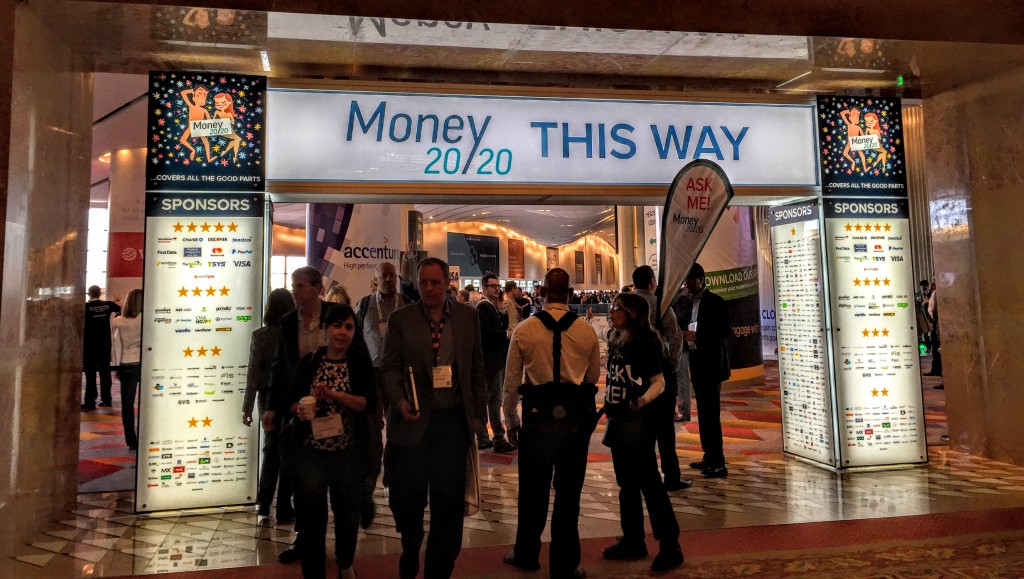 Back in April at the LendIt conference in New York, the big consensus was that not all underwriting was created equal and therefore several players wouldn’t survive long enough to make it back to LendIt in 2016. Six months later at Money2020 and so far everyone is still standing.
Loan terms are getting longer, rates cheaper and the cost to acquire borrowers higher. Somebody has to be feeling the pressure but in a rather benign economic and regulatory environment, it’s clear skies.
Valuations are soaring. SoFi is valued at more than $4 billion and Kabbage at more than $1 billion.
But Robert Greifeld, the CEO of Nasdaq warned attendees about the validity of private market valuations. “A unicorn valuation in private markets could be from just two people,” he said. “whereas public markets could be 200,000 people.” At best he described a private market valuation as being just a rough indicator.
And some wonder if these valuations are based on just scale, rather than the ability to underwrite more intelligently and efficiently than a bank. OnDeck for example, had a Compound Annual Growth Rate (CAGR) in originations of 159% from 2012-2014 when the average originations CAGR for their peers is currently 56%. But OnDeck has the advantage of time. With nearly a decade of data under their belt, they’ve been able to see what works and what doesn’t.
“You have to have enough bad loans to build a good credit model,” said OnDeck CEO Noah Breslow during a Money2020 panel discussion.
For Aaron Vermut, CEO of Prosper, getting their company to the next level was about having access to institutional capital. As a marketplace, and as a company that almost died several years ago, he pointed out, institutional money was the inflection point for them to grow. The peer-to-peer model that actually depended purely on “peers” is what held their company back.
One thing several lenders seemed to agree on was the limited applicability of FICO. FICO is not the thing to use for a small business loan, said Sam Hodges, Managing Director and Co-founder of Funding Circle. His words didn’t come as a surprise since credit scores are generally the domain of consumer lending.
But doubts about FICO’s ability to predict performance didn’t just come from the commercial finance side. Prosper’s Vermut explained that consumers still think their FICO score is the most important factor in the rate they get. So even though they’ve got a system to predict repayment outside of FICO, they’re kind of forced to incorporate it because consumers are being educated to believe that’s what matters most.
The irony was not lost that as Vermut said that on a panel, he was seated next to Kenneth Lin, the CEO and founder of Credit Karma, a company that educates consumers about credit. “A credit score is one of the most important components of a consumer’s financial profile,” says Credit Karma’s website. Such language puts a tech-based lender with their own scoring model perhaps at odds with what their own prospects believe.
For instance if a potential borrower with a 750 FICO score is offered a high interest rate because the lender’s advanced and more in-depth underwriting determined them to be high risk, they’re going to walk away confused.
That of course begs the question, who needs to change? Those educating consumers about credit scores or the lenders who are moving away from them?
Before educational services shift though, it would probably make sense if the lenders can prove that their non-FICO dependent systems will work in the long run. And the sentiment among many lenders is that there are plenty of flawed models out there that will inevitably fail. That makes a shakeout not just a matter of if, but when.
Six months after LendIt, everybody is still standing. Whispers from in and around Money2020’s halls and exhibit floor revealed that the confident lenders wish the correction would happen sooner rather than later but that they are prepared to wait however long it takes.
Right now, confidence about the future on the commercial finance side came in at an 83.7 out of 100, according to the Small Business Financing Report. While there are no other points of reference to compare that to, industry captains are generally very bullish.
That could mean that for those secretly under tremendous pressure already, you could be left waiting for a shakeout for a very long time.