Axiom Bank Acquires Allied Affiliated Funding
July 12, 2018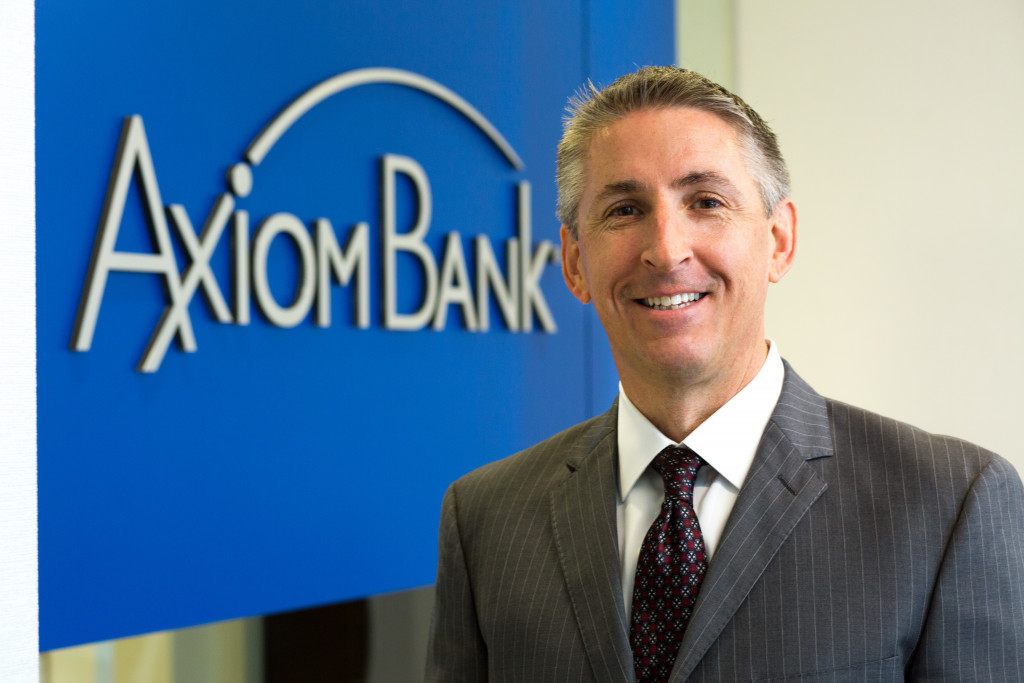
Axiom Bank, a community bank with retail branches located inside Walmarts throughout Florida, announced this week that it has acquired a factoring company, Allied Affiliated Funding.
“Allied has a proven track record of success with accounts receivable lending, which fits well with Axiom’s broader business plan to diversify and expand our commercial lending operation,” said Axiom Bank President and CEO Daniel Davis. “Allied is also an excellent fit culturally for us. They have a strong management team with the expertise to help emerging companies and businesses that are seeking growth, as well as those that need working capital.”
Allied’s factoring product will add to Axiom Bank’s offering for its small business owners clients. Likewise, Axiom Bank’s capabilities in cash management services will provide new opportunities for Allied’s current commercial clients. Allied is based in Dallas, Texas.
“Axiom is a Florida-based nationally chartered bank with a strong entrepreneurial spirit that is focused on maximizing clients’ potential,” Allied Affiliated Funding CEO Clay Tramel. “Combining forces helps us to deliver on a shared vision with greater creativity by offering new exciting products, including asset-based lending, in the marketplace.”
Tramel will stay on as CEO of what will now be known as Axiom Factoring. Gen Merritt-Parikh will serve as President and be in charge of the day-to-day operations.
Acquiring other companies has been a cornerstone of Axiom Bank’s growth strategy, including branch expansions (there are now 24 branches) as well as the launch of AxiomGO, a mobile banking app. Axiom was also recently approved as an SBA preferred lender, a designation that allows the bank to independently approve and underwrite SBA 7(a) loans.
Established in 1962, Axiom Bank is based in central Florida and provides retail banking services, including checking, deposit, and money market accounts.
It’s Back to Business For Alternative Funding in Puerto Rico
June 15, 2018
Last year, alternative funding in Puerto Rico ground to a halt after the island was ravaged by two devastating hurricanes in close proximity. Now, however, the alternative funding business in Puerto Rico is getting its second wind, after a several-month hiatus.
Puerto Rico got lashed by high winds and rain from Hurricane Irma in early September 2017, causing large-scale power outages and damage. Then, about two weeks later, Hurricane Maria hit the island square on, causing even more catastrophic destruction. Millions were without power for months (thousands still are), homes were destroyed, multiple lives were lost, businesses were decimated and the island’s already shaky economy teetered on the brink of disaster.
More than half a year later, residents are still trying to pick up the pieces of the epic humanitarian crisis. Hurricane Maria caused an estimated $90 billion in damage, according to the National Hurricane Center, making it the costliest hurricane on record to strike Puerto Rico and the U.S. Virgin Islands. The hurricane knocked out 80 percent of Puerto Rico’s power lines and destroyed its generators. Even months later, the lives of many residents are still in disarray as they wait desperately for insurance payments to materialize and get back to a semblance of their former lives. The island faces additional challenge—and uncertainty— with another hurricane season just around the corner.
In the midst of this turmoil, however, there’s a glimmer of hope for the budding alternative funding sector. Some businesses are once again seeking funds to rebuild or expand, and alternative funders are once again dipping their toes into the Puerto Rican market—albeit somewhat slowly. While some funders have exited the Puerto Rican alternative lending market, other new entrants are starting to stake a claim, citing an expected uptick in economic development that tends to follow natural disasters. Some funders also see Puerto Rico as a sweet spot because the market isn’t as mature as the U.S. and competition from other alternative funders is scant. Banks on the island aren’t always willing to provide businesses there with much- needed funds, so opportunities for non-bank funders are considered plentiful.
Businesses struggling to rebuild from the storms need more help than ever before, says Sonia Alvelo, president of Latin Financial LLC, an ISO that has been arranging funding for business owners in Puerto Rico for three years. “There is no doubt that Puerto Rico has a long, hard road ahead,” she says. But “I can assure you the entrepreneurial spirit is alive and well,” she says.
Latin Financial and other ISOs and funders are back to business—courting merchants and trying to help them get back on their feet. In December, Latin Financial processed its first renewal since Maria; in January it funded its first new client since September. Latin Financial continues to arrange funding of between $500k and $1 million per month on average in Puerto Rico, after some hurricane-related downtime.
“The storm destroyed a lot, but it didn’t set the small business drive back. They’re still pushing hard and really trying to maintain and grow business,” says Brendan P. Lynch, business partner and fiancé to Latin Financial’s Alvelo.
 Greenbox Capital in Miami Gardens, Fla., an early entrant to the Puerto Rican alternative funding market, has also returned to funding small businesses on the island after a few-month hiatus. The company put off new deals right before Maria hit, and as a goodwill measure suspended the payments of existing customers for 90 days. Given the extension, almost all customers were able to stay on track and the firm suffered very few losses, says Jordan Fein, the company’s chief executive. Greenbox began funding again in January, he says.
To be sure, it’s not exactly business as usual, since many businesses in Puerto Rico are still struggling, Fein says. While the situation should continue to improve, it will take time for the economy and businesses to fully recover, he says.
“They’ve come a long way since September, but they still aren’t fully back. We’re not seeing the same type of submissions that we saw before,” Fein says. Nonetheless, Fein remains positive about the market’s long-term prospects. “I think they are going to come back stronger, I really do,” he says.
To be sure, not all funders are interested the Puerto Rican market. Ripe with political uncertainty and economic instability, Puerto Rico already posed challenges that made many funders hesitant to do business there. The devastation wrought by Irma and Maria complicated matters further, and some funders pulled out of the market completely.
For others, however, the market’s still an opportune one, albeit not as stable as the U.S. market. Certainly, there are reasons for alternative funders to be optimistic. Despite its recent troubles, Puerto Rico is still considered a growth market. What’s more, with new businesses popping up in the wake of the storms, new infrastructure being instituted and businesses anxious to bounce back even bigger and better than before, some funders are striking while the iron is hot.
“This is the right time, as the island is growing,” says Paul Boxer, chief marketing officer and vice president of business development at Quicksilver Capital, a New York-based small business funder. Quicksilver funded its first deal in Puerto Rico in late April.
The company had been mulling over the possibility of doing business in Puerto Rico when an actual funding prospect arose. The company decided to give it a shot, sensing a potentially viable business opportunity. Existing businesses are rebuilding after the hurricane, there’s plenty of new business development and there’s a pressing need for new infrastructure as Puerto Rico continues to recover from the devastation, Boxer says.
Accordingly, Boxer says his company is in the process of vetting additional funding opportunities in Puerto Rico and hopes to continue growing this business in what he says is a largely untapped market. “I see it as a positive addition to what we offer, and I see a lot more opportunity in the future,” Boxer predicts.
Settling Up: Debt Settlement Companies Paid Yellowstone Capital and Everest Business Funding a Half Million Dollars to End Lawsuit
June 12, 2018 A group of debt settlement companies and ISOs have entered into a settlement they’re unlikely to forget. A lawsuit that accused Corporate Bailout, Protection Legal Group, Mark Mancino, Michael Hamill and others of tortious interference with merchant cash advance contracts has led to a settlement in which the defendants agreed to pay Yellowstone Capital and Everest Business Funding $500,000. They also agreed not to offer any services to Yellowstone or Everest merchants in the future, AltFinanceDaily has learned.
The original complaint alleged that ISOs had partnered with companies that purport to offer debt relief services to merchants with MCAs. In practice, the complaint said, debt relief was a code word for deceiving merchants to breach their existing agreements so that they could pay fees instead to the debt relief companies.
When asked to comment, Yellowstone Capital CEO Isaac Stern said that there were companies that offer this kind of service the right way but that was not the case here. “The way they’re going about it is really wrong,” he said.
Of note is that the bound parties were not just debt settlement companies but also ISOs and a law firm (Mark D. Guidubaldi & Associates, LLC dba Protection Legal Group).
Additional companies not named in the original complaint but nonetheless bound to the settlement are Mainstream Marketing Group and Corporate Client Services LLC. Websites for both companies say that they offer small business debt relief services.
Coast to Coast Funding LLC, who the defendants represented they had no control of, did not participate in the deal.
The settled matter is not the first of its kind. Everest and Yellowstone have been hammering debt settlement companies with lawsuits this year, according to court records examined by AltFinanceDaily. In January, Everest sued MCA Helpline and Todd Fisch for tortious interference, and just last month Yellowstone filed a Petition to recover funds that were allegedly fraudulently transferred by Settle My Cash Advance.
In the latter case with Settle My Cash Advance, the defendants are alleged to have actively coached a merchant to hide his money in new bank accounts and hide the paper trail rather than pay the money owed to Yellowstone.
Speaking about no case in particular, Stern said “Imagine getting a commission on a deal [where you help a small business get funding] and then sending it to a debt settlement company. If there are ISOs that are doing that, we’re going to come after you hard.”
An Inside Look at Strategic Funding’s Portfolio
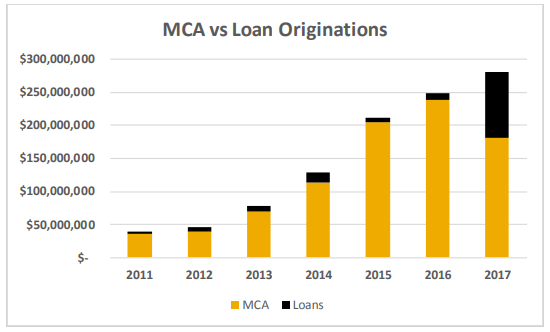
June 10, 2018A Kroll Bond Rating Agency report reveals interesting details about Strategic Funding Source’s $105 million securitization and also their business. Here are a few main takeaways:
Pool breakdown
60% MCA
40% Loans
Average original receivable balance per merchant: $40,705
Weighted Average FICO Score: 649
Weighted Average RTR Multiple: 1.35
Weighted Average Time in Business: 12.5 years
Weighted Average Gross Revenue: $1,729,709
Number of ISOs/referral partners: 1,300
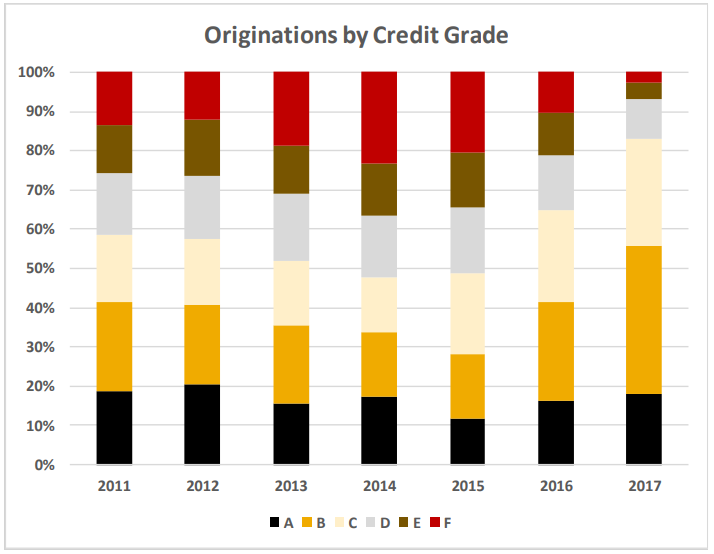
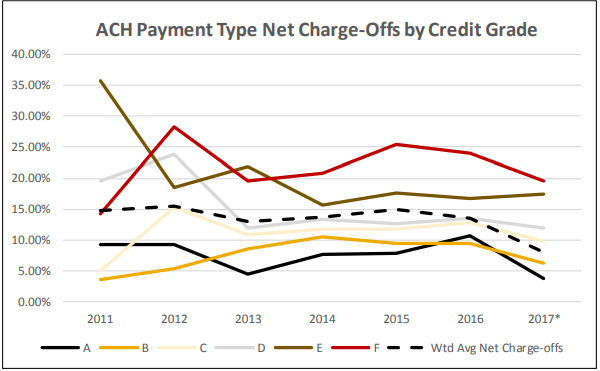
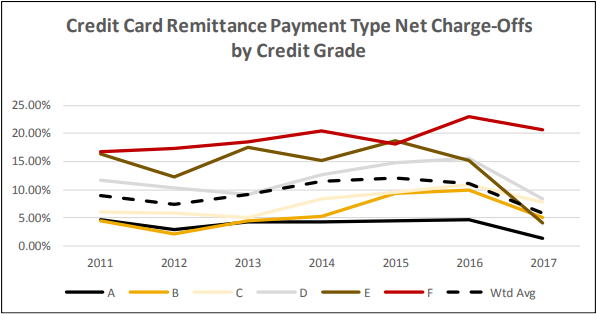
In an earlier interview, Strategic Funding CEO Andrew Reiser said, “It’s certainly exciting to be able to meet the requirements of a securitization. Kroll is a very responsible agency and they put you through a lot of rigor to be able to meet [their] requirements and have a rated bond.”
LeaseQ Partners with SEFA
June 5, 2018 LeaseQ, an online marketplace for equipment financing, announced a partnership yesterday with SEFA, a non-profit association of leading supply and equipment dealers in the food industry.
“SEFA is a group of 62 companies that work together like a big family to add value wherever they can,” said Vernon Tirey, founder and CEO of LeaseQ. “Unlike many buying groups, value-add is very important to them [and] that’s why we’re so excited to be part of the team.”
Tirey expressed enthusiasm about working with SEFA to develop financing solutions to meet the individual needs of each of SEFA’s members. LeaseQ has three kinds of clients: businesses seeking equipment financing, equipment dealers (like members of SEFA), and funding companies. LeaseQ earns money by charging a processing fee to funding companies for financing deals, Tirey told AltFinanceDaily. But the funding company rolls LeaseQ’s fee into its fee to the borrower, so the fee is ultimately paid by the borrower. Typically, for a five-year lease, LeaseQ’s fee is under two percent.
Aside from the benefit of LeaseQ getting new business from SEFA members, SEFA members will benefit by receiving certain perks from LeaseQ . For instance, Tirey said that LeaseQ has introduced a kiosk program for SEFA members where, among other offerings, SEFA members will be able to receive instant funding for transactions under $15,000.
LeaseQ facilitates equipment finance in over 20 different vertical markets, including agriculture, construction, oil and gas, medical devices.
Founded in 2012, the company is based in Burlington, MA, and employs 27 people.
Breakout Capital Announces New $15MM Credit Facility with Medalist Partners
May 30, 2018Leading innovative fintech lender announces $15MM credit facility to further fuel its growth in small business lending
McLean, VA May 30, 2018 – Breakout Capital, a technology-enabled small business lender, announced today the launch of a new, $15MM credit facility with a fund managed by Medalist Partners. The new facility will enable Breakout Capital to continue the rapid expansion of its small business lending programs, including the award-winning FactorAdvantage℠ program, across the country.
“Medalist is an ideal partner to support our growth,” said Carl Fairbank, Founder & CEO of Breakout Capital. “They appreciate the tremendous value that FinTech lenders offer to small businesses through timely access to capital, and its vital role as a growth engine for our entire economy. And just as importantly, they are aligned with our values of innovation, transparency, and advocacy for small business.”
The facility will support Breakout Capital’s growth across traditional business loans, Breakout Bridge loans, and FactorAdvantage℠ program loans. In the patent-pending FactorAdvantage℠ program, Breakout Capital complements traditional A/R factoring with a hybrid business loan, enabling consolidations or overadvances.
“We believe the combination of strong underwriting, product innovation, and a top-notch management team is a great recipe for success,” said John Slonieski, Director of Private Credit for Medalist Partners. “We are excited to add this credit facility to our portfolio of high quality asset-based lending programs.”
Throughout 2018, Breakout Capital has continued to grow its origination volume, breaking records each month for new funding volume. In parallel, the company has continued to innovate in its technology program, with notable advances in machine learning, artificial intelligence, and use of the blockchain to support lending operations.
“We are privileged to have Medalist as a partner on our growth journey,” said Fairbank. “This new credit facility is key to our bringing more of our great products, together with our partners, to more small businesses.”
About Breakout Capital
Breakout Capital is a leading financial technology company, leveraging best-in-class technology to provide a wide range of credit solutions to small businesses across the country. Built on three pillars of transparency, education, and advocacy for small business, the company is one of the fastest-growing direct lenders in the space, and leads a world-class technology innovation effort. Breakout Capital is a Principal Member of the Innovative Lending Platform Association and an original advocate for the SmartBox™ standard for transparency and cost disclosure.
To learn more about Breakout Capital, please visit www.breakoutfinance.com.
About Medalist Partners
Medalist Partners is an SEC registered investment manager with approximately $900 million of assets under management as of May 1, 2018. The New York based firm manages strategies in specialty finance and structured credit. The business and track record was started within Credit Suisse and Candlewood Investment Group, LP prior to being spun-out as an independent, partner-owned firm in 2018.
To learn more about Medalist Partners, please visit www.medalistpartners.com.
Fundbox Partners with Eventbrite to Provide Credit to Event Organizers
May 17, 2018 Today Fundbox announced an integration with Eventbrite that will give small business event creators access to capital.
Fundbox Chief Business Officer Sebastian Rymarz told AltFinanceDaily that event planners for small businesses often have to lay out a lot of money up front – to secure a venue, rent equipment or pay for a performer – before they get paid through ticket sales later.
“There’s this mis-timing between expenses and revenue,” Rymarz said. “There’s an acute need and we’re able to serve [event creators] by providing them with capital to fund those events.”
Funding a company as it anticipates future earnings sounds akin to factoring. But this solution for event creators is not a factoring product. In fact, Rymarz said that Fundbox does not have a factoring product. Instead, this new solution is a new application of what the company calls its Fundbox Line product. This is a line of credit that is paid back weekly over 12 to 24 weeks, regardless of when an invoice is paid, or when tickets are sold.
Fundbox doesn’t purchase invoices. It doesn’t even verify if an invoice exists. Instead, the company relies on its technology. Once an application is submitted, its proprietary system reveals a company’s payment history, its clients, vendors and other information that paints a picture of its creditworthiness. The data system, which Rymarz calls a “ledger graph,” is a web of thousands of small and medium-sized businesses that contains information about the businesses’ relationships to one another.
“Every customer that applies makes our algorithms smarter,” Rymarz said.
He also explained that Fundbox does not employ a single underwriter. Rather, the company invests heavily in developing technology, like its ledger graph. Rymarz said that of the company’s roughly 170 employees, 60 percent of them are either machine learning experts, data scientists or engineers.
The company, co-founded in 2013 by CEO Eyal Shinar, is headquartered in San Francisco and has a research and development team in Tel Aviv.
Strategic Funding Announces Securitization
May 12, 2018
Strategic Funding received preliminary ratings from Kroll Bond Rating Agency on four classes of Series 2018-notes that can be sold to investors. The notes are composed of Strategic Funding’s receivables, packaged together based on quality.
“It’s certainly exciting to be able to meet the requirements of a securitization,” said Strategic Funding CEO Andrew Reiser. “Kroll is a very responsible agency and they put you through a lot of rigor to be able to meet [their] requirements and have a rated bond.”

Reiser told AltFinanceDaily that although their securitization starts at $100 million, it gives the company the ability to ramp up to $500 million.
“A securitization allows you to continue to grow without having to constantly find who’s the next source of capital,” Reiser said.
He spoke of a securitization in contrast to a warehouse line of credit, which is a short-term revolving credit facility.
“A warehouse line requires banks to bring on more banks [which] is more tedious. With a securitization, it’s a very seamless process. It makes growth easier.”
Only Kabbage and OnDeck have a securitization in the alternative lending space, Reiser said.
The notes will be secured by a pool of the company’s receivables consisting of business loans and merchant cash advances. This securitization is particularly unique as it is uncommon to securitize merchant cash advances since the timing of a cash advance receivable is uncertain. (The securitizations for Kabbage and OnDeck are not backed by merchant cash advances as those companies don’t provide this product.)
The four classes of notes, valued at $100 million, received the following ratings by Kroll:
A- notes ($65,394,000), BBB- notes ($19,131,000) BB notes ($5,777,000) and B notes ($9,698,000).
Founded in 2006, Strategic Funding is headquartered in New York, with other offices in Boca Raton, FL, Arlington, VA, and Rockwell, TX, outside of Dallas.