What Works in Marketing Financial Products
November 17, 2021 Social media was at the top of the list for many marketers that AltFinanceDaily spoke with, but there are certain formulas necessary to make it work, they say.
“It’s coming up with new ways to say ‘we want to fund your deals,’” said Cassandra Lund, Social Media Manager at Lendini, when asked what the hardest part of her job is. Being heavily involved in the marketing campaigns of a large small business funding company, Lund believes social media is a prime place for setting up brand legitimacy.
“[Social media] provides something that even other forms of marketing cannot,” said Lund. “It instantly connects you to your audience and allows them to ask questions right away, either through direct message or as a comment.”
Fintech companies are also strategically using social media to start getting their name out there. Jennifer Marshall, Marketing Manager at fraud and dispute software provider Quavo, praised the power of social media; especially platforms that provide a professional environment for both consumers and businesses.
“We see the most results on LinkedIn,” said Marshall, “from both paid and organic efforts. “LinkedIn can take [businesses] a long way if their marketing team leverages tagging and mentioning [on the platform]. In the early stages of a company, when brand awareness is the top priority, [businesses] should leverage their employees’ LinkedIn networks.”
 While Marshall and Lund are marketing different financial products, they both agree on the inherent value of LinkedIn to their respective companies when it comes to a buttoned-up platform for connections and content.
“Just create a Linkedin and Instagram and start posting,” Lund said, when asked how a business could get their foot in the social media door. “You will find people in your industry, potential clients and information about what other businesses in your field are doing. Build out from there, and your business will thank you for it.”
With the opportunity social media provides comes responsibility, and some companies have let simple mistakes hurt the perception of their brand. Lund and Marshall both believe that a misguided or typo-littered social media presence can do a company more harm than good.
“Spelling errors and bad graphics, I see these [errors] a lot on social media as it becomes more and more important to small businesses,” said Lund. “There is nothing more important on social media than a first impression, and a spelling error or hugely pixelated photos is a major deterrent.”
Marshall stressed that companies not let “B2B vs B2C” marketing practices dictate their social media efforts. “In the end, you should want to reach people where they work and where they play. Once you understand that, the value of social media to all financial companies is crystal clear.”
 With new members of the work force living most of their lives ingrained in social media, it appears its value in the business world is exponential. “The younger generations have used it for years, or since being born, and it’s not going anywhere in the near future,” said Lund. “Finding new clients, new customers and like-minded business professionals on [social media] helps build your brand and stake a claim in the industry. Anyone that doesn’t think social media is important in business in general is missing out.”
Marketing financial products, especially new or alternative fintech solutions can be difficult, however. When asked about how to market a financial product, Francesca Ligouri, Lead National Designer at Create with Chess, a national marketing company that works in a variety of industries, spoke about the values of traditional marketing materials on top of social media. She stressed the importance of putting a tangible item that explains your business model in the hands of a potential customer that may not fully understand the product being sold to them.
Ligouri spoke about networking materials, and how sometimes the explanation of a product is best done through tangible imagery.
“It’s about using infographics and icons [to help] create a storyline of what you’re trying to say, while keeping your demographic engaged,” said Ligouri. “Illustrative materials like brochures, folders, and mailers make people want to pick up your collateral and be like ‘oh cool, what is this all about?’ instead of printing a word document of all your info and expecting people to want to read through it.”
Whether it is printed or digital materials, innovation in finance isn’t just about the technology behind the products themselves, but also about how those brands and their products are introduced to potential customers.
Bitty Advance Has Been Acquired By Industry Veteran Craig Hecker
July 23, 2020 There’s new management over at Bitty Advance. The Fort Lauderdale-based funding company has been acquired by long-time industry veteran Craig Hecker. Hecker, who years ago founded, grew, and sold Rapid Capital Funding had originally acquired a stake in Bitty earlier this year, but in the following months purchased the remainder of the business from founders Eddie Siegel and Lenny Duvdivani.
Hecker told AltFinanceDaily that under his management Bitty has committed capital that will allow the business to fund up to $10 million per month.
“I’m very excited to take my industry experience and knowledge and apply it to this segment of the MCA space,” he says.
As part of the takeover, Hecker says that he has “re-assembled his dream team of technologists and ops” that have been part of his inner-circle for nearly a decade and “were critical in building out the platform” that had made Rapid Capital Funding successful.
Bitty has historically focused on micro-advances and the company plans to really scale up its efforts in the $2,500 – $12,500 small merchant market segment with the aid of automated technology. In addition to this, Bitty has launched a new sales partner portal for ISOs. “That way [ISOs] will always know what’s going on with merchant applications,” hecker said.
Big Money, Small Town: How SBA Loans Are Powering America
December 26, 2019
 “The Mountains Are Calling” is the motto of Gatlinburg, an East Tennessee town of roughly 4,000 citizens known for its spectacular views of the Smoky Mountains and as a jumping-off spot for hikers, campers and winter skiers. The town also offers attractions such as Ripley’s Aquarium and arts-and-crafts festivals.
To get around, 800,000 tourists and locals alike hop aboard the 20-odd trolley buses operated by Gatlinburg Trolley, the private transit system. Few riders marveling at the picturesque scenery and enjoying the sprightly vehicles, which recall San Francisco’s cable cars, know that they’re riding a custom-made trolley-bus built by Hometown Trolley of Crandon, Wisconsin.
 And even fewer would know that the chief executive and president of that company is Kristina Pence-Dunow, making it the only female-owned manufacturer of transit vehicles in the US. Bolstering the manufacturing enterprise—which Pence-Dunow acquired in 1997 from her ex-husband, who wanted to “liquidate” it, she says—have been multiple bank loans backed by the Small Business Administration.
The most crucial SBA loan came in 2005, she says, just as she was nearly driven out of business in a price war. “We had to be innovative” to survive the cutthroat competition, Pence-Dunow told AltFinanceDaily in a telephone interview.
Using a $350,000, five-year SBA credit issued by River Valley Bank (now Incredible Bank of Wausau, Wis.), the transit company developed the prototype for a “lowfloor entry vehicle.” The design feature made her trolleys accessible to riders with walkers and wheelchairs and enabled the company to beat out its competitor for a key contract with Hampton Roads (Va.) Transit. That deal, in turn, generated sales to transit authorities in Miami Beach, Laguna Beach, and the University of Oklahoma.
Subsequent SBA loans, Pence-Dunow says, enabled the company to create its own dealer network and develop battery-powered, clean-energy vehicles. The financings also allowed her to buy out, in 2016, the rival trolley company that had tried to run her buses off the road.
Her grit and determination—for many years Pence-Dunow ran the company as a single mother raising two children—have also paid dividends for her Wisconsin community. With annual sales of $20 million and 65 employees receiving health and life insurance as well as pension benefits, Hometown Trolley has brought good-paying jobs to successive generations of families in the Northwoods.
In 2018, she earned the SBA’s “Small Business Person of the Year” award for the state of Wisconsin.
Hometown Trolley, meanwhile, is just one of 30 million small businesses that make up the backbone of the US economy. Small businesses—a small business is broadly defined as a commercial or professional enterprise with fewer than 500 employees—accounted for the employment of 58.9 million people in 2015, according to the US Census Bureau’s most recent figures. That’s just shy of 50% of the country’s total workforce. And it seems that the smaller the better: In 2018, firms employing fewer than 20 employees added 1.1 million net jobs to the US economy, the largest gains among the small business cohort.
 By contrast, large manufacturing companies only employ about 11% of the total workforce, notes Karen G. Mills, former SBA administrator and member of President Barack Obama’s cabinet. The bottom line is that the contribution to the economy made by both small business and the SBA “is under-appreciated,” says Mills, now a senior fellow at Harvard Business School and author of Fintech, Small Business & the American Dream. “It’s a much more powerful job-creator than the manufacturing component of the US economy,” she adds.
During the Great Recession, which coincided with her tenure at the SBA, Mills reports that 60% of the country’s job losses were in the small business sector. As many as 1.8 million jobs disappeared in a single quarter in 2009. Mills credits the SBA’s lending as playing a key role in buffering the US economy against even more severe ravages.
To help reverse the economic free-fall, the SBA eliminated all SBA fees and temporarily upped the 75% government credit guarantee to 90%. The agency also persuaded a thousand commercial banks that had not issued an SBA-backed credit since 2000 to turn on the spigots. “Banks are the primary source of financing for small businesses,” she notes. “They (small businesses) can’t go to the credit markets like big business does.”
S.R. Rosati, Inc., an Italian ice manufacturer based in Clifton Heights, Pa., is one of those small businesses that nearly went belly-up. Headed by Richard Trotter, a West Point graduate, former US Army captain and company president, the Italian ice business is thriving today. It has just under 30 employees and reports annual sales of $10 million. But ten years ago it was in desperate straits. “Even though we’re a 100-year-old company,” Trotter says, “we could have been like a ton of businesses that went out of business every week. The SBA helped us get through tough economic times in 2007-2008 when a lot of businesses took a hit.”
The SBA’s flagship product is the 7(a) loan, which range up to $5 million. Almost 2,000 US banks, as well as a number of nonbanks, participate in the program. The loans are currently backed by a 75% government guarantee and are targeted to those entrepreneurs who, the SBA states, “otherwise would not have access to capital to start, grow, or expand their small businesses.”
An SBA loan, former Administrator Mills explains, “is designed to fill a market gap— to make loans to creditworthy borrowers that the market feels are too risky to make without some support.”
Currently bearing an interest rate of 7.75%-9%, according to financial technology firm Fundera, 7(a) loans are affordable and the terms are fairly generous: typically, the borrower has 10 years to repay the loan. The loans can be used for multiple purposes: as working capital, to purchase equipment and inventory, make a business acquisition, meet payroll, hire new employees, and (in some cases) refinance crushing debt.
If a borrower is eligible and able to secure a 7(a) loan, “it’s the gold standard,” remarks Levi King, chief executive and co-founder of Utah-based Nav, an online, credit-data aggregator and financial matchmaker for small businesses.
William McSweeney, chief operating officer in the business banking section at Citizens Bank in Boston, says that insufficient collateral is most often the reason that a small business fails to qualify for a conventional business loan. With an SBA loan, he says, the government guarantee serves as a bulwark “to cover the weakness of a collateral position.”
 He cites the case of a dentist who’s attempting to acquire an existing dental practice for $1 million. Unless the practice owns a building, McSweeney says, there’s probably not enough collateral to support a $1 million borrowing. Yet the deal is attractive: Dentistry is a reliable industry (or “vertical” in lender jargon), the targeted practice has a solid client base, there’s strong cashflow, and the practice boasts a fully equipped armamentarium. “An SBA loan will guarantee the $1 million loan for 75 percent,” McSweeney says. “Now I can ask, ‘Is there $250,000 in collateral.’ That’s the way I look at it.”
Adds Kirk Jacobson, an SBA lender at Northwest Bank branch in Independence, Ohio: “In my experience, the preponderance of SBA loans have a collateral shortfall. Even lending to hotels or something tangible can be risky. The collateral (the hotel) can lose value quickly. The challenge for banks like ours is to use the SBA as the tool where conventional lending doesn’t work.”
By at least one yardstick SBA lending appears to be at a crossroads. The SBA reports that the number of small businesses taking advantage of the 7(a) program fell by 13% in the most recent fiscal year, which ended September 30, 2019. The 52,000 small businesses securing 7(a) credits in 2019 was more than 8,000 fewer than the previous year. The dollar amount of credits acquired also dropped; the $23.7 billion in lending was a 6.5% drop.
This is being taken as a good sign by the agency. “A strong economy is powering America’s 30 million small businesses, and the SBA’s numbers bear that out,” Chris Pilkerton SBA’s acting administrator and general counsel, said in a recent statement. “When the economy is doing well, 7(a) lenders are more willing to provide capital without the need for a federal loan guarantee.”
But even small businesses that are outwardly healthy and experiencing growth often face hardship. Consider the case of Kyle McClelland, owner of Have Lights Will Travel, a Reno-based contractor that handles illumination for office buildings, stores, parking lots, and warehouses across northern Nevada. He got in over his head this year when he subcontracted lighting work for Macy’s and Target parking lots in a string of northern California cities.
There was no money advanced by the main contractor for materials, wages or expenses, he says. As a subcontractor, McClelland doesn’t get paid until the job is done. Yet, almost overnight, he doubled his workforce to 70 employees, footed the bill for a platoon of workers to lighting equipment, all of which exhausted his $100,000 line of credit with a Reno bank. His situation looked dire and it was taking an emotional toll. “The company was on life support.” he says. ”I realized that I needed extra funds to make payroll. I honestly didn’t sleep for months. I was lucky to get three hours of sleep a night.”
McClelland was bailed out in August when he secured a $350,000 line of credit through an SBA Express loan fronted by Five Star Bank, a Sacramento financial institution. SBA Express loans, which are part of the 7(a) program but carry only a 50% government guarantee, can be made in as few as 36 hours. But McClelland says that it took him four weeks to obtain the loan.
Trotter, the owner of the Italian ice company, says that his business too is in an expansion phase and that its financial situation was cramped. He had been saddled with a pricey, short-term note for $1.4 million that was weighing down business. With the intercession of Multifunding, a Philadelphia-area broker, Trotter took out a $2.5 million, 10-year loan with Celtic Bank in Utah at prime plus 2.75%, his third SBA loan in 20 years. The refinancing, which closed in late July, is saving him $30,000 in monthly cashflow, he says, more than $100,000 to date.
“Now we can play a little bit of offense,” he says. “We have the up-front money to go into convenience stores and supermarkets with our product.”
One common experience of the business-people who spoke to AltFinanceDaily is that assembling the required documents and applying for SBA loans can be a daunting and often discouraging task. “The whole thing with these loans is making sure the I’s are dotted and the T’s are crossed,” says Domenic Rinaldi, managing partner at Sun Acquisitions, a Chicago-based firm specializing in lower middle-market, merger-and-acquisition deals using SBA loans. “The government is demanding,” he adds, “and if everything is not in order, you won’t get your money.”
To cut through the inordinate amount of red tape, many businesses turn to brokers like Multifunding and other financial midwives, who receive a commission from the bank. “The fastest I’ve done an SBA loan is two weeks and the longest is 18 months,” says Ami Kassar, founder and chief executive of Multifunding. He says that the firm’s SBA credit business constitutes 70% of his work and that he relies on a network of 10 banks. “The average time it takes for an SBA loan is probably 90 days,” he adds.
“Grueling” is how Daniel Shemtob of Los Angeles describes his experience obtaining an SBA loan. “I had gone to 30 banks,” he says, “and I did qualify for a loan but I didn’t like the deal.”
Shemtob is the chief executive and—thanks to securing an SBA backed financing for an acquisition—the sole owner of The Lime Truck, which has bragging rights to winning the Food Network’s “Great Truck Race.”
In addition to the truck, his Southern California business also includes a couple of brick-and-mortar restaurants and a catering company. The operation, which will do $5.5 million in sales this year, employs 40 full-time workers plus part-time catering help.
Shemtob finally scored an SBA loan with assistance from Kassar’s Multifunding, which he found through Entrepreneurs’ Organization, where he’s a board member of the L.A. chapter. He was able to take out a pair of 10-year loans totaling $1.8 million with IncredibleBank at prime plus 2.75%. Even with a broker, he says, it took him three months to get the loan, which closed earlier this year. “The ten-year loans give you stability and an affordable payment,” he says. “If I hit my sales targets,” he adds, “the loans will allow me to grow the business.”
But what if he hadn’t obtained SBA-backed financing? “I don’t know if the company would be around today,” Shemtob says.
SBA loans used for acquisitions play a major role in extending the life of enterprises that likely would have disappeared upon the retirement or death of an entrepreneur, the unwillingness of succeeding generations to take control of a family business, or the break-up of a partnership, notes Rinaldi, the Chicago M&A specialist.
To arrange SBA acquisition loans for purchasers of small businesses, Rinaldi deals mainly with 18 banks, including Busey Bank (Champaign, Ill.), U.S. Bancorp (Minneapolis), Byline Bank (Chicago) and Canadian Imperial Bank of Commerce (Toronto). “Banks may say, ‘Bring us all your manufacturing deals’ and two years later there’s a management change and they’ll only make loans to distribution and service companies,” Rinaldi says. “Part of my job is understanding which sectors are handled by which banks.”
 Meanwhile, an emerging debate is brewing within banking circles about the best use of SBA 7(a) loans, which were capped at $28 billion in the last fiscal year. While the overall U.S. economy has continued to prosper since the Great Recession, and the official unemployment rate has dipped below 4%, the lowest in 50 years, the bounty is being shared unevenly. While most large US cities and suburbs are generally adding jobs and experiencing good times, many rural areas and Rust Belt communities are dealing with stagnant wages, job losses and population outflows.
The question is: Should more banking resources be directed to distressed communities through SBA loans? Or should the banking industry lend as it sees fit, largely focused on profitability and shareholder value, albeit within the SBA’s guidelines, perhaps with a nod to businesses owned by women, minorities and veterans? Many banks incorporate both philosophies. But this dichotomy in operational goals can sometimes be seen in sharp relief.
The stark difference in SBA lending practices between Live Oak Bank of Wilmington, N.C. and Northwest Bank of Warren, Pa. is a case in point.
With $4.6 billion in assets, Live Oak Banking Company, which was founded in 2007, is just a dozen years old but it’s already become the No. 1 SBA lender in the US. In the most recent fiscal year, from just one branch on North Carolina’s seacoast, it made 913 SBA loans totaling $1.347 billion, an average of nearly $1.5 million per loan. To comprehend the magnitude of that accomplishment: Live Oak nearly lapped Wells Fargo Bank, the No. 2 lender with $786.4 million in loan totals, despite the latter’s making triple the number of SBA loans. It also out-lent such worthies as J.P. Morgan Chase and Bank of America, both of which lagged well behind Live Oak in the SBA lending tables.
With its adroit use of technology and its meteoric rise to become an SBA powerhouse, Live Oak has emerged as a Wall Street darling. Thomas Brown, a founder and chief executive at Second Curve Capital, a hedge fund that invests exclusively in financial services companies and manages $150 million in assets, calls Live Oak “a freak of nature.”
“For their veterinarian-lending practice,” Brown observes, “they hire a vet as their lending officer. They do this with all their verticals, whether it’s chicken farming or funeral homes. And when they’re dealing with a client, they have all this incredible expertise.”
Steve Smits, chief credit officer at Live Oak, told AltFinanceDaily that the bank now lends to 29 verticals across all 50 states. Its most recent additions were early childhood education centers and franchisees for aftermarket companies like Jiffy Lube and Meineke. Not only does Live Oak have experienced loan officers with deep knowledge of their sectors making the loans, but the bank is conscientious about keeping up with its clients. So much so that it maintains a stable of consultants, accountants and other professionals who are on call to add value.
For example, says Smits, a former associate administrator of the SBA’s office of capital access, one of Live Oak’s board members is Jerald Pullins, a former president of Service Corporation International, the Houston-based owner and operator of nearly 1,500 funeral homes and 481 cemeteries in the US and Canada.
For critics who say that an SBA lender should be modeled on George Bailey, the small-town banker immortalized in “It’s a Wonderful Life,” Smits says: “On a moral plane, we visit 100 percent of our small business owners face-to-face at a minimum of a two-year rotation. With 10-year loans, it would be easy to take a hands-off approach, but we’re very vigilant.”
Smits adds: “We’ve had our customers say to us, ‘You know what. You’ve traveled across the country to see me. And I’ve been banking with the branch down the street and they’ve never been in my office.’”
Founded in 1896 and headquartered in Warren, Pa., Northwest Bank’s service area looks like a jagged triangle traversing three states, running from Lancaster, Pa. to greater Cleveland to Buffalo, N.Y. and back. Inside the tri-state perimeter are a plethora of gritty old factory towns and Rust Belt communities.
“Our banks are located in all kinds of small cities,” Jacobson, the bank’s chief SBA lender, says. “I’m biased,” he adds, “but I believe in reinvesting in our communities. Our business model is to lend in our footprint. It’s where our branches are and where our clients are. Our strategy is not to lend around the US.”
One example of Northwest’s targeted SBA lending, Jacobson says, can be seen in Lorain, Ohio, a city of 64,000 on Lake Erie that is working to reinvent itself. Lorain was once the proud home of iconic heavy industries like the American Ship Building Company, a Ford Motor assembly plant, and U.S. Steel’s sprawling mill on the city’s south side. The economy was so dynamic that it “outshined Cleveland” says Kevin Nelson, the Lorain-based president of Northwest Bank’s Ohio region.
 But in the 1980s deindustrialization began to take its toll and the city experienced high unemployment, rising poverty, and urban decay. Now, however, Lorain is hoping to rise like the mythical Phoenix from its ashes. And Northwest Bank is doing its part by marshaling resources in concert with the city’s government, the Black River Port Authority, the Chamber of Commerce, the Lorain Historical Society and other citizens groups to transform the waterfront and downtown into an entertainment center and destination for weddings, rock concerts, and other events.
Nelson is bullish on the just-completed Broadway Streetscape, in the heart of downtown, which has given Lorain a physical makeover. There are, Nelson says, “new sidewalks, lighting, archways, and parking areas.” Condominiums are being built and the marina is under new management, which could make the city a boating center. Black River Landing has become a magnet for celebrants with more than 200,000 people attending the “Rockin’ on the River” concerts over the summer. And the city is witnessing “new restaurants, coffee shops, bars, and other gathering places for people,” the banker says. “We’re seeing outside investment and we’re just beginning to see Lorain becoming a destination for millennials.”
Many of the trendy new establishments are being financed with SBA loans. “SBA lending has helped us support some of these new ventures coming in,” Nelson says. “They don’t make up for bad credit, lack of a business plan or cashflow,” he adds. “It has to be the right type of business. But SBA loans are a component.”
Who knows? Maybe Lorain will be home to the next Ben & Jerry’s or Calloway Golf, both of which commenced life as small business start-ups. A city can hope, can’t it?
How Business Financing Has Changed
October 22, 2019 The first thing small business owners think about when deciding to take on funding to grow their business is the ten-year, 3% bank loan that was the standard ten to twenty years ago. The application and approval process was much slower, and if a borrower didn’t fit the mold that mainstream lenders were looking for, approval was difficult. Today, the business loan landscape has changed, and alternative financing methods have captured much of the market. Small business owners who can’t get approved by the banks have access to the funding they need to grow and expand their businesses.
The technology that these alternative lenders use has made small business lending more accessible. Applications are online, underwriting techniques are fine-tuned and often times quicker, and borrowers get personalized offers and service.
More money is going out and more business owners are getting approved.
Changes in loan accessibility
Increased loan accessibility has resulted in more loans, but what does this mean for small business owners? And what are the risks to small business funders?
While alternative lending has opened up more doors for small business owners, as both the industry as a whole and individual lenders move faster, so increases the risk of people taking advantage of the system. Twenty years ago, fewer lenders meant that business owners had fewer options, but on the flip side, it meant that lenders didn’t need to worry as much about dishonest borrowing practices.
Increased competition pushes more lenders to approve more loans faster than ever. After all, if one lender won’t, another may, and the competition is just a Google search away. Unfortunately, this has also resulted in more opportunities for both borrowers and salespeople to take advantage of the system, and one of the largest risks to small business funders and small business owners alike is loan stacking.
What is loan stacking?
Loan stacking is used to refer to borrowers who take out multiple loans from multiple sources within a short window of time without thinking of their business’s long term health, due to the speed and efficiency that the funding occurs in, most business owners do not think twice as it becomes easy to obtain funding. Typically this situation occurs when a borrower can’t get approved for the total amount of money they need, or when a borrower is promised better rates at a future date by accepting the first offer from an overeager salesperson. The biggest red flag for all small business owners is when a promise is made without it being put in writing. If the funder or lender is not willing to put future promises on paper then steer clear of any future funding dealings.
Who is the culprit?
While some small business owners that cannot qualify for the full amount of cash they need may instead obtain multiple smaller loans to satisfy their requirements, others have more malicious intentions. Some borrowers take on funding for their business intending to use those funds for non-business related expenses. Whether it’s to go on vacation, pay down debt, or make a large purchase, this type of loan stacker may not fully understand the consequences of taking on more debt than their business can comfortably handle. During the funding verification calls, prior to funding, any mention of outside use for the funding can have a lasting effect on future funding relations.
An owner whose business is about to go under is another common offender. These borrowers make the decision to accept multiple funded deals, knowing that their business is at the end of its life, take the cash, close their bank accounts, and often declare bankruptcy, leaving the lender with no way to collect.
Finally, a small business owner may choose to lie to the lender about the purpose of the loan, thus convincing the lender to approve them for additional funding. A business loan to help with a larger long term project, like opening a new location that will bring increase revenue. But, when a borrower lies to a lender to get additional funding and thereby stacks loans on top of loans, this can become an issue.
While the borrower is often the offender, this isn’t always the case. Some brokers and salespeople prey on potential borrowers by employing aggressive and unethical sales tactics. “Baiting the borrower with a promise of a better rate down the line, but more importantly offering terms of approval that are unrealistic is a recipe for disaster. It is perfectly fine for any funder or lender to customize approvals to gain long term business relations, but to purposely or viciously offer unrealistic terms in the future, creates a need for a “Small Business Funding Code of Ethics”. Long term funding relationships are created with trust, transparency, and willingness to meet halfway. With the right Code of Ethics in place, the entire Small Business Funding industry can shine above all other financing,” explains Paul Pitcher, managing Partner at First Down Funding and SharpShooter Funding. Often these borrowers have just taken on a loan, probably for less than they had originally wanted, and the prospect of additional funds is quite appealing. The problem is that this often leaves the borrower overstretched, putting all parties at risk.
Understand the risks & signs
Business owners who stack loans are not only affecting the lenders they obtain funding from but are putting both their personal and business finances at risk. “Every business owner must analyze their 30, 60, and 90-day cash flow in order to better serve the purpose and total cost of capital for all rounds of funding” explains Pitcher.
Chances are if a lender doesn’t approve a business owner for the full amount they wanted, it’s because their finances can’t handle more and the lender did not want to put the business in a difficult position. After all, it is in the best interest of the lender for the small business to succeed.
In many cases, a business owner could be personally liable for their debt. However, aggressive brokers looking to quickly cash in on loans commissions put lenders at risk as well. Therefore, funders need to be wary of both deceptive business owners and lenders.
Prevention
When it comes to prevention, most lenders benefit from a three-pronged approach; a strong underwriting system, helpful consumer education, and open communication with the competition. “The most important part of funding deals day-to-day is the strength and volume of business and personal references. When the inner circle of the business owner vouches for them positively, 99% of the time, the deal can fund cleanly and perform,” explains Pitcher.
A strong underwriting system and a solid set of procedures can help lenders make sure they don’t unknowingly enter into a cycle of loan stacking. Experience plays an important role, but if you have a strong understanding of what you’re looking for and perform the appropriate amount of due diligence, you should be able to prevent the majority of loan stacking. Nevertheless, most small business funders already have such systems in place and yet loan stacking is continuously growing problem.
An informed applicant becomes a great borrower. Dealing with a frustrated business owner who can’t get approved for the full amount they want, is never fun. But, educating them about why they can only qualify for a certain amount is a key component in preventing loan stacking and ensuring a borrower isn’t taken advantage of. “The first impression a funder gets from an owner, a hand-signed and dated application, and the organizational skills needed to send over prepared financials and bank statements, can say a whole lot about the business owner’s interests, intentions, and overall health. The more rushed we feel, the less likely we will want to work with that said business,” explains Pitcher.
Finally, chatting with your competition might not seem like a great idea, but maintaining open lines of communication with those in your industry can help spot loan stacking schemes before they get out of hand. Trade shows and other industry events are a good place to network and meet other industry stakeholders.
Closing
Running a small business takes time, persistence, passion, and money. This is why small business owners need funders to be on their side of the court.
Educating and providing borrowers with useful information at the right time can help reduce the risk of loan stacking and helps to maintain healthy accounts.
Broker Fair 2019 Makes Major Splash in the Heart of Manhattan
May 10, 2019
If a tiny ray of light were created from every conversation about small business financing, then the Roosevelt Hotel in midtown Manhattan would have been tantamount to the sun on May 6th. It was the site of AltFinanceDaily’s 2nd annual Broker Fair and the grand old lobby was abuzz with brokers, funders and vendors from across the industry. And it wasn’t only the lobby. The hallways and ball rooms and bathrooms were filled with people in jackets or dresses with colorful conference badges hanging from their necks. You could not open your eyes without seeing a Broker Fair attendee.
The day kicked off with an address to the crowd by AltFinanceDaily’s founder and president Sean Murray.
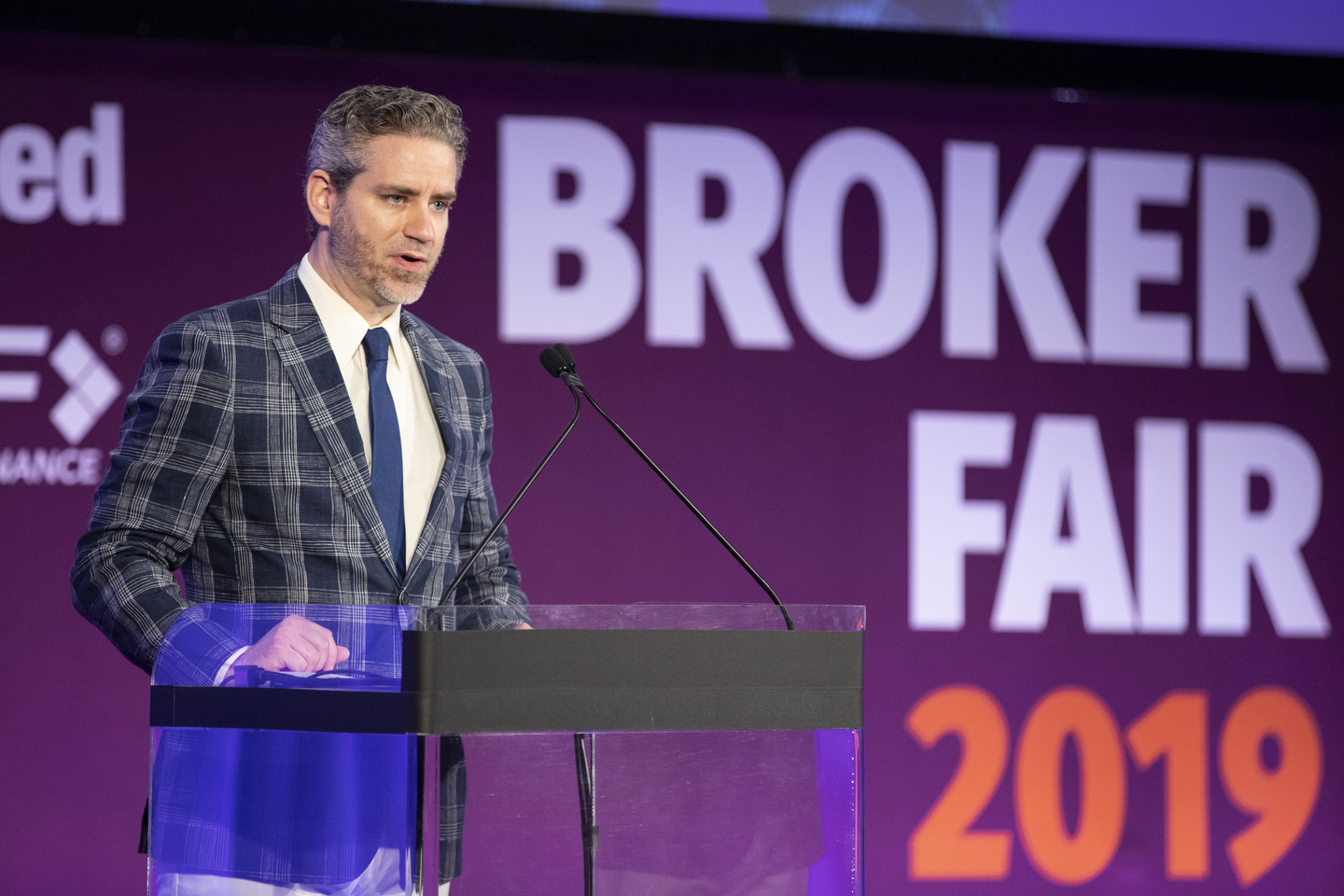 He spoke to a packed audience in one of the hotel ballrooms that was actually the site of a famous scene in the 1987 movie, “Wall Street,” starring Charlie Sheen and Michael Douglas. It was in this scene where one of the most well-known lines, “Greed is good,” was delivered in a speech by the character Gordon Gekko, a ruthless businessman played by Michael Douglas.
In Murray’s speech, he acknowledged the classic financial thriller, but gave it a twist.
“Funding small business is good,” Murray said. “It’s not greed that’s good. Aligned interests are good.”
This very room was a marriage of old and new. The 1924 room with soaring ceilings and crystal chandeliers was packed with mostly young faces in a still relatively new industry. The stage was simple, the chairs sleek, and colored strobe lights circled the ceiling in what created a fresh energy.
The first panel of the day, called “The Great Debate,” was dominated by discussion of technology among the CEOs of some of the largest companies in the small business funding industry: National Funding, Rapid Finance, BFS Capital, and Kapitus.
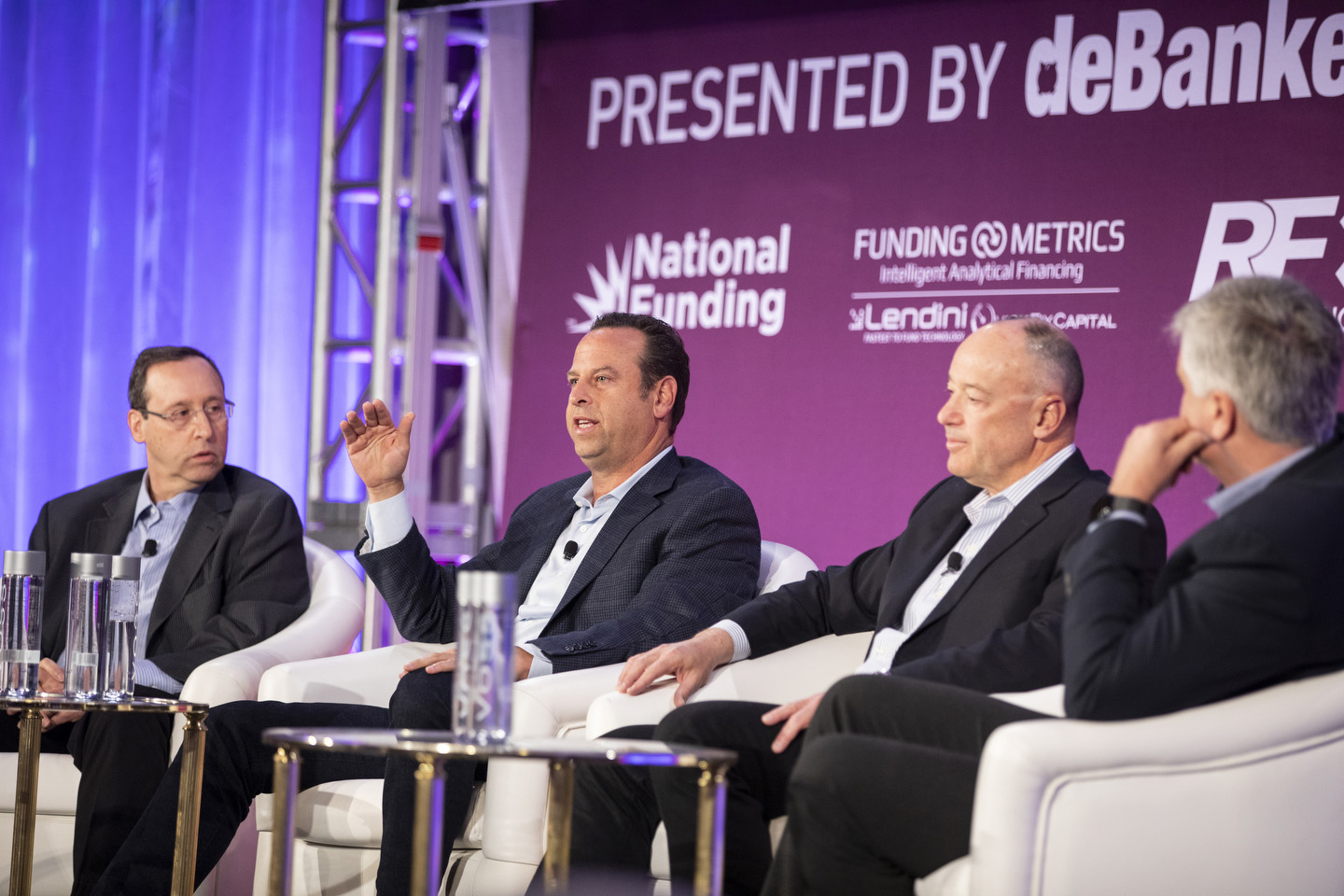
“Technology is an inevitability and a powerful way for brokers to stay relevant,” BFS CEO Mark Ruddock told AltFinanceDaily. “The question is, ‘Does that preclude the small [brokers] who don’t have the money to invest in technology?’”
He sees great opportunity for software platforms that can connect an individual broker to lenders, similar to how Shopify connects small mom and pop retailers to a wider consumer audience.
One of the other CEOs on the panel said he was bullish on digitally savvy brokers and all of them seemed to agree that brokers should offer more products.
“Having a broader set of products benefits brokers because they become the go-to person for merchants rather than simply serve a transactional function,” Chairman of RapidAdvance Jeremy Brown told AltFinanceDaily.
For brokers looking to expand their product offerings, there was a well-attended session called “Commissions with Factoring and Leasing” that was led by factoring and leasing professionals, Phil Dushey and Edward Kaye, respectively.
Meanwhile, the co-founders of the successful brokerage Everlasting Capital, led a session called “How to Scale Your Broker Shop” which included advice on everything from hiring to customer acquisition and social media marketing. One of the founders, Josh Feinberg, had his marketing person follow him around with a video camera throughout the day.
There were also sessions on regulations affecting the industry, plus a session called “Operating with Integrity: Why Ethics Matter.”
“The speakers are very relevant,” said Dexter Bataille, a broker at Pivotal Funding in Florida who attended Broker Fair. “And the panels are really good too.”
“AltFinanceDaily always finds ways to make the shows more professional,” said Senior Sales Leader at Reliant Funding Nicolas Marr, who flew in from California to attend the conference. “The details really count.”

In another hotel ballroom, Broker Fair attendees meandered around high tables where event sponsors had representatives talking about their products and handing out free t-shirts and pens. As the day wound down and Broker Fair’s “networking happy hour” approached its end at 6 p.m., the figurative sun (created by small business finance conversations) began to set at the Roosevelt Hotel. But a crowd of about 100 lingered at the hotel bar, buzzing away, eager to make just a few more connections.
The small business financing sun will rise again on July 25 at deBank’s next event, AltFinanceDaily CONNECT in Toronto. Tickets are already available.
The Madden Decision, Three Years Later
February 18, 2018
At first, reversing the 2015 Madden v. Midland Funding court decision, which continues to vex the country’s financial system and which is having a negative impact on the financial technology industry, seemed like a fairly reasonable expectation.
The controversial ruling by the Second Circuit Court of Appeals in New York, which also covers the states of Connecticut and Vermont, had humble roots. Saliha Madden, a New Yorker, had contracted for a credit card offered by Bank of America that charged a 27% interest rate, which was both allowable under Delaware law and in force in her home state.
But when Madden defaulted on her payments and the debt was eventually transferred to Midland Funding, one of the country’s largest purchasers of unpaid debts, she sued on behalf of herself and others. Madden’s claim under the Fair Debt Collection Practices Act was that the debt was illegal for two reasons: the 27% interest rate was in violation of New York State’s 16% civil usury rate and 25% criminal usury rate; and Midland, a debt-collection agency, did not have the same rights as a bank to override New York’s state usury laws.
In 2013, Madden lost at the district court level but, two years later, she won on appeal. Extension of the National Bank Act’s usury-rate preemption to third party debt-buyers like Midland, the Second Circuit Court ruled, would be an “overly broad” interpretation of the statute.
For the banking industry, the Madden decision – which after all involved the Bank of America — meant that they would be constrained from selling off their debt to non-bank second parties in just three states. But for the financial technology industry, says Todd Baker, a senior fellow Harvard’s Kennedy School of Government and a principal at Broadmoor Consulting, it was especially troubling.
“The ability to ‘export’ interest rates is critical to the current securitization market and to the practice that some banks have embraced as lenders of record for fintechs that want to operate in all 50 states,” Baker told AltFinanceDaily in an e-mail interview.
A 2016 study by a trio of law professors at Columbia, Stanford and Fordham found other consequences of Madden. They determined that “hundreds of loans (were) issued to borrowers with FICO scores below 640 in Connecticut and New York in the first half of 2015, but no such loans after July 2015.” In another finding, they reported: “Not only did lenders make smaller loans in these states post-Madden, but they also declined to issue loans to the higher-risk borrowers most likely to borrow above usury rates.”
With only three states observing the “Madden Rule,” the general assumption in business, financial and legal circles was that the Supreme Court would likely overturn Madden and harmonize the law. Brightening prospects for a Madden reversal by the Supremes: not only were all segments of the powerful financial industry behind that effort but the Obama Administration’s Solicitor General supported the anti-Madden petitioners (but complicating matters, the SG recommended against the High Court’s hearing the case until it was fully resolved in lower courts).
Despite all the heavyweight backing, however, the High Court announced in June, 2016, that it would decline to hear Madden.
That decision was especially disheartening for members of the financial technology community. “The Supreme Court has upheld the doctrine of ‘valid when made’ for a long time,” a glum Scott Stewart, chief executive of the Innovative Lending Platform Association – a Washington, D.C.-based trade group representing small-business lenders including Kabbbage, OnDeck, and CAN Capital — told AltFinanceDaily.
Even so, the setback was not regarded as fatal. Congress appeared poised to ride to the lending industry’s rescue. Indeed, there was rare bipartisan support on Capitol Hill for the Protecting Consumers’ Access to Credit Act of 2017 — better known as the “Madden fix.”

Introduced in the House by Patrick McHenry, a North Carolina Republican, and in the Senate by Mark Warner, Democrat of Virginia, the proposed legislation would add the following language to the National Bank Act. “A loan that is valid when made as to its maximum rate of interest…shall remain valid with respect to such rate regardless of whether the loan is subsequently sold, assigned, or otherwise transferred to a third party, and may be enforced by such third party notwithstanding any State law to the contrary.”
Just before Thanksgiving, the House Financial Services Committee approved the Madden fix by 42-17, with nine Democrats joining the Republican majority, including some members of the Congressional Black Caucus. Notes ILPA’s Stewart: “We were seeing broad-based support.”
But the optimism has been short-lived. The Madden fix was not included in a package of financial legislation recently approved by the Senate Banking Committee, headed by Sen. Mike Crapo, Republican of Idaho. Moreover, observes Stewart: “Senator Warner appears to have gotten cold feet.”
What happened? Last fall, a coast-to-coast alliance of 202 consumer groups and community organizations came out squarely against the McHenry-Warner bill. Denouncing the bill in a strongly worded public letter, the groups — ranging from grassroots councils like the West Virginia Citizen Action Group and the Indiana Institute for Working Families to Washington fixtures like Consumer Action and Consumer Federation of America – declared: “Reversing the Second Circuit’s decision, as this bill seeks to do, would make it easier for payday lenders, debt buyers, online lenders, fintech companies, and other companies to use ‘rent-a-bank’ arrangements to charge high rates on loans.”
The letter also charged that, if enacted, the McHenry-Warner bill “could open the floodgates to a wide range of predatory actors to make loans at 300% annual interest or higher.” And the group’s letter asserted that “the bill is a massive attack on state consumer protection laws.”
Lauren Saunders, an attorney with the National Consumer Law Center in Washington, a signatory to the letter and spokesperson for the alliance, told AltFinanceDaily that “our main concern is that interest-rate caps are the No. 1 protection against predatory lending and, for the most part, they only exist at the state level.”
But in their study on Madden, the Stanford-Columbia-Fordham legal scholars report that the strength of state usury laws has largely been sapped since the 1970s. “Despite their pervasiveness,” write law professors Colleen Honigsberg, Robert J. Jackson, Jr., and Richard Squire, “usury laws have very little effect on modern American lending markets. The reason is that federal law preempts state usury limits, rendering these caps inoperable for most loans.”
While the battle over the Madden fix has all the earmarks of a classic consumers-versus-industry kerfuffle, the fintechs and their allies are making the argument that they are being unfairly lumped in with payday lenders. “Online lending, generally at interest rates below 36%, is a far cry from predatory lending at rates in the hundreds of percent that use observable rent-a-charter techniques and that result in debt-traps for borrowers,” insists Cornelius Hurley, a Boston University law professor and executive director of the Online Lending Policy Institute. Because of fintechs, he adds: “A lot of people who wouldn’t otherwise qualify in the existing system are getting credit.”
A 2016 Philadelphia Federal Reserve Bank study reports that traditional sources of funding for small businesses are gradually exiting that market. In 1997, small banks under $1 billion in assets –which are “the traditional go-to source of small business credit,” Fed researchers note — had 14 percent of their assets in small business loans. By 2016, that figure had dipped to about 11 percent.
The Joint Small Business Credit Survey Report conducted by the Federal Reserve in 2015 determined that the inability to gain access to credit “has been an important obstacle for smaller, younger, less profitable, and minority-owned businesses.” It looked at credit applications from very small businesses that depend on contractors — not employees – and discovered that only 29 percent of applicants received the full amount of their requested loan while 30 percent received only partial funding. The borrowers who “were not fully funded through the traditional channel have increasingly turned to online alternative lenders,” the Fed study reported.
The ILPA’s Stewart gives this example: A woman who owns a two-person hair-braiding shop in St. Louis and wants to borrow $20,000 to expand but has “a terrible credit score of 640 because she’s had cancer in the family,” will find the odds stacked against when seeking a loan from a traditional financial institution.
But a fintech lender like Kabbage or CAN Capital will not only make the loan, but often deliver the money in just a few days, compared with the weeks or even months of delivery time taken by a typical bank. “She’ll pay 40% APR or $2,100 (in interest) over six months,” Steward explains. “She’s saying, ‘I’ll make that bet on myself’ and add two additional chairs, which will give her $40,000-$50,000 or more in new revenues.”
In yet another analysis by the Philadelphia Fed published in 2017, researchers concluded that one prominent financial technology platform “played a role in filling the credit gap” for consumer loans. In examining data supplied by Lending Club, the researchers reported that, save for the first few years of its existence, the fintech’s “activities have been mainly in the areas in which there has been a decline in bank branches….More than 75 percent of newly originated loans in 2014 and 2015 were in the areas where bank branches declined in the local market.”
Meanwhile, there is palpable fear in the fintech world that, without a Madden fix, their business model is vulnerable. Those worries were exacerbated last year when the attorney general of Colorado cited Madden in alleging violations of Colorado’s Uniform Consumer Credit Code in separate complaints against Marlette Funding LLC and Avant of Colorado LLC. According to an analysis by Pepper Hamilton, a Philadelphia-headquartered law firm, “the respective complaints filed against Marlette and Avant allege facts that are clearly distinguishable from the facts considered by the Second Circuit in Madden.
“Yet those differences did not prevent the Colorado attorney general from citing Madden for the broad-based proposition that a non-bank that receives the assignment of a loan from a bank can never rely on federal preemption of state usury laws ‘because banks cannot validly assign such rights to non-banks.’”
Should the Federal court accept the reasoning of Madden, Pepper Hamilton’s analysis declares, such a ruling “could have severe adverse consequences for the marketplace and the online lending industry and for the banking industry generally….”
Tech Banks: Will Fintech Dethrone Traditional Banking?
August 20, 2017On Halloween, 2014, a largely unknown, Boston-based financial institution, First Trade Union Bank, embraced high-technology, went paperless, and officially adopted a new name: Radius Bank.
 In reinventing itself, Radius did more than dump its dowdy moniker. It shuttered five of its six branches, re-staffed its operations with a tech-savvy team, instituted “anytime/anywhere” banking services, and offered customers free access to cash via a nationwide ATM network. And it teamed up with a fistful of financial technology companies to offer an impressive array of online lending and investment products.
Today, the bank’s management boasts that, using their personal mobile phones, some 2,700 people per week are opening up checking accounts, funneling $3 million in consumer deposits into the bank’s virtual vault. That’s a stark contrast from a decade ago when the financial institution was being rocked by the financial crisis and “we couldn’t get anybody to walk into our branches,” says Radius’s chief executive, Mike Butler.
“We tried to leave that old bank behind,” he says. “We’re a virtual retail bank now, an efficiently run organization that offers high levels of customer service and Amazon-like solutions.”
Radius Bank is not alone. At a moment when there is much discussion — and hand-wringing — over the future of seemingly outmoded, highly regulated community banks, a coterie of small but nimble banks is exploiting technology and punching above its weight. Almost overnight, this cohort is combining the skill and hard-won experience of veteran bankers with the lightning-fast, extraordinary power afforded by the Internet and technological advances. As a result, these small and modest-sized institutions are redefining how banking is done.
In addition to Radius Bank, independent banks winning recognition for their bold, innovative – and profitable — exploitation of technology, include: Live Oak Bank in Wilmington, N.C., which adroitly parlays technology to become the No. 2 lender to business and agricultural borrowers backed by the U.S. Small Business Administration; Darien Rowayton Bank in Darien, Conn., which is making a name for itself with coast-to-coast, online refinancing of student loans; and Cross River Bank in Fort Lee, N.J., which does back-end work for a passel of fintech marketplace lenders.
Interestingly, there’s not much overlap. Each of the banks goes its own way. But what all the banks have in common is that each has struck out on its own, each hitting upon a technological formula for success, each experiencing superior growth.
“These are companies that understand the value of a bank charter,” says Charles Wendel, president of Financial Institutions Consulting in Miami. “They have to work under the watchful eyes of state and federal regulators. But their cost of funds is low and they can offer more attractive rates. Because they’re less likely (than nonbank fintechs) to disappear, run out of money, or get sold,” the bank expert adds, “they also have the image of stability with customers.”
These modest-sized banks are emerging as not only pacesetters for the banking industry. Along with making common cause with the fintechs — which had promised to disrupt the banking industry – they’re even beating the fintechs at their own game.

“Classically, community banks have looked to technology partners to provide technological innovation,” says Cary Whaley, first vice-president for payment and technology policy at the Independent Community Bankers of America, a Washington, D.C.-based trade group representing a broad swath of the country’s 5,800 Main Street banks. “They still do. You’re seeing more partnerships. But now you also see community banks building innovative products and services outside of that relationship. You see forward-thinking banks developing their own technology to support big ideas like marketplace lending, distributed ledger technology, and emerging payments technology.”
With its extraordinary skill at exploiting technology, Live Oak Bank – which trades on the Nasdaq and is the only public company encountered in the cohort — has become a Wall Street darling. “While several banks have adopted an online-only model, and nearly all banks are shifting more and more delivery through online channels, Live Oak was built from the ground up as a technology-based bank,” Aaron Deer, a San Francisco-based research analyst at Sandler O’Neill Partners, wrote in a recent investment note.
Driving the success of Live Oak, which operates out of a single branch in the North Carolina seacoast town and has only been in business for a decade, is the explosive growth in its SBA lending, the bank’s “core strategy,” Deer notes. Last year, Live Oak lent out $709.5 million in SBA loans in increments of up to $5 million, the federal agency reports, making it the country’s No. 2 SBA lender. It trailed only megabank Wells Fargo Bank, the third largest bank in the U.S. with $1.5 trillion in assets, which made $838.93 million in SBA-backed loans last year.
As its SBA lending has taken off, Live Oak, which qualifies as a “preferred lender” with the federal agency, boasts assets that have nearly tripled to $1.4 billion in 2016, up from $567 million two years earlier. Those are flabbergastingly fantastic growth numbers. But just as incongruously — by nipping at the heels of Wells Fargo — Live Oak has been challenging a bank more than a thousand times its asset size for dominance in SBA lending.
And, interestingly, the bank is able to book those outsized amounts of SBA loans while lending to only 15 industries out of 1,100 approved by the government agency, slightly more than 1% of the universe. That’s up from 13 industries in 2015, and Live Oak is adding two to four additional industries yearly for its SBA loan portfolio, Deer reports. Included among the industries to which the bank made an average SBA loan of $1.29 million last year: Agriculture and poultry, family entertainment, funeral services, medical and dental, self-storage, veterinary, and wine and craft-beverage.
The bank has a team of financing specialists dedicated to each of the designated industries. Among Live Oak’s current SBA borrowers are Martin Self Storage in Summerville, S.C.; Utah Turkey Farms in Circleville, Utah; Pinballz Arcade, Austin, Tex.; and Council Brewery Company in San Diego. Steve Smits, chief credit officer at the bank, told NerdWallet: “When you specialize in something, you become efficient. Because we do it every day and we have professionals and specialists, we tend to be more responsive and quicker.”
The heady combination of technological sophistication and banking expertise has allowed the lender to slash its loan-origination time to 45 days, about half the three-month industry average for SBA loans. To speed up loan sourcing and generation, the bank developed its own in-house technology, which led to the formation of the Wilmington-based technology company nCino, which was spun off to shareholders in 2014.
Live Oak did not return calls to discuss its lending strategies, but in SEC filings bank management declared: “The technology-based platform that is pivotal to our success is dependent on the use of the nCino bank operating system” which relies on Force.com’s cloud-computing infrastructure platform, a product of Salesforce.com.
Natalia Moose, a public relations manager at nCino told AltFinanceDaily in an e-mail interview: “We work with Live Oak Bank, in addition to more than 150 other financial institutions in multiple countries with assets ranging from $200 million to $2 trillion, including nine of the top 30 U.S. banks. nCino was started by bankers at Live Oak Bank who found the logistics of shuffling paperwork among loan stakeholders to be unwieldy, inefficient and time-consuming.
“nCino’s bank operating system,” Moose adds, “leverages the power and security of the Salesforce platform to deliver an end-to-end banking solution. The bank operating system empowers bank employees and leaders with true insight into the bank, combining CRM (customer relationship management), deposit account opening, loan origination, workflow, enterprise content management, digital engagement portal, and instant, real-time reporting on a single secure, cloud-based platform.”
Live Oak, meanwhile, is not resting on its technological laurels. According to Deer’s report, the bank’s parent company, Live Oak Bancshares, has formed a subsidiary to inject venture capital into fintech companies. It’s already taken a small equity stake in Payrails and Finxact, “the latter of which is developing a completely new core processor to compete against the old legacy systems used by most banks,” the Sandler O’Neill analyst writes. “Quite simply,” he asserts elsewhere in his report, “the company is far beyond any other bank we cover in its technical capabilities and the growth outlook remains outstanding.”
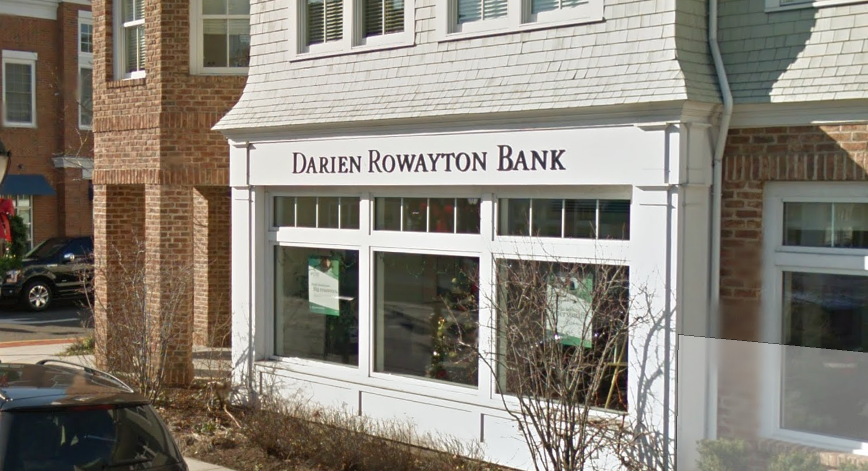 Five hundred and thirty-three miles due north along the Atlantic coast in southeastern Connecticut, Darien Rowayton Bank is also experiencing tremendous success as a lender using a home-grown technology platform. State-chartered by the Connecticut Department of Banking and regulated as well by the Federal Deposit Insurance Corp., the $600 million-asset bank is winning attention in banking circles for its online student-loan refinancing.
A few years ago, DRB, as it is known, was looking to go beyond mortgage and commercial lending — “the bread and butter for most community banks,” bank president Robert Kettenmann explained to AltFinanceDaily in a telephone interview – and was somewhat at a loss. The bank considered but then rejected the credit card business. Finally, DRB struck paydirt refinancing student loans. “Our chairman really seized on the opportunity,” Kettenmann says, adding: “It’s a $35 billion market.”
Thanks to the National Bank Act, it’s able to operate in all 50 states. As a regulated commercial bank with a strong deposit base, DRB can also offer low rates well below any state’s usury prohibitions.
What is most striking about DRB’s program is its nationwide targeting of upwardly mobile, affluent young professionals. According to a PowerPoint presentation obtained by AltFinanceDaily, all of the bank’s super-prime borrowers, who are mainly in the 28-34 age bracket, have a college degree and a whopping 93% have graduate degrees. Average income is $194,000.
 Forty-eight percent of those refinancing student loans with DRB are doctors or dentists and another 22 percent are pharmacists, nurses or medical employees; only about 20% are paying off their law degrees or MBAs. The heavy concentration of refinancing in the medical field reduces economic risk in an economic downturn. Forty-three percent of the borrowers are home-owners, the rest are renters – and prime candidates for an online, DRB-financed mortgage.
(Once known as “yuppies” today this cohort is “known by the acronym ‘HENRY,’” remarks Cornelius Hurley, a Boston University banking professor and executive director of the Online Lending Institute, explaining the initials stand for “High Earners Not Rich Yet.”)
The Connecticut bank partnered with a third-party on-line vendor, Campus Door, when it commenced making student loans in 2013. In the fall of 2016, however, DRB built out its own, proprietary loan-origination system, Kettenmann reports, emphasizing that CampusDoor had been an excellent partner but that the bank wanted to exercise end-to-end control over the process. DRB employs a seven-pronged, “omni-channel” marketing approach that includes interactive marketing, affinity partnerships, digital/online advertising, direct mail, mass-media advertising, and public relations/brand awareness campaigns.
DRB’s online enrollment provides “pre-approved rates” in less than two minutes with final approval on rates in 24-48 hours. Refinancers can complete the online application at their own speed. Through May, 2017, DRB had made $2.48 billion in refinancing to 20,000 student-loan borrowers, with only ten defaults, five of which were attributed to deaths or “terminal illness.”
On Yelp! the bank has received a batch of reviews ranging from very favorable, five-star (“I had a truly wonderful experience”) to one-star (“awful” and “truly a nightmare”). Many fault the application process as laborious, describing it as “time-consuming.” But for those who have succeeded, like the reviewer who counseled “patience,” the result can be “the lowest rate with DRB…my loan payments went down $100 a month.”
 Just about an hour’s drive south and taking its name from its proximity to New York city just over the George Washington Bridge is New Jersey-based, state-chartered Cross River Bank, which has a reputation as a partner-in-arms to fintech companies. “We’re both users and producers of technology,” declares Gilles Gade, the bank’s chief executive.
The bank provides “back-end” and infrastructure support to 17 marketplace lenders that offer a suite of lending products including personal loans, mortgages and home-equity loans. Following loan origination by a fintech company – Marlette Funding, Affirm, Upstart, loanDepot, SoFi, and Quicken Loan, among other partners — Cross River does the actual underwriting. Last year, Gade reports, the bank underwrote 1.9 million loans valued at $4-4.5 billion, about 10% of which Cross River kept on its books. The bulk of the loans are sold “back to the marketplace lenders” or to a third party. “We’ve created a high-velocity automated system,” he says.
Gade is manifestly unapologetic about the bank’s role in assisting fintechs in their competition with the banking establishment. “We’re a banking infrastructure services provider for those who want to disrupt the banking system,” he says. “Consumers expect a lot better than they’ve been getting from traditional banking services.”
 Back in Boston, Radius Bank’s chief executive reports that forging partnerships with fintechs to provide the full panoply of online banking services was no easy proposition. In its mating ritual, Radius not only had to determine that a fintech company’s offerings were sound and that it had the right characteristics – most especially “a long-term, sustainable business model” – but that its corporate culture meshed comfortably with Radius’s.
After meeting with as many as 500 fintechs and after a fair amount of trial and error, Radius formed partnerships with LevelUp, which enables customers to make mobile payments; with online lender Prosper, for refinancing consumer debt and “credit rehabilitation”; with SmarterBucks, for refinancing student loans; and with online investment firm Aspiration Partners – which allows investors to name their own fees and markets itself to a predominately middle-class audience as the firm “with a conscience.”
Radius employs advertising on social media websites and employs “psychographics” to appeal to “anyone who is zealous about using technology, not necessarily millennials,” Butler says. The data show that 65% of adults in the U.S. would prefer to use a traditional bank and have face-to-face interactions with a teller, he notes, leaving the remaining 35% as Radius’s target audience.
Christopher Tremont, executive vice-president for virtual banking, told AltFinanceDaily that a typical Radius customer is 42 years old, lives in Boston, New York, Chicago “or one of the bigger cities in the West,” is a “technophile,” earns $75,000 a year, and has $100,000 in personal assets.
Radius’s performance since it went paperless has been stellar. The bank has seen a rapid rise in deposits, spurting to $782 million through the first quarter of 2017, up from $565 million at year-end 2014. With little fee income but ample deposits and low-cost funds, Radius realizes the bulk of its revenues – and profits — on the interest-rate spread generated from its loan portfolio.
The bank booked $43.5 million in SBA loans last year, ranking it in the top 50 banks on the SBA’s league tables, while carrying another $105 million in its commercial leasing business at the end of the first quarter this year. Loan generation is driving asset growth, which are currently at $973 billion, up more a third from $726 million in 2014, and Butler expects the bank’s assets to top $1 billion sometime this year.
“Community banks love that part of the business—lending money,” Butler says.
Lendio Announces Record Fourth Quarter and Fiscal Year in 2016, Executive Promotions
February 8, 2017Lendio, the nation’s leading marketplace for small business loans, today announced that it helped facilitate more than $70 million in financing through its marketplace of more than 75 small business lenders during Q4 2016. The figure represents a 68 percent increase in loans originated through the Lendio platform over Q4 2015. In the last fiscal year, Lendio facilitated more than $240 million in funding, a 87 percent increase over 2015.
The company also announced the promotions of Jim Granat to president and chief revenue officer and Trent Miskin to chief growth officer. Granat formerly served as chief operating officer and Miskin as chief technology officer.
Q4 Highlights:
- Lendio raised $20 million in funding led by Comcast Ventures and Stereo Capital
- More than 3,300 small businesses funded in Q4, including in all 50 states
- Record number of repeat customers – 111 percent year-over-year deal growth from Q4 2015
- Added six new lenders to its marketplace, including: FundingCircle, Able Lending, and Internex
“We are extremely pleased to report a strong year-end performance and look forward to continued success in the months and years to come,” said Brock Blake, founder and CEO of Lendio. “These robust numbers put us in an even better position to help small business owners acquire funding. Looking ahead, we will continue to focus on investing in a superior customer experience, loan application automation, efficient processes and talented personnel that will help simplify small business lending.”
Lendio’s financial performance is the result of helping small business owners across the U.S. gain access to capital. Becca Grider and Lindie Royall of Little Poppy Co., a bow subscription for little girls, needed funding to manage the rapid growth of their company (20 percent month over month). “We started looking online at different options for funding and quickly realized that Lendio was our best choice,” Royall said. “We submitted our information online, they contacted us and showed us our different loan options. We got $75,000 through alternative lending, and because we now have the money on hand, it will help us keep our growth going.”
About Lendio
Lendio is a free online service that helps business owners find the right small business loans within minutes. The center of small business lending, our passion is fueling the American Dream by uniting the small business loan industry and bringing all options together in one place, from short-term specialty financing to long-term low-interest traditional loans. Our technology makes small business lending simple, decreasing the amount of time and effort it takes to secure funding. More information about Lendio is available at http://www.lendio.com.