
The Industry is Back; Broker Fair Takes NYC
December 7, 2021 Broker Fair 2021’s showcasing in lower Manhattan on Monday brought together an unprecedented amount of attendees, that not too long ago saw their entire livelihoods and industry threatened by a pandemic-hampered economy.
“We are so happy to be here,” said Sonia Alvelo, CEO of Latin Financial and speaker on the ‘Great Debate’ panel. “With everything that has happened in the past two years, we are just super excited to be a part of this.”
Speakers at the event included keynote Slava Rubin, founder of Indiegogo, Oz Konar of Business Lending Blueprint, and Leo Kanell of 7 Figures Funding.
“We’re here to rekindle,” said Adam Abraham, Partner at Blueline Capital Group. “It’s always good to meet face to face. We’ve all been speaking on the phone for years at this point, so if you put a face to the name, it changes everything.”
That alone, is the best part about this event,” said Abraham. “Here, it’s about who you’re networking with.”
Other attendees felt that alongside the networking opportunities, events like Broker Fair allow the industry to truly leverage its core strength — its relatively small size compared to other areas of the financial world.
“Despite what many people think, this industry isn’t really as big as other finance industries,” said Josh Feinberg, CEO of Everlasting Capital. “When we come together like this, it really drives inspiration, thoughts, and dreams to be able to make this industry what it is today. I think these events really bring everyone together to drive the industry to the next level.”
A total of five panels took the stage throughout the day, and included individuals from across the business financing landscape. Other highlights of the event included a Small Business Finance Professional certification course, an expo room with over fifty companies and tables, and a hip-hop performance with viral artist Kosha Dillz.
At the event, AltFinanceDaily Connect Miami was announced, which will take place on March 24. For the first time, AltFinanceDaily will shift away from Miami Beach and into Downtown Miami, an area in which many members of the finance, crypto, lending, and banking industries have resettled and developed new flagship offices.
“I’m super pumped about the announcement of the show,” said Feinberg. “We’ll see everyone in Miami.”
Small Business Finance Broker Wins Entrepreneur Of The Year
May 17, 2019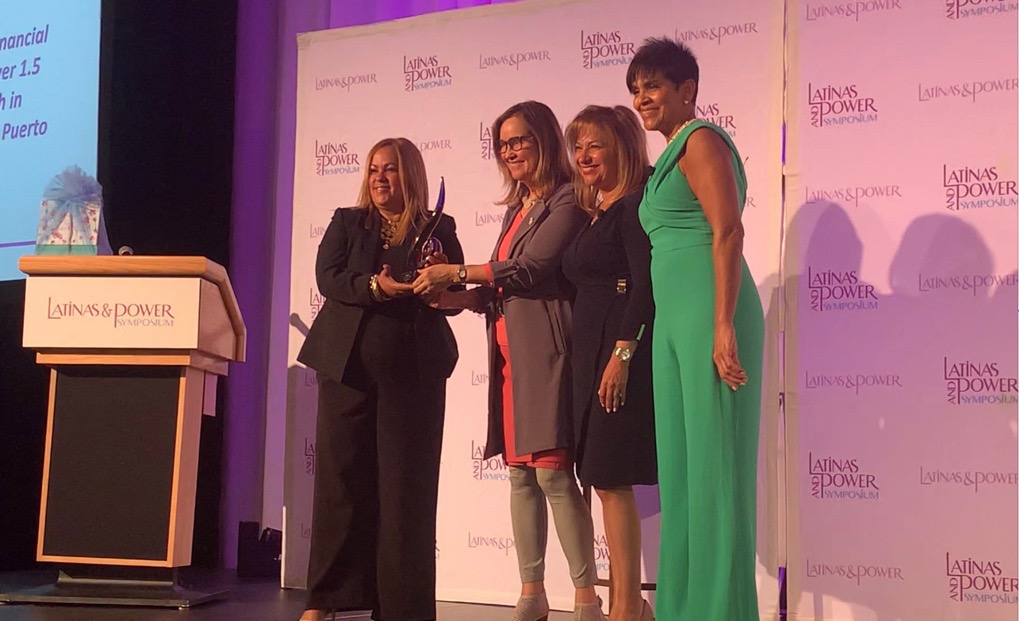
Sonia Alvelo, CEO of Newington, CT-based Latin Financial LLC, has been awarded Entrepreneur of The Year by the Latinas & Power Symposium. The event, incubated in Hartford, Connecticut in 2004, is the largest of its kind in New England and has reached upwards of 8,000+ women since its inception.
Alvelo’s company markets and brokers business loans and merchant cash advances throughout the mainland United States and Puerto Rico.
Connecticut Secretary of State Denise Merrill presented the award to Alvelo, who referenced the moment on social media by writing, “I was deeply honored to present the Entrepreneur of the Year Award to Sonia Alvelo at the 16th Annual Latinas & Power symposium today. Her small business is bolstering the Newington economy and her leadership serves as an example for women across the state.”
Alvelo has been an oft-quoted source in AltFinanceDaily on the state of the small business finance market in Puerto Rico, most recently in the May/June 2018 magazine edition.
“I’m here today because of the merchants and clients from Puerto Rico and the US,” she told AltFinanceDaily on Thursday, adding that this is just the beginning for what she and her company will accomplish.
I was deeply honored to present the Entrepreneur of the Year Award to Sonia Alvelo at the 16th Annual Latinas & Power symposium today. Her small business is bolstering the Newington economy and her leadership serves as an example for women across the state. pic.twitter.com/POwlvx0XkA
— Denise Merrill (@SOTSMerrill) May 16, 2019
It’s Back to Business For Alternative Funding in Puerto Rico
June 15, 2018
Last year, alternative funding in Puerto Rico ground to a halt after the island was ravaged by two devastating hurricanes in close proximity. Now, however, the alternative funding business in Puerto Rico is getting its second wind, after a several-month hiatus.
Puerto Rico got lashed by high winds and rain from Hurricane Irma in early September 2017, causing large-scale power outages and damage. Then, about two weeks later, Hurricane Maria hit the island square on, causing even more catastrophic destruction. Millions were without power for months (thousands still are), homes were destroyed, multiple lives were lost, businesses were decimated and the island’s already shaky economy teetered on the brink of disaster.
More than half a year later, residents are still trying to pick up the pieces of the epic humanitarian crisis. Hurricane Maria caused an estimated $90 billion in damage, according to the National Hurricane Center, making it the costliest hurricane on record to strike Puerto Rico and the U.S. Virgin Islands. The hurricane knocked out 80 percent of Puerto Rico’s power lines and destroyed its generators. Even months later, the lives of many residents are still in disarray as they wait desperately for insurance payments to materialize and get back to a semblance of their former lives. The island faces additional challenge—and uncertainty— with another hurricane season just around the corner.
In the midst of this turmoil, however, there’s a glimmer of hope for the budding alternative funding sector. Some businesses are once again seeking funds to rebuild or expand, and alternative funders are once again dipping their toes into the Puerto Rican market—albeit somewhat slowly. While some funders have exited the Puerto Rican alternative lending market, other new entrants are starting to stake a claim, citing an expected uptick in economic development that tends to follow natural disasters. Some funders also see Puerto Rico as a sweet spot because the market isn’t as mature as the U.S. and competition from other alternative funders is scant. Banks on the island aren’t always willing to provide businesses there with much- needed funds, so opportunities for non-bank funders are considered plentiful.
Businesses struggling to rebuild from the storms need more help than ever before, says Sonia Alvelo, president of Latin Financial LLC, an ISO that has been arranging funding for business owners in Puerto Rico for three years. “There is no doubt that Puerto Rico has a long, hard road ahead,” she says. But “I can assure you the entrepreneurial spirit is alive and well,” she says.
Latin Financial and other ISOs and funders are back to business—courting merchants and trying to help them get back on their feet. In December, Latin Financial processed its first renewal since Maria; in January it funded its first new client since September. Latin Financial continues to arrange funding of between $500k and $1 million per month on average in Puerto Rico, after some hurricane-related downtime.
“The storm destroyed a lot, but it didn’t set the small business drive back. They’re still pushing hard and really trying to maintain and grow business,” says Brendan P. Lynch, business partner and fiancé to Latin Financial’s Alvelo.
 Greenbox Capital in Miami Gardens, Fla., an early entrant to the Puerto Rican alternative funding market, has also returned to funding small businesses on the island after a few-month hiatus. The company put off new deals right before Maria hit, and as a goodwill measure suspended the payments of existing customers for 90 days. Given the extension, almost all customers were able to stay on track and the firm suffered very few losses, says Jordan Fein, the company’s chief executive. Greenbox began funding again in January, he says.
To be sure, it’s not exactly business as usual, since many businesses in Puerto Rico are still struggling, Fein says. While the situation should continue to improve, it will take time for the economy and businesses to fully recover, he says.
“They’ve come a long way since September, but they still aren’t fully back. We’re not seeing the same type of submissions that we saw before,” Fein says. Nonetheless, Fein remains positive about the market’s long-term prospects. “I think they are going to come back stronger, I really do,” he says.
To be sure, not all funders are interested the Puerto Rican market. Ripe with political uncertainty and economic instability, Puerto Rico already posed challenges that made many funders hesitant to do business there. The devastation wrought by Irma and Maria complicated matters further, and some funders pulled out of the market completely.
For others, however, the market’s still an opportune one, albeit not as stable as the U.S. market. Certainly, there are reasons for alternative funders to be optimistic. Despite its recent troubles, Puerto Rico is still considered a growth market. What’s more, with new businesses popping up in the wake of the storms, new infrastructure being instituted and businesses anxious to bounce back even bigger and better than before, some funders are striking while the iron is hot.
“This is the right time, as the island is growing,” says Paul Boxer, chief marketing officer and vice president of business development at Quicksilver Capital, a New York-based small business funder. Quicksilver funded its first deal in Puerto Rico in late April.
The company had been mulling over the possibility of doing business in Puerto Rico when an actual funding prospect arose. The company decided to give it a shot, sensing a potentially viable business opportunity. Existing businesses are rebuilding after the hurricane, there’s plenty of new business development and there’s a pressing need for new infrastructure as Puerto Rico continues to recover from the devastation, Boxer says.
Accordingly, Boxer says his company is in the process of vetting additional funding opportunities in Puerto Rico and hopes to continue growing this business in what he says is a largely untapped market. “I see it as a positive addition to what we offer, and I see a lot more opportunity in the future,” Boxer predicts.
Sunshine and Deal Flow: Who’s Funding in Puerto Rico?
September 1, 2016
Lots of small businesses need capital in Puerto Rico and not many companies are trying to provide it. Combine that with the island’s tax incentives, tourist attractions and gaggle of ambitious entrepreneurs, and America’s largest unincorporated territory can seem like an archipelago of opportunity for the alternative small-business finance community – a virtual paradise.
But for alt funders, the sunshine, sandy beaches, swaying palms, picturesque rocky outcroppings, rich history and renowned cuisine can’t change two nagging facts about this tropical commonwealth that 3.4 million people call home. Alternative finance remains largely unknown on the island, and it’s difficult if not impossible to split credit card receipts there.
Let’s start with the good part. “If you call a restaurant in Los Angeles at 2 o’clock in the afternoon, you’re the 15th person to call them that day, but if you’re calling a business in Puerto Rico, you might be the only one,” says Andrew Roberts, director of partnership development for Merchant Cash Group, which funds some deals on the island. “So it’s not the same cutthroat competitiveness that we have here.”
But consumers in Puerto Rico’s tourist areas rely on PIN debit cards, which don’t qualify for split funding between merchants and finance providers because the cards don’t have Visa or MasterCard logos and thus merchants can’t run them as credit transactions, Roberts says. Besides, processors on the island don’t want to split the revenue from credit card transactions between funders and merchants, either, Roberts notes. “If there’s a processor in Puerto Rico that will split fund, I haven’t been unable to find them,” he says. “Believe me, I have looked.”
The two main processing platforms on the island, Global and First Data, require ISOs to carry 100 percent of the risk on a split, according to Elevate Funding CEO Heather Francis, who was involved in the island market at another company before taking her current job. That’s why split remittance “remains almost nil” in Puerto Rico, she says.
Splitting funds by using a “lockbox” – which works like an escrow account and distributes a certain percentage of receipts to the merchant and the rest to the funder – doesn’t provide a solution because banks in Puerto Rico decline to use the option, Roberts maintains. That’s why he advises that it’s easier to offer ACH-based products on the island.
Merchants on the island have to meet the same requirements for ACH that apply on the mainland, Roberts notes. That includes a reasonable number of checks returned for non-sufficient funds and a reasonable number of negative days. “The underwriting procedure on the island is pretty much the same as it is here,” he says.
Perhaps the difficulties of setting up the split in Puerto Rico shouldn’t cause any uneasiness about entering the market because the bulk of alternative funding on the island relies on daily debits—just as it does on the mainland, Roberts says. Still, he notes that some merchants in both places may qualify for split funding but fail to measure up for daily debit.
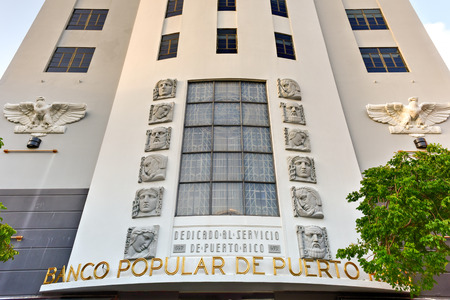
 Though merchants and funders have those commonalities, the banking systems differ on the mainland and on the island. Banco Popular, which has held sway in Puerto Rico for nearly 120 years, controls much of the island’s banking and inhibits the growth of alternative funding for small businesses there, Francis says. Still, Puerto Rican merchants should have some familiarity with alternative finance or high-fee products because of the island’s high concentration of title loan companies, she notes.
Similarities and and differences aside, the Puerto Rican market provides a little business to some mainland alternative finance companies. United Capital Source LLC, for example, has completed five deals for small businesses on the island, says CEO Jared Weitz. Companies can provide accounts receivable factoring there, he says.
Alternative funding has yet to post runaway growth in Puerto Rico, Weitz says, because it’s not marketed strongly there, only a few mainland funders are willing to do business in Puerto Rico, the range of products offered there is limited, and small business remains less prevalent there than on the mainland.
 But a handful of mainland-based companies have been willing to take on the uncertainties of the Puerto Rican market, and Connecticut-based Latin Financial LLC serves as an example of an ISO that has enthusiastically embraced the challenge. The company got its start in 2013 by offering funding to Hispanic business people on the mainland and began concentrating on Puerto Rico early in 2015, says Sonia Alvelo, company president.
Alvelo built a strong enough portfolio of business on the mainland that funders were willing to take a chance on her and her customers in Puerto Rico. Latin Financial now maintains a satellite office on the island, and the company generates 90 percent of its business there and 10 percent on the mainland.
Latin Financial has a sister company called Sharpe Capital LLC that operates on the mainland, says Brendan P. Lynch, Sharpe’s president. Alvelo describes Lynch as her business partner, and he says he’s started several successful ISOs. He credits her with helping Puerto Rican customers learn to qualify for credit by keeping daily balances high and avoiding negative days.
“It’s a small company with a big heart,” Alvelo says of Latin Financial. She was born in Puerto Rico and came to Connecticut at the age of 17. “For me it’s home,” she says of the island. She’s realizing a dream of bringing financial opportunity to business owners there.
To accomplish that goal, Alvelo spends much of her time teaching the details of alternative finance to Puerto Rico’s small-business owners, their families, their accountants and their attorneys. “You want to make sure they understand,” she says, adding that the hard work pays off. “My clientele is fantastic,” she says. “I get a lot of referrals.”
Latin Financial started small in Puerto Rico when a pharmacy there contacted them to seek financing, Alvelo says. It wasn’t easy to get underway, she recalls, noting that it required a lot of phone calls to find funding. Soon, however, one pharmacy became three pharmacies and the business kept growing, branching out to restaurants and gas stations. Already, some merchants there are renewing their deals.
 Growth is occurring because of the need for funding there. Puerto Rican merchants have had the same difficulties obtaining credit from banks as their peers on the mainland since the beginning of the Great Recession, Alvelo says. “It’s the same story in a different language,” she notes.
Speaking of language, Alvelo considers her fluency in Spanish essential to her company’s success in Puerto Rico. “You have to speak the language,” she insists. “They have to feel secure and know that you will be there for them,” she says of her clients. Roberts agrees that it’s sound business practice to conduct discussions in the language the customer prefers, and his company uses applications and contracts printed in Spanish. At the same time, he maintains that it’s perfectly acceptable to conduct business in English on the island because both languages are officially recognized.
People in Puerto Rico have been speaking Spanish since colonists arrived in the 15th Century, and English has had a place there since the American occupation that resulted from the Spanish-American War in 1898. Still, more than 70 percent of the residents of Puerto Rico speak English “less than well,” according to the 2000 Census, but that’s changing, Alvelo says.
Whatever the linguistic restraints, the products Latin Financial offers in Puerto Rico have been short-term, most with a minimum of six-month payback and a maximum of 12 months, but Alvelo hopes to begin offering longer duration funding. She also believes that split funding will come to Puerto Rico. “It’s in the works,” she asserts, noting that she is campaigning for it with the banks and processors.
At the same time, mainland alternative finance companies are learning that the threat of Puerto Rican government default does not mean merchants there don’t deserve credit, notes Lynch. “Just because the government is having trouble paying its bills,” he says, “doesn’t mean these merchants aren’t successful. The island is full of entrepreneurs.” In fact, many of Puerto Rico’s merchants use accountants and keep their business affairs in better order than their mainland counterparts do with their homemade bookkeeping.
Alvelo also knows many merchants there are worthy of time and investment. She strives to listen to her customers when they express their needs and then help them fill those needs. “I’m very, very proud to be doing this in Puerto Rico now,” she says.