They Grew Tremendously Through the Pandemic and Landed on the List
September 26, 2022 Inc recently dropped the latest annual list of the fastest growing small businesses in the country. These 5,000 businesses span across a range of industries including health, financial, IT services and more. Companies such as Fundomate, Fountainhead, and Business Lending Blueprint have been featured on this year’s list due to incredible growth.
For Sam Schapiro, the grit to grow Fundomate through a pandemic stemmed from a realization he came to years earlier.
“I think one of the best lessons I learned when I launched Fundomate, I was in Las Vegas at a conference to raise money,” Schapiro said. “…and barely anybody looked at us and I literally left with nothing.”
Full of doubt, Schapiro had lunch with someone he respected that had built several successful startups. That mentor told him that despite what he thought, 99.9% of the people pitching their business at the show were going to fail regardless, even if they really wanted success.
“So if you don’t really really really want it, then don’t bother doing it, because your chances of success are so slim,” Schapiro was told. That hard dose of advice led Schapiro to first question how bad he wanted it and he realized he was fully committed to seeing it through.
“I always say that if I knew how long it would take us to get here and how hard it would be to be down this road, I’d never get on the road,” Schapiro said. “But that’s the thing about life in general. Anything worth having and anything worth doing requires consistency and determination. And over and over and over again. So if something’s not working, and you can obviously see it’s not working and it’s clear, you know, the job is to keep looking at it, and at the point where it becomes a clear message that it just doesn’t work, then you got to pivot.”
Fundomate is a white label funding and banking platform for wholesale processors and MCA funders to automate their funding in a scaled way. Schapiro says that success was due in part to their technology, which collects a true daily percentage of a business’s sales.
As the pandemic subsided “we didn’t have to get back on the phone with every merchant and say, ‘Hey, we want to increase our daily payment again’ because we’re not on daily payments, we’re on instant collections that are happening on a daily basis,” Schapiro explained. “As soon as their sales came back up and even grew to get through the 2021 boom, all the sudden collections happen faster.”
Meanwhile, for Chris Hurn, Founder and CEO of Fountainhead, he had to refocus his non-bank small business lending company into a PPP loan operation.
“Pivoting our business solely to do PPP loans over the last two years was a pretty challenging experience,” said Hurn. “And we did, we worked ridiculous hours. I mean I averaged about three to four hours of sleep a night for months at a time every day. So, you know, that was probably the biggest challenge we had.”
But the work paid off. Hurn said that they were one of the most active PPP lenders over the last two years, making approximately 300,000 loans.
“Obviously, that helped accelerate our growth,” said Hurn, “as well as many of our full time hires that we made during that time are still there. And we’re still growing now.”
The process is no walk in the park when it comes to being listed on the Inc 5000. Thousands of companies apply annually to be ranked on the list. It’s months of lengthy paperwork and long-waited verifications. After realizing that one’s company has made the list, they find out their ranking along with the rest of the world.
“It’s a painstaking process because you can’t just apply and claim that you’re a growing company,” said Oz Konar, Founder at Business Lending Blueprint. “Your CPA needs to send them income verification or revenue verification, and all the things need to be documented and signed off on so they can actually prove that you’re a growing company, and you can make it on the Inc 5000.”
The hardest part of newfound success is maintaining it. With massive growth over the past four years, Konar believes growth happens when you have happy customers. Focusing on democratizing the lending space for new and existing brokers has drawn clients into his business.
“When you do things the right way consistently and stay laser focused on one problem, one solution, one product, that’s what brought us to the Inc 5000,” said Konar. “And to our surprise, we were hoping that we were going to be ranking about 1,000, the first 1,000 companies. We ranked in 799. So, it’s such an honor, we’re so happy, and we’re just getting started.”
In the competitive industry of finance that is always changing and rearranging, SMB finance companies may feel pressured to do all things for all people. But sometimes it may be more beneficial to stick to what one is good at. As Hurn can agree, it is much more complicated to compete in every marketplace.
“I think if you as a business, if you’re starting out, you need to definitely focus on a niche you want to attack and try to be the best at that,” said Hurn.
The Merchant Marketplace Announces Its New Launch with Industry Powerhouse Executive
September 19, 2022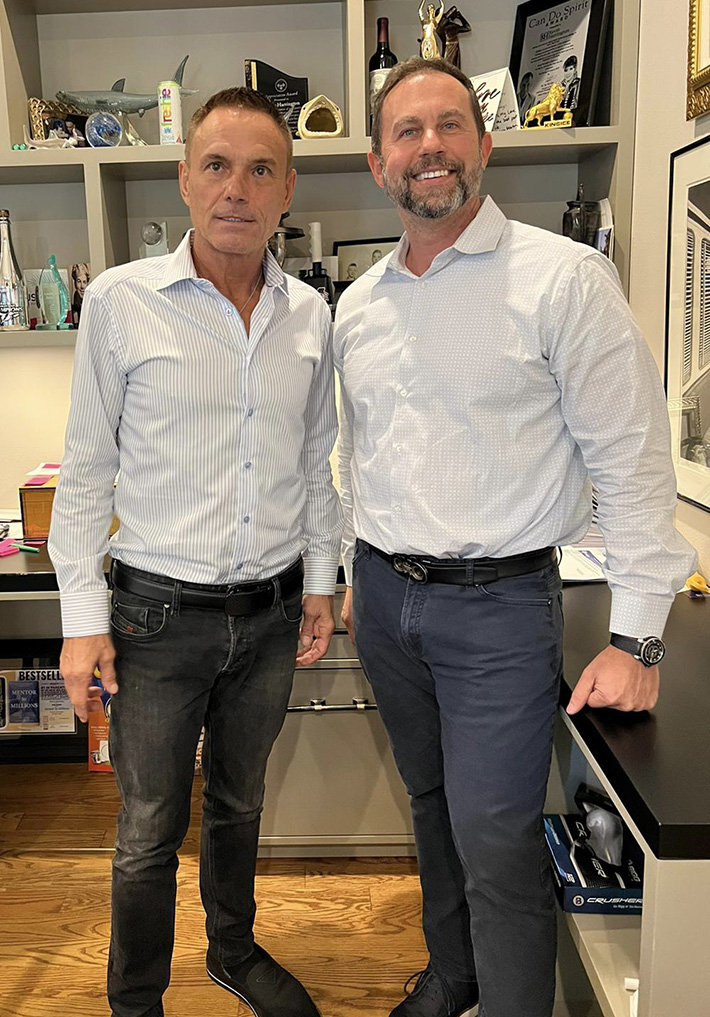 BALDWIN, NEW YORK SEPTEMBER 19, 2022 – The Merchant Marketplace, a leading fintech platform provider of direct financing to small and midsize businesses, announced today the launch of its new leadership with backing from industry powerhouse executives. The company’s new leadership team brings over 75 years of collective financial, technology, and business experience within its core leadership group: Adam Schwartz as CEO and Kevin Harrington, the Original Shark Tank Investor, will serve as a Strategic Partner. This partnership will revolutionize how merchants and independent sales organizations (ISO’s) obtain capital for growing their merchant’s businesses, changing the game for entrepreneurs throughout the United States.
“We are looking to change the industry by using a true fintech platform to facilitate transactions amongst ISO’s, merchants, and the Merchant Marketplace,” said Merchant Marketplace CEO Adam Schwartz. “We understand the challenges many small business owners face when trying to secure financing to help make their dreams a reality. The Merchant Marketplace is happy to be a resource for entrepreneurs by providing them access to capital so they can build a successful business.”
The Merchant Marketplace created a proprietary syndication platform that offers real time data and full transparency. In most instances, the company will offer ISO’s a two percent syndication as bonus for every deal that it funds, with the ability to syndicate more funding if needed. ISO’s can earn another stream of income by being vested in every deal they fund with the Merchant Marketplace, as well as earn a referral fee. The platform also offers a profit-sharing program and technology tutorials to show ISO’s how to engage with the platform to help achieve the best end results.

“The merchant cash advance market has been witnessing an escalation in growth over the past few years with the help of innovation. Our technology integrates with over 25 different third parties to give us complete insights into our merchants, giving us the ability to make offers with lightning speed and efficiency. We understand the needs of our clients and we want them to be part of the process. We do not want to be seen as just another funder; we want to be seen as a business partner for our ISO’s,” said Merchant Marketplace Director of ISO Relations, Justin Strull.
For questions on the service and to sign up as an ISO, contact Justin Strull at 516-980-4932 or email in to justin@merchantmarketplace.com
About Kevin Harrington
As an original “shark” on the hit TV show Shark Tank, the creator of the infomercial, pioneer of the As Seen on TV brand, and co-founding board member of the Entrepreneur’s Organization, Kevin Harrington has pushed past all the questions and excuses to repeatedly enjoy 100X success. His legendary work behind the scenes of business ventures has produced more than $5 billion in global sales, the launch of more than 500 products, and the making of dozens of millionaires. He’s launched massively successful products like The Food Saver, Ginsu Knives, The Great Wok of China, The Flying Lure, and many more. He has worked with amazing celebrities turned entrepreneurs including, Billie Mays, Tony Little, Jack LaLanne, and George Foreman to name a few. Kevin’s been called the Entrepreneur’s Entrepreneur and the Entrepreneur Answer Man, because he knows the challenges unique to start-ups and he has a special passion for helping entrepreneurs succeed.
Funding Circle US Originates $168M in 1st Half of 2022
September 8, 2022 Funding Circle’s US arm originated $168M worth of small business loans in the first two quarters of 2022.
“In the US, we continued to offer our commercial loan product during the six months to June 2022 and we have expanded this offering to serve super-prime businesses,” the company said in its latest financial disclosures.
Notably, Funding Circle closed funding deals with four banks and credit unions during the period and anticipates adding new investors as the year continues.
Globally, Funding Circle says it has helped 130,000 small businesses access $19.4B in funding since inception.
“Lending investor returns through the platform remain robust and attractive,” the company said on LinkedIn. “We’re making early progress against our medium-term plan to transform the business into a multi-product platform, as we continue to help more small businesses get the funding they need to win.”
Who’s Growing in the Industry?
September 6, 2022Despite Covid, several small business finance companies successfully secured spots on the 2022 Inc 5000 list for their stellar 3-year revenue growth. Here’s a snapshot of who made it:
| Ranking | Company Name | 3 year growth % |
| 127 | Crestmont Capital | 3,548% |
| 271 | Fountainhead | 2,006% |
| 799 | Business Lending Blueprint | 793% |
| 835 | Clearco | 755% |
| 970 | Valiant Business Lending | 668% |
| 1,047 | Funding Forward | 618% |
| 1,240 | Lending Science DM | 524% |
| 1,587 | Lendio | 401% |
| 1,876 | Choice Merchant Solutions | 324% |
| 1,970 | Nav | 306% |
| 2,343 | Novae | 250% |
| 2,886 | Velocity Capital Group | 189% |
| 3,262 | Fundbox | 162% |
| 3,410 | SBG Funding | 154% |
| 4,284 | Flexibility Capital | 107% |
| 4,367 | Fund&Grow | 103% |
| 4,737 | ApplePie Capital | 89% |
| 4,959 | Fundomate | 82% |
The Inc 5000 list requires companies to apply and submit data. Companies that may have qualified to be ranked could have chosen not to apply.
First Criminal Charges in MJ Capital Funding Saga
September 6, 2022 Criminal charges have finally been introduced to the MJ Capital Funding ponzi scheme saga. Last week, 29-year-old Pavel Ramon Ruiz Hernandez was charged by federal prosecutors with Conspiracy to Commit Wire Fraud. According to the allegations, Hernandez helped manage the operations of MJ Capital and oversaw significant fundraising efforts for the company while knowing that the business was a ponzi scheme. All told, it’s alleged that he and his co-conspirators defrauded investors out of $42 million.
MJ Capital Funding pretended to be an MCA provider but did not actually operate an MCA business, nor was the company known within the MCA industry.
Much of the investigations have focused on Johanna M. Garcia, the CEO of the company, but to date she has not been criminally charged.
If Ruiz Hernandez is convicted, he faces a maximum penalty of 20 years in prison, the DOJ states. The MJ Capital ponzi scheme is reported to have affected over 9,000 investors.
Why is a Recession Good for the MCA Industry?
August 30, 2022
 The MCA industry has strived for many years to overcome tremendous challenges. Interestingly, many in the industry – especially the many new “rookie funders” – are very nervous about the looming recession. In this article, we will attempt to calm nerves and delve in detail about how high inflation rates have affected the MCA space. More importantly, we will address how the inevitable recession will actually be good for the industry – if we play it right.
A Changing Environment
Funders and ISOs alike must be superefficient in working within the MCA guidelines, so they can avoid collapsing in the coming recession. The MCA game has drastically changed in recent years. The product, the rules, the accepted norms, and even the actual laws have changed. It is only natural that many of the “new funders” won’t have a complete grasp of the very original merchant cash advance product, and what made it work. Unless a funder has a complete understanding of why and how something works, they won’t know why and how it cannot work. Before we directly address the status of the current inflation, and discuss how to prepare for the recession, lets briefly go back and talk about the original merchant cash advance product.
The Monkey’s Ladder
It reminds us of an old parable where a scientist placed a ladder with a bunch of bananas on top of it, in the center of a cage full of monkeys. Whenever one of them attempted to climb the ladder, the scientist sprayed all of the monkeys with icy water. Eventually, whenever a monkey took a first step onto the ladder, the others would pull him off and give him a beating, because they wanted to avoid the icy water. The scientist then substituted one of the monkeys with a new one, who naturally jumped on the ladder as soon as he entered the cage and noticed the bananas. He immediately received a proper beating and learned to never go up the ladder – but he never learned why. Eventually all the monkeys were replaced, and the new monkeys learned not to climb the ladder, but no one knew why. Here, we will attempt to inform our new monkeys, I mean funders, about why we do things the way we do. When the recession finally hits, at least they will know to prepare a raincoat before the icy water hits them in the face.
Bob’s Pizza
The original merchant cash advance recipient was a hard-working pizza shop owner named Bob. Unfortunately for him, his oven broke, and the replacement cost was ten thousand dollars. Bob didn’t have good enough credit for traditional financing options. Of course, without a pizza oven Bob’s business faced an imminent demise. As a last-ditch effort, he contacted a factoring company, who funded businesses with their existing receivables, and asked if they would consider funding “future” receivables. The funder reviewed Bob’s file and immediately identified Bob’s bad credit, which was why no bank wanted to take a risk on Bob’s Pizza. The funder calculated that if the big banks had been able to legally charge a much higher APR, they may have taken the risk on Bob after all. The reality – it was the funding price that limited Bob’s credit options, not his bad credit.
This funder happened to be a “softy” and since the factoring industry was not limited to what the usury laws allow, he decided to come up with a solution that worked for both parties. To make the long story short, the funder offered to take a risk and fund the crucial pizza oven, by purchasing the future sales of Bob’s pizzas. The funder would do this if Bob was willing to pay a 1.49 factor rate, and let the funder draw a small percentage of Bob’s daily sales as payment. The funder determined that the pizza shop generated enough sales to cover the cost of the oven by paying just a small percentage of the running daily sales.
The funder believed the risk was minimal, and the rate balanced out the risk that Bob’s Pizza would default before the oven was paid off. Bob figured out that the cost for the oven was not ten but fifteen thousand dollars because of the funding arrangement. Bob believed it a relatively small charge to pay the additional five thousand dollars, in order to get the ten thousand dollars needed to buy his oven. After all, without the oven, his business would fail.
MCA in the Post-Covid19 Era
A lot has changed since Bob received the first MCA. For the purposes of this inflation-recession conversation, let’s skip to the current post-Covid19 era of the MCA space. First, the basic economic concept involved is that the need for a high-cost funding product such as an MCA peaks when interest rates are generally high and there’s a tight credit market on main street. Those in the high-risk bracket will find it even more difficult to obtain financing, and will seek out an MCA. Reversely, the demand for the MCA product is lowest when interest rates are low, and it is easier for a business to access credit. Even if Bob himself doesn’t have direct access to credit, if the oven supplier has easier access to financing, they will offer an in-house finance option directly to Bob. He won’t need to sell his future pizza pies at 1.49 factor rates for an MCA funder to replace his pizza oven.
How do these basic foundational MCA concepts line up with actual historical events in the space? The economic boom leading up to Covid19 saw record low interest rates and unemployment, which caused a drastic drop in the demand for high-cost funding. In reaction, the MCA space normalized stacking. As a direct result of the imbalance in supply and demand, funders added the option to fund multiple positions. Post-Covid19, the government issued many rounds of PPP and EIDL loans, and the demand for MCA money plummeted to the lowest point in the history of the industry. This also explains the high inflation rates we currently experience. With easier access to money, more people spend more money, which drives up the prices to access money, through the old economic law of supply and demand. However, by this theory, we should have seen a sharp decline in the number of MCA funders. Unexpectedly, the outcome has been the opposite. Since Covid19, funders have opened at a rate faster than ever seen before in the MCA space.
In fact, the opening of brand-new funders has proportionally outpaced the opening of brand-new merchants.
Investing Changes Post-Covid19
The reason for this outcome is simple. When more people have access to money, more people invest money. A lot of people choose cryptocurrency as their easy ride to riches, others have an appetite for the MCA space. Each time a funder opens shop, they add to the overall supply within the MCA space, which aggravates the already stressed demand imbalance. The new funders who came into the space carrying large bags of money from investors weren’t willing to simply return the unopened bags – they wanted to fund. To overcome the lack of demand, these new funders relaxed the underwriting standards. It is now normal to see new funders advertise “we fund defaults.” As a result, many lead generators have stopped creating leads for new merchants. Instead the focus is officially on UCC filings, defaults, etc. These people are basically saying they have given up on expanding the MCA market share, and rely on rerouting the same leads over and over like the game of musical chairs.
A New Era For Bob
Not so long ago all reputable funders funded only 1st positions. Now many of the new funders officially do not fund 1st positions, they only fund a merchant who is a proven payer to a big funder. By this logic, Bob would not have received funding for his pizza oven from most of the new funders. But the truth is that Bob was helped many years ago, and wouldn’t need funding in the current environment, after he wisely saved his PPP and other loans. But, given that he once received an MCA, a lead generator dug him up and Bob was a fresh lead once again.
After receiving many unsolicited offers, Bob realized that the supply and demand imbalance had flipped the game upside down. This was a new era where the demand for merchants was higher than for funding. With such feelings of empowerment, Bob couldn’t resist the offers and decided to take a deal. However, he was determined not to touch the funds. Bob decided to use the funds only to make the payments and build solid MCA credit for a rainy day. The UCC filing chasers picked up on Bob’s situation, and guess what, within a few short weeks, Bob was receiving 2nd position offers.
At first Bob relentlessly refused the offers. He didn’t feel comfortable committing too much of his daily sales that he needed for rent, payroll, and pizza ingredients. Bob soon realized that in the current MCA era, as long as he maneuvered to move his money around so that his bank statements met the new robotic guidelines of the funders, they would keep funding and renewing him. In fact, given the current state of affairs, Bob now realizes that zero of his actual pizza sales need to be committed, since the many funder’s positions and renewals provide plenty of resources to cover the daily payments, just like an efficient Ponzi scheme.
The Effect on Competition
The tricks to artificially force more demand within the same group of merchants was not exercised by the smart and disciplined funders. Many of the big funders officially slowed down on funding. They haven’t provided a detailed explanation about why they are issuing a lot more declines than usual. Some of the big funders choose to battle with the new funders by competing with them. Those big funders, being fully aware that the new funders shy away from 1st positions, also know that when a new funder receives a bank statement with a daily payment to a big reputable funder, it is almost an automatic certainty that the new funder will want to fund a 2nd position, and 3rd, even a 4th position, etc.
Therefore, the big funder has every reason to go ahead and fund it, considering that the merchant will certainly pay the 1st position to qualify for the many more positions to come. However, the big funder is limited to their publicly advertised policies. They now face a problem trying to even get these types of fundings. If one of their “partners” happens to submit such bad paper, they can’t lower themselves to fund it, because they don’t want to admit to their ISOs how desperate they really are.
To overcome these limitations, those big funders who choose to compete with the new funders open their own little “new funder shops.” These anonymous “new funders” do not have any obligations to the big and reputable ISO shops. These new funders accept all ISOs and all paper. This provides an underground tunnel where the big funder can take part in the slum of the MCA space, where demand for high-priced funding is always rampant, despite the laws of economics. Those big funders then take the data from their very own “new funder shops” and backdoor them back to their “big company.” The submissions are then funded as a 1st position to create an illusion of an excellent file, funded by a reputable brand name funder. Of course, this merchant will receive many offers for many more positions which will provide plenty of cash flow to pay the big funder’s 1st position.
These “big funders” will also at times utilize their “new funder” shops to compete on 2nd and 3rd positions. They will ultimately use the same trick to drop a deal to this merchant from their big company, and rely on the “real new funders” who will undoubtedly jump in to act as reliable cleanup hitters, and drop even more cash to drive the other positions home.
Bob’s New Business
By now Bob no longer operates a genuine pizza shop. He simply does not have the time to manage that business, and quite frankly he doesn’t have to. Bob is now an entrepreneur, with various companies and bank accounts, all of which are of course related to the pizza industry. The influx of funding has given Bob an opportunity to walk away from the hot oven and focus on business – the MCA kiting business. MCA kiting is a phrase coined by OPV. The term is derived from a similar practice in the banking industry known as check kiting. It is a form of fraud where a check is intentionally written for a value greater than the balance in the account. Then a second check is written on a different account, to cover the non-existent funds in the first account. This falsely inflates the balance of a checking account, to allow written checks to clear that would otherwise bounce.
The sales on Bob’s banks statements no longer consist of small amounts that shoppers drop for a slice. We now see large deposits and large expenses coming and going as transfers wires, etc. Bob now even imports and exports flour from international flour mills, which explains the large offshore wires.
Bob remembers the days of working hard in a Pizza shop, so he is determined to do the right thing and keep making money from his new companies. Bob studies the guidelines from the various funders, and he makes sure not to mess up. He is an excellent merchant with a perfect MCA payment history. If Bob keeps the process moving forward, he can get funding every few weeks, skim off the top and save the rest for payments until the next advance. This can mathematically go on and on for a long time, where the funders keep paying the merchant to make payments.
The only time this could become an issue for Bob is if the new funders stop opening new shops and the influx of fresh supply comes to an abrupt halt.
The Impact of a Recession on MCA Kiting
Some economists in the MCA space have expressed concern that the upcoming recession will affect the merchants’ sales, and force them to default on their payments. However, this is not a major concern for the legitimate merchants, since many of them are in essential business markets that will not experience a substantial drop in sales, and thus won’t be greatly affected by a recession. But – it is a huge concern for those in the MCA kiting business like Bob. When the recession hits and interest rates rise to rates not seen in a century, investors will be stressed to the max and seek to pull the “huge profits” that they made in the MCA space. There won’t be an influx of new funders that can be relied upon to bail out the previous positions.
As those MCA-kiting merchants collapse, so will the funders who heavily relied on that part of the market share within the space.
Surviving The Recession
On the other hand, the recession will bring major relief and recovery to those funders, new and old, big and small, who were disciplined throughout the inflation period when demand was low. As mentioned earlier, the reason for high inflation rates is easy access to cash. In order to curb inflation the government will raise interest rates to induce lower inflation, which will restrict the easy access to cash. This will usher in a new era of legitimate merchants that find themselves trapped in a credit crunch, who will seek out the MCA option just like Bob did all those years ago.
During these volatile times it is important to always be mindful that your network is your net worth. As a funder, if a large portion of your portfolio consists of merchants who are playing the MCA kiting scheme, then prepare a raincoat for when the recession hits. On the other hand, if you are a funder that remembers why we do not climb the ladder for the bananas, then you are in a perfect position to survive the upcoming recession. The same goes for ISOs, where building solid relationships with solid companies will be the difference between failure or getting a win during the next great recession.
Funding Circle’s Partnership With Farm Bureau Bank
August 26, 2022 “I think the main thing is that Funding Circle for a long time’s been working with banks and the way we work with Farm Bureau Bank is no different, which is we’re out here to try and put money into the pockets of small businesses,” said Angus Sanders, Chief Revenue Officer & VP Product at Funding Circle, “and Farm Bureau Bank is going to help us to do that.”
According to Sanders, Funding Circle and Farm Bureau Bank have joined forces in delivering quality loans to small business owners. This partnership allows Farm Bureau Bank to purchase loans through Funding Circle in support of the small business community. They even extend a hand to small businesses in rural communities who may not be close to a bank to receive the services they need to grow their business.
“For those customers who are in rural areas, and perhaps can’t travel so easily to a branch, working with Funding Circle and Farm Bureau Bank, they’re able to get a loan much more easily and quickly, typical turnaround, 24 hours to offer and 48 hours to loan, which is very different to your typical small business loan. So, I say those are the primary areas where this helps small businesses,” said Sanders.
With the increase of banks wanting to do more small business lending, sometimes they struggle with finding businesses or being able to process the loans, Sanders explained. Working with organizations like Funding Circle, Farm Bureau can now provide capital faster and fund more small businesses.
During the pre and post-pandemic era, Sanders said he believes that fintech has evolved and will only continue to do so. And with fintech on the rise, Sanders said that other products like Lending as a Service, will continue to be a key growth area in the coming months.
“Farm Bureau Bank is starting with financing and we hope someday they’ll refer deals to us, […] but what this really shows is the deepening focus on partnerships between fintechs and banks, and particularly this emergent Lending as a Service product, which within Funding Circle sort of takes the lead on but lots of other fintechs go into and I think you’ll see, you’ll see more about that in the coming months,” said Sanders.
PayPal, King of The Small Business Lenders?
August 3, 2022 PayPal didn’t offer precise quarterly origination figures for its “Working Capital” loan product on Tuesday, but it did reveal total originations since 2013. The number? 1.3M loans for a total of $25.6B across the US, UK, Australia, and Germany. Though there is an international component, the totals are higher than rivals OnDeck and Square Capital over the same time period.
“PayPal Working Capital (PayPal Funding Pro) expanded to France and the Netherlands,” PayPal said in its Q2 announcement, “providing SMBs with simple and flexible funding in minutes.”
The company’s small business lending operations draw little attention given that its payment business, which includes Venmo, is so massive. The size of it first became known in 2019 when it offhandedly claimed $4 billion in annual business loan origination volume for the year. That number shrank to $2.6B in 2020 during the pandemic, which was still more than all of its competitors.
In the US, its loans are actually made possible through WebBank.