
How LendingTree and SnapCap Crossed Paths
September 25, 2017 LendingTree in recent days revealed the acquisition of online platform for small business lending SnapCap’s non-lending assets in a $21 million deal, including $12 million upfront and $9 million in contingency payments. The deal gives online lending marketplace LendingTree more scale in the small business market ahead of what could shape up to be recovery in 2018.
J.D. Moriarty, LendingTree Chief Financial Officer, told AltFinanceDaily that SnapCap’s 20 employees will stay in Charleston, and the brand will remain intact. “For them, their employer just got both a whole lot more stable and scalable. As with anything we acquire, we will keep the brand in place and test it to see what is most effective,” said Moriarty.
LendingTree has been connecting small businesses with lenders since 2014, and the latest deal reflects a strategy to add scale.
“It’s a bit of what you might call an acqui-hire. LendingTree is growing quickly and scaling. We hired a really good team in SnapCap that will basically be our way of scaling in small business,” said Moriarty.
LendingTree is lifting its profile in the small business segment amid an industry transformation that is thinning the pack and has seen some players shifting gears entirely.
“Small business lending might do very well in 2018. And we are investing now to grow the base of our business. On a macro level, we expect our business to do well in 2018 regardless. But if small business lending recovers and suddenly you see companies like OnDeck doing well, we will benefit from that. But we position any acquisition assuming that the market doesn’t recover and the deal still must be attractive to us, even if the market continues to struggle.”
Moriarty went on to provide a glimpse into the financial structure of the deal.
“Last year, SnapCap set up a special purpose vehicle (SPV), which was funded by outside capital with which they would actually make loans. There’s a balance sheet aspect to that business we are not acquiring. But it was a small percentage of their business,” Moriarty explained.
Inside the Marketplace
LendingTree is largely known as a marketplace for mortgage loans where they represent about 50 percent of comparison shopping for mortgages. “That is how people think of us for sure,” said Moriarty. The revenue drivers have expanded in recent years, however.
For instance, mortgages used to account for 90 percent of revenue. Today, based on the most recent quarter, less than half of business originates from mortgages while the balance is in personal loans, credit cards, home equity, small business and auto loans.
LendingTree is no stranger to acquisitions, having done five such deals since June 2016. “What we’re trying to do is to build other marketplaces where people want to comparison shop,” said Moriarty.
But growth by acquisition is not their only growth strategy. “We’re growing period,” said Moriarty, adding that organic growth has been very good but small business in particular is a tough market to scale.
One of the recent deals, the acquisition of CompareCards a year ago, led them to gain market share in the credit card space. That deal also led LendingTree to SnapCap. CompareCards founder and president Chris Mettler and his wife own more than a one-third equity stake in SnapCap.
“SnapCap was introduced to us through Chris. He’s now a LendingTree employee. The introduction was absolutely from him. But it’s very consistent with our strategy, which we have conveyed to the market. We will continue to make small, accretive acquisitions and that will help us to gain scale in certain businesses and diversify,” said Moriarty.
Hybrid Model
While LendingTree and SnapCap both facilitate loans to the small business community, they take slightly different approaches to get there. “SnapCap’s core business is not unlike ours, meaning they are essentially finding high quality leads for lenders,” said Moriarty.
SnapCap uses a concierge model in which customers have a broker experience. They talk to someone at the company who helps them to identify a lender.
“LendingTree will be bigger and more scalable through both the traditional LendingTree model and SnapCap’s concierge approach. We will simply be able to serve lenders more effectively. If I’m a lender making small business loans, this is a pretty good thing.” he said.
SnapCap, meanwhile, is looking forward to the very same scale that LendingTree is targeting.
“The mission of SnapCap has always been to serve small business owners with access to funding. LendingTree’s leading online lending marketplace combined with SnapCap’s successful concierge model will enable us to serve an even wider range of business owners,” Hunter Stunzi, co-founder of SnapCap, told AltFinanceDaily.
Tech Banks: Will Fintech Dethrone Traditional Banking?
August 20, 2017On Halloween, 2014, a largely unknown, Boston-based financial institution, First Trade Union Bank, embraced high-technology, went paperless, and officially adopted a new name: Radius Bank.
 In reinventing itself, Radius did more than dump its dowdy moniker. It shuttered five of its six branches, re-staffed its operations with a tech-savvy team, instituted “anytime/anywhere” banking services, and offered customers free access to cash via a nationwide ATM network. And it teamed up with a fistful of financial technology companies to offer an impressive array of online lending and investment products.
Today, the bank’s management boasts that, using their personal mobile phones, some 2,700 people per week are opening up checking accounts, funneling $3 million in consumer deposits into the bank’s virtual vault. That’s a stark contrast from a decade ago when the financial institution was being rocked by the financial crisis and “we couldn’t get anybody to walk into our branches,” says Radius’s chief executive, Mike Butler.
“We tried to leave that old bank behind,” he says. “We’re a virtual retail bank now, an efficiently run organization that offers high levels of customer service and Amazon-like solutions.”
Radius Bank is not alone. At a moment when there is much discussion — and hand-wringing — over the future of seemingly outmoded, highly regulated community banks, a coterie of small but nimble banks is exploiting technology and punching above its weight. Almost overnight, this cohort is combining the skill and hard-won experience of veteran bankers with the lightning-fast, extraordinary power afforded by the Internet and technological advances. As a result, these small and modest-sized institutions are redefining how banking is done.
In addition to Radius Bank, independent banks winning recognition for their bold, innovative – and profitable — exploitation of technology, include: Live Oak Bank in Wilmington, N.C., which adroitly parlays technology to become the No. 2 lender to business and agricultural borrowers backed by the U.S. Small Business Administration; Darien Rowayton Bank in Darien, Conn., which is making a name for itself with coast-to-coast, online refinancing of student loans; and Cross River Bank in Fort Lee, N.J., which does back-end work for a passel of fintech marketplace lenders.
Interestingly, there’s not much overlap. Each of the banks goes its own way. But what all the banks have in common is that each has struck out on its own, each hitting upon a technological formula for success, each experiencing superior growth.
“These are companies that understand the value of a bank charter,” says Charles Wendel, president of Financial Institutions Consulting in Miami. “They have to work under the watchful eyes of state and federal regulators. But their cost of funds is low and they can offer more attractive rates. Because they’re less likely (than nonbank fintechs) to disappear, run out of money, or get sold,” the bank expert adds, “they also have the image of stability with customers.”
These modest-sized banks are emerging as not only pacesetters for the banking industry. Along with making common cause with the fintechs — which had promised to disrupt the banking industry – they’re even beating the fintechs at their own game.

“Classically, community banks have looked to technology partners to provide technological innovation,” says Cary Whaley, first vice-president for payment and technology policy at the Independent Community Bankers of America, a Washington, D.C.-based trade group representing a broad swath of the country’s 5,800 Main Street banks. “They still do. You’re seeing more partnerships. But now you also see community banks building innovative products and services outside of that relationship. You see forward-thinking banks developing their own technology to support big ideas like marketplace lending, distributed ledger technology, and emerging payments technology.”
With its extraordinary skill at exploiting technology, Live Oak Bank – which trades on the Nasdaq and is the only public company encountered in the cohort — has become a Wall Street darling. “While several banks have adopted an online-only model, and nearly all banks are shifting more and more delivery through online channels, Live Oak was built from the ground up as a technology-based bank,” Aaron Deer, a San Francisco-based research analyst at Sandler O’Neill Partners, wrote in a recent investment note.
Driving the success of Live Oak, which operates out of a single branch in the North Carolina seacoast town and has only been in business for a decade, is the explosive growth in its SBA lending, the bank’s “core strategy,” Deer notes. Last year, Live Oak lent out $709.5 million in SBA loans in increments of up to $5 million, the federal agency reports, making it the country’s No. 2 SBA lender. It trailed only megabank Wells Fargo Bank, the third largest bank in the U.S. with $1.5 trillion in assets, which made $838.93 million in SBA-backed loans last year.
As its SBA lending has taken off, Live Oak, which qualifies as a “preferred lender” with the federal agency, boasts assets that have nearly tripled to $1.4 billion in 2016, up from $567 million two years earlier. Those are flabbergastingly fantastic growth numbers. But just as incongruously — by nipping at the heels of Wells Fargo — Live Oak has been challenging a bank more than a thousand times its asset size for dominance in SBA lending.
And, interestingly, the bank is able to book those outsized amounts of SBA loans while lending to only 15 industries out of 1,100 approved by the government agency, slightly more than 1% of the universe. That’s up from 13 industries in 2015, and Live Oak is adding two to four additional industries yearly for its SBA loan portfolio, Deer reports. Included among the industries to which the bank made an average SBA loan of $1.29 million last year: Agriculture and poultry, family entertainment, funeral services, medical and dental, self-storage, veterinary, and wine and craft-beverage.
The bank has a team of financing specialists dedicated to each of the designated industries. Among Live Oak’s current SBA borrowers are Martin Self Storage in Summerville, S.C.; Utah Turkey Farms in Circleville, Utah; Pinballz Arcade, Austin, Tex.; and Council Brewery Company in San Diego. Steve Smits, chief credit officer at the bank, told NerdWallet: “When you specialize in something, you become efficient. Because we do it every day and we have professionals and specialists, we tend to be more responsive and quicker.”
The heady combination of technological sophistication and banking expertise has allowed the lender to slash its loan-origination time to 45 days, about half the three-month industry average for SBA loans. To speed up loan sourcing and generation, the bank developed its own in-house technology, which led to the formation of the Wilmington-based technology company nCino, which was spun off to shareholders in 2014.
Live Oak did not return calls to discuss its lending strategies, but in SEC filings bank management declared: “The technology-based platform that is pivotal to our success is dependent on the use of the nCino bank operating system” which relies on Force.com’s cloud-computing infrastructure platform, a product of Salesforce.com.
Natalia Moose, a public relations manager at nCino told AltFinanceDaily in an e-mail interview: “We work with Live Oak Bank, in addition to more than 150 other financial institutions in multiple countries with assets ranging from $200 million to $2 trillion, including nine of the top 30 U.S. banks. nCino was started by bankers at Live Oak Bank who found the logistics of shuffling paperwork among loan stakeholders to be unwieldy, inefficient and time-consuming.
“nCino’s bank operating system,” Moose adds, “leverages the power and security of the Salesforce platform to deliver an end-to-end banking solution. The bank operating system empowers bank employees and leaders with true insight into the bank, combining CRM (customer relationship management), deposit account opening, loan origination, workflow, enterprise content management, digital engagement portal, and instant, real-time reporting on a single secure, cloud-based platform.”
Live Oak, meanwhile, is not resting on its technological laurels. According to Deer’s report, the bank’s parent company, Live Oak Bancshares, has formed a subsidiary to inject venture capital into fintech companies. It’s already taken a small equity stake in Payrails and Finxact, “the latter of which is developing a completely new core processor to compete against the old legacy systems used by most banks,” the Sandler O’Neill analyst writes. “Quite simply,” he asserts elsewhere in his report, “the company is far beyond any other bank we cover in its technical capabilities and the growth outlook remains outstanding.”
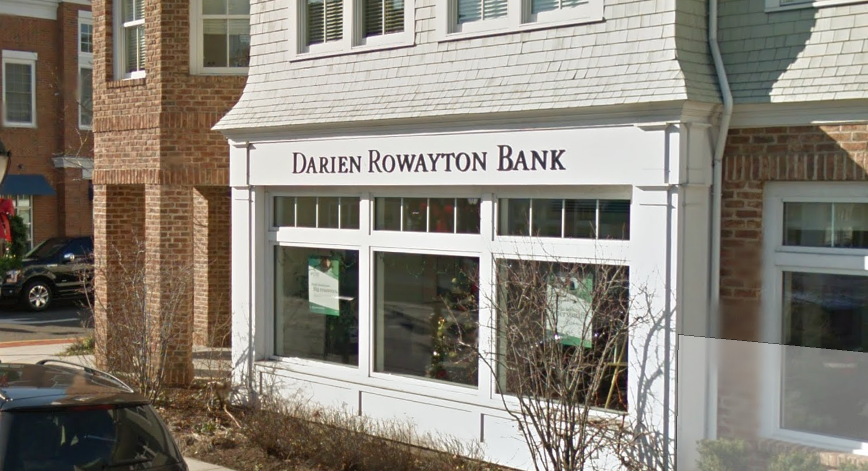 Five hundred and thirty-three miles due north along the Atlantic coast in southeastern Connecticut, Darien Rowayton Bank is also experiencing tremendous success as a lender using a home-grown technology platform. State-chartered by the Connecticut Department of Banking and regulated as well by the Federal Deposit Insurance Corp., the $600 million-asset bank is winning attention in banking circles for its online student-loan refinancing.
A few years ago, DRB, as it is known, was looking to go beyond mortgage and commercial lending — “the bread and butter for most community banks,” bank president Robert Kettenmann explained to AltFinanceDaily in a telephone interview – and was somewhat at a loss. The bank considered but then rejected the credit card business. Finally, DRB struck paydirt refinancing student loans. “Our chairman really seized on the opportunity,” Kettenmann says, adding: “It’s a $35 billion market.”
Thanks to the National Bank Act, it’s able to operate in all 50 states. As a regulated commercial bank with a strong deposit base, DRB can also offer low rates well below any state’s usury prohibitions.
What is most striking about DRB’s program is its nationwide targeting of upwardly mobile, affluent young professionals. According to a PowerPoint presentation obtained by AltFinanceDaily, all of the bank’s super-prime borrowers, who are mainly in the 28-34 age bracket, have a college degree and a whopping 93% have graduate degrees. Average income is $194,000.
 Forty-eight percent of those refinancing student loans with DRB are doctors or dentists and another 22 percent are pharmacists, nurses or medical employees; only about 20% are paying off their law degrees or MBAs. The heavy concentration of refinancing in the medical field reduces economic risk in an economic downturn. Forty-three percent of the borrowers are home-owners, the rest are renters – and prime candidates for an online, DRB-financed mortgage.
(Once known as “yuppies” today this cohort is “known by the acronym ‘HENRY,’” remarks Cornelius Hurley, a Boston University banking professor and executive director of the Online Lending Institute, explaining the initials stand for “High Earners Not Rich Yet.”)
The Connecticut bank partnered with a third-party on-line vendor, Campus Door, when it commenced making student loans in 2013. In the fall of 2016, however, DRB built out its own, proprietary loan-origination system, Kettenmann reports, emphasizing that CampusDoor had been an excellent partner but that the bank wanted to exercise end-to-end control over the process. DRB employs a seven-pronged, “omni-channel” marketing approach that includes interactive marketing, affinity partnerships, digital/online advertising, direct mail, mass-media advertising, and public relations/brand awareness campaigns.
DRB’s online enrollment provides “pre-approved rates” in less than two minutes with final approval on rates in 24-48 hours. Refinancers can complete the online application at their own speed. Through May, 2017, DRB had made $2.48 billion in refinancing to 20,000 student-loan borrowers, with only ten defaults, five of which were attributed to deaths or “terminal illness.”
On Yelp! the bank has received a batch of reviews ranging from very favorable, five-star (“I had a truly wonderful experience”) to one-star (“awful” and “truly a nightmare”). Many fault the application process as laborious, describing it as “time-consuming.” But for those who have succeeded, like the reviewer who counseled “patience,” the result can be “the lowest rate with DRB…my loan payments went down $100 a month.”
 Just about an hour’s drive south and taking its name from its proximity to New York city just over the George Washington Bridge is New Jersey-based, state-chartered Cross River Bank, which has a reputation as a partner-in-arms to fintech companies. “We’re both users and producers of technology,” declares Gilles Gade, the bank’s chief executive.
The bank provides “back-end” and infrastructure support to 17 marketplace lenders that offer a suite of lending products including personal loans, mortgages and home-equity loans. Following loan origination by a fintech company – Marlette Funding, Affirm, Upstart, loanDepot, SoFi, and Quicken Loan, among other partners — Cross River does the actual underwriting. Last year, Gade reports, the bank underwrote 1.9 million loans valued at $4-4.5 billion, about 10% of which Cross River kept on its books. The bulk of the loans are sold “back to the marketplace lenders” or to a third party. “We’ve created a high-velocity automated system,” he says.
Gade is manifestly unapologetic about the bank’s role in assisting fintechs in their competition with the banking establishment. “We’re a banking infrastructure services provider for those who want to disrupt the banking system,” he says. “Consumers expect a lot better than they’ve been getting from traditional banking services.”
 Back in Boston, Radius Bank’s chief executive reports that forging partnerships with fintechs to provide the full panoply of online banking services was no easy proposition. In its mating ritual, Radius not only had to determine that a fintech company’s offerings were sound and that it had the right characteristics – most especially “a long-term, sustainable business model” – but that its corporate culture meshed comfortably with Radius’s.
After meeting with as many as 500 fintechs and after a fair amount of trial and error, Radius formed partnerships with LevelUp, which enables customers to make mobile payments; with online lender Prosper, for refinancing consumer debt and “credit rehabilitation”; with SmarterBucks, for refinancing student loans; and with online investment firm Aspiration Partners – which allows investors to name their own fees and markets itself to a predominately middle-class audience as the firm “with a conscience.”
Radius employs advertising on social media websites and employs “psychographics” to appeal to “anyone who is zealous about using technology, not necessarily millennials,” Butler says. The data show that 65% of adults in the U.S. would prefer to use a traditional bank and have face-to-face interactions with a teller, he notes, leaving the remaining 35% as Radius’s target audience.
Christopher Tremont, executive vice-president for virtual banking, told AltFinanceDaily that a typical Radius customer is 42 years old, lives in Boston, New York, Chicago “or one of the bigger cities in the West,” is a “technophile,” earns $75,000 a year, and has $100,000 in personal assets.
Radius’s performance since it went paperless has been stellar. The bank has seen a rapid rise in deposits, spurting to $782 million through the first quarter of 2017, up from $565 million at year-end 2014. With little fee income but ample deposits and low-cost funds, Radius realizes the bulk of its revenues – and profits — on the interest-rate spread generated from its loan portfolio.
The bank booked $43.5 million in SBA loans last year, ranking it in the top 50 banks on the SBA’s league tables, while carrying another $105 million in its commercial leasing business at the end of the first quarter this year. Loan generation is driving asset growth, which are currently at $973 billion, up more a third from $726 million in 2014, and Butler expects the bank’s assets to top $1 billion sometime this year.
“Community banks love that part of the business—lending money,” Butler says.
Go West, MCA Broker
August 16, 2017
If you check out the AltFinanceDaily forum, one of the latest discussions originated from a self-described newbie business owner who wants to know, ‘What separates a successful ISO from the rest?’ The user, who calls himself jellyfish capital, asks the AltFinanceDaily universe:
“I’m trying to figure out what the variables are that would dictate a successful brokerage/ISO vs. a shop that has a ton of turnaround and doesn’t make any money and ultimately ends up shutting its doors.”
The answer just might lie in the types of financial products the broker can sell.
MCA Broker Shift
Noah Grayson is managing director and founder of South End Capital, a commercial and investment residential real estate lender launched in 2009 that also started doing SBA loans and MCA consolidation loans in recent years to help out merchants with stacked MCA positions. Grayson pointed to a shift in the types of brokers signing up with the Encino, Calif-based lender.
“We’ve noticed a large number of brokers signing up with us are coming over from the MCA space. They’ve relayed to our staff that competition is too stiff to make enough money only originating MCAs, and they are looking for other avenues to bring in revenue,” Grayson said.
Indeed, South End Capital has seen an influx of brokers from the MCA industry gravitating their way. In fact, there has been more than a 10 percent spike year-to-date versus the same period last year in the number of brokers that discovered South End Capital through some form of Internet origin, such as AltFinanceDaily, versus a targeted ad in a real estate related publication or through more traditional real estate origination means.
“What we’re hearing from our MCA industry referral partners is that their[customers] now want any option other than an MCA. These brokers are coming to us now because they are trying to evolve their businesses to stay afloat. Offering real estate or SBA loans has proved to be the next logical step for these brokers and it has provided a big bump to our business,” said Grayson.
As in any industry, making a career change can introduce unexpected challenges. A hurdle for the brokers, particularly as it relates to making the jump to commercial real estate lending, has been unrealistic expectations.
“Many MCA brokers have an expectation that real estate or SBA loans will work similarly to an [MCA], but it’s a more involved process. There’s more documentation and more moving parts to understand. There has been a big learning curve for a lot of these brokers — some have been willing to learn and are excited about the opportunity. However, many MCA brokers have proven extremely resistant to change and unable to adapt” noted Grayson.
There are hurdles facing the MCA industry, too.
 Merchant Motivation
So what’s driving the shift? Small businesses, some of which are saddled with short-term obligations, have begun to realize that thanks to the rise of alternative lenders they have more options. Meanwhile unscrupulous collection agencies are throwing a monkey wrench into the situation, making it trickier for merchants to gain access to cash advances.
David Soleimani, CEO of LendFi Corp, said a major setback for the MCA industry has been the interference of collection companies convincing good paying merchants to default and cut their payments in half. By negotiating payments with a third party, merchants essentially become blacklisted from receiving any further MCAs.
LendFi senior account rep Jonathan Meyer specializes in cash advances, term loans, equipment leasing and lines of credit. He’s noticing a trend of more MCA brokers expanding their line of business in the last year.
“Companies are overextended [with cash advances.] It’s a problem,” said Meyer. “If everything is perfect, we can do a term loan or a line of credit if it falls under certain criteria.”
One small business came to LendFi’s Meyer recently and as a result saved himself a lot of cash. “I consolidated someone’s loan recently. I got him a term loan and saved him $14,000 a month. He had two loans at $110,000. I got him a term loan for $165,000 and he saved $14,000 a month. He was paying $22,000 per month,” said Meyer, adding that he also consolidated the payments from a daily to a monthly schedule. “That’s a huge savings,” he said.
For all of the twists and turns that may be up ahead for brokers and merchants alike, one thing seems clear. The MCA industry isn’t going anywhere.
“There will always be a [customer] whose only option is an MCA, and it has its benefits for many. For example, the only way to get business funding in one or two days is with an MCA. However, I think the reasons why someone would need an MCA are becoming fewer and fewer as other more viable financing options emerge,” said Grayson.
Breslow: The Advantage Goes to Scale Players
August 8, 2017
OnDeck’s recent quarter answered a host of questions that surrounded the online lender, touching on everything from market share gains, to year-end profitability, to double-digit loan origination growth on the horizon. Another major growth driver that took the spotlight was the partnership between OnDeck and JPMorgan Chase, which has been cemented with expanded terms.
Noah Breslow, OnDeck’s CEO, told AltFinanceDaily the partnership, which is bigger than any other relationship the online lender has formed, is firing on all cylinders.
“Ever since the product was introduced in April 2016 we’ve seen nice growth, incredible customer satisfaction and sound credit performance,” said Breslow.
In fact, the Chase partnership has been not only a flagship deal for OnDeck but very possibly the online lending community as a whole.
“We think it’s a harbinger of what’s to come in the space. Chase took a very forward thinking move a year and a half, two years ago when it decided to work with us to build a product,” said Breslow, adding that OnDeck remains in discussions with a number of large financial institutions about providing similar services and capabilities for online business lending.
The partnership, which started off as a pilot program between OnDeck and Chase, is a testament to JPMorgan’s commitment not only to OnDeck but also small business lending, which has taken it on the chin since the financial crisis. Under the new terms the relationship will continue for another four years.
“A whole segment of small businesses doesn’t want to borrow $5 million or $500,000. They want $50,000. The traditional bank lending process is not set up to make loans very efficiently,” said Breslow, pointing to the costs and time involved that cause banks to shy away from doing this.
OnDeck uses a score, dubbed the OnDeck score, that Breslow likens to a FICO score for small businesses. “The OnDeck score is built for our population. It looks at cash flow, personal and business credit, the industry and geography of the business, other debt, taking a holistic view of performance of the business than only FICO and cash flow,” he said.
JPMorgan Chase sets how much risk they want to take or not take with the loans they issue on the OnDeck platform, leveraging both their own data as well as data OnDeck has collected over the past decade of lending. Chase’s small business lending program remains invite-only.
“Small business owners will receive an email or phone call or some other form of solicitation, and then they can come to the website and get approved. We think over the next couple of years Chase will expand the scope of the program, but we’re not talking about how and when they are going to do that,” Breslow said.
OnDeck has taken a series of steps to strengthen the company’s balance sheet in recent months, not the least of which has been to tighten lending standards, which admittedly led to lower loan originations in Q2. Nonetheless the company expects to rebound with double-digit growth in loan originations in 2018, albeit off a low base.
OnDeck has largely completed a cost reduction plan that was started in 1H2017 and essentially removed $45 million in annual expenses from its P&L. “That was a lot of work to take on in a short period of time. We went heads down and got through it. In conjunction with that we rationalized our credit policy and our credit standards to be more conservative to reduce loss rates. The combination of those two moves set the business up to be profitable at the end of the year,” said Breslow.
These steps are resonating with institutional investors, including Mario Cibelli, managing partner at Marathon Partners Equity Management, which has an investment in OnDeck. He characterized the Chase extension as “good stuff.” “I think they had a solid quarter. They’re following through on some of their promises and I’m continuing to monitor our investment,” Cibelli said.
While OnDeck appears to be out of the woods, Breslow shared his perception of the industry.
“The advantages of online lending go to market leaders and scale players. Some folks with lower levels of scale can’t get credit performance right and don’t have enough capital to build out their business,” said Breslow.
With the expanded JPMorgan Chase relationship, gaining scale is on the horizon while some of the hard times appear to be in the rear-view mirror.
“The nice thing is we’re focused on growth again. The message we wanted to communicate yesterday is that we have all the capital we need to lend after the progress we made in the past year. We refinanced $850 million in credit facilities or added new credit facilities. So we have a great balance sheet that’s healthier than it’s ever been from a capital perspective. Now it’s about growing responsibly and profitably as we head into 2018,” said Breslow.
Fintech Remains Loyal to Prosper & Suber
July 10, 2017
When AltFinanceDaily reached out to fintech market participants for comment on Ron Suber’s sudden departure as Prosper’s president, the responses were the same — ‘anything for Ron.’ Dubbed the Godfather of fintech, Suber might deserve superhero status given the recapitalization that he and the Vermuts led half a decade ago to save Prosper Marketplace. That type of rescue inspires the kind of loyalty that investors and other fintech participants are displaying not only for Suber but also the Prosper brand.
“Ron is an incredible business partner. His word is always good. He doesn’t overpromise, and he always follows through. We were honored to work with a guy like that,” said Matt O’Malley, co-founder and president of Looking Glass Investments, which has been investing on the Prosper platform since 2008.
Perhaps he has never seen him overpromise but in recent weeks he and many other investors on the Prosper platform did observe an overstatement of returns. O’Malley calls it a forgivable mistake.
“In my view, it is our responsibility to track our returns. Prosper provides an extremely robust data set. We have the ability to calculate our returns daily,” said O’Malley, pointing to a nascent fintech market that is still evolving. “This asset class is new. If you compare it to investing in stocks and bonds, it’s in its infancy. When preparing returns, it’s very challenging to determine what they are,” he said.
Looking Glass has been investing in individual loans on the Prosper platform since before Suber’s time and has watched as the former Wells Fargo executive has transformed the peer-to-peer lender to welcome institutional investors.
“He didn’t have to let us stay on the platform. They could have chosen to replace the little guy. But that isn’t how he does business. He knew the investment banks and [other] banks would get involved, however he knew there was enough room for everyone,” said O’Malley.
That day is here, evidenced by Prosper’s previously announced deal with a consortium of institutional investors to purchase $5 billion worth of loans via the Prosper platform over the next couple of years.
FT Partners was the lead advisor on that deal.
“When they needed capital they could have chosen anybody to help. We were excited to be the chosen one to help them on the deal. It was one of fintech’s largest deals and certainly the largest of its kind,” said Steve McLaughlin, founder of FT Partners.
McLaughlin went on to explain the unique circumstances surrounding the transaction, including a lack of diversification tied to Prosper’s capital sources, which he added was a learning experience not only for the peer-to-peer lender but for all of fintech.
“They were focused on getting capital from hedge funds in a steady stream. When the capital markets had a blip, lots of that capital backed away. It was an unprecedented thing to go out and get a $5 billion forward agreement from a series of investors. “There was nothing cookie cutter about it,” said McLaughlin.
Since then the rest of fintech seems to be catching on.
“FT Partners is getting a lot of attention and a lot of calls for all of the other activity we are doing in the space as well. We raised capital for Prosper and a bunch of other companies, including Earnest, GreenSky, Upstart, Kabbage and others. We get a lot of calls, and we’re doing a lot of deals in the space. It’s a lot of fun,” McLaughlin said.
Much of the success of the multi-billion dollar Prosper deal was thanks to Suber.
“A lot of people are very familiar with Ron and the Prosper story and view Prosper as a high-end institution that while having some issues on financing had a very big and long-term future. Lots of Ron’s connections from before came into play in the round,” said McLaughlin.
Now that Suber is out of the picture in an official capacity, investors have every right to be disappointed. But as McLaughlin pointed out, Suber remains a big shareholder in Prosper and the peer-to-peer lender’s greatest supporter, two things that the FT Partners founder does not expect to change.
“This is not a major blow for Prosper. They maintain Ron as a friend of the firm and as an advisor. He has great friends and colleagues at Prosper. He is not going to work for anybody else. He won’t be doing anything with any other lending companies, I don’t think. He may be able to do more good from the outside than the inside at Prosper. I think Ron will always be part of the Prosper family,” McLaughlin said.
Why Now?
If things were going so well for Suber ushering Prosper into its chapter that included expanding the role of institutions on the platform then why is he leaving now? While Suber himself was not available to answer that question, the answer seems to be that it is personal. The fintech community knows Suber for his role in advancing this new asset class but what people might not know is that he is also a husband and a father.
“I think he just feels like this is more of a personal shift,” McLaughlin said.
O’Malley’s impression was similar. Upon joining the fintech startup, Suber made it a point to get to know the Looking Glass team.
“Ron invited us to breakfast. We did this three times. I remember meeting him and thinking this guy is exactly what we need – extra bright, charismatic and he talked lovingly about his children and his wife. He even joked that marriage is like yoga – it’s harder than it looks,” O’Malley said. “My guess is they are going to spend some time together as a family. And he is going to come back bigger and better than ever.”
Meanwhile Both O’Malley and McLaughlin were familiar with Prosper before Suber came on board, and both will remain engaged with Prosper even after Suber’s departure.
“They’re terrific and we have a great relationship. If they do something, we’re definitely the banker for it,” said McLaughlin.
O’Malley’s commitment is steadfast “We will remain loyal,” he said.
SoFi Bank Puts ILC Charter in Spotlight
June 28, 2017
Online lender SoFi’s decision to apply for a bank charter has snagged the attention of alternative lenders, big and small banks and regulators alike. Market participants appear split between cheering the move and drawing a line in the sand. One thing they agree on is that the signs were there all along.
Christopher Cole, executive vice president and senior regulatory counsel at the Independent Community Bankers of America (ICBA) said it was only a matter of time.
“We were expecting the application from a fintech company to come eventually and it came pretty rapidly,” Cole told AltFinanceDaily. “What was surprising to me was that they took the ILC route as opposed to the OCC special purpose national bank charter.”
As a Utah-chartered industrial bank SoFi would be subject to the regulation of the FDIC. There have not been any ILC applications for deposit insurance in years in part due to a temporary moratorium that Dodd Frank placed on the ILC loophole following the financial crisis, a roadblock that has since been removed.
Richard Hunt, president and CEO of the Consumer Bankers Association (CBA), said that SoFi’s application was certainly not a shock.
“The whole world is evolving, fintech is evolving. This was inevitable one way or another,” Hunt told AltFinanceDaily, adding that there will probably be more applications coming down the pike, which he welcomes. “We’re glad more people are getting into banking. SoFi at one time railed against banks and now it wants to get into banking. Welcome to the world of banks and overregulation.”
The CBA is comprised of the country’s largest financial institutions as well as regional banks.
“This is the first true test of the FDIC in a new fintech world,” said Hunt, adding that it’s the duty of the FDIC to ensure that SoFi Bank is well capitalized. “That is part of the application process.”
The ICBA is comprised of approximately 6,000 small banks across $5 trillion in assets.
“This would actually create a risk to the deposit insurance system. An ILC would have deposit insurance from the FDIC. If SoFi Bank fails because parent SoFi can’t maintain it, the rest of the banking system must pay for it. They’re putting the banking industry at risk here,” said Cole.
And while the rise of fintech startups has created more competition for banks, neither trade organization has a problem with this.
“We’re not trying to keep fintech from competing, that’s not the case,” said Cole.
Meanwhile Hunt told of his trip to Silicon Valley in which he visited SoFi as well as many other fintech startups.
“I’ve always been a big fan of SoFi, especially after visiting. I’m head over heels they chose banking as their industry. We’re gloating that they want to join the banking industry. This is good for consumers, to have choices. We are not going to be afraid of SoFi joining the banking world. We welcome them to the banking world,” said Hunt, adding that banks are ready to compete as long as it’s fair.
Fair is precisely what the ICBA is seeking.
Level Playing Field
There are about 30 existing ILCs in existence now and thousands of insured banks. And SoFi’s use of the ILC charter is the ICBA’s main objection.
“It’s the fact that they’re using this loophole so that SoFi, the parent company of SoFi Bank the subsidiary, will not be subject to the same kind of restrictions that the owner of a commercial bank would. And therefore, you don’t have a level playing field,” said Cole.
The ICBA is also concerned that a successful SoFi ILC charter would set a precedent for other fintech firms.
“Who’s next? I could see Amazon trying to do this and waiting for SoFi to do it first. Who knows? I could see maybe Google and PayPal pursuing this. I could see some big commercial companies exploiting this loophole, and that is why we think it should be closed,” said Cole.
Meanwhile CBA’s Hunt sees things somewhat differently. He said SoFi’s application represents an opportunity for bank regulators to review the ILC in a new world environment and possibly make changes.
“No one envisioned when they wrote the ILC charter that we would have fintech companies that finance mortgages and student loans from private equity capital and not deposits. It’s a new world. Like with all rules and regulations, federal regulators should periodically review longstanding policy,” Hunt said.
Either way the influence of the banking sector should not be overlooked.
“We have been fighting the ILC charter for over a decade. When Walmart tried to apply for an ILC charter in 2006 we objected at that point. And that resistance was part of the reason why they never got a charter,” said Cole.
 SoFi Bank
The ICBA is preparing commentary for the FDIC, which is due by July 18. “Our comments will be focused mostly on the use of the ILC charter,” said Cole.
Once the comments are in, the ball is in the FDIC’s court. “We’re anticipating that a decision will be made in the next two to three months. We should know by the end of this year whether or not SoFi Bank gets its charter and deposit insurance,” said Cole.
If SoFi does become a bank, Hunt says he’s pleased that the fintech company has expanded its lending beyond only the elite universities though he’s still not sure they’ve gone far enough. “If they are granted the ILC charter, every student should have fair access to SoFi’s products just as they do with every other bank in this country,” said Hunt.
SoFi declined to comment for this story.
Amazon vs. Banks
June 23, 2017Amazon made headlines most recently for its blockbuster acquisition of Whole Foods, but the online behemoth already disrupted another sector – fintech — including banks and online lenders when in 2011 it started lending to small businesses. So far Amazon Lending has extended $3 billion-plus in capital to the small business community, a cool billion of which was lent in the past year alone.
Amazon has dealt a one-two punch to the lending market, filling a gap that was left by banks following the financial crisis and leveraging the massive data that the online retailer has access to through its Amazon Marketplace platform.

Matt O’Malley, co-founder and president of Looking Glass Investments, a fixed-income alternative investment firm focused on marketplace lending, said small business lending was a very natural evolution of Amazon’s business.
“Large levels of data give you the ability to increase your predictive power. Amazon has a great deal of information on how a company is doing and an ability to assess credit risk that is very likely unmatched as it relates to businesses selling on their platform,” O’Malley said.
This is not to suggest that Amazon’s future market share in the small business lending segment is a lock.
“In the long run, this entire fintech revolution is about the movement of capital and having to do it faster. So even Amazon is going to have competition. And the reason is there are fewer barriers to entry than before. From Milwaukee to Wisconsin, there is competition for building bank products. I’d put our math up against anybody in New York City thanks to technology,” said O’Malley of Looking Glass Investments’ own lending platform.
Nonetheless a lack of transparency surrounding interest rates for Amazon loans could interfere with repeat business. “Amazon should be careful about being respectful to business owners. Assuming the business does succeed, imagine that the borrower is either going to have a positive reaction or a negative reaction to the initial loan with Amazon. It won’t be good for long-term business if they have a negative reaction. If I were Amazon, I would be cautious on rates,” O’Malley said.

Something else that could throw a wrench into Amazon’s plans as a small business lender is banks, if and when they open the spigots to loan to this segment. While small businesses businesses have already proven a willingness and even a preference for turning to alternative lenders, the tables could turn at some point.
“That’s an unsettled question we think about every day. When do banks make the decision to get in the game? And we would like that to happen sooner rather than later because it would be good for our company LendSight, Inc. But at the same time, we don’t see that tipping point in the near term,” said O’Malley.
AltFinanceDaily spoke with a pair of business owners that sell on the Amazon Marketplace platform, both of which Amazon has lent to.
LonoLife Living the Life
San Diego-based food and beverage maker LonoLife, the Hawaiian translation for which is peace and prosperity, was offered a line of credit with Amazon without having to ask for it. Jesse Koltes, one of LonoLife’s co-founders, spent some time with AltFinanceDaily to talk about the offer, which came over the phone.
“It was super quick, super easy, as opposed to what you get with a banking relationship even if you get a better rate,” said Koltes. “Bank loans take more time and paper work, and with Amazon there was none of that.”
LonoLife never approached a bank for a loan. And given an exclusive agreement with Amazon for its top selling bone broth, they didn’t have to. “I 100 percent agree that access to capital for businesses without a lot of revenue is problematic. We’re not a capital intensive business so there are not a lot of assets to put behind as collateral for a loan with a bank,” Koltes said.
And while he declined to disclose the size of the credit line, Koltes characterized the amount as “meaningful” adding that Amazon adjusts it higher and lower, mostly to the upside.
“They have 100 percent transparency to one of the biggest parts of our business. That is something other lenders don’t have,” he said, referring to the sale of the bone broth product. “One reason they are able to move first and with more confidence is they have confidence you can pay something off. They are literally seeing how much money you make every month.”
LonoLife’s Koltes compared the rate at which Amazon lent to them as comparable to other non-bank lenders but probably not best in class and not equivalent to an asset-backed small business loan. “But it’s not as high as you get from venture debt,” he quipped.
LonoLife has been selling on Amazon since 2016 and was offered the line of credit about a year later. “It’s a virtuous cycle. We’re growing on Amazon and they’re funding the growth,” Koltes said.
Mini Bezos
Stephan Aarstol, founder of direct-to-consumer brand Tower, is best known for pitching his Stand Up Paddle Boards, in response to which he received a $150,000 backing from billionaire investor Mark Cuban. Little did Aarstol know that this would be the excuse banks would use not to lend.
“After Shark Tank banks no longer looked at us as a startup. They told us we don’t technically qualify for an SBA loan because they’re not in the business of giving billionaire loans,” said Aarstol referring to the company’s silent partner Cuban. Before the show banks pointed to the company’s lack of a two-year financial history. Meanwhile Tower’s revenue has climbed higher every single year since the company was founded, reaching $7.5 million last year.
Amazon, which offered its first loan to Aarstol in the amount of about $35,000 at about the same time PayPal offered him a $25,000 loan for working capital. He took them both. “We needed the capital for inventory,” he said of the Paddle Boards, which can take up to three months to produce. A couple of months later in 2013 Amazon followed up with another offer for a $145,000 loan. Tower accepted that loan too.
The first time Tower got a loan of any kind from a traditional bank was September 2014, more than four years from inception for a company that was profitable from day one. That fall the banks started lining up after Tower was named the fastest growing company in San Diego by the San Diego Business Journal.
Since then Aarstol has been straddling the fence of alternative lenders and traditional banks, having borrowed more than $1 million from Amazon alone. He feels loyalty to Amazon because they were one of the first lenders to offer him a loan. That plus the ease and speed at which he can access capital.
Meanwhile Aarstol has since widened the beach lifestyle brand, almost like a mini-Bezos would, to include sunglasses, surf boards, snorkeling, bikes, skateboards and even a magazine through which Tower can do its own advertising.
“We’ve expanded the brand and every new product class we open up requires additional inventory and additional capital,” he noted.

The Future Amazon
Perhaps the greatest sign for just how massive Amazon can become as a small business lender is in their ability to capture repeat business. If it’s any indication, both Koltes and Aarstol would return.
“We’ve been really pleasantly surprised with access to capital Amazon has given us,” said Koltes. “It has helped us grow our business. We’re growing at a fast rate. Without Amazon we would have had to pick and choose what we did.”
For Aarstol, it’s a combination of both allegiance and fear that fuels his relationship with Amazon as a borrower.
“What if banks all of a sudden are no longer willing to lend to small businesses again? What’s my fallback? This is a hedge for me to keep establishing credit. I’ll keep borrowing from and paying back Amazon loans,” he said, despite the interest rates of 11 percent to 13 percent.
Alternative Lenders Spread Their Wings Internationally
June 20, 2017 As alternative lending gains global traction, a growing number of U.S-based alternative lenders are exploring international growth, with large companies like OnDeck, Kabbage and SoFi leading the way.
Some alternative lenders have begun their expedition closer to home by extending their reach into Canada. Others are traveling farther beyond to parts of Europe and Australia, for example, while others are eying eventual growth in Asia.
Propelling the opportunity is the fact that a number of international banks are still unprepared to offer online lending on their own and thus are more amenable to partnerships with U.S.-based alternative lenders, according to Rashmi Singh, senior manager in the wealth management practice at EY.
It also helps that the options for local partners are somewhat limited. “There are not a lot of digital lenders [outside the U.S.] at the same level as some of the folks here,” Singh says.
To be sure, international expansion requires extensive time, money and regulatory know-how, and some U.S. alternative lenders may never reach the critical scale to be able to compete effectively. Nonetheless, as globalization proliferates, industry observers expect that additional forward-thinking companies will push beyond the limits of their current geographical borders.
“The question is not if, but when (and where) U.S. fintech companies will expand internationally,” contends Ryan Metcalf, chief of staff and director of international markets at Affirm, a San Francisco-based fintech that has partnered with Cross River Bank of Fort Lee, New Jersey, to allow shoppers pay for purchases over time with simple-interest loans.
Affirm—which works with more than 900 retailers and recently announced that it had processed its 1 millionth consumer installment loan—has focused on domestic growth so far, but the company is now considering a number of options for international expansion, Metcalf says.
SIZING UP THE MARKET
Certainly, there are numerous opportunities for homegrown lenders to expand internationally given the healthy growth alternative lending is experiencing in other parts of the world. Each market, of course, has its nuances and individual growth patterns.
Europe, for instance, has seen substantial growth over the past few years, with the U.K. leading the way in alternative finance. It has four times higher volumes in aggregate than the rest of Continental Europe, according to a 2016 report from KPMG and TWINO, one of the largest marketplace lending platforms in Europe. (P2P consumer lending is the largest component of alternative online lending in Europe, capturing 72 percent of the total in the first through third quarters of 2016, according to the report.)
After the U.K., France, Germany and the Netherlands are the top three countries for online alternative finance by market volume in Europe, according to a September 2016 report by the Cambridge Centre for Alternative Finance.
Asian markets, meanwhile, show significant promise for alternative finance players to make their mark due to the sizeable population of digitally savvy consumers who are still largely underbanked. China is by far the largest market for alternative lending in Asia. It’s also the world’s largest online alternative finance market by transaction volume, registering $101.7 billion in 2015, according to the March 2016 Cambridge Centre for Alternative Finance report. This constitutes almost 99 percent of the total volume in the Asia-Pacific region, the research shows. To date, most of the growth in China specifically has been from local firms, but that could change as the market there continues to develop.
 Although there are many possible international markets to explore, U.S. lenders have to tread carefully before planting roots elsewhere, observers say. Some smaller U.S. lenders may find domestic expansion easier and more cost-effective because of the time, regulatory and financial commitment that goes along with exploring international markets. It’s a lot easier, for instance, to expand from New York to California, than it is to build out internationally.
“Why take on all the added costs and regulatory pressures, when you haven’t fully explored your home market, unless the business that you’re in deems it necessary,” says Mark Abrams, partner with Trade Finance Global, a London-based international corporate finance house, specializing in crossborder trade.
“It doesn’t make sense to start as a U.S. lender, do a few loans and then jump over to the U.K,” he contends.
What’s more, foreign banks looking for alternative lending partners typically prefer to work with larger, more established players. Even though new players’ technology may be ahead of the curve, the banks still want a longer track record. “It’s reputational for these banks,” says Singh of EY.
MANY CHALLENGES TO INTERNATIONAL EXPANSION
Several alternative lenders say they see significant growth opportunities by expanding internationally. At the same time, however, they are mindful of the substantial headwinds they face.
Regulation is among the biggest, if not the biggest, challenge. A lot of firms in the U.S. have invested a lot of time and money to get up to speed on U.S. regulations. When they look to Europe or to Canada or Mexico or elsewhere, there are different regulations. “If you’re speaking to folks in three continents, now you are looking at regulations times three,” says Singh of EY.
Certainly there’s a time commitment involved; it can take six to eight months for a U.S. lender to get their U.S.–based platforms compliant with regulations in another country, she says.
What’s more, regulatory barriers can vary greatly country to country, notes Metcalf of Affirm. Take Canada for example where very low barriers to entry exist with some provincial exceptions. In the U.K., on the other hand, it can take eight months or more to receive a lending license, he says.
That’s why it’s so important for online lenders to make strategic decisions about where they want to invest their time and resources—even if they have sound technology that’s easily adaptable outside the U.S. “The minute you throw in cross-border regulations, it gets very complicated,” Singh says.
Understanding the local culture of the market you’re trying to tap is also crucial, according to Rob Young, senior vice president of international at OnDeck, where he oversees all aspects of the company’s non-U.S. expansion efforts.

Within the past several years, OnDeck has begun offering small business loans to customers in Canada and Australia. Frequently Canada is a first step for U.S. companies that want to expand internationally because of the shared language and similarities between the economies, Young explains.
After the Canadian operation was successfully underway, the opportunity arose for the online lender to expand to Australia—which shares several similarities with the Canadian market. OnDeck doesn’t break out how much of its overall loan portfolio comes from these two markets, but it has announced publicly that it’s delivered more than CAD$50 million in financing to Canadian small businesses since 2014.
“So far we’re very satisfied with the performance,” Young says, referring to its expansion into both Canada and Australia.
Young notes that while a U.S.-based alternative lender can leverage certain things like technology from a central location within its home country, having dedicated teams on the ground in local markets is also critical. Marketing and pricing all have to be competitive with the needs of the local market, he says.
In Canada and Australia, for example, OnDeck has found that the “personal element” is really important. Young says customers there expect to interact with sales representatives who have ties to the community, understand the local market and can relate to the issues small businesses there are facing.
“I don’t think you can establish that rapport if you are trying to serve them with a sales team overseas,” he says.
U.S.-based alternative lenders also need to be careful to create products that fit the culture and needs of a particular market. For instance, alternative players that focus on luxury asset-based lending would want to look at countries with high concentrations of wealth. “It doesn’t make sense to grow to a country where there’s very little wealth because you’re not going to have much success,” says Abrams, of Trade Finance Global.
Even knowing the market well doesn’t guarantee results, which Lending Technologies, a white label technology provider for the MCA space, has discovered first hand.
Markus Schneider, the company’s chief executive, is originally from Switzerland and he knows the market there well, so he set out to fill a void he saw for an MCA-like product. However, Lending Technologies, which has offices in New York and Zurich, has hit some roadblocks along the way.
“It’s a very different mind-set there. People are more risk-adverse,” Schneider says.
The company already has a Swiss distribution partner in place, but has had trouble finding a lender willing to underwrite the funds. Schneider would also be willing to work with a U.S. lender that wants to partner with Lending Technologies to provide MCA services to merchants in his home country.
“We’re going to do this. It’s just a matter of time,” he says. “There’s a tremendously underserved segment of the market there.”
FINDING THE RIGHT FIT
To be successful internationally, U.S. companies also have to be willing to shift gears as needed when things aren’t working out as expected.
Take Kabbage, for example. The small business lender expanded into the U.K. in 2013, two years after its U.S. debut. But the company found that having its own small business lending business in the U.K. was too challenging for regulatory and capital reasons. It no longer offers new loans from this platform.
Instead, the funding company decided that a better global strategy was to license its technology to financial institutions in international markets a less capital-intensive, yet economically sound way of doing business.
Kabbage—which recently announced the establishment of its European headquarters in Ireland—has licensing arrangements with Santander in the U.K., Kikka Capital in Australia, Scotiabank in Canada and Mexico and ING in Spain. The company plans to launch operations in several additional countries this year where banks use Kabbage’s technology to offer online loans to their clients, says Pete Steger, head of business development at Kabbage.
“We are partnering with local experts. That’s our strategy,” Steger says.
Funding Circle has also made changes to its international strategy. Earlier this year, the company—which got its start in the U.K.—announced that it would stop issuing new loans in Spain. The Spanish version of the company’s website says that it continues to monitor ongoing loans so investors receive monthly payments for the projects they have invested in.
A spokeswoman for Funding Circle said the company continues “to look at new geographies, but we have no immediate plans for expansion and are focused on building a successful business here in the U.S., U.K., Germany and the Netherlands.” She declined to comment further.
Without divulging too many details, a handful of U.S.-based alternative financiers say they continue to look at additional markets outside their home turf.
For its part, SoFi has announced plans to expand to Australia and Canada this year. The company’s chief executive has also talked about European and Asian expansion in the future.
On the international front, Affirm is currently evaluating markets that make the most sense for its business model, Metcalf says. Affirm is also looking at possible acquisitions in developed markets such as the U.K. and Sweden as well as considering “serious investment” in new distribution models in southeast Asia, Mexico and Brazil, he says.
LendingClub, meanwhile, last November announced a significant partnership with National Bank of Canada and its U.S. subsidiary Credigy. The agreement provides for Credigy to invest up to $1.3 billion over the subsequent twelve months. A spokeswoman for LendingClub said the company has nothing to share about plans for international expansion.
As for OnDeck, Young says the company is exploring a number of options; it’s a matter of finding markets where gaps exist in small business lending and where potential customers have a willingness to borrow online.
“We want to be the preferred choice for small businesses. It’s not necessarily defined geographically,” Young says. “We review markets all the time. There are a number of markets that are interesting to us.”