
PayPal Originated ~$2.6B in Funding During 2020
May 10, 2021 PayPal reported originating a total of about $2.6B in capital for U.S. SMBs in 2020, which doesn’t include the more than $2B in PPP loans it arranged.
“PayPal delivered record performance in 2020 as businesses of all sizes have digitized in the wake of the pandemic,” Dan Schulman, President and CEO, said.
Exact origination figures are hard to track through the firm’s quarterly reports. The Working Capital product is only mentioned in passing. At the outset of the pandemic, PayPal reported that they helped merchants by “Granting deferral of repayments on business loans and cash advances at no additional cost.”
Throughout the remainder of the year, PayPal was echoing the problems of the industry and slowed down funding as a whole. In the 2021 first quarter call, John Rainey the CFO Global Customer Operations, said that the firm “Tightened underwriting and strong repayment activity contributed to lower balances in our merchant loan portfolio.”
PayPal’s origination volume fell relative to their 2019 estimate.
Why Funders Are Investing in Real Estate As Their Side Hustle of Choice
January 25, 2021
 After five years in finance, Peter Ribeiro decided to strike out on his own and start US Business Funding in 2008, providing equipment leasing and financing for businesses. But when the housing market collapsed four months later, Ribeiro saw a second major business opportunity emerge. Earlier that year, he had purchased a $250,000 home in southern California that appraised for $355,000 at the time he bought it. Within seven months, the home’s value plummeted to $95,000. “I told myself I knew the area really well, so I might as well start buying some properties.”
At that point, Ribeiro’s fledgling company still wasn’t generating much revenue. “I thought, ‘Man, I just can’t get a lot of loans done right now. I only have three or four employees.’ That’s how I got into the real estate industry.” Twelve years later and at the height of a global pandemic, Ribeiro is simultaneously running two thriving ventures —US Business Funding, and a portfolio of hundreds of rental properties he now owns.
At a time when fintech startups and other industry innovators are looking for investors, alternative lending execs like Ribeiro are instead choosing to put their money in real estate to beef up their investment portfolios. Although some execs shy away from talking publicly about their real estate dealings, citing the fact that they don’t want too much exposure, the consensus is that there’s a lot of money to be made in buying, selling and renting property – if you know what you’re doing.
 “I think real estate is lucrative because when you look at the history of investments, there are two or three ways to really make money: You can put your money in the stock market, or you can put it in bonds. And the other one guaranteed to go up in value is real estate,” Ribeiro says.
To Ribeiro, real estate offers a few major advantages: It’s a tangible asset. You can leverage it as it appreciates in value. Deductions make it so you pay very little in taxes. And it offers significant cash flow. “It’s the best investment you can make,” he says.
What makes real estate an especially good fit for alternative lending and fintech execs is that they possess the skills, resources and financial literacy to succeed at it.

“Real estate is a long-term gain,” Ribeiro says. “The industry we’re in is a cash-flow cow. People who are doing well are printing money. But what can you do with that money? You can put it in the stock market, but you won’t control much. Then you pay capital gains on it.”
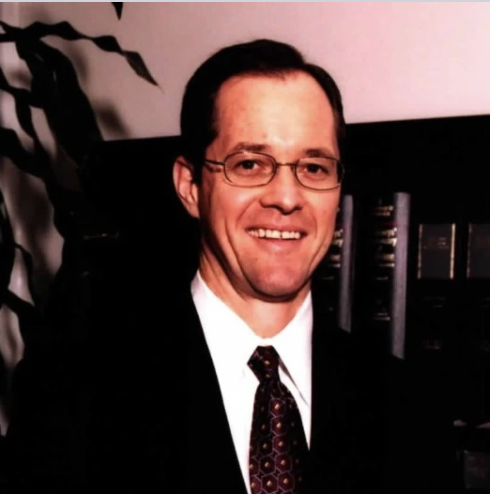 Attorney Paul Rianda, who represents both cash advance clients and real estate investors, says it makes sense that real estate investing appeals to alternative lenders – especially amidst the uncertainty of COVID-19.
“If you’re a cash advance guy and COVID happened, then you’re not doing very well,” he says. “If you diversified your assets by doing real estate and cash advance, you’re able to weather these downturns a lot more easily than you would otherwise.”
Rianda has not yet counseled any of his own cash advance clients on real estate matters. But based on his insights from working with both areas, he says real estate would be a logical move for MCA executives, and he’s seen some of his clients in the bankcard industry buy up properties.
“One of my clients had a portfolio of merchants and sold it for a few million, then flipped over to real estate. So it’s a means (to an end),” Rianda says.
‘Snowball effect’
Ribeiro has relied on a simple strategy to steadily build his portfolio of residential properties: Buy. Fix. Leverage. Repeat.
“I feel like the portfolio is doubling every couple of years. It’s just a snowball effect,” he says.
After Ribeiro buys a home, he waits about six months before he has it appraised and fixes it up in the meantime.
“If you go to the bank within the first six months of purchasing it, they’re going to give you the actual market value of whatever you purchased the house for,” he says. “If you wait six months, they’ll reappraise the home and give its true market value, which could be another 40, 50 or 60 percent. And so now you’re going to have a lot more equity in the house, and you’re going to get a lot more money when you leverage that home to go buy the next one.”
Ribeiro says he sees lots of people making the mistake of buying a home, and then going to the bank a week or two later for a loan.
 Constantly maintaining a positive cash flow is Ribeiro’s number one rule of real estate investing. “Your best friend is depreciation,” he says.
Depreciation refers to one of the key tax benefits of real estate. Since owning a rental property is technically a type of business because it generates income, the property is considered a business asset. The IRS allows you to deduct the cost of acquiring that asset – the property – over the span of its useful life. For residential properties, the IRS sets a standard depreciation period of 27.5 years.
So if you buy a $100,000 property with a $20,000 land value, $80,000 of the asset is considered depreciable. Over the course of 27.5 years, you can take an annual deduction of just over $2,900 a year.
The trick, Ribeiro says, is to stick to lower-priced properties with an 80/20 home-to-land value. Most of his properties are single- and multifamily homes between southern California and Las Vegas.
Like Ribeiro, Rianda’s investor clients concentrate on one geographic area to find the best properties. “They look at the area for a long time, understand the area,” he says. “In my neighborhood, three blocks can make a 50 percent difference in the price of a house. You need to focus on a particular geographic area and do a lot of transactions in it.”
Small portfolio, big impact
 Real estate investing has provided a way for Jared Weitz to earn more money while being able to focus on his primary job as CEO of New York-based United Capital Source Inc., the company he founded.
“For me, it’s just a really good second income stream and a way to have a secure return of 4.5% to 6.5% a year,” he says.
Growing up, Weitz got a feel for real estate by watching his uncles invest in multifamily properties. At one point, Weitz’s uncle owned 15 different multifamily homes, and Weitz would help do the maintenance on them.
Eight years ago, Weitz invested in his first two-family home and has fixed and flipped eight properties since then. He currently owns two two-family homes and invests primarily in multifamily homes in Long Island, Brooklyn and Queens. Over the next five years, he plans to pick up at least two more four- or eight-family properties. Working with a small portfolio of residences in his home state has allowed Weitz to have full control over managing his properties and to turn a good profit.
“I think for me, it just offers more liquidity,” he says. “It’s an asset I can sell and liquidate at any time. That’s really important for me.”
Ideally, Weitz would like for his investment to build generational wealth that he can pass down to his son. With many people in the U.S. unable to qualify for mortgages, Weitz sees real estate investing as an opportunity to help the economy by giving renters a place to live and put down roots. “Depending on the neighborhood, you can put yourself in a situation where you have good renters for 20 to 30 years. They want to raise their families and have their kids grow up there,” he says.
Litigation among the pitfalls
Even though Ribeiro has had success with his business model, he cautions that there’s considerable risk involved with real estate.
“I love the industry. It’s a passion. It’s beyond my wildest dreams of the size of the portfolio and how well it performs,” he says. “But don’t think it’s all cupcakes and unicorns. There’s a lot to the madness. That’s why not everyone can replicate the model.”
 “Professional litigators” and multiple lawsuits from renters are a major downfall that Ribeiro points to. He sees at least one substantial suit each year and tries to settle outside of court whenever possible.
As an attorney, Rianda says his real estate clients call on him not just for the purchase of the property, but for various issues that occur during the ownership period.
Here’s one scenario: A property owner has a tenant who isn’t paying rent, so the property owner sues the tenant. But while the lawsuit proceedings are under way, the tenant declares bankruptcy, which puts a stall on further litigation.
“There are people who understand the system and can make it difficult for you to get them out (of the property),” Rianda says, adding that it’s important to have legal counsel readily available. “You need someone who has really done this a lot and knows how the system works to get that person out of the rental property as quickly as possible.”
To minimize liability, Ribeiro has divided his properties into about 10 different business entities – each with a separate umbrella insurance policy.
Rianda sees his own real estate investor clients follow this strategy by grouping multiple homes under the name of an LLC. “If you personally own all these various assets, there’s the potential that if something catastrophic happened at one, it could bleed into all your other properties and potentially put them at risk,” he says.
Dual careers
Ribeiro’s real estate investments and finance company both serve as full-time occupations for him. Some years, he’ll focus more on one area than on the other, depending on market conditions. He spent more time on real estate between 2008 and 2013; then his business needs flip-flopped when real estate prices started going back up. This past year, he’s directed more attention to the finance company because of COVID, which necessitated some operational changes and a need to help clients who had been trying to get PPP loans. But he’s also started investing in commercial real estate, which has taken a hit because of companies forgoing office space to save overhead costs while employees work remotely.
Ribeiro expects to start seeing more mortgage defaults on lower-level homes in 2021 and 2022, after forbearance periods are over. And he’s been leveraging his assets to start buying more properties around the second quarter of the new year. “I think it will be a good time to start buying heavy again,” he says.
An attractive investment vehicle
With the pandemic weakening business portfolios, secondary investment options might sound like just what the doctor ordered.
 When COVID first hit, some of Rianda’s clients started pursuing other investments like personal protective equipment (PPE). Most of his cash advance clients closed up shop for a few months.
“As time goes on, I’m starting to see my clients go back into their lending,” Rianda says.
Even as clients start to recoup their business, Rianda sees the wisdom in other investments and says cash advance executives are well suited for real estate. “It’s just a way that people who have been successful and spin off a lot of cash for their businesses see as a safe way to diversify their income,” Rianda says. “It’s something I find that people who are doing well in their business do, regardless of what business they’re in. So cash advance guys are just following the things people have done for years.”
Ribeiro cautions that people who get into real estate should look at it as a 10-year investment minimum, and not just a two- or three-month stint.
“It’s not a lottery ticket, and it’s not an overnight race,” Ribeiro says. “This is a long-term gain. But it’s a very lucrative gain from a cash-flow perspective and a tax perspective. I don’t think there’s a more attractive vehicle than real estate.”
What Stimulus is Next for SMBs?
September 4, 2020 Next week, lawmakers will finally be back from vacation, arguing over the next stimulus package. There are various proposals, and the two competing Republican and Democrat offerings are nearly a trillion dollars apart.
It’s the Senate GOP HEALs act vs. the House Democrats HEROs act. But in between, what may be getting the most support? Standalone bipartisan bills that focus on extending and forgiving PPP loans.
Ryan Metcalf, head of the office of Government affairs and Social Impact for Funding Circle, has been following conversations on The Hill closely.
“Up until Monday, Pelosi said they weren’t even going to even put a bill forward for a new stimulus,” Metcalf said. “But then yesterday [Tuesday] Secretary Mnuchin said he was open to doing a standalone PPP loan. It’s the one that has the most bipartisan support; they can’t meet anywhere else than PPP.”
Funding Circle is one of the world’s largest online lenders, with about $10 billion in global loans to date. Metcalf said Funding Circle mostly offers US loans in the $25,000 to $500,000 range, and as a funder for PPP, offered more loans in just eight days in August than half of their total business in July. His company had to cut off funding requests, locking out some customers that needed help, simply because the deadline had ended.
“When PPP ended on August 8th, the narrative was that PPP had died out, and there was no interest in it, but that is a complete fallacy,” Metcalf said. “We were processing loans for the smallest of small businesses- 10-15 employees- well under $50,000 loans, the people still needed help.”
Steve Denis, Executive Director of the Small Business Finance Associaton (SBFA), has also been engaged in the process. He has been petitioning members of Congress on behalf of what he calls truly small business, those under 10 employees or nonemployers that still need help.
“‘Real’ small businesses: ones with under ten employees that are really grinding, like small hair salons, retail stores, and mechanics don’t really have traditional banking relationships,” Denis said.
SBA data from July found that most of the loans made (66.8%) were in the $50k range and to very small businesses, but the largest amount of capital went towards firms that applied for a $350k-$1M sized loan.
Denis said that the higher dollar amount PPP loans were more profitable for banks to make, so disproportionate funding went toward bigger businesses with pre-established finance connections. This disparity is backed up by research. Studies, like one from the National Bureau of Economic Research (NBER), found that firms with stronger connections to banks were more likely to be approved for PPP funds.
“The way fees are structured: there’s an incentive for big banks to prioritize bigger deals at [commission] rates like 3% or 5%,” Denis Said. “They’d rather make that on a $500,000 deal than on a $40,000 deal.”
Denis said the SBFA was lobbying for Congress to create a prioritized amount of money authorized only for smaller loans, under $100,000-$150,000, to focus on those really small businesses with less than five employees.
Like Metcalf, Denis sees the most likely outcome is an extension of PPP- at least until the end of the federal fiscal year budget in September. If the Fed cannot agree on a budget, the government will go into shutdown- and this year would be the worst time to shut down.
“The only thing that motivates Congress to move big legislation like this are deadlines; there’s a big deadline coming up,” Denis said. “At the end of September, the fiscal year runs out and there needs to be a budget agreement.”
 Metcalf said that the next round of PPP programs need to make sure businesses can get their first loan if they haven’t already, and streamline the loan forgiveness process to keep the SBA from getting overwhelmed.
“We need a forgiveness bill that streamlines the process; lenders will not have the resources to process forgiveness, a first PPP and second PPP as it is,” Metcalf said. “In my call with the SBA two weeks ago, they said for processing new 7(a) lender applications and all the other business they do to resume their normal business we’re looking at six months.”
The PPP proposal that Metcalf likes the best is called the Paycheck Protection Small Business Forgiveness Act, which stipulates a one-page forgiveness form for all loans made under $150,000. Metcalf said he saw support from a bipartisan group of over 90 members of Congress.
Another opportunity is the Economic Injury Disaster Loan (EIDL) program- offering long term loans to businesses with less than 500 employees that need financial help. Both Denis and Metcalf encouraged business owners to check out the program, which offers loans directly from the government without the need to prove forgiveness.
In the end, Denis said he was interested in the Republican “Skinny Bill” that is a cheaper breakdown of the GOP HEALS Act, but he said it is all up in the air.
“This is just me guessing,” Denis said. “I have talked to these people every day, but even members of Congress on Capitol Hill have no clue what’s going to happen.”
Where Fintech Ranks on the Inc 5000 List for 2020
August 12, 2020Here’s where fintech and online lending rank on the Inc 5000 list for 2020:
| Ranking | Company Name | Growth |
| 30 | Ocrolus | 7,919% |
| 46 | Yieldstreet | 6,103% |
| 351 | Direct Funding Now | 1,297% |
| 402 | GROUNDFLOOR | 1,141% |
| 486 | LoanPaymentPro | 946% |
| 534 | LendingPoint | 862% |
| 539 | OppLoans | 860% |
| 566 | dv01 | 830% |
| 647 | Fund That Flip | 724% |
| 1031 | Fundera | 449% |
| 1035 | Nav | 447% |
| 1053 | Fundrise | 442% |
| 1103 | Bitcoin Depot | 409% |
| 1229 | Smart Business Funding | 365% |
| 1282 | Global Lending Services | 349% |
| 1360 | CommonBond | 327% |
| 1392 | Forward Financing | 319% |
| 1398 | Fundation Group | 318% |
| 1502 | Fountainhead Commercial Capital | 293% |
| 1736 | Seek Capital | 246% |
| 1746 | PIRS Capital | 244% |
| 1776 | Braviant Holdings | 240% |
| 1933 | Choice Merchant Solutions | 218% |
| 2001 | Fundomate | 212% |
| 2257 | Lighter Capital | 185% |
| 2466 | Bankers Healthcare Group | 167% |
| 2501 | Fund&Grow | 165% |
| 2537 | Central Diligence Group | 162% |
| 2761 | Lendtek | 145% |
| 3062 | Shore Funding Solutions | 127% |
| 3400 | Biz2Credit | 110% |
| 3575 | National Funding | 103% |
| 4344 | Yalber & Got Capital | 76% |
| 4509 | Expansion Capital Group | 70% |
How An Online Lending Hedge Fund Manager Became “Unwound”
August 12, 2020 In 2017, Ethan Senturia, the founder of a defunct online lending company, published a tell-all book about his startup’s rise and fall. He called it Unwound. It’s the fall that stood out. Senturia’s poorly modeled business had been heavily financed by an up-and-coming online lending hedge fund manager named Brendan Ross.
I first encountered Ross in 2014 on the alternative finance conference circuit. Ross’s major theory was that small businesses overpay for credit and that the padded cost served as a hedge against defaults and economic downturns.
“The asset class works even when the collection process doesn’t,” Ross said during a Short Term Business Lending panel at a conference in May 2014. “The model works with no legal recovery.”
 As an editor, I helped secure a lengthy interview with Ross that Fall. In it, he placed a special emphasis on building “trust.” It’s a word he used seventeen times over the course of the recorded conversation. “Everything is about trust and eliminating the need for it whenever possible,” he proclaimed.
Ross stressed that his fund invested in the underlying loans of online lenders, not in the online lenders themselves. “I need to be the owner of the loan. I need it sold to me in a way that is completely clean.”
Ross would eventually connect with Senturia at Dealstruck, an online small business lender whose philosophy seemed to contradict Ross’s mantra of small businesses overpaying for credit. Dealstruck, it would turn out, had a tendency to have them underpay…
Senturia told the New York Times that year that Dealstruck’s mission was “not about disintermediating the banks but the very high-yield lenders.”
It’s a concept that failed pretty miserably. Senturia recalled in his book that “We had taken to the time-honored Silicon Valley tradition of not making money. Fintech lenders had made a bad habit of covering out-of-pocket costs, waiving fees, and reducing prices to uphold the perception that borrowers loved owing money to us, but hated owing money to our predecessors.”
As the loans underperformed, Senturia became aware that the hedge fund backing them, Ross’s Direct Lending Investments, might also be doomed. Senturia recalled an exchange with Ross in 2016 in which Ross allegedly said of their mutually assured destruction, “I am like, literally staring over the edge. My life is over.”
One would expect that in light of that conversation being made public through a book, that investors would question Ross’s report that his fund delivered a double digit annual return (10.61%) the same year his life was over.

Some actually did question it. AltFinanceDaily received tidbits of information in the ensuing years, always seemingly off the record, that something was not right at Ross’s fund. There was little to go off other than the unlikelihood of his consistently stable stellar returns. Ross had been an especially popular investment manager with the peer-to-peer lending crowd and a regular face and speaker at fintech events. CNBC also had him on their network several times as a featured expert.
All told, Ross managed to amass nearly $1 billion worth of capital under management before his demise.
In 2019, Ross suddenly resigned. His fund, Direct Lending Investments, LLC, was then charged by the SEC with running a “multi-year fraud that resulted in approximately $11 million in over-charges of management and performance fees to its private funds, as well as the inflation of the private funds’ returns.”
 Yesterday, the FBI arrested Ross at his residence outside Los Angeles. A grand jury indicted him “with 10 counts of wire fraud based on a scheme he executed between late 2013 and early 2019 to defraud investors…” An announcement made by the US Attorney’s Office in Central California revealed that the charges had been under seal for approximately two weeks prior.
The SEC simultaneously filed civil charges against him.
No reference is made to Dealstruck in any of it. The Dealstruck brand was later sold to another company that has no connection to Ross or Senturia where it is still in use to this day. Instead, the SEC and US Attorney focus on Ross’s actions allegedly undertaken with another online lender named Quarterspot. Quartersport stopped originating loans in January of this year.
Ross allegedly directed the online lender to make “rebate” payments on more than 1,000 delinquent loans to create the impression that they were current. Quarterspot has not been accused of any civil or criminal wrongdoing.
The SEC included in its complaint that Ross expressed concern about the scale of loan delinquencies.
“…more loans are going late each month than I can afford and still have normal returns, so that the can we are kicking down the road is growing in size,” he wrote in an email. It was dated February 8, 2015.
It’s a sentiment that seems to disprove his early premise that “the asset class works even when the collection process doesn’t.”
Ross is innocent until proven guilty, but an excerpt of an interview with him in 2014 is now somewhat ironic.
“I [understand] that people end up sometimes in the [industry] who have had colorful careers in the securities space. It doesn’t make it impossible for me to work with them,” he said. “But if they had been in the big house for white collar crime, then that is probably a non-starter.”
LendingPoint Partners with eBay to Fund Online Sellers
August 6, 2020 LendingPoint announced this week that it is partnering with the online marketplace eBay to provide funding to sellers on its platform. Titled eBay Seller Capital, the program will offer terms of up to 48 months, with no origination or early payback fees, and which will be capped at $25,000 during its pilot program.
“We’re committed to empowering entrepreneurs to make their dreams a reality, and we are continuing to partner with our sellers to provide them with the tools they need to thrive, eBay’s VP of Global Payments Alyssa Cutright said in a statement. “We’re excited to make flexible financing options available that are integrated with our new payments experience. The program with LendingPoint will enable critical funding opportunities for eBay sellers, especially during this time of economic uncertainty.”
In its early stages now, eBay Seller Capital will only be available for selected sellers, with the plan being for it to be made available to all eligible sellers in the US later this year. Beyond the program, LendingPoint has made clear in its statement that it aims to “expand their offering to provide eBay sellers with more tools to help run their businesses,” however, when asked, CEO and Co-Founder Tom Burnside did not give details of these future plans.
“I don’t want to leave the proverbial cat out of the bag yet with that,” Burnside commented in a call, “but what I will tell you is that I think when we are done eBay will be able to offer best-of-class seller financing.”
“People are Starting to Come Out of Their Caves”: How 2M7 got through the lockdown
July 13, 2020 For 2M7, the Toronto-based alternative funding company, the concept of a global economic shutdown was far-fetched. January and February of 2020 had been some of their best months in business yet. But, like every company, 2M7 was forced to reckon with the unreckonable and feel the effects of an economic lockdown.
“In terms of client onboarding and funding volume, in terms of collecting volume, and in terms of any metric you would look at, [January and February] were two very strong months,” CEO Avi Bernstein explained in a call. “And then in March, I don’t want to say we slammed on the brakes, but in the first or second week of March we basically just said, ‘you know what, we just need to really change the focus of what we’re doing.”
Saying that they were a week or two ahead of the curve, Bernstein notes that in the leadup to the shutdown their customers had already been asking for deferred or reduced payments. And with anxiety and concern in the air, 2M7 changed course and moved from focusing on bringing in new customers and increasing collections, they “hunkered down” and worked exclusively on the needs of existing clients.
“We funded throughout very minimally … and really our main effort was to get in touch with all our existing merchants and see how they were being affected, if they needed a payment plan, or if they needed a little bit more capital to tide them over. And we adjusted each one on an ongoing basis as we kind of floated through the panic of the lockdown to the waiting time to when we really started to reopen. … And you know, the ones that were still operating in the kind of environment that they were operating, if they had any additional expenses, they had additional requirements for capital.”
This approach lasted up until mid-June, around the time that the Canadian economy began to reopen. Lasting all of three months, this halting was not without victims as 2M7 had to furlough a number of staff members, many of whom were on the sales team that had reduced responsibilities during this time. Since then though, these employees have been brought back in, new customers have been brought on, and 2M7 has returned to its offices.
“As the Canadian economy started reopening and wrapping up even a little bit earlier than we were, we worked with provinces that were already more advanced in the opening stages. Saskatchewan, Nova Scotia, New Brunswick, Newfoundland, they were doing better in terms of reopening and they were ahead of us. … We were able to work with them in terms of ramping up. Now as the economy’s kicking into gear, we’re seeing more and more demand from businesses and we’ve started feeling our how much of their client base is still in existence, how much of their market is still in existence; whether it be manufacturing or transportation, or whatever it is.”
Looking ahead, Bernstein is cautiously optimistic, believing the worst is behind them but that there is still a ways to go for the Canadian market that has shown resilience in that last four months. Explaining that he think the shutdown won’t lead to any great reset of the Canadian market, the CEO thinks that it will instead act as a catalyst for events that were already in motion: debt-laden companies will struggle and possibly perish.
But beyond that, Bernstein is feeling positive about the future, saying that “people are starting to come out of their caves, and slowly but surely businesses are starting to reopen and invest. A lot of businesses are hiring back their employees. So that’s good news for Canada and good news for small businesses in the Canadian marketplace. … I feel like we’re going to come out okay.”
Keeping Up With The Winklevii
July 6, 2020 Spending the previous three and a half months indoors, locked away from others, and sat at homebound desks have had differing effects on everyone. Some have had a period of intense productivity, some have fallen into bad habits, and some have spent an inordinate amount of time on social media. The Winklevoss twins, famous for playing a role in the founding of Facebook, are of the latter sort.
Cameron and Tyler, aged 38, are two entrepreneurs with a particular focus on cryptocurrencies. Having experimented with social media in its early days with Mark Zuckerberg at Harvard, the pair later sued the Facebook CEO in 2008, the same year they rowed for the USA in the Beijing Olympics. From here the twins went into venture capital; led a seed-funding round for BitInstant, a Bitcoin payment processor; claimed to have accumulated 1% of all Bitcoin by 2013 between them; and launched Gemini, their own cryptocurrency exchange, in 2014. Since then, as Bitcoin’s value has surged and fluctuated, the pair have become figureheads for the cryptocurrency, having been proponents of the decentralized currency from the days when it was worth less than $10, to its highest valuation in 2017 at just below $20,000, to its current price of just over $9,000.
And with quarantine providing all the time in the world to ponder the future of Bitcoin, the twins have been posting daily on Twitter about the crypto, relating it to any and all topics that proved popular. Cancel culture? There’s a tweet for that. George Orwell’s magnum opus, 1984? There’s a tweet for that. Vaccinations and their alleged comparability with cryptocurrency? There’s a tweet for that.
 Beyond comparing and relating Bitcoin to everything that comes up in the news cycle, the twins brought up an idea a number of times on social media over quarantine: that the pandemic has set the stage for a decentralized world.
While it is clear that this has happened to a point already, given the global move toward working from home, Cameron believes it will go further, mentioning in a tweet that the pandemic will be “an inflection point for Bitcoin and the Metaverse.” Choosing not to expand on this lofty statement, the specifics of Cameron’s claim can’t be known for sure, but the idea behind the Metaverse, a collectivized virtual space based off the setting of a 1992 sci-fi novel which is capable of replacing the functions and opportunities granted by the real world, is one well suited to Bitcoin, or, at least the idealized vision of what Bitcoin could become.
 As well as this prophesizing of a virtual utopia, the brothers displayed an intense distrust and paranoia of government, currencies that are regulated by centralized banks, and the role of big tech. With tweets criticizing the Federal Reserve’s decision to inject $1.5 trillion into the economy, YouTube’s ongoing debate over whether the First Amendment applies to a private business, and warnings against the threat of a government willing to grab more power during a pandemic, the billionaires’ tweets appeared at times to reach Elon Musk’s recent anti-government messages via Twitter.
With the twins having noted their disappointment in the US government earlier in the year at a conference in January, that time regarding the government’s slow adoption of cryptocurrencies, it is not so much of a surprise to see these further critiques, especially with them largely taking aim at the government’s employment of federally printed money, or “toilet paper,” as they call it.
All this being said, the twins appeared to be just like everyone else during quarantine: left with not much to do with a stable internet connection and a charged phone. And so conspiracies and cryptocurrencies aside, the brothers also made time for the irreverent and the relatable, posting about the possibility of a Groundhog Day-style scenario during quarantine as well as the importance of “sunsets, the stars, and true friends” in a tweet that wouldn’t be amiss in a Disney film.
Ultimately though, the sooth-saying and future-gazing done by the Winklevii in quarantine will take years, if not decades, to come about, if it ever does. One thing is certain though, the twins won’t stop talking about it until then.