It’s Back to Business For Alternative Funding in Puerto Rico
June 15, 2018
Last year, alternative funding in Puerto Rico ground to a halt after the island was ravaged by two devastating hurricanes in close proximity. Now, however, the alternative funding business in Puerto Rico is getting its second wind, after a several-month hiatus.
Puerto Rico got lashed by high winds and rain from Hurricane Irma in early September 2017, causing large-scale power outages and damage. Then, about two weeks later, Hurricane Maria hit the island square on, causing even more catastrophic destruction. Millions were without power for months (thousands still are), homes were destroyed, multiple lives were lost, businesses were decimated and the island’s already shaky economy teetered on the brink of disaster.
More than half a year later, residents are still trying to pick up the pieces of the epic humanitarian crisis. Hurricane Maria caused an estimated $90 billion in damage, according to the National Hurricane Center, making it the costliest hurricane on record to strike Puerto Rico and the U.S. Virgin Islands. The hurricane knocked out 80 percent of Puerto Rico’s power lines and destroyed its generators. Even months later, the lives of many residents are still in disarray as they wait desperately for insurance payments to materialize and get back to a semblance of their former lives. The island faces additional challenge—and uncertainty— with another hurricane season just around the corner.
In the midst of this turmoil, however, there’s a glimmer of hope for the budding alternative funding sector. Some businesses are once again seeking funds to rebuild or expand, and alternative funders are once again dipping their toes into the Puerto Rican market—albeit somewhat slowly. While some funders have exited the Puerto Rican alternative lending market, other new entrants are starting to stake a claim, citing an expected uptick in economic development that tends to follow natural disasters. Some funders also see Puerto Rico as a sweet spot because the market isn’t as mature as the U.S. and competition from other alternative funders is scant. Banks on the island aren’t always willing to provide businesses there with much- needed funds, so opportunities for non-bank funders are considered plentiful.
Businesses struggling to rebuild from the storms need more help than ever before, says Sonia Alvelo, president of Latin Financial LLC, an ISO that has been arranging funding for business owners in Puerto Rico for three years. “There is no doubt that Puerto Rico has a long, hard road ahead,” she says. But “I can assure you the entrepreneurial spirit is alive and well,” she says.
Latin Financial and other ISOs and funders are back to business—courting merchants and trying to help them get back on their feet. In December, Latin Financial processed its first renewal since Maria; in January it funded its first new client since September. Latin Financial continues to arrange funding of between $500k and $1 million per month on average in Puerto Rico, after some hurricane-related downtime.
“The storm destroyed a lot, but it didn’t set the small business drive back. They’re still pushing hard and really trying to maintain and grow business,” says Brendan P. Lynch, business partner and fiancé to Latin Financial’s Alvelo.
 Greenbox Capital in Miami Gardens, Fla., an early entrant to the Puerto Rican alternative funding market, has also returned to funding small businesses on the island after a few-month hiatus. The company put off new deals right before Maria hit, and as a goodwill measure suspended the payments of existing customers for 90 days. Given the extension, almost all customers were able to stay on track and the firm suffered very few losses, says Jordan Fein, the company’s chief executive. Greenbox began funding again in January, he says.
To be sure, it’s not exactly business as usual, since many businesses in Puerto Rico are still struggling, Fein says. While the situation should continue to improve, it will take time for the economy and businesses to fully recover, he says.
“They’ve come a long way since September, but they still aren’t fully back. We’re not seeing the same type of submissions that we saw before,” Fein says. Nonetheless, Fein remains positive about the market’s long-term prospects. “I think they are going to come back stronger, I really do,” he says.
To be sure, not all funders are interested the Puerto Rican market. Ripe with political uncertainty and economic instability, Puerto Rico already posed challenges that made many funders hesitant to do business there. The devastation wrought by Irma and Maria complicated matters further, and some funders pulled out of the market completely.
For others, however, the market’s still an opportune one, albeit not as stable as the U.S. market. Certainly, there are reasons for alternative funders to be optimistic. Despite its recent troubles, Puerto Rico is still considered a growth market. What’s more, with new businesses popping up in the wake of the storms, new infrastructure being instituted and businesses anxious to bounce back even bigger and better than before, some funders are striking while the iron is hot.
“This is the right time, as the island is growing,” says Paul Boxer, chief marketing officer and vice president of business development at Quicksilver Capital, a New York-based small business funder. Quicksilver funded its first deal in Puerto Rico in late April.
The company had been mulling over the possibility of doing business in Puerto Rico when an actual funding prospect arose. The company decided to give it a shot, sensing a potentially viable business opportunity. Existing businesses are rebuilding after the hurricane, there’s plenty of new business development and there’s a pressing need for new infrastructure as Puerto Rico continues to recover from the devastation, Boxer says.
Accordingly, Boxer says his company is in the process of vetting additional funding opportunities in Puerto Rico and hopes to continue growing this business in what he says is a largely untapped market. “I see it as a positive addition to what we offer, and I see a lot more opportunity in the future,” Boxer predicts.
BFS Co-founder Returns as Temporary CEO
May 23, 2018 Chairman and co-founder of BFS Capital Marc Glazer has assumed the role of Interim CEO. The former CEO, Michael Marrache, is no longer at the company.
“We’re on a nationwide search to find an individual that we feel will be an excellent candidate to continue BFS’s track record as a market leader and help grow the company,” Glazer said.
Founded in 2001, BFS is a veteran in the merchant cash advance industry. More than five years ago, the company began offering a business loan product, which now accounts for more than half of its revenue.
Glazer told AltFinanceDaily that when BFS started offering its loan product, it widened its customer base significantly such that a sizable percentage of its customers are now business to business companies. Glazer said that MCA funding would not work for these kinds of customers because many of them get paid by check or get paid in larger amounts, but not on a daily basis.
Glazer said that working with ISO partners has always been a critical part of the BFS business model. What does Glazer look for in an ISO?
“Ultimately, you want to work with ISOs that view the relationship with not only the funder, but the merchant, [in mind,]” he said. “We look at ourselves as a responsible funder and put out offers that we not only think help the merchant, but that have payment terms that the merchant can afford. And the ISOs that we look for are ones that do the same kind of matching with the merchant.”
BFS has funded 400 different types of merchants, from florists to nail salons. But Glazer said that a big portion of the company’s customer base comes from either the hospitality industry or parts of the construction industry, including plumbing. To date, BFS has delivered more than $1.75 billion in total financing to small and mid-sized businesses, including $300 million funded in 2017. Loans are typically offered through the company’s banking partner, Bank of the Internet, according to Glazer.
BFS is headquartered in Coral Springs, FL and has an office in New York and one in southern California. It also includes a wholly owned subsidiary in the UK called Boost Capital. Altogether, BFS employs about 200 people with the majority of employees at its Florida office.
Wayward Merchants
April 19, 2018
Wayward merchants and outright criminals are continuing to bilk the alternative small-business funding industry out of cash at a dizzying pace. In fact, an estimated 23 percent of the problematic clients that funders reported to an industry database in 2017 appeared to have committed fraud, up from approximately 17 percent in the previous year. That’s according to Scott Williams, managing member of Florida-based Financial Advantage Group LLC, who along with Cody Burgess founded the DataMerch database in 2015. Some 11,000 small businesses now appear in the database because they’ve allegedly failed to honor their commitments to funders, Williams says.
Whether fraudulent or not, defaults remain plentiful enough to keep attorneys busy in funders’ legal departments and at outside law firms funders hire. “I do a lot of collections work on behalf of my cash-advance clients, sending out letters to try to get people to pay,” says Paul Rianda, a California-based attorney. When letters and phone calls don’t succeed, it’s time to file a lawsuit, he says.
Lawsuits become necessary more often than not by the time a funder hires an outside attorney, according to Jamie Polon, a partner at the Great Neck, N.Y.- based law firm of Mavrides Moyal Packman Sadkin LLP and manager of its Creditors’ Rights Group. “Typically, my clients have tried everything to resolve the situation amicably before coming to me,” he observes.
That pursuit of debtors isn’t getting any easier. These days, it’s not just the debtor and the debtor’s attorney that funders and their attorneys must confront. Collections have become more difficult with the recent rise of so-called debt settlement companies that promise to help merchants avoid satisfying their obligations in full, notes Katherine Fisher, who’s a partner in the Maryland office of the law firm of Hudson Cook LLP.
 Meanwhile, a consensus among attorneys, consultants and the funders themselves holds that the nature of the fraudulent attacks is changing. On one side of the equation, crooks are hatching increasingly sophisticated schemes to defraud funders, notes Catherine Brennan, who’s also a partner in the Maryland office of Hudson Cook LLP. On the other side, underwriters and software developers are becoming more skilled at detecting and thwarting fraud, she maintains.
Digitalization is fueling those changes, says Jeremy Brown, chairman of Bethesda, Md.-based RapidAdvance. “As the business overall becomes more and more automated and moves more online – with less personal contact with merchants – you have to develop different tools to deal with fraud,” he says.
A few years ago, the industry was buzzing about fake bank statements available on craigslist, Brown recalls. Criminals who didn’t even own businesses used the phony statements to borrow against nonexistent bank accounts, and merchants used the fake documents to inflate their numbers.
Altered or invented bank statements remain one of the industry’s biggest challenges, but now they’ve gone digital. About 85 percent of the cases of fraud submitted to the DataMerch database involve falsified bank documents, nearly all of them manipulated digitally, Williams notes.
Merchants alter their statements to overstate their balances, increase the amount of their monthly deposits, erase overdrafts, or hide automatic payments they’re already making on loans or advances, Williams says. Most use software that helps them reformat and tamper with PDF files that begin as legitimate bank statements, he observes.
To combat false statements, alt funders are demanding online access to applicants’ actual bank accounts. Some funders ask for prospective clients’ usernames and passwords to examine bank records, but applicants often consider such requests an invasion of their privacy, sources agree.
That’s why RapidAdvance has joined the ranks of companies that use electronic tools like DecisionLogic, GIACT or Yodlee to verify a bank balance or the owner of the account and perform test ACH transfers – all without needing to persuade anyone to surrender personally identifiable information, Brown says.
Other third-party systems can use an IP address to view the computing device and computer network that a prospective customer is using to apply for credit, Brown says. RapidAdvance has received applications that those tools have traced to known criminal networks. The systems even know when crooks are masking the identity of the networks they’re using to attempt fraud, he observes.
RapidAdvance has also developed its own software to head off fraud. One program developed in-house cross references every customer who’s contacted the company, even those who haven’t taken out a loan or merchant cash advance. “People who want to defraud you will come back with a different business name on the same bank account,” Brown says. “It’s a quick way to see if this is somebody we don’t want to do business with.”
Sometimes businesses use differing federal tax ID numbers to pull off a hoax, according to Williams at DataMerch. That’s why his company’s database lists all of the ID numbers for a business.
All of those electronic safeguards have come into play only recently, Brown maintains. “We didn’t think about any of this five years ago – certainly not 10 years ago,” he says. In those days, funders were satisfied with just an application and a copy of a driver’s license, he remembers.
Since then, some sage advice has been proven true. When RapidAdvance was founded in 2005, the company had a mentor with experience at Capital One, Brown says. One piece of wisdom the company guru imparted was this: “Watch out when the criminals figure out your business model.” That’s when an industry becomes a target of organized fraud.
As that prediction of fraud has become reality, it hasn’t necessarily gotten any easier to pinpoint the percentage of deals proposed with bad intent. That’s because underwriters and electronic aids prevent most fraudulent potential deals from coming to fruition, Brown notes. The company looks at the loss rates for the deals that it funds, not the deals it turns down.
Brown guesses that as many as 10 percent of applications are tainted by fraudulent intention. “It’s meaningful enough that if you miss a couple of accounts with significant dollar amounts,” he says, “then it can have a pretty negative impact on your bottom line.”
Some perpetrators of fraud merely pretend to operate a small business, and funders can discover their scams if there’s time to make site visits, Rianda notes. Other clients begin as genuine entrepreneurs who then run into hard times and want to keep their doors open at all costs, sources agree.
 Applicants sometimes provide false landlord information, something that RapidAdvance checks out on larger loans, Brown notes. Underwriters who call to verify the tenant-landlord relationship have to rely upon common sense to ferret out anything “fishy,” he advises.
Underwriters should ask enough questions in those phone calls to determine whether the supposed landlord really knows the property and the tenant, which could include queries concerning rent per square foot, length of time in business and when the lease terminates, Brown suggests. All of that should match what the applicant has indicated previously.
Lack of a telephone landline may or may not provide a clue that an imposter is posing as a landlord, Brown continues. Be aware of a supposed landlord’s verbal stumbles, realize something’s possibly amiss if a dubious landlord lacks of an online presence, note whether too many calls to the alleged landlord go into voicemail and be suspicious if a phone exchange with a purported landlord simply “feels” residential instead of commercial, he cautions.
Reasonable explanations could exist for any of those concerns, but when in doubt about the validity of a tenant-landlord relationship it pays to request a copy of the lease or other type of verifications, according to Brown. Then there are the cases when the underwriter is talking to the actual landlord, but the applicant has convinced the landlord to lie. It could happen because the landlord might hope to recoup some back rent from a merchant who’s obviously on the verge of closing up shop.
Occasionally, formerly legitimate merchants turn rogue. They take out a loan, immediately withdraw the funds from the bank, stop repaying the loan, close the business and then walk or run away, notes Williams. “We view that as a fraudulent merchant because their mindset all along was qualifying for this loan and not paying it back,” he says.
Collecting on a delinquent account becomes problematic once a business closes its doors, Rianda notes. As long as the merchant remains in business, funders can still hope to collect reduced payments and thus eventually get back most or all of what’s owed, he maintains.
In another scam sometimes merchants whose bank accounts are set up to make automatic transfers to creditors simply change banks to halt the payments, Brown says. That move could either signal desperation or indicate the intent to defraud was there from the start, he says.
Merchants with cash advances that split card revenue could change transaction processors, install an additional card terminal that’s not programmed for the split or offer discounts for paying with cash, but those scams are becoming less prevalent as the industry shifts to ACH, Brown says. Industrywide, only 5 percent to 10 percent of payments are collected through card splits these days, but about 20 percent of RapidAdvance’s payments are made that way.
Merchants occasionally blame their refusal to pay on partners who have absconded with the funds or on spouses who weren’t authorized to apply for a loan or advance, Brown reports. Although that claim might be bogus, such cases do occur, notes Williams of DataMerch. People who own a minority share of a business sometimes manipulate K-1 records to present themselves as majority owners who are empowered to take out a loan, Williams says.
In a phenomenon called “stacking,” merchants take out multiple loans or advances and thus burden themselves with more obligations than they can meet. Whether or not that constitutes fraud remains debatable, Rianda observes. Stacking has increased with greater availability of capital and because some funders purposely pursue such deals, he contends.
Some contracts now contain covenants that bar stacking, notes Brennan of Hudson Cook. As companies come of age in the alt-funding business, they are beginning to employ staff members to detect and guard against practices like stacking, she says.
Moreover, underwriting is improving in general, according to Polon “The vetting is getting better because the industry is getting more mature,” he says. “The underwriting teams have gotten very good at looking at certain data points to see something is wrong with the application – they know when something doesn’t smell right.” They’re better at checking with references, investigating landlords, examining financials and requesting backup documentation, he contends.
Despite more-systematic approaches to foiling the criminal element and protecting against misfortunate merchants, one-of-a-kind attempts at fraud also still drive funders crazy, Brown says. His company found that a merchant once conspired with the broker who brought RapidAdvance the deal. The merchant and the broker set up a dummy business, transferred the funds to it and then withdrew the cash. “The guy came back to us and said, ‘I lost all the money because the broker took it,’” he recounts. “Why is that our problem?” was the RapidAdvance response.
Although such schemes appear rare, some funders are developing methods of auditing their ISOs to prevent problems, notes Brennan. They can search for patterns of irregularities as an early-warning system, she says. It’s also important to terminate relationships with errant brokers and share information about them, she advises, adding that competition has sometimes made funders reluctant to sever ties with brokers.
 Although fraud’s clearly a crime, the police rarely choose to involve themselves with it, Brown says. His company has had cases where it lost what it considered large dollar amounts – say $50,000 – and had evidence he felt clearly indicated fraud but the company couldn’t attract the attention of law enforcement, he notes.
Rianda finds working with law enforcement “hit or miss,” whether it’s a matter of defaulting on loans or committing other crimes. In one of his cases an employee forged invoices to steal $100,000 and the police didn’t care. In another, someone collected $3,000 in credit card refunds and went to jail. If the authorities do intervene, they may seek jail time and sometimes compel crooks to make restitution, he notes.
“Engaging law enforcement is generally not appropriate for collections,” according to Fisher from Hudson Cook. However, notifying police agencies of fraud that occurs at the inception of a deal can sometimes be appropriate, says Fisher’s colleague Brennan, particularly when organized gangs of fraudsters are at work.
At the same time, sheriffs and marshals can help collect judgments, Polon says. He works with attorneys, sheriffs and marshals all over the country to enforce judgments he has obtained in New York State, he says. That can include garnishing wages, levying a bank account or clearing a lien before a debtor can sell or refinance property, he notes.
When Rianda files a lawsuit against an individual or company in default, the defendant fails to appear in court about 90 percent of the time, he says. A court judgment against a delinquent debtor serves as a more effective tool for collections than does a letter an attorney sends before litigation begins, Rianda notes.
But even with a judgment in hand, attorneys and their clients have to pursue the debtor, often in another state and sometimes over a long period of time, Rianda continues. “The good news is that in California a judgment is good for 10 years and renewable for 10,” he adds.
So guarding against fraud comes down to matching wits with criminals across the country and around the world. “It makes it hard to do business, but that’s the reality,” Brown concludes. Still, there’s always hope. To combat fraud, funders should work together, Brennan advises. “It’s an industrywide problem … so the industry as a whole has a collective interest in rooting out fraud.”
Ron Suber: ‘This Industry Will Look Very Different One Year From Now’
February 25, 2018 Ron Suber wears many hats. His official LinkedIn profile lists him as President Emeritus and Senior Advisor at Prosper Marketplace. Now you can add a new title to his repertoire – the Magic Johnson on fintech. That’s because when it comes to Suber’s legacy, he’s all about the passing game.
“I really enjoy the assist in basketball more than the score or the dunk and so I’m trying to be that leader of assists in our industry, Magic Johnson, if you’ll let me use that analogy … I want to be him for our industry and help everybody win and help the whole thing be bigger, but you have to give the ball to the people in the position where they can score and that’s what I’m trying to do,” said Suber in a podcast discussion with Lend Academy’s Peter Renton, who is also a co-founder of LendIt.
Since Suber stepped down as president of Prosper, his presence in marketplace lending and fintech only seems to have blossomed, which in hindsight may have been the plan all along. The godfather of fintech, as he’s also known, is in the midst of what he’s dubbed a professional rewiring, one that didn’t prevent him from participating in a podcast with Renton.
During the discussion, Suber didn’t shy away from any topic, fielding questions on everything from his investment portfolio, to Prosper, to travel and his views on marketplace lending and fintech. His travels have taken Suber to Patagonia and the straits of Magellan to his favorite Aussie city of Melbourne. Next up Suber plans to explore Africa, including Rwanda and Tanzania.
 Suber on Aussie IPO Credible
San Francisco-based Credible, a consumer finance marketplace for millennials, just raised $50 million in an Australian IPO. Suber, who serves as chairman of the fintech, got to know Credible CEO Stephen Dash a few years ago. When Dash needed to raise money, Suber was the first to work with other fintech influencers including a group in Asia to invest $10 million in the company at a $40 million valuation.
Credible followed up with another equity round before deciding to IPO in Australia, where the market is different versus the United States or Hong Kong.
“We were able to meet with the asset managers, the family offices, and the superannuation funds and some of the pension funds in Asia, Hong Kong in particular, and throughout Australia who were very supportive of Stephen Dash, who is from Australia,” said Suber, adding that Credible was the biggest tech/fintech IPO in Australia last year.
Incidentally, Suber has also met with Australia Treasurer Scott Morrison, who sparked a meeting with Suber, Dash, US cryptocurrency exchange Coinbase and other members of the payments market to discuss how Australia can engage with young US entrepreneurs.
We asked Suber what to expect with crypto and lending, in response to which he told AltFinanceDaily: “Like the very early days of the internet, there were lots of dot-com companies with high valuations in the hype cycle, little revenue and unclear long-game solutions…think Amazon. Big winners emerged, and the majority lost money on the early bets. The same is true for cryptocurrencies. Enormous winners will emerge. In my opinion, the winners include CoinBase, Ripple and Ethereum.”
Suber on Prosper
 While Suber has moved on from an executive role at Prosper, he remains engaged with the company and is close with the leadership team, including CEO David Kimball and CFO Usama Ashraf. Suber’s involved across the board, from customer acquisition, to business development and on the capital markets side of things as well.
“It’s again doing close to $300 million a month in originations, it has $100 million in cash it generates cash each quarter, it has its own securitization channel at this time in addition to the consortium … There’s a lot going on there including some product expansion, so there’s no shortage of things to do with Prosper, which I care a lot about,” said Suber.
Suber on Hindsight Being 20/20
Marketplace lending has had peaks and valleys along the way as it has matured from a nascent segment to essentially a transformational influence on the lending space, with its technology touching everything from the business model, to the borrower to the banks.
But if hindsight were 20/20, there are some things he’d do differently the second time around.
He pointed to Prosper’s acquisition of American HealthCare Lending, which he characterized as a “great decision,” giving the marketplace lender an opportunity to tap the healthcare borrower market. But as in any relationship, you can’t change each other.
“We changed American Healthcare Lending too much and tried to make it into something that it just couldn’t be with the point of sale financing. I think the lesson there is it’s great to do an acquisition, but you have to make sure you execute and keep it fresh and focused and successful once you get it,” said Suber, pointing to the acquisition of Tel Aviv’s BillGuard as yet another example of this.
Prosper also took on too much office space around the country.
“Perhaps we could have outsourced a little more instead of all the hiring. Clearly diversifying committed capital and maybe back then even using some of the capital we raised to do these own CLUB deal securitizations, which Prosper does now very successfully with its balance sheet,” he noted.
 Suber also urged the marketplace lending market to showcase its technology and unique abilities as “tech-enabled finance companies” more. As the innovator that he is, Suber suggested there should be greater collaboration among marketplace lenders, comparing it to the airline industry. He explained:
“So, the airline industry is competitive, they’re competing for dollars and seats and people and talented pilots and the best planes, but the reality is they have to work together, they have to make sure that planes don’t crash and that the industry is on time and does lots of good things together… And that’s really what I think we can do better, a better job of as an industry is really working together, competing, but communicating and making sure everybody lands safely.”
Suber on Marketplace Lending
As the godfather of fintech, Suber is often looked to as a guiding voice on the status of the market. That’s why when he says the industry has advanced in innings, it’s revelatory.
“I think we’re in the home stretch, I think we’ve done the seventh inning stretch,” he said. Suber pointed to Asia, where the market has gone from 3,000 platforms to 50 and in the United States where it’s consolidated from 300 to fewer than 100.
“The mature are maturing,” he said,” pointing to a race in which some platforms are pulling away from others in terms of valuation, volume and the ability to engage the industry.
“The separation will continue,” he said. “The industry will look very different one year from now.”
Suber on His Investment Portfolio
If you’ve ever wondered which investment areas Suber believes represent the next opportunity, look no further. He’s “struck” by financial inclusion, in particularly a telecom play Juvo for which he’s an advisor and in which invested a few rounds. Juvo is looking to serve the unbanked in the developing world where they lack financial identities, internet access and smartphones. The company has partnered with the likes of Samsung.
“We talk a lot in the online lending industry about top down, super-prime and prime and near prime; this is my way of coming from the bottom up with technology and data and finance to be involved in financial inclusion. I’m really quite excited about that one,” said Suber.
He also likes startup Unison and the emerging fractionalization of the home equity market, which he characterizes as “the next big thing.” In addition to Suber, this market has attracted the likes of Marc Andreessen.
Suber has nearly 20 investments in private companies, including payment companies, financial inclusion and lending. He’s also become a debt investor to some online lenders, invoice finance plays among others. “I’ve really enjoyed the debt side of investing as much as the equity side,” he proclaimed.
Suber on Broader Fintech
In addition to marketplace lending, Suber is also a believer in the point-of-sale (PoS) solution and invoice finance companies, which he says are “fixing the way invoicing is financed and making it better, cheaper and quicker.” And in taking an overarching view of the market, he also likes the cleantech, pointing to solar fintech play Mosaic and a company called CleanCapital.
 Suber on Rewiring
Suber is a big believer in rewirement, both in his personal life and in business. He defines it as “redesigning one’s life personally and professionally.” Before he applied it to his career, Suber and his wife Caryn pursued a rewirement in their personal lives, one that included selling their home and material possessions, buying a new home and traveling.
In 2017, he decided to do the same thing professionally to strike a better balance in his life. Since then, he’s developed a color-coded regiment by which to live, separating the hours of the week across categories including exercise = blue, personal = green, work = purple and teaching and managing his family office = red.
“There’s a lot of green on my calendar,” he said.
For those interested in rewirement, Suber has launched a blog on the topic, with the maiden couple of entries documenting the first 360 days and counting.
Many of Suber’s quotes here originated from his interview with Peter Renton. Renton is the co-founder of the LendIt Conference.
Banks, Alt Funders Continue to Compete for Small Business
February 13, 2018
The alternative small-business finance industry owes its very existence to banks’ reluctance to lend money to mom-and-pop shopkeepers, tradespeople and restauranteurs, but bankers’ tight fists may be loosening. Small-business owners are reporting better results when they apply for bank loans.
In fact, small entrepreneurs succeeded in landing bank loans 37 percent of the time in the fourth quarter of 2017, up from 29 percent a year earlier, according to the 1,341 merchants surveyed for the most recent quarterly Private Capital Access Index report provided by Dun & Bradstreet and Pepperdine University’s Graziadio School of Business and Management.
“That’s a big change. It’s outside the margin of error and outside normal statistical variation,” Craig R. Everett, assistant professor of finance at Pepperdine and director of the Graziadio and Dun & Bradstreet Private Capital Markets Project, tells AltFinanceDaily. He’s comparing the shift to patterns established in the nearly six years the quarterly index has pegged small-business trends.
 But the effects of bankers’ increased willingness to lend to small businesses may prove a bit muted in the alternative funding industry. That’s partly because Pepperdine and Dun & Bradstreet define small businesses as having up to $5 million in annual revenue. Alt funders often deal with much smaller enterprises that could still fail to capture the attention of bank loan officers, says Noah Grayson, managing director of South End Capital in Encino, Calif. “If you’re making $5 million in gross revenue, that’s a pretty robust business,” he says of his clients.
Then there are the borrowers whose companies seem small in that they employ just a few people but might rake in $5 million on a single contract – like contractors who specialize in heavy construction equipment or have a presence in the aviation business – but aren’t profitable enough to qualify for bank loans, says Gene Ayzenberg, CEO of PledgeCap, a company with offices on Long Island and in Manhattan that specializes in business and personal loans secured by collateral.
Besides, lots of alternative lenders don’t regard gross revenue as the measure of a business. “I would look at what kind of resources and infrastructure the business has to define what is small and medium-sized,” says David Obstfeld, CEO of New York-based SOS Capital. Many alt lenders cite the importance of net over gross.
The size of prospective borrowers aside, banks are probably lending to small merchants more often these days because small businesses are becoming more profitable in today’s relatively healthy business climate and thus stand a better chance of qualifying for credit, Everett says. The recent reduction in corporate taxes will also improve profits and make small businesses more credit-worthy, he says.
The change in bank lending volume seems tied to those financial gains and doesn’t appear to be linked to any shift in policy among bankers, Everett notes. But new policies at the Small Business Administration could prompt the banking community to view small-business loans more favorably, according to Grayson. The SBA is increasing the percentage it guarantees for some loans and reducing the amount required for a down payment on some loans, he notes. That could make life more difficult for some alternative lenders because most of the small-business loans made by major banks, like Wells Fargo and Chase, are SBA loans, he says. The SBA did not provide details regarding the changes by press time.
 Regardless of what’s making banks loosen their grip on the purse strings, merchants are feeling more optimistic – or at least less gloomy – about obtaining bank loans in the near term, the study by Pepperdine and Dunn & Bradstreet indicates. In the fourth quarter of last year, 55 percent of small-business owners predicted difficulty in raising financing in the next six months, down from 61 percent a year earlier, the survey shows.
“That’s an improvement, but I still think it’s an alarmingly high number,” Ayzenberg says of those findings. “Before they even start worrying about how their operations are going and how good their product is, one in two businesses is already worrying that their bank is not going to be able to fulfill their needs. They shouldn’t have to have those fears.”
So, banks are becoming a bit more likely to loan to small businesses but still aren’t throwing open the flood gates to create a flood of funding. That’s true of banks that qualify as large and those classified as small.
American banks tend to be either small community institutions or huge national concerns that are swallowing up the remaining mid-sized regional banks, observers agree. Between 80 and 90 banks control assets of $10 billion or more and thus qualify as large, while thousands of small banks have more limited resources, says David O’Connell, an Aite Group senior analyst.
Large and small banks exhibit about the same degree of ambivalence toward small-business loans. Banks can mitigate the downside of the loans because they have funds to hire staffs and buy technology to analyze risk, O’Connell says. Executives at small banks can avoid potential problems with small-business loans because they’re often dealing with prospective borrowers who were their high school or college classmates, he notes.
Whether banks are large or small, they have their reasons to deny loans to small businesses. Perhaps foremost among the rationales for denying loans to small businesses is the cost of underwriting, says O’Connell. Banks simply can’t make enough money on the loans to pay the cost of processing them, he says, adding that, “It’s a long-standing problem.” For example, a bank can make a profit by loaning $2 million at prime plus 2 percent, but can’t cover the underwriting costs of an $80,000 loan that also earns prime plus 2 percent. The underwriting costs would be the same in both cases, he notes.
Banks became even more ambivalent about loaning to small businesses after the Great Recession struck in 2008, O-Connell continues. They didn’t want to repeat the mistakes of the freewheeling period that preceded the economic catastrophe. About the same time, private equity and hedge funds began madding more capital available to alternative lenders, he says. Meanwhile, technology and alternative data sets helped the alternative industry understand risk and reduce underwriting costs, he maintains.
Banks also find it more expensive to loan to small businesses these days because the Dodd-Frank Act has increased compliance costs, Everett points out. “Red tape and reserve requirements for the banks have all increased under Dodd-Frank, so making loans to small businesses is less cost-effective than it was before.” Banks now need upwards of $1 billion in assets under management to remain viable, and they feel compelled to expand their staffs to follow all the new rules for lending, he says.
What’s more, bankers still exercise extreme caution when it comes to extending credit to small businesses because stores or restaurants often fail and then the business or the owner defaults on the loan, Everett says. That’s why banks often require business-loan applicants to demonstrate two years of profitability to qualify for credit, he notes. Higher interest that can mitigate that risk, but state usury laws often capping rates at 36 percent or less, Everett notes. New York, for example, limits banks to 16 percent, he says.
State usury laws don’t apply to factoring or merchant cash advances, and that enables alternative funders to charge more for the use of funds, Everett says. “If it’s not called a loan and what the customer is paying is not called interest, then it’s not subject to state usury laws,” he says.
Obstfeld puts it this way: “In would be great to be in a business where nobody defaults. The rates we charge at SOS Capital are necessary to cover our losses and be profitable at the same time.”
The high cost of obtaining funds in the alternative market could eventually prompt the federal government to intervene with regulation but that probably won’t happen anytime soon, Everett predicts. O’Connell agrees, noting that in the current political climate the government has little appetite for new restrictions on a major source of capital for thousands of small businesses.
Because alternative funders have greater flexibility than banks in how much they can charge for access to credit, banks have sometimes formed referral relationships with alt funders to hand off small-business borrowers. “That looks good on paper and makes great headlines, but it’s harder to do in real life,” O’Connell maintains, because the bank loses control of the customer experience. If the alt funder doesn’t manage customers’ expectations effectively, the bank might have to take the blame – at least in some consumers’ minds, he contends. He’s surveyed bankers and found them feeling “really mixed” about such partnerships.
 The impact of such partnerships hasn’t been as great as some anticipated. “We were quite nervous when we heard that JPMorgan would be using OnDeck’s platform,” recalls Obstfeld. “However, it’s been quite some time that they’ve been doing that and it hasn’t seemed to make a dent – at all – in alternative lending.”
But alternative funders can provide borrowers with advantages that banks can’t match. Some alternative lenders can approve a client’s application in a few hours and wire funds to the recipient the same day, Grayson says. Steve Hauptman, chief operating officer at SOS Capital, notes that banks can require weeks or even months to respond to an application.
 That’s why SOS Capital customers sometimes obtains funding from the company as a bridge to keep operating while they’re waiting for an SBA bank loan or to take advantage of an opportunity that requires a quick response, Obstfeld says.
The advantages of the alternative funding industry don’t end there. SBA bank loans require more paperwork than is needed for a merchant cash advance, which can slow the process even further as the client assembles the documentation, Obstfeld notes.
In addition, banks can simply seem slow to respond to the needs of the market. “Banks are banks – they’re never going to be able to do the things we can do,” says Obstfeld. “If one product becomes an issue, we can pivot and create new product tomorrow. It takes banks years to get approval for something new.”
Then there are cards. Besides an increase in banks’ willingness to lend to small businesses, merchants are finding it easier to obtain business credit cards, the index provided by Pepperdine and Dun & Bradstreet finds. In the fourth quarter of last year, 65 percent of survey respondents applied successfully for cards, compared with 51 percent in the corresponding period a year earlier.
 Easier access to credit cards might not make merchants less likely to apply for loans, Everett says. “Usually, credit cards are a backup plan,” he notes. “They’re the poor man’s line of credit. It’s a very high interest rate.” Most businesses would prefer to open a line of credit from a bank with a lower interest rate. Many cardholders use cards only for travel expenses or to ease short-term cash-flow issues, he says.
Finding the right credit card poses a challenge, even for those who are adept at online searches, says Grayson of South End Capital. In addition, many business credit cards carry a low spending limit. A business might qualify for a $5,000 credit limit on the card but could receive a $50,000 loan, he adds. “A card generally doesn’t fill their needs,” he declares.
Others have a slightly different view of business cards. “Once you get approved, it’s easy money,” Obstfeld says of business credit cards. However, cards can’t finance some of the actions that cash from merchant cash advances can cover, such as buying out a partner or opening a second location, he notes.
Moreover, the fact that competitors exist – whether they’re banks, card issuers or other alternative lenders – doesn’t necessarily threaten existing alt funders, according to Hauptman. Remember that banks and alternative lenders aren’t offering the same products, he says. Those products, such as bank loans, factoring and merchant cash advances, each have advantages and disadvantages, which prompt merchants to pursue the vehicles that are right for them, he says.
Having banks and nonbanks in the mix can even prove complementary, too. Pumping more funds into the small-business economy from any source can result in a healthier environment that offers more opportunities for all, Ayzenberg says.
The real danger resides not so much from direct competition but rather from failing to keep pace with the alternative lending industry’s introduction of new products, falling behind in the quest to speed up the decision-making process granting funding or neglecting to obtain technology that eases the application process, Grayson says.
In one recent development, some alternative lenders aren’t reviewing credit histories, he notes. Instead they look just at deposits and can extend credit based just on that, Grayson notes. That’s somewhat like a merchant cash advance, but it’s offered at single-digit rates and on favorable terms, he says. “A lot of lenders are making it very simple for borrowers to get money now,” he continues, concluding that alt funding firms that can’t afford to make such improvements probably can’t remain in business.
Though some players will inevitably disappear, the alternative small-business funding industry in general seems likely to survive so long as banks remain reticent about lending to small businesses – the situation that gave rise to the alternative industry in the first place.
Yalber Obtains $20 Million Credit Facility
February 13, 2018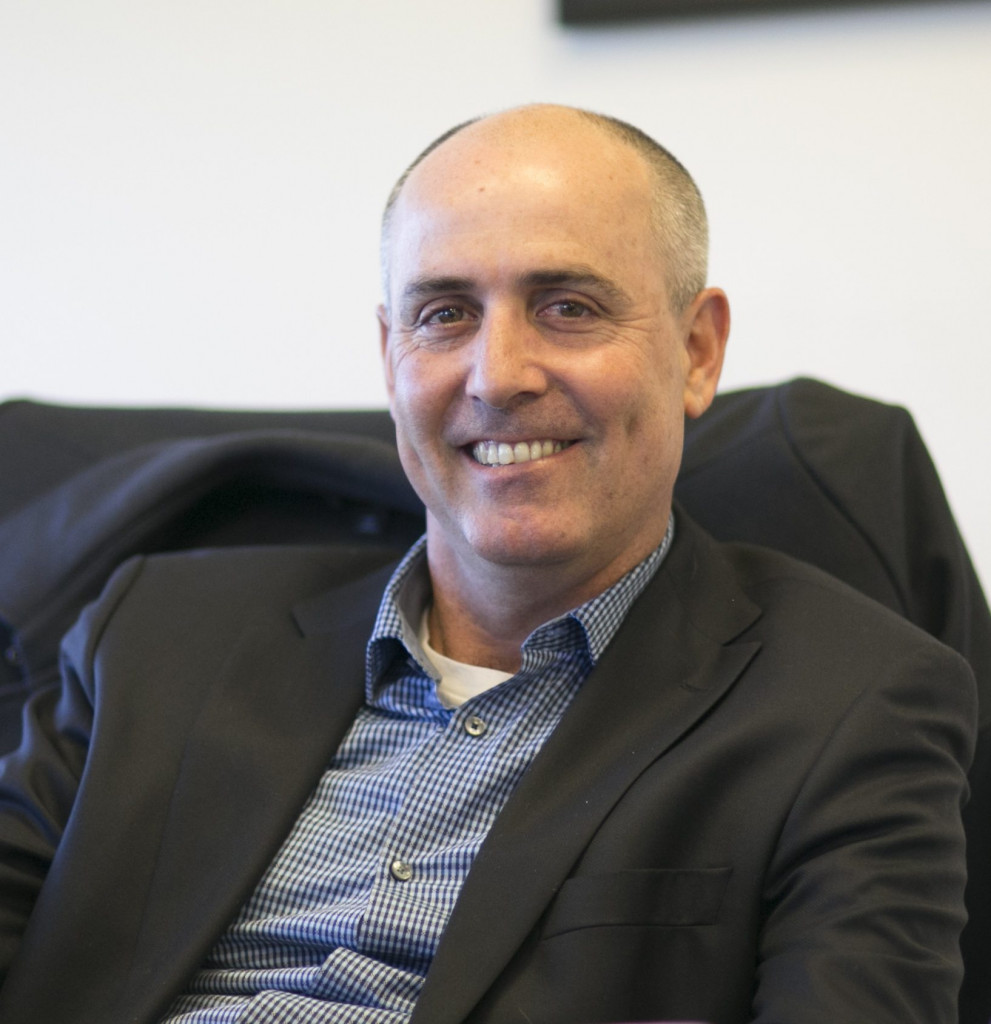
Small business financing company Yalber has announced the closing of a $20 million credit facility from an institutional credit fund focused on specialty finance and related investments.
Yalber CEO Amir Landsman told AltFinanceDaily that the money was raised primarily in response to increased demand for capital. The company will use the new credit facility to satisfy customer demand for funding and to continue building out its technology platform.
“This is part of the bigger picture of really looking ahead to the future – to advance technology, marketing and customer service,” Landsman said. “For us, this is just the beginning.”
Yalber was founded in 2007, and until now, it has been self-funded.
The New York-based company derives 90 percent of its leads internally with an in-house sales and marketing team.
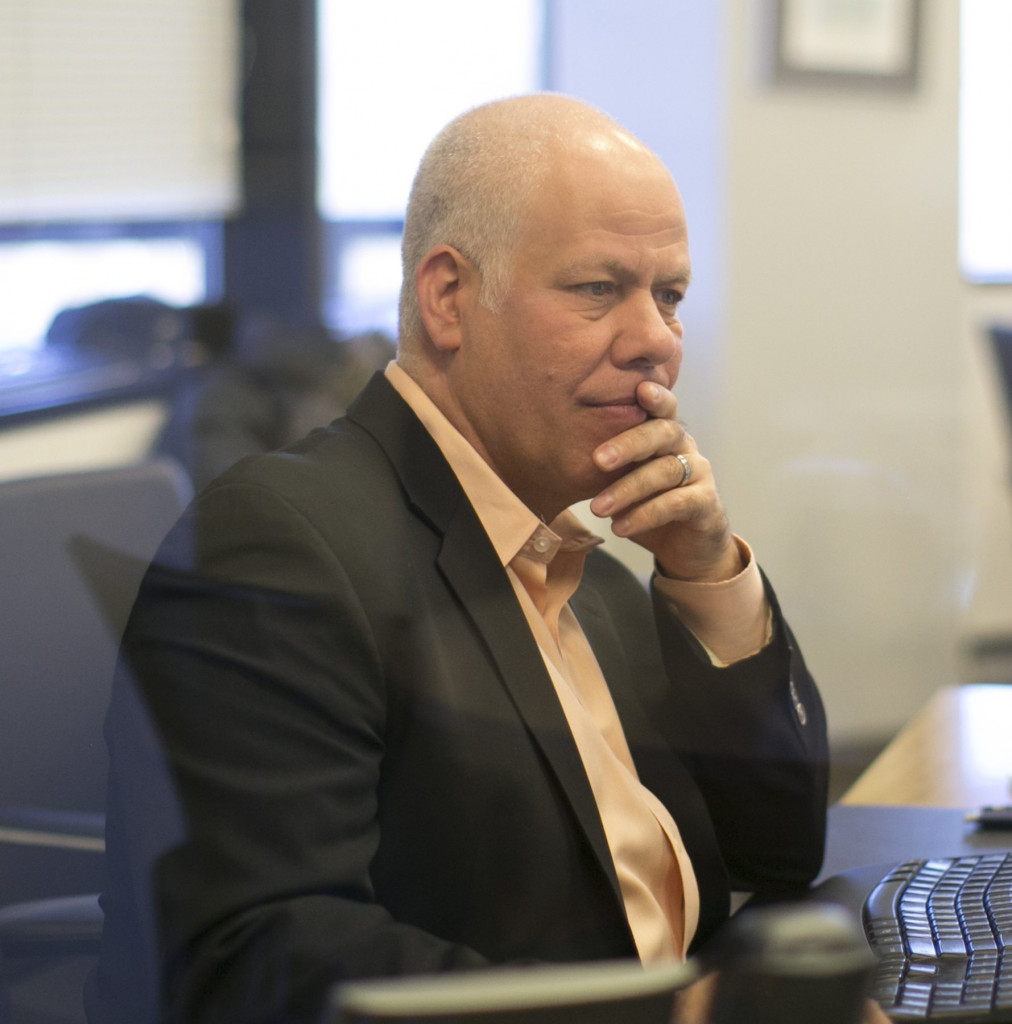
“We still work with some ISOs,” Landsman said. “We consider the ISO channel as an important one, but we are quite picky.”
Yalber offers small businesses up to $500,000 and so far it has provided more than 5,000 businesses with over $300 million in working capital.
From its original office in New Jersey, which since moved to New York, Yarber now has offices in Dallas, Los Angeles, San Francisco and London. Most of the company’s 30 employees are based in New York.
With an emphasis on making the application process simpler and faster, and all online, what is the value in having multiple offices?
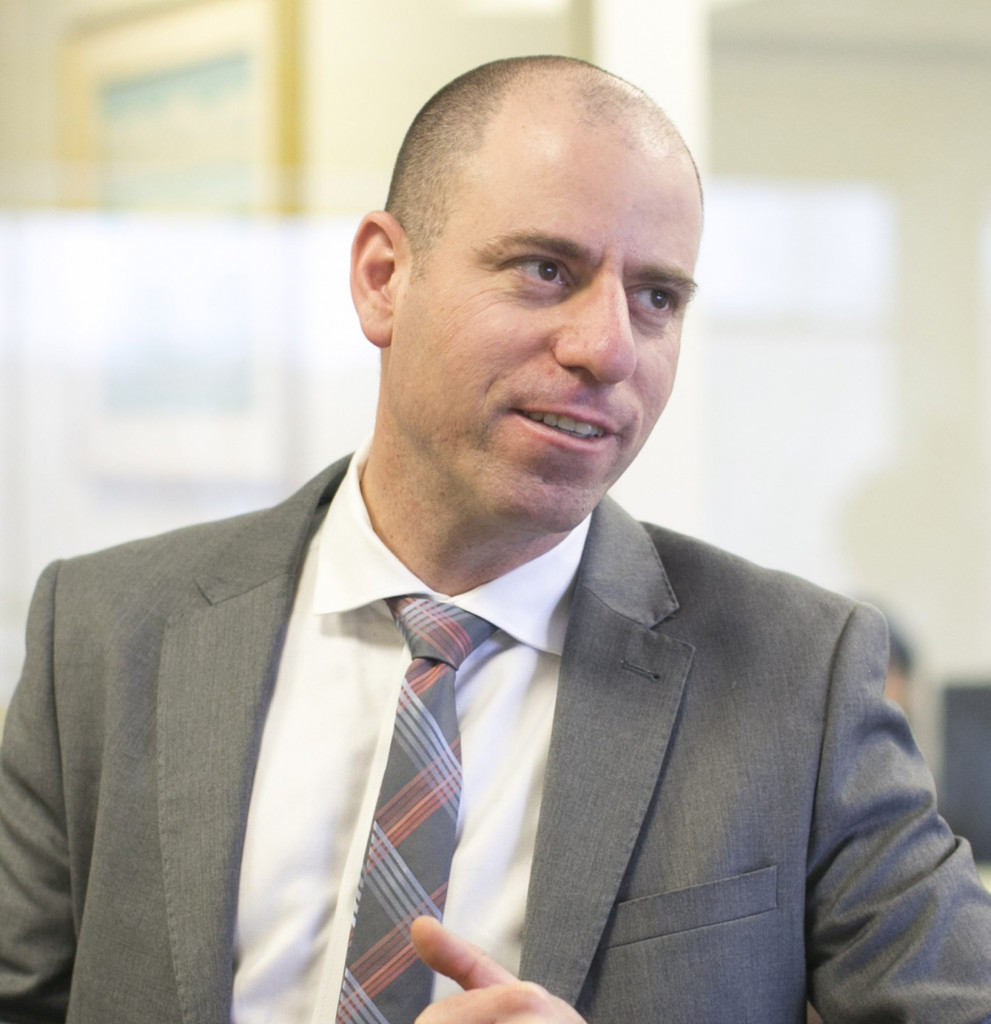
Landsman told AltFinanceDaily that by better understanding local business environments, they can make better credit decisions. And having a local office also gives merchants more comfort, knowing that they can speak to someone familiar with their area.
In the decade since Yalber started in the MCA business, CTO Nir Goshen noted how much the industry has grown.
“When I started with Google AdWords [in 2007], when I searched ‘Merchant Cash Advance,’ Google said ‘too little traffic.’ Today, it’s one of the most expensive ad words. The only one I can think of that’s more expensive is ‘insurance.’”
Yalber’s $20 million financing was raised by Brean Capital.
Creating a Credit Standard for Canadian Merchants
December 26, 2017
The Canadian alternative lending market is in earlier innings than the US market, which creates unique opportunities for funders and merchants alike. Indeed, the Canadian market is one comprised of nuances that distinguish it from the lower 48, which we have spotlighted before, and 2018 is shaping up to be a year that could redefine the parameters as we know them. One of the companies that is positioned at the forefront of this expansion is Montreal-based Thinking Capital
Jeff Mitelman, Thinking Capital’s chief executive, explained the company existed for about eight years before somebody called the industry fintech. “Rather than think of ourselves as a large funder in the context of the Canadian market, I like to think of us as having the greatest opportunity to get this new way of lending into the mainstream,” said Mitelman.
The challenge, he says, has moved away from ‘does this have a place in the market and do people want this’ (evidenced by the fact that Thinking Capital has funded thousands of businesses and deployed hundreds of millions of dollars) and shifted toward establishing a standard for business credit underwriting.
There are more than 1 million small businesses in Canada with no formal method to evaluate them. One of the most notable differences in the Canadian small business landscape is that there are no FICO scores for credit underwriting.
“The FICO score doesn’t exist in Canada. We have other similar measures of credit, but they are all very much consumer measures. They all fail to accurately reflect the credit worthiness of the small business,” said Mitelman.
Language & Education
The new face of credit for Canadian merchants, one in which Thinking Capital is positioned at the forefront, surrounds language and education and it is now taking shape.
“Interestingly the opportunity we have is around creating the language of credit and educating the market to say that there is a measure of small business credit that exists far beyond how credit used to be adjudicated,” he added.
This language would communicate to borrowers what their score looks like and how they should think of their own credit as it relates to their ability to borrow.
“There is no universal measure of credit that exists in Canada that says , ‘this business has great credit and this one has less than great credit.’ The opportunity that we have both as an organization and an industry is to establish a language on which credit can be offered to small businesses going forward,” said Mitelman.
One of the industries that is poised to benefit is restaurants, which historically has had a tough time accessing financing based on the belief that they’re a bad credit risk. “It’s an amazing industry that by default is just considered risky. Just saying ‘restaurants are risky’ full stop is an exclusive way to think about. The idea here is to be inclusive and say, ‘let’s find the right way to communicate credit worthiness back to the restaurants and help those that are doing great,” Mitelman explained.
Attention Small Businesses
Partners are a cornerstone to the Thinking Capital business model, including key relationships with the likes of Staples, CIBC, Moneris and Money Mart. The lender will rely on this model for its campaign to touch and educate small businesses about credit worthiness.
“What we are looking to do is really partner with brands that already have the attention of small businesses and in their messaging out to their customers let small businesses know that there is a better way to borrow; there is a bigger market for credit that is available through this new methodology than there was in the old way of thinking about credit,” Mitelman said.
Thinking Capital exclusively targets very large brands as partners. The lender has not taken the agent route and they’ve very much adopted a “lending as a service” approach with partners.
“2018 will be a big year of major partnership announcements for us,” said Mitelman. “Lending is being made easier and the addressable market for small business lending is being expanded.”
Mitelman went on to explain that small business demand for capital has always been there. “The ability to access working capital from brands that are trusted is something that’s changing and giving small businesses a whole lot of comfort around tapping the credit markets rather than bootstrapping themselves through vehicles that aren’t intended to finance small businesses, such as friends and family loans, personal loans and credit cards.”
SBA Loans Go Online: A Q&A With SmartBiz
November 28, 2017 A while back, a merchant AltFinanceDaily interviewed told us they had obtained what sounded like impossibly good terms from an online lender not known for low rates. When I requested a fact check of it, we learned that the online lender had actually referred the borrower to SmartBiz and that SmartBiz had secured an SBA loan for them. It was so seamless that the borrower had hardly noticed.
Curious, I caught up with Sean O’Malley, president and co-founder of SmartBiz last month at Money2020. Below is a modified excerpt of our conversation:
AltFinanceDaily: [tells the above story about the merchant who got an SBA loan] – So you actually have other alternative lenders and online lenders going through you too. What is really the biggest channel that you tap into to get small business owners to you? Is it other online lenders or do you go direct to merchants?
O’Malley: Well, there are three different areas where customers come to us. The first is through our marketing efforts. We have our own online presence and marketing initiatives that go on, where small business owners are interested in the SBA loan product. The second area lies in our strategic relationships. These are partnerships with companies like Sam’s Club where we’re actually on their lending center; we have been doing that for a number of years. Another channel would be partnerships with companies like Fundera who bring customers to us through their online channels.
AltFinanceDaily: How about like Lendio?
O’Malley: Yes. We’ve built a relationship with them over the years. Lastly, the third area is the independent financial consultant channel, like our partnerships with accountants.
AltFinanceDaily: Okay. Didn’t SmartBiz recently celebrate a major milestone?
O’Malley: Yes! We recently passed the $500 million threshold of originated capital on the platform.
AltFinanceDaily: All SBA loans?
O’Malley: Correct, all the originated capital is a result from SBA 7(a) loans. Today, we have six bank partners on our platform who are doing SBA loan origination. It’s all been facilitated through our platform. There are really four major components to what we do. The first part is we provide an online presence and origination solution for small businesses. They come through our technology solution and then they go through an application process where we’re able to pre-qualify them. So, that’s the first piece. The second piece is really the technology platform around packaging of the loan.
AltFinanceDaily: What do you mean by packaging?
O’Malley: After a business pre-qualifies, there are still documents that need to be captured and some of the specific analysis also needs to be done. A large piece of that is automated through our platform. Some of it does require sort of a white glove experience for small business. We provide that as well. Then the third piece is the bank’s underwriting platform, where we digitize the bank’s underwriting and provide them with an underwriting platform that they license from us. Leaving us with the fourth part, the marketplace.
AltFinanceDaily: Can you explain the fourth piece, marketplace?
O’Malley: The core of what we do is we connect small business owners with banks. And the interesting part of that is that because we’re the marketplace, we’re able to say yes more to the small business than any single bank because they all have their own different credit boxes. In effect, we’re able to get more customers approved because we’re able to fit more use cases for that small business owner. If you combine all these, the ultimate value prop is that we’ve reduced the time to originate a loan. It traditionally takes about 120 days for a bank to originate an SBA loan. We’ve reduced that to as little as seven days. And on the bank side, we’ve reduced their costs up to 90%. As a result, we’ve made these loans more profitable for banks. And they’re then more willing to originate as part of their standard business. Whereas you know, in the small business space, banks have not been super eager to be making smaller sized loans because it costs as much for them to originate that type of loan as it does for them to originate a $5 million loan. So, we’ve made it super efficient.
AltFinanceDaily: So you’re kind of filtering out applicants on your own that they would normally have to deal with.
O’Malley: That’s right. Our platform allows us to filter out all the applications and only feed a bank the deals that they can do. When we provide a deal to a bank, they’re funding it anywhere between 90-95 percent of the time. They’re funding the deals that come from us because we have the knowledge of how the bank looks at their deals.
AltFinanceDaily: Is there a world in which you move outside of SBA loans and potentially offer other types of bank loans or maybe even non-bank loans or facilitate them? Not necessarily make them, but facilitate them?
O’Malley: We recently just launched a conventional bank loan. So, yes, we are expanding on our product line, and we did this as a result of really looking at that type of product and filling a gap in the marketplace as well. We’re trying to help the customers out and support their needs.
AltFinanceDaily: Are you noticing a trend with maybe borrowers applying for loans on like a mobile phone? I mean, any loan is a pretty big commitment, right? They go online and apply for $5,000, you know what I mean, for a personal expense or whatever and that’s not such a huge deal because it’s a small loan. I think an SBA loan is a much bigger commitment, you know, it’s long term. Are you seeing borrowers apply for the loans you offer from a mobile device?
O’Malley: About a quarter of our small businesses start the applications over a mobile device. And they are able to get pre-qualified through a mobile device. That said, the majority of borrowers still want to talk to someone. There are still a lot of traditional relation-based elements to a small business lender. When somebody is taking out a couple hundred thousand dollars, like you said, there needs to be some white glove experience for that. And it can’t just be 100% automated. In fact, small businesses a lot of times don’t want 100% automation.
AltFinanceDaily: Because it’s such a big commitment.
O’Malley: That’s right. And that’s where the market is today. In the future, we look to certainly automate as much as possible, but we hyper-target where we interact with the customer so that we provide the most unique customer-centric solution so that they feel comfortable about the process. If you look at our TrustPilot customer reviews that we use on our site, you will note that people really speak very highly about their experience. We’re super proud of that because we’ve been able to match up technology with people in the right way so that we can hyper-target where human interaction is needed to make sure that the customer feels at ease with the process. We’ve been able to become the trusted source for them getting the loan that they’re looking for.
AltFinanceDaily: Do you think in the future borrowers will apply for SBA loans entirely online? Will there be an age where they’re not necessarily going to the bank to meet somebody to talk about an SBA loan? Do you think it’s all going to kind of become like an online digitized process or will it always be a layer of I wanna go and sit and talk with somebody in the bank office?
O’Malley: Well, we’re proving small businesses want to do it primarily online. In fact, you know, the point too is that if you just consider the small dollar amount category, we are now the largest provider of SBA loans in the country for loans under $350,000.
AltFinanceDaily: Anything else I should know about SmartBiz?
O’Malley: We really seek to be an advocate for small businesses. We have gone beyond SBA in supporting our customers with the more conventional product, but we’re always trying to get businesses into SBA loans because it’s the best product out there. And so, our focus is always first and foremost trying to get our businesses SBA loans if at all possible. And it appears to be working. Recently, we were named as one of the fastest growing companies in the Bay area. We’re looking at certainly scaling this solution with as many small businesses as possible.