
Looking Back & Forging Ahead: A Dialogue With David Goldin
June 23, 2016 DeBanked Magazine recently caught up with David Goldin, the founder, president and chief executive of Capify, a New York based alternative funder. Goldin, who started his business in January 2002 as a credit card processing ISO, has been an outspoken and active participant in the alternative funding space since that time. He is also president of the Small Business Finance Association, the industry trade group that he helped found in 2006. The following is an edited transcript of our discussions.
DeBanked: Since you started the business, Capify has grown from a credit card processing ISO into a global company with more than 200 employees in the U.S., U.K., Canada and Australia. Please talk a little about where Capify is today and your future growth plans for the company.
The key here is responsible growth and the responsible providing of capital. Anyone can fund deals. The hard part is collecting the money back, so you have to know how to operate during a down economic cycle. Capify did it very successfully in the last economic downturn. As we move into uncertain times, it seems there’s a greater possibility that the economy is going to get worse over the next 18 months. Even so, we’re working on several new products and new partnerships that we’ll be announcing shortly. Again, the trick is to be responsible about growth. We’re staying laser focused on our business right now and being very selective about where to invest capital in new projects during these uncertain times.
DeBanked: Continuing on the subject of growth, what do you think has been the most significant contributor to the company’s upward progression over the past several years?
I think our underwriting model is what has helped us the most. Our performance data has allowed us to make decisions in tough times and automate our processes further based on historical trends. We have 10-plus-years of performance data in the U.S. and 8-plus-years overseas. Most companies have only three to five years of experience, and most importantly, they haven’t been through an economic downturn.
DeBanked: How has the competitive landscape in the industry changed in the past few years?
Lenders are a different quality now. There is more variation in lenders than ever before—from lower-risk providers of capital to higher-risk providers of capital. Higher-risk providers of capital tend to charge a lot more. They also tend to have very aggressive business practices. The public perception is that all funders are the same—but we all have different business models and ethics in the way we operate our companies. It can be challenging at times to help customers, the media, partners and investors understand the difference between Capify and less scrupulous players.
DeBanked: What do you think the industry will look like in five to 10 years?
I think you’re going to see a lot of consolidation, and I think you’re going to see a whole new variety of products being offered to customers. The customer acquisition cost is too high to only offer one type of product. Similar to banks, alternative funders are going to start offering multiple products, if they aren’t already, and that will help make for a stickier customer and increase the bottom line.
Also, there will be significantly fewer funders than there are today and many ISOs will not be able to survive. I think more and more companies are going to start building their own internal sales forces. There are lower default rates and higher renewal rates in the direct model; the ISOs don’t have skin in the game. I think some of the stronger ISOs over time will become part of the larger funding companies.
DeBanked: There seems to be a consensus in the industry that more regulation of alternative financing is inevitable. How is regulation going to change how alternative funders operate and how might it change the competitive landscape?
I think you’ll see a lot more self-regulation before you see actual regulation when it comes to business-to-business lending. Funders are taking self-regulation more seriously and there have been more associations formed to educate policy-makers about the performance rates, default rates, renewal rates, customer satisfaction levels and how the products work.
The one area there could be potential regulation is in providing capital to sole proprietorships. The argument is that tiny businesses may need more assistance than larger companies, and some make the argument that these micro businesses are quasi-consumers. We disagree. We feel that if a sole proprietor is using the capital for his business, it should be considered a business transaction. However, several factors— including rampant media attention, more publicly traded alternative financing companies, tremendous growth of marketplace lending over the past several years and an election year—provide a recipe for all the regulation noise.
DeBanked: What are the biggest risks our industry is facing right now?
We’ve seen the movie before—in 2007 and 2008—when alternative funders didn’t factor in the severity of how an economic downturn could affect their business. The risk is there again. Funders have to be even more responsible. It’s not about how much you fund, it’s about much you collect back. You can’t be super-aggressive during times you think you may be
going into a down period. There could be significant industrywide fallout from irresponsible underwriting.
DeBanked: What advice would you give to new funders entering the market now?
I think the boat has left the dock; I don’t think they will be able to compete with established players in a meaningful way. Someone who really wants to be in the business should look at acquiring several small to medium-sized companies and rolling them up to get scale. It would be very challenging and require many years of investment to start from scratch at this point to build a substantial company. It’s harder now than it was in the past.
DeBanked: Can you talk a little about where you see the future of banks and alternative funders and how they will work together?
I think some banks will want to acquire platforms for speed to market or partner with platforms where the banks provide the capital and the funders service the loans. The latter is the model that J.P. Morgan and On Deck chose. The challenge is that the banks aren’t going to want to take a risk on applicants that don’t fall within the certain credit profile that they are comfortable lending to. While the partnership model will help banks make decisions faster about lending to small businesses, many small businesses will continue to be underserved. This could, in turn, provide an opening for independent funders who are willing to provide capital, albeit at higher rates because you can’t make a profit providing working capital (typically unsecured) at bank rates to the credit and risk profiles of businesses that most alternative funding companies work with today.
DeBanked: Please address the major technology trends shaping the alternative financing industry and what this means for industry players?
My opinion is the technology is ahead of the typical business brick-and-mortar business owner. Whilethe technology exists for business owners to go to a website and provide their personal and business data, we have found most business owners want to speak with a salesperson first, get a comfortable level and then apply online. (Compared with going right to a website and applying without a human involved). However, each year that goes by more and more business owners get more comfortable with technology and a greater percentage of them will look for a completely online experience. Being that it costs millions of dollars and years of time to build these platforms, you have to constantly evolve your platform to stay relevant. You can’t just snap your fingers and have it up and running.
I think the trend for our specific industry is being technology-enabled rather than being pure-bred tech companies. Customers still want to speak to people,but you also have to have viable backend technology so your business is scalable. Technology, such as digital bank statement transmission via various platforms, also helps cut down fraud compared with reviewing manual documents that can easily be forged or “Photoshopped.”
DeBanked: How can alternative funding companies best meet the challenges they are likely to face over the next few years?
I think alternative funders need to focus on more responsible providing of capital. This means really focusing on business owners’ ability to repay, taking a hard look at overburdening them with debt through stacking, for example, and further evaluating the referral sources of business they are getting their deal flow from in order to ensure that business owners get the best possible experience. Furthermore, I think as more alternative funding companies focus more on profitability and not just growth, coupled with the tightening of available institutional capital with an appetite for our industry, you will see some of the recent trends potentially reverse such as extremely high approval rates and industry margin compression.
Splits Glitz or Fritz? – Transact 16 highlighted strange chapter in merchant cash advance history
April 21, 2016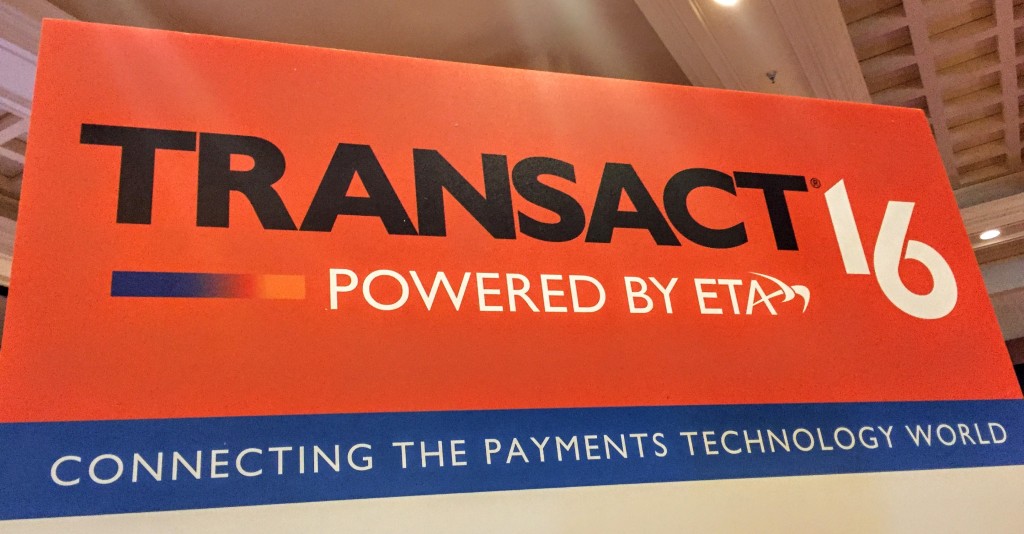
It’s Opposite Day in the alternative business funding industry. Lenders are splitting card payments and merchant cash advance companies are doing ACH debits.
Jacqueline Reses was not an odd choice for Transact 16’s Wednesday morning keynote. Square, the company she works for, has continued to be a hot topic in the payments world for years. But what was striking is that Reses heads the lending division, the group that allows merchants to pay back loans through their future card sales. If that sounds very merchant-cash-advance-like, it’s because that’s exactly the product they used to offer before changing the legal structure behind them.
Split-payments, not ACH payments, have literally propelled Square and PayPal to the top of the charts of the alternative business funding industry. One individual on the exhibit hall floor posited that Square’s ability to originate loans through their payments ecosystem was the company’s real value; Payments itself was secondary. It’s a testament to the opportunities that split-payments affords to (as I argued 3 years ago on the ETA’s blog) a company well positioned to benefit from it.
Meanwhile, the companies at Transact that one would have historically described as merchant cash advance companies have mostly transitioned away from split-payments to ACH. Essentially, Square and PayPal embraced splits as an incredible strength while yesterday’s merchant cash advance companies viewed splits as a handcuff that limited scalability. The payment companies became merchant cash advance companies and the merchant cash advance companies became something else entirely, a diverse breed of loan and future receivable originators operating under a label people are now calling “marketplace lenders.” But even Square and PayPal, arguably the two companies at Transact doing the most split-payment transactions, claim to make loans, not advances.
Merchant Cash Advance as anyone knew it previously is dead
Ten years. That’s the average age of the small business funding companies that exhibited at Transact this week. They are but the last remaining players that probably considered the debit card interchange cap imposed by the Durbin Amendment of Dodd-Frank as being among the most significant legislation that affected their businesses.
A senior representative for one credit card processor told me at the conference that their biggest gripe with new merchant cash advance ISOs today is that they know almost absolutely nothing about merchant accounts. It’s not that they know less, they know nothing, he said.
One company was notably absent from the floor this year, OnDeck. They’ve since embraced the marketplace lending community as their home, just as many others have.
Nine years ago, I overheard a very influential person say that the first company to be able to split payments across the Global, First Data and Paymentech platforms would be crowned the “winner” of the merchant cash advance industry and by extension the wider nonbank small business financing space.
If one were to define the winner as the first company from that era to go public, well then those 3 platforms played no role. OnDeck was the first and they relied on ACH payments the entire way. They also refer to themselves these days as a nonbank commercial lender. If that doesn’t sound very payments-like, it’s because it’s not.
What cause is being Advanced?
At least four coalitions are currently advocating on the marketplace lending industry’s behalf, the Coalition for Responsible Business Finance, the Marketplace Lending Association, the Small Business Finance Association, and the Commercial Finance Coalition. The Transact conference is put on by the Electronic Transactions Association whose tagline is “Advancing Payments Technology.” In an age where new merchant cash advance ISOs know nothing about payments, it’s no wonder there’s a growing disconnect.
Could Transact now be one of the best kept secrets?
A few people from companies exhibiting say that they believed they stood a better chance to land referral relationships from payment companies by being there and that there was still a lot of value in landing those deals. Partnerships like these may be why the average exhibitor has been in business for 10 years while today’s new companies relying solely on pay-per-click, cold calling, or handshakes are falling on hard times.
Some payment processors acknowledged that merchant cash advance companies were still a good source to acquire merchant accounts, though the process by which that happens is not the same as it used to be. A lot of it is referral based now, according to one senior respresentative for a card processor. The funding company funds a deal via ACH and then refers them to the payment guy to try and convert that as an add-on. The residual earnings may not be as good as they used to be but that’s because they don’t have to do any work in this circumstance. In a sense, funders are still leading with cash but instead of the boarding process being mandatory, it’s an entirely separate sale that sometimes works and sometimes doesn’t. In that way, small business funding companies can be a good lead source for payments companies.
When I asked the senior representative if they really had success closing merchant accounts just off of a referral from a funding company, he looked at me incredulously, and said, “you used to do this, of course we do. that’s how this whole industry started.”
“What industry?” I asked.
What industry indeed…
Online Lender Avant Hires Ex-FDIC Chief to Board
April 1, 2016 Soon, non banking lending will be made up of ex bankers.
The latest announcement comes from Chicago-based online lender Avant which hired the former head of Federal Deposit Insurance Corporation Sheila Bair to its board. Avant sells unsecured personal loans from $1,000 to $35,000 and has issued loans worth $3 billion.
Bair joins Avant after months of due diligence and said she was impressed Avant’s lending standards are similar to big banks where it retains half the loans on its balance sheet. At the FDIC where she spent five years between 2006 to 2011, she pushed for stricter lending standards with capital and risk. In 2014, she joined the board of Spanish bank Santander for a brief stint.
In the recent months, the new crop of fintech upstarts, backed by venture dollars and fiery ambition have clocked fast growth to justify the impressive hires. Stealth P2P insurance startup Lemonade brought on famous behavioral economist Dan Ariely to design risk models. Student lender SoFi hired Deustche Bank chief Anshu Jain to its board, Funding Circle appointed ex ECB chief Jorg Asmussen and last year Prosper hired former CFPB chief Raj Date.
The alternative lending space is garnering a lot of regulatory attention. SEC Chairwoman Mary Jo White called for more disclosure to investors as well as proprietary risk and lending models adopted by companies. The Small Business Finance Association is working on building a guide for industry best practices.
Industry Trade Group Coming of Age: The SBFA is Becoming More Political
February 1, 2016By hiring an executive director, the Small Business Finance Association hopes to achieve at least two goals – taking a step toward becoming a full-service trade group and providing a public voice for the alternative finance industry.
Stephen Denis, formerly deputy staff director of the U.S. House Committee on Small Business, went to work in the new role in mid-December, setting up shop with his cell phone and laptop in a Washington, DC, area coffee emporium. He’s the SBFA’s first full-time employee.
Hiring Denis, who also has association experience, represents “the next evolution” of the trade group, according to David Goldin, SBFA president and Capify’s founder, president and CEO.
 The SBFA, which got its start in 2008 as the North American Merchant Advance Association, changed its name last year because members have added small-business loans to the their merchant cash advance offerings. Although the trade group’s not exactly new, it has plenty of room to grow and its leadership and members seem open to change.
“The goal is to start from scratch and take a look at everything the association is doing,” Denis told AltFinanceDaily, “and to really build this out to a robust group that represents the interests of small businesses.”
Denis appears optimistic about pursuing that goal. He’s a native of the Boston area and a Harvard University graduate whose first job out of school was as an aide to Republican Sen. John E. Sununu of New Hampshire. After three years in that position, he took a job for two years with a UK-based trade association, traveling frequently to London to inform the group of Congressional action in the United States.
From there, Denis went on to become director of government affairs and economic development for the Cincinnati Business Committee, a regional association that included Fortune 500 companies among its members. After two years in that role, Denis joined the staff of Rep. Steve Chabot, R-Ohio, moving back to Washington and serving as the congressman’s deputy chief of staff during a five-year stint that ended when he joined the SBFA.
While working for Chabot, Denis also became deputy staff director of the House Committee for Small Business, the No. 2 position there, and he has held that job for the last three years. The committee’s tasks include learning as much as they can about small business, including financing, and using the information to advise members of the House on policy initiatives.
The experience Denis has amassed in government should serve the association well because his duties include briefing federal legislators and regulators on how the alternative-finance business works. With Denis as spokesperson, the industry can speak to government with a single voice, Goldin asserted.
“We are going to be aggressive in our outreach to legislators and regulators as well as be active reaching out to local, state governments,” Denis said. The SBFA will “work with other trade groups and small business groups to promote our mission to ensure small businesses have alternative finance options available to them.”

Until now, too many players from the alternative finance industry have been vying for lawmakers’ attention, Goldin said. To make matters worse, some of those seeking to influence government in hearings on Capitol Hill are brokers instead of lenders and thus may not have a perfect understanding of risk and other aspects of the business, he maintained.
“We’re hearing that there are people trying to be the voice of small-business finance that either don’t have a lot of years of experience or they’re not telling the whole story,” Goldin said. “We want to make sure the industry’s represented properly.”
Denis can draw attention away from the “noise” created by unqualified voices and focus on information that Congress needs to make reasonable decisions about the alternative finance business, Goldin maintained.
Besides getting the word out in Washington, the SBFA hopes to convey its message to the general public on “the benefits of alternative financing,” Goldin said. At the same time the group can help make small business owners aware of the finance options, Denis added.
 Asked whether hiring Denis marks the beginning of an effort to lobby members of Congress for legislation the association deems favorable to the industry, Goldin said only that additional announcements will be forthcoming.
Meanwhile, updated “best practices” guidelines might be in the offing to help industry players navigate the business ethically and efficiently, Goldin said. A set of six best practices the association released in 2011 included clear disclosure of fees, clear disclosure of recourse, sensitivity to a merchants’ cash flow, making sure advances aren’t presented as loans and paying off outstanding balances on previous advances.
Addressing other possible steps in the association’s growth, Goldin said the group doesn’t plan to publish an industry trade magazine or newsletter. However, a trade show or conference might make sense, he noted.
Denis said he and the board had not discussed the possibility of a test, credential or accreditation to certify the expertise of qualified members of the industry. However, associations often establish and monitor such standards, so it would be reasonable for the SBFA to do so, he added.
The association might establish a Washington office, Goldin said. “We’ll look to Steve for his thoughts and guidance on that,” he observed. Denis seems amenable to the idea. “Down the road, we would love to open an office and hire more people,” he said.
In Goldin’s view, all of those moves might help the rest of the world comprehend the industry. Understanding the industry requires taking into account the cost of dealing with risk and business operations, he said.
Placing a $20,000 merchant cash advance, for example, requires a customer-acquisition effort that costs about $3,000 and a write-off of losses and overhead of about $4,000, Goldin said. That’s a total of $27,000 even without the cost of capital, he maintained.
“Most people don’t understand the economics of our business,” Goldin continued. The majority of placements are for less than $25,000, he said, characterizing them as “almost a loss leader when you factor in the acquisition costs.”
While spreading that type of information on the industry’s inner workings, Denis will also conduct the day-to-day for the not-for-profit’s affairs. The association’s board of directors will continue to set policy and objectives.
Members elect the board members to two-year terms. Current board members are Goldin; Jeremy Brown of Rapid Advance, who’s also serving as the group’s vice president; John D’Amico, GRP Funding; Stephen Sheinbaum, Bizfi; and John Snead, Merchants Capital Access.
Member companies include Bizfi, BFS Capital, Capify, Credibly, Elevate Funding, Fora Financial, GRP Funding, Merchant Capital Source, Merchants Capital Access (MCA), Nextwave Funding, NLYH Group LLC, North American Bancard, Principis Capital, Rapid Advance, Strategic Funding Source and Swift Capital.
Companies pay $3,000 in monthly dues, which Denis characterizes as inexpensive for a DC-based trade association.
Membership could spread to other types of businesses, Denis said. “I’d like to expand the tent to other industries,” he noted. “The association is trying to represent the interests of small business and make sure they have every finance option available to them.”
But a key purpose of the trade association is to provide a forum for members to come together as an industry, Denis said. “We’re thinking big,” he admitted. “We hope that all members of the marketplace will want to become a part of it.”
Bad Merchants: Lies, Fraud, and Hard Times
December 4, 2015 Critics seldom tire of bashing alternative finance companies, but bad behavior by merchants on the other side of the funding equation goes largely unreported. Behind a veil of silence, devious funding applicants lie about their circumstances or falsify bank records to “qualify” for advances or loans they can’t or won’t repay. Meanwhile, imposters who don’t even own stores or restaurants apply for working capital and then disappear with the money.
“People advertise on craigslist to help you commit fraud,” declared Scott Williams, managing member at Florida-based Financial Advantage Group LLC, who helped start DataMerch LLC to track wayward funding applicants. “Fraud’s a booming business, and every year the numbers seem to increase.”
Deception’s naturally on the rise as the industry continues to grow, according to funders, industry attorneys and collections experts. But it’s also increasing because technology has made it easy for unscrupulous funding applicants to make themselves appear worthy of funding by doctoring or forging bank statements, observers agreed.
Some fraud-minded merchants buy “novelty” bank statements online for as little as $5 and fill them out electronically, said David Goldin, president and CEO of Capify, a New York-based funder formerly called AmeriMerchant, and president of the SBFA, which in the past was called the North American Merchant Advance Association.
To make matters worse, dishonest brokers sometimes coach merchants on how to create the forgeries or modify legitimate records, Goldin maintained. Funders have gone so far as to hire private investigators to scrutinize brokers, he said.
But savvy funders can avoid bogus bank statements, according to Nicholas Giuliano, a partner at Giuliano, McDonnell & Perrone, a New York law firm that handles collections. Funders can protect themselves by remaining skeptical of bank records supplied by applicants. “If the merchant cash advance company is not getting them directly from the source, they can be fooled,” Giuliano said of obtaining the documents from banks.
Another attorney at the firm, Christopher Murray, noted that many funders insist upon getting the merchant’s user name and password to log on to bank accounts to check for risk. That way, they can see for themselves what’s happening with the merchant.

Besides banking records, funders should beware of other types of false information the can prove difficult to ferret out and even more difficult to prove, Murray said. For example, a merchant who’s nine or ten months behind in the rent could convince a landlord to lie about the situation, he noted. The landlord might be willing to go along with the scam in the hope of recouping some of the back rent from a merchant newly flush with cash.
Merchants can also reduce their payments on cash advances by providing customers with incentives to pay with cash instead of cards or by routing transactions through point of sale terminals that aren’t integrated onto the platform that splits the revenue, said Jamie Polon, a partner at the Great Neck, N.Y.-based law firm of Mavrides, Moyal, Packman & Sadkin, LLP and manager of its Creditors’ Rights Group. A site inspection can sometimes detect the extra terminals used to reduce the funder’s share of revenue, he suggested.
In a ruse they call “the evil twin” around the law offices of Giuliano, McDonnell & Perrone, merchants simply deny applying for the funding or receiving it, Giuliano said. “Suddenly, the transaction goes bad, and they deny they had anything to do with it,” he said. “It was someone who stole the merchant’s identity somehow and then falsified records.”
In other cases, merchants direct their banks not to continue paying an obligation to a funder, or they change to a different bank that’s not aware of the loan or advance, according to Murray. They can also switch to a transaction processor that’s not aware of the revenue split with the funder. Such behavior earns the sobriquet “predatory merchant,” and they’re a real problem for the industry, he said.
Occasionally, merchants decide to stop paying off their loans or advances on the advice of a credit consulting company that markets itself as capable of consolidating debt and lowering payments, Giuliano said. “That’s a growing issue,” agreed Murray. “A lot of these guys are coming from the consumer side of the industry.”
The debt consolidator may even bully creditors to settle for substantially less than the merchant has agreed to pay, Murray continued. Remember that in most cases the merchants hiring those companies to negotiate tend to be in less financial trouble than merchants that file for bankruptcy protection, he advised.
“More often than not, they simply don’t want to pay,” he said of some of the merchants coached by “the credit consultants.” They pay themselves a hundred thousand a year, and everyone else be damned. You continue to see them drive Humvees.”

Merchants sometimes take out a cash advance and immediately use the money to hire a bankruptcy attorney, who tries to lower the amount paid back, Murray continued. However, such cases are becoming rare because bankruptcy judges have almost no tolerance for the practice and because underwriting continues to improve, he noted.
Still, it’s not unheard of for a merchant to sell a business and then apply for working capital, Murray said. In such cases, funders who perform an online search find the applicant’s name still associated with the enterprise he or she formerly owned. Moreover, no one may have filed papers indicating the sale of the business. “That’s a bit more common than one would like,” he said.
In other cases the applicant didn’t even own a business in the first place. “They’re not just fudging numbers – they’re fudging contact information,” said Polon. “It’s a pure bait and switch. There wasn’t even a company. It’s a scheme and it’s stealing money.”
Whatever transgressions the merchants or pseudo-merchants commit, they seldom come up on criminal charges. “It is extremely, extremely rare that you will find a law enforcement agency that cares that a merchant cash advance company or alternative lender has been defrauded,” Murray said. It happens only if a merchant cheats a number of funders and clients, he asserted. “Recently, a guy made it his business to collect fraudulent auto loans,” he continued. “That’s a guy who is doing some time.”
However, funders can take miscreants to court in civil actions. “We’re generally successful in obtaining judgments,” said Giuliano. “Then my question is ‘how do you enforce it?’ You have to find the assets.” About 80 percent of merchants fail to appear in court, Murray added. Funders may have to deal with two sets of attorneys – one to litigate the case and another to enforce the judgment. Even merchants who aren’t appearing in court to meet the charges usually find the wherewithal to hire counsel, he said.
Funders sometimes recover the full amount through litigation but sometimes accept a partial settlement. “Compromise is not uncommon,” noted Giuliano. Settling for less makes more sense when the merchant is struggling financially but hasn’t been malicious, said Murray.
To avoid court, attorneys try to persuade merchants to pay up, said Polon. “My job is to get people on the phone and try to facilitate a resolution,” he said of his work in “pre-litigation efforts,” which also included demand letters advising debtors an attorney was handling the case.
 But it’s even better not to become involved with fraudsters in the first place. That’s why more than 400 funding companies are using commercially available software that detects and reduces incidence of falsified bank records, said a representative of Microbilt, a 37-year-old Kennesaw, Ga.-based consumer reporting agency that has supplied a fraud-detection product for nearly four years.
“Our system logs into their bank account and draws down the various data points, and we run them through 175 algorithms,” he said. “It’s really a tool to automate the process of transferring information from the bank to the lender,” he explained.
The tools note gross income, customer expenditures, loans outstanding, checks returned for non-sufficient funds and other factors. Funders use the portions of the data that apply to their risk models, noted Sean M. Albert, MicroBilt’s senior vice president and chief marketing officer.
Funders pay 25 cents to $1.25 each time they use MicroBilt’s service, with the rate based on how often they use it, Albert said. “They only pay for hits,” he said, noting that they don’t charge if information’s not available. Funders can integrate with the MicroBilt server or use the service online. The company checks to make sure that potential customers actually work in the alternative funding business.
MicroBilt is testing a product that gathers information from a merchant’s credit card processing statement to analyze ability to repay excessive chargebacks reflected in the statements could spell trouble, and seasonality in receipts should show up, he noted.
Additional help in avoiding problem merchants comes from the Small Business Finance Association, which maintains a list of more than 10,000 badly behaving funding applicants, said the SBFA’s David Goldin. The nearly 20 companies that belong to the trade group supply the names.
SBFA members, who pay $3,000 monthly to belong, have access to the list. According to Goldin, the dues make sense because preventing a single case of fraud can offset them for some time, he maintained. Besides, associations in other industries charge as much as $10,000 a month, he added.

Another database of possibly dubious merchants, maintained by DataMerch LLC, became available to funders in July, according to Scott Williams, who started the enterprise with Cody Burgess. It became integrated with the AltFinanceDaily news feed by early October, causing the number of participating funders to double to a total of about 40, he said. The service is free now, but will carry a fee in the future.
It’s not a blacklist of merchants that should never receive funding again, Williams emphasized. Businesses can return to solvency when circumstances can change, he noted. That’s why it’s wise to regard the database as an underwriting tool. In addition, merchants can in some cases add their side of the story to the listings.
Funding companies directly affected by wayward merchants can contribute names to the list, Williams said. About 2,500 merchants made the list within a few months of its inception, he noted. “We’re super happy with our numbers,” he said of the database’s growth.
Many merchants find themselves in the database because of hard times. Of those who land on the list because of fraud, perhaps 75 percent actually own businesses and about 25 percent are con artists applying for funding for shell companies, Williams said.
So far, only direct funders – not brokers or ISOs – can get access to the database, he continued, noting that DataMerch could rethink the restriction in the future. “We don’t want hearsay from a broker who might not know the full scope of the story,” he said.
DataMerch might grant brokers and ISOs the right to read the list to avoid wasting time pitching deals to substandard merchants, but the company does not intend to enable members of those groups to add merchants to the database, Williams said.
Williams sees a need for the new database because smaller companies can’t afford belonging to the SBFA. The association also tracks deals about to become final, which could prevent double-funding but makes some users uncomfortable because they don’t want to disclose their good merchants, Williams said.
 Although dishonesty’s sometimes a factor, merchants often go into default just because of lean times, Jamie Polon, the attorney, cautioned. A restaurant could close, for example, because of construction or an equipment breakdown. “Were they not serving dinner anymore, or was there something much deeper going on?” he said. Fraud may play a role in 10 percent to 20 percent of the collections cases his law firm sees, he noted. More than 95 percent blame their troubles on a downturn in business, and the rest claim they didn’t understand the contract, he said.
To understand the downturn, it’s important to amass as much information about the merchant as possible, said Mark LeFevre, president and CEO of Kearns, Brinen & Monaghan, a Dover, Del.-based collections agency that works with funders. That information sheds light on a merchant’s ability to repay and could help determine what terms the merchant can meet, he said.
Timeliness matters because the sooner a creditor takes action to collect, the greater the chance of recouping all or most of the obligation, LeFevre maintained. When distress signals arise – such as closing an ACH account or a spate of unreturned phone calls – it’s time to place the merchant with a collections expert, he advised.
LeFevre’s company also traces a troubled merchant’s dwindling assets to help the funder receive a fair share. Funders can sometimes recover all or most of what they pay a collection agency by imposing fees on the merchant, he noted.
Pinning the collection fees to merchants in default makes sense because that’s where the guilt often resides, observers said. It’s part of balancing the bad behavior equation, they agreed.
The Bad Merchant Database is Free, But Not the One You’re Thinking Of
October 1, 2015 Now you can find out if merchant cash advance and business loan applicants have engaged in suspicious activity with other funders for FREE.
For years, the only way to access such a database was through the Small Business Finance Association (SBFA but formerly known as NAMAA) and doing that hasn’t exactly been cheap or easy. As the SBFA describes itself as a not-for-profit trade association representing organizations in the United States and Canada, acceptance comes with adherence to certain trade association rules and fees often too high for smaller companies.
Just about every merchant cash advance company is aware of the SBFA’s shared database of bad actor merchants. It’s widely viewed as the biggest benefit to being an association member. It’s exclusive, almost too exclusive, many would say.
Enter DataMerch, the startup that’s disrupting it all by making the system open to funders… for FREE. Founded by merchant cash advance veterans, the company’s co-founders have replicated a product that the industry loved, but many could not afford or be accepted into.
AltFinanceDaily has learned that DataMerch already has an active community of funding companies submitting suspicious merchant activity to the database.
Naturally, DataMerch’s tech-based platform made it a suitable fit to integrate the AltFinanceDaily’s news feed into its member dashboard. The companies announced completion of the integration earlier this morning.
To sign up for DataMerch, contact support@datamerch.com
PSC and Hudson Cook, LLP Align to Promote Best Practices in Merchant Cash Advance Industry
May 18, 2015 Earlier today, New York-based PSC announced an alliance with nationally renowned law firm Hudson Cook, LLP to educate members of the merchant cash advance industry. PSC provides full backend systems and support staff for more than a dozen merchant cash advance companies.
The move is significant because it focuses on the adoption of best practices. The only other similar initiative has come from from the Small Business Finance Association (SBFA), but no organization has ever actually made guidelines public, at least not since the Electronic Transactions Association published a white paper in March 2008.
Both Hudson Cook and the SBFA are said to be separately working on their own public best practice frameworks in collaboration with industry participants.
Three attorneys for Hudson Cook recently took on the industry’s most polarizing topic, stacking, when they authored, Stacking: Is it Tortious Interference?. “The analysis of what is ‘improper’ interference versus vigorous, but acceptable, competition will be based on the specific facts of each case,” they wrote.
The law firm may draw from another well established best practice playbook, like the one that exists for the Online Lenders Alliance in the consumer lending space.
 PSC recently hired Amanda Kingsley, the woman behind the headline, “Year of the Broker” in our last issue. Kingsley spoke often of best practices in her interview with AltFinanceDaily Magazine.
A month ago at the LendIt conference, Karen Mills, the former head of the Small Business Administration, said she asked several regulatory bodies who would stand up to oversee small business lending. “No one stood up,” she said.
For now, that seems to mean that the industry is on its own. “PSC also intends to maintain its commitment to its members by providing standards to help them better adhere to all new legal requirements and regulatory practices,” the release said.
It’s a step in the right direction.
New Lender Designed to Support Underserved SMEs
July 23, 2024A new specialist lender has today been launched in response to evolving SME funding needs.
Rapital is set to transform the financial landscape to support both brokers and SME businesses facing difficulty in securing funding from existing lenders and banks.
Rapital will focus on offering a direct route for clients with challenging credit situations, such as poor credit, existing loans, CCJs and defaults with loans ranging between £5,000 and £250,000. With a focus on offering fast funding, Rapital aims to make decisions in as little as three hours so SMEs can access the cash boost they need quickly.
 Access to funding is an evergreen issue for the UK’s vital SME community, with many struggling to get approval from traditional lenders. Indeed, according to the National Association of Commercial Finance Brokers’ (NACFB) annual lender and broker survey, 32% of new clients successfully funded by its members last year had been previously denied funding elsewhere – a 3% increase from 2022. Rapital has been launched to help close the gap and enable SMEs who might have been denied financing from traditional lenders to get the cash boost they need to succeed.
Rapital’s ambition is to help turn a “no” into a “yes” for SMEs needing rapid and flexible financing solutions. The service promises an easy, transparent process and same-day funding, empowering businesses to thrive and grow. In these challenging operating conditions, it is vital that smaller businesses have access to rapid and flexible capital. Rapital will offer a much-needed financial lifeline to the business profiles and industries that are often rejected by banks and other SME lenders.
About Rapital
Rapital’s mission is to empower businesses of all sizes, credit backgrounds and industries by providing brokers and SMEs with funding solutions tailored to meet the real-world challenges they encounter.
For media inquiries, please contact:
Rapital Media Team
Email: info@rapital.co.uk
Phone: 0161 884 0767
Website: rapital.co.uk