
How Start-Up Founder Andrew Luong Went From House Flipper to Real Estate CEO
November 19, 2020 Andrew Luong said it all started seven years ago in San Francisco, just out of graduate school investing in real estate with his spare time on the weekends. Today, his startup Doorvest manages more than $20 million in real estate assets.
“I wanted to look for an avenue to put the money that I had earned from my day job to work,” Luong said. “The goal was to seek out some income security, build a long-term nest egg, hopefully, some passive income to support my life.”
That avenue turned out to be real estate. Luong thinks more people should have the option to invest in the estimated $3 trillion single-family renting market, now more than ever.
A second wave of infections is sweeping across the nation, and with shutdowns looming and business growth on hold, many face a familiar question:
What can I do to make more money?
Luong believes Doorvest has an answer. The firm offers what Luong calls a Democratized way to invest in real estate, entirely online.
Customers can invest up to $100,000 on the platform. Luong and his team of real estate flipping specialists buy, refurbish, and then rent properties, paying back the rent revenue to investors. Luong said Doorvest only gets paid when the properties are profitable, and the reported average annual return on investment is 18%.
The idea came about when Luong and co-founder Justin Kasad tried to find a better way to invest.
Like his peers back in San Francisco, Luong had tried his hand trading stocks. Many of his friends had Robinhood or high yield savings accounts, and were even trading cryptocurrency- but none of those options were what they were looking for. Real estate felt like that next step, but there was a large process to go from cash investment to payday:
 “From identifying a mortgage to underwriting, looking through offers, ultimately an offer that sticks, then you’re figuring out how to find a mortgage financing, how to get homeowner insurance,” Luong said. “Then you’re closing on this thing, take the title, and you’re figuring out how to lease it out, how to manage your residents, and then ultimately, maintenance and bookkeeping.”
With a long, dizzying list of steps, all with uncertain outcomes, it is no wonder a lot of people are put off by that risk, Luong said.
“When my good friend and co-founder Justin and I went through that long list of items, it dawned upon us that if we could deconstruct real estate investing and rebuild it in an online frictionless way, we could bring it to the masses,” Luong said. “We see real estate as a vehicle to funnel people toward financial security.”
The pair got a group of experienced real estate investors and partnered with mortgage providers and renovators to build a platform to handle all of the steps it takes to turn cash into rent income returns. Doorvest will run every step of the process, including property management, while updating investors at every step of the way.
The firm currently focuses on the Houston rental market, Luong’s long term bread-and-butter area, but plans on renting in other markets in the future.
The platform has been in the works for years, but finally launched last year and immediately had to deal with the pandemic, but Luong said Doorvest made it through so far with success.
“It was definitely an experience, back in mid-march Justin and I were like crap, I think we’re done,” Luong said. “Public equities markets were tanking; we’re a young company without a lot of cash. I think people saw the volatility of the public equities market. In that span of two weeks it went down 40% or so and I think that led a retreat towards perceived reliable asset classes.”
To some, investing in Doorvest was perceived as more reliable than a tanking stock market, and after initial fluctuation, the firm is on the up. In his experience, Luong said the real estate market would continue to push toward suburban areas outside of major city centers as the pandemic continues.
All the while, everything is moving digital. As the company evolves, Luong is excited to offer new products to customers, using real estate as a vehicle to build a banking platform or mortgage platform to service a growing smorgasbord of online real estate options.
“We as a company made a bet three to five years out: we believe that real estate will be transacted entirely online,” Luong said. “Historically, you’d show up at a house, walk around, etc. Due to COVID, people weren’t going out, weren’t shaking hands: The adoption of technology to look at a home entirely online just became a lot more natural. Because of that, we’ve had really strong customer demand and fundraising.”
In Loving Memory of Elliot J Dabah
November 17, 2020
Elliot J Dabah, CEO of NYC-based Merchants Cash Partners, LLC, recently passed away. Known throughout the merchant financing industry, friends and colleagues began collecting kind words to reflect on his life to be able to share them here.
Elliot Ashkenazie, his business partner and best friend, said “Elliot Dabah would step up and help anyone in need whether that be his own employee, another ISO, or a complete stranger on the street. He didn’t keep any secrets so he would have an advantage over others, he simply paid it forward and helped the community as a whole benefit from it. Merchants Cash Partners will work tirelessly to carry on his legacy and his values.”
“Elliot Dabah was the heartbeat of the Financial District and he was an integrated part of my life, both professional and personal,” said Gigi Russo. “Not only did Elliot and I live three blocks from each other, but I first had the privilege and pleasure of meeting him while I was working for AltFinanceDaily, at CONNECT San Diego. We quickly became close friends. He truly never took advantage of our tight knit friendship. His professional support was a reflection of his character— a respectable person that respected his family, friends and business associates. Elliot wanted everyone to succeed. He believed that friends and business colleagues should support one another to build a viable network.”
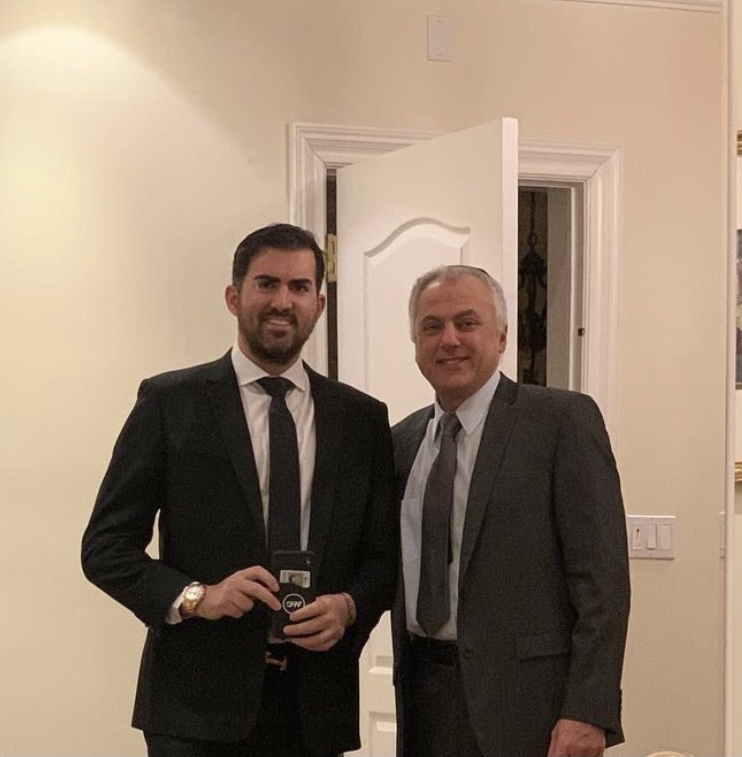
Tom Dool of Power Funding, said “Of all of the offices I’ve ever visited, I can honestly say that no other partner of mine compares to Merchants Cash Partners. From the moment I met both Elliots, they were inviting. I could tell right away that they had a special bond of shared enthusiasm, honesty, generosity, thoughtful, caring people.” He adds, “Elliot [Dabah] lived life with such a genuine love for people and getting to know people, discussing higher level ideas, sharing feelings. He was one of the best and I’ll never forget him.”
“Elliot was one of the most welcoming people I had the pleasure of knowing,” says Colt Kucker of Libertas Funding, “and always tried helping out whether it be a customer, myself, or anybody in need. He was a hard worker and will truly be missed by all he came across.”
Justin Friedman of Enova SMB, described Dabah, “Smart, strategic, urgent, generous and wise are a few words to describe Elliot. He was universally popular and a known professional in our industry, which isn’t common to come by. He cared about his customers and business relationships. Elliot’s presence in alternative lending was a positive one and he will be remembered for exactly that.”

Ben Lugassy of SOS Capital states that he was “Always smiling and enthusiastic, Elliot was the embodiment of joyful. A friend with tremendous respect and gratitude, he will always be remembered and in our prayers.”
Paul Boxer of Velocity Capital Group added, “Every-time I met Elliot he had the largest smile, always happy to talk shop and discuss the industry. He was very knowledgeable and had a wealth of information, he will surely be missed.”
Ken Peng of Elevate Funding recounts that Elliot, “was always great to work with. He was always very friendly and understanding when we did review any of his files. He will be missed.”
Gigi Russo, who was instrumental in putting this tribute together, further added that Elliot “treated everyone he came into contact with as a friend.” He has “a sincere, dignified, and affable reputation that will follow him after his passing. He will surely be remembered for supporting his colleagues, clients, business acquaintances, and network. The legacy Elliot has left behind is simple: Respect one another. Support one another. Honesty and hard work are necessities of success.”

Part of Elliot’s legacy is the company he built. Merchants Cash Partners, despite the pandemic, was so successful this year that it outgrew its office space.
“Elliot had a revolutionary style of making this industry a community,” says his partner Ashkenazie. “He referred clients and prospects alike to small firms and national firms, expecting nothing in return.”
Coincidence would have it that a photo of Elliot at a AltFinanceDaily event was often used in event marketing promotions. As to how that picture came to be used so prominently, AltFinanceDaily President Sean Murray said that “Elliot embodied the community we were trying to portray. A nice young business professional who radiated positive energy. Who is part of this industry? It’s guys like Elliot. That’s what we wanted everyone to know.
“Elliot totally noticed how often we were sharing his photo,” Murray said. “He told me that he thought that was pretty cool.”






The OnDeck Roller Coaster of 2020
October 30, 2020 “2019 was an important year for OnDeck and we finished strong,” said OnDeck CEO Noah Breslow in the year-end earnings call that took place on February 11, 2020. “Financially, we had our second full year of profitability. And strategically, we are making significant progress positioning the company for improved performance and even greater long-term success.”
OnDeck reported net income of $28 million for 2019 and its share price closed at $4.07 the day earnings were announced, giving it a market cap of roughly $240 million. This was down significantly from its IPO value of $1.3 billion, but up from the lows it had hit in 2017 and 2019.
Over the next 30 days, however, the price fell by 50% on fears that the looming novel coronavirus could cause catastrophic disruption. The company also announced the departure of its Chief Accounting Officer.
As the industry looked on with wonder, news coming out of the company seemed strangely at odds with reality. For example, OnDeck announced a “first-ever” NASCAR sponsorship on March 10th.
 “OnDeck is proud to sponsor the JR Motorsports team and driver Daniel Hemric for races during the 2020 NASCAR Xfinity Series season,” said a senior vice president of marketing at OnDeck. “So many of our small business customers are avid motorsports fans and we look forward to joining them to cheer on Daniel and the No. 8 car decked out in OnDeck colors at the Atlanta 250 and the Chicago 300.”
On March 23, OnDeck closed at 70 cents. The market, it seemed, valued OnDeck at a paltry $41 million.
 Publicly, OnDeck kept up the optimism. The company applied to be a PPP lender as the program was just beginning to roll out. “We are excited to be one of the fintechs delivering PPP loans as a direct lender,” Breslow said. “Our team has been working around the clock getting us ready and now we wait and hope we are approved soon!”
Simultaneously, the company suspended the funding of its “Core” loans and lines of credit to new and existing customers. The company then went on to report a Q1 net loss of $59M due to covid-related damage, wiping out all of its 2019 profits and more. It also furloughed many employees while reducing the pay for those that stayed on.
That same month, OnDeck’s management “commenced a review of potential financing options to secure additional liquidity and potentially replace [its] corporate line facility and began contacting potential sources of alternative financing, including mezzanine debt.”
The response it got was grim.
 “The interest rates offered by those alternative financing sources ranged from 1-month LIBOR plus 900 basis points to 1,700 basis points (in addition to an upfront fee) and all but one required a significantly dilutive equity component,” the company later disclosed. “The one proposal that did not include an equity component was at an interest rate of 1-month LIBOR plus 1,400 basis points to 1,700 basis points.”
OnDeck engaged in negotiations with four potential sources of alternative financing, but two dropped out as the economic effects of the pandemic worsened. At the same time, it was speaking with Enova about something else entirely, a potential merger.
On the frontend, OnDeck was keeping the public abreast of its negotiations with creditors. The pandemic had put them in a technical breach of its terms with several of them but the company was experiencing some success with securing workouts and reprieves.
Regardless, the stock continued to trade below $1 as the world looked on to see what would become of their Q2.
 On July 28th, bombshell news broke. Enova, an international lending conglomerate, announced it was acquiring OnDeck for the price of approximately $90 million.
“Following an extensive review of our strategic options, we believe this is the right path forward for our customers, employees, and shareholders,” Noah Breslow said on a call with Enova executives the following day.
Some shareholders had a different opinion and thought that the deal and the terms looked a little fishy, all considered. Nine different shareholder lawsuits were filed over the next two months with the intent to delay or block the acquisition.
How could this possibly be the best deal or the right path?!
That was the underlying question being posed between the lines of the various claims asserted. OnDeck ultimately settled with all the parties by releasing supplemental information to the public about its financial situation and thought process that led up to the Enova merger. All the objections appeared to fade as shareholders approved the deal by an overwhelming majority.
On October 13th, Enova announced that it had completed the acquisition of OnDeck.
But by that time, was OnDeck merely a hollowed out shell of its former self? Not quite, according to disclosures made two weeks later. Enova announced that OnDeck’s portfolio performance was already exceeding their expectations.
 “On the small business side, the makeup of the demand is surprisingly similar to a year ago,” said David Fisher, CEO of Enova. “You would expect so many differences given what the economy has been through but there’s actually very very few. It’s pretty broad based. Credit quality look really really strong. If anything it’s stronger- I think it’s the stronger businesses that are trying to borrow at this point that are trying to lean into covid, not the ones that are just trying to survive so if anything on the demand there is a slight improvement on credit quality in small business.”
Fisher was also bullish going forward. “We believe now is a great time to be increasing our presence in
small business lending. The pandemic has devastated many small businesses across the country. Their
revenues are down and small business owners are digging into their savings to survive until the pandemic subsides and the economy reopens.”
Enova reported monster quarterly earnings of $94 million, a company record.
“Together Enova and OnDeck will be well positioned to further support small businesses and consumers in the wake of the pandemic,” Fisher said.
Shopify Capital Originated $252M in MCAs and Business Loans in Q3
October 29, 2020 Shopify Capital, the finance arm of the 2nd largest e-commerce platform in the United States, reported making $252.1M worth of merchant cash advances and loans in the 3rd quarter. This is a 79% increase over the same period last year and spans three markets, the US, UK, and Canada. It’s also a quarterly record for the company.
The figure also solidly trumped the numbers recently reported by rival OnDeck.
Shopify CFO Amy Shapero said that the company has maintained loss ratios in line with historical performance.
“Businesses need financial resources to survive and fulfill their potential especially in these uncertain times and as you heard just now capital greatly increases the value of Shopify to our merchants,” she said during the earnings call.
The Roosevelt Hotel is Closing Permanently Due to Pandemic Losses
October 13, 2020 After nearly a century of quintessential Manhatten hospitality, the Roosevelt Hotel is closing by the end of the month, sources say. A relic of classic New York that survived the Great Depression, WWII, and Broker Fair 2019, the hotel is officially shutting down for good after suffering pandemic related losses, a spokesperson said.
“Due to the current, unprecedented environment and the continued uncertain impact from COVID-19, the owners of The Roosevelt Hotel have made the difficult decision to close the hotel, and the associates were notified this week,” the Spokesperson told CNN reporters Friday. “The iconic hotel, along with most of New York City, has experienced very low demand, and as a result, the hotel will cease operations before the end of the year. There are currently no plans for the building beyond the scheduled closing.”
The hotel will be added to the growing list of staple New York City businesses that have closed as a result of COVID. The Roosevelt was named and built to honor the United States’ 26th president and it opened its doors on September 22, 1924. Constructed during Prohibition, the building began the modern trend of featuring designer store windows on the street front.
 Appearing as a backdrop for dozens of Hollywood blockbusters like Boiler Room, Malcolm X, and The Irishman, the hotel was iconic. The New Year’s Eve tradition of singing “Auld Lang Syne” was born at the Roosevelt in 1929 when Guy Lombardo and his orchestra broadcast the song live over the radio.
The building was purchased by the limited investment branch of Pakistan International Airlines (PIA) in 1999.
In July, government officials and PIA executives debated the hotel’s future, some hoping rumors that President Trump would purchase the property were true. The initial plan was to sell or renovate the city block to create office space, thought to be far more lucrative than the hotel business in 2019. Work-from-home orders threw a wrench into the cogs, and the hotel kept losing money: no one wanted the traditional New York experience during a pandemic.
 Posting a loss during this year has become expected of the hospitality industry. According to the Bureau of Labor Statistics, hospitality lost 7.5 million jobs due to shutdowns and travel restrictions in April. CNN reported that only half as many jobs had been added back. In September, NYC hotels were below 40% occupancy.
The decision to ultimately close The Roosevelt might also come from trouble in PIA’s airline business. After the crash of PIA flight 8303 that killed 97 people in Havelian, Pakistan, European and US regulators banned flights from PIA for six months. After the crash, nearly one-third of airplane licenses in Pakistan were found to be fraudulent or forged, further straining the organization’s ability to recover.
Though this may have contributed to The Roosevelt’s closure, the pandemic sealed the deal. According to a study by the American Hotel & Lodging Association, New York has 2,336 hotels statewide that have lost 43,014 jobs this year.
 Without further congressional aid, 1,565 hotels might close: the AHLA found that 74% of overall US hotels say more layoffs are coming if the industry doesn’t get additional federal assistance. But successful talks for more aid in the House and Senate are increasingly unlikely due to this election year’s heightened partisanship.
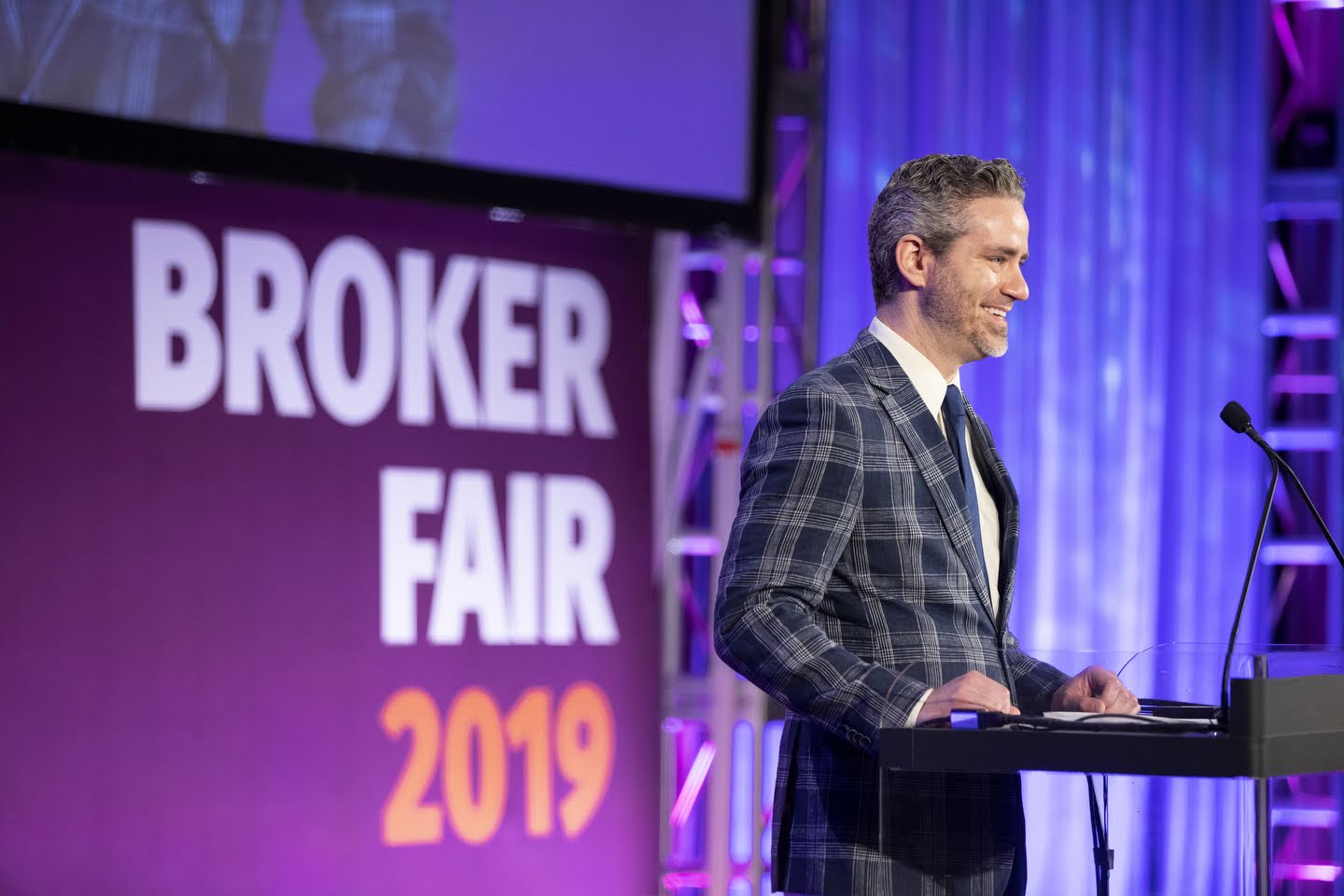
NYC is losing yet another historical business, as the way of life and all things we have come to expect from the big apple struggle to survive. As a destination venue, The Roosevelt was also dear to AltFinanceDaily. It was the home of Broker Fair 2019, where Sean Murray spoke in the same ballroom that Michel Douglas (as Gorden Gekko) made the famous “Greed is Good” speech as part of the 1987 film Wall Street. Murray made a similar speech but rewrote it to fit the industry that had gathered. “Funding small business, for lack of a better phrase, is good,” he said on stage to an audience of 700 people.
Unfortunately, it was The Roosevelt that ultimately needed funding and didn’t get it.
OLA CEO Mary Jackson: Colorado True Lender Bad for Borrowers
September 21, 2020 Last month, the Colorado Attorney General’s office announced a settlement with Avant and Marlette Funding, setting a precedent for how “true lender” cases will be handled. The fintech lenders and their partners are free to lend in the state, subject to a lot of restrictions, as long as they stick below the 36% APR level.
Some touted the decision as a safeguard for fintech bank partnerships. Still, many, like those represented in the Online Lenders Alliance (OLA)- saw misplaced regulation that harms borrowers more than it helps.
Mary Jackson, CEO of OLA, said that while well-meaning, the 36% rule arbitrarily limits the ability for non-prime credit customers to get a loan at all. The limit draws an arbitrary line in the sand, based on an outdated centuries-old lending system, and doesn’t describe loans that last shorter than a year very well, Jackson said.
“What it did was drive out all the lenders,” Jackson said. “Non-prime consumers have fewer choices. They have to go and be subject to fraud or more unscrupulous lenders, or they have to go back to overdraft as another option.”
Jackson represents a group of lenders that offer online services, which regularly partner with banks to provide loans nationwide at higher APR rates than some states allow. Jackson said these are not fintech “rent-a-bank” cases to skirt state regulations, but natural partnerships that enable larger institutions to gain the tech and talent of leading tech companies to reach a greater customer base.
“Big banks cannot keep up with the technology that fintech providers have developed,” Jackson said. “A key US bank has a lot of data scientists that they employ, but if you’re a regional or smaller bank, you don’t have that capability: it’s nearly impossible to drive an IT team as a banker.”

Jackson said that when her firm Cash America, that offered storefront cash advances, was bought by online lender CashNetUSA, she saw the differences between in-person transactions and the IT teams necessary for online lending. “It’s like two different worlds, two different ways of looking at something.”
“Our lenders are sophisticated like Enova, Elevate, CURO, Access Financial,” Jackson said. “These are companies that employ hundreds of data scientists that compete for jobs with Google in Chicago and a small regional bank can’t keep up.”
Fintech talent is helping to reach the 42% of Americans that have non-prime credit scores- FICO scores below 680, according to the Domestic Policy Caucus.
Jackson said these customers, many of whom can pay for loans, have almost no options. Jackson sees many of her partner companies offering a “pathway to prime” service, empowering customers to rehabilitate their credit.
“Most of these people are non-banking customers, these folks have damaged or thin file credit,” Jackson said. “Most banks don’t service that customer, except for overdraft- a 35$ fee for lack of money in their account- I think bankers want to be able to offer longer-term installment loans.”
Jackson said research backs up her claims, pointing to a 2018 US Treasury report that discussed how banks would have to rely on fintech partnerships to innovate and drive product change. That’s what is finally happening, Jackson said.
She also pointed to a 2017 study into the effects of the 2006 Military Lending Act. The act intended to protect military families from lending products with an APR above 36%. The study out of West Point found that the limit only hurt military members, some of which lost their security clearances when their credit fell too low.
“We find virtually no statistically or economically significant evidence of any adverse effects of payday lending access on credit and labor outcomes. In a few cases, we find suggestive evidence of the positive impacts of access. For example, our second survey suggests that a 1 standard deviation increase in the fraction of time spent in a payday loan access state decreases the probability of being involuntarily separated from the Army by 10%”
Not only was there no harm done, but the paper argues on behalf of payday lending as a healthy way to maintain the credit necessary to keep a military job.
She sees similarities in the legal fight over the creation of interstate credit card laws in the 50s and 60s, saying it used to be the case that consumers had to use a texas-based or California based card. The country had to decide how interstate credit worked then, and with the induction of new technology to loans today, the same question is being asked.
The majority of Jackson’s clients offer products above the 36% limit, in the 100 to 175% APR range. She said that looks high, but consumers are looking at it on a monthly basis, and most of them pay it off early.
“These fintech partnerships allow the bank to offer one rate to everybody across the United States,” Jackson said. “We feel that really adds more democracy to credit, making sure that those who’ve been left out of banking have a shot at it.”
Become CEO Eden Amirav Speaks Optimistically About Kabbage and OnDeck Acquisitions
August 31, 2020 Eden Amirav, CEO and co-founder of Become, shared his optimistic insight into what the recent round of acquisitions in the fintech lending world might mean. With the purchase of Kabbage by AMEX and OnDeck by Enova, the industry is moving toward consolidation.
“For many years, we saw many different players and high competition, now we’re starting to see consolidation,” Amirav said. “When a big player like AMEX puts in close to $1 billion [allegedly] in an acquisition of the IP and tech of Kabbage- an amazing technology for underwriting- we think that it’s a very good sign of belief in the industry, it shows the huge potential that AMEX sees in it.”
Eden said from the beginning, Become was happy to be a part of the journey of Kabbage as a partner.
Become is a company that empowers small businesses to improve their fundability and choose lending options through proprietary tech that rates businesses for their loan potential. Become has been a partner with Kabbage in the past, the company says.
Last year, Become underwent a rebranding, adopting a contact-free tech-only mindset. Needless to say, that move came with some unforeseen benefits- contact-free finance is now the name of the game.
Become partnered with Kabbage for loan facilitation in PPP, and Amirav said it was a huge opportunity for alternative finance.
“At the beginning [of the pandemic] there was no supply – practically all the lenders stopped lending,” Amirav said. “We built a very quick process that allows small business to sign the PPP and get the forms ready and get access to the funds as quickly as possible.”
Amirav said that it is because of the dire need for capital and traditional institutions’ inability to respond that alternative fintech markets became so attractive. He hopes that through the purchase, Become will have the opportunity to keep working with Kabbage and feature AMEX on the platform.
“Now that PPP is over we will start seeing alternative lending come back with a more important role- and I think the fintech lending industry as a whole has proven that it has an important role in assisting small business,” Amirav said. “Banks are serving big companies and traditional clients, fintech companies are really there to serve the mom and pop shops.”
Shopify Originates $153M in MCAs and Loans in Q2
July 29, 2020Shopify had a monster 2nd quarter. The e-commerce giant generated $36M in profit on $714.3M in revenue. As part of that the company originated $153 million worth of loans and merchant cash advances, only slightly down from the $162.4M in Q1. Still that figure was up by 65% year-over-year (and was more than 2x the volume originated by OnDeck).
The company has offered capital to its US merchants since 2016 and recently begun doing the same with its UK and Canadian merchants starting this past March and April respectively, the company revealed.
Shopify CFO Amy Shapero said that company had maintained loss ratios “in line with historical periods,” despite COVID. “Access to capital is even tougher in times like these, which makes it even more important to continue lowering this barrier by making it quick and easy so merchants can focus on growing their business,” Shapero stated.