UNITED CAPITAL SOURCE

This is a search result page


“Panic Induces Panic”: David Goldin on Small Business Funding and the Coronavirus

March 12, 2020
Article by:

With companies in Australia, Britain, and the United States, David Goldin has weathered storms of various sizes and seriousness over the past two decades. Whether it was the recent wildfires that saw state-sized infernos engulf the Australian countryside, the regulatory upheaval that is Brexit, or the unprecedented shockwaves sent by the 2008 financial crisis, the CEO has seen his fair share of global disruption.

So when AltFinanceDaily got in touch with Goldin about his perspective on the coronavirus pandemic, how it compares to what he’s seen before, and what funders should do to combat contagion, he was happy to discuss the insights he’s garnered from twenty years in business.

The following Q&A has been lightly edited for clarity and succinctness:


AltFinanceDaily: Generally speaking, how bad do you think the coronavirus pandemic is going to get?

David Goldin Headshot“I don’t think anyone knows the outcome. I think what you’re going to see is the industry completely change over the next few days. In the last 48 hours you went from mild cancellations to, today alone, the NBA, NHL, and MLB. And Cuomo just announced in New York that there can be no more than 500 people at events, colleges are shutting down left and right, and schools as well. Basically, we’re heading in the direction of shutting down the entire country at some point.

So I think funders have two issues. One is their existing customers, right? And how do you lend in this market? There’s the obvious and the not so obvious, because, for example, a deal that may have been great a few days ago, let’s say there’s a college bar near SUNY Albany, and they just announced this shutting down of schools, that bar may not see any business for who knows how long.

I’m not the CDC, I’m not the WHO, I’m not a medical expert, but I know in life, people are always afraid of the unknown and panic induces panic, but this is just my opinion. So I think once people start getting this virus, which is inevitable, and they recover from it, I think that’s going to offset some of the panic.

I think you’re going to have a couple of more shock factors. I would not be surprised if we learn in the next few weeks that the President of the United States has it.”


And what about our industry specifically?

“I think right now, lenders will say, ‘Well, if I [tighten up], typically what happens in our industry is if a company runs into trouble, it’s usually just that company,’ right? So if they start tightening up, they lose the business.

The entire playing field will be level by Monday or Tuesday of next week, by the latest. I think some of the playbook will be that some funders may take the position to stop funding for the next couple of weeks and look to see what happens because no one knows how bad this is going to get.”


Do you have any advice for funders?

“I think you have to price the risk because I think everyone is foolish to think that the bolts are not going to go off. So you’re either going to have to increase the pricing to the customer or raise the rates to the broker and limit the amount they could charge the customer temporarily for the increased risk your portfolio is now going to take.

I think you need to shorten the term. During the 2008 recession, the industry was at a 1.35 to a 1.37 factor rate, averaging six or seven months. There weren’t too many providers back then going past a year, there really was no such things as a second or third position.

This is a much different world we live in. So I think, unfortunately, some of the platforms that tend to be longer-term players which do one year, two years, three years, even four years, I think they’re going to be in a lot of trouble. Their ships are too far out to sea and I think they’re really going to have to focus on portfolio management and collections.

There’s going to be opportunities in the marketplace for those that don’t take a prudent approach, but I think in the short term people have to shorten their terms, potentially raise pricing for risk, and decrease the amount of capital that they’re taking out of a customer’s gross sales.”


What lessons do you think can be learned from this?

“I think as a platform you have to look at redundancy of capital, and that the time to raise money is when you don’t need it. So I think this could be a lesson for all to perhaps have more than one funding source.

I think brokers are going to really have to diversify. There’s good and bad, I think the approval rates at companies are going to fall through the floor, but I think you’ll get a lot of borrowers over the next few weeks that can typically go to a bank that won’t be able to go to a bank. But you’re going to see a lot of watching and waiting right now. And you’re going to see the industry revert back to where it was a while ago: shorter term deals, pricing in the risk, lower gross sales taken.”


How does this compare to previous crises?

“So I think this one’s a little bit different. It’s affecting everything and your playbook is going to change literally daily. This will be affecting the majority of the major cities. When you’re shutting down things like the MLB, the NBA, the NHL, shutting down colleges and universities, I don’t think this country or the world has ever experienced anything like this for this extended period of time.

Now that doesn’t mean everyone’s going to go out of business, there’ll be a redistribution. For example, if it was a restaurant in midtown Manhattan that relied a lot on people going from work, and these people are now working from home, perhaps their local restaurants or supermarket may see an uptick in business.

I think you’re going to see decisions slowing down and really digging a lot deeper into the underwriting, understanding what the business actually does, how it’s potentially affected.”


What should funders be doing to combat contagion?

“They should be testing a disaster recovery plan to work remotely.

But most importantly it’s really about everyone being healthy, helping their families and their employees. That’s first and foremost.”

1 Week Until AltFinanceDaily CONNECT MIAMI

December 19, 2019
Article by:

ALTFINANCEDAILY CONNECT MIAMI IS BACK

View The Agenda Here

Get inspired by Brian Holloway’s Total Market Domination, find out how much your company is worth, and learn how to make the dough from the pros in 2020.

Brokers Pay a Reduced Price

Still need a ticket? Register here!


Meet The Sponsors – Form Relationships

Get deals done, sign up a new vendor, network and more at AltFinanceDaily CONNECT MIAMI on January 16, 2020

JAN 16, 2020

Questions? Email: Events@debanked.com

917-722-0808

THANKS TO OUR AMAZING SPONSORS

TITLE SPONSOR

SPONSORS
REGISTER ONLINE AT WWW.ALTFINANCEDAILYMIAMI.COM

2019 Top 25 Company Leaders in Lending – Canadian Lenders Association – Presented By BMO

November 11, 2019
Article by:

Canadian Lenders Assocation CoverThe Canadian Lenders Assocation (CLA) received 124 nominations for these awards from leaders in lending across the country. The CLA’s goal is to support access to credit in the Canadian marketplace and champion the companies and entrepreneurs who are leading innovations in this industry.

The Top 25 finalists in this report represent various innovations in the borrower’s journey from innovations in artificial intelligence powered credit modelling to breakthroughs in consumer identity management using blockchain technologies. These finalists also represent solutions for a wide spectrum of borrower maturity and needs, ranging from consumer credit rebuilding all the way to senior debt placements for global technology ventures.

See The Leading Companies Report Here

See The Leading Executives Report Here

BDC

The 75 year old firm is the only Canadian bank devoted exclusively to supporting entrepreneurs.

Borrowell

Borrowell helps Canadians make great decisions about credit. They were the first company in Canada to offer credit scores for free, without applying for credit, and currently has over 800,000 users. Eva Wong and Andrew Graham were the joint recipients our the CLA’s awards in 2018.

Clearbanc

Clearbanc offers a new approach to capital access for entrepreneurs that uses AI to determine funding terms with a focus on unit economics and repayment through revenue share as a way to get founders access to the capital they need to fuel their growth.

CreditSnap

CreditSnap is a best in class pre-qualification and cross selling engine to deliver highly relevant pre-qualified loan offers to CreditSnap banks and CUs.

Dealnet Capital

Dealnet Capital services the home and retail sectors providing end-to-end financing plus innovative technology and communication solutions.

Espresso Capital

Since 2009, Espresso Capital has provided over 230 early and growth stage technology companies with founder friendly capital. Espresso offers lines of credit and term loans to enable entrepreneurs to grow their businesses without dilution, board seats, or personal guarantees.

Financeit

Financeit is a market leading point-of-sale consumer financing provider, servicing the home improvement, vehicle and retail industries.

First West Capital

First West Capital is a leader in Canadian mid-market business funding. First West Capital helps ventures acquire and transition through innovative junior capital financing.

Home Trust

Home Trust Company is one of Canada’s leading trust companies. Home Trust offers Canadians a wide range of financial product and service alternatives, including mortgages, Visa cards, deposits and retail credit services.

Inverite

Inverite is the first Canadian designed, developed and focused real-time bank verification service. With coverage for over 240 Canadian FIs.

IOU Financial

Based in Montreal, IOU Financial provides small businesses throughout the U.S. and Canada access to the capital they need to seize growth opportunities quickly.

Lending Loop

Lending Loop is Canada’s first and only regulated peer-to-peer lending marketplace focused on small business.

Magical Credit

Magical Credit has been helping Canadians consumers get approved for quick and simple short term personal loans since 2014. They offer personal loans up to $10,000 regardless of the borrowers past financial issues or credit.

Manzil

Manzil is the market leader in the manufacturing and distribution of Islamic Financial products for Canadians who wish to balance material pursuits with their spiritual obligations.

Marble Financial

Marble Financial uses smart technology and socially responsible lending practices to help Canadians rebuild credit once their past debt has been settled by a consumer proposal.

Owl

owl.co is a customer insight engine that helps financial institutions make better decisions. By connecting to tens of thousands of trusted data sources, Owl is able to instantly aggregate and synthesize millions of data points to learn more about customers and entities.

Paays

Paays is a Canadian eCommerce financing solution for a new generation of digital consumers seeking “point of inspiration” financing.

PayPal Canada

PayPal Canada recently announced a new SMB loan offering in Canada – a quick application process that can approve an applicant in minutes and transfer funds in one to two business days.

Progressa

Named by CB Insights to the 2018 Fintech 250, a list of the world’s top fintech startups, Progressa is Canada’s fastest growing financial technology lender focused on changing the way pay cheque to pay cheque Canadians access and build credit.

Shopify Capital

In its effort to become a one-stop e-commerce shop, Shopify Capital allows Shopify business owners to secure funding through revenue sharing on daily sales.

Silicon Valley Bank

For more than 35 years, Silicon Valley Bank (SVB) has helped innovative companies and their investors move bold ideas forward, fast. SVB provides a full range of financial services and expertise to companies of all sizes in innovation centers around the world.

Spring Financial

Spring Financial is a subsidiary of Canada Drives, one of the leading brands for auto financing in Canada. Spring provides accessible solutions for Canadians to establish a positive payment history.

Thinking Capital

Thinking Capital is a leader in the Canadian Online Lending space, leveraging technology to be at the forefront of the FinTech industry. Since 2006, they have helped more than 14,000 small-to-medium sized Canadian businesses reach their full potential

Uplift

Uplift’s mission is to make travel more accessible, affordable and rewarding by enabling travel providers such as JetBlue, American Airlines, and United to offer flexible payments to their customers.

Venbridge

Venbridge is a leading Canadian venture debt firm. Venbridge provides SR&ED, grant and digital media financing and consulting.

Presented By:

Online Lenders Square Off, Offer The Kabbage In Brooklyn Food Court

April 10, 2019
Article by:

Square POS

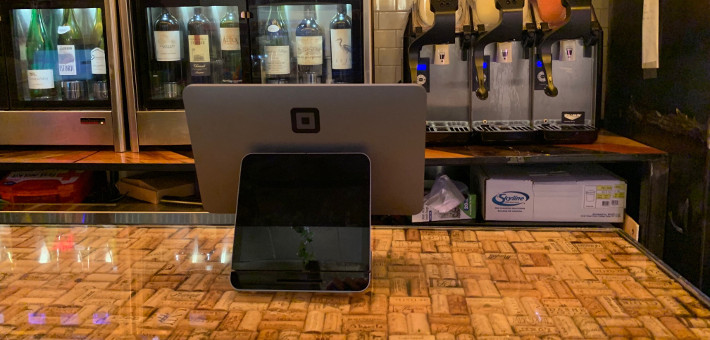
In a fast gentrifying section of Downtown Brooklyn, online lenders are waging a silent turf war. Each day, hungry consumers flock to DeKalb Market, a subterranean hipster food court where lunch and a drink can cost $17. The maze-like space with retro neon signs and rustic wood countertops offers a dizzying array of cuisines, and with it, the opportunity to indulge in one’s own individual preferences. But if you’re looking for the vendor’s payment machines, you’ll notice an eerie sameness amidst a cacophony of color.

City Point Mall
DeKalb Market in Downtown Brooklyn

Square processed $85 billion in payments in 2018 and here in DeKalb Market, 75% of the vendors AltFinanceDaily surveyed relied on Square’s Point-Of-Sale technology. The publicly traded company generated $2.5 billion in payment transaction fees last year alone, but it’s the add-on products like Instant Deposit, Cash Card, Caviar, and Square Capital that are propelling the growth. 244,000 businesses received a loan from Square in 2018 for a total of $1.6 billion. Borrowing is as simple as clicking a few buttons on the POS dashboard, making Square the presumptive lender of choice for businesses in the food court.

But the rankings on a national level say that Square trails behind Kabbage, an online lender with no reliance on a POS system. Kabbage’s growth trajectory has been epic, once a lending service for eBay merchants, the company is now one of the largest online small business lending companies in the United States.

kabbage ad in City Point Mall
An ad for Kabbage towers over shoppers in the hallway of the City Point Shopping Center directly above DeKalb Market

Undeterred by the sea of Square dashboards, billboard advertisements for Kabbage once blanketed the periphery. The ads, which few consumers seemed to gaze at, were clearly meant for the business owners in between the food court and the mall above it. There was also a competitive feel to it, as if Kabbage was subconsciously communicating to Square that they were not alone.

Nowhere to be found was OnDeck, an online lender headquartered a short distance away in Manhattan that does more in loan volume each year than Square and Kabbage. But just because they can’t be seen doesn’t mean they’re not there. Blending into the crowd of consumers, AltFinanceDaily spots business loan brokers, ones reputed to refer business to alternative capital sources and online lenders, OnDeck among them. 29% of OnDeck’s business in 2018 was attributed to Funding Advisors, an army of independent sales professionals across the country.

But they’re here for lunch just like everybody else, or are they? Their in-person presence may complicate their rivals’ efforts. Can a face and a handshake trump familiar software and the Internet? OnDeck’s $2.5 billion in 2018 loan volume suggests that their diverse sales strategy, including the use of Funding Advisors, has an impact.

square swiper
A food vendor demonstrates how easy it is for them to accept card payments in the food court

Some vendors in DeKalb Market fail and go out of business. Others, like Cuzin’s Duzin, a homemade donut vendor made semi-famous by its feature on a Vice Media TV Show, The Hustle, recently completed renovations and further expanded its business into the nearby Barclay’s Center. Public records show the company just received financing from an equipment leasing company based in Washington State, a possible missed opportunity for the online lenders canvassing the space. Not for long, perhaps, as OnDeck announced it would be entering the equipment finance market this year.

As for Square, the love for the POS product presents a perceived edge. A general manager of Two Tablespoons, another food vendor, told AltFinanceDaily that he thinks the Square system they rely upon is very easy to use. He said it also creates promotions that allow businesses like them to track customer spending and text a customer (with their permission) if they’ve earned, say, $5 off at a store.

But converting these vendors into borrowers is not guaranteed. Kabbage’s ads could not be found on a recent trip to the food court. And one shop selling burgers there told AltFinanceDaily that they were aware of the loan product through Square because they use the POS for payments, but that they had no interest in using it to borrow money.

“It’s like a credit card,” she said. “What you take out, you owe. And we choose not to owe.”

THE ABCs OF SBDCs

December 16, 2018
Article by:

This story appeared in AltFinanceDaily’s Nov/Dec 2018 magazine issue. To receive copies in print, SUBSCRIBE FREE

An often-overlooked national network of nearly a thousand Small Business Development Centers has the potential to help alternative funders cement relationships with existing clients and locate new ones. The centers, known as SBDCs, offer free or low-cost training and consultation to established and aspiring merchants and manufacturers.

The earliest SBDCs have been around for four decades. The centers operate in conjunction with the Small Business Administration as public-private partnerships and serve about 1.5 million clients annually.

Centers help small-business owners evaluate ideas, organize companies, find legal assistance and obtain operating capital.

But not everyone knows all that. “The network is underutilized,” says Donna Ettenson, vice president of operations for Washington-based America’s SBDCs, which functions much like a trade association for the centers scattered across the nation. “We’re one of the best-kept secrets in the United States federal government.”

That means alternative funders can assist customers by simply informing them that the centers exist and can offer potentially beneficial services. Providing basic information on the SBDCs could become part of a consultative approach to selling that brings repeat business, especially with merchants who lack business skills or experience, observers suggest.

What’s more, alt funders who want to increase their chances of benefitting from SBDCs can go beyond merely providing clients with a rundown on the centers. The funders can become actively involved with the work of carried out at the centers.

One way of taking part is to contact nearby centers and offer to make presentations at seminars or workshops, Ettenson says. Funders could provide information to fledgling business owners on the instruments available through the alternative-funding industry, such as cash advances, loans and factoring, she suggests.

SBDCTo get started, alternative funders can visit the America’s SBDC website, where they’ll find a search tool that provides contact information for their nearest centers, Ettenson says. From there, they could discuss possible connections with officials at the local centers, she advises.

That involvement would not only provide exposure to merchants in need of capital but also to center officials who point merchants toward capital sources. If enough members of the alt funding industry took part, their work could eventually give rise to something akin to the lists of attorneys that some centers maintain, Ettenson says.

Centers often tap attorneys—perhaps quarterly—to lecture on a rotating basis on what type of business to form. That could mean organizing as a corporation, limited-liability partnership or some other form. In much the same way, funders could share their knowledge of instruments for obtaining capital.

Funders could emulate the lawyers who use the centers as a forum for soft marketing, Ettenson says. The speaker becomes a familiar face and can leave business cards that students could use to contact them as questions arise. However, speakers must provide general information and are prohibited from using speaking opportunities as blatantly self-promotional unpaid advertisements, she cautions.

What’s more, the centers have to exercise caution to avoid recommending specific attorneys, accountants or sources of capital because they could incur liability if events go sour and a service provider absconds to Bogata, Columbia, Ettenson points out. That keeps the centers “ecumenical,” in that they provide a list of professionals for clients to interview and rather than pointing to a single source.

Alternative funders can explore other ways to become involved with SBDCs, too. The national organization presents an annual trade show and professional development conference for service-center directors and service-center staff members who teach or consult with clients. Alternative funders who have taken booth space on the exhibition floor or made presentations in the accompanying conference include RapidAdvance, Breakout Capital, Kabbage and Newtek Business Services.

When America’s SBDCs issues a call for presentations at the annual conference, it receives approximately 300 applications for about 140 speaking slots. Some of the speakers come from the rosters of presenters at past shows, while companies newer to the trade show can purchase an entry-level sponsorship that includes booth space and the right to conduct a workshop.

The attendees at those annual conferences can tell their clients about the funders they encounter there. Attendees can also find out more about the alternative- funding industry and then pass that information along to merchants.

Some regional centers in states with large populations—such as California—can also hold conventions for their officials, says Patrick Nye, executive director for small business and entrepreneurship at the Los Angeles Regional SBDC Network, which is based at Long Beach City College. His state was planning its second statewide gathering this year and intends to do it again every other year. Alternative funders could participate, he says.

“IN ORDER FOR THE FEDERAL MONEY TO BE PULLED DOWN, A MATCHING NON-FEDERAL DOLLAR MUST BE PROVIDED AS WELL.”


With so much going on at the centers, someone has to front the cash to keep the lights on. Local organizations are funded partly through federal appropriations administered by the SBA. “In order for the federal money to be pulled down, a matching non-federal dollar must be provided as well,” Ettenson says. The federal funds are apportioned based on the amount of matching funds the centers provide.

The matching funds usually flow from colleges, universities and state legislatures. “It’s a mix,” Ettenson says of the sources. Institutions of higher learning often meet part of their matching-fund goals by providing “in kind” resources—such as classrooms, services and instructors—instead of cash.

In the six states that administer the centers through their economic development departments, the state legislatures generally appropriate matching funds. In Texas, the representatives of the state’s four regional programs combine forces to lobby the legislature for matching funds, and that teamwork reduces the cost of their efforts in Austin.

The federal funds and matching funds support local and regional centers that belong to a network based on 62 host institutions. Of the 62, six operate through the economic development departments of state governments. They’re in Indiana, Illinois, Ohio, West Virginia, Minnesota and Colorado. The rest of the host institutions are mostly universities or community colleges. Some are based in economic development agencies.

SBDC LA
Training at the Los Angeles Regional SBDC Network earlier this year (via facebook)

One can think of the regional centers as something akin to corporate headquarters and the local centers as retailers, says Nye, who administers the Southern California regional center. The local centers under his regional’s jurisdiction are located in only three counties but pull in the sixth-largest share of funding because of Southern California’s huge population, he notes.

The local service centers provide training and consulting for entrepreneurs starting or expanding their enterprises. About 60 percent of the clients are already in business. Of the 40 percent who don’t own a business, about half launch one after receiving assistance from an SBDC, Ettenson says.

The centers don’t charge for consulting services, and the fees for training are just large enough to cover expenses. The training fees usually remain in the centers that provide the instruction where they’re used to cover expenses like buying computers.

In Southern California centers, the business advisors are usually under contract and have knowledge to share from their experience in business, marketing, banking, social media, consulting or other realms, says Nye. Not many college instructors work in the centers, he notes, adding that the centers are monitored to avoid conflicts of interest among advisors.

To track how well advisors are performing, the national organization produces economic impact statements by interviewing thousands of clients. Interviews generally take place two years after consulting sessions. That should provide enough time to get results, Ettenson says

Thus, America’s SBDCs this year surveyed clients who received services in 2016. Those long-term clients received $4.6 billion in financing, while last year the clients surveyed who got underway in 2015 had received $5.6 billion in financing. She could not break down that financing by categories like banks and non-banks.

Discussing those surveys, Ettenson offers some details. “If you talk to us for two minutes, we don’t consider you a client,” she emphasizes. The SBDC definition of what constitutes a client calls for at least one hour of one-to-one consulting or at least one two- hour training session, she says. The organization defines “touches” as people with less exposure, such as those who call on the phone with a question.

“WE DON’T EXCLUDE ANYBODY IN ANY WAY, SHAPE OR FORM UNLESS THERE’S SOME REASON TO THINK THEY’RE FRAUDULENT”


When an SBDC client needs funding, officials at the centers have no qualms about including alternative funders in their recommendations to clients who are seeking funds, says Ettenson. “We don’t exclude anybody in any way, shape or form unless there’s some reason to think they’re fraudulent,” she notes.

But malfeasance isn’t the worry it once was, Ettenson asserts, noting that alternative funders have gained credibility in the last five or so years as they began policing their own industry. “They’ve learned to keep track of who’s in their space and how they’re operating,” she says.

Alternative financing has established a niche that benefits small-business people who know how to use it, Ettenson maintains. “They understand that they’re borrowing money for a short period of time and it’s going to cost you a fair amount,” she says. “It’s a short-term bridge to get to whatever your goal is.” Merchants seeking funders should learn the differences among alternative funders—whom she says all operate a little differently from each other—to choose their best option.

And opportunity for alternative funders may abound at the centers in the near future. Nye cites the two biggest goals for his centers as new business starts and capital infusion. Center advisors help develop business plans that aid clients in obtaining financing, he says. Last year, his region received a little over $4 million from the SBA and used it to help start 365 new businesses and raise $148 million in capital infusions. Those efforts created 1,700 jobs, he says.

Multimillionaire CEO Claims Predatory Lenders are Causing Him to Sell His Furniture for Food

November 22, 2018
Article by:

Two months ago, a billionaire hedge-fund manager named Philip Falcone, the 377th richest person in the United States who once “put the squeeze on Goldman Sachs,” led a Virginia-based investment group to make a strategic purchase of a local Telemundo TV station in Columbus, Ohio. The seller, a company led by local businessman Richard Schilg, pocketed a lavish sum of $850,000, according to the Columbus Dispatch.

Two months later, Schilg, who is 61-years old, had become so poor and destitute that he would have to sell his furniture just to buy food. That’s what Bloomberg Businessweek says of Schilg in its purported tell-all piece about predatory lending. Though Schilg successfully negotiated a deal with a Wall Street billionaire, he apparently was outmatched and “unable to defend himself” when it came to much less sophisticated transactions at his other business, Pathmark HR, a human resources company located 15 miles outside of Columbus.

Pathmark HR is anything but small. At the end of 2017, Schilg’s company was on track to gross $20 million a year in sales. Along the way, he engaged in commercial finance transactions that required the sale of future receivables, non-loan arrangements that businesses use to fuel their growth.

They did not go as planned. Multiple financial companies obtained judgments to enforce the contracts that Pathmark HR had entered into, NY State court records confirm. Schilg told Bloomberg Businessweek that “your life is ruined by their contract.”

But if that’s the case, it stands to reason he wouldn’t enter into one again.

Pathmark HR kept applying for more of these things, industry insiders told AltFinanceDaily, though the stream of judgments filed against his business from competitors offering similar products have served as a veritable red flag for underwriting departments. That would’ve created a problem for Pathmark HR if it intended to rely on that type of capital going forward.

That’s when a straw man appeared.

According to a purported (and admittedly unauthenticated) corporate resolution reviewed by AltFinanceDaily, Schilg appears to have transferred his majority interest in Pathmark HR to an 82-year old minority shareholder named Robert Renzetti, who lists a small mobile home more than 1,000 miles away in Sarasota, FL as his residence.

There’s a catch. The corporate resolution (dated in 2017) says that Schilg can just buy the shares back from Renzetti in the future. Either way, several finance companies said they received applications for capital from Pathmark HR up through and including this year, with only Renzetti’s name and information included. Schilg’s is nowhere to be found.


Telemundo airs on the TV station owned by Richard Schilg

Schilg, who Bloomberg Businessweek portrays as so poor that he’s more-or-less eating his household furniture to stay alive, is the former founder, chairman and CEO of Team America Corp, a staffing organization that grew to more than $350 million in annual sales by 1999. That’s more than $500 million at today’s value, larger than almost every single alternative funder that AltFinanceDaily ranked in 2018.

Meanwhile, the only thing that separates Schilg from the sale of his TV station to a billionaire is FCC approval. Hopefully the man has enough furniture to see it through.


This is the second in a series of articles relating to a fanciful tale in Bloomberg Businessweek

Congressman Tom MacArthur Visits CFG Merchant Solutions’ NYC Office

October 15, 2018
Article by:

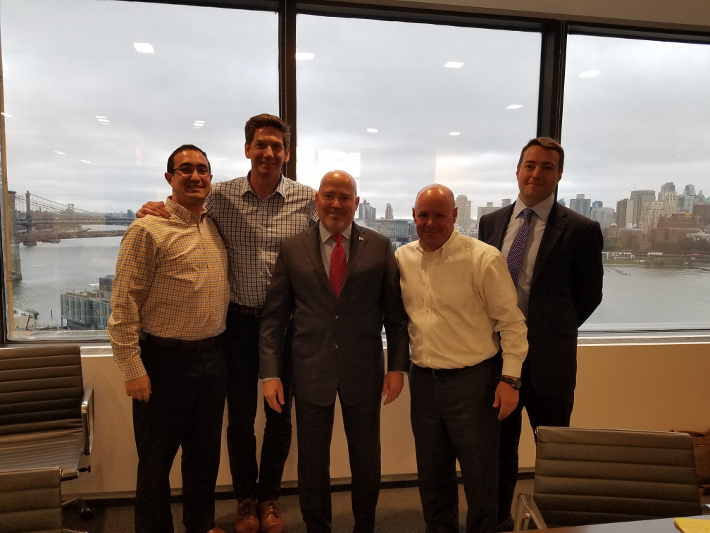
United States Representative Tom MacArthur, who represents New Jersey’s 3rd District, visited the NYC office of CFG Merchant Solutions on Monday. MacArthur has been in office since 2014.

CFG Merchant Solutions moved into the 180 Maiden Lane office earlier this year. The company is a member of the Commercial Finance Coalition (CFC). Adam Sloane of Cresthill Capital, another CFC member, was also in attendance.

Below: the CFG Merchant Solutions office with Congressman Tom MacArthur (at center with red tie)

cfg-pic


Below: Far Left – Josh Karp, CFG | Left – Andrew Coon, CapFlow Funding Group | Center – Rep. Tom MacArthur | Right – Bill Gallagher, CFG | Far Right – Adam Sloane, Cresthill Capital

cfc-cfg-mcarthur

OnDeck Small Business Online Lending Tops $10 Billion

September 12, 2018
Article by:

Record volume by a non-bank online small business lending platform.
OnDeck is the world’s largest non-bank online small business lending platform.
Federal Reserve says small businesses are turning to online lenders in record numbers

NEW YORK, N.Y., September 12, 2018 – – OnDeck® (NYSE: ONDK), today announced it has achieved a milestone in the Financial Technology (FinTech) industry, becoming the first non-bank online lender to surpass $10 billion in total loans originated to small businesses. OnDeck, with operations in the United States, Canada and Australia, is now the world’s largest non-bank online lender to small business by total loan volume.

The achievement by OnDeck, a pioneer of the FinTech lending industry, is the latest indication that small businesses increasingly prefer to seek financing online. According to the recent Small Business Credit Survey from the Federal Reserve, small business owners are turning to online lenders in record numbers. In 2017, 24 percent of small businesses seeking credit applied online, up from 21 percent the previous year. Not only did the total number of loan applications to online lenders increase in 2017, but satisfaction rates of small businesses soared almost 50 percent year-over-year.1

OnDeck provided its first small business loan online in 2007, taking just 11 years to pass $10 billion in total loan volume in a digital lending market it helped create. The majority of OnDeck’s lending occurred in the last few years as it gained scale, with the company originating $2.1 billion in loans in 2017 alone.

“If reaching $10 billion dollars in total loan volume online tells us anything, it’s that the days of old-fashioned lending to small businesses are numbered,” said Noah Breslow, Chairman and Chief Executive Officer, OnDeck. “We created OnDeck because we believed the Internet could revolutionize and speed up the way underserved small businesses access capital. Today, we are helping to fill a credit gap across hundreds of industries by providing fast, secure and transparent loans that enable small businesses to grow, generate economic activity and create jobs. We look forward to providing billions more in financing and powering the small business lending migration to the online model via our OnDeck-as-a-Service platform.”

Small businesses are the economic backbone of America, accounting for more than 99% of all U.S. companies1 and employing over half of all private sector workers2. However, they still face a growing credit gap. According to the Federal Reserve survey, 54% of small businesses report credit shortfalls3 and lower-income communities are disproportionately impacted. Traditional large banks deny 44% of all small business loan applications3 and many are steadily exiting the small business credit market. Since 2008, small business lending from traditional sources has fallen over 20%4.

Identifying the developing credit gap over a decade ago, OnDeck transformed the means by which small businesses access capital, using proprietary technology and a small business credit scoring system, the OnDeck Score®, to more efficiently evaluate a business’ creditworthiness and make lending decisions in real time. OnDeck provides term loans and lines of credit to small businesses and can supply customers with funding in as little as one business day. The economic impact of this online lending activity is substantial. Immediate infusions of capital enable small businesses to purchase inventory, cover operational costs, or expand without delay, which can stimulate economic growth and help create jobs in their communities.

OnDeck and the Impact of Online Lending on the Economy
An Analysis Group report commissioned by OnDeck in 2015 analyzed the economic impact from the first $3 billion OnDeck lent to small businesses. The report estimates that those loans powered $11 billion in business activity and created 74,000 jobs nationwide. In 2018, OnDeck announced it had provided small businesses more than $10 billion in capital.

In May of 2018, a report on small business online lending in the United States revealed that OnDeck and four other small business lending platforms funded nearly $10 billion in online loans from 2015 to 2017, generating $37.7 billion in gross output and creating 358,911 jobs and $12.6 billion in wages in U.S. communities. The upsurge in online lending is filling a critical financing gap for small businesses across industries, according to NDP Analytics, a Washington, D.C.-based economic research firm. See the NDP Report here: http://www.ndpanalytics.com/online-lending/

OnDeck Company Timeline
Download here: https://www.ondeck.com/wp-content/uploads/2018/09/10-year-timeline-02.pdf

BizFund

Smart Step Funding / Principis Capital

Flash Advance

Merk Funding

Cloudsquare

Dragin

Amerifi Capital

Essential Funding

Total Merchant Resources

Fundo

ByzFunder

B2B Finance Expo

Fenix Capital Funding

Green Note Capital

Synergy Direct Solution

AMA Recovery

Legend Funding

Velocity Capital Group

BHB Funding

1 Stop Cap

Thorocorp

Spartan Capital

BizFinLaw

Merit Business Funding & MeridianBank

ROK Financial

Wynwood Capital Group

United First