
Amazon’s On-Balance-Sheet Business Loan Program Steady
February 11, 2024 Amazon’s business loan program was relatively steady in Q4 if its seller lending receivables are any indication. Those receivables totaled $1.3B, which was in line with where it has been throughout 2023. Compared to Amazon’s overall business, which generated $170 billion in sales in Q4 alone, its in-house lending business is rarely if at all mentioned.
Part of this is because Amazon has forged ties with third parties to service large swaths of its sellers. These parties include Parafin, Lendistry, and more recently SellersFi.
“Amazon is committed to providing our sellers with flexible and convenient access to capital, regardless of their size,” said Tai Koottatep, director and general manager, Amazon WW B2B Payments & Lending as part of the SellersFi announcement last month. “Through this lending option with SellersFi, we’re able to strengthen that commitment and offer sellers even more opportunities to grow their business.”
“Working with the Amazon Lending team has been an exceptional experience for SellersFi,” said Leonardo Felisberto, Head of Global Business Development and Partnerships at SellersFi during that same announcement. “Their dedication to empowering sellers aligns perfectly with our mission, and together, we’ve unlocked more possibilities for e-commerce entrepreneurs. We’re hopeful this can be another step toward supporting the growth aspirations of online sellers in the US and beyond.”
Lightspeed’s Merchant Cash Advance Business is Accelerating
February 8, 2024 “Our capital business has grown—it’s doubled from over a year ago and we expect that trajectory to continue. And capital revenue comes in at a 95% gross margin,” said Lightspeed CFO Asha Bakshani in the company’s most recent quarterly earnings call.
Although Lightspeed is more widely known as a global e-commerce platform, analysts have been encouraging the company to ramp up its merchant cash advance business because of the considerable margins it produces. As such Lightspeed through Lightspeed Capital has been doing just that. And not just in the US. “We launched Lightspeed Capital in France, the Netherlands and Belgium this quarter, and Germany shortly after the quarter, expanding our global footprint for this high-margin offering,” said company CEO Jean Paul Chauvet.
Origination growth has been slow, however, because the company has been concerned with the potential impact it will have on its own available operating cash. This fear seems slightly overblown as Lightspeed reported having $750M in cash as of the close of the most recent quarter and said that merchant cash advance originations were responsible for using up only $8.3M in cash during the quarter.
With Fraud on the Rise, AI Can Fill in the Gaps
October 19, 2023 In today’s dynamic world of fraud detection, technology, and artificial intelligence (AI) are allies. The insights of industry experts, Yinglian Xie, a technology veteran with a background at Microsoft Research and CEO at DataVisor, Sandip Nayak, President at Fundation, and Andrew Davies, Global Head of Regulatory Affairs at ComplyAdvantage, discuss the transformative role of AI in fraud prevention.
When DataVisor started, it primarily offered advanced machine learning solutions, through an unsupervised approach. In other words, their programs can spot fraud without needing a loss or training labels; they can automatically identify suspicious activities. Xie explains that AI’s ability to make rapid decisions during real-time transactions depends on the amount of data available for this process. To achieve a proactive response, it must be synchronized with real-time data, as opposed to a manual or “supervised machine learning” approach.
“We need to kind of switch the traditional approach looking at fraud being very much kind of an isolated case, like a manual approach, and into something we need technology for, said Xie. “And we need to essentially be able to make decisions instantaneously as well.”
In addition to unsupervised learning algorithms, Xie explains that generative AI falls into another category of fraud detection. This method describes the data and communicates information back in human-like responses. Xie gives an example that as customers, some may not understand why a transaction was rejected and that’s where generative AI comes to rationalize the reason behind the rejection.
Echoing Xie, Nayak described solutions where traditional techniques fail, one of them being unsupervised learning algorithms. These algorithms can use techniques like anomaly detection to actually hone in on “the needle in a haystack problem.”
“Number two, the automated and advanced nature of AI can really solve the shortcomings of rules based and human based approaches in detecting fraud and can also self-calibrate itself as the nature of fraud evolves with time,” said Nayak.
Meanwhile, Andrew Davies pointed out that one of the biggest challenges faced by banks and financial institutions is “they are constantly playing catch-up.” With the accelerated pace of money movement and real-time settlement, he emphasized that fraudsters capitalize on this by being swift and innovative, continuously seeking out new vulnerabilities to exploit.
“Banks must update their legacy technology which leaves too many weak points in the control environment,” said Davies. “Additionally, as money moves more quickly and is subject to finality, fraud detection must be done in real time.”
And as the digital landscape continues to evolve, Nayak envisions the adoption of these technologies will be beneficial to the lending industry. Embracing different strategies not only reduces fraud losses but also enhances capital efficiency, paving the way for increased profitability and security in lending, according to Nayak.
“I do expect the lending industry, especially the ones who adopt the latest technologies of fraud detection, will have a competitive advantage compared to those who don’t,” said Nayak. “And what that will do is it will help them preserve more of their capital in the current tough macro environment by helping the overall unit economics…”
Unsupervised machine learning and generative AI are strategies reshaping fraud prevention. The ability to make rapid, data-driven decisions, adapt to evolving fraud tactics, and provide human explanations behind alerts has become a cornerstone in modern fraud detection.
Experts: How GFE Went Big
September 6, 2023The Brewster Building is an icon in Long Island City, a bustling district of Queens that’s right across the water from Manhattan. Most people know the building as the official headquarters of JetBlue because their giant logo on the roof can be seen from miles away. Others identify it as a major corporate hub for The Estée Lauder Companies since they sublease a substantial amount of office space inside. But up on the eighth floor, men and women traversing the hallways in suits work for another employer that’s making a splash in a different industry altogether. The sign on their door says GFE, which is short for Global Funding Experts. It’s a company that provides working capital to small businesses nationwide and they just recently secured a senior debt facility of up to $100 million.
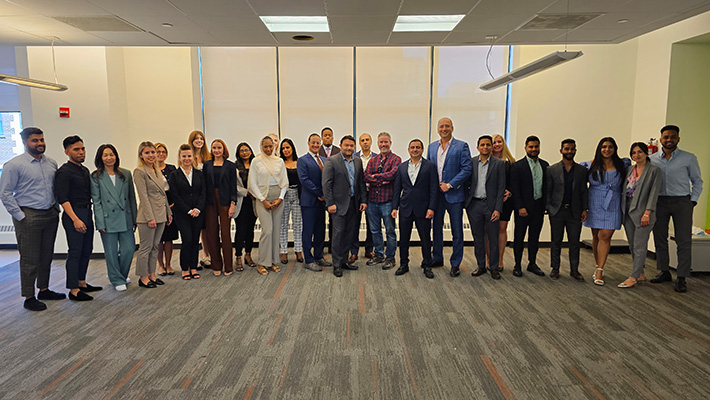
Boris Musheyev, GFE’s CEO, founded the company almost a decade ago with partner Viacheslav “Steve” Eliyayev. Musheyev was working mainly in real estate when he learned about an innovative way to support small businesses by purchasing their future receivables. A cautious investor, he didn’t just jump right in. Instead, he bided his time with research on how it worked. He crunched numbers and analyzed the risks before he was confident it was something he wanted to do.
“From the outset, I’ve only channeled funds into ventures I wholeheartedly believed would both succeed and offer genuine value,” Musheyev told AltFinanceDaily. “This commitment was evident in 2013 when we began by investing our capital.”
Alas, Global Funding Experts was born. The company’s model is referral partner driven, meaning they rely on ISOs for submissions and there’s no internal sales force. Today, GFE has an estimated 1,500 ISOs signed up and they receive about 700 applications on an average day. It’s a level of scale that wouldn’t be possible if they didn’t have an efficient CRM, something Musheyev predicted the necessity and utility of long before. GFE began building its own proprietary CRM in 2017 and the company used that to accelerate growth beyond its early startup days.
 With its momentum, GFE brought on Boris Shakhmurov to serve as COO in 2019, a traditional banking executive with 20 years experience. Shakhmurov was previously an Executive Director at JPMorgan Chase and had overseen mainly cybersecurity, technology controls, and compliance before making his move to GFE. The two Boris’s knew each other previously, having been friends for over 30 years already. At GFE, Shakhmurov’s pitch that “banks don’t lend to small businesses” lands differently given his background.
“As an expert in Governance, Risk, and Compliance, when I joined the organization in 2019, our goal was to establish a best-in-class MCA Operational Resilience framework to address current and future challenges facing our industry,” Shakhmurov said. “With a focus on building strong and resilient operational controls, we used a multidisciplinary approach to assess the risk across all of our information assets and business processes. The Zero Trust and Defense-in-Depth approach enabled us to focus on early detection, rapid response, enhanced protection, and reducing single points of failure throughout the entire MCA lifecycle.”
For all the technical talk, Shakhmurov said what really stands out is the firm’s family-like atmosphere, which one can see for themselves in their spacious office. That environment has been achieved all while tightly controlling and compartmentalizing access to data, the company says. Security is paramount.

With the infrastructure in place, GFE hired Jonathan Mayer to be their CFO, a veteran accountant who previously spent more than 10 years at Grant Thornton LLP. Mayer first met Musheyev and Shakhmurov in 2021 and he echoed a similar sentiment about how he ended up at GFE. “The work ethic and trust and family environment really stood out to me,” Mayer said.
Between Musheyev, Eliyayev, Shakhmurov, and Mayer, the firm was then off to the races, ultimately leading up to the securing of a debt facility last month of up to $100 million. A lot went into making that happen, including the enlistment of a well known industry law firm to perform the due diligence, they say.
“Through consistent communication with our merchants and operational adaptability, we’ve not only met but surpassed our profitability benchmarks, all the while ensuring minimal defaults in our portfolio,” Musheyev said.
The company also credits having a qualified CFO and robust CRM technology as being necessary ingredients to getting a serious deal done. GFE’s signature products include purchases of future receivables, reverse consolidations, and more recently something called “Incremental Funding.” There’s also no commission clawbacks, they tout. Overall, GFE has funded over $400 million in capital to small businesses since inception.
The executive team heaped praise on the staff for being integral to their success.
“What we have is trust,” Shakhmurov said, who comes back again and again to the importance of building a business that will endure. “If you look at the banking industry, you need operational resilience,” he said.
Capify Wins SME Lender of the Year Award
June 5, 2023Specialist finance provider Capify were recently crowned SME lender of the year at the 2023 Credit Awards.
 The awards, which took place at London’s prestigious Grosvenor House on the 1st June and were hosted by television’s Katherine Ryan, recognise innovation and best-practice in the financial services industry.
In a fiercely competitive segment, which included banks, fintechs, asset finance providers, invoice finance companies, and P2P businesses, Capify was recognised as the SME lender of year (up to £1m lend).
Reflecting on their win, John Rozenbroek, Capify COO/CFO said “This award is recognition of the amazing work the whole Capify team have undertaken over the past year and our commitment to serving the UK’s vital SME community. For many UK SMEs, access to finance can be a real barrier to growth and we are delighted that our innovative and flexible approach to serving this segment of the economy has been recognised”.
Capify’s Q1 2023 business confidence survey revealed that 55% of SMEs are uncertain in their ability to secure finance from their traditional banking partners. “This is where we step in”, Rozenbroek adds. “As an alternative lender, we pride ourselves on our agile yet responsible approach, enabling us to promptly provide the much-needed funds to this underserved audience. In fact, we can approve and transfer funds to the applicant’s account in as little as 24 hours.”
Launched in 2008, Capify was born out of the desire to offer small businesses an alternative way to quickly access responsible business finance when many firms were struggling to navigate the impact of the global financial crisis. With offices in the UK and Australia and approximately 120 employees, it continues to support smaller businesses with funding to meet the challenges and opportunities of today’s economic climate.
About Capify
Capify is an online lender that provides flexible financing solutions to SMEs seeking working capital to sustain or grow their business. Alongside its sister company, Capify Australia, the fintech businesses have been serving their respective markets for 15 years.
For more details about Capify, visit: http://www.capify.co.uk
Capify Media Contact:
Ian Wood, Marketing Director
iwood@capify.co.uk
0161 393 9536
Lending Valley is Now Offering Funding Up to $5 Million
May 2, 2023 Lending Valley, based in New York City, is proud to announce that we are expanding funding options for funding up to $5 million. In the years following the global pandemic, Lending Valley helped many small businesses stay afloat, giving them the capital necessary to fund payroll, purchase materials, and keep the lights on even when patronage was at an all-time low. Now, Lending Valley will offer even larger funding to small and mid-sized businesses to keep them thriving.
Since its conception, Lending Valley has offered a wide range of business funding targeted toward supporting small businesses, including the following options:
- Unsecured business funding – No collateral needed. The business owner’s ability to repay the funding is the only thing securing the funding.
- Funding for entrepreneurs with bad credit – Unfortunately, going out on a limb for business ventures can often lead to bad credit for entrepreneurs. Traditional funding won’t consider these merchants, but Lending Valley will.
- Emergency business funding – Any emergency, personal or business, can derail even the best business plan. Short-term emergency funding can prevent long-term damage.
Businesses that have benefited from Lending Valley’s services vary widely, from the film industry to convenience stores and gas stations, cannabis farms and dairy farms, to dental practices and more. Lending Valley is a different type of funder, providing custom tailored funding options. Unlike traditional funding that can take weeks to approve and fund, Lending Valley deposits cash into the business’s account within 24 hours in most cases!
About Lending Valley
Lending Valley is a FinTech company that has already funded a lot of small businesses of all types across the U.S. For all inquiries, email Clark@lendingvalley.com
Lightspeed’s MCA Business is Growing
February 2, 2023Lightspeed Commerce, a global e-commerce platform for merchants, reported an increase in its merchant cash advance business in its latest earnings report. As of December 31, 2022, $15.8M of mcas were outstanding, up 25% from the previous quarter, the company announced.
Lightspeed is no small company. It reported $188.7M in total revenues for the most recent fiscal quarter, $74.5M of which was drawn from subscriptions and $107.2M from transactions.
“To further complement our core cloud solutions, we offer a merchant cash advance program called Lightspeed Capital,” the company said in its quarterly statements. “This program provides cash advances to eligible merchants and is designed to help them with overall business growth and cash management.”
What’s To Come in 2023? The Industry Shares Their Predictions
January 11, 2023 It’s halfway into the first month of the new year and the expectations for 2023 are buzzing. Fintech and alternative finance executives have different views on what’s to come. Here’s what they had to say:
Nick Chandi (CEO & CO-Founder at Forward AI): “Adopting real-time payments (RTPs) will be critical in 2023 as SMBs continue to grow. RTP transactions are set to grow 300% globally over the next five years, potentially becoming the new standard for banks, FinTech’s, and businesses to move money. The implementation of real-time payments allows SMBs to manage their cash flow better, settle transactions in real-time, hold cash for longer, and make due payments instantly.”
Bruno Raschio (President at East Capital): “Predictions include negative growth in the equities markets as earnings estimates lower, the S&P to remain below 4,000 by the end of the year, as well as stagnant growth in real estate prices. Even a 10-20% in price reductions in real estate prices as interest rates continue to rise, closing in on 30-year highs.”
Gregg Templeton (Founder at TRAM Funding): “I predict that embedded finance will really take root this year. Both B2B and B2C will be looking for ways to embed banking and financial services directly into their user experience.”
Tyson Rose (Head of Partnerships at BlockApps): “My top three predictions for the financial world as we enter 2023 are as follows. Lenders will outsource more of their business processes and adopt new technologies to drive down costs wherever possible. Smaller lenders will enter the direct ABL and factoring market. Banks and FIs will focus on building fintech solutions to take greater market share in the transportation and supply chain financing industries.”
Sharmylla Siew (Senior Underwriter at Lending Valley): “We predict a number of funders to tighten up their guidelines during the recession and the continuous spread of the regulations state by state with less funding being outputted by hybrid funders.”
Alicia Josshua (ERC Specialist & Field Underwriter at Symmetry Financial Group): “Small businesses are leaning more towards alternative financing because of the flexibility. This financing niche allows for quick turnarounds in approvals and fundings within a week. Big banks have scaled back on lending such as lines of credit [and there’s a] longer approval process such as 4-8 weeks. The alternative financing space is not being affected and makes a great outlook for businesses.”
Andy Parker (CEO at The LCF Group): “2023 will be a challenging year for both small businesses and funders. Increasing borrowing costs, increased compliance and regulatory costs, and more frequent defaults for funders will lead to more expensive funding and tougher qualifications for small business borrowers.”